
Quick Take
- Adult sea turtles seem nearly untouchable, but a handful of ocean predators have cracked the code on taking them down. Discover sea turtle predators →
- The shell isn't the safe haven most people imagine, and there is one life stage that leaves turtles almost completely defenseless. See hatchling vulnerabilities →
- Some of a turtle's fiercest enemies never enter the water, and these adversaries are not who you'd expect. Meet the land-based threats →
- Over three-quarters of all turtle species share one habitat, and that habitat comes with a predator list that might surprise you. Explore freshwater turtle habitats →
There are 364 recognized turtle species in the order Testudines. They can be found in nearly any type of environment on Earth except for the polar regions. As ectotherms, turtles rely on external heat for thermoregulation, so they cannot adapt to extreme cold. Unfortunately, turtles also have predators in every environment. In this article, we’ll discuss the threats turtles face on land, in freshwater environments, and in the ocean.
Types of Turtles
Turtle species are often categorized by their habitats. These include land turtles, or tortoises, freshwater turtles, terrapins, and sea turtles.
Tortoises
Tortoises live exclusively on land. These turtles have elephant-like feet, and most species have heavy, highly-domed shells. Most tortoise species are also herbivores. They live in a wide variety of environments from deserts to grasslands, coastal plains, and high-elevation regions.
Their sizes range widely from the tiny speckled padloper (Chersobius signatus) that measures up to 4 inches and weighs 3.4 to 5.8 ounces to Galápagos giants (Chelonoidis spp.) that can measure 6 feet in length and weigh over 500 pounds.
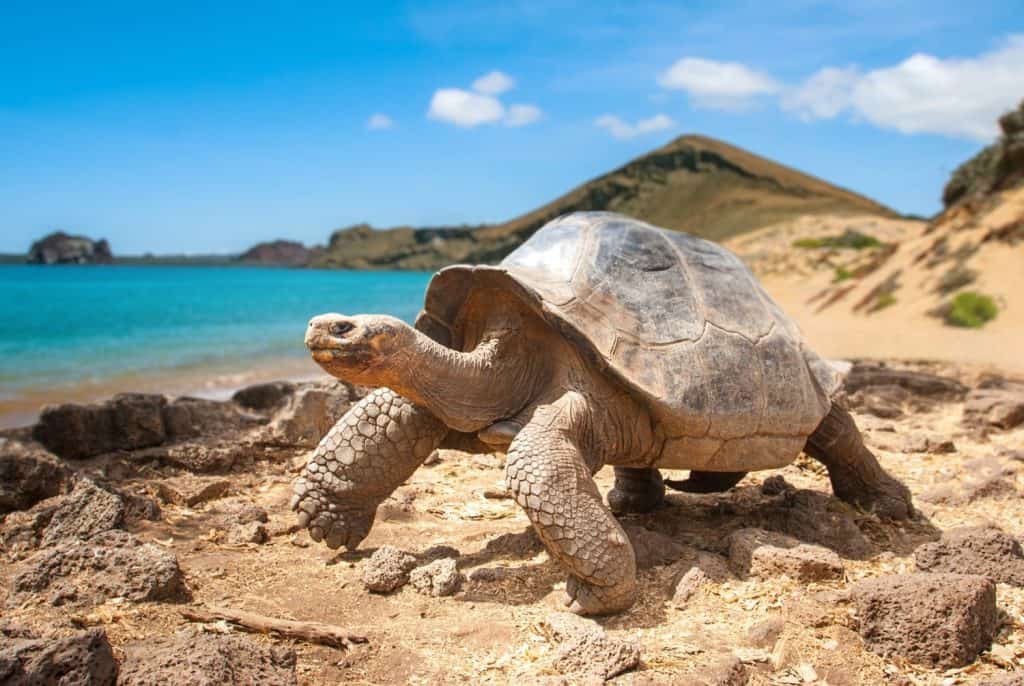
Galapagos giant turtles can weigh well over 500 pounds.
©FOTOGRIN/Shutterstock.com
Freshwater Turtles
Over 75% of all turtles live in freshwater. Freshwater turtles are semi-aquatic, inhabiting rivers, ponds, lakes, streams, swamps, marshes, bogs, and wetlands. They have modified limbs that allow them to both walk and swim. Most freshwater turtles have hard, bony shells. However, softshell turtles in the family Trionychidae have rubbery shells adapted for faster swimming, burrowing, and skin respiration.
Freshwater turtles are mostly omnivores. Examples include the red-eared slider (Trachemys scripta elegans), one of the most common turtles in North America, and the alligator snapping turtle (Macrochelys temminckii), the largest freshwater turtle in North America, weighing up to 200 pounds.
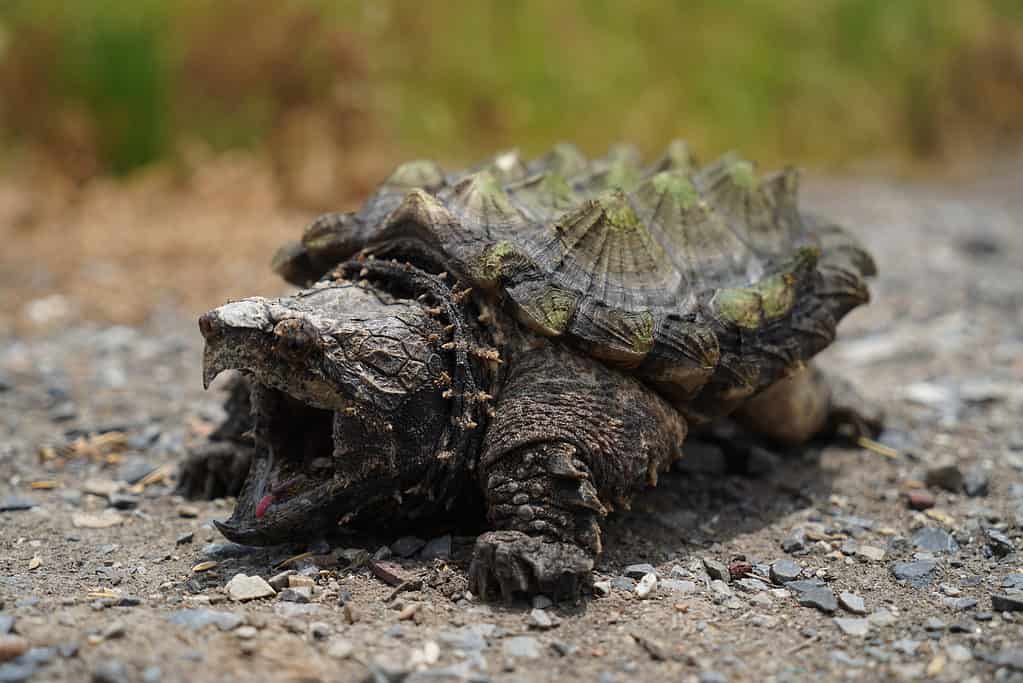
Alligator snapping turtles are the largest turtles in North America.
©iStock.com/Sista Vongjintanaruks
Terrapins
Terrapins are semi-aquatic turtles, primarily inhabiting brackish tidal waters, coastal marshes, and estuaries. However, some may also live in freshwater lakes, rivers, and streams. Terrapins have hard, slightly domed shells, muscular legs, and webbed, clawed feet for swimming and gaining traction on muddy banks. Terrapins also have special glands that aid in removing excess salt from their bodies through their tears.
These turtles are mostly omnivores, but their proximity to the ocean means they eat more marine animals, such as crabs, clams, and mussels. Diamondback terrapins (Malaclemys terrapin) are probably the most well-known, inhabiting the brackish waters of both the Atlantic and Gulf coasts of the U.S. They measure up to around 9 inches in length and weigh up to 1.5 pounds.
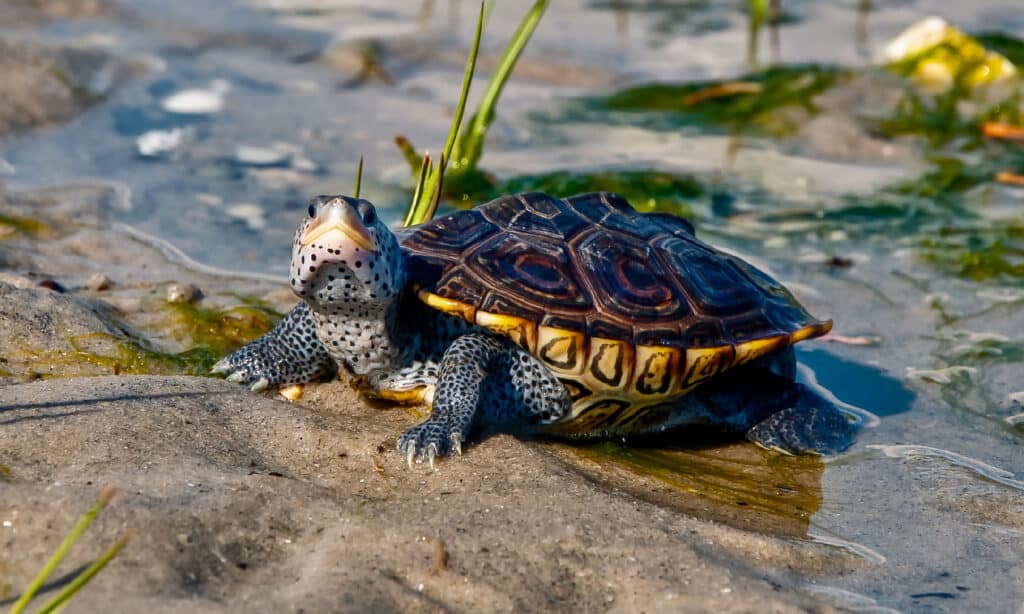
Terrapins such as the diamondback are mainly found in brackish waters along the coasts.
©iStock.com/JasonOndreicka
Sea Turtles
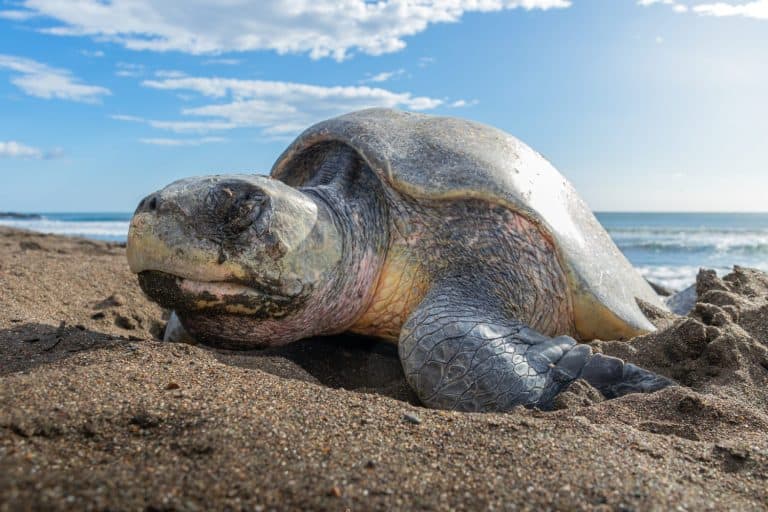
There are 7 known species of sea turtle that live exclusively in salt water, inhabiting tropical and subtropical waters in every ocean except the Arctic and Antarctic. Females only leave the water to lay their eggs on sandy beaches. These turtles have flatter, more streamlined bodies and have large flippers instead of feet.
Most have hard shells, but the largest sea turtles, leatherback turtles (Dermochelys coriacea), have rubbery shells for fast swimming and deep-sea diving. These turtles can weigh up to 2,000 pounds and measure 6 feet in length. Sea turtles diets’ vary by age and species. Like terrapins, sea turtles have specialized glands that allow them to excrete excess salt through their tear ducts.
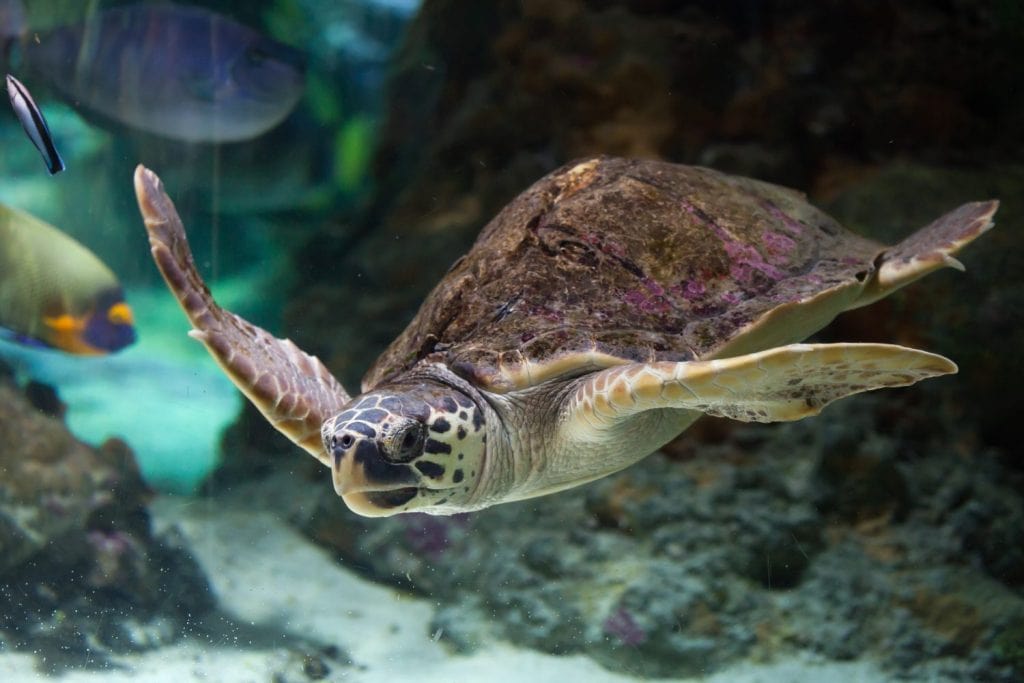
Sea turtles like this loggerhead spend their lives in the water, leaving only to lay eggs.
©Vladimir Wrangel/Shutterstock.com
Turtle Predators on Land
A wide variety of land animals prey on turtles and their nests. Small to medium-sized adult tortoises may fall prey to larger mammals like bobcats, foxes, coyotes, badgers, and some birds of prey like golden eagles. Hatchlings and juveniles may be targeted by mammals including foxes, coyotes, bobcats, badgers, skunks, raccoons, opossums, armadillos, dogs, and cats. They are also preyed on by birds such as ravens, crows, hawks, and other birds of prey. Large adult tortoises like Sulcata and Galapagos tortoises are typically safe from wild predators.
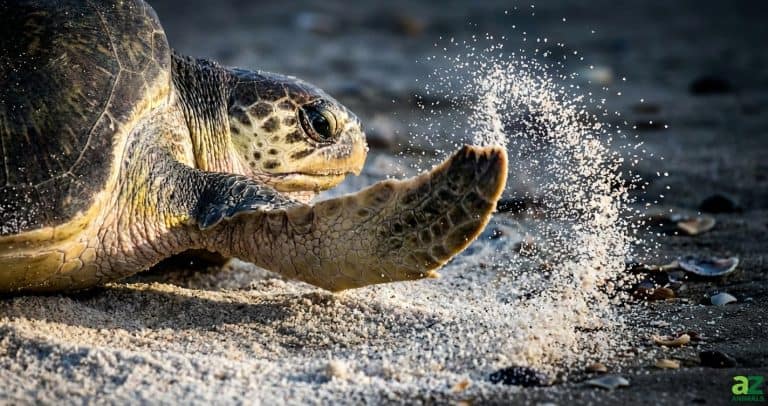
All turtles lay their eggs on land and none provide parental care, leaving the nests unprotected. Female turtles dig a shallow hole in loose, well-drained soil or sand. After laying the eggs, she covers them up and leaves them to incubate. Nests are often raided and the eggs eaten by mammals including badgers, coyotes, foxes, ground squirrels, wild boar, skunks, dogs, cats, raccoons, armadillos, and opossums. Bird predators include hawks, eagles, and ravens, among others. Some snake species also eat turtle eggs. In desert regions, tortoise nest predators also include reptiles such as Gila monsters and insects like fire ants.
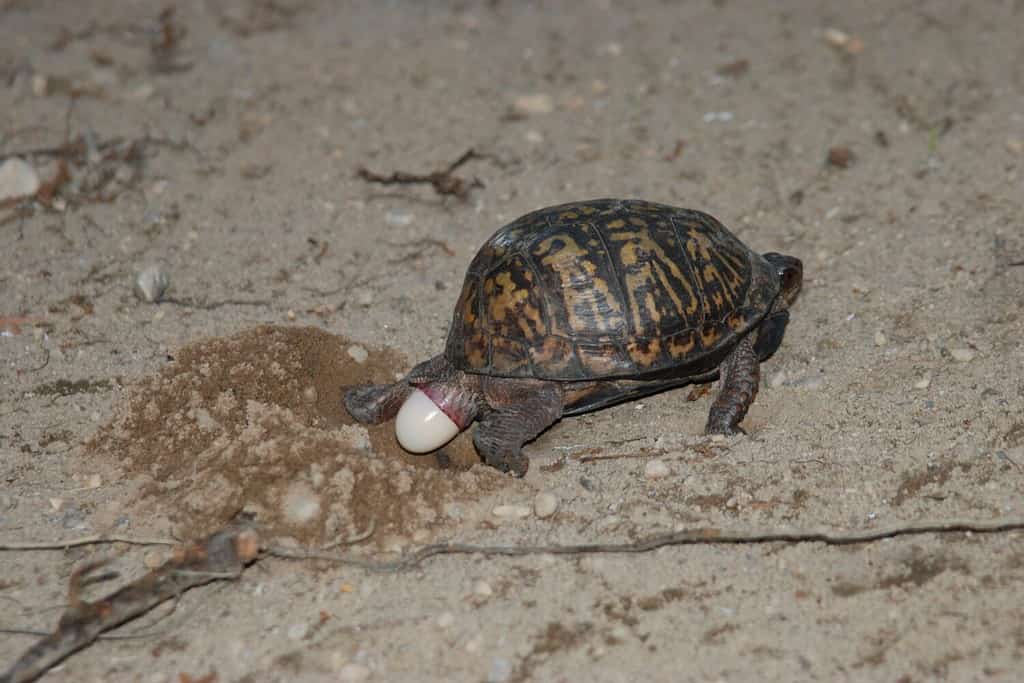
Female turtles dig a shallow hole in loose, well-drained soil or sand in which to lay their eggs.
©RAScottPhotos/Shutterstock.com
Freshwater and Brackish Water Predators
Larger predators such as alligators, foxes, coyotes, dogs, and wild pigs may occasionally prey on adult freshwater turtles and terrapins when they leave the water. Birds of prey and coastal birds like ospreys, gulls, and herons will snatch smaller turtle species. In more tropical regions, monitor lizards, crocodiles, and jaguars eat turtles. In the water, adult turtles and terrapins may be preyed upon by alligators, otters, and large fish in freshwater environments, as well as large predatory fish like toadfish, crabs, and sharks in coastal waters.
As mentioned above, freshwater turtles also leave the water to dig their nests and lay eggs. They favor sunny, open areas with well-drained soil, loose sand, or gravel. After laying the eggs, they cover the nest with dirt or other debris. Mammals such as raccoons, foxes, cats, dogs, coyotes, skunks, opossums, armadillos, wild pigs, and rats dig up turtle nests to eat the eggs or hunt for small hatchlings. Birds, including gulls, vultures, crows, and shorebirds, also hunt hatchlings as they make their way to the water.

Adult turtles and terrapins are sometimes preyed on by crocodilians, otters, and large predatory fish.
©iStock.com/Thorsten Spoerlein
Ocean Predators
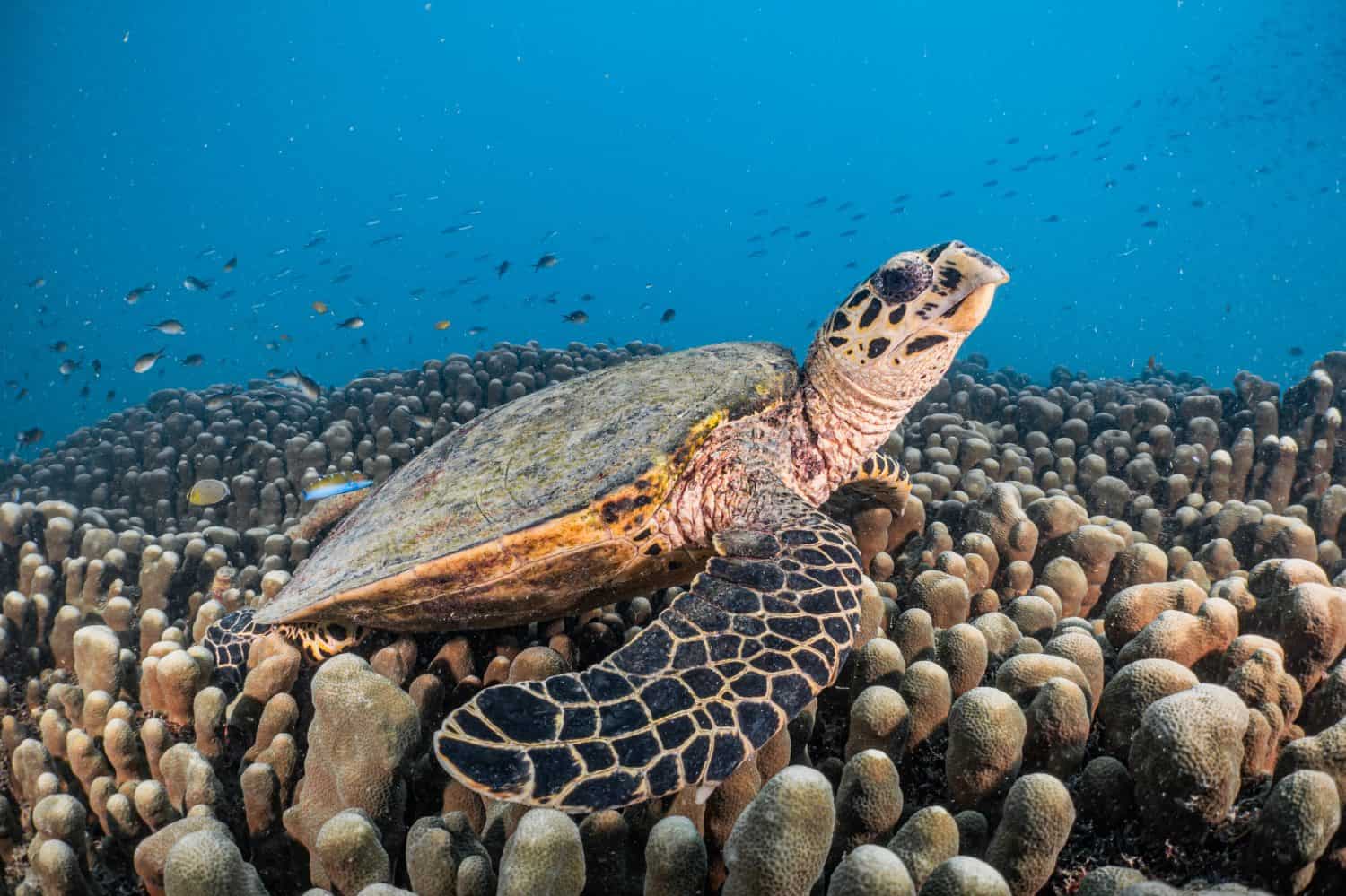
Surprisingly, adult sea turtles have few natural predators due their large size and hard shells. Even with their more rubbery shells, leatherback turtles become so large that few ocean creatures are successful in preying on them. Only large sharks like white sharks and tiger sharks, as well as orcas, are strong enough to prey on adult sea turtles. However, sharks, dolphins, seabirds, and large predatory fish such as snapper, grouper, jacks, barracuda, and mahi-mahi target hatchlings and juveniles.
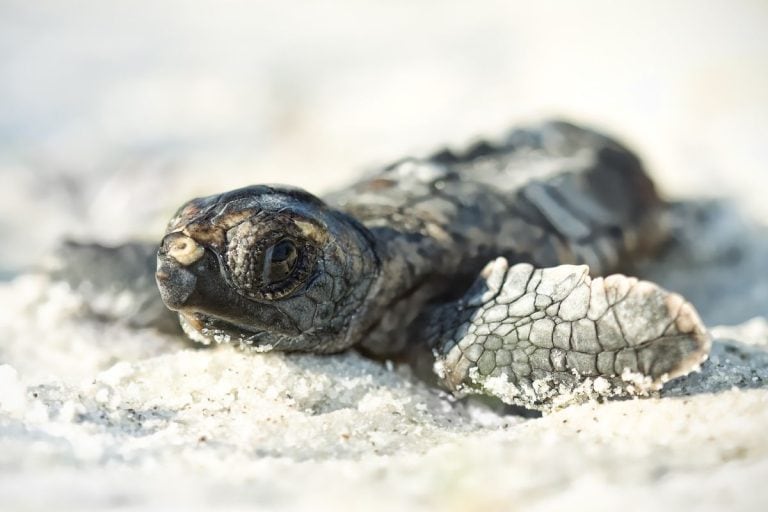
Sea turtles dig their nests on sandy beaches, making the hole around 18 to 24 inches deep. Unfortunately, their nests are still frequently subject to predation like those of land turtles. Sea turtle eggs and hatchlings may be eaten by crabs, seabirds and shorebirds, reptiles like monitor lizards and egg-eating snakes, and mammals such as wild pigs, coyotes, raccoons, cats, foxes, dogs, armadillos, mongooses, and skunks, among others. Crocodiles and jaguars have also been reported to prey on sea turtles as they leave the water to nest and lay their eggs.
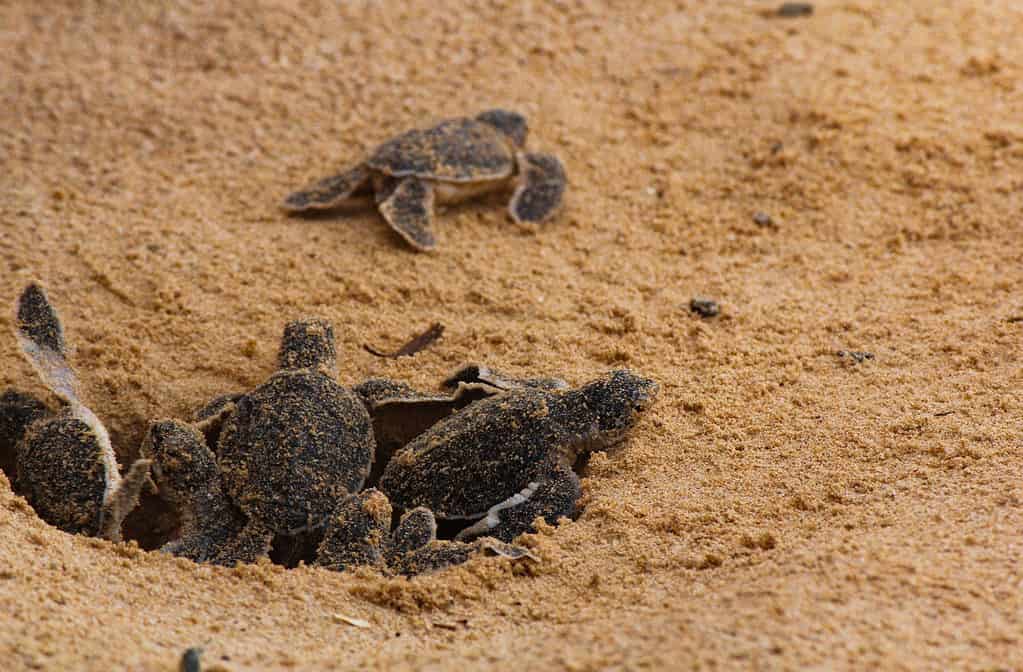
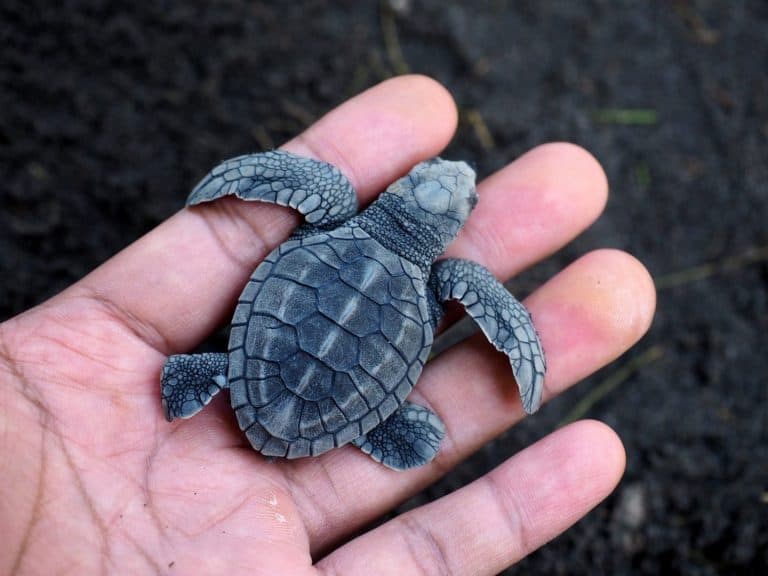
Sea turtle hatchlings are targeted by crabs, reptiles, and birds before they ever leave the beach.
©SLSK Photography/Shutterstock.com