
Quick Take
- A single incomplete split during development can produce something far stranger than twins, and the explanation lies in what happens inside the egg. Explore the biology →
- Turtles are actually better equipped to survive bicephaly than most animals, and the reason comes down to one unexpected anatomical quirk. Discover the shell advantage →
- This Cape Cod hatchling weighs less than a nickel, yet its discovery raises a bigger question about what's happening in the waters nearby. Meet the tiny hatchling →
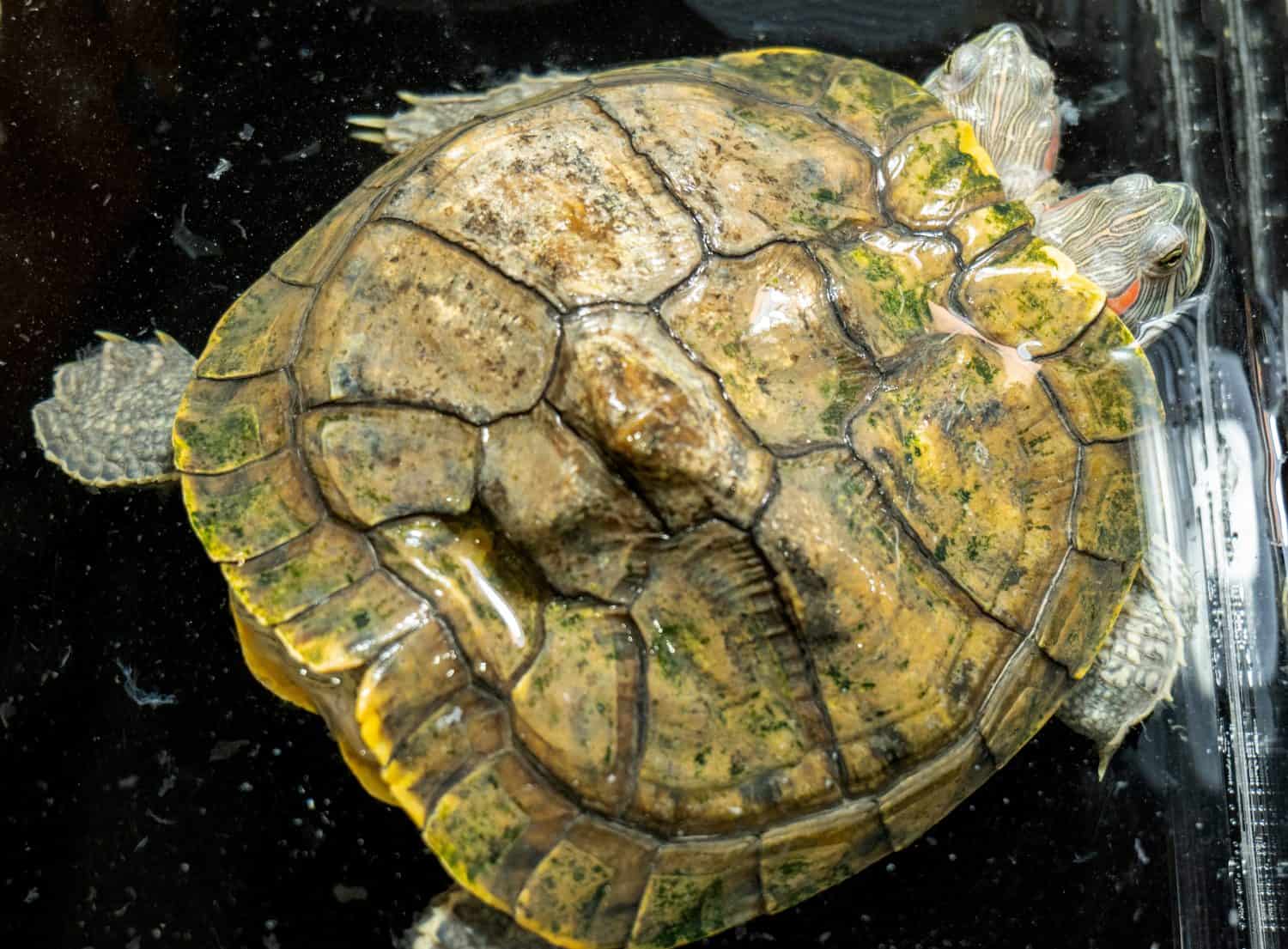
Diamondback terrapin turtles (Malaclemys terrapin) are not uncommon in Massachusetts salt marshes and estuaries. But while most of them have only one head, a recent discovery revealed a turtle with two. The condition, known as bicephaly, occurs when two heads develop from a single body.
It’s an extremely rare occurrence in nature, capturing the attention of scientists and Cape Cod locals. While the diamondback terrapin appears normal in every other aspect, are two heads really better than one?
The Third Two-Headed Turtle In Five Years
Surprisingly, this bicephaly incident is not the first ever discovered on Cape Cod. Over the last five years, Cape Wildlife Center has seen at least two cases of bicephaly, including the most recent finding on September 17. Even so, the team wrote on Facebook that it’s still an exceptionally rare discovery.
The team is closely monitoring the tiny terrapin, which weighs roughly as much as a nickel at only 5.2 grams. At this small size, it’s a miracle the turtle was even discovered at all. A pair of keen eyes at the Mass Audubon Wellfleet Bay Wildlife Sanctuary located the hatchling before bringing it to the Center for further observation.
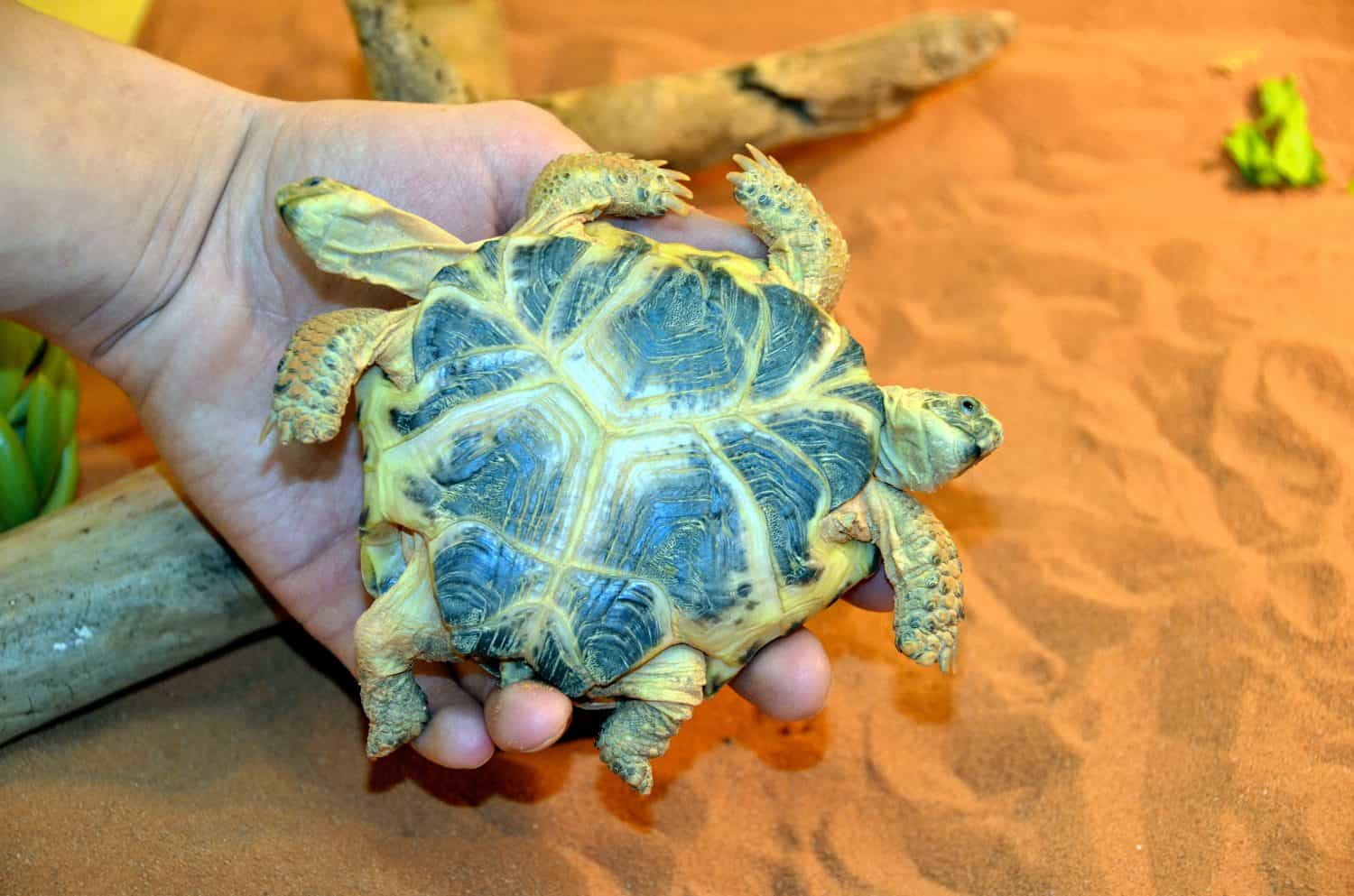
Bicephaly can affect reptiles in various ways, such as the formation of multiple organs or limbs during egg splitting.
©Andreas Wolochow/Shutterstock.com
While this cute two-headed turtle was found at a protected nesting site in Wellfleet, the previous two were found at other locations along the Cape. Therefore, the turtles’ bicephaly may be attributed to environmental and genetic conditions. However, no cause for this specific case has been confirmed. The Wellfleet diamondback terrapin continues to be observed, but animals with this condition have a long, often challenging road ahead.
How Does Bicephaly Happen in Turtles?
Bicephaly occurs when a single fertilized egg splits in half. In most cases, this would result in twins that may or may not have identical features. But in the case of bicephaly, this split stops midway through its occurrence. As the embryo develops, rather than creating two new lives, it produces two copies of a single feature (e.g., a head) as a result of the malformed egg splitting.
This is also known as incomplete twinning or axial bifurcation, specifically when two heads form on the same body. However, an incomplete split can occur in any organ, depending on where the two halves separate. Some animals end up with two hearts, stomachs, digestive tracts, and even separate spines.
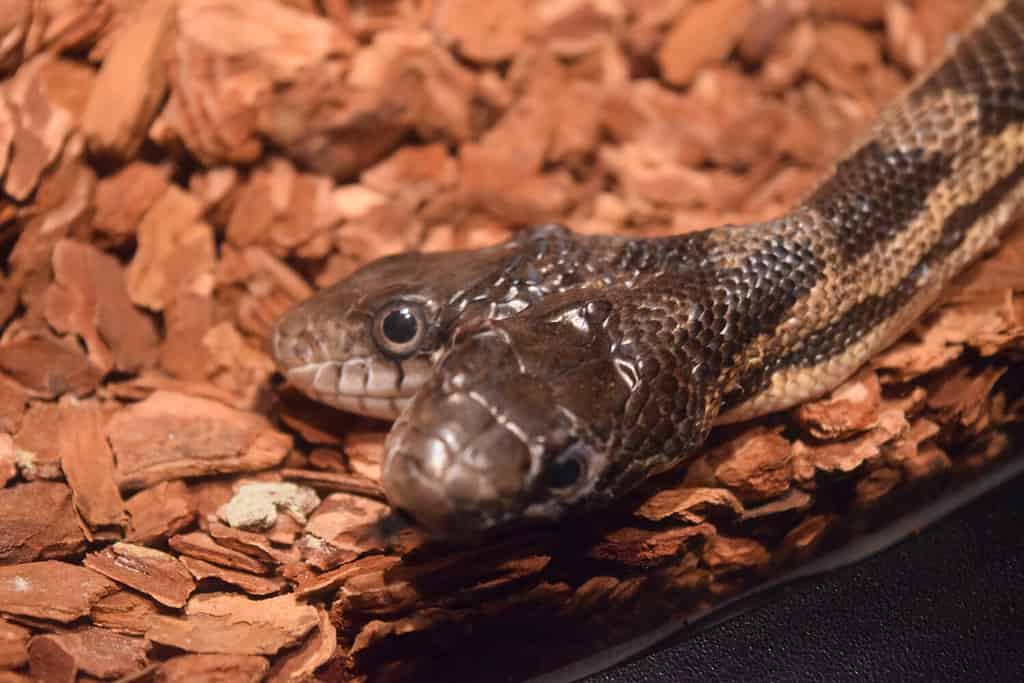
Animals with two heads happen more often than you would expect and don’t always have an obvious cause.
©Amare Marketing Group/Shutterstock.com
Due to a turtle’s anatomy, most cases of bicephaly involve two heads attached to a single body. The biggest challenge with this is the competition for control over the shared body. While both heads function with their own brains, they compete to control movement and motor functions. This also results in two separate consciousnesses, which may limit the turtle’s ability to carry out basic functions. In the wild, animals with bicephaly struggle to survive and rarely reach adulthood.
The Future Of Wellfleet’s Two-Headed Diamondback Terrapin
The most obvious challenge Wellfleet’s diamondback terrapin must overcome is movement. The most recent reports from the Cape Wildlife Center indicate that the turtle is doing well and thriving, which is a good early sign. But as it grows, it will face further challenges, such as coordination. This is the biggest struggle for many reptiles, as two heads sometimes pull the body in opposite directions. Further down the line, this can lead to trouble evading predators or navigating difficult terrain.
In the same vein, coordination may affect a turtle’s ability to feed. As a reptile matures, the two heads may fight one another over food dominance. Since there are also two mouths, it’s challenging to determine which head actually does the eating. In rare cases, reptiles with bicephaly have been known to attack one another in the fight for food.
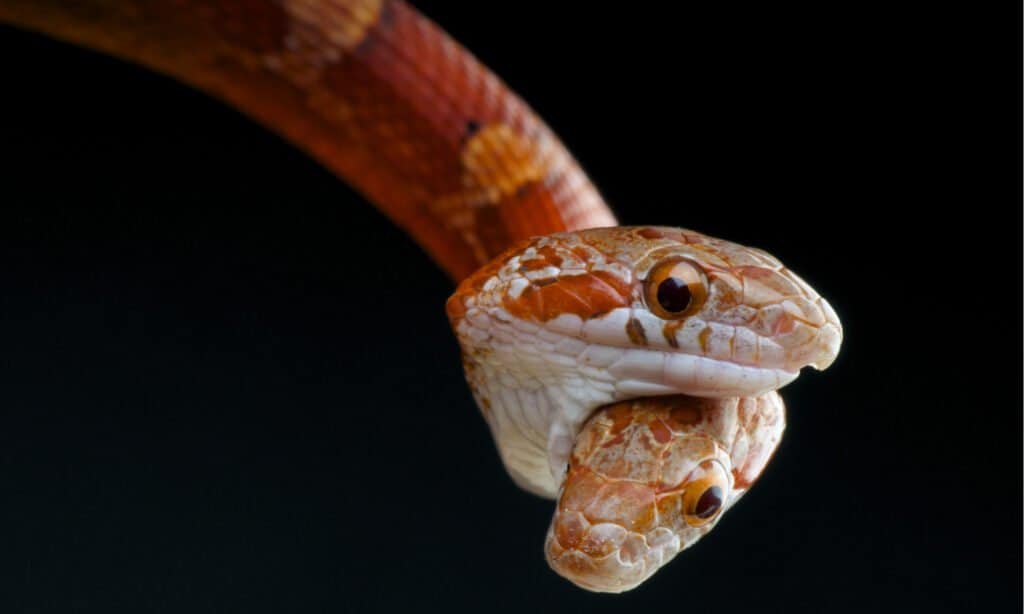
Snakes and turtles often have better survival odds with bicephaly.
©reptiles4all/Shutterstock.com
One positive is that Wellfleet’s newest two-headed turtle, like snakes, is better adapted to overcome bicephaly. Its anatomy is partly to blame for this because, despite having two heads, it lives in a single shell. This means turtles have an easier time navigating, as their vital organs are confined to a single protected space. While its two heads might create a vulnerability, it’s not detrimental to the survival of the diamondback terrapin.
For now, the Cape Wildlife Center team is closely monitoring the appetite, growth, and behavior of this tiny, two-noggined turtle. And while it may have a long life ahead of it, for now, it’s the darling of Wellfleet’s turtle residents.