
Quick Take
- A government agency cut water flows weeks early, allegedly after one landowner complained. What happened next was called 'incomprehensible' by scientists. See what went wrong →
- 281 eggs and a zoo stay later, the story isn't over. Whether the next generation survives hinges on something still unfolding. Follow the rescue and eggs →
- The waterhole refilled, the birds came back, and 13 turtles went home. Whether this will ever happen again, however, remains unanswered. See the waterhole recover →
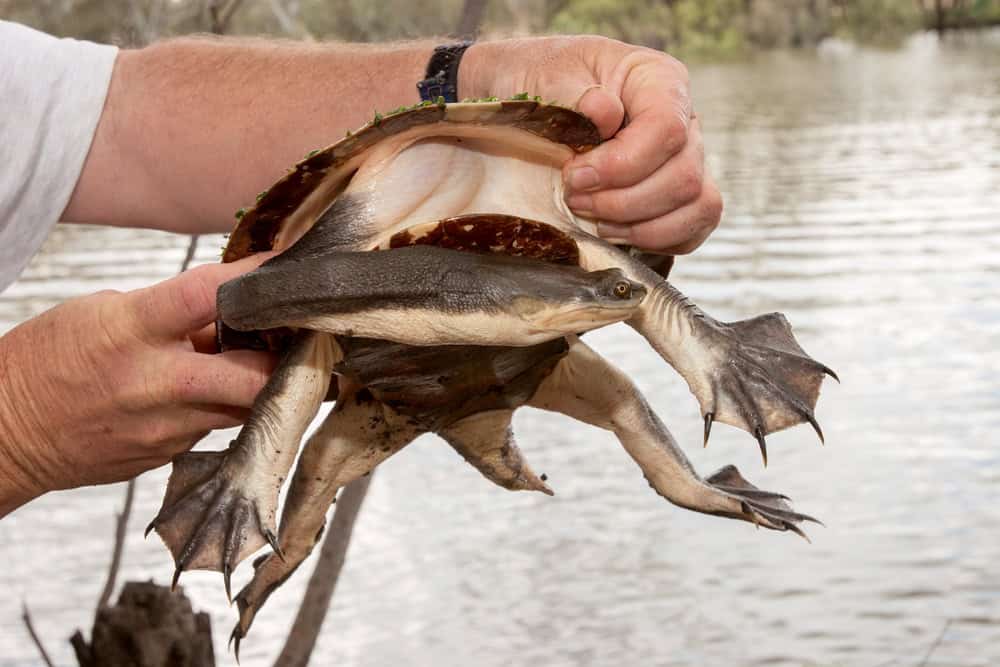
A group of freshwater turtles is being returned to their home after a dramatic rescue and rehabilitation that made headlines. The broad-shelled turtles (Chelodina expansa) were in peril when the water supply to their habitat at the Gingham Waterhole in the Gwydir region of New South Wales, Australia, was cut off. Thanks to the ensuing public outcry, a rescue mission was launched, and the tale has a (mostly) happy ending.
What Are Broad-Shelled Turtles?
Broad-shelled turtles are the largest of Australia’s snake-necked turtles. These guys have a very long neck in relation to their body size, covered in loose and baggy skin. Their shell is twice as long as it is wide and can be up to 19 inches long.
These turtles are carnivores and accomplished ambush predators. They lurk in water weeds, waiting to grab small fish and shrimp but will also eat larger aquatic insects. By shooting out their very long necks, they can reach prey that is quite some distance from them! These turtles play a vital role in maintaining water quality by also eating dead fish and other animals.
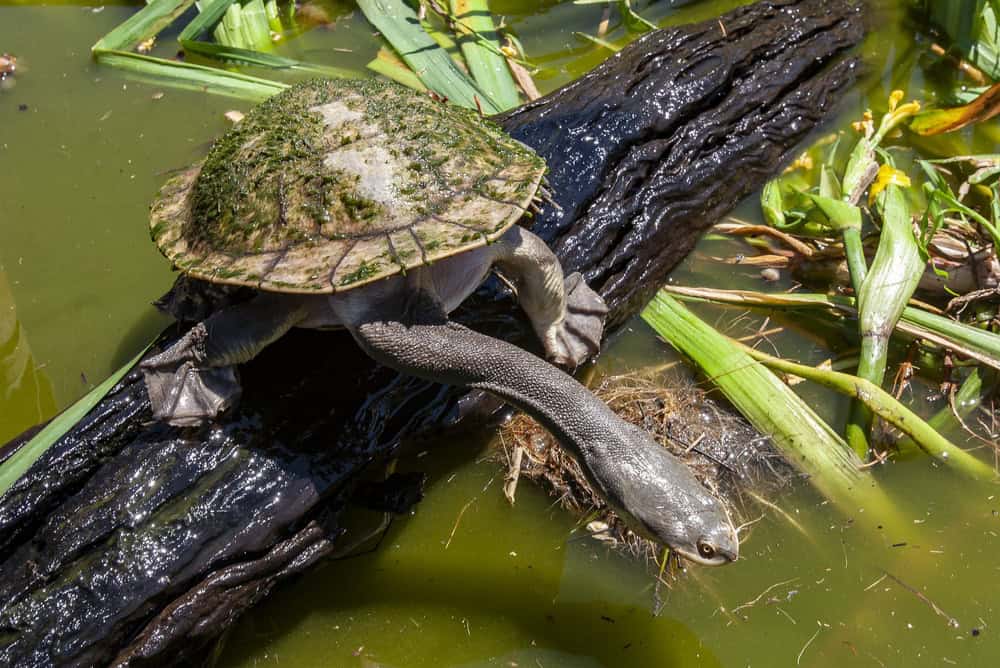
Broad-shelled turtles have very long necks!
©Ken Griffiths/Shutterstock.com
Broad-shelled turtles are highly dependent on water in their habitats and only emerge onto land to lay their eggs. Each female usually lays around 20 eggs in a small hole she digs in the sand. The eggs take about a year to hatch.
The threats facing these turtles include poor water quality, often caused by chemical run-off from farms and towns. Foxes also dig up their nests and eat their eggs and even attack adult turtles on land, which are usually nesting females. They are also threatened when water flow is reduced, turning the deep pools they call home into shallow, drying ponds; this is exactly what happened in the Gwydir Wetlands. However, this was not due to a dry summer; it was because of human intervention.
Tragedy at Gwydir Wetlands
The Gwydir Wetlands is a group of wetland areas in central-north New South Wales (NSW) near the town of Moree. The area was originally over 200,000 hectares of wetlands but is now half that due to agricultural production. The wetlands play an important role in the biological and ecological functioning of the Murray-Darling Basin bioregion.
The area provides important habitats for wetland-dependent species, some of which are threatened. These include silver perch (Bidyanus bidyanus), Australian painted snipe (Rostratula australis), and black-tailed godwit (Limosa limosa).
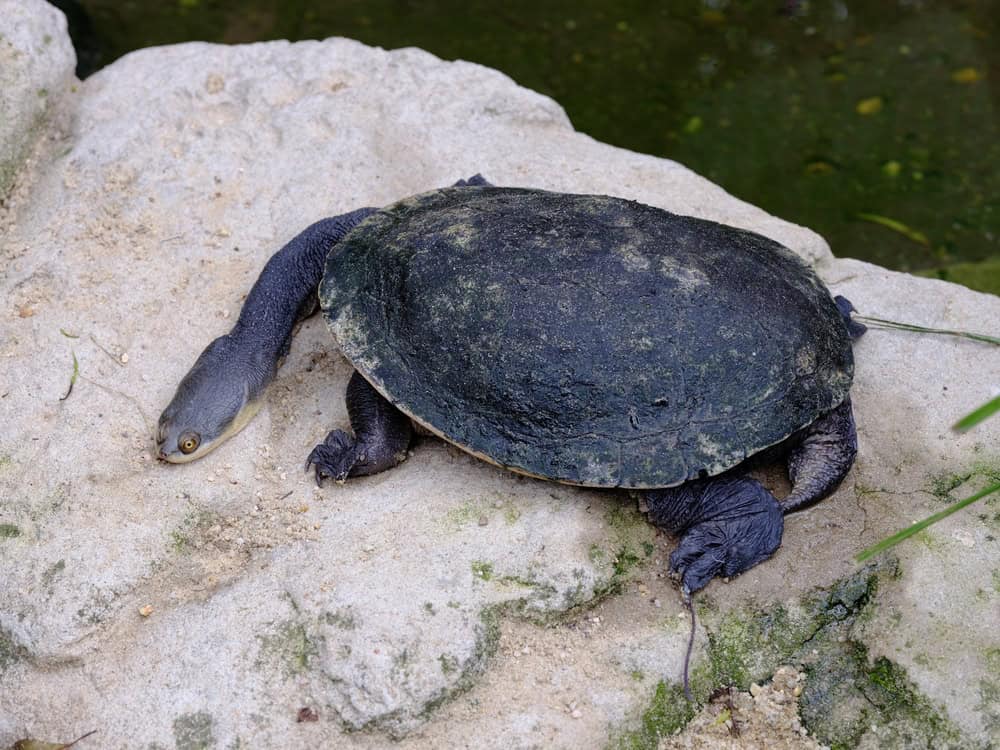
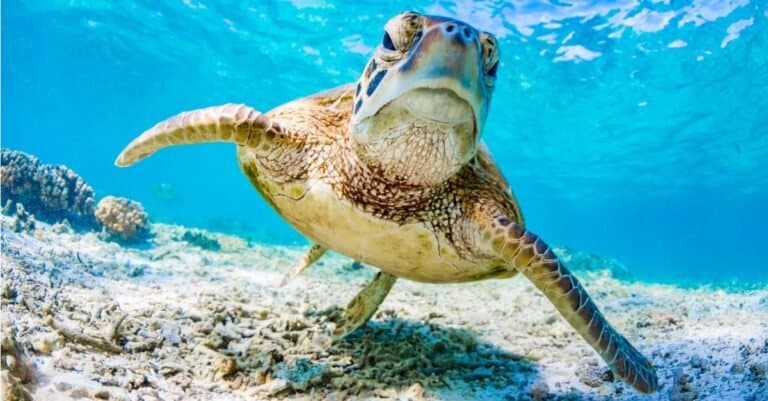
Turtles rely on freshwater habitats.
©Andreas Ruhz/Shutterstock.com
Unbelievably, the state water agency abruptly stopped environmental flows to the wetlands earlier this year! Environmental flows are water released by the government from dams and tributaries into rivers and ecosystems. The flows were supposed to continue until mid-April but were stopped in early March, allegedly after complaints from a local landowner.
The results were devastating. Many turtles, waterbirds, frogs, and sheep perished. Scientists from the University of New England (UNE) scrambled to dig up broad-shelled turtles stuck in the mud. Despite their heroic efforts, many turtles died, including mature females that would have produced the next generation. Speaking to The Guardian in April 2026, Prof Deb Bower described the situation as “a disaster” and “incomprehensible”.
How Were the Gingham Waterhole Turtles Rescued?
There was a public outcry about the damage to the wetlands. Local people described fledgling chicks and eggs being abandoned by their parents and numerous dying frogs. Farmers described how their sheep had died after getting trapped in bogs created by the falling water levels.
Experts rescued 39 turtles, all of whom went to Taronga Western Plains Zoo in Dubbo. Sadly, two of them had to be humanely euthanized. The remaining 37, however, were rehabilitated. Many of them had been carrying eggs, and they were induced for welfare reasons. A total of 281 eggs are being stored in incubators, and these will hopefully give rise to many hatchlings next year! Not all will survive, but the hatchlings that do make it will be released back into the Gingham Waterhole.
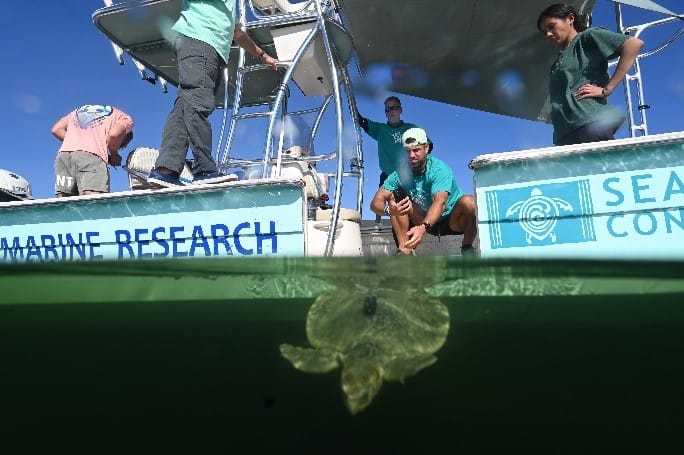
Meanwhile, 13 adult turtles were released back into their home this month (October 2026) after water levels recovered.
Refilling the Gingham Waterhole
According to a News Release from the New South Wales government, flows recommenced to the Gingham Waterhole in late May. It continued until the waterhole reached capacity in late June. Water NSW was provided with a target flow of 100 megalitres per day (ML/d) at Tyreel Gauging Station, but heavy rainfall also helped.
Thankfully, frogs and a range of bird species were soon seen using the waterhole. The high rainfall meant that the water authorities could move environmental water through the wetlands sooner. According to the news report, many bird species, including Australasian grebes, grey teal, and tree martins, had been seen in the area. Hopefully, lessons have been learned, and a similar catastrophe will not occur in the future.