
Quick Take
- Researchers assumed both nests belonged to the same turtle, but a closer look at the photos revealed something no one expected. See the photo evidence →
- More nests may already be hiding along the Southern California coastline, and there is a clue hiding in plain sight that explains why. Explore the hidden clues →
- Sand temperature doesn't just determine when these eggs hatch. It decides something far more consequential about the hatchlings themselves. See how sand temperature decides sex →
- Scientists aren't sure climate change is what pushed these turtles to California, and the real culprit is far more dramatic. Discover the real culprit →
Southern California has recently seen sightings of novel marine life. From whale sharks to mahi-mahi, yellow-bellied sea snakes, hammerhead sharks, and more, the West Coast is teeming with marine animals typically never seen as of late.
One of the most surprising animals, however, is an endangered sea turtle. The olive ridley sea turtle recently made history by digging the first known West Coast nests on Southern California beaches. Does this mean more are coming? Researchers, frankly, do not know.
Olive Ridley Sea Turtle Lays Eggs on the West Coast for the First Time
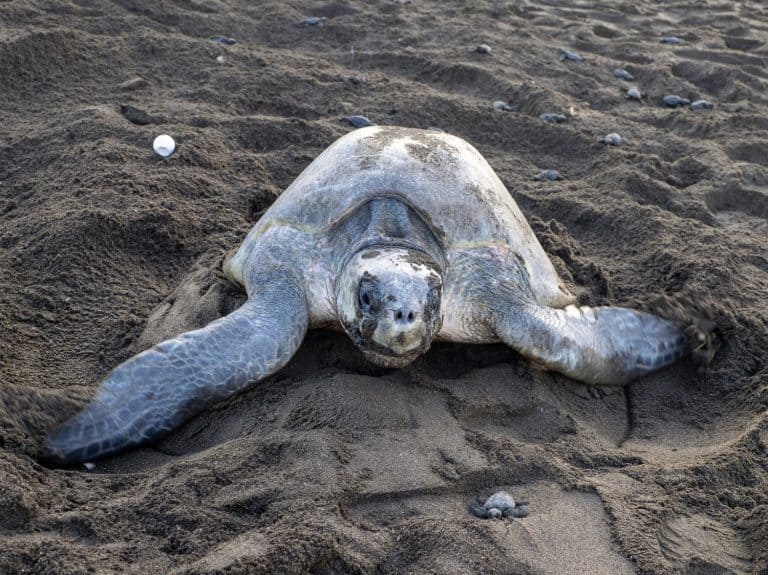
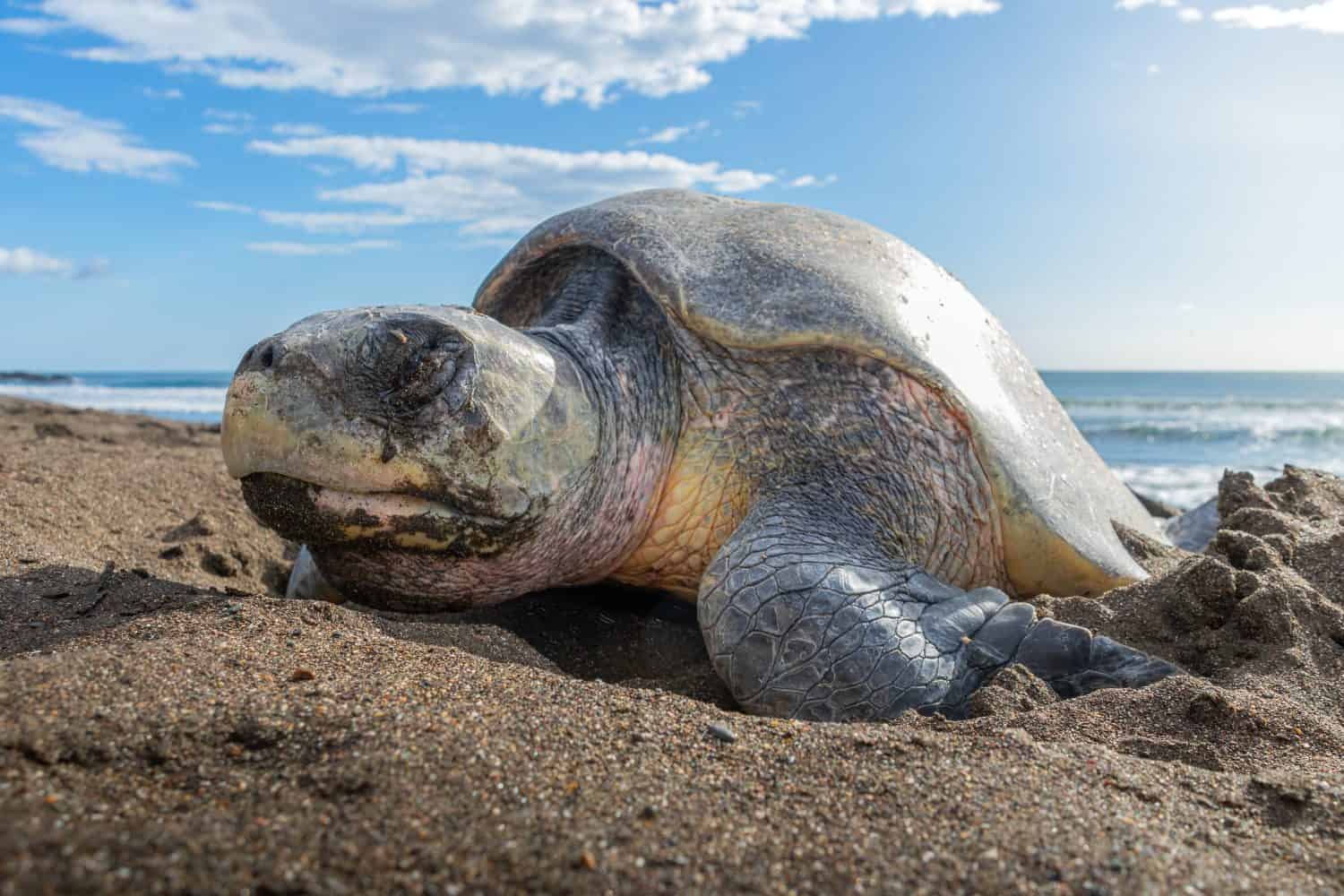
On September 16, 2026, a sea creature emerged from the ocean at Seal Beach National Wildlife Refuge. It was an olive ridley sea turtle. The sea turtle was not looking to sunbathe or rest on the beach; it had other plans entirely.
To the surprise of observers, the endangered sea turtle began digging a nest. This has never been recorded on the West Coast, let alone in California. As soon as she dug the nest and laid the eggs, the sea turtle made her way back into the ocean.
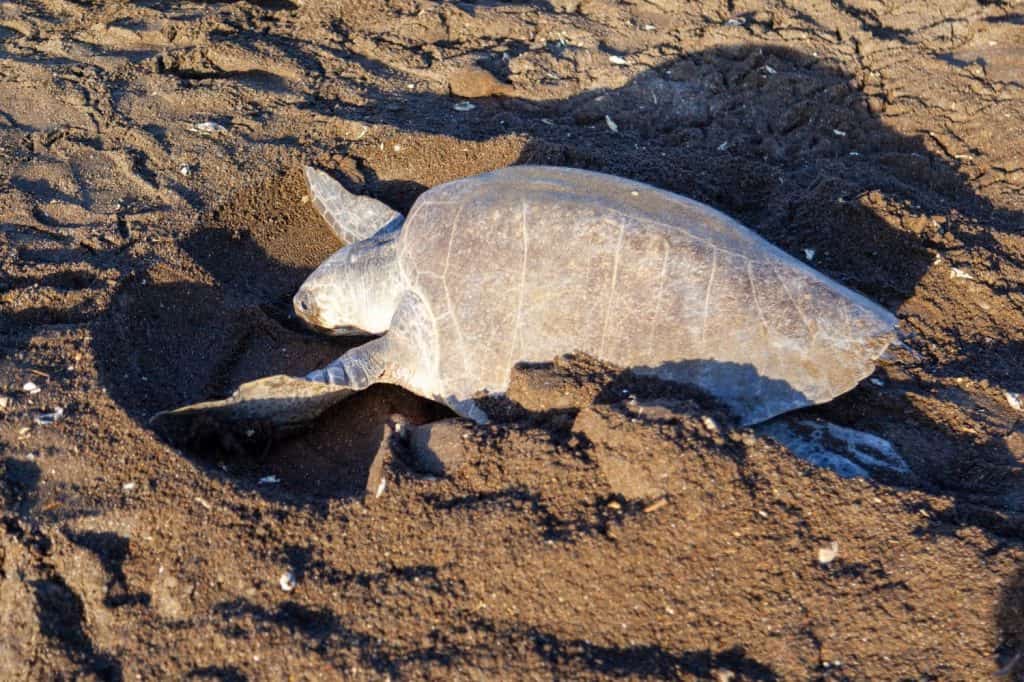
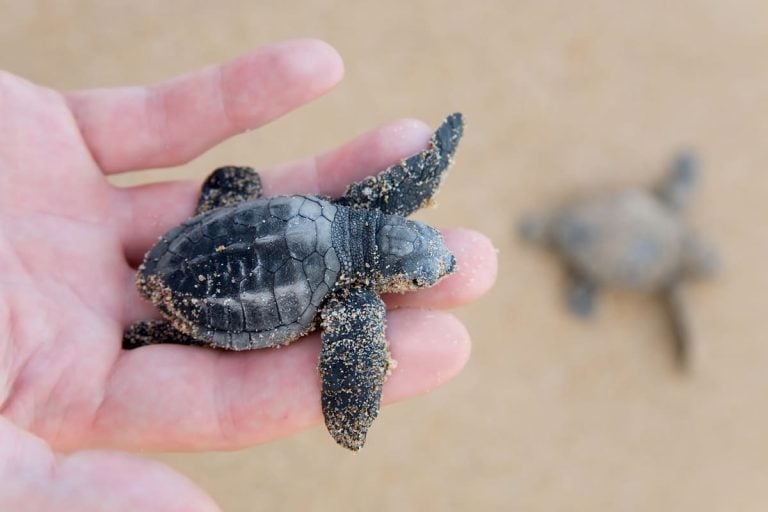
An olive ridley sea turtle was seen coming ashore and laying eggs on two Southern California beaches.
©JHVEPhoto/Shutterstock.com
This is not where the story ends, however. On September 19, 2026, an olive ridley sea turtle came ashore several miles down the coastline at Huntington Beach. Again, the sea turtle dug a nest and laid eggs. As it had a few days earlier, the turtle returned to the ocean after covering the nest.
The egg sites have been taped off to keep visitors from getting too close. Signs have also been posted in hopes that people will keep their distance and allow for a truly monumental event: healthy olive ridley sea turtles hatching and making their way to the ocean.
Two Nests Believed to Be from the Same Olive Ridley Turtle Are Different
The discovery of an olive ridley sea turtle laying eggs on a West Coast beach stunned researchers and conservationists alike. Even more shocking, the event occurred again just three days and eight miles from the first nest. Given the nests’ proximity, researchers initially believed one turtle was responsible for both. However, photographic evidence suggested otherwise.
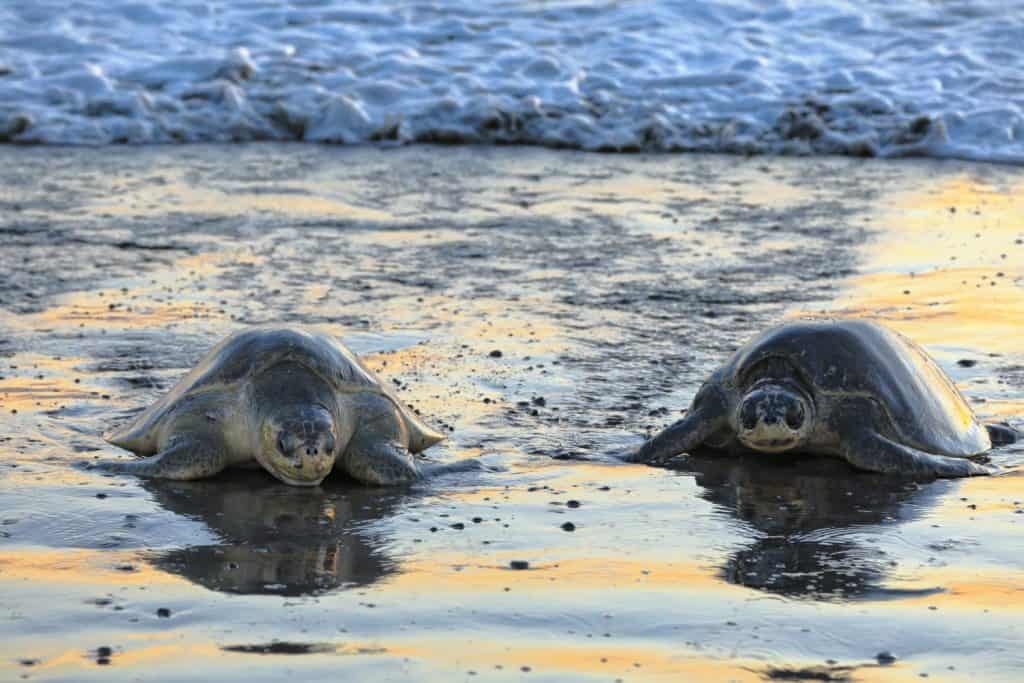
It turns out, it was not one, but two separate olive ridley sea turtles laying eggs on Southern California beaches.
©Balakate/Shutterstock.com
Early reports from Orange County stated that the olive ridley sea turtle that laid eggs at Seal Beach later returned to Huntington Beach to lay more. This is not atypical for olive ridley sea turtles, as they can lay eggs one to three times per season.
But as researchers examined the photographs of the sea turtles more closely, they noted key differences between the two. The turtles’ shells differed in size, and the barnacle patterns varied. Consequently, not just one but two olive ridley sea turtles came ashore in Southern California to lay eggs for the upcoming hatchling season.
Could More Nests Be Discovered?
To date, researchers have discovered two nests on Southern California beaches. However, it is not out of the realm of possibility that more will be found as the season progresses.
Olive ridley sea turtles lay eggs in a mass event known as an arribada. Although this has not occurred on Southern California beaches, researchers believe more undiscovered nests may exist along the coastline. This is especially true after it was discovered that the known nests belong to two separate turtles rather than one.
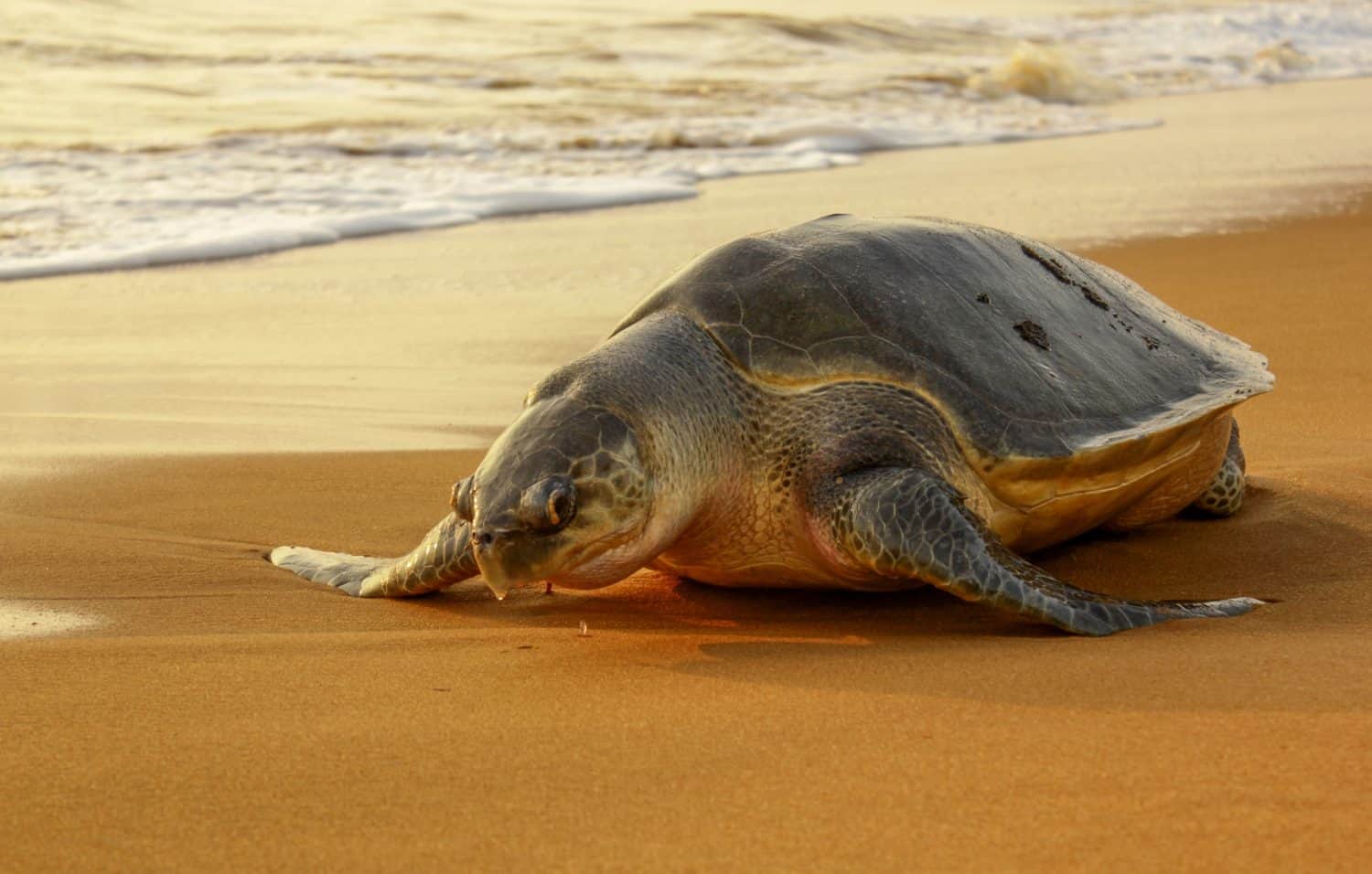
Researchers believe other nests may have been dug on beaches in Southern California.
©Ananthu Asokan/Shutterstock.com
Researchers believe more nests may be discovered because, in addition to participating in group egg-laying events, olive ridley sea turtles also nest solitarily. As a result, in the next few months, it will become clear whether more olive ridley sea turtles came to beaches alone under cover of night to lay eggs if hatchlings begin to emerge from their nests.
The Wait is Now On
Now that the olive ridley turtle nests have been identified and cordoned off for their protection, a watch-and-wait game of epic proportions has begun.
After olive ridley sea turtles lay their eggs, the eggs incubate for 45 to 60 days. Nest sand temperature determines how long the eggs incubate. The warmer the sand is, the shorter the incubation period. The cooler the sand, the longer the eggs take to hatch. Sand temperature typically correlates with the depth of the nest the sea turtle dug. This means deeper nests are cooler and shallower nests are warmer.
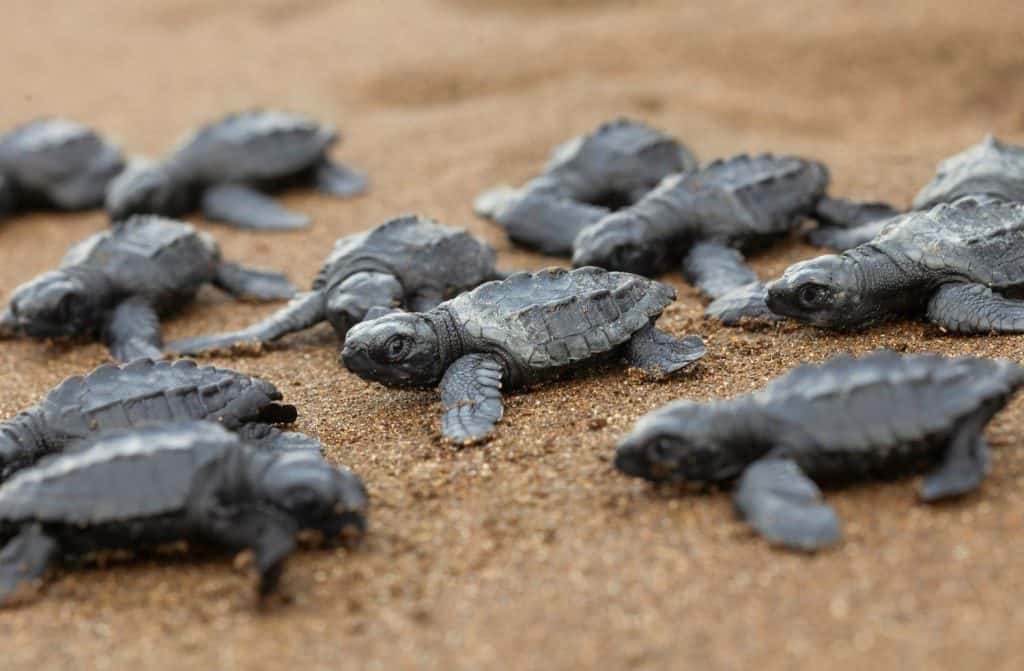
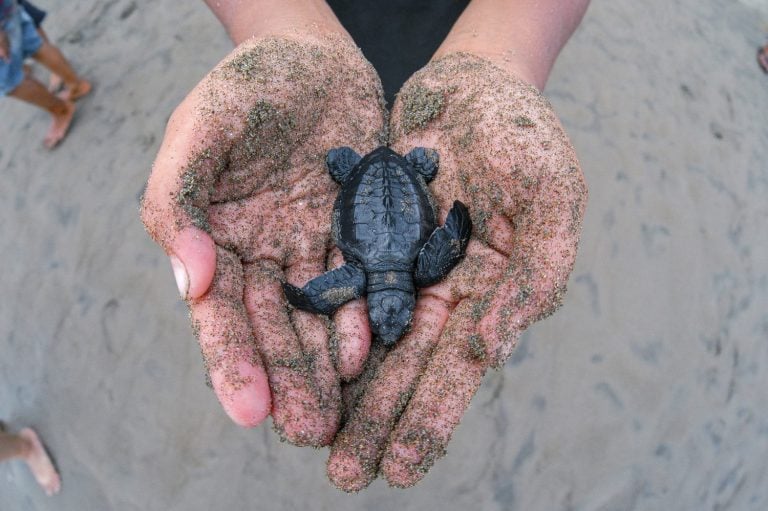
Within the next two months, tens of olive ridley sea turtle hatchlings may hatch and make their way to the ocean.
©Memo Ossa/Shutterstock.com
Sand temperatures that lead to healthy sea turtle hatching range from 82.5F to 95F. Temperature also determines the sex of olive ridley sea turtles. Temperatures below 86.9F create male sea turtles, while those above create females.
If the sand temperature rises above 95F, the chances of the eggs hatching drop dramatically.
The hope is that sand temperatures remain favorable for olive ridley sea turtles so that nests with 50 to 100 eggs have a chance of hatching.
Could This Be the New Norm for Olive Ridley Sea Turtles?
Olive ridley sea turtles are typically found in the Indian Ocean, the Atlantic Ocean, and the tropical Pacific Ocean. Southern California is usually not on their radar. Does this mean that olive ridley sea turtles may become a permanent egg-laying fixture on beaches in California?
Scientists are still trying to answer this question. While climate change affecting sea temperature could contribute to turtles coming ashore, the Super El Niño is more likely the main reason the sea turtles made their way to California rather than Mexico.
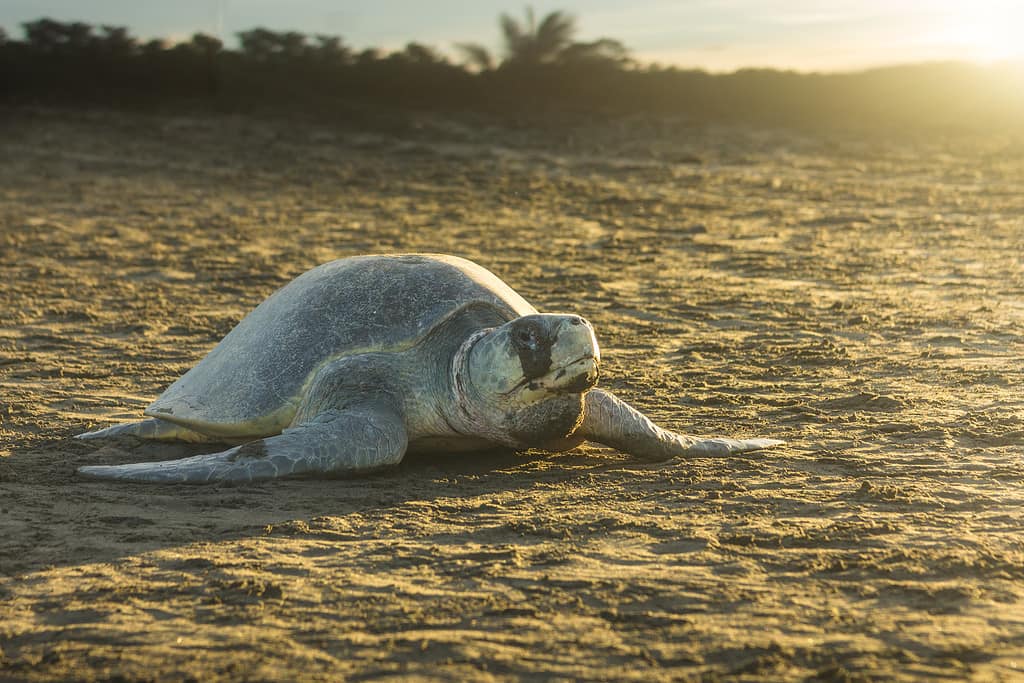
It is not yet clear whether olive ridley sea turtles are nesting in Southern California because of Super El Niño or another event entirely.
©Daniel Alvarado Calderon/iStock via Getty Images
The Super El Niño is bringing warmer-than-normal water temperatures to California’s coast. This event is expected to be the strongest on record since the 1950s. Consequently, the variety of marine life seen off the West Coast is likely to be quite unusual from now through January 2027.
According to CNN, extreme weather from Super El Niño could also have driven the turtles off course. Multiple hurricanes have recently hit the Pacific Ocean. The churning ocean may have caused olive ridley sea turtles to lose their “internal compass,” winding up in Southern California instead of their intended destination in Mexico.
Whether olive ridley sea turtles coming to the West Coast are an anomaly or the start of something new remains to be seen. For now, all eyes are on Seal Beach and Huntington Beach to see whether olive ridley turtle hatchlings make their way to the sea in several weeks. The event would make for a historic turtle breeding season.