
Quick Take
- Green parakeets aren't simply green. The combination of pigments behind their color is more surprising than it looks. How green color works →
- One parakeet color requires four separate genetic mutations to fire simultaneously, and breeders had to figure out how to make that happen. Four mutations explained →
- The rarest parakeet color was first recorded in 1935, and breeders still can't fully replicate it. So what makes it so elusive? The rarest color story →
- One color looks completely ordinary at first glance, but it's actually among the hardest to breed in the world. Surprisingly hard to breed →
In the United States, the word parakeet refers to Melopsittacus undulatus, or the common parakeet, also known as the shell parakeet. Another name for this species is budgerigar, or budgie. Common parakeets are either yellow-based or white-based. This series of colors provide the foundation for dozens of different mutations, which give some parakeets exceedingly rare colors or markings. There is also a dark factor, which darkens the blue in a parakeet’s body feathers, and new colors continue to be selectively created. Keep reading to discover the world of parakeet colors, from the most common to the rarest.
Green
Green parakeets have a yellow pigment with a structural color of blue. The markings vary depending on the type of pattern mutation. An opaline green parakeet and a normal green parakeet look startlingly different next to each other; the opaline has a much more vibrant green hue to its body.
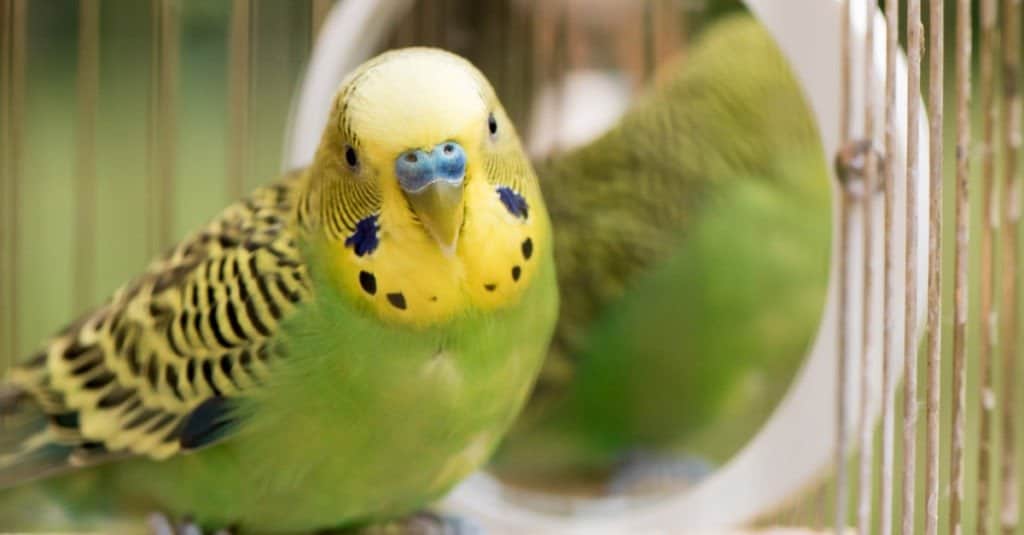
The light green budgie occurs most often in the wild.
©Vyaseleva Elena/Shutterstock.com
Opaline green parakeets often appear much brighter and more vividly green than normal green parakeets because normal green parakeets have heavy black stripes covering the back of their head, neck, and shoulders, whereas the opaline mutation suppresses these dark markings to leave a clean, vibrant green V shape across the upper back.
Blue
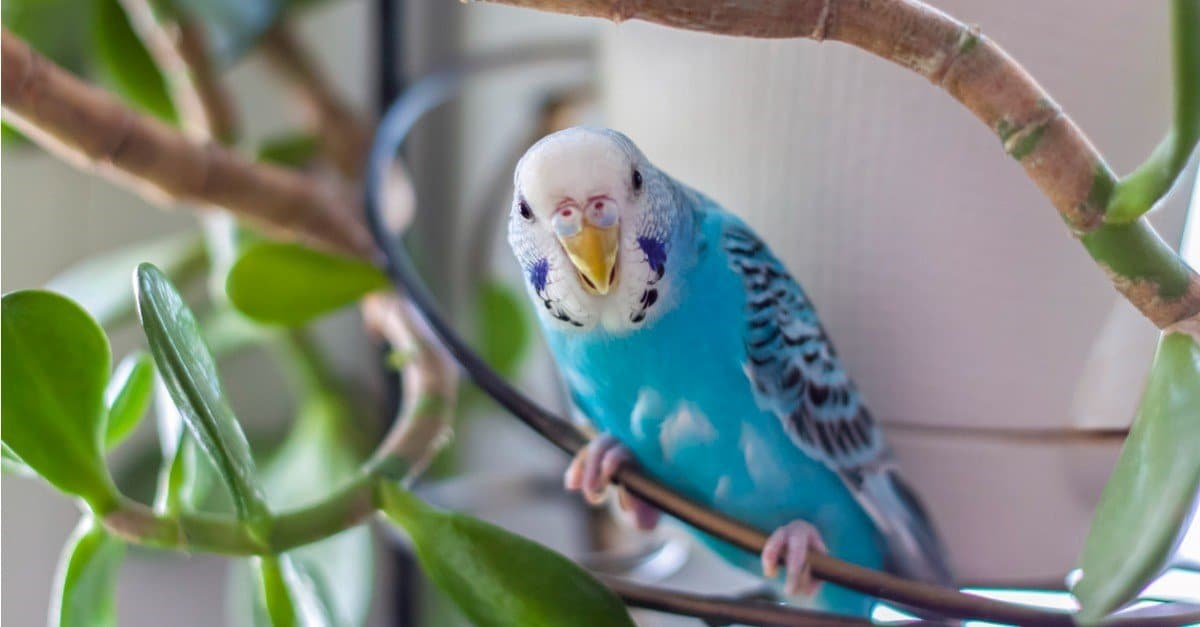
While blue is a recessive trait in parakeets, blue coloring takes many different forms and patterns, resulting in a common, naturally occurring color. If a parakeet doesn’t have full “blue” coloring, at least its tail feathers have a blue hue.
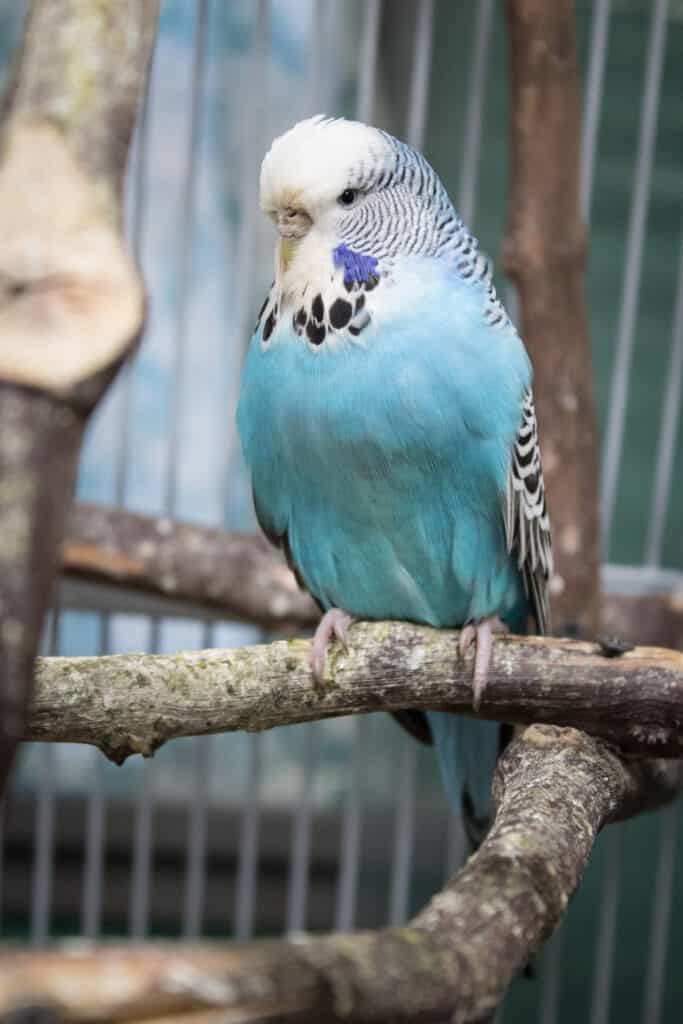
The light blue coloring of a budgie used to look rare, but generations of breeding have made the color more common.
©Jess Cowan/Shutterstock.com
Outside of the color mutations of Blue 1 and Blue 2, other coloring patterns that have blue accents or hues include:
- Clearwing.
- Greywing.
- Dark.
- Violet Blue.
Of course, hundreds of mutations emanate from the original yellow base and white base, resulting in unnamed patterns and colors that include blue.
Yellow
As one of the foundational colors, yellow-based parakeets are relatively common, including the yellowface parakeet, the goldenface parakeet, the dilute parakeet, and the bronze fallow. Yellow is a primary color that tends to filter colored light, so many parakeets that have a yellow base pigment actually manifest as different colors.
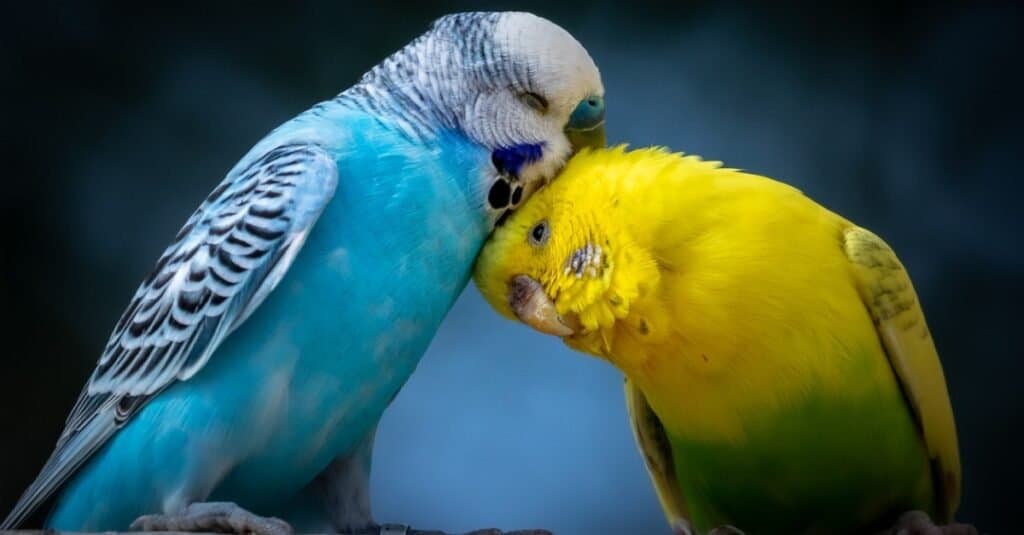
Yellow-based parakeets often have a body of feathers that transition from yellow to green, or another color.
©iStock.com/Werner Baumgarten
White
White is a common accent or secondary color in many parakeets. However, the fully albino parakeet — with a clear or orange beak and pink skin — has become exceedingly rare. Like in all animal species, albinism is a recessive inheritance pattern; in budgerigars, it is a sex-linked recessive mutation that can be deliberately bred into a chick by pairing appropriate carriers.
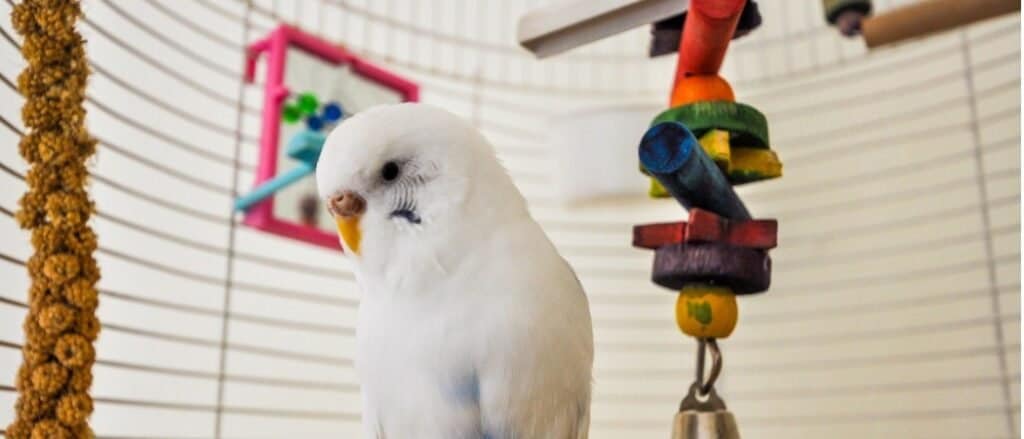
White parakeets, especially with some patches of blue, are a common color.
©JanJBrand/Shutterstock.com
Non-albino white budgerigars have dark eyes and normal skin pigmentation, unlike true albinos, which completely lack melanin and have red or pink eyes.
Purple or Violet
Although they can be difficult to source, violet and purple parakeets are becoming more frequently seen thanks to the demand for this unique color. Some of the common hues are violet, indigo, or lavender.
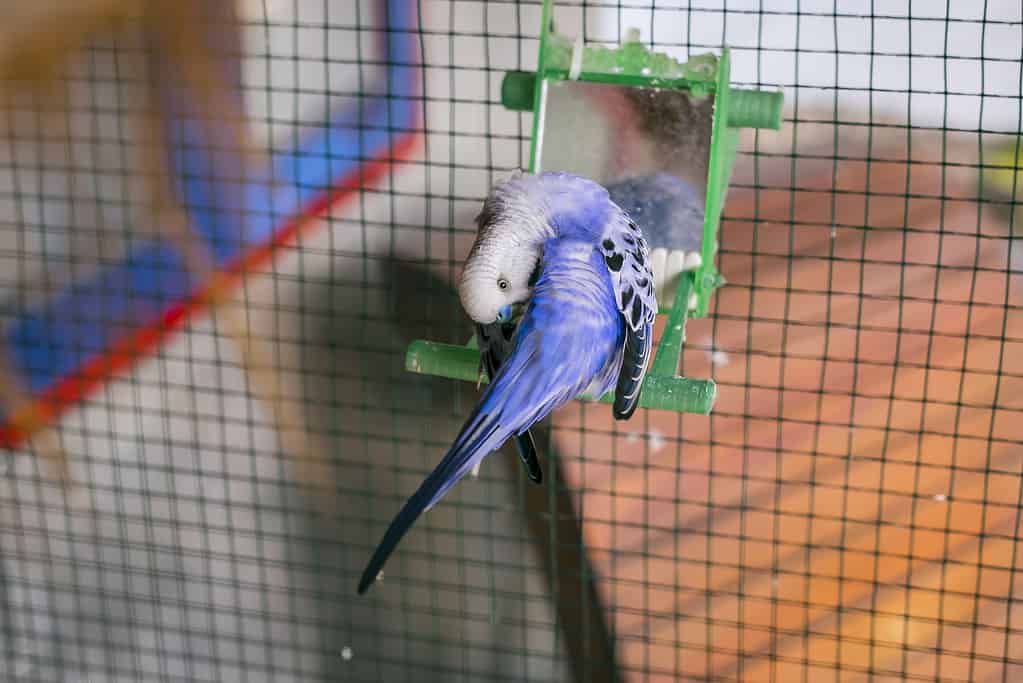
The purple budgie comes in a variety of hues, including a bluish-lavender with a blue beak.
©tarfullhd/iStock via Getty Images
Rainbow
The rainbow parakeet comes in both classic rainbow and rainbow spangle coloring. Once thought to be one of the rarest colors, the rainbow parakeet has become more common. This bird has a combination of mutations in its genes to create the many different colors in its plumage.
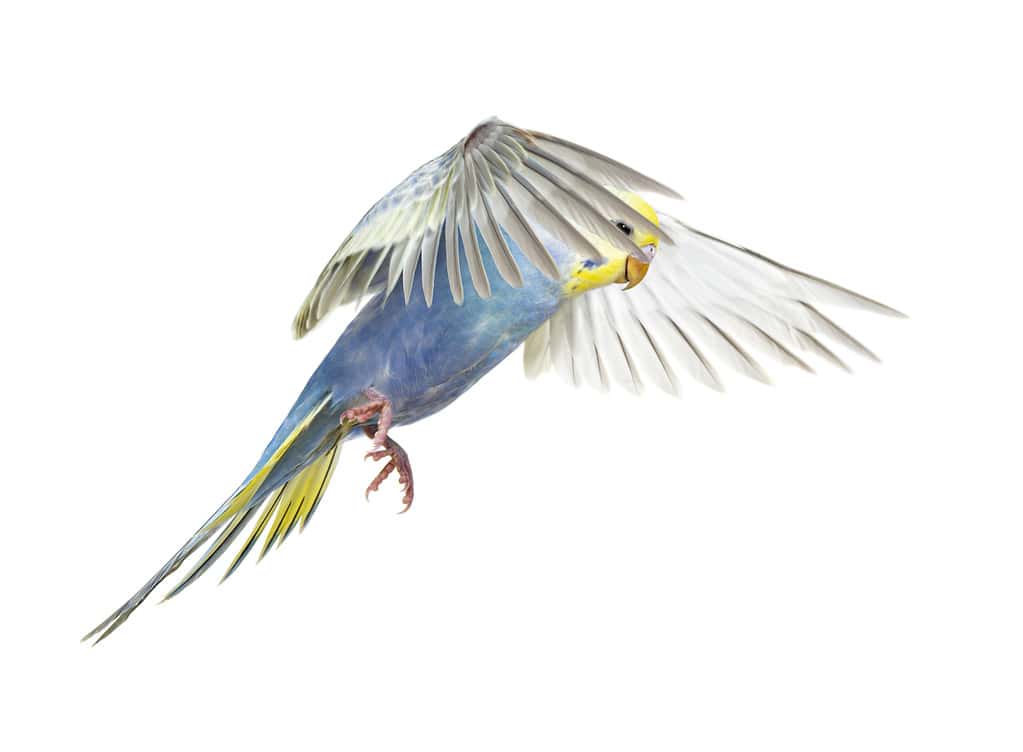
Rainbow parakeets typically display more than two colors of plumage.
©GlobalP/iStock via Getty Images
Producing a rainbow budgie requires the simultaneous expression of four mutations: blue series, yellowface (I, II, or goldenface), opaline, and whitewing.
Gray
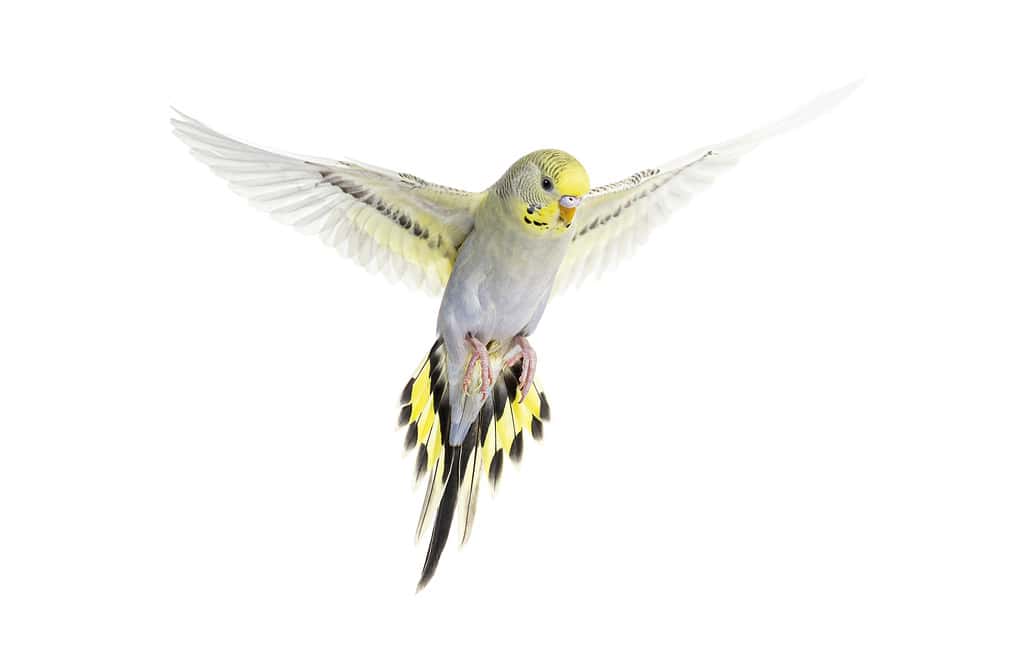
Gray budgies usually have at least one other accent color in their wings.
©GlobalP/iStock via Getty Images
Anthracite
Also known as slate, the gray color mutation occurs in blue-series budgies and has a significantly more prominent “dark factor” than the neighboring mutations of sky blue, cobalt, and mauve. While history only shows one record of the slate mutation discovery in 1935, these birds remain rare among enthusiasts. Some breeders have taken to consistently trying to darken the feathering to produce a completely black budgie, but have not succeeded.
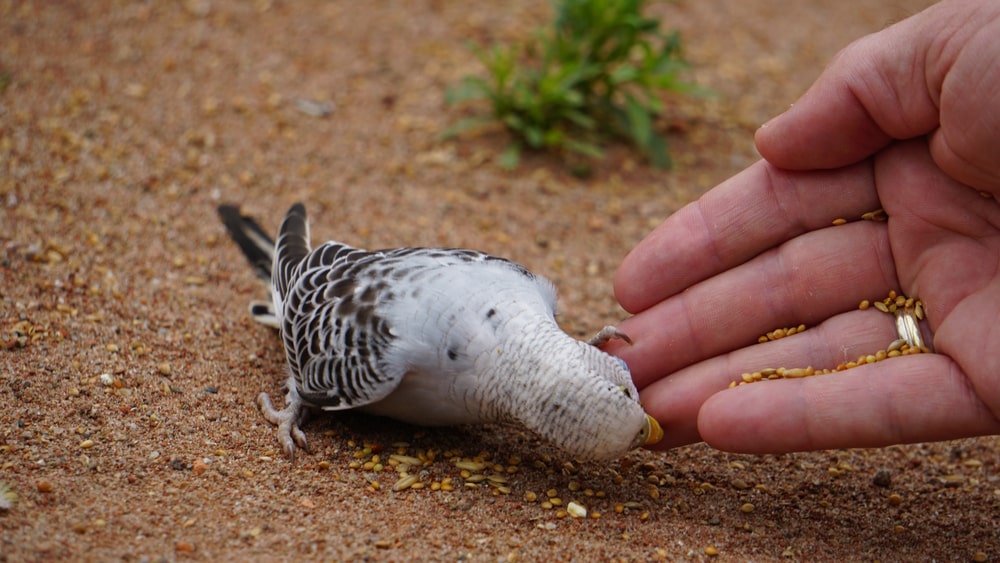
Anthracite color mutations remain extremely rare among all the budgie color mutations.
©Snoopy0107/Shutterstock.com
Similar to the mutation that happens in violet budgies, the Anthracite mutation and coloring give parakeets a black or deep gray look to their feathers. Many believe this mutation, based in Germany, is the re-emergence of the rare or extinct English Grey parakeet.
Texas Clearbody
The sex-linked Texas clearbody budgie has a deceptively normal color despite its extreme rarity. At first glance, a Texas clearbody simply has a yellow body. In actuality, the bird possesses a pale green cast with blue cheeks and a colored beak. If it’s of the blue series, the bird will have a white body and a blue cast with black markings.
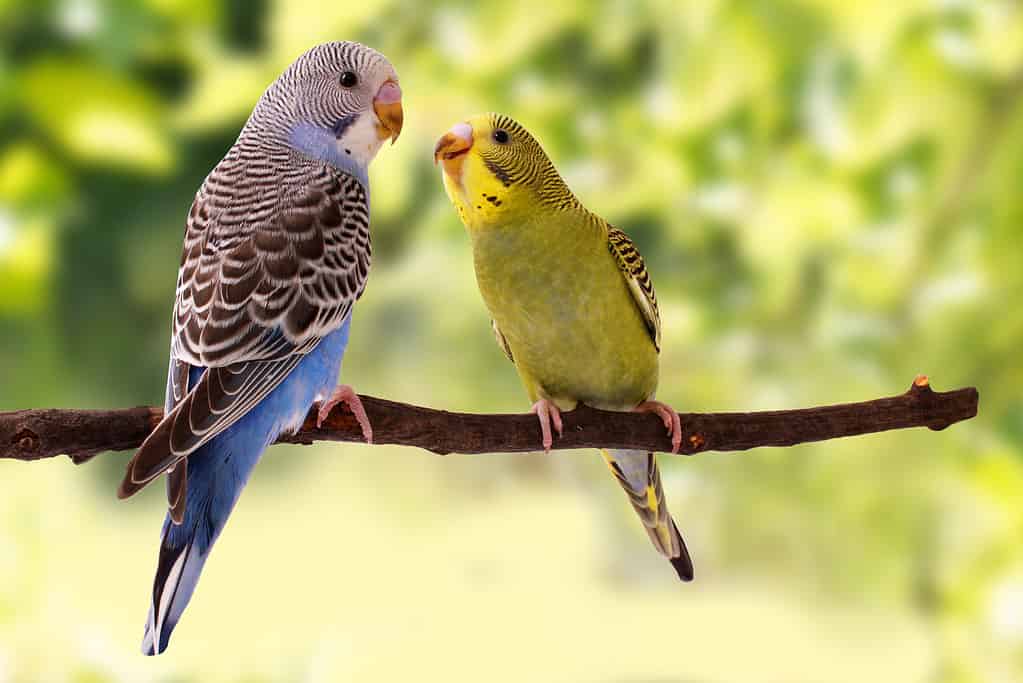
When talking to breeders about a yellow sex-linked Texas clearbody, make sure the bird in question has a colored beak and blue cheeks.
©Khmel/iStock via Getty Images
Brown
Captive breeding has produced brown, cinnamon, and brown-fallow varieties where melanin is altered, turning the black markings and green body pigments into soft brown or beige tones.