
Quick Take
- These turtles chose California for a reason, and the science behind it is stranger than you'd expect. See why they came north →
- Where hatchlings are released matters more than it sounds, and the consequences could echo for decades. See where hatchlings go →
- Scientists had a narrow window to save the eggs, and the clock was already ticking before anyone even knew they were there. See the rescue timeline →
- Two turtles. Same stretch of coastline. Three days apart. That coincidence raises a question researchers are still watching for. Meet the two turtles →
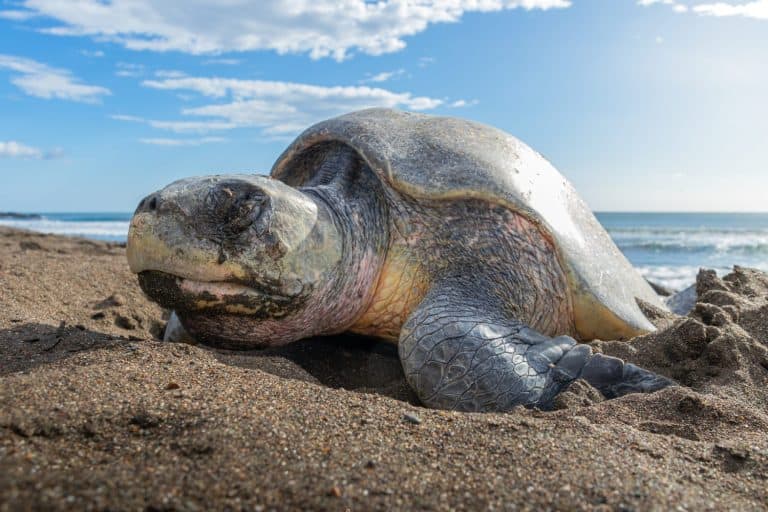
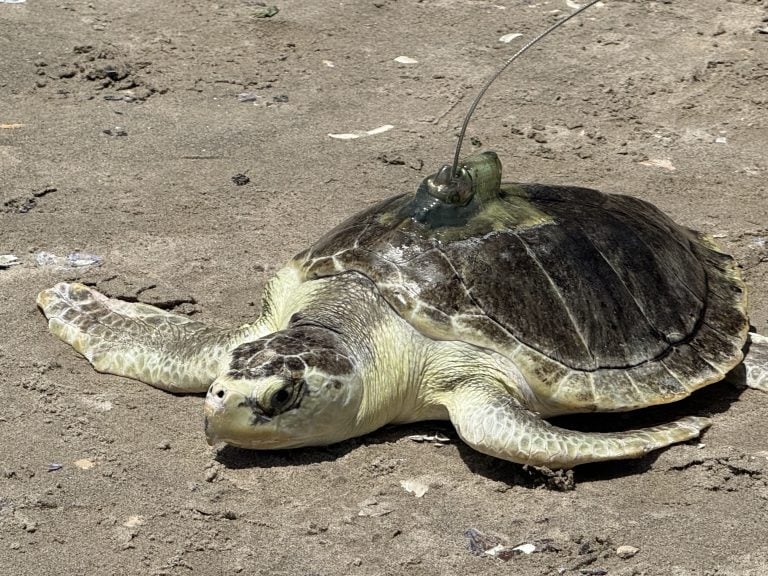
Something happened on September 16, 2026, that has never been recorded anywhere on the U.S. West Coast: a sea turtle dug a nest. Spotted by a beachgoer near Seal Beach in Orange County, California, an olive ridley sea turtle laid her eggs and returned to the ocean. This behavior was abnormal, and impending weather made the situation even rarer.
If that wasn’t enough, something else occurred three days later: eight miles away, near the Huntington Beach Pier, a second turtle was observed nesting at dusk. These are the first documented sea turtle nests in the recorded history of California, as well as any other U.S. Pacific state.
Why did these turtles opt to lay their precious eggs along the California coastline, and how did the weather play into the behavior? Here’s the story of a miraculous situation scientists are currently studying to better understand sea turtles and their young.
Sea Turtle Eggs and Storm Warnings
During the week the eggs were discovered, tropical storms off the coast of Mexico were generating hazardous surf conditions that were expected to reach Orange County beaches within days. Biologists monitoring the nests ran the numbers on beach erosion risk and reached a conclusion: the eggs would not survive where they had been laid.
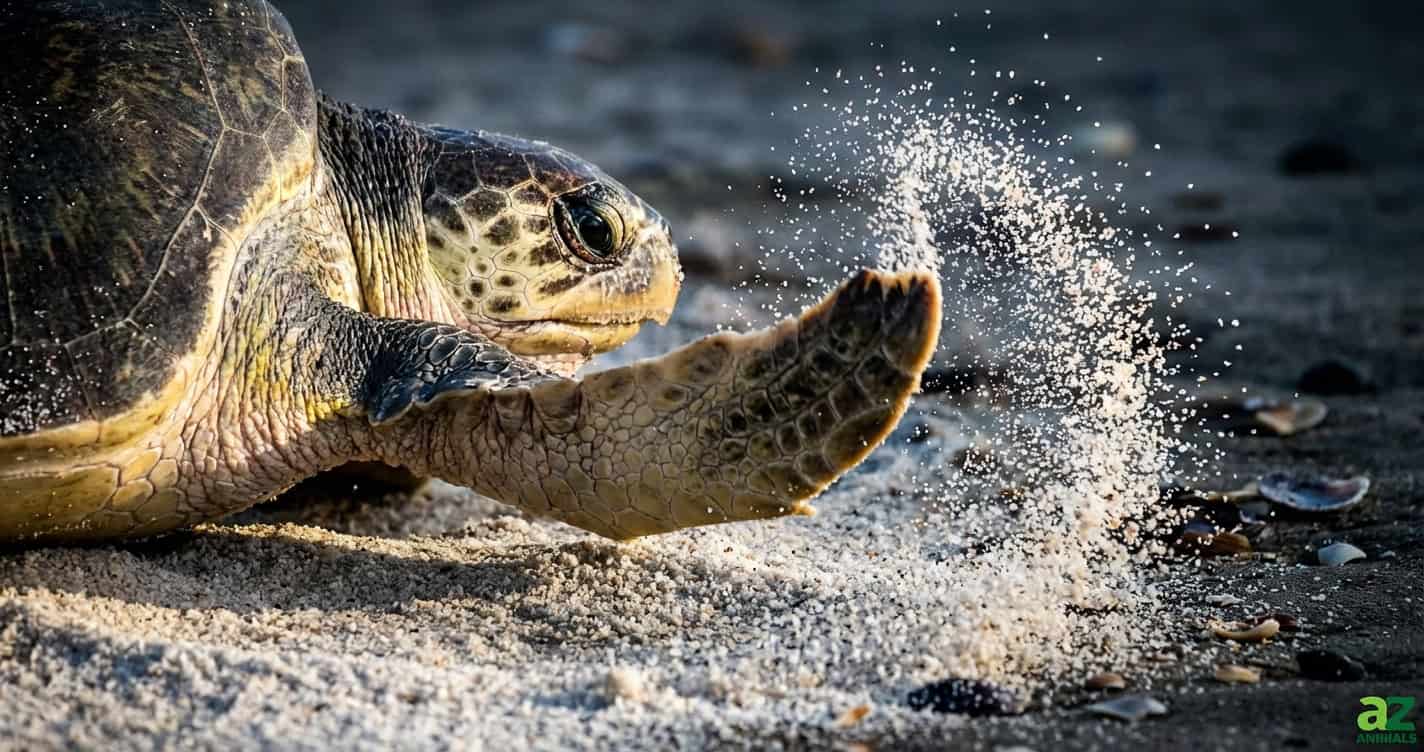
California has never been a habitat for sea turtles, until now.
©Scupix/Shutterstock.com
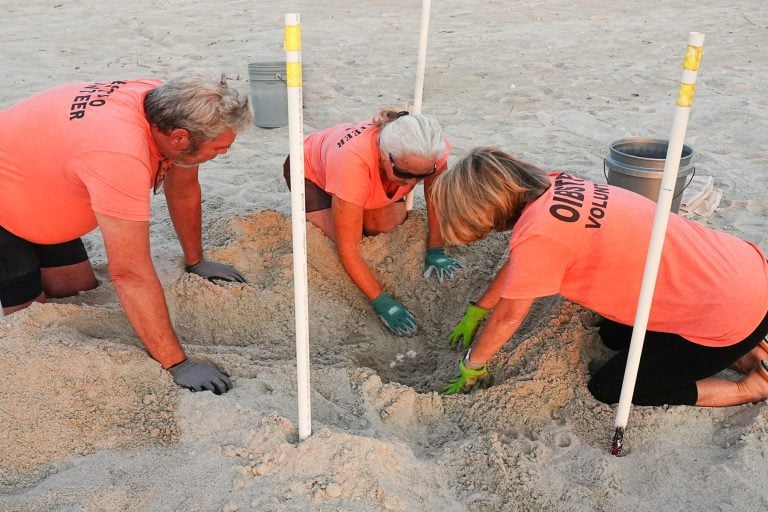
On September 25th, just before the storms were projected to land, a team from federal and state agencies carefully excavated both sea turtle egg clutches and transported them in coolers to the Aquarium of the Pacific in Long Beach. They are now incubating under professional care at this facility.
“The science team believed the highest chance of survival for the eggs was to collect them and hatch them under human care,” NOAA Fisheries stated in the announcement.
If the eggs hatch successfully after their 45 to 60-day incubation period, the plan is to return the hatchlings to the beaches where they were laid, so they can crawl across the sand and enter the Pacific. Returning these young turtles to where they were laid is more important than it appears on the surface.
Why Do Sea Turtles Lay Eggs in the Same Places?
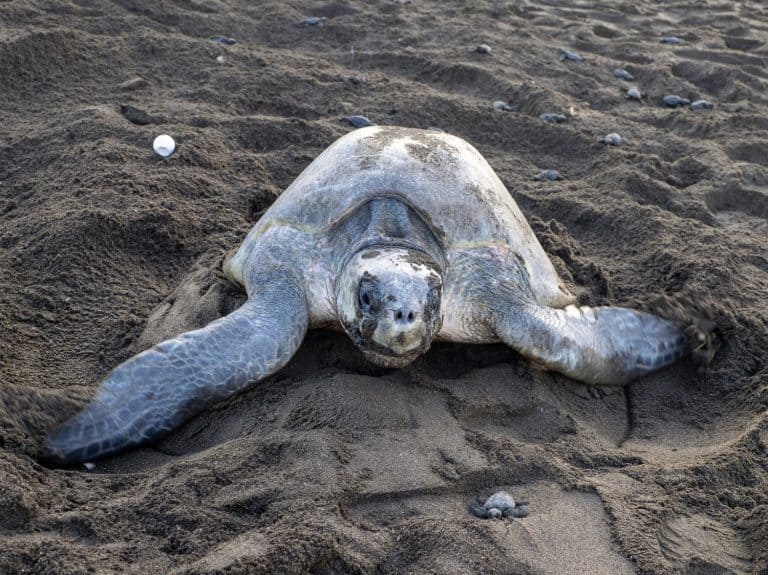
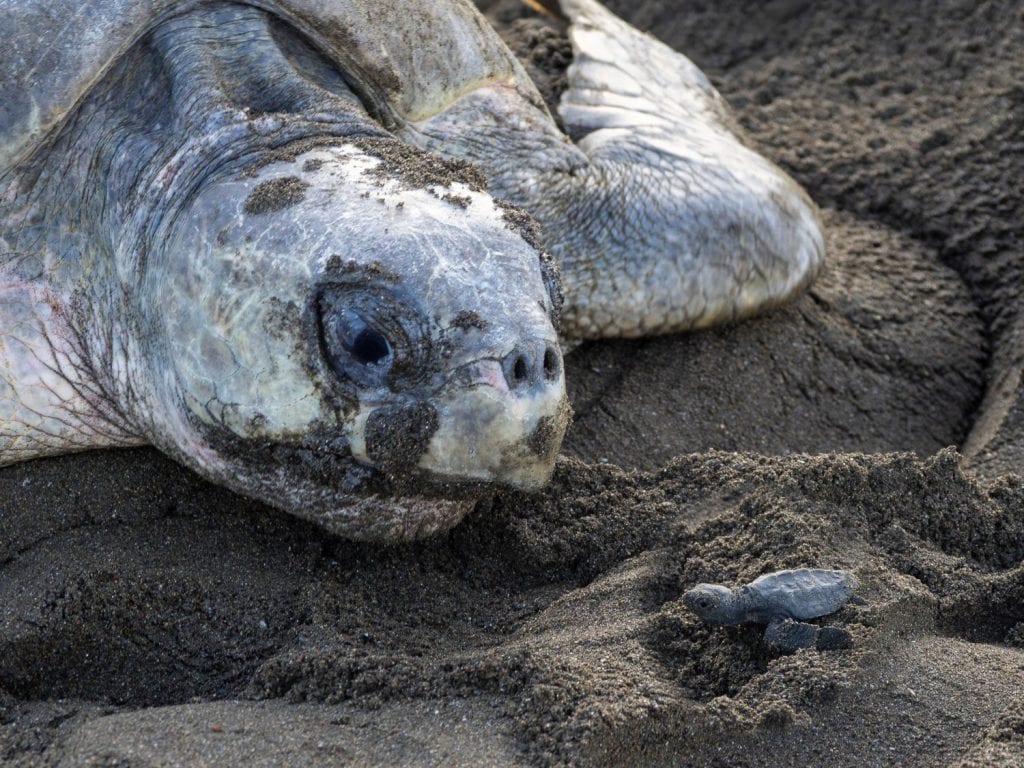
Sea turtles are known for natal homing, when females return to nest on the same beach where they were hatched, sometimes after 15 or more years at sea. If the eggs found on the California coast hatch and those hatchlings survive to adulthood, they may return to Seal Beach and Huntington Beach to nest as adults around 2041. Over generations, these turtles may establish a self-sustaining West Coast nesting population, which is something that has never existed in recorded history.
Sea turtles understand where they were born, with adult females often returning to make their own nests.
©Memo Ossa/Shutterstock.com
However, this process involves a long chain of steps, and NOAA was careful to say so. “There are many days and many hurdles to overcome over the 45–60-day incubation period,” the agency noted. Regardless, the potential outcome justifies the effort to give every egg the best possible chance, especially considering the scientific reasons why these turtles chose California.
Why Olive Ridleys Are Nesting in California
The closest known olive ridley nesting site to California is in the western Cape region of Baja California, Mexico, near Todos Santos, which is a coastline hundreds of miles to the south. Scattered nests occur near Magdalena Bay on the Pacific Baja coast, but nothing further north has ever been recorded until now.
There’s a combination of factors as to why this abnormal nesting occurred. For one, ongoing marine heatwaves have elevated sea surface temperatures along the California coast, and a developing 2027 El Niño is expected to push those temperatures even higher.
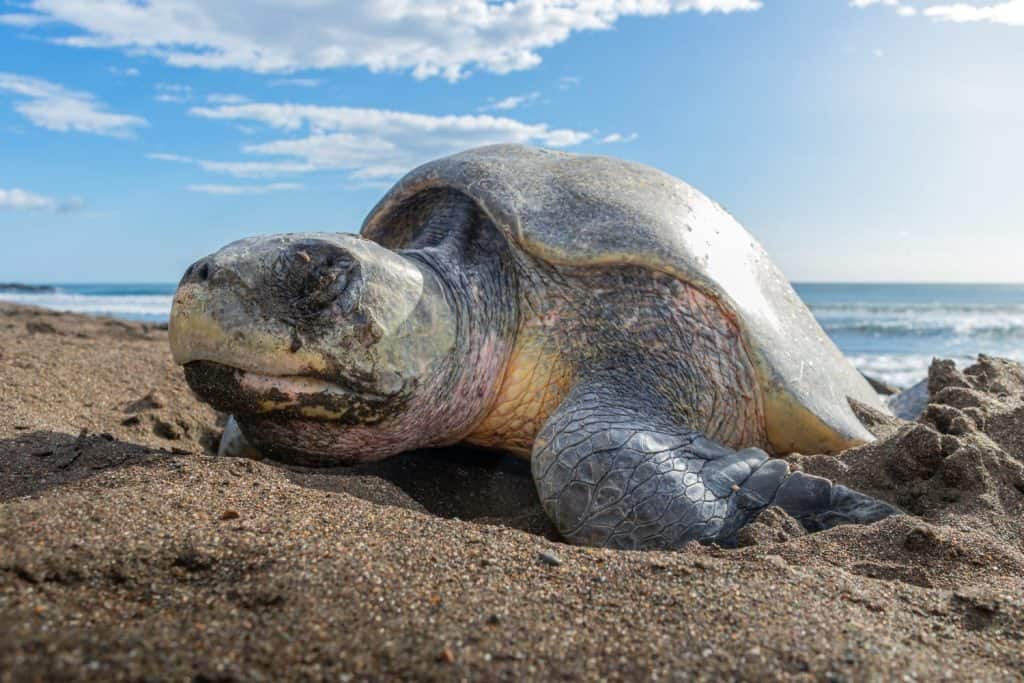
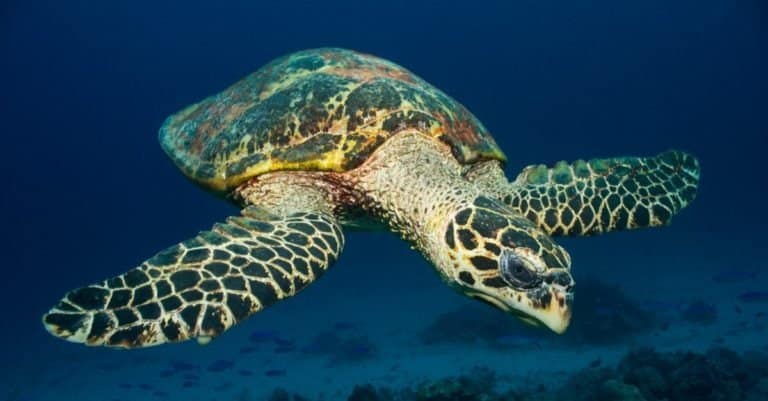
Sea turtles like olive ridleys are migratory, which may be why they’re moving further north.
©Kevin Venegas Barrantes/Shutterstock.com
Olive ridleys are naturally nomadic and highly migratory, more than other sea turtle species, and their adaptable nature makes range shifts more plausible compared to their relatives. Finally, navigational errors may also have contributed to these two turtles moving north; however, the true reason is not fully understood.
No matter the case, these turtles found conditions suitable enough to nest in Orange County. Two olive ridleys made the same decision within three days and eight miles of each other, so there’s no telling if and when it may happen again, and for many years to come.
Profiles of The Two Turtles: Will They Return?
Scientists worked quickly to answer questions: were these truly two separate turtles laying eggs, and will they return?
Dr. Cali Turner Tomaszewicz, a research biologist with NOAA’s Southwest Fisheries Science Center Marine Mammal and Turtle Division, conducted a photo identification analysis comparing the turtles’ body shapes, barnacle placement, and scute patterns, which is the unique arrangement of large scales on each turtle’s shell. The two turtles were confirmed to be distinct individuals, making the discovery all the more exciting.
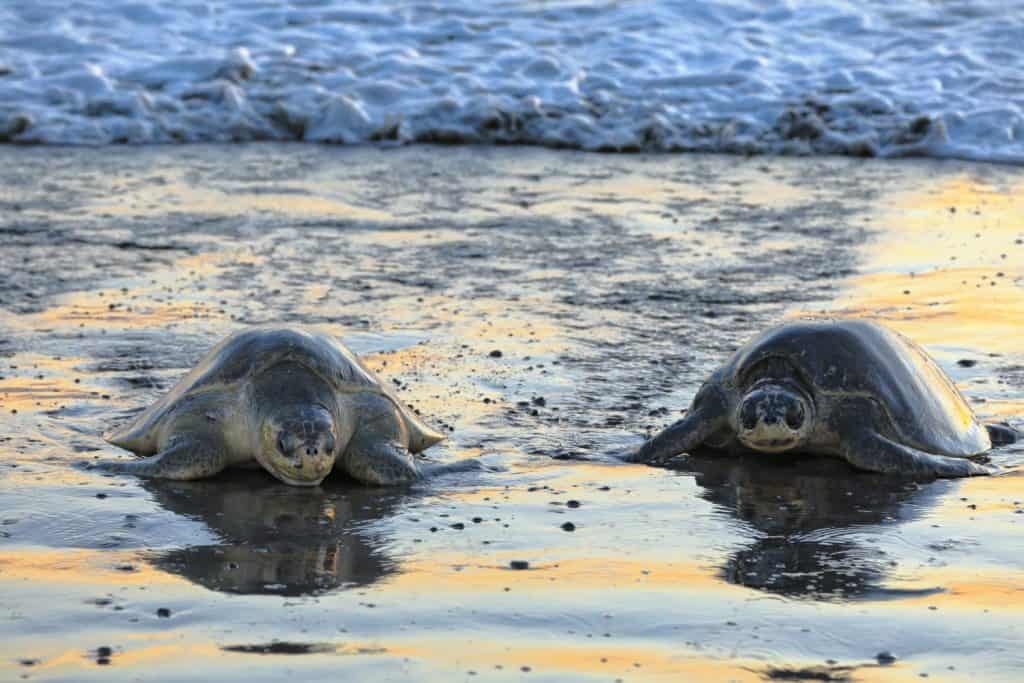
There were indeed two separate female sea turtles laying eggs on California beaches.
©Balakate/Shutterstock.com
Teams also monitored both sites for additional nesting activity after the initial events. Olive ridleys typically nest two to three times per season, approximately two weeks apart and in the same general area, so biologists remain on watch for return visits from either female.
Protecting the Nesting Sites
Between the initial discoveries on September 16th and 19th, as well as the egg transfer on September 25th, an inter-agency group mobilized around the two nests. Both sites were immediately fenced and roped off, with signs explaining the findings.
In addition, the Cities of Huntington Beach and Seal Beach conducted patrols and surveillance. Partners included the U.S. Fish and Wildlife Service, the California Department of Fish and Wildlife, the U.S. Navy, the Bolsa Chica Ecological Reserve, California State University Long Beach, and the Surfside Colony Community Organization, alongside the Aquarium of the Pacific and NOAA Fisheries.

Long Beach has an aquarium that is currently incubating the baby sea turtles.
©Larry Gibson/Shutterstock.com
There’s a reason for all the hubbub: olive ridley sea turtles are protected under the Endangered Species Act, which prohibits any form of disturbance to the animals, their nests, or their eggs. Given California’s additional animal protections, these turtle nests were immediately attended to, and any future nests will be, too.
California-Based Sea Turtles: What Happens When the Eggs Hatch
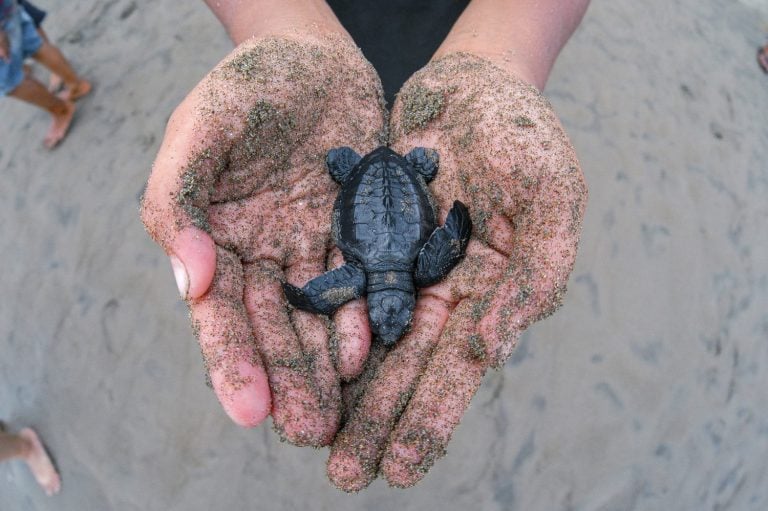
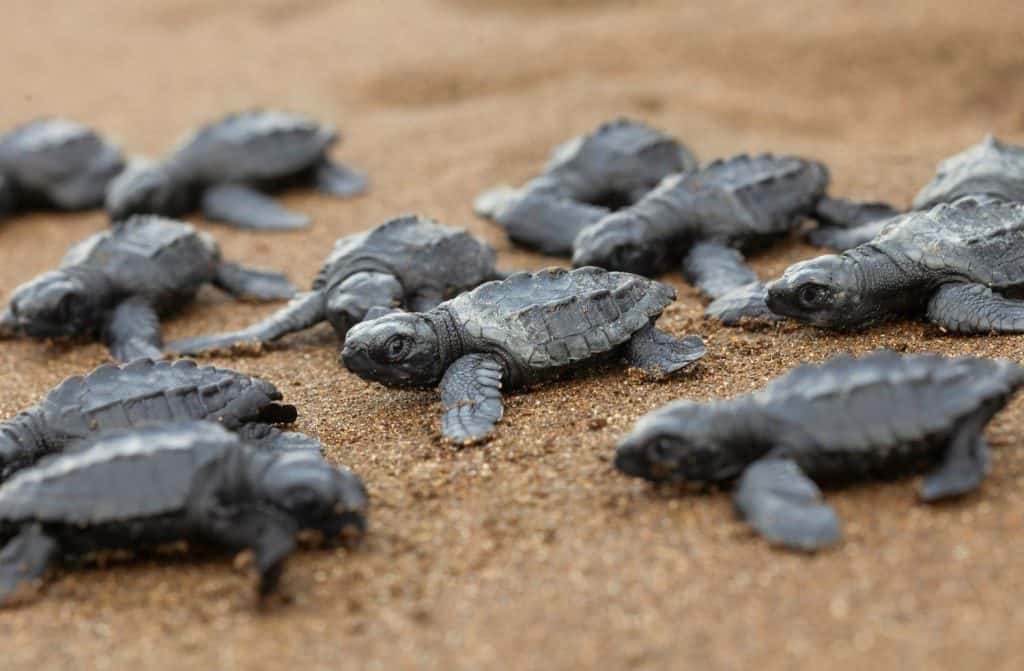
The eggs need to incubate for 45 to 60 days, and they will be held at the Aquarium of the Pacific. While successful hatching is not guaranteed, if the hatchlings emerge, they will be transported back to Seal Beach and Huntington Beach for release. The young will crawl from the sand into the Pacific Ocean in roughly the same place their mothers chose to lay them.
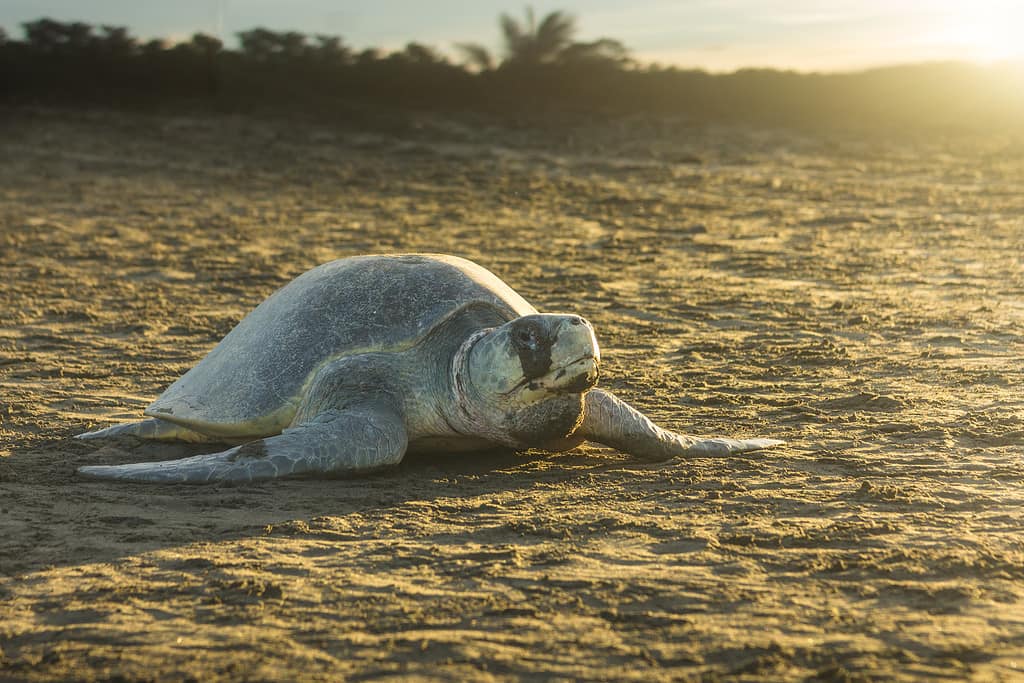
If the sea turtles hatch on California’s coastline, the same babies may return to lay their own eggs as adults.
©Daniel Alvarado Calderon/iStock via Getty Images
The olive ridley’s global population, concentrated in mass nesting events called arribadas on beaches in Mexico, Costa Rica, and India, faces ongoing pressure from bycatch, coastal development, and egg poaching. What is unfolding on the beaches of Orange County is remarkable; California just may become the next nesting site for this special turtle species.