
Quick Take
- One whale species living near Cabo never migrates, and the females stay year-round for a surprising reason. Meet the year-round resident →
- The time of day you book your tour changes everything, though the best window isn't what most people assume. Find the best viewing window →
- Booking with the wrong tour operator could mean you're not legally allowed near the whales at all. See SEMARNAT certification rules →
- Spotting a blue whale near Cabo is possible, though it requires knowing the one detail most visitors overlook. Spot blue whales near Cabo →
If you’re headed to Cabo San Lucas this winter, you might want to consider some amazing activities beyond lounging on the beach and dining out. One of the most exciting activities in the area is whale watching. You can join a tour for a moderate price and experience all the beauty of these incredible creatures. Whales in Cabo come in many sizes and shapes. They can typically be seen from December to April. You’re likely to spot some well-known mammals like humpback whales who love to show off. Or, if you’re really lucky, you might spot some rare whales like sperm whales or even blue whales, the largest animals on the planet.
When to Go Whale Watching in Cabo San Lucas, Mexico
Some species of whales in Cabo can be seen year-round, but most are in the area at certain times due to their migration patterns. For example, humpback and gray whales migrate from the cold waters of Alaska to the warmer waters of Baja California Sur. The official whale season is December 15 to April 15, but some years the whales come in early or leave late. Many people report the best whale watching opportunities between January and March.
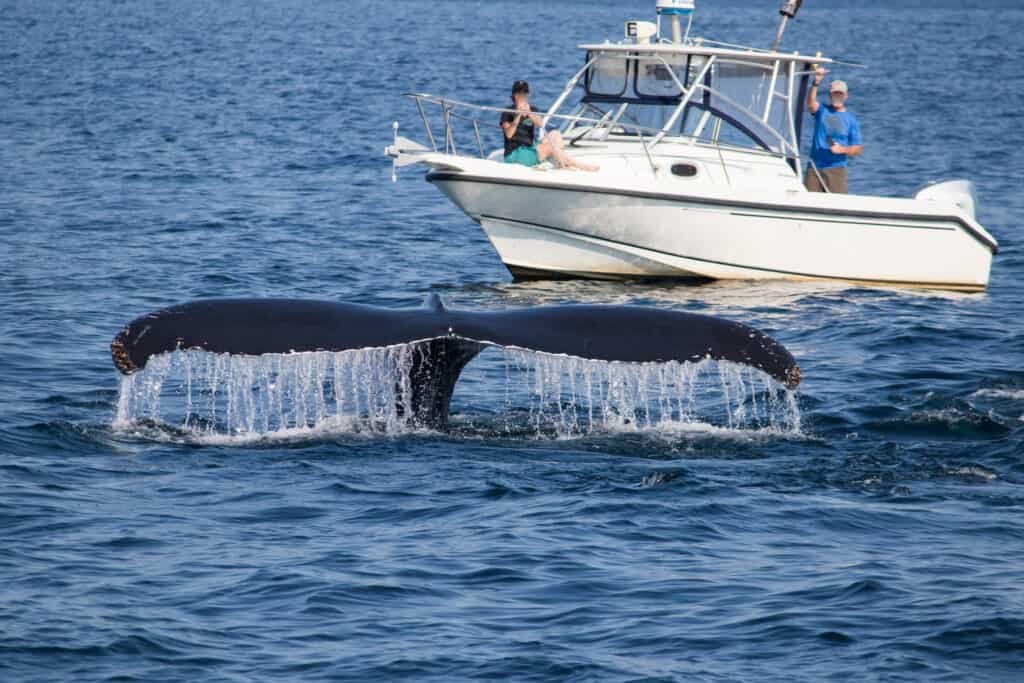
Whale season in Cabo San Lucas is generally from mid-December to mid-April.
©Mircea Costina/Shutterstock.com
SEMARNAT monitors and sets the official whale season each year, so be on the lookout for updated information as you plan your trip. The Mexican government has rules and regulations for whale watching season, and it is important to choose a whale watching company that has been certified by the government for your tour. Tour providers must be trained to receive their certification, and SEMARNAT provides the company with a whale watching flag each year. Look for the flag or other evidence of certification before booking your tour.
The best time of day for whale watching may vary, depending on your needs. For those who suffer from motion sickness or have small children, head out in the mornings. Waves are calmer and the wind is lower. For the most whale activity, head out midday. The waves get a bit rougher though, so be warned. Afternoons and early evenings offer the most whale activity, but also the highest turbulence on the water.
Types of Whales Found in Cabo
Those headed to Mexico will be glad to know that several species of whales can be sighted from the Cabo waterways. You might find humpback whales, fin whales, Bryde’s whales, sperm whales, or minke whales, among others.
Humpback Whales
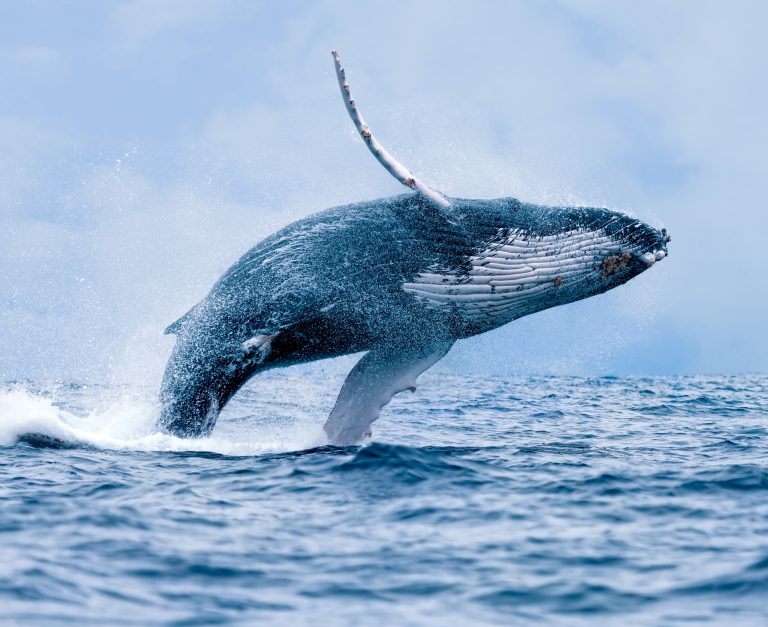
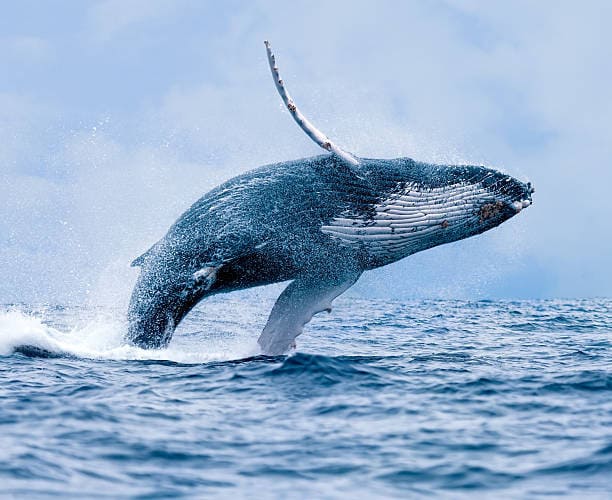
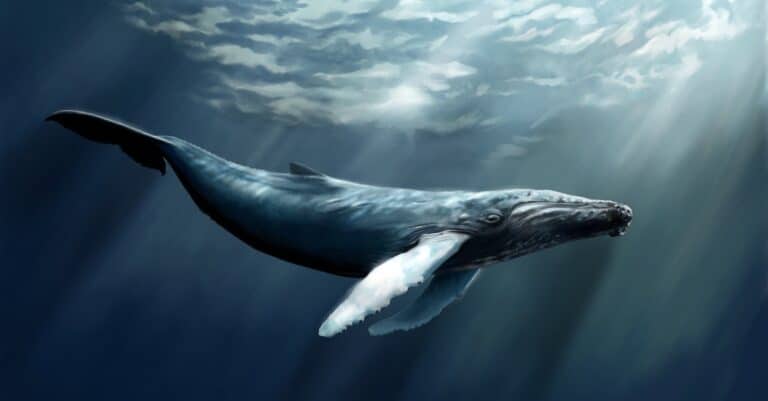
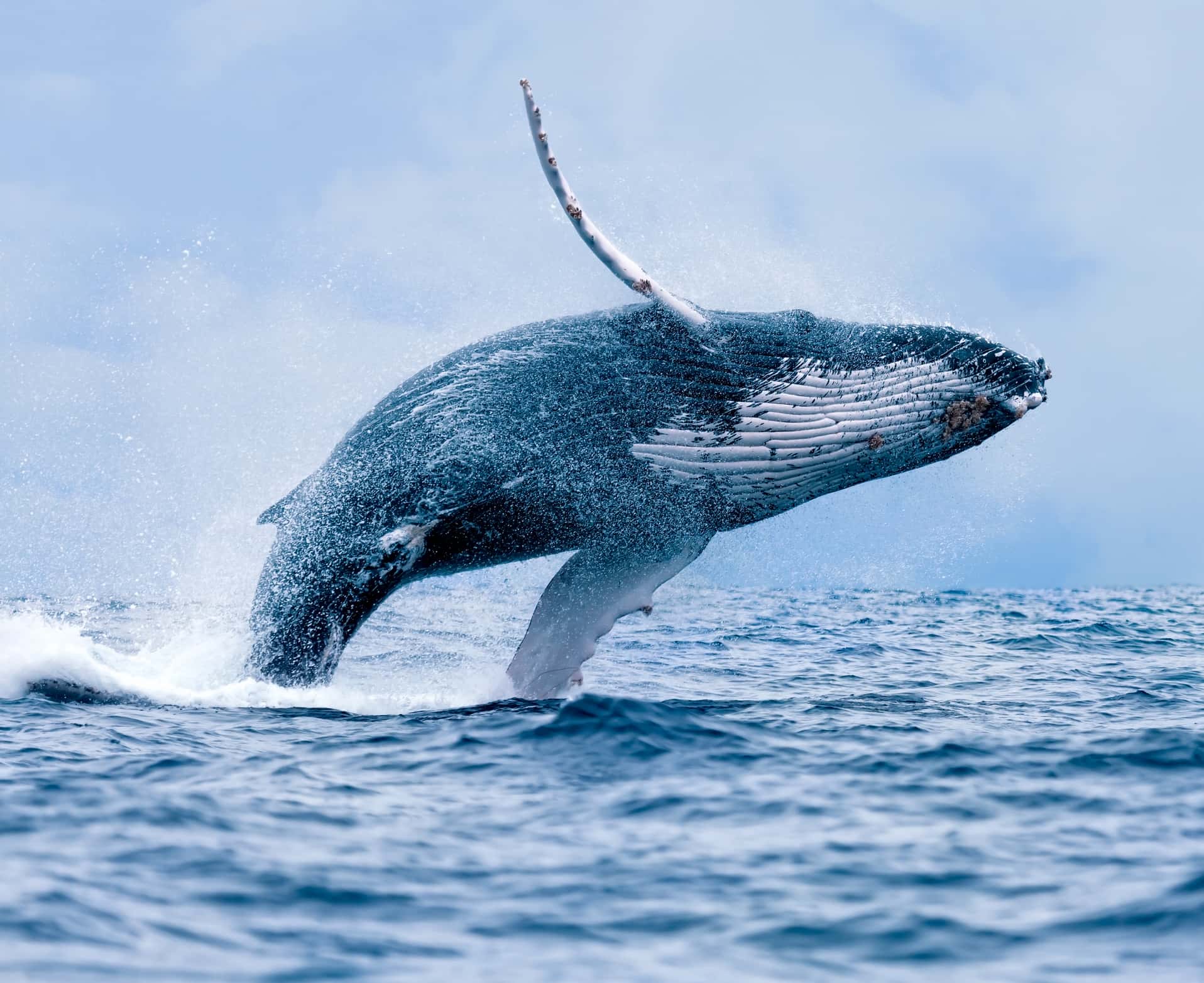
One of the most well-known species of whales, the humpback whale, is also one of the most likely whales to encounter in Cabo. These baleen whales come from the North Pacific population, with over 33,000 whales among them. You can identify them by the iconic humps on their backs. These whales have dark grey or black on top with areas of white on their undersides and flippers. They have the longest pectoral fins in the world. Humpback whales can reach up to 60 feet in length and weigh as much as 40 tons.
These active whales are truly a delight to behold, as they play and show off regularly for people in boats. Even more amazing is a mother whale with her young learning how to breach and tail slap. The best times to see these amazing creatures in Cabo are February to March, though they may be present as early as October.
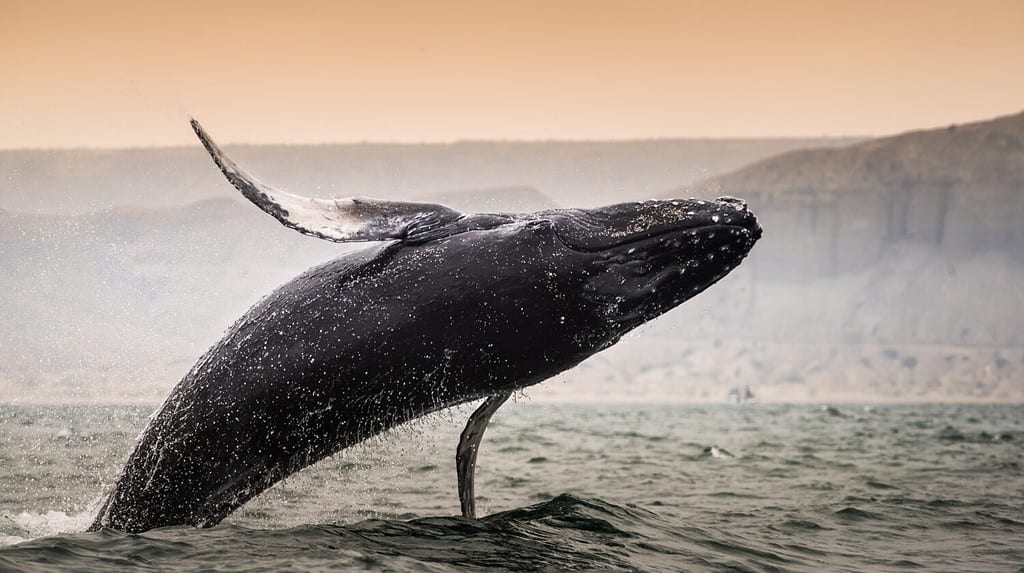
The humpback whale is one of the most commonly seen species of whale in Cabo.
©Christian Vinces/Shutterstock.com
Bryde’s Whales
Also, a baleen whale, Bryde’s whale swims the warm waters around Cabo. However, these unique creatures are the only ones who spend their whole lives in tropical and subtropical waters. They have a short migration, with some populations skipping it altogether to stay close to the sunny waters of Cabo San Lucas. They can be seen throughout the year, but the best times are the beginning and end of the season when the water is warmer.
Bryde’s whales have large heads that can take up one-third of their bodies. They are a bluish-grey color that transitions to a lighter color on their underbellies. They have broad, pointed, sickle-shaped dorsal fins. These whales also have up to 70 pleats in their throats that expand while feeding. They are 40 to 55 feet in length and weigh up to 90,000 pounds.
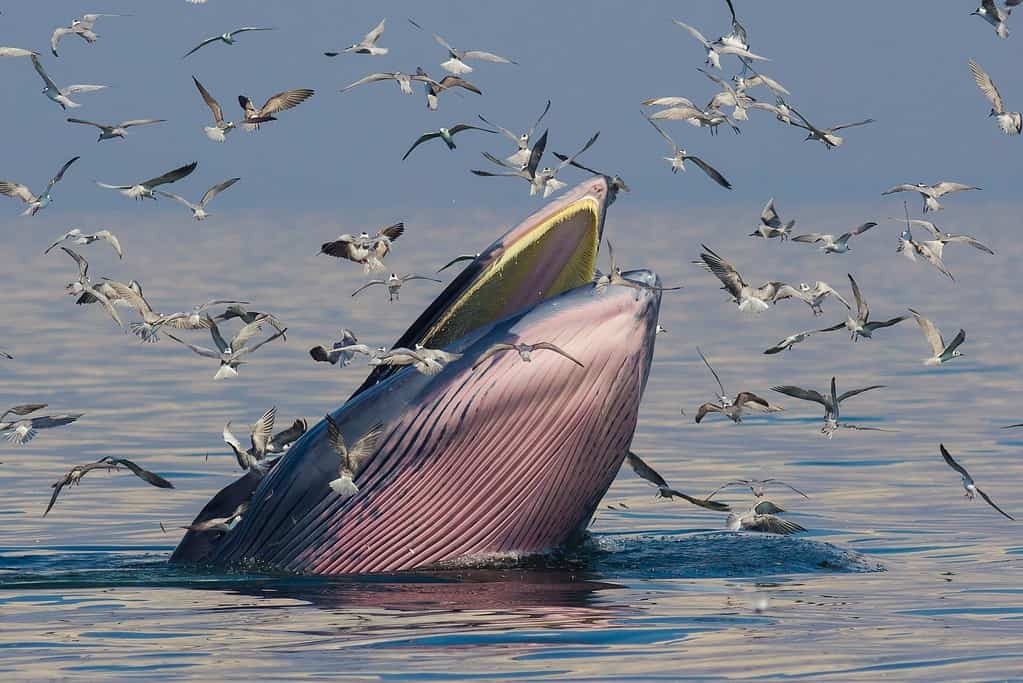
Bryde’s whale is the only known baleen whale species to prefer warm waters year-round.
©aDam Wildlife/Shutterstock.com
Sperm Whales
One unique thing about sperm whales is that they aren’t a migratory species. In fact, some of these incredible animals live in Cabo year-round. Males make the journey northward, but females stick around raising their young. Sperm whales live and play in deeper waters, though, so you’ll need to venture out farther from land. They are one of the deepest diving mammals in the world, hunting for squid and other deep-sea animals near deep ocean trenches in the Sea of Cortez near Cabo. These whales are most likely seen during the summer months.
Sperm whales are primarily dark grey and have extremely large heads that make up around one-third of their body length. They have small pectoral fins and a single, angled blowhole on their left side. Female sperm whales can weigh up to 15 tons, while males can reach 45 tons. Females measure up to 40 feet long, and males grow up to 52 feet.
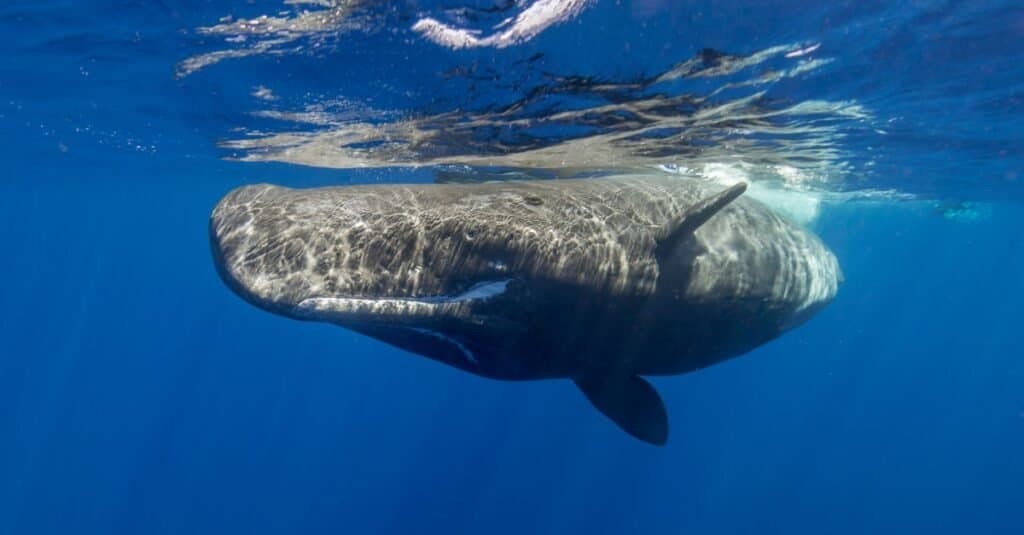
Female sperm whales remain in Cabo to raise their calves.
©wildestanimal/Shutterstock.com
Blue Whales
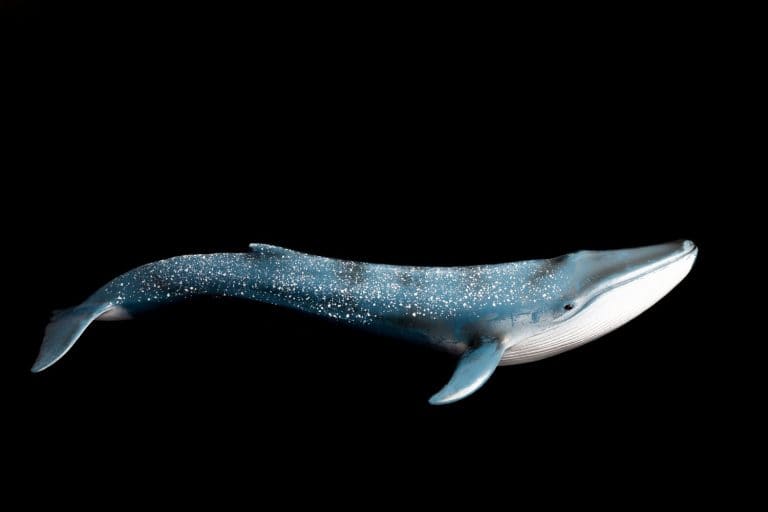
The largest living animal on the planet, the blue whale is truly a sight to behold. These massive marine mammals may occasionally be seen in Cabo San Lucas. However, experts recommend traveling just north to Loreto Marine Park in the Sea of Cortez between February and April for your best chance to see them.
If you’re lucky enough to spot one of these incredible animals, you won’t believe their size. These long, slim, mottled blue-grey mammals thrive in deep water, growing up to 110 feet in length and weighing a maximum of 330,000 pounds. However, blue whales in the Atlantic and Pacific tend to be smaller than those in the Antarctic.
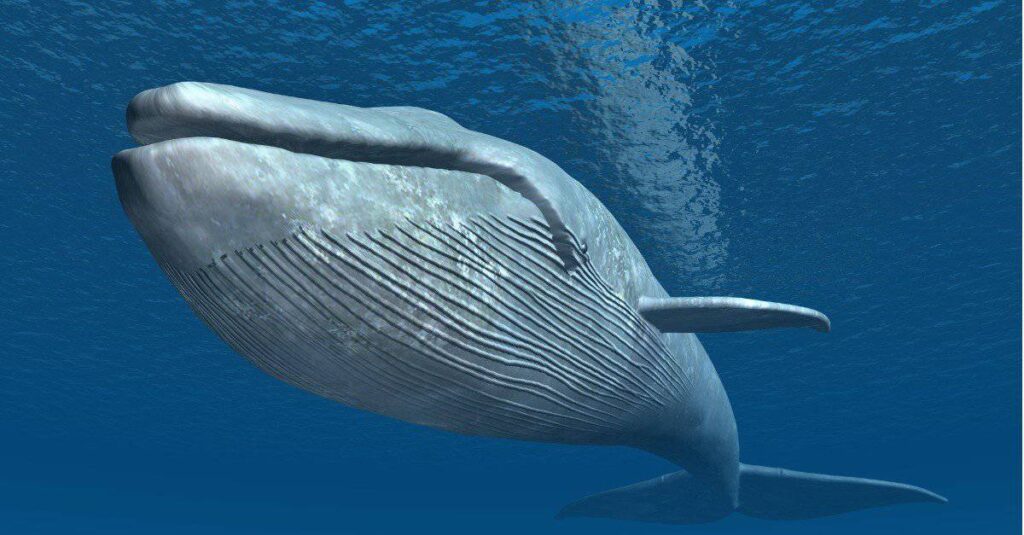
The best place to see the blue whale near Cabo is Loreto Marine Park in the Sea of Cortez.
©iStock.com/MR1805
Fin Whales
Next to blue whales, fin whales are the second largest animal on the planet. In Cabo, you’re most likely to see them in February and March. Many people also recommend heading to Loreto Marine Park for a blue whale watching tour, during which you’re more likely to see fin whales.
Fin whales are brownish-grey to black on the back and sides with white on their undersides. They are dark-colored on the left lower jaw and white on the right lower jaw, with the reverse coloring on their tongues. They can weigh between 40 and 80 tons and measure 75 to 85 feet long.
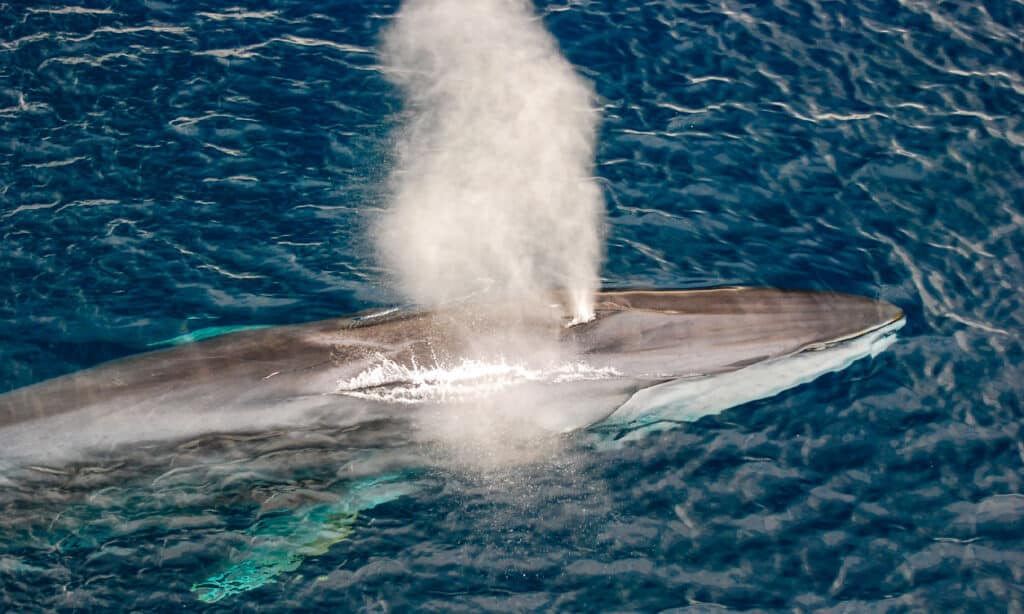
The second largest whale in the world, the fin whale is best seen in the Sea of Cortez north of Cabo.
©iStock.com/JG1153
Short-Finned Pilot Whale
Short-finned pilot whales typically reach between 12 and 18 feet, depending on their sex. Some males may even hit 24 feet. Full-grown short-finned pilot whales typically weigh 1 to 3 tons, and travel in pods of 15 to 30 whales.
Pilot whales have bulbous, melon-shaped heads with no beaks, and dorsal fins located forward on their bodies. They are dark brownish-grey with a grey saddle patch behind their dorsal fin. Short-finned pilot whales are year-round residents of the Gulf of California near Cabo. They are also sometimes seen on the Pacific side of the Baja peninsula.
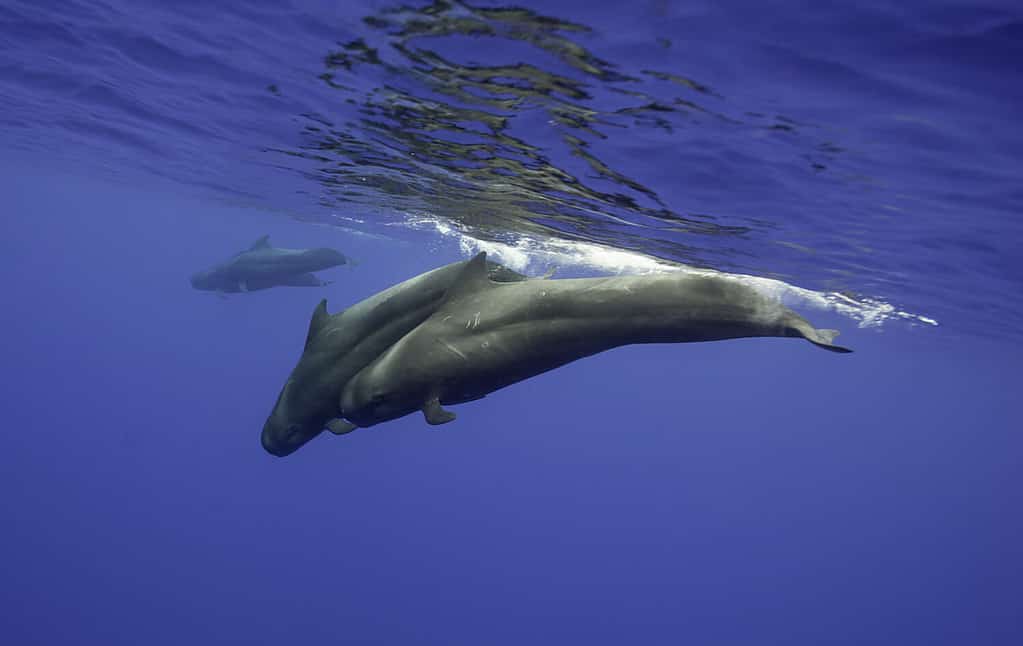
Short-finned pilot whales are year-round residents, inhabiting the deeper waters in the Gulf of California near Cabo.
©wildestanimal/Shutterstock.com
Minke Whales
A lesser-known whale, the minke whale, is the smallest baleen whale inhabiting North American waters. The minke whale migrates from the cold waters of Alaska and Siberia to the warmer waters around Cabo San Lucas, especially the Sea of Cortez, from mid-December through mid-April.
These whales are generally a dark greyish-brown with pale undersides. They have relatively tall, sickle-shaped dorsal fins around two-thirds of the way down their bodies. Minke whales can weigh up to about 20,000 pounds and measure up to around 35 feet in length.
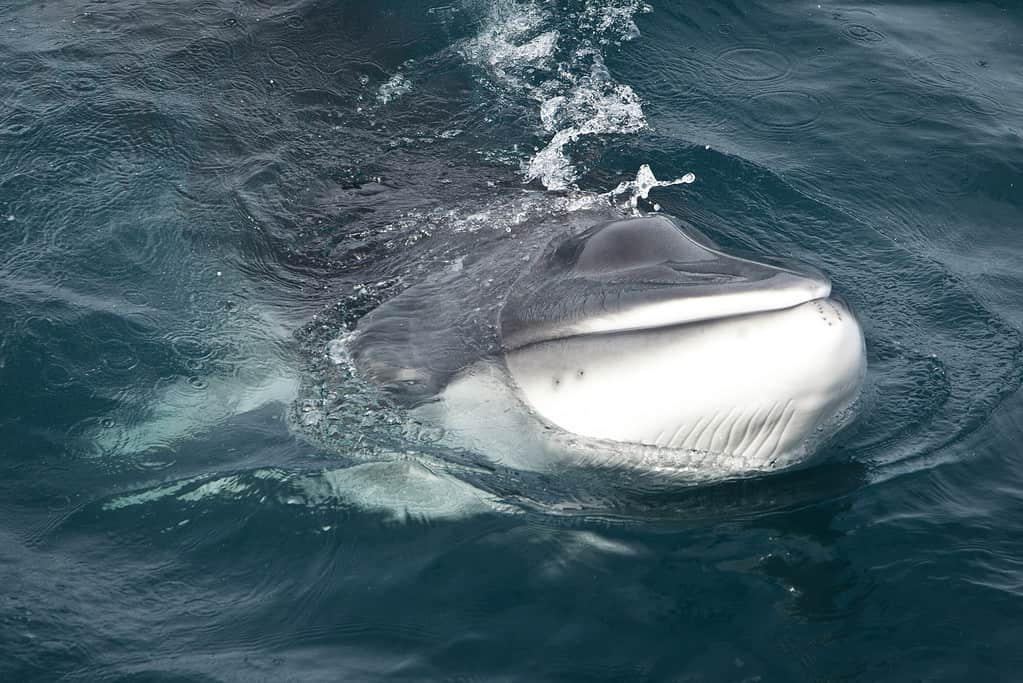
The minke whale migrates to the waters around Cabo from Alaska and Siberia.
©Tim Watters/Shutterstock.com