Quick Take
- Muskrats are opportunistic omnivores that eat both plant and animal matter, although the majority of their diet consists of plant matter.
- Muskrats consume 1/3 of their body weight daily
- Muskrat fur is durable, dense, and water-repellent.
Muskrats (Ondatra zibethicus) are semi-aquatic rodents that are native to North America. A single species within the Ondatra genus, muskrats are found globally through native distribution and introduced populations. Adults of the species weigh 1.5 to 4.5 pounds and are between 8 and 14 inches long, with tails of a similar length. They are known for their dense, waterproof fur and their flattened tails, which they use for swimming. Muskrats are omnivores, but their diet primarily consists of aquatic vegetation, and they occasionally eat animal protein. Continue reading to discover everything you need to know about what muskrats eat.
What do Muskrats Eat?
Muskrats are opportunistic omnivores, though about 95% of their diet consists of aquatic vegetation.
In their natural environment, muskrats primarily eat aquatic vegetation. Their favorite food source is cattail, a reed-like plant that can be found anywhere near water. Muskrats also use cattails to build their lodges.
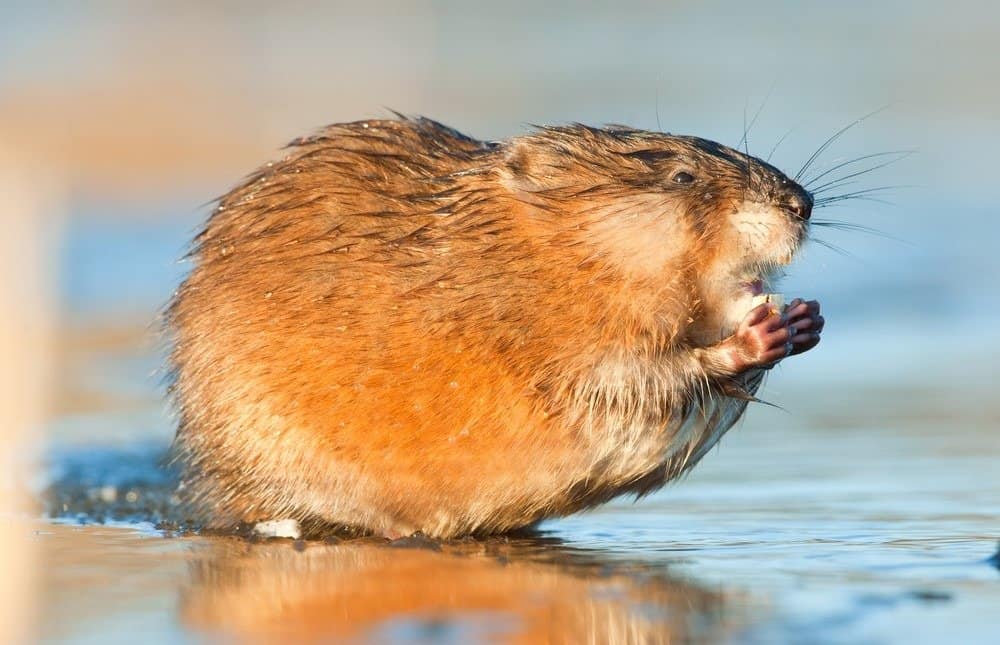
As omnivores, muskrats eat both plants and animals, although they generally prioritize aquatic plants.
©Sergey Uryadnikov/Shutterstock.com
Besides cattails, muskrats eat sedges, rushes, water lilies, and pond weeds. Their mostly herbivorous diet helps keep waterways clear of excessive vegetation, although muskrats can also cause environmental problems.
When natural food sources like cattails become scarce, hungry muskrats may invade residential gardens near water to eat vegetables and other plants. They can quickly destroy landscaping and crops, often causing significant damage.
While aquatic vegetation makes up 95% of the muskrat’s diet, the remaining 5% consists of small aquatic animals, including freshwater mussels, crayfish, frogs, fish, small turtles, salamanders, and even young birds. However, animal protein is typically eaten as a supplement or when vegetation is scarce.
Common foods muskrats will eat:
- cattails
- sedges
- rushes
- water lilies
- pond weeds
- freshwater mussels
- crayfish
- fish
- snails
- frogs
- small turtles
Muskrats eat an astonishing one-third of their body weight each day. With such high caloric needs, they are constantly foraging.
Muskrats in the Wild
Indigenous Americans have held the muskrat in high regard for thousands of years. Many of their creation myths center around muskrats bringing mud up to help the Great Creator build the world. On a practical level, muskrats were used as a food and a fur resource.
Muskrat fur is durable, dense, and water-repellent, and was traditionally used for coats, hats, and mittens. Muskrats are trapped primarily in North America, where they are considered sustainable furbearers with high reproductive rates.
In the 20th century, muskrats were introduced to Europe and rapidly spread across much of the continent. They are now considered an invasive pest in many European countries, causing ecological damage by overeating vegetation and structural damage to dykes and levees through their burrowing habits.’
Muskrats build lodges out of vegetation and mud. Although humans have destroyed much of their habitat, they are adaptable and have begun claiming canals and human-made waterways as new territory.
Do Muskrats Have Predators?
Muskrats have many natural predators, as well as a few competitors in their ecological niche. Muskrats are prey for mink, foxes, coyotes, cougars, bears, eagles, hawks, owls, wolverines, snakes, and alligators. In the North American ecosystem, they are an essential element of the food pyramid. Many predators rely on muskrat populations year-round.
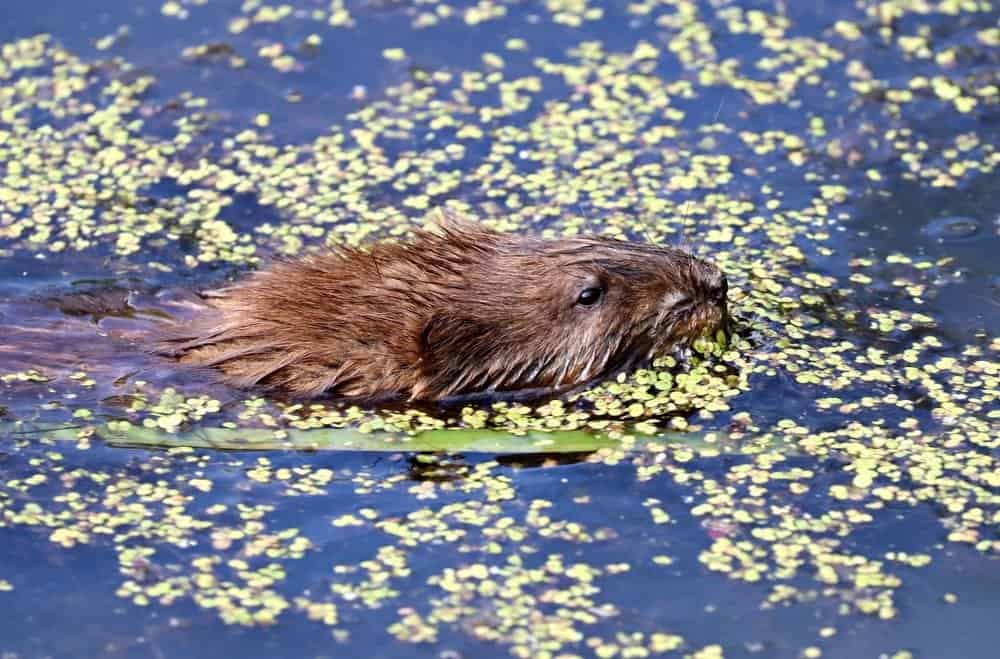
Muskrats eat one-third of their body weight in food a day.
©Steve Gillick/Shutterstock.com
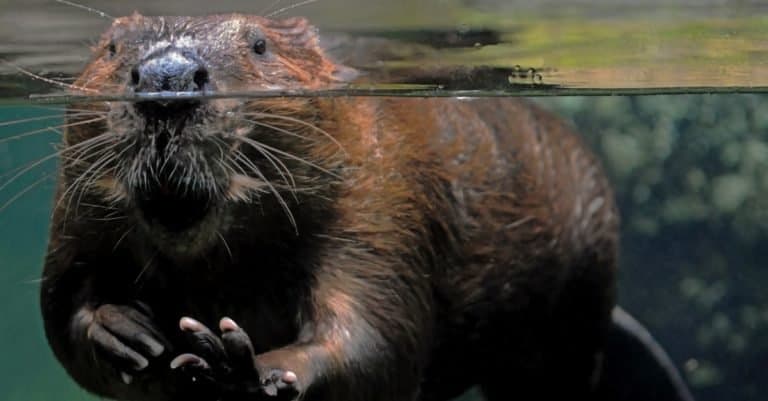
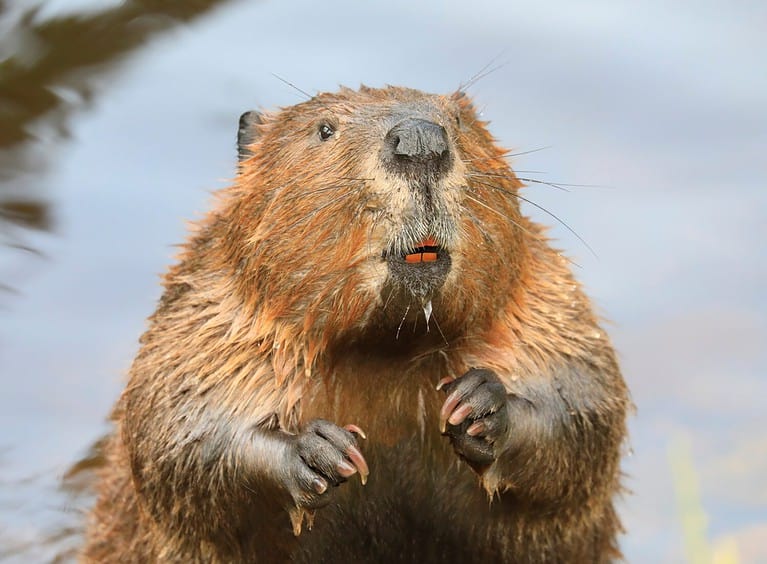
Muskrats compete with other semi-aquatic animals for food. Among the most common are beavers (Castor canadensis) and nutria (Myocastor coypus). Beavers eat some of the same aquatic plants that muskrats do, creating some competition between the species. However, there is also a beneficial relationship between the two species. Muskrats will occasionally move into a beaver dam while it’s still occupied. For beavers, the relationship is beneficial because muskrats will alert the beaver family if predators are nearby.
Nutria are significant competitors of muskrats. Introduced from South America for their fur, nutria have become invasive pests in North America. They are much larger than muskrats, weighing up to 22 pounds. As a non-native species, nutria cause extensive damage to wetland habitats and water infrastructure, which can indirectly affect muskrat populations by degrading their habitat.
A third competitor of the muskrat is the Florida water rat, known as the round-tailed muskrat (Neofiber alleni). However, the muskrat’s range ends almost exactly where the Florida water rat’s territory begins, in southern Georgia and the Florida Panhandle.
How do Muskrats Find Food?
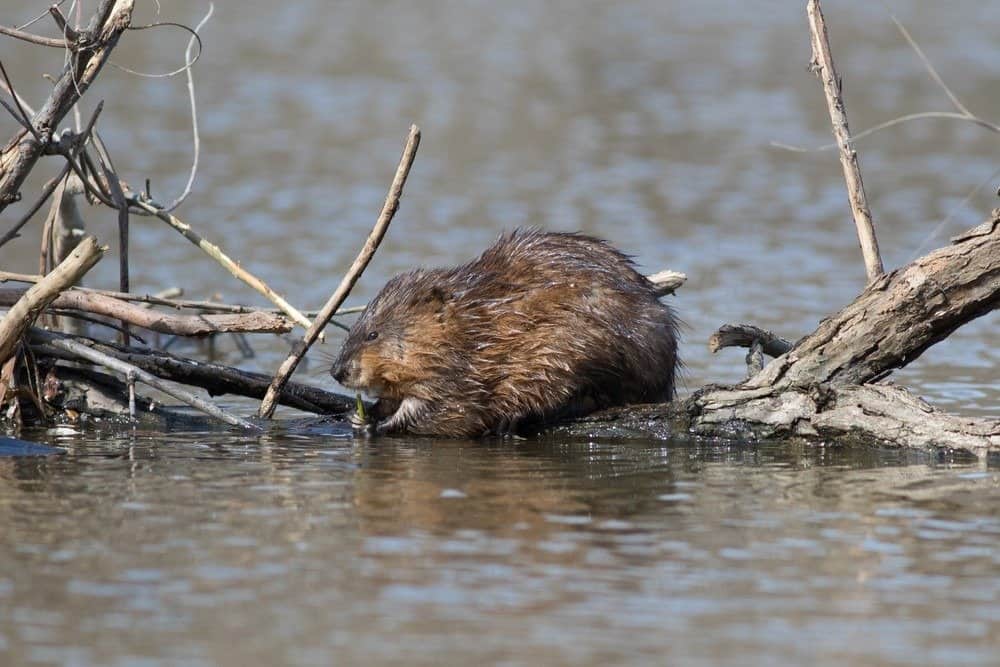
Muskrats eat by dragging food into their dens, away from predators.
©William Levesque/Shutterstock.com
Muskrat aren’t necessarily predators as they get 95% of their diet from vegetation. Still, they have unique ways to acquire and consume their food.
Central to a muskrat’s life is its lodge. These dome-shaped homes can measure 4 by 5 feet and house an entire family of muskrats. Additionally, they have separate dens that are used for various needs, particularly feeding.
When a muskrat locates a plant or animal it intends to consume, it doesn’t want to do so in the open. Muskrats are near the bottom of the mammal food chain, and any time spent outside is risky. Once it grabs its food, it swims underwater and comes up in one of its pre-built “feeding dens” to eat in peace.
Muskrats are crepuscular, meaning they are most active during the low-light periods of dawn and dusk.