
Quick Take
- The real beaver home is not the dam, and its design is far more ingeniously engineered than the barrier holding the water back. See the lodge explained →
- Beavers completely change their construction technique based on one environmental factor, and their solution to it rivals deliberate human engineering. Discover their adaptive strategy →
- When winter ice seals the pond, beavers have a months-long survival strategy that means they never have to set foot on land. Explore winter survival inside →
- Beaver wetlands have been spotted staying green and unburned in the middle of active wildfires, and the reason behind this phenomenon is not as obvious as it sounds. See the wildfire connection →
When people think of incredible engineering, they often picture massive structures like the Hoover Dam. Built to control floods, store water, and generate electricity, it is one of the largest dams in the United States. However, long before humans began pouring concrete, beavers were already transforming waterways using just sticks, mud, rocks, and determination. For roughly 20 million years, these hardworking rodents have reshaped landscapes to create safe homes. While human dams are built to support cities and communities, beaver dams serve one simple purpose: protecting the family.
How Do Beavers Build Their Dams?
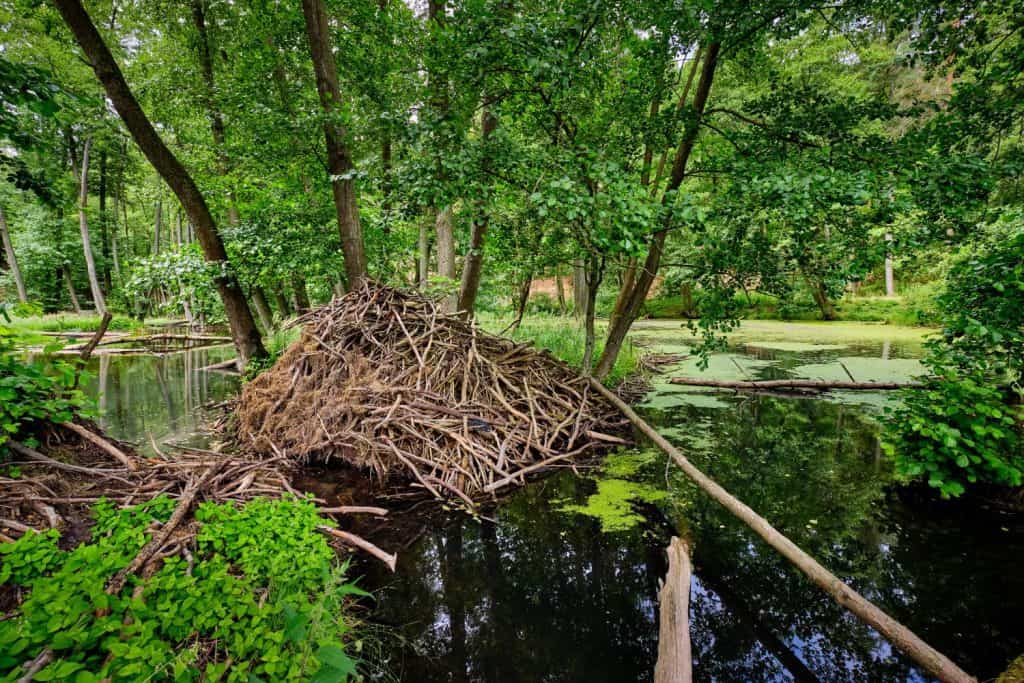
A common misconception is that beavers live inside their dams. In reality, the dam is just a barrier that holds back water. By building dams across streams and small rivers, they slow the current and create deep ponds that keep predators away. The beavers live in a separate structure called a lodge, which sits in the middle of the pond. Because the pond keeps the lodge’s entrance underwater, beavers can swim safely in and out while predators like wolves, coyotes, and mountain lions cannot reach them.
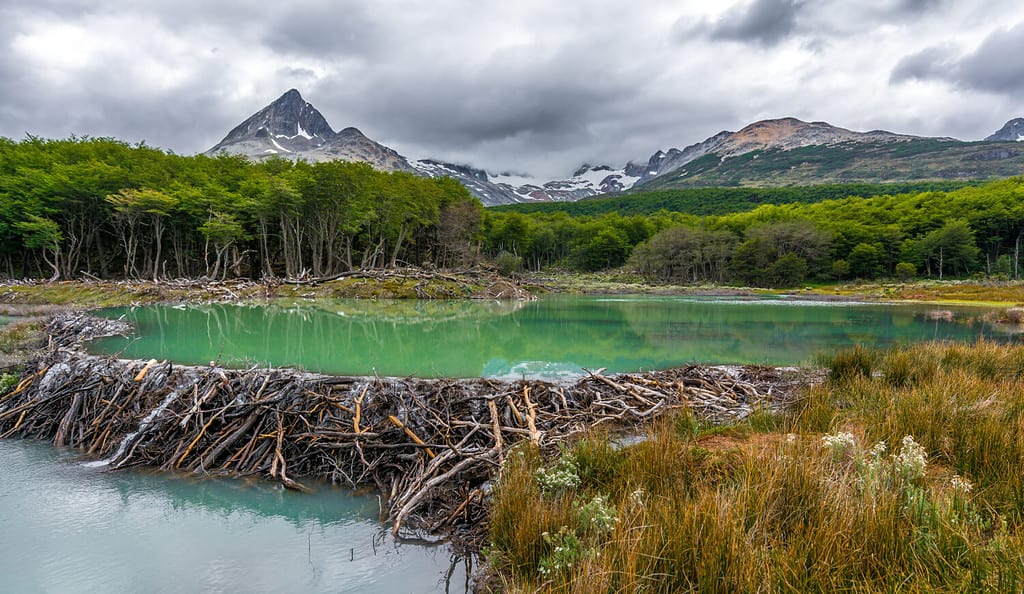
Beaver dams completely transform the landscape where they are built.
©O Brasil que poucos conhecem/Shutterstock.com
Beavers live in close-knit family groups. They have small litters, and their young take years to mature, so keeping the family safe is worth every branch they haul and every tree they chew. But building a dam is no small task. Instead of randomly piling sticks across a stream, beavers construct surprisingly sturdy structures, layer by layer, with help from each family member.
Beavers start by anchoring the base of the dam with heavy rocks. They then weave branches and logs together to form a sturdy framework, packing mud, sand, plants, and sediment into the gaps. This process creates a watertight barrier that slows the water and forms a pond.
Beavers use whatever materials are available nearby, often choosing willow and hazel branches. However, they will also incorporate fallen trees, rocks, fence posts, bricks, concrete chunks, culverts, weirs, and even fish passes. They frequently build their dams around existing landscape features as well.
Beavers Build for Their Surroundings
Not every beaver dam looks the same. The shape depends largely on how fast the water is moving. In slow-moving streams, beavers typically build straight across the channel. Faster streams require a different strategy. Instead of blocking the current head-on, beavers gradually build outward from each bank, placing sticks parallel to the flow. This narrows the channel and reduces the force of the water until they can manageably close the remaining gap.
There are limits to what they can do, however. If a river is wider than about 32.8 feet, beavers generally do not build a dam. Instead, they dig burrows directly into the riverbank, relying on the naturally deep water for protection.
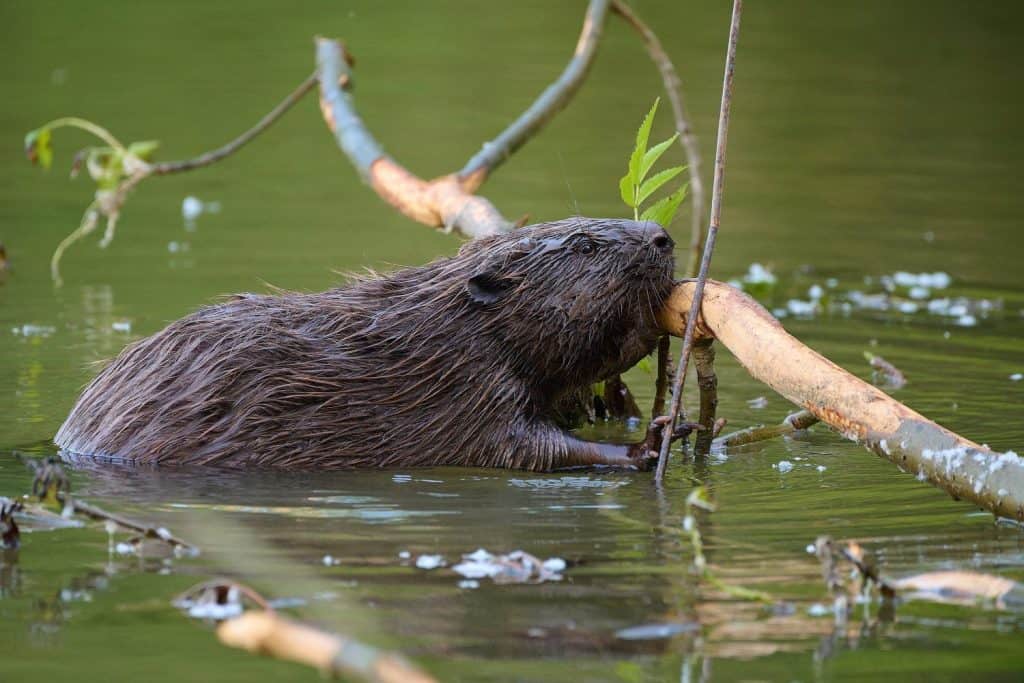
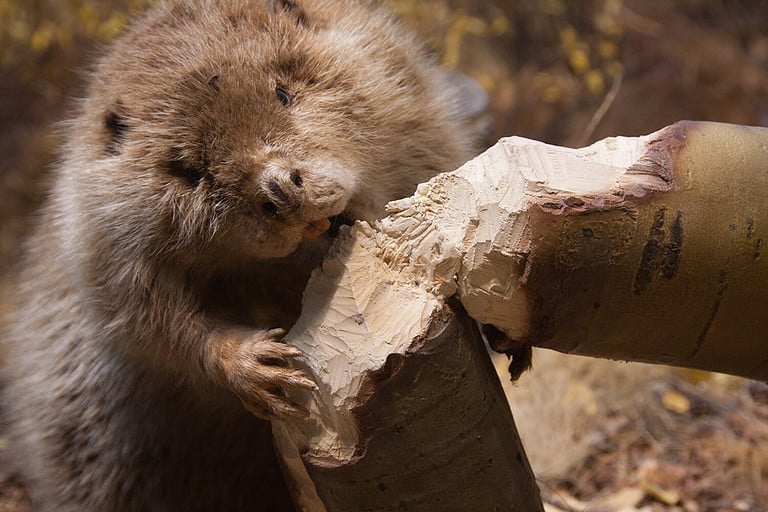
Beavers have strong teeth that are reinforced with iron.
©Tomas Palsovic/Shutterstock.com
A Dam Is Never Finished
Building the dam is only the beginning; maintaining it is an ongoing family project. Because the height of the dam determines the depth of the pond, beavers constantly monitor it for leaks. They rely heavily on sound, listening for the trickle of water spilling over weak spots. Whenever they hear running water, they instinctively patch that section with more mud, sticks, rocks, and vegetation.
After repairing one leak, water often begins flowing over another low point, which the beavers then patch. Over time, this ongoing maintenance makes the dam longer, taller, and stronger. Both adults and kits help with repairs, making dam maintenance a family effort that never truly ends.
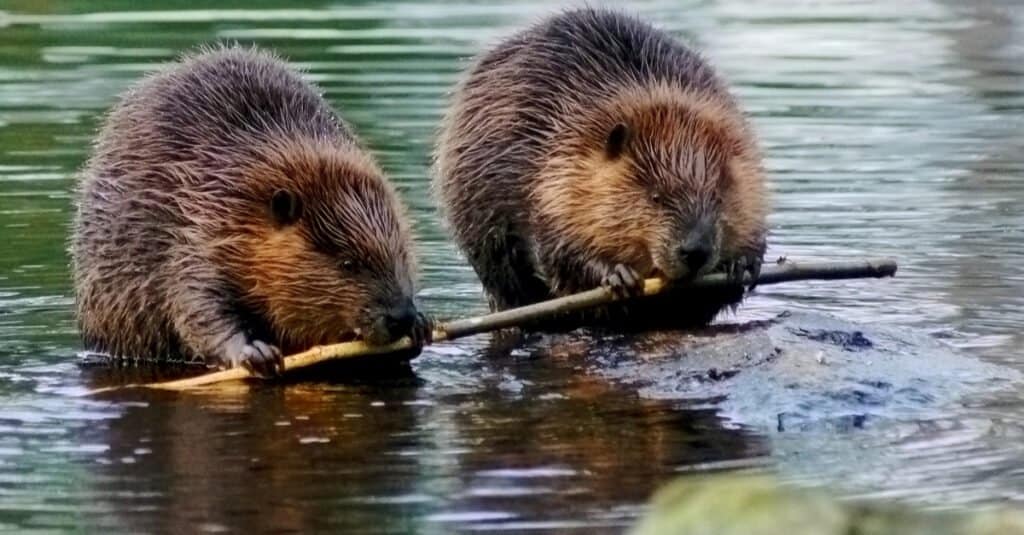
Older beaver offspring often stay with their parents for some time and help maintain the dam and lodge.
©P Harstela/Shutterstock.com
Beaver Dam vs. Beaver Lodge: What’s the Difference?
One of the biggest misconceptions about beavers is that they live inside their dams. In reality, the dam and the lodge serve two very different purposes. A beaver dam is simply a barrier built across a stream to slow the water and create a deep pond. The lodge, meanwhile, is the beavers’ actual home. Built from sticks, mud, and rocks, the lodge sits within the pond behind the dam and features an underwater entrance. This design keeps the family safe from land predators while providing a warm place to sleep, raise kits, and shelter from harsh weather conditions.
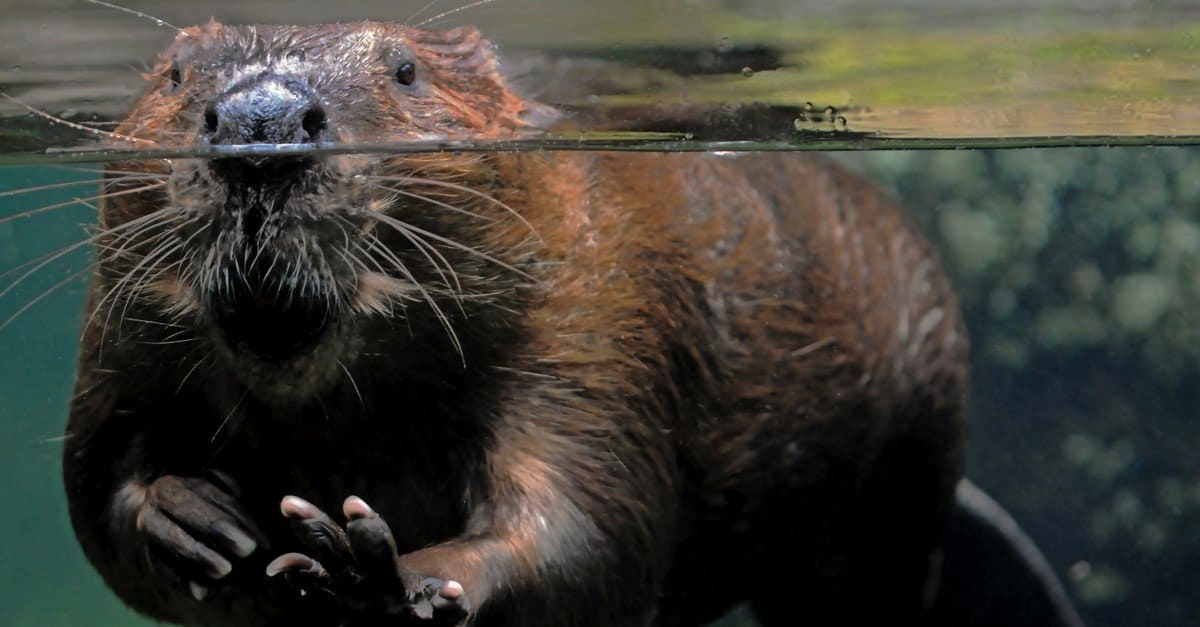
The pond also becomes a lifeline during winter. Once ice forms on the surface, beavers are vulnerable to predators if they venture onto land. To avoid this, they prepare months in advance by pushing branches from food sources, especially willow and aspen, into the mud at the bottom of the pond. This underwater food cache stays fresh all winter, allowing beavers to swim from their lodge, grab food beneath the ice, and return home safely without ever venturing onto dry land.
Beavers often carve out canals to float building materials back to their lodge, saving time and energy.
©ebenart/Shutterstock.com
Another common myth is that only North American beavers build dams. In reality, both American and Eurasian beavers build dams whenever they need to deepen the water around their lodges. If a river or stream is already deep enough, they skip dam building altogether. For example, beavers rarely build dams on large rivers, as the naturally deep water provides sufficient protection.
Why Beaver Dams Matter
Beavers do not just reshape streams—they transform entire ecosystems. They are recognized as a keystone species because countless plants and animals benefit from the unique habitats they create. Beaver dams slow flowing water, leading to the formation of wetlands. These wetlands provide habitats for birds, amphibians, reptiles, fish, waterfowl, and many other species. According to the U.S. Fish & Wildlife Service, more than 60 percent of threatened species depend on wetlands during at least part of their lives.
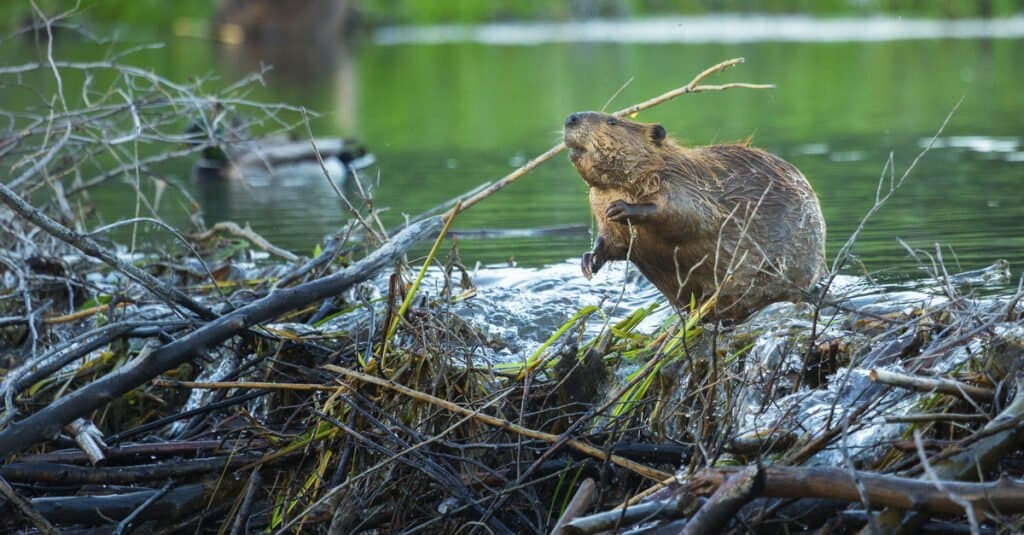
Beaver dams help slow fast-moving water and refuel groundwater, which can ultimately alleviate flooding.
©Chase Dekker/Shutterstock.com
The benefits of beaver dams extend far beyond wildlife. Beaver dams naturally filter water by trapping sediment, nitrogen, and phosphorus before they move downstream. The ponds also store water that gradually seeps into the ground, recharging aquifers, reducing erosion, and lessening the impacts of both droughts and floods. Even during wildfires, beaver wetlands often remain lush and green because the saturated ground is much less likely to burn.
A beaver’s feeding habits also help create healthy forests. Beavers primarily eat aquatic plants, leafy vegetation, and the bark, leaves, and shoots of broadleaf trees and shrubs. Most of their tree cutting occurs close to the water, encouraging new growth and creating a healthy mix of young trees, mature forest, and standing deadwood that supports a wide variety of wildlife. Established beaver colonies even dig canals to help float construction materials and food back to their ponds, extending deep into nearby forests.
Living Alongside Beavers
Despite their many environmental benefits, beavers do not always make ideal neighbors. Their tree-cutting can damage ornamental or valuable trees, and their dams can sometimes flood roads, farmland, and residential property. In some cases, beaver ponds may slightly warm surface water in the summer, and their dams can temporarily obstruct migratory fish such as trout and salmon. Additionally, if a dam fails, all the sediment trapped behind it is released downstream at once.
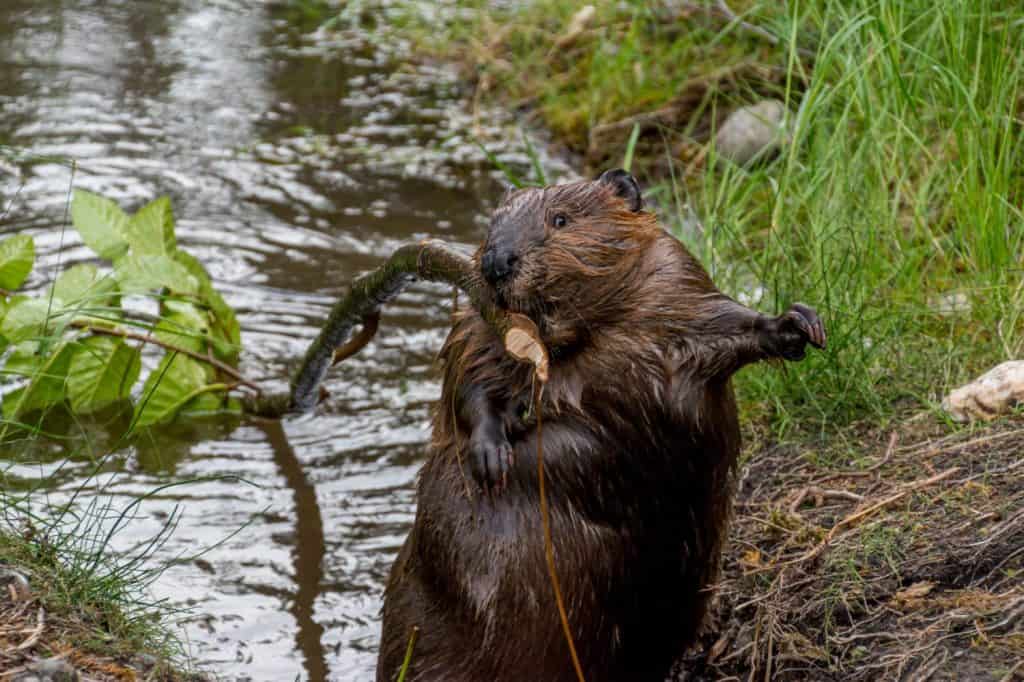
A beaver’s front teeth continue to grow throughout its entire life.
©Jaime Espinosa/Shutterstock.com
Fortunately, many of these conflicts can be managed without removing the beavers themselves. Wrapping tree trunks with wire mesh helps protect them from chewing, while specially designed flow devices, often called “beaver baffles,” regulate water levels without destroying the dam. Maintaining vegetated buffer zones along streams also gives rivers space to flow naturally around dams, reducing flooding and allowing fish to continue migrating.