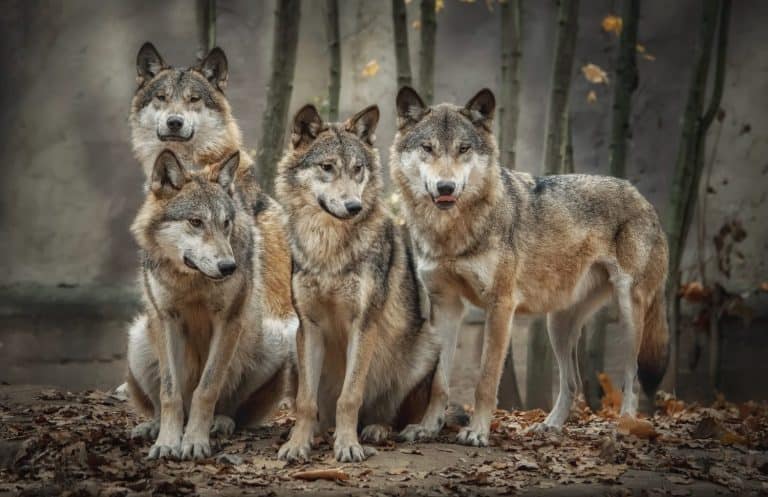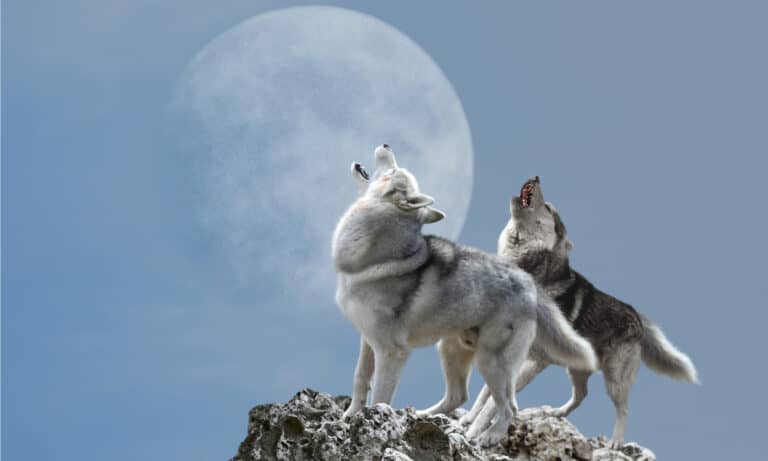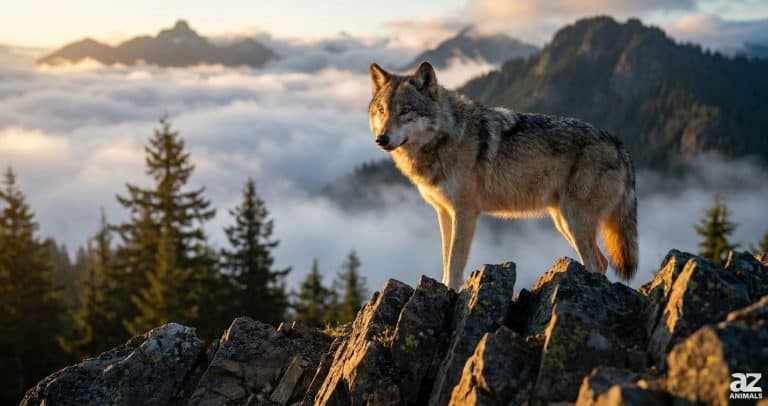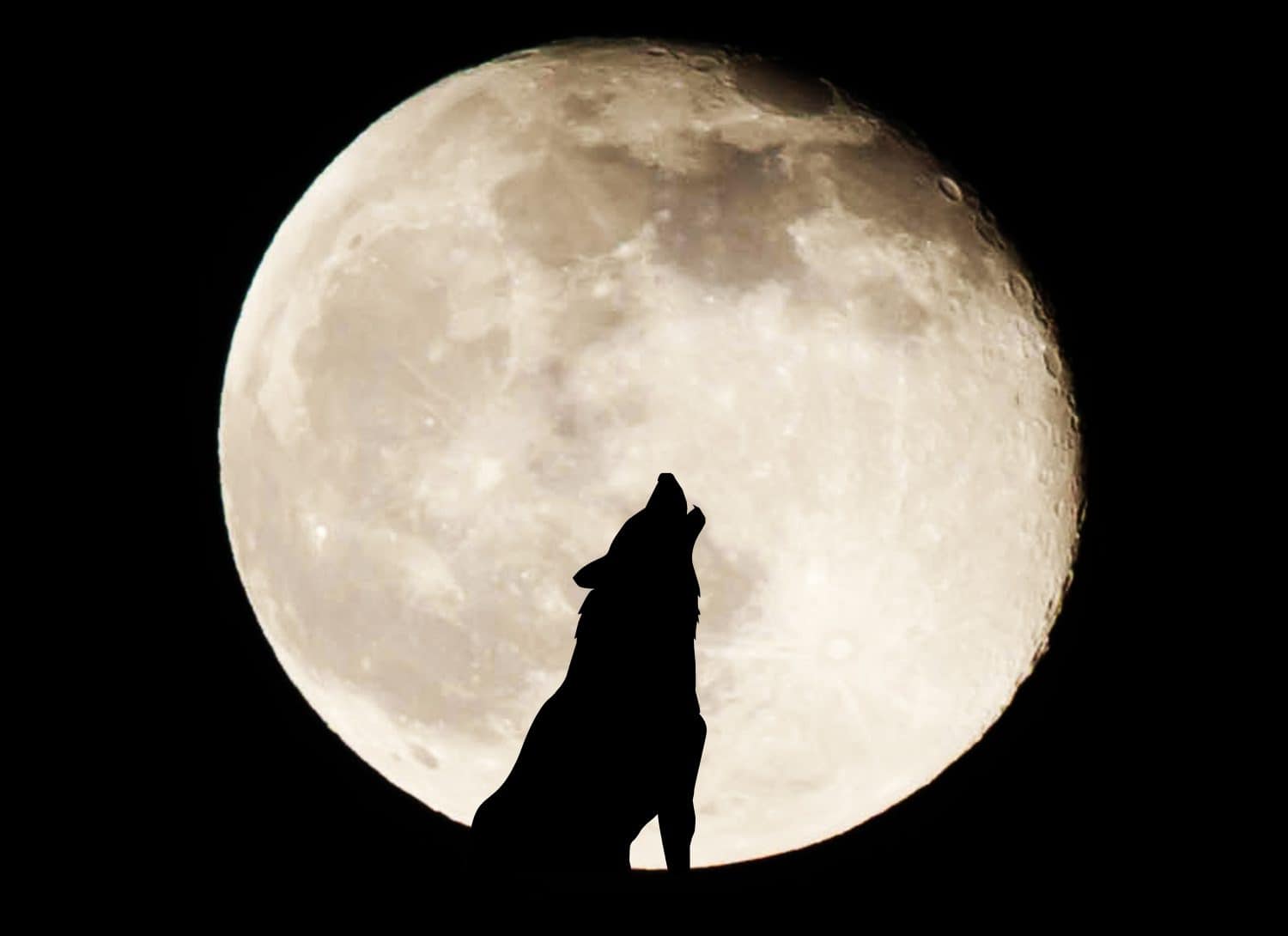

Almost all dogs, including wolves, howl in one way or another, and it’s common knowledge that wolves howl at the moon, right? It’s been portrayed in folklore and entertainment for as long as stories have existed. But do wolves really howl at the moon? Nope. The idea that wolves howl at a full moon is full of baloney. It is nothing more than a literary device or a Hollywood gimmick. So, where did the legend come from, and why do wolves howl?
It’s All About Communication
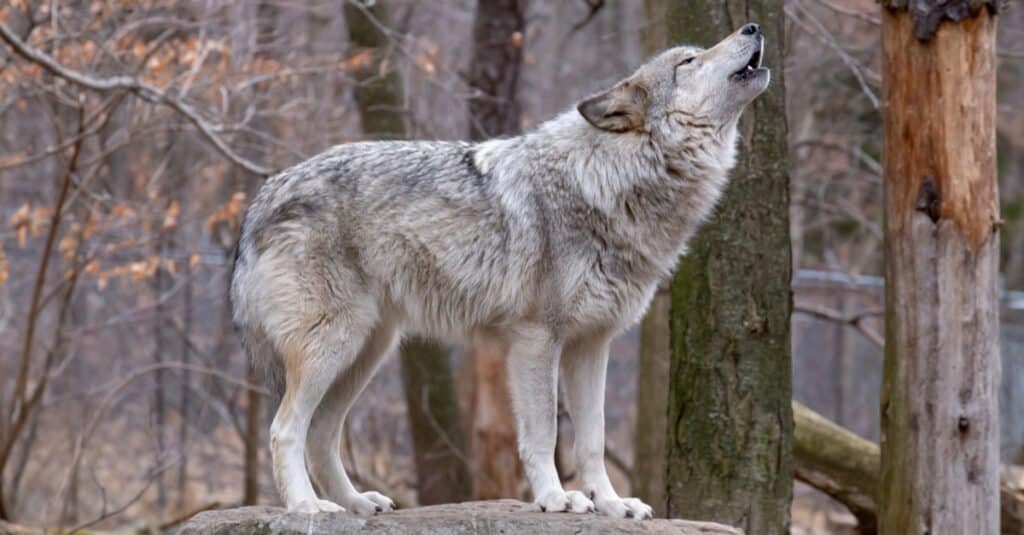
When a wolf howls, it is communicating with members of its pack or with competing packs.
©Allison Coffin/Shutterstock.com
The idea that wolves howl at the moon is derived from ancient civilizations, including Greek, Norse, and Roman mythology. More recently this image has been propagated through art and literature. Howling is a vocalization, and all vertebrate vocalizations are forms of communication. Wolves use howls to communicate to their pack or with competing packs about a wide variety of topics, none of which is related to the current lunar phase.
Studies have shown that wolves more often howl with pack members with whom they have a close relationship. This was determined by studying howling wolves’ saliva and measuring the level of cortisol found within. The research determined that cortisol was higher in the saliva taken from wolves that were communicating with other packs than that of those communicating within the pack.
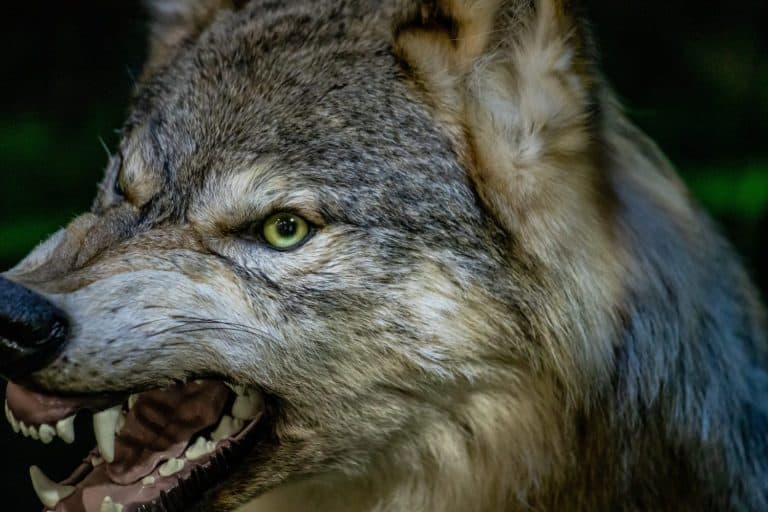
On open terrain, a wolf’s howl can be heard up to ten miles away, while in thick forest, a howl is audible up to six miles. The more excited the wolf, the higher the pitch of its howl. Wolves in a calmer emotional state tend to use a softer, lower-pitch. A wolf will also communicate using yips, barks, growls, and snarls, though these vocalizations are rare and typically used to communicate danger.
Other Forms of Communication
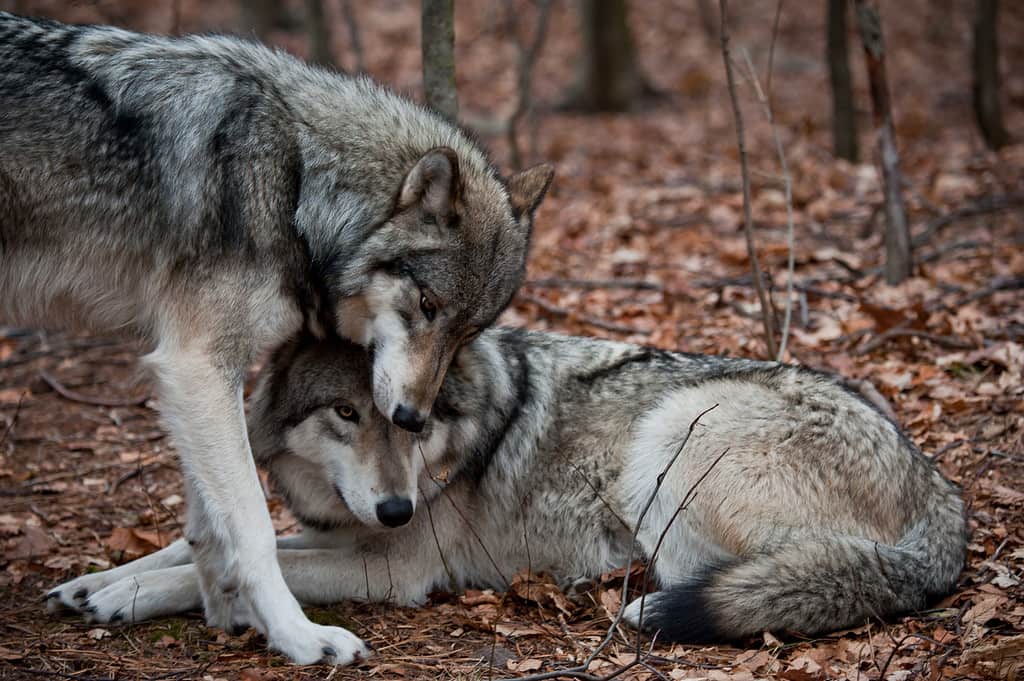
Wolves communicate using body language as well as howls.
©RamiroMarquezPhotos/iStock via Getty Images
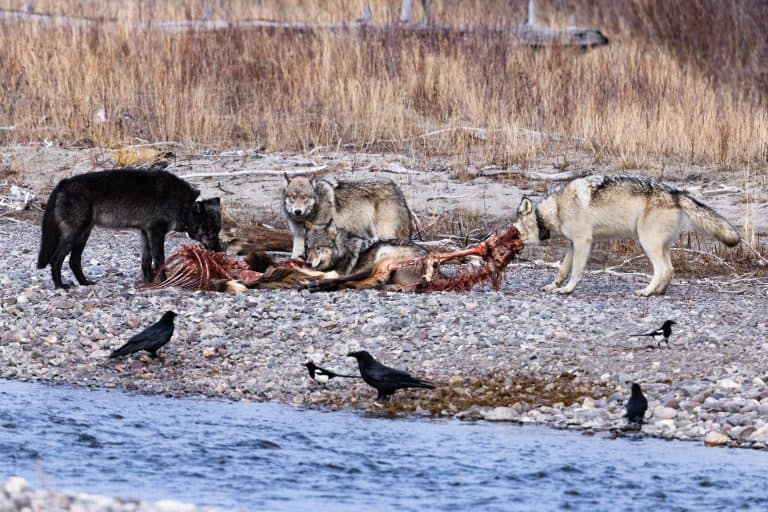
Many of us think of communication as only talking or writing to one another. However, the way humans share information is very different from how canines share information. Wolves will often use body language to show affection or convey dominance within a pack. From ear and tail positions to posture and facial expressions, wolves have other ways to communicate beyond their howls.
Wolves, like dogs, communicate by marking their territory with urine and scat. Wolves use their highly developed sense of smell to translate the message. Alpha pairs, the dominant male and female within a pack, may each mark their territory, to warn other packs to stay away.
When Do Wolves Howl?
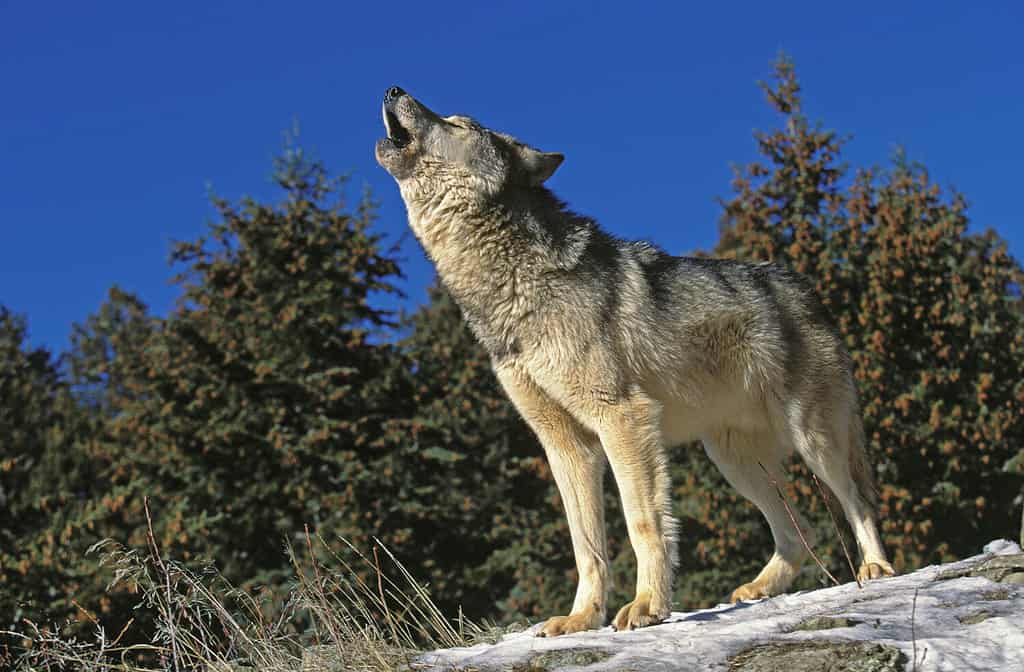
Crepuscular animals, wolves are most active in the hours around dawn and dusk.
©slowmotiongli/Shutterstock.com
Since most species like the gray wolf (Canis lupus) are crepuscular, it is not uncommon to hear howling in the hours around dawn and dusk. And while the moon may be present when the howling occurs, it is entirely unrelated to the moon’s presence. That the moon is out at the time wolves are the most likely to howl is nothing more than a coincidence. Wolves may howl during the day, in times of the new moon, and even when the moon is obscured by thick cloud cover.
There are many reasons why wolves howl. Sometimes it is to signal the start of a hunt, the presence of prey, a desire to move on, or even to signal their location after having been separated from the pack. Packs will even howl to warn rival packs to stay away from their territory. Wolf packs will harmonize when howling together, rather than matching the tone of the initiating member. This has the added effect of making the pack appear larger than it is to any potential rival pack or nearby predators.