
Quick Take
- Centuries of wolf-moon mythology trace back to one surprisingly practical behavior that has nothing to do with moonlight. Trace the myth's origins →
- A lost wolf separated from its pack howls to find its group. Hear how lost wolves call →
- Wolf packs can broadcast their size to rival packs without ever making visual contact. See how packs signal strength →
- Scientists can identify a wolf's species just by listening, and the reason why changes what we know about animal communication. Discover howling dialects →
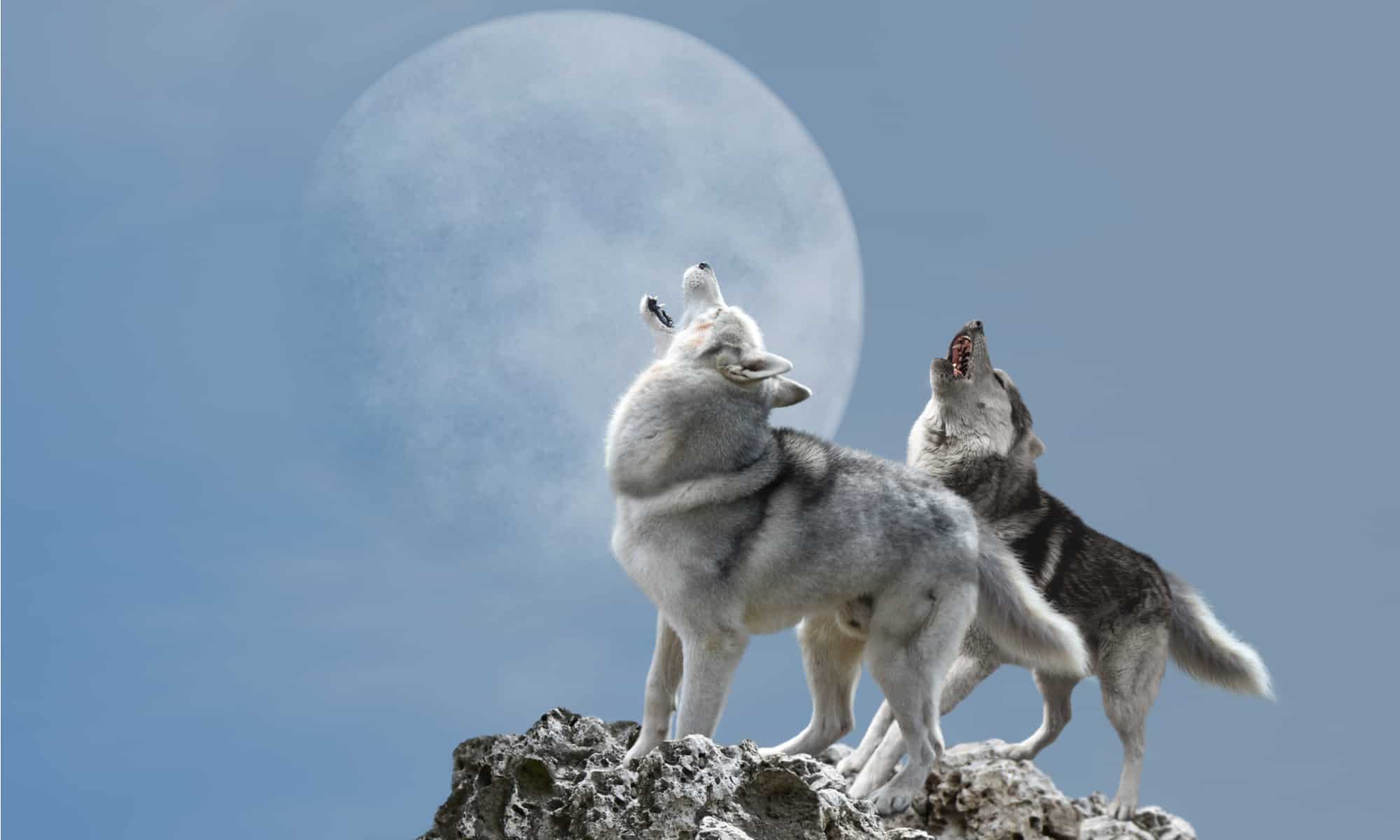
The eerie sound of a wolf howling at the moon has long been depicted in films, TV shows, books, and more. In legend and lore, we associate werewolves with the full moon. If you’re camping in an area where wolves roam and hear howling in the dark, you might assume it’s a pack of wolves howling at the moon. The reality is that wolves howl for many reasons, but none of them have anything to do with the moon. Despite the myth of the wolf paired with the moon, which dates back to ancient cultures, the real reasons wolves howl are perhaps even more fascinating.
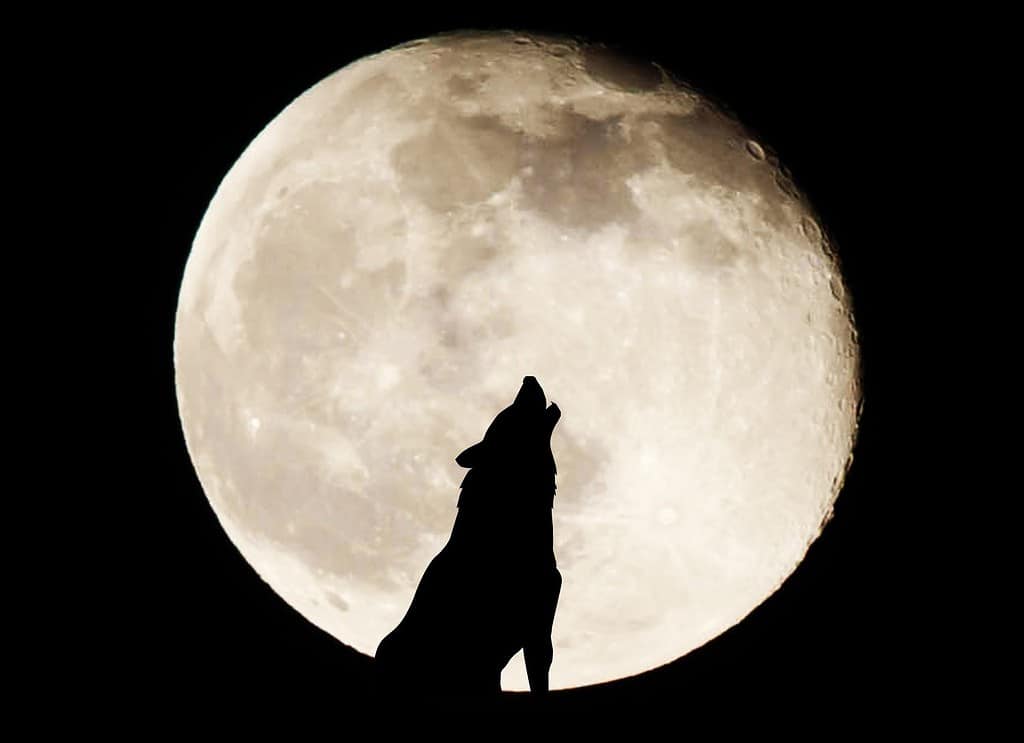
The myth of wolves howling at the moon can be traced back for centuries.
©Mongkol Rujitham/Shutterstock.com
The Lunar Legend and Human Perception
Many cultures, including those of ancient Rome, Greece, and the Norse world, have long linked wolves with the moon. According to tradition, the Seneca people of North America tell a story in which wolves sang the moon into existence. January’s full moon is called the “Wolf Moon,” likely because wolves tend to howl more frequently in winter as their breeding season begins. According to the non-profit, Partnership With Native Americans, although many believe the name originated with Native Americans, it was probably brought to North America by European settlers.
It’s easy to see why people have associated wolves with the moon for centuries. Wolves are actually crepuscular, meaning they are most active at dusk and dawn. They also hunt at night and often howl when the moon is visible in the sky. Additionally, they tilt their heads back when howling to help their voices carry farther. On a moonlit night, this posture can make it look as though the wolf is howling at the moon.
A Social GPS for Pack Coordination
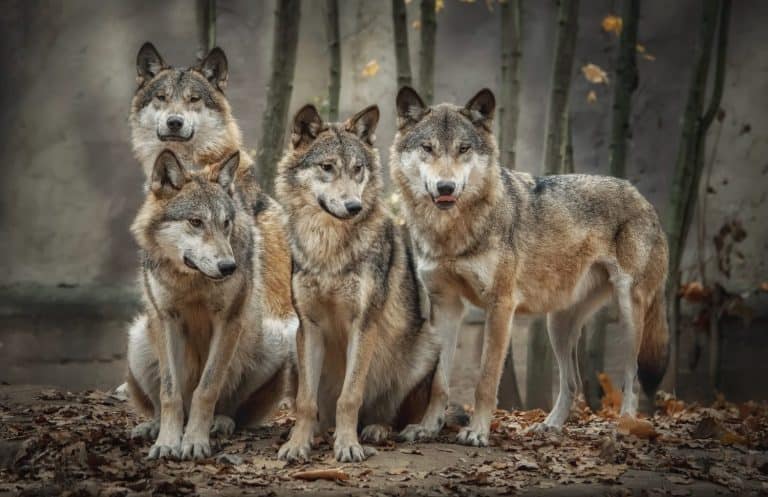
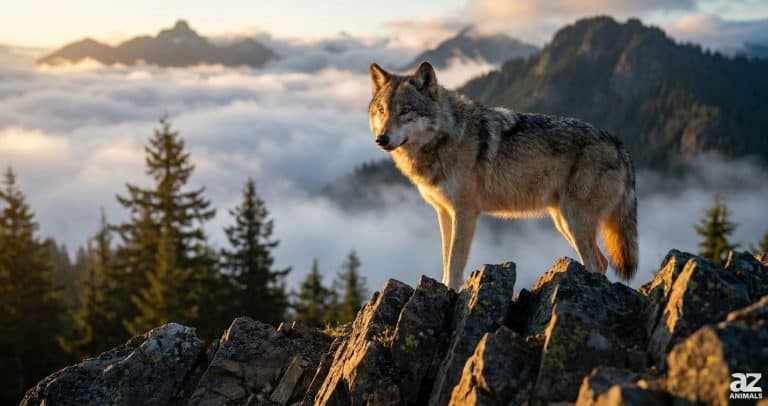
Wolves are social animals and live together in family packs. For example, gray wolf packs contain around five to eight individuals. However, some gray wolves have been observed traveling in packs of up to 36. A wolf pack’s range may cover 80 to 300 square miles, but in harsh environments, wolves may expand their range up to 1,000 square miles in search of food.
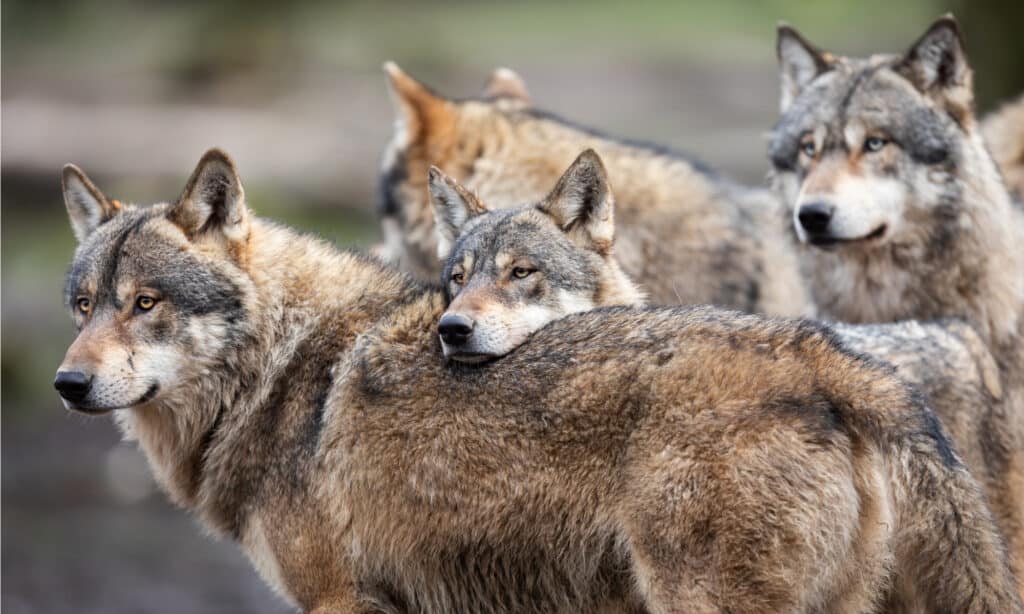
Wolves are highly social and live together in family packs.
©AB Photographie/Shutterstock.com
Pack members need to communicate with each other throughout the night. They can do so over long distances through howling. According to the Smithsonian National Zoo, a lost wolf separated from its pack emits a special howl to call for the group. When the others hear, they howl back, allowing the lost wolf to find its way home.
Defending Territory and Preventing Conflict
Another reason wolves howl is to defend their territory from other wolf packs without the need for physical conflict. By scenting, marking, and howling, wolves communicate the boundaries of their territory to warn others to stay away. When an entire pack of wolves howls together, it announces the size of the group, making would-be invaders think twice.
Each Wolf Has a Distinct Howl
Scientists studying wild Eastern gray wolves found that each wolf has its own unique howl that can be told apart from others. Other studies have found that wolves have their own dialects that correspond to the species or subspecies, which can help scientists identify different types of wolves through their howls.
The next time you hear a wolf howling at night, you’ll know it’s for reasons far more complex than simply howling at the moon. Wolves howl for a combination of reasons, including social bonding, territorial defense, and survival.