
When it comes to either avoiding predation or hunting through subterfuge, the natural world provides several camouflage strategies. Animals like leopards use disruptive coloration to blend into the savannah. Their prey, such as gazelles, however, rely on countershading to go unnoticed. Some animals take camouflage a step further by erasing themselves. Indeed, there are several creatures in both the ocean and on land that you can actually see right through.
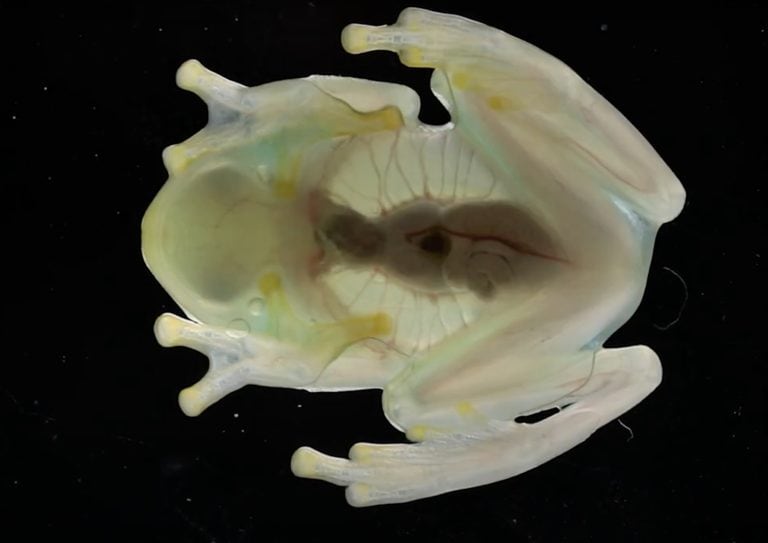
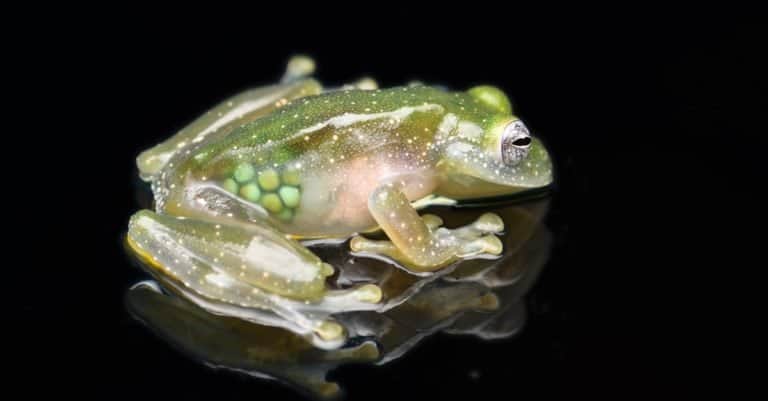
Animals like glass frogs have abdominal skin that’s so transparent that only their blood is visible, and even then, only when they are awake. While asleep, they easily blend into the green leaves they often use for beds. Invisibility is one of nature’s most impressive party tricks. It requires a suppression of pigment or a refraction of light to pull off effectively. When done well, you can’t even see the creature. Let’s learn more about the ten animals you can actually see right through.
Jellyfish (Aequorea victoria)
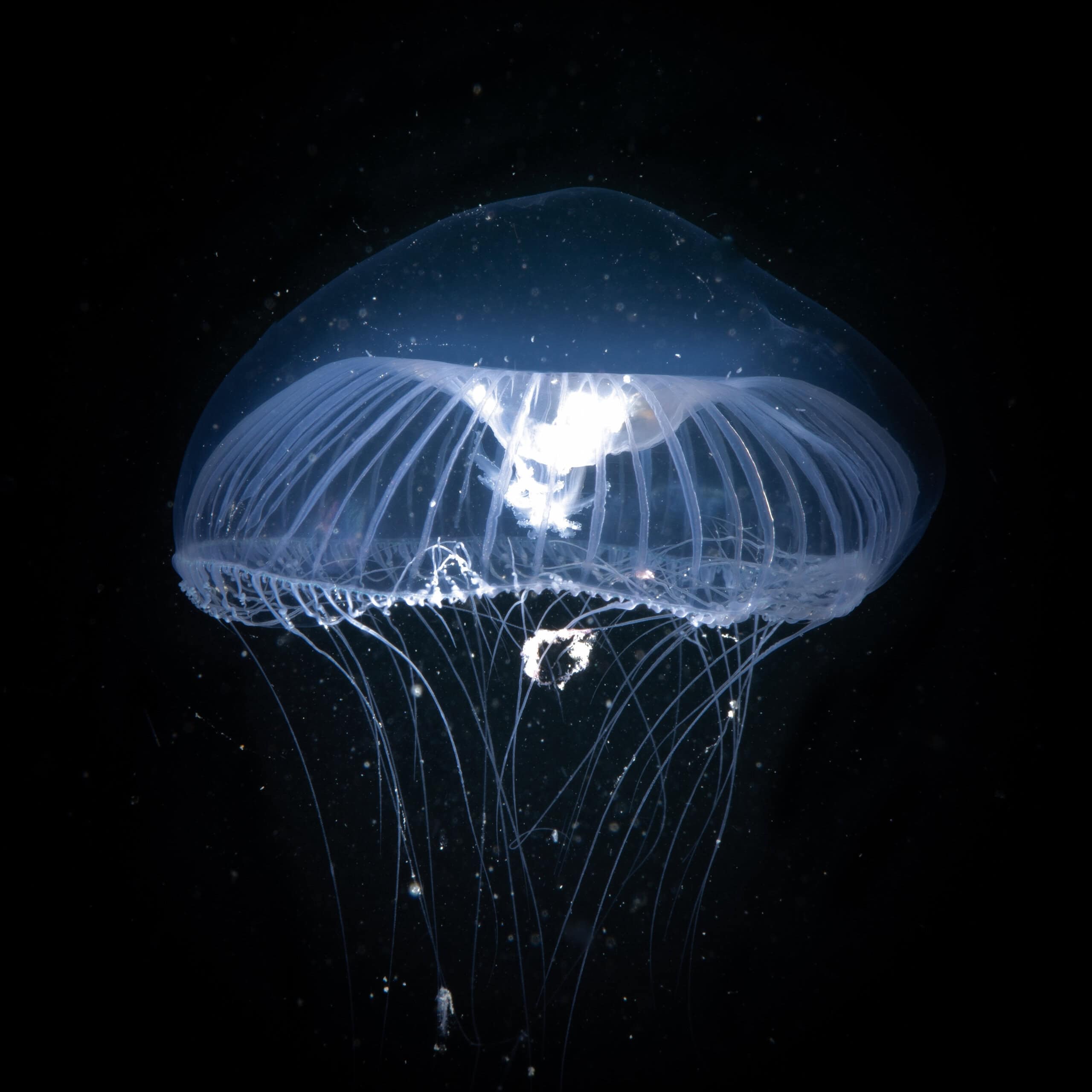
Proteins contained in crystal jellies led to the 2008 Nobel Prize in Chemistry.
©Wirestock Creators/Shutterstock.com
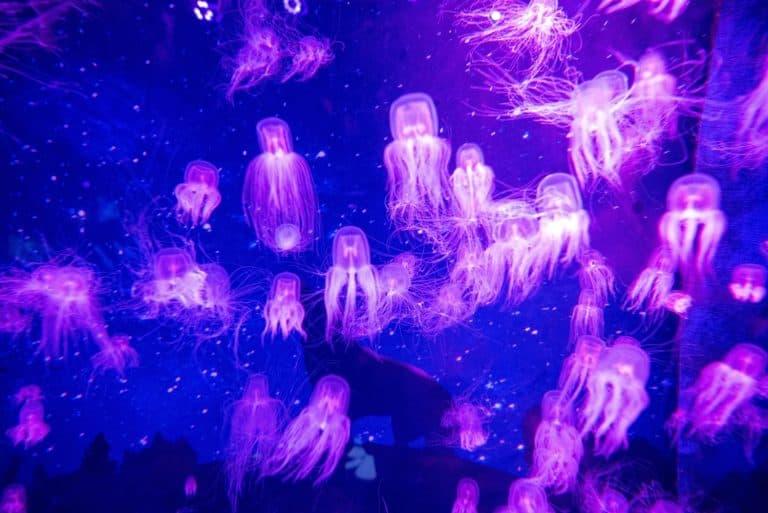
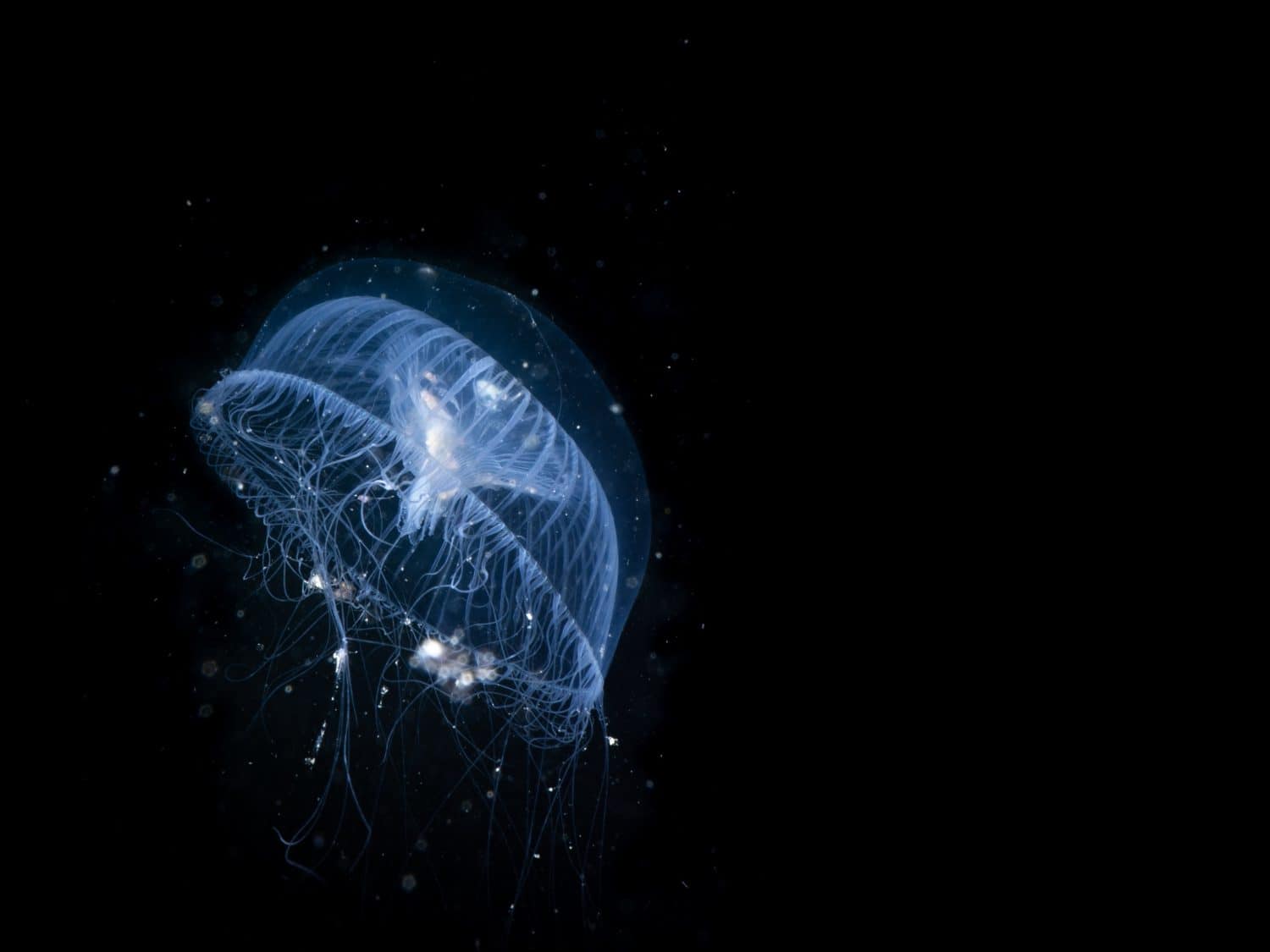
While most jellyfish are pretty transparent compared to other creatures, some species you can actually see right through. One of the more elusive creatures in the ocean, crystal jellies (Aequorea victoria) are almost entirely transparent. Only its gonads and radial canals remain slightly visible. That’s because its tissues contain proteins called aequorin and green fluorescent protein (GFP), which emit light. In fact, the discovery of this second protein (GFP) earned Osamu Shimomura, Martin Chalfie, and Roger Tsien the 2008 Nobel Prize in Chemistry.
Glass Squid
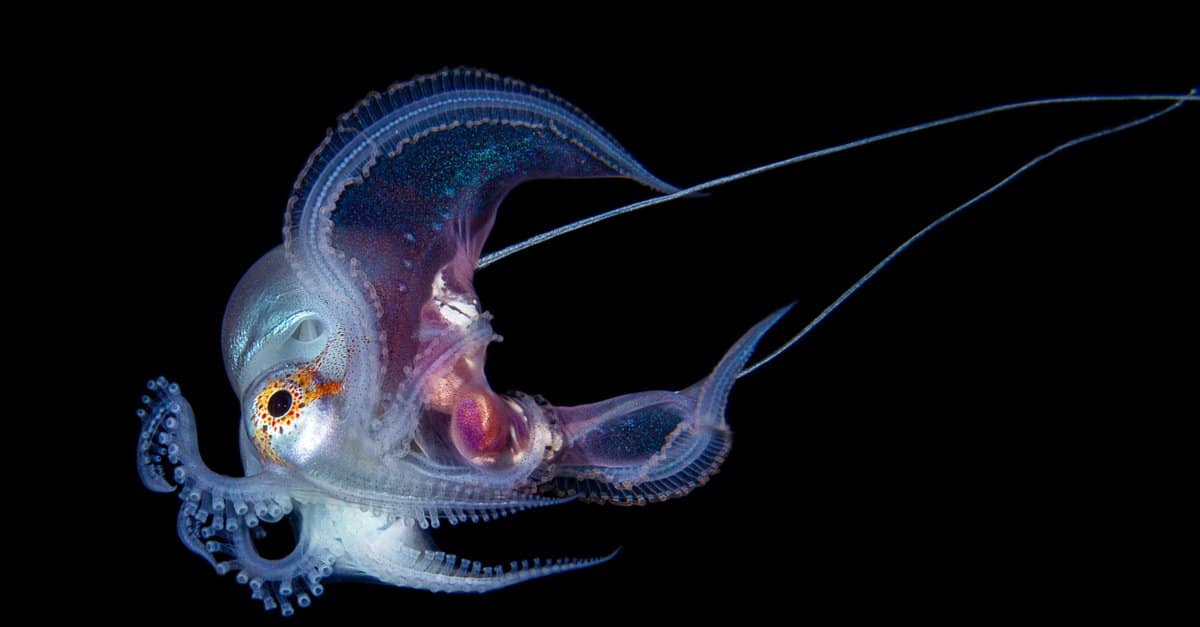
Glass squids have light-producing organs called photophores.
©Sam Robertshaw/Shutterstock.com
They may look like creatures from the depths of the ocean, but glass squids spend most of their time in its sunny shallow waters until they mature and venture lower. The Cranchiidae family features around 60 species of glass squid. Like transparent sea cucumbers, some of them have unique names: cockatoo squid, bathyscaphoid squid, and cranch squid. Glass squid have balloon-like bodies filled with an ammonia solution that keeps them relatively invisible. Some types of glass squid have photophores, which are light-producing organs that effectively mask their silhouettes to predators in the depths below. The only organ of theirs that remains visible is the digestive gland, akin to a liver.
Glass Frog
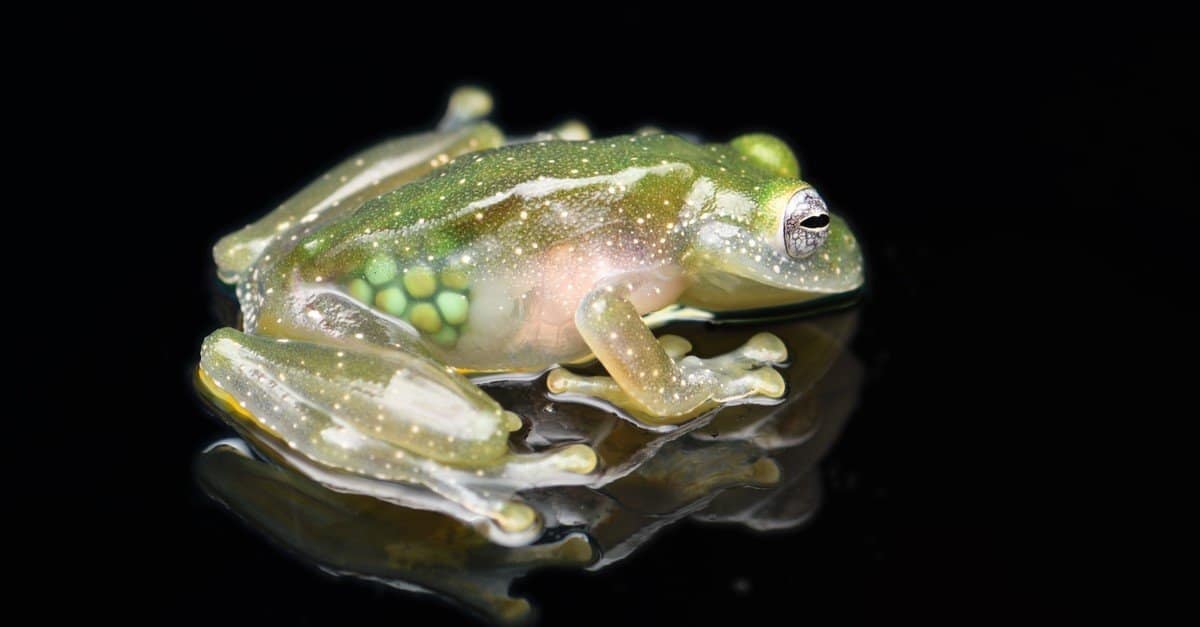
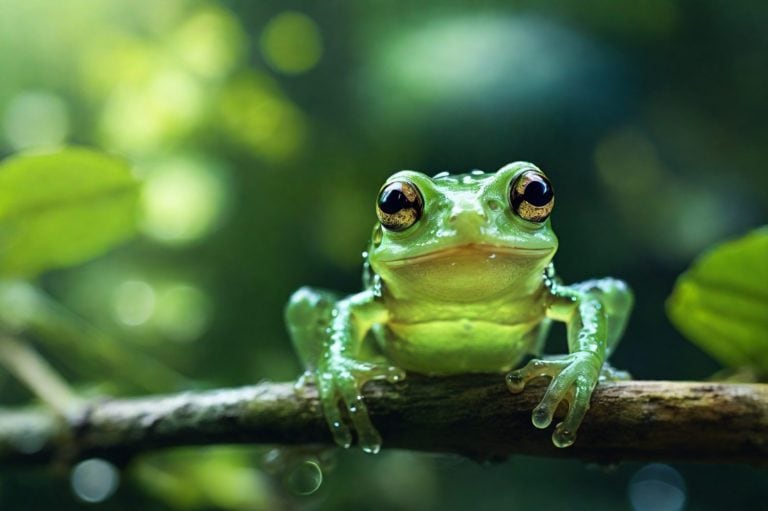
Glass frogs have translucent abdominal skin.
©petrdd/Shutterstock.com
These tiny frogs belong to the Centrolenidae family and are almost entirely see-through. They are native to the rainforests of Central America and Colombia, where they are nearly impossible to spot. That’s because they have translucent abdominal skin. While their blood makes them visible when they are awake, as it moves through their organs, they become almost invisible when asleep. The blood sticks to the liver, concealing any movement from potential predators. Since they usually sleep on green leaves, they disappear into the thick foliage they call home.
European/American Eel
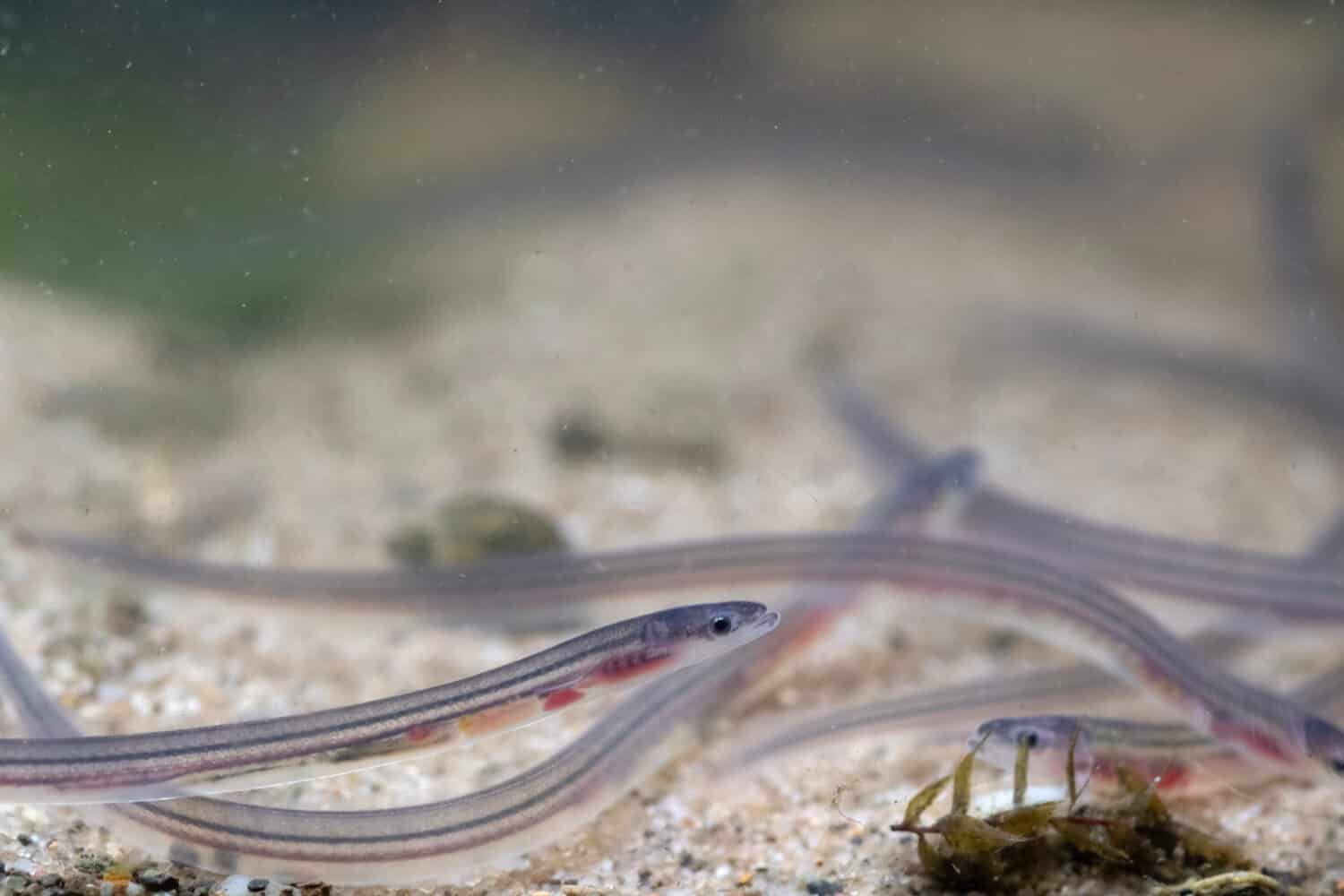
‘Glass eel’ is a term for the juvenile stage undergone by European eels.
©jack perks/Shutterstock.com
Some creatures, like European and American eels, are only blessed with real transparency during one part of their lives. Even so, much of an eel’s life remains a mystery to scientists. For centuries, it seemed like eels skipped their juvenile stage because fishermen had never caught them. It turns out, however, that juvenile eels enter a stage that temporarily makes them “glass eels.” After European eels hatch in the Sargasso Sea and head for the coast, they turn almost see-through. Only a faint outline of their digestive tracts and eyes remains visible. Once they make it from the ocean to the river, they gain color because they don’t need to hide as much.
Sea Angel
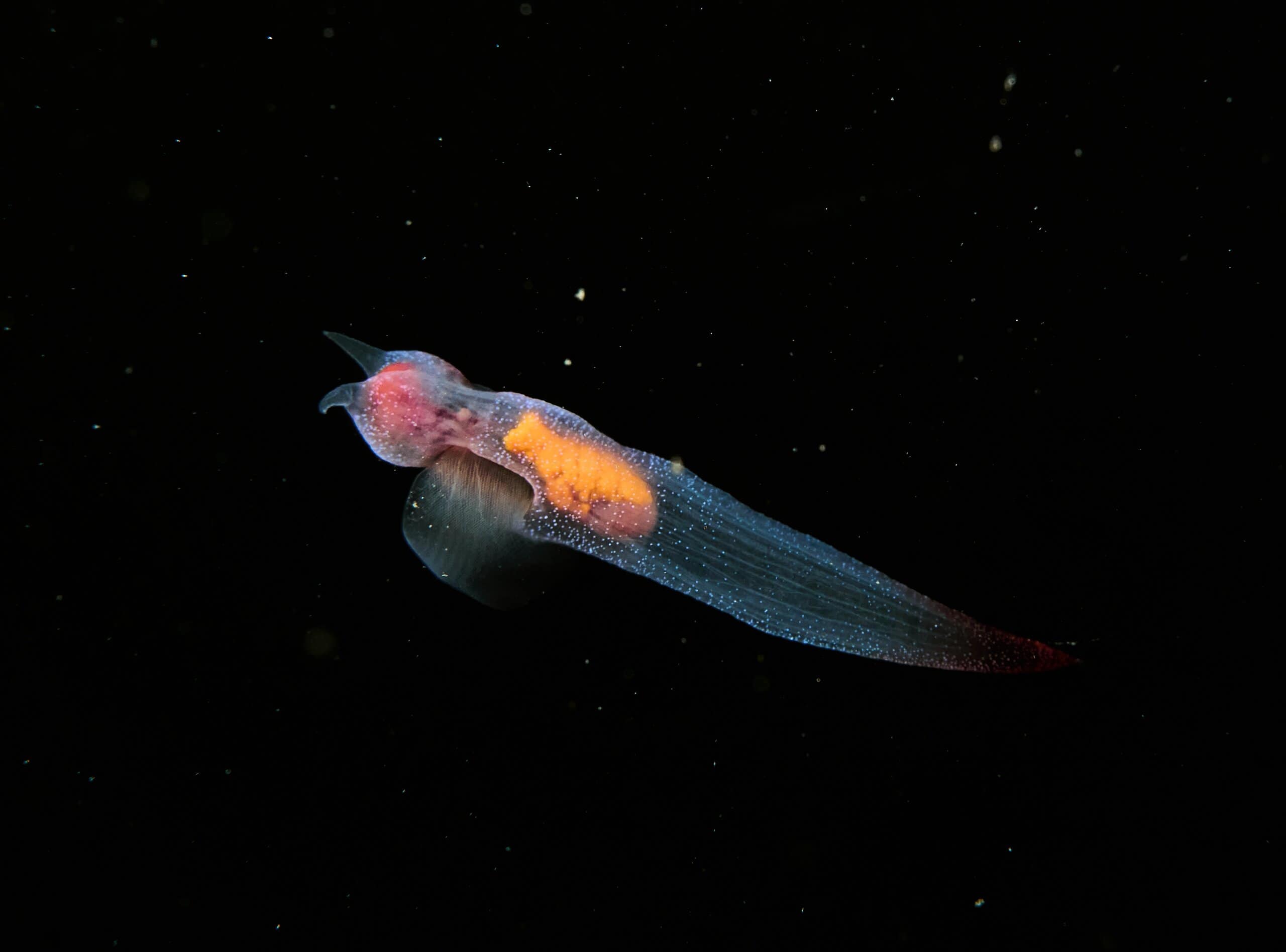
These free-floating sea slugs are only a few centimeters in length.
©Aleksei Miroliubov/Shutterstock.com
Sea angels are a group of free-floating sea slugs belonging to the family Clionidae within the order Gymnosomata. They are sometimes confused with sea butterflies, but sea butterflies belong to a different order (Thecosomata). That’s because of the variety within these families, plus the fact that some sea angels only feed on their sea butterfly relatives. These creatures also might be the smallest on this list; they reach no more than a few centimeters in length. They are characterized by clear gelatinous bodies that glow faintly in their internal organs. Some creatures use their transparent skin and frames to hide from predators. Sea angels, however, are the predators. They use the fact that you can see right through them to conceal themselves from prey. Lacking heavy shells, sea angels will drift to the water’s surface and over their for long periods of time.
Transparent Sea Cucumber
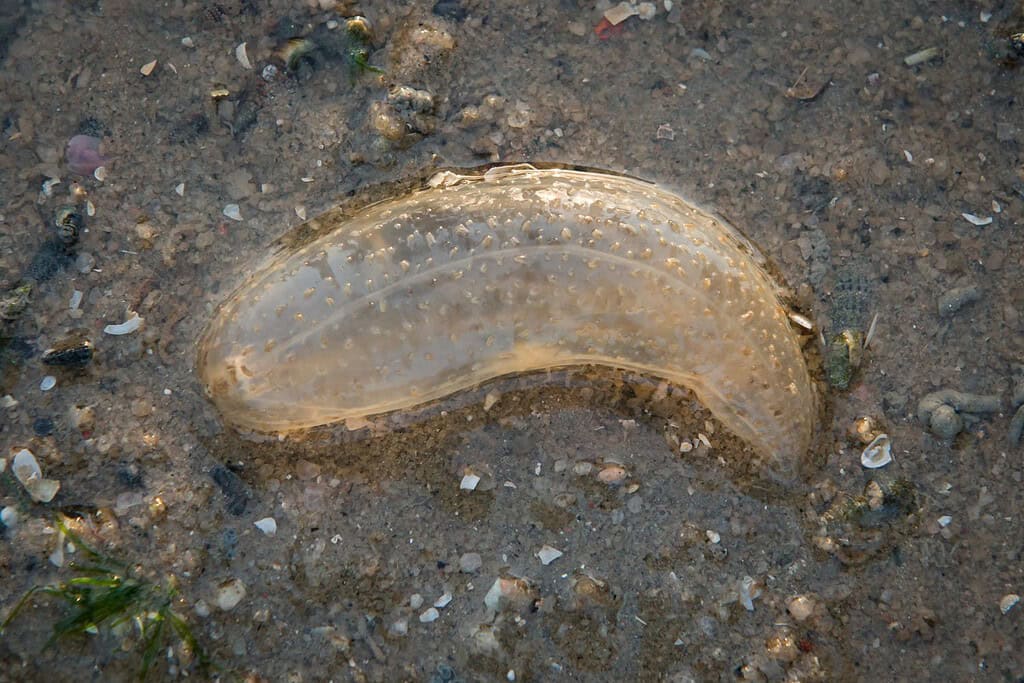
Transparent sea cucumbers are also called headless chicken monsters.
©Kim Pin/Shutterstock.com
The species Enypniastes eximia is monotypic, representing the Enypniastes genus. They are found all over the world, hanging out in the water column and periodically lowering to the seafloor to eat. They are less than ten inches long, but feature bright pink coloring that is semi-transparent. Unlike other transparent creatures, transparent sea cucumbers are actually more see-through after they eat. While they are more visible than other aquatic creatures on this list, transparent sea cucumbers can easily mesmerize a threat thanks to their ethereal colors and movements.
Icefish
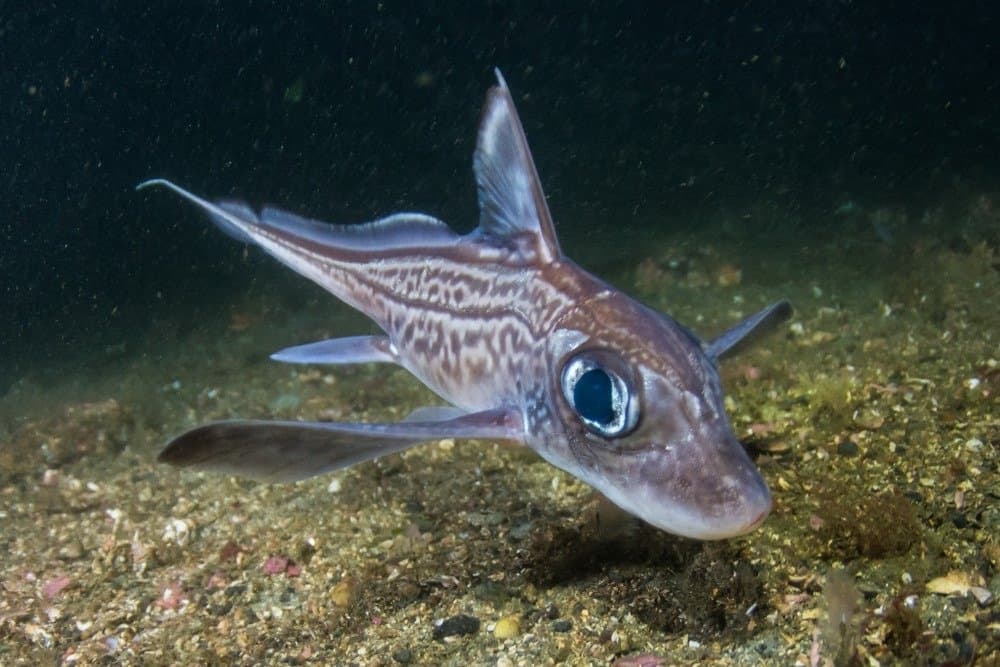
Icefish have colorless blood.
©Joern_k/Shutterstock.com
Also called crocodile icefish or white-blooded fish, icefish are not entirely transparent, but you would guess otherwise after looking at them. That’s because they lack hemoglobin in their blood. This gives icefish a ghostly, pale complexion that makes them practically see-through. To add to the illusion, they live in the icy depths of the Southern Ocean of Antarctica. In such low light with such colorless shades, icefish appear completely see-through.
Glasswing Butterfly

Glasswing butterflies can carry up to 40 times their body weight.
©Wirestock Creators/Shutterstock.com
Also called Greta oto, the glasswing butterfly is one of the rare examples of animals that you can see right through that also live on land. These butterflies thrive in tropical climates and can be found in the rainforests of Central and South America. Their transparent wings make for great camouflage amongst the foliage; they become the environment instead of trying to blend in. Their wings contain nanopillars, seemingly randomly arranged, that allow for a smooth refractive index gradient. Nor do they absorb much visible light. However, don’t be fooled by their delicate name and even more delicate appearance. Glasswing butterflies can carry up to 40 times their own body weight without breaking a sweat.
Glass Catfish
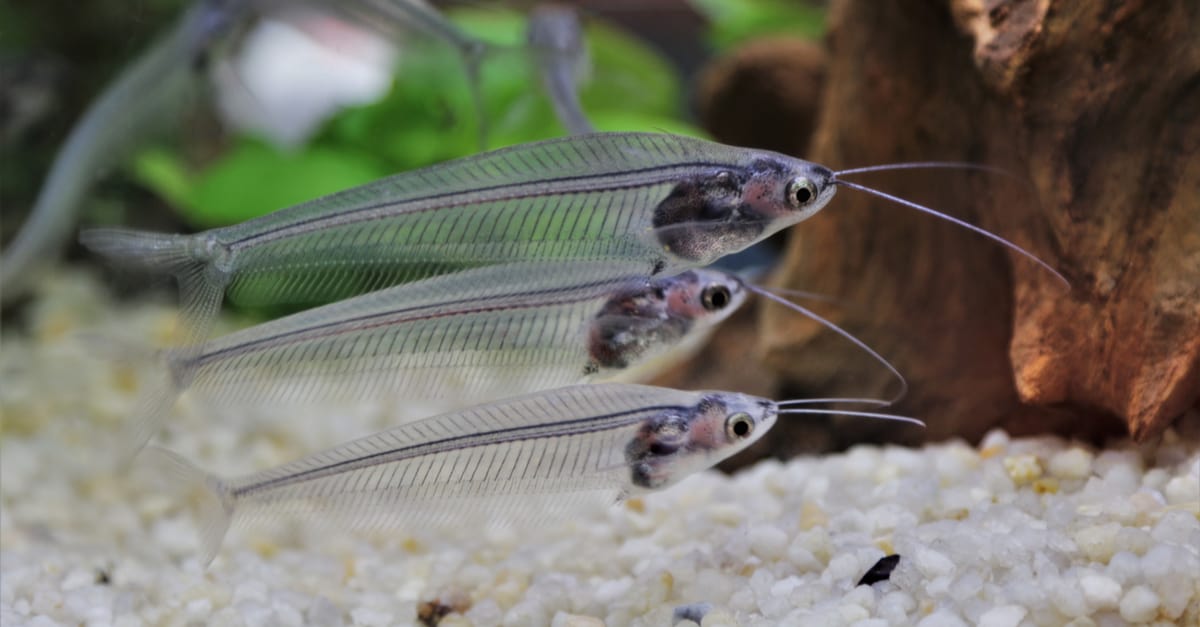
Glass catfish are native to Thailand.
©Arunee Rodloy/Shutterstock.com
While African glass catfish are fairly transparent, Asian glass catfish are literally translucent. Also known as Kryptopterus vitreolus, which is a combination of the Greek words for ‘hidden’ and ‘fin,’ these fish almost look like ghosts. They are native to the waterways near the Isthmus of Kra that drain into the Gulf of Thailand. There are also unverified reports of these glass fish living in Malaysia. Only several inches long, these phantom fish have skin composed of unique collagen fibrils.
These fibrils have a laminate-like structure that allows light to enter their bodies and refract through their muscles. Organs don’t get in the way because they are bunched up near their heads. In Thai folklore, the glass catfish is said to have come from the legendary king Phra Ruang. As the story goes, he ate a fish down to its bones before wishing it lived again. As such, the skeleton fish awoke as the glass catfish.
Salp
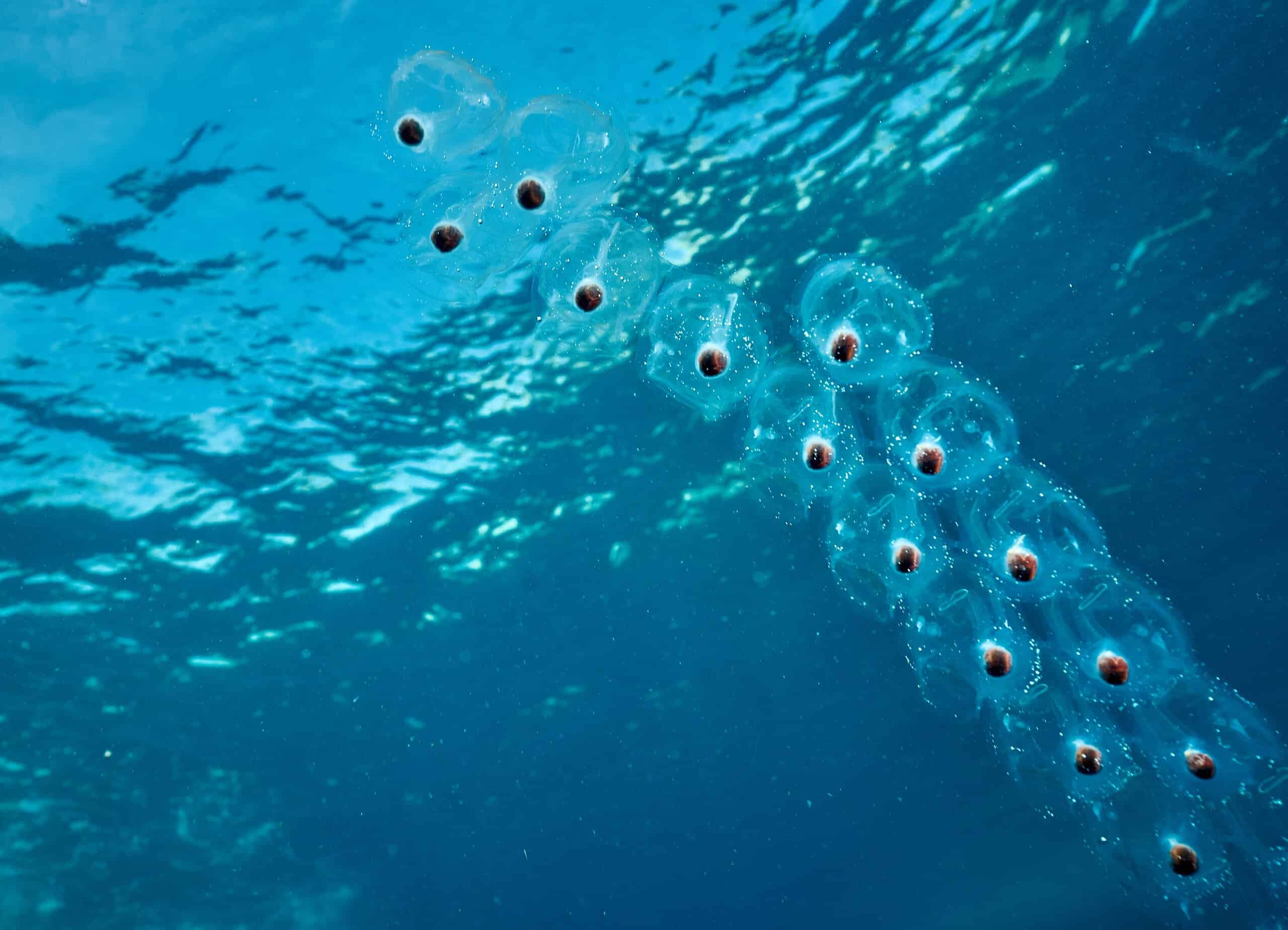
Salps form long chains that float around the ocean.
©Aleksei Miroliubov/Shutterstock.com
Besides being one of the more fascinating types of life in the ocean, salps are one of the few creatures on earth you can see right through. They are barrel-shaped, planktonic tunicates. To move through the water, salps contract bands of muscles that encircle their bodies. This action draws water in and expels it out their rear, making for an efficient example of jet propulsion. Minimal but perfectly adapted to their environment, salps have complex life cycles. While both parts of this cycle exist together in the water, they have very different appearances. The oozooid portion is solitary, reproducing with itself and producing a chain of ten to up to a hundred individuals. This chain, called blastozooids, represents the colonial part of the life cycle. These chains remain attached while they feed and swim. Sometimes, people mistake them for jellyfish when they wash up on the shore.