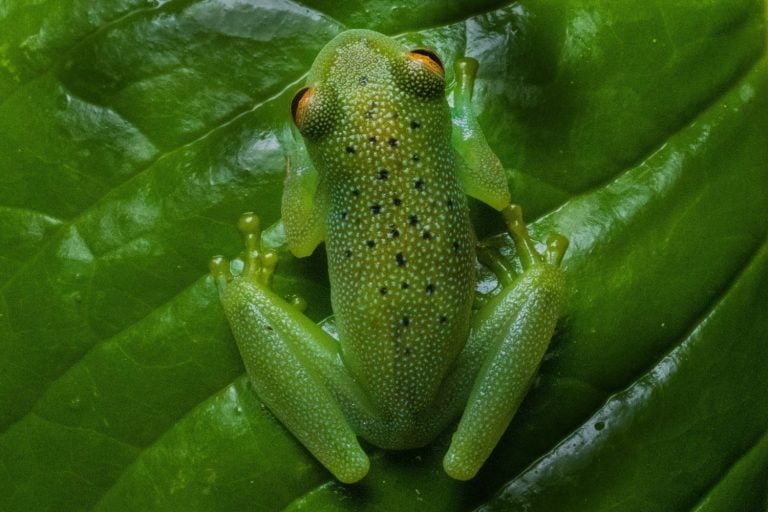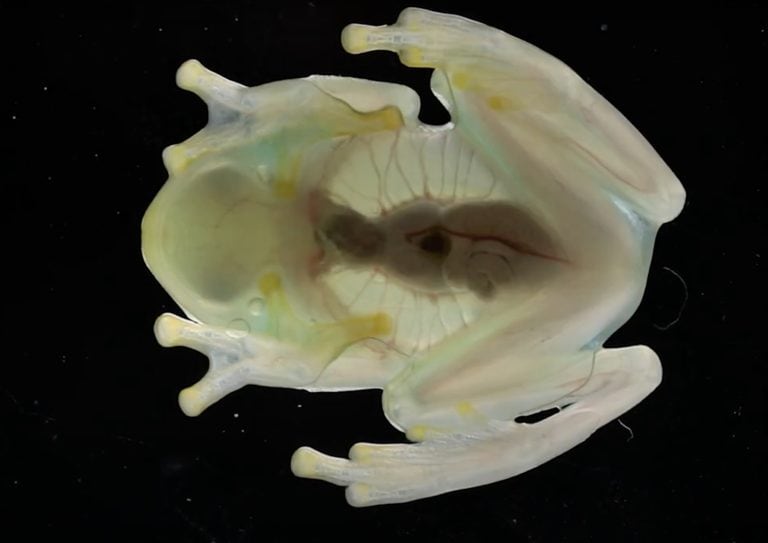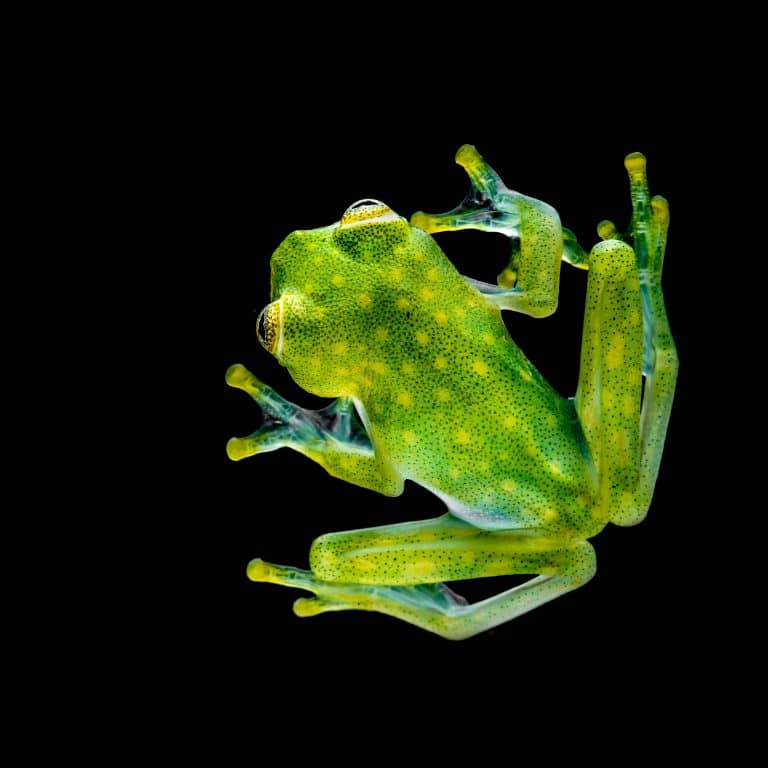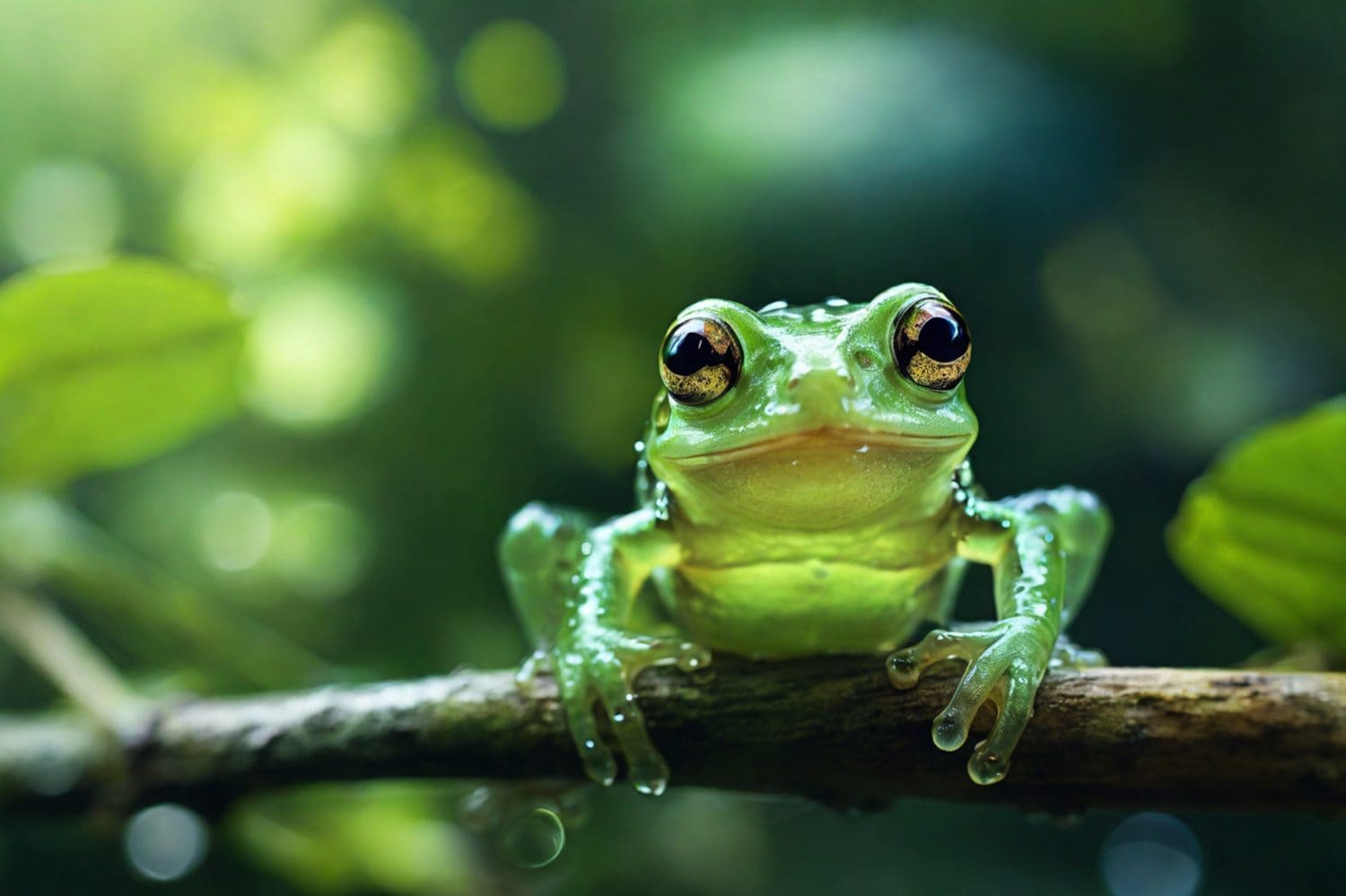

Nature is full of unique traits. Whether it’s a beautiful coloring or a striking pattern, there seems to be an endless amount of amazing sights to see. One of these unique sights—or lack thereof—is the slope-snouted glass frog. As its name suggests, this frog is transparent like glass! This Instagram post by @bbcearth shows this frog up close. Read on to learn more about this amazing frog species!
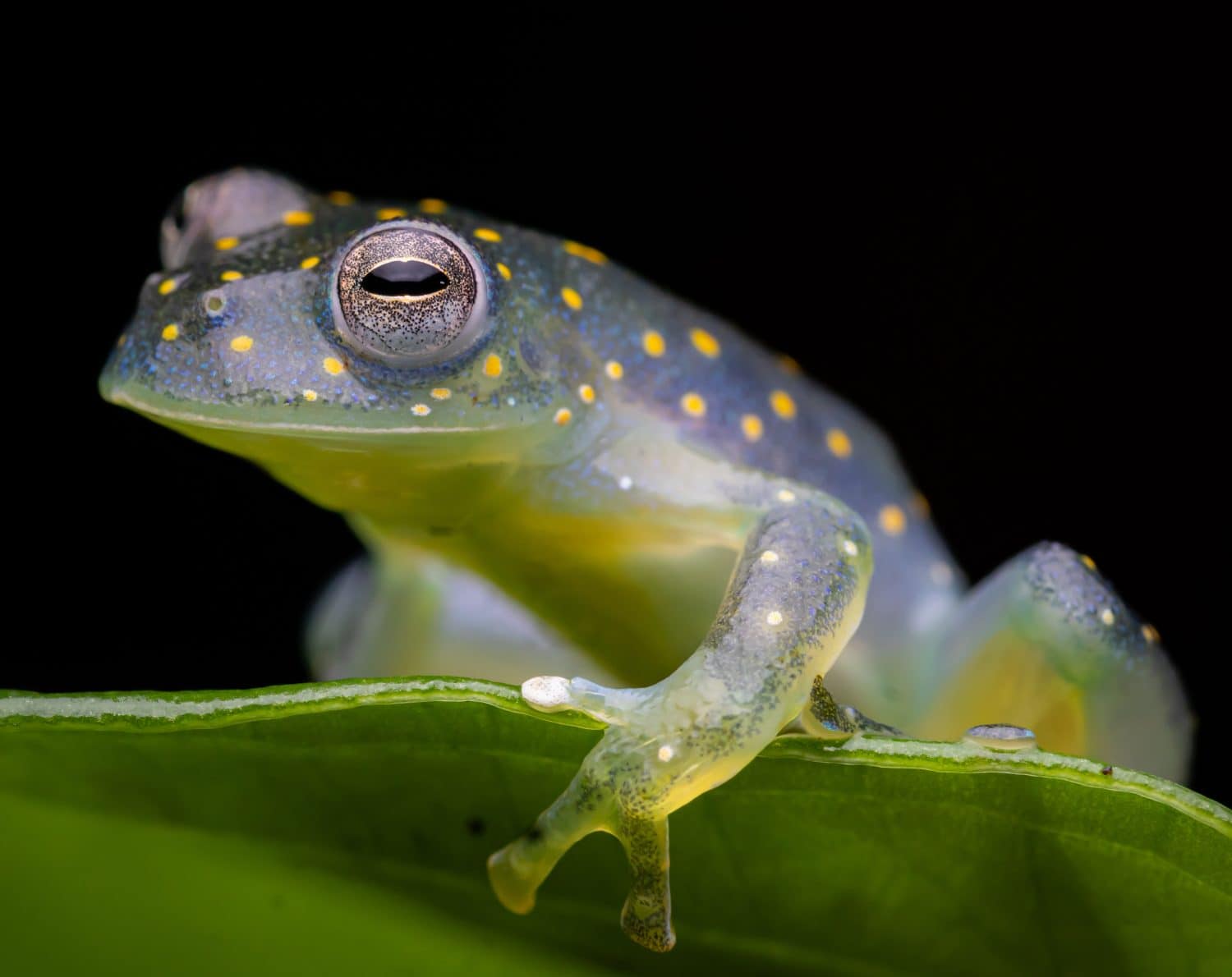
The glass frog has translucent skin.
©Jerouth Abarca/Shutterstock.com
Slope-Snouted Glass Frog
The slope-snouted glass frog is part of the Centrolenidae family, also known as the glass frog family. This particular species inhabits tropical rainforests throughout Costa Rica, Panama, Colombia, and Ecuador. They are arboreal frogs, meaning they dwell in trees, and they are nocturnal. While they feed and move at night, they rest underneath leaves during the day. Even without their transparency, these frogs are difficult to see, as they only grow to around an inch in length. The top of their bodies is a bright lime green, helping them blend into the greenery of the rainforests they call home.
Transparency?
These frogs are famous for their transparency, but how does it work? Like other glass frogs in the family, the slope-snouted glass frog has skin so thin that it is almost clear. This allows you to see its internal organs, even the active beating of its heart. This transparency is partly due to pigment cells called chromatophores. In glass frogs, these cells function differently than in other species, allowing light to pass through the skin instead of reflecting off it. While amazing to look at, their transparency also serves a practical purpose. The transparency helps the frog to blend into the leaves that they rest on, with their bright green backs matching the color. This makes the frog difficult to see, especially as it moves at night. Glass frogs can actively increase their transparency while resting by removing up to 89% of their red blood cells from circulation and storing them in their liver. This process makes them significantly more transparent. When active, the red blood cells return to circulation, reducing their transparency. These frogs are an amazing example of the diversity that can be found in nature.