Quick Take
- The kākāpō is a flightless parrot inhabiting just a few islands off New Zealand’s coast.
- Females breed only when specific forest conditions align to produce rare food-rich periods, and those conditions can take years to return.
- A single female may produce few chicks over an entire lifetime.
- By the late twentieth century, kākāpō numbers had collapsed due to hunting and introduced predators, which decimated the population.
- Monitoring across kākāpō islands shows that 2026 qualifies as a mega mast year, making it crucial to the species.
Few animals depend on timing as tightly as the kākāpō. This flightless parrot is found only on a few predator-free islands off the southern coast of New Zealand. It breeds only when specific forest conditions align, and those conditions can take years to return. After four quiet breeding seasons, 2026 marks a rare opening. Heavy fruiting in native rimu trees has triggered breeding behavior across multiple islands, giving conservation teams their best chance in years to grow the population. With an estimated 236 birds alive worldwide as of early 2026, the outcome of this breeding season could shape the species’ future well beyond a single year.
Meet the Kākāpō
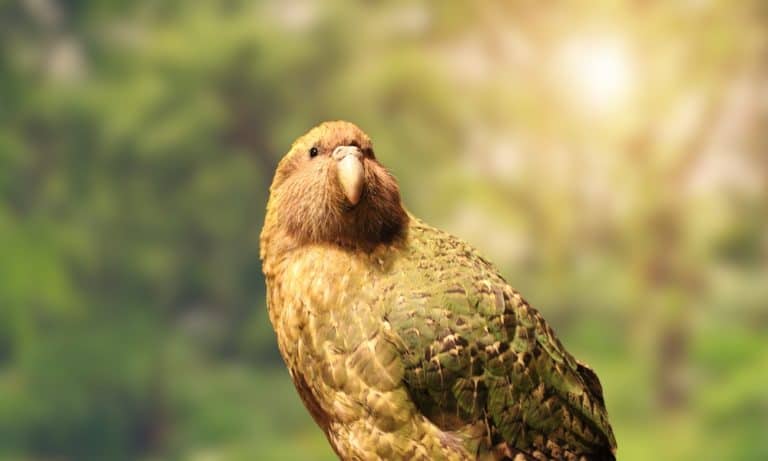
Unlike most parrots, the kākāpō lives on the ground and moves mainly at night. It uses strong legs to climb trees and relies on balance rather than flight to descend. Adults are among the largest parrots in the world, with males weighing up to about 9 pounds (4 kilograms), making the kākāpō the heaviest parrot species known. Their green and yellow plumage provides camouflage against forest plants, which once helped them avoid predators that hunted by sight.

The kākāpō is a large, flightless parrot that lives and nests on the forest floor.
The species evolved in isolation, without mammalian predators. As a result, kākāpō show little fear and reproduce at a slow pace. Individuals can live 60 to 90 years, but females breed only during rare food-rich years and may produce few chicks over an entire lifetime. These traits were well suited to ancient forests but became dangerous after human arrival. Introduced predators, including rats, stoats, and feral cats, preyed on eggs, chicks, and even adults, while habitat loss accelerated the species’ collapse.
Decline and Near Extinction
By the late twentieth century, kākāpō numbers had collapsed. Hunting and introduced predators decimated the population. Eggs and chicks were especially vulnerable. By 1995, only 51 birds remained, including just 20 females capable of breeding.
Conservationists moved surviving birds to offshore islands where predators like rats and cats had been completely eradicated. Each bird received a transmitter, allowing constant tracking. This effort required long stays in remote locations and careful planning. Over time, survival improved. Breeding seasons remained rare, but when conditions aligned, numbers increased. Heading into 2026, official records list 236 living kākāpō, a fragile gain built over decades of work.
The Role of Rimu Trees
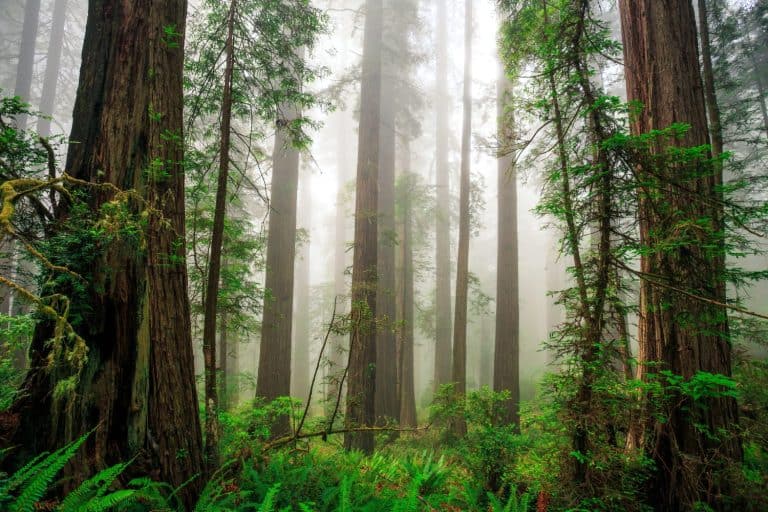
Kākāpō do not breed every year because raising chicks requires an unusually large and stable food supply. Females must produce eggs, incubate them alone, and then feed chicks for several months without help from males. Rimu fruit provides the calories and nutrients needed for egg production and for sustaining chicks through early growth.
The rimu fruits lightly most years. When fruiting is low, females are unlikely to maintain their own body condition while raising young, so most do not attempt to nest. But every several years, called mast years, weather conditions line up across multiple seasons so that the trees produce unusually large amounts of fruit at the same time. This triggers more intense breeding behavior across the species. By waiting for heavy fruiting years, kākāpō increase the chance that chicks will survive to independence.
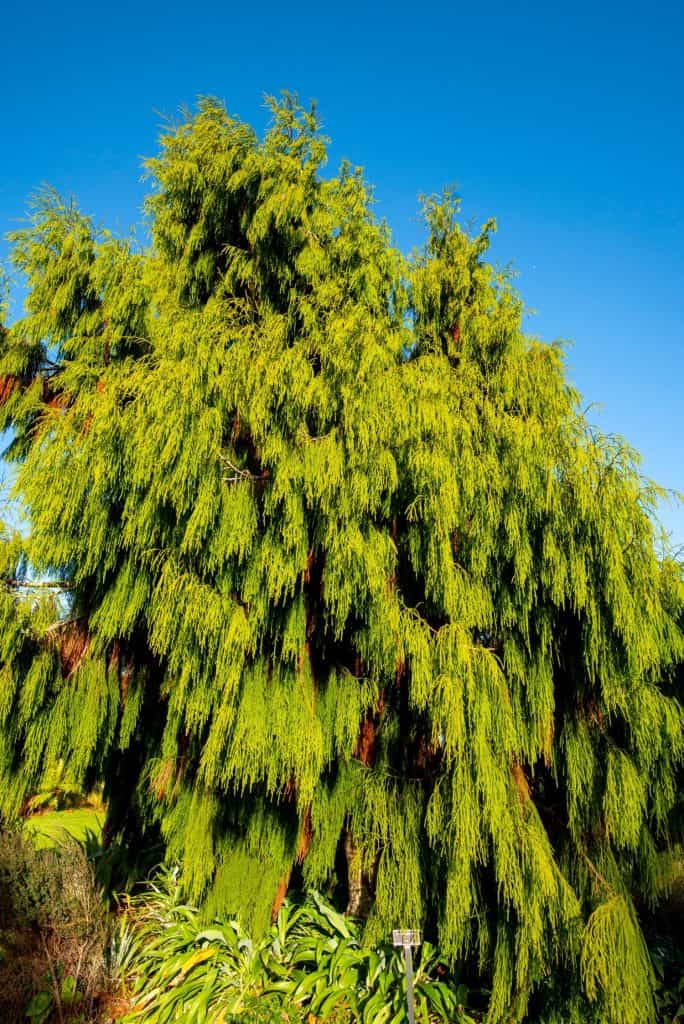
This is a rimu tree, which is essential to the breeding patterns of the kākāpō.
©Adwo/Shutterstock.com
Research shows that when fruiting reaches about ten percent of branch tips, some females attempt to nest. Higher fruit levels bring more breeding activity. In years with low fruiting, most females skip breeding entirely. This link explains why the species may go several years without nesting, then suddenly produce many chicks at once.
Why 2026 Matters
Monitoring across kākāpō islands shows that 2026 qualifies as a mega mast year. Fruit development on rimu trees is projected at roughly fifty to sixty percent of branch tips. That level supports widespread breeding and may allow some females to attempt replacement clutches if early nests fail.
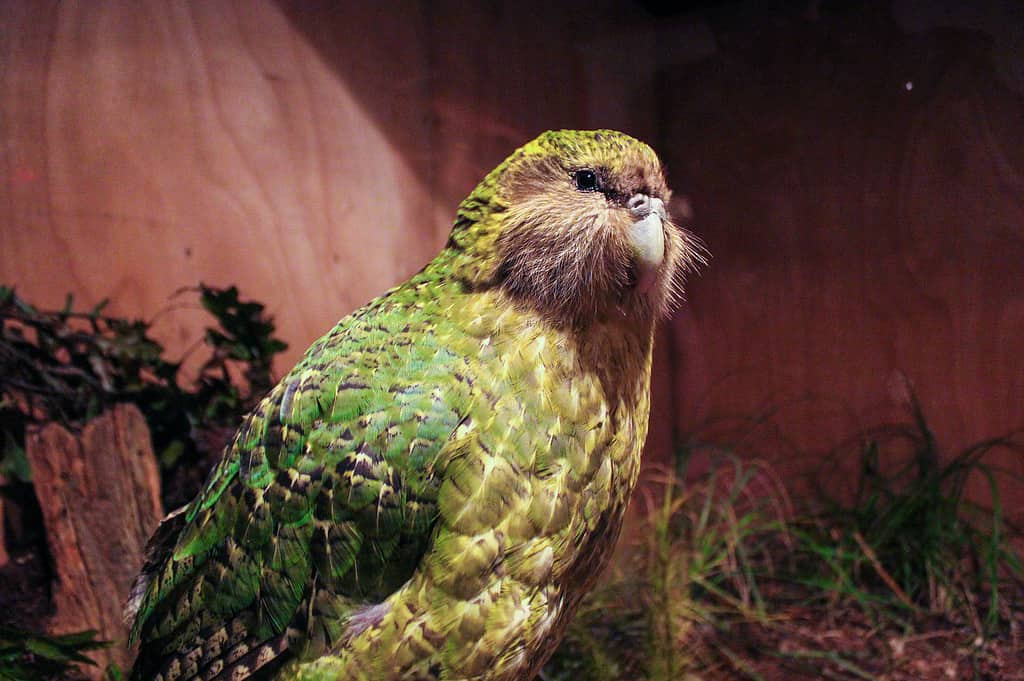
The kākāpō is the world’s heaviest parrot and breeds only during rare food-rich years.
©Imogen Warren/Shutterstock.com
The timing matters. The last breeding season occurred in 2022. Since then, adults have aged, recovered condition, and avoided breeding stress. About 83 females are now considered breeding age. If conditions hold, 2026 could involve the largest number of active nests ever recorded. Because breeding events are so rare, success or failure this year will influence population growth for many seasons.
Breeding Behavior and Chick Care
During mast years, males gather at display sites called leks. Each male prepares a bowl-shaped depression in the soil and produces low frequency booming calls. These calls travel long distances through forested valleys.
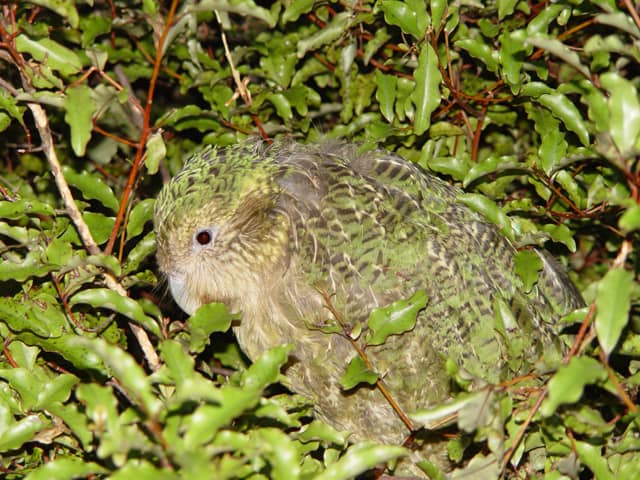
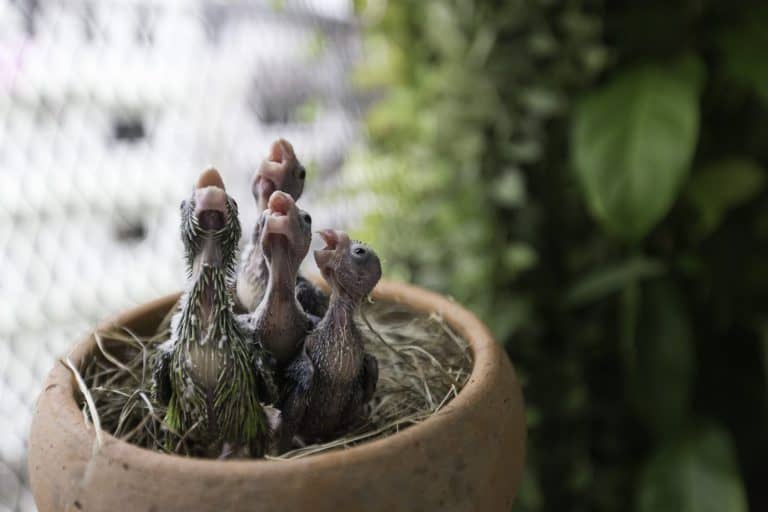
Most successful kākāpō nests raise only one chick, making each hatchling important.
Females visit multiple males, then return alone to nest. They choose hidden locations under roots or rocks. Clutches range from one to five eggs. Females handle all incubation and chick feeding without help from males. Most successful nests raise a single chick. Given the species’ long lifespan and slow reproduction, each chick represents a meaningful step forward.
Population Growth and Limits
Strong mast years can produce dramatic gains. In 2019, intensive management helped 72 chicks survive to fledging. The 2026 season could match or exceed that outcome, depending on weather, disease risk, and food stability.
Still, gains remain fragile. Storms can flood nests. Disease can spread quickly in dense populations. Because breeding opportunities may not return for several years, poor outcomes cannot be easily offset. Conservation teams describe 2026 as a high stakes window, where preparation and luck must align.
Disease and Genetic Challenges
Disease remains a serious concern. In 2019, a fungal infection called aspergillosis killed several birds, including chicks. Since then, health screening and environmental monitoring have increased. Staff now act quickly at early signs of illness.
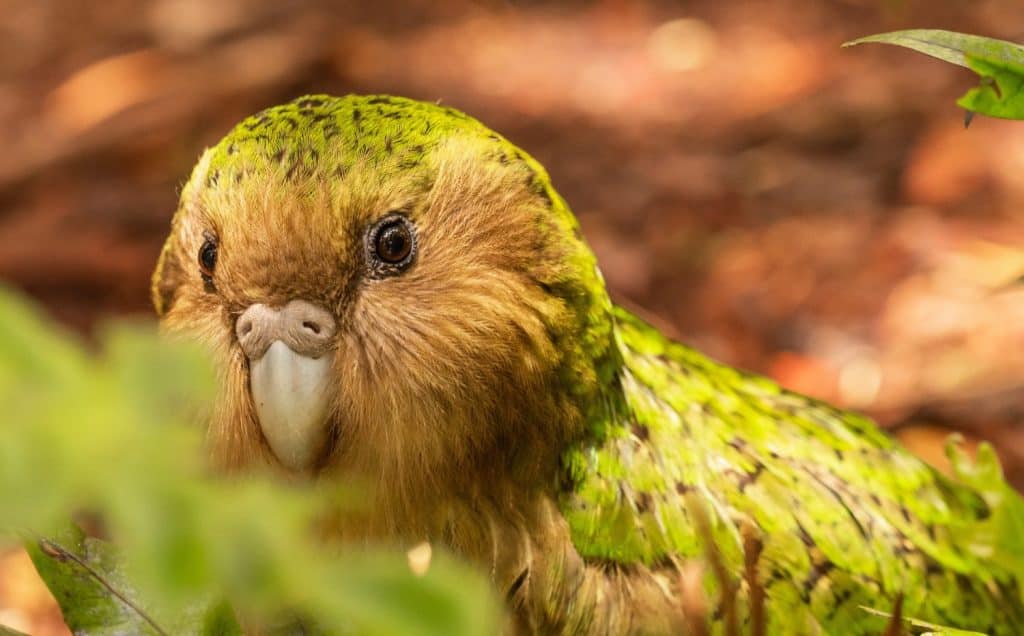
All living kākāpō descend from a small population, making genetic care essential.
©FeatherStalker Don/Shutterstock.com
Genetics also limit recovery. All living kākāpō descend from a small number of founders. That history affects fertility and chick survival. Scientists use genetic data to guide breeding decisions and sometimes assist reproduction through artificial insemination. The goal is to spread genetic material more evenly across generations, improving long term resilience.
Shifting Conservation Strategies
Early recovery efforts focused on saving every possible chick. As numbers have grown, managers are adjusting their approach. On some islands, particularly Te Kākahu, teams now allow selected nests to proceed with less intervention.
This shift helps researchers understand natural survival rates and reduces long term dependence on human care. In 2026, not every nest will receive equal attention. Resources will focus on genetically valuable pairings and higher risk situations. While this approach accepts short term losses, it supports the goal of a population that can persist with less constant management.
Capacity and Future Habitat
Current islands are nearing their limits. Managers continue to explore new locations, including mainland sanctuaries with intensive predator control. These sites carry higher risk, as fences and traps cannot guarantee complete safety.
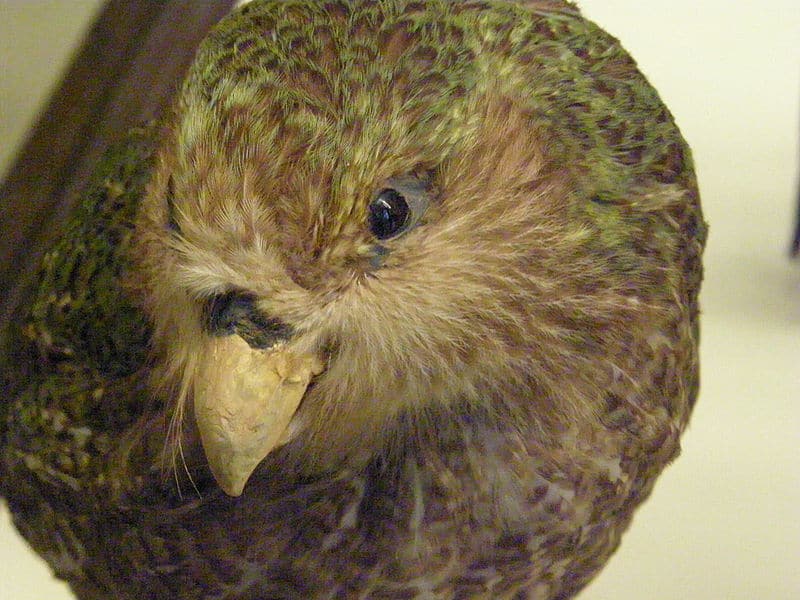
Close monitoring helps protect the kākāpō from disease and genetic risks.
Past trials showed that kākāpō are skilled climbers and explorers. Some birds escaped protected areas and had to be retrieved. Future expansion depends on improving mainland protection methods and ensuring birds can remain safe without constant retrieval.
What 2026 Represents
For the kākāpō, 2026 is not just another breeding attempt. It brings together rare forest conditions, the largest group of breeding-age females seen to date, and decades of refined conservation work, including improved genetic planning and disease monitoring. If the season succeeds, the population could move closer to long-term stability. If it fails, the species may have to wait years for another opportunity of similar scale, making the outcome unusually consequential.
The kākāpō’s recovery follows the rhythm of forests rather than human timelines. Progress depends on patience, careful planning, and respect for natural limits. Whatever happens in 2026, the season will generate critical data about breeding success, survival, and management strategies. Those lessons will shape how conservationists protect one of the world’s rarest parrots in the decades ahead.