
Quick Take
- Scientists ran a sneaky egg-swap experiment to settle a decades-old debate about whether a parrot's "name" is born or built, and the answer upends what most people assume. See the nest-swap experiment →
- Wild parrots can do something with names that almost no other animal on Earth can do, and it has nothing to do with mimicking humans. Discover how parrots use names →
- A stress hormone that cripples vocal learning in other birds does something completely different inside a parrot chick's brain. Explore the stress hormone finding →
- The noisiest, most chaotic nests may actually produce the most sophisticated communicators, and there is a biological reason why. See why noisy nests win →
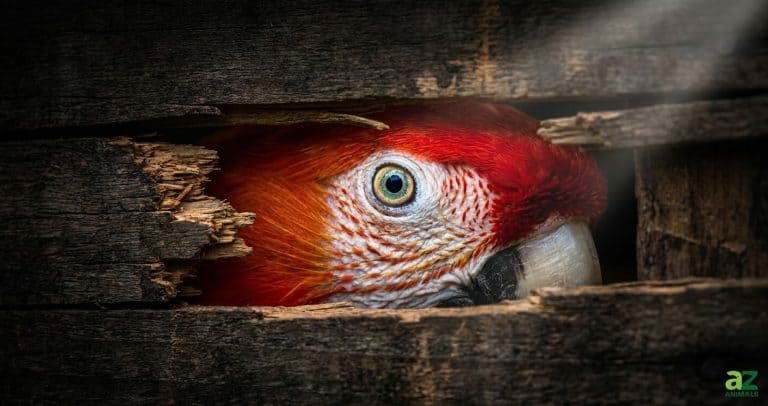
When we think of parrots mimicking sounds, we usually picture a pet bird shouting “hello,” barking like a dog, or copying a microwave beep. However, wild parrots do something far more fascinating. Before they can even fly or leave the nest, baby green-rumped parrotlets (Forpus passerinus) develop unique vocal labels. Essentially, these young birds give themselves their very own names before they leave the nest.
How Scientists Discovered Baby Parrots Learn Their Names
Scientists have spent decades studying the incredible behavior of baby green-rumped parrotlets in Venezuela. Researchers already knew wild parrots used individualized contact calls to recognize mates and other flock members, but they did not know whether those calls were inherited genetically or learned after hatching.
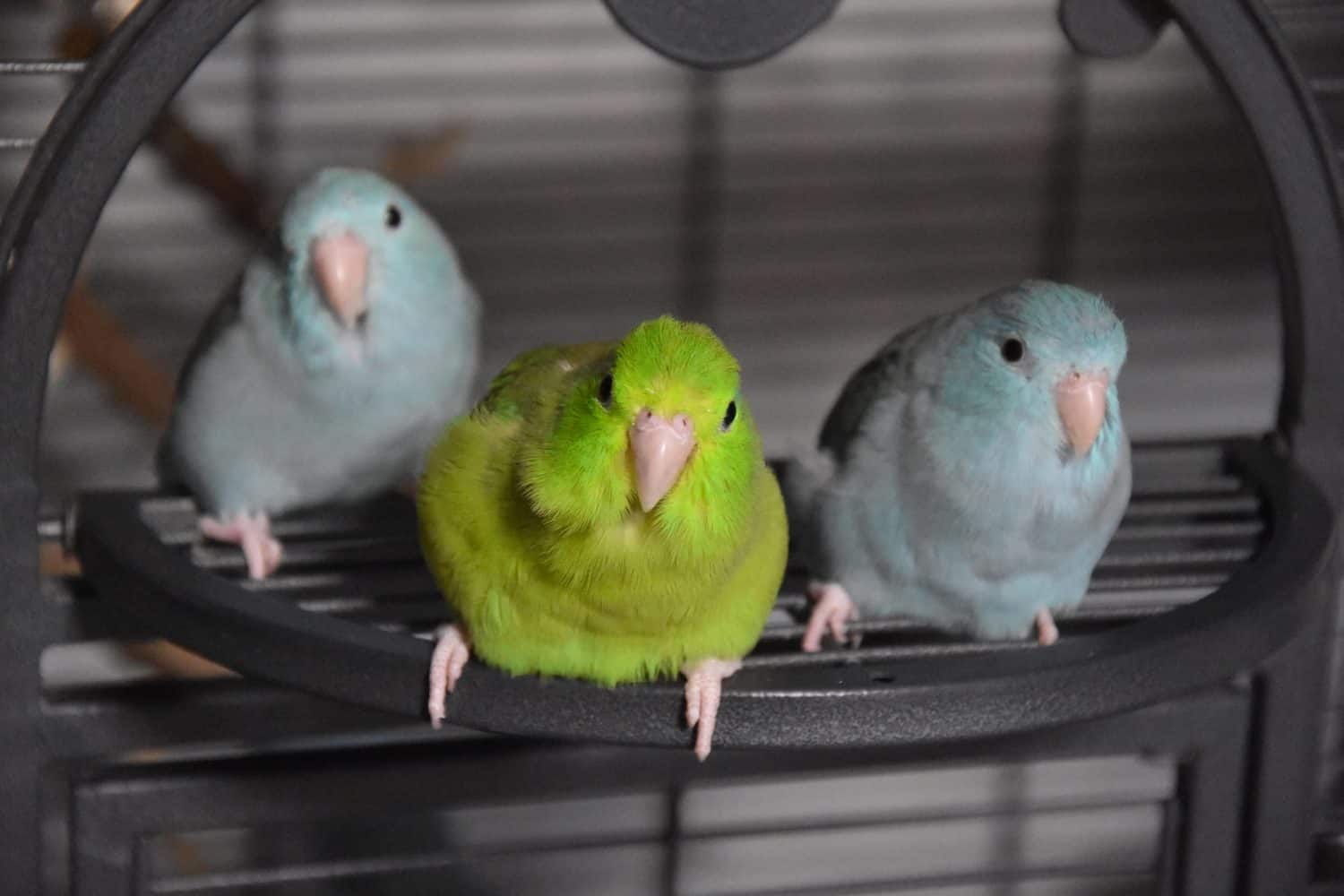
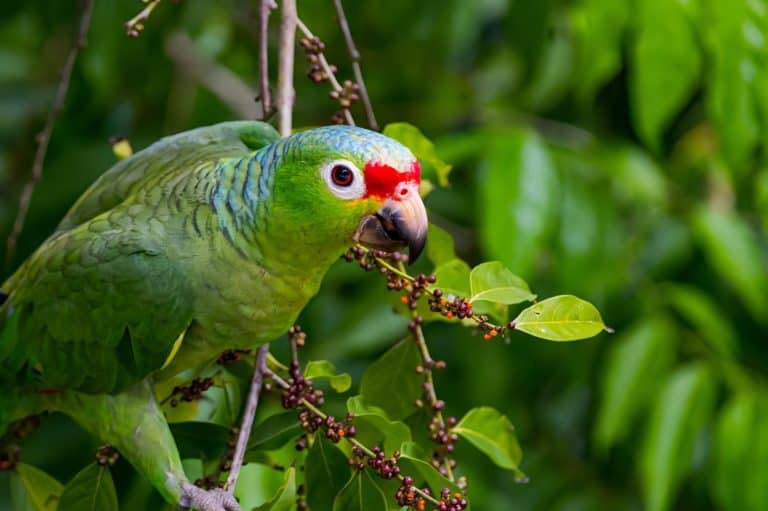
Green-rumped parrotlets are the only parrotlet species found in the Caribbean.
©Andrej Jakubik/Shutterstock.com
To find out, Dr. Karl Berg and his colleagues monitored 17 wild parrotlet nests using miniature cameras and audio recorders. They designed a simple “nature vs. nurture” experiment, swapping eggs between different nests so some chicks would be raised entirely by unrelated foster parents. If the vocal calls were genetic, the chicks would grow up sounding like their biological parents. If the calls were socially learned, however, the chicks would sound more like the foster parents who raised them.
Researchers analyzed nearly 5,000 recorded calls, revealing that the young parrots’ vocal labels closely matched their foster parents, not their biological parents. The experiment provided the first definitive proof that wild parrots do not inherit their unique calls genetically — they learn them socially from the family environment that raises them.
Baby Parrots Learn to “Talk” Like Human Babies
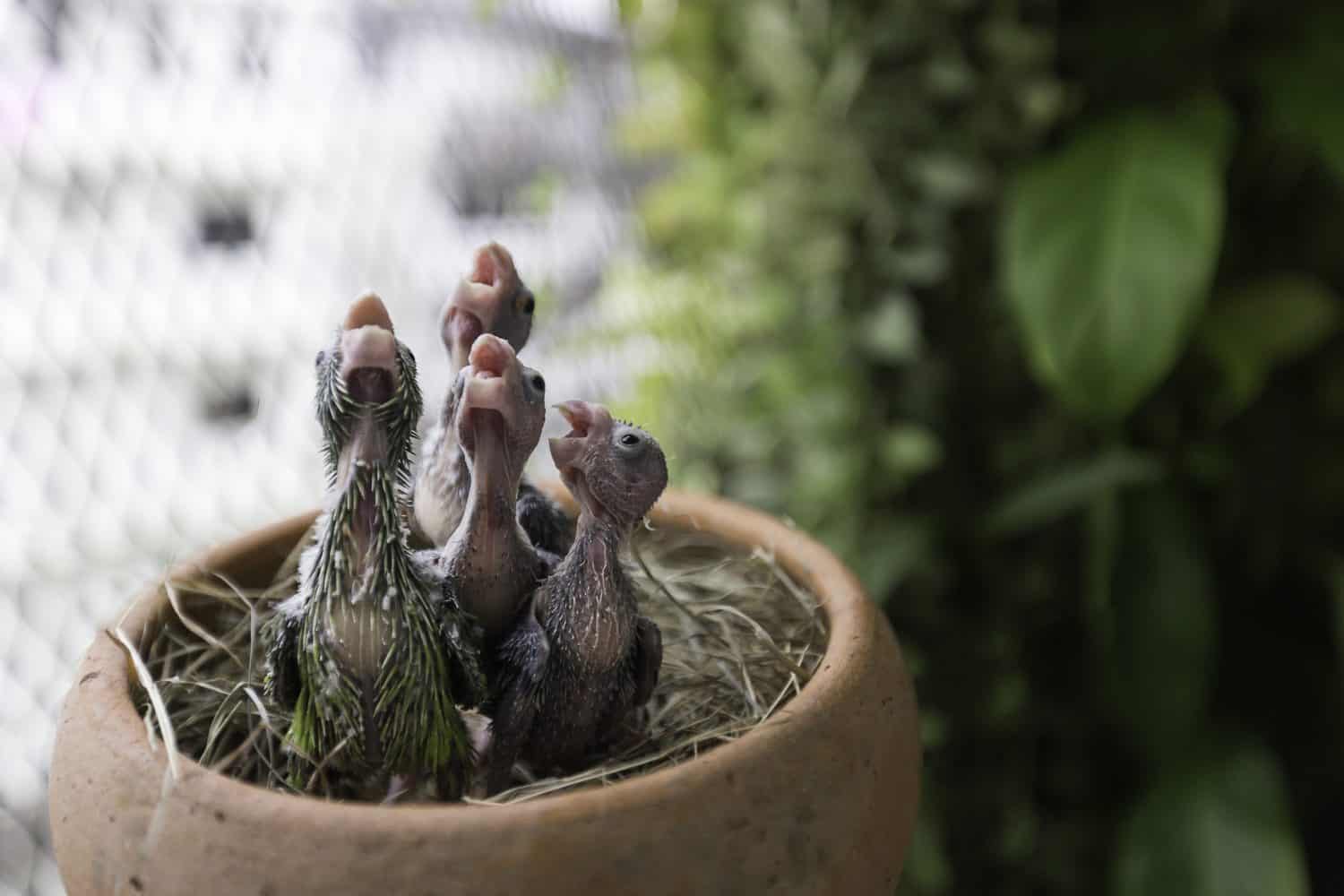
Parrotlets develop their own names through a process surprisingly similar to how human babies learn to talk. During the first 14 days of life, chicks do not yet have names. They only make simple begging noises for food, but during this time they are also listening intently to their parents communicating around the nest.
As they listen, the chicks begin recognizing individual voices. Scientists noticed sleeping nestlings would instantly perk up the moment they heard their specific parents outside the nest box. At around 19 to 21 days old, the chicks begin “babbling” — producing quiet, messy streams of experimental sounds when no adults are nearby. Researcher Karl Berg first observed them doing this alone in otherwise silent nests. Much like human babies, they mix begging noises with clumsy attempts at adult sounds as they practice.
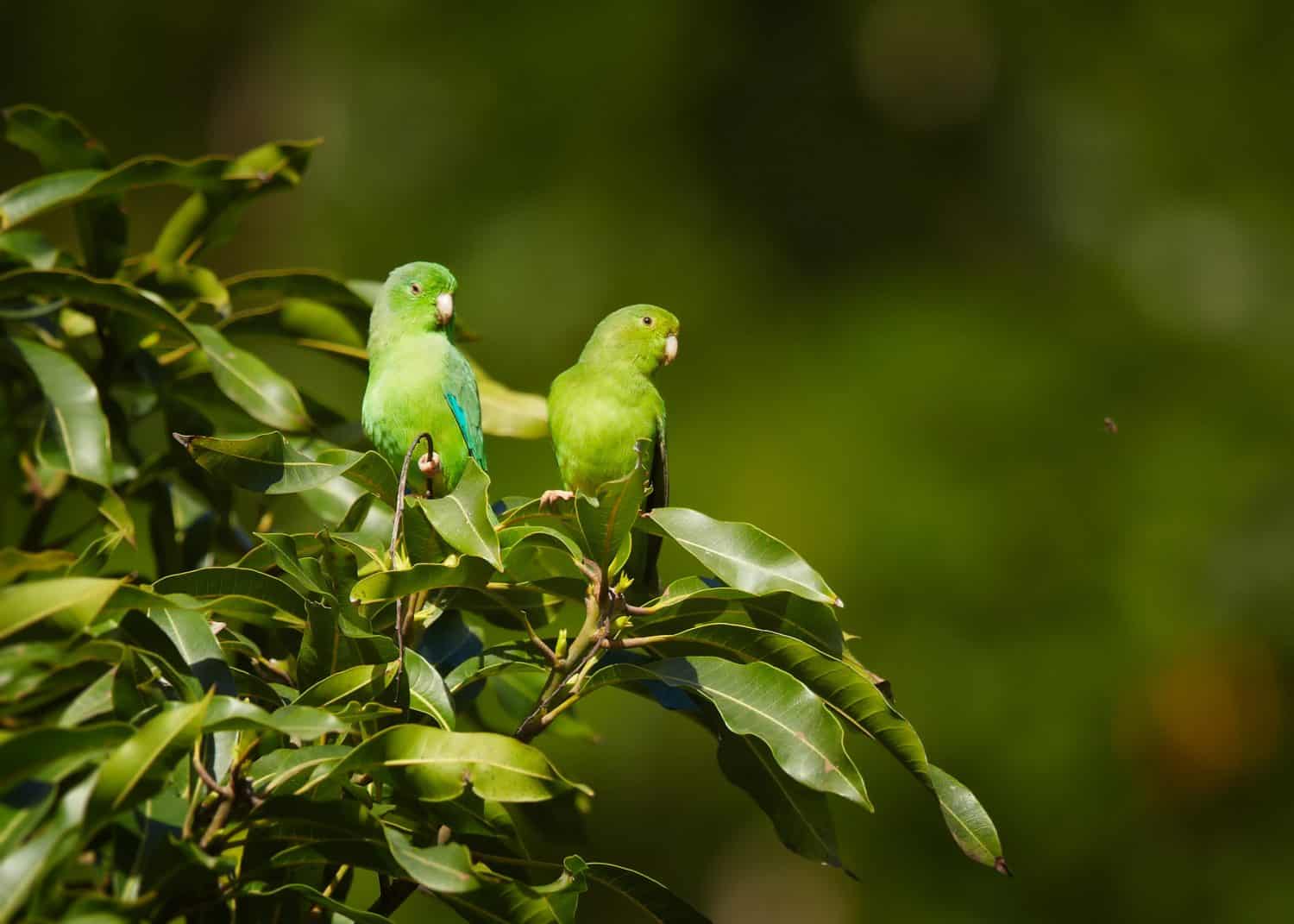
Green-rumped parrotlets make their nests in the hollows of trees and stumps.
©Martin Mecnarowski/Shutterstock.com
Then, between 22 and 28 days old, the chicks’ chaotic babbling begins to narrow down. After experimenting with a massive range of sounds, they refine them into a stable, permanent signature. By the end of the month, each chick has developed a distinct vocal identity—a personalized “name.”
Why Parrots Learn Differently Than Songbirds
The parrotlets’ early babbling phase highlights a major difference in how parrots and songbirds develop their vocal skills. In songbirds, vocal practice typically happens much later in life, right before adulthood, and is usually limited to males. Parrots, on the other hand, begin babbling together while they are still just tiny nestlings, and both male and female parrots participate.
Because both sexes get an early start on practicing sounds, male and female parrots grow up with an equal ability to learn incredibly complex vocalizations and communication patterns.
Parrots Can Call Each Other by “Name”
While many animals can signal who they are, parrots can do something much rarer: they can directly address specific individuals. Instead of just broadcasting “this is me,” a parrot can actively use another bird’s unique signature call. In other words, they can essentially “call out” another bird’s name during a conversation.
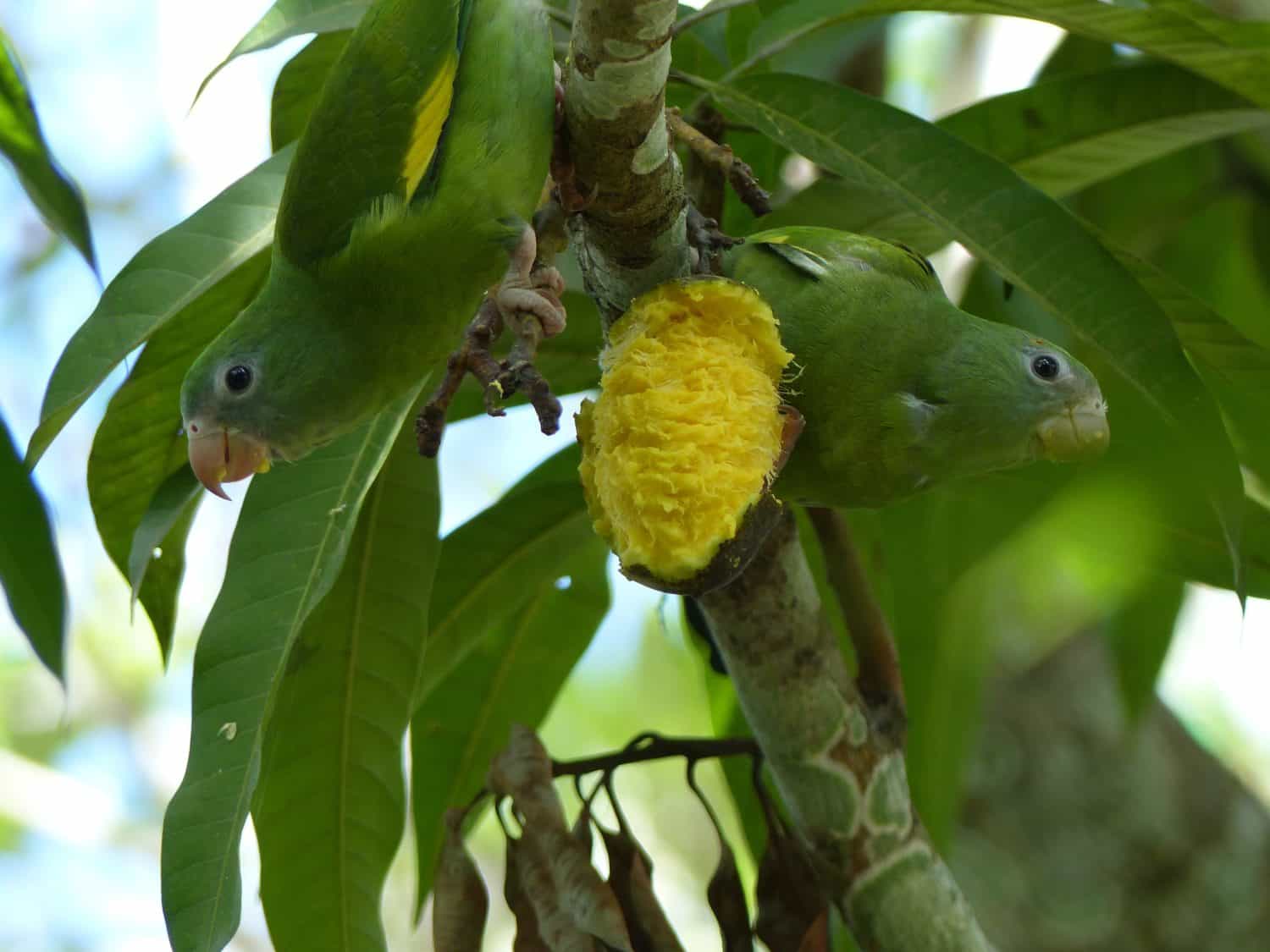
Green-rumped parrotlets typically live in small flocks.
©guentermanaus/Shutterstock.com
Researchers believe this advanced skill is especially useful during feeding time. Wild green-rumped parrotlets travel long distances to communal feeding grounds — noisy areas packed with massive flocks of birds. Since parents need a reliable way to locate their own chicks in the chaos, scientists suspect these individualized calls function like auditory beacons, much like a human parent calling out a child’s name in a crowded amusement park.
Ultimately, this communication system is not just random mimicking — it is highly sophisticated, deeply social, and surprisingly personal.
What Parrots and Humans Have in Common
The deeper scientists look, the more similarities they find between how parrots and humans learn to communicate. According to researcher Karl Berg, parrots share two rare biological traits with humans and other primates:
- They have a high brain-to-body size ratio.
- They experience exceptionally long periods of parental care while growing up.
This exact combination appears to be the perfect recipe for true vocal learning — the rare ability to hear a sound, process it internally, imitate it, and refine it through practice and social feedback.
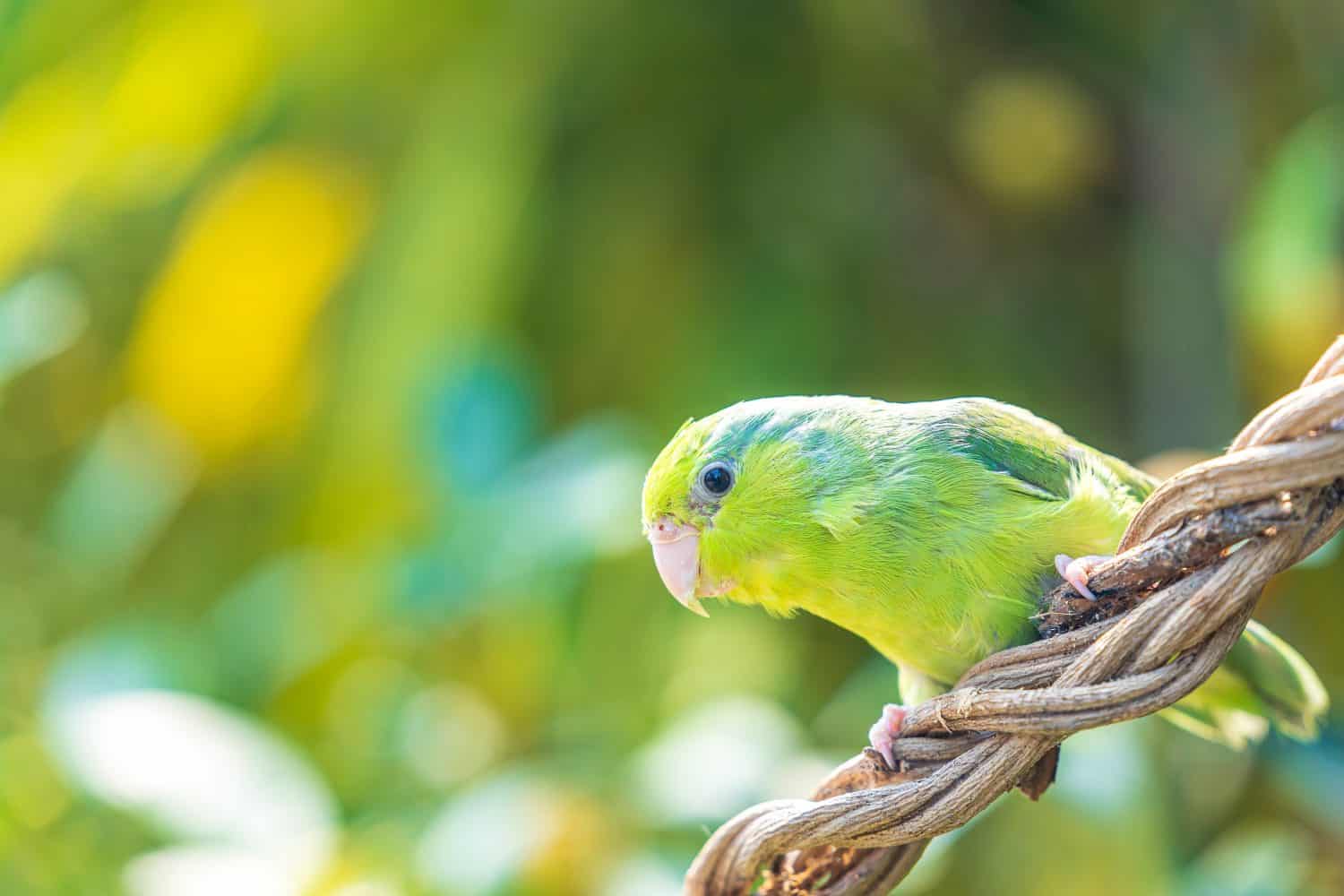
Green-rumped parrotlets live in northern regions of South America.
©thirawatana phaisalratana/Shutterstock.com
Scientists have also discovered a surprising biochemical difference between parrots and other birds when it comes to stress and learning. In songbirds, stress hormones like corticosterone typically impair song learning and development. However, experimental research on green-rumped parrotlets has shown that modest increases in corticosterone can actually increase vocal complexity in parrot chicks.
Rather than disrupting their development, these hormones may actually help young parrots develop more complex vocalizations. This suggests that the parrot brain may be uniquely adapted to handle high-stress, socially intense environments — potentially contributing to their advanced communication skills.
Why Crowded Nests May Shape Smarter Communicators
Because female parrotlets begin incubating their eggs immediately after laying them, the eggs hatch one by one rather than all at once. This creates an extreme age gap among brothers and sisters in a single nest. The oldest chicks can be more than two weeks older than their youngest siblings.
Just like in human families, this creates a crowded, noisy nest packed with dramatic differences in size and development. Scientists believe this intense environment — packed with sibling competition, peer interaction, and constant vocal chatter — may play a major role in shaping a young parrot’s advanced communication skills.
What Baby Parrots Reveal About Language and Learning
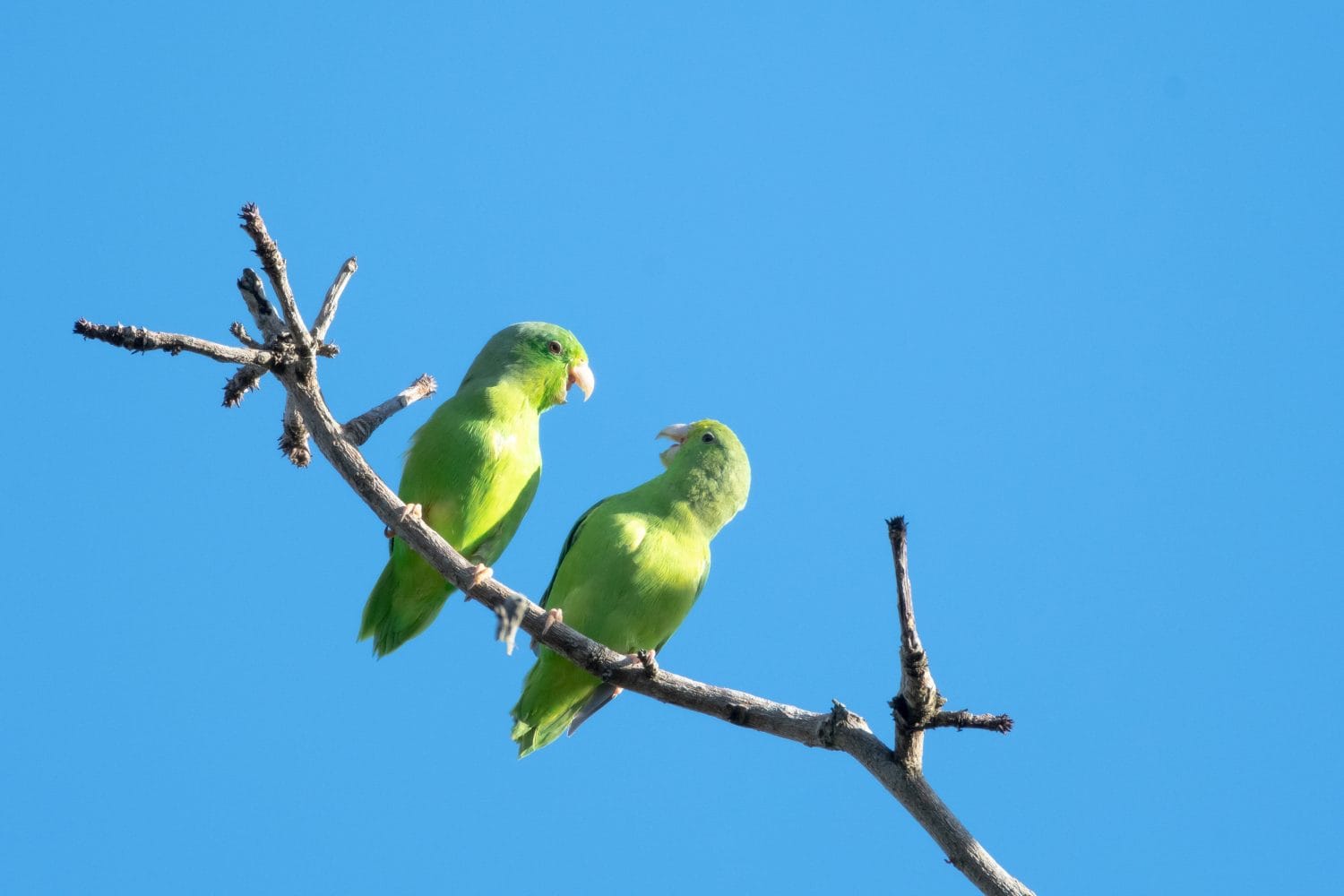
Green-rumped parrotlets are extremely vocal and social.
©Chelsea Sampson/Shutterstock.com
Long before they ever take flight, young green-rumped parrotlets are already discovering who they are through sound. They closely tune in to their parents’ voices, then experiment with clumsy, imperfect babbling. Through constant practice, they gradually shape those messy sounds into highly individualized “names” that identify them for life. This entire process is deeply social, entirely learned, and completely dependent on family connections.
These tiny birds reveal that true vocal learning — and even the roots of personal identity — may run far deeper across the animal kingdom than humans once imagined. In the crowded nests of wild Venezuelan parrotlets, we find something remarkably familiar: babies learning their voices, siblings shaping one another’s growth, and young minds figuring out how to connect with the world around them.