
Quick Take
- Those jaw-dropping colors should make the male an easy target for predators. So why does nature let him keep them? Discover the color paradox →
- Ancient cultures called this bird a symbol of eternal love, and modern science found something unexpected when it actually looked into the claim. Explore the love legend →
- Mandarin duck ducklings enter the world in a way that looks far more like a stunt than a survival strategy. See how ducklings survive →
- There's a version of this bird so different from the one at Lake Garda that most people mistake it for an entirely different species. Meet the white Mandarin →
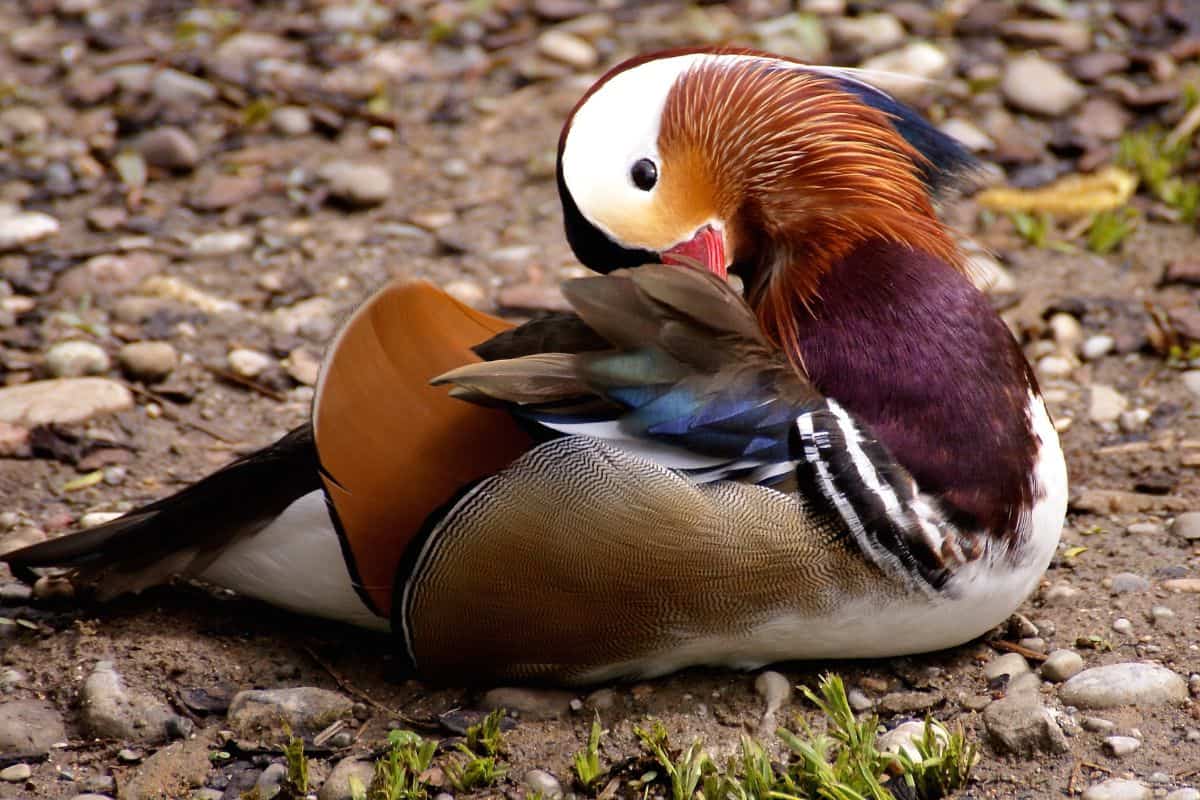
This September, a male mandarin duck spotted on Lake Garda stopped people on the shore, and it is easy to see why. It has orange “whiskers” sweeping back from its face, a purple chest, a coral-red bill and two upright orange sail feathers on its back.
The species, Aix galericulata, is native to East Asia. Its presence on an Italian lake says as much about people as about birds.
Why the Male Can Afford Those Colors
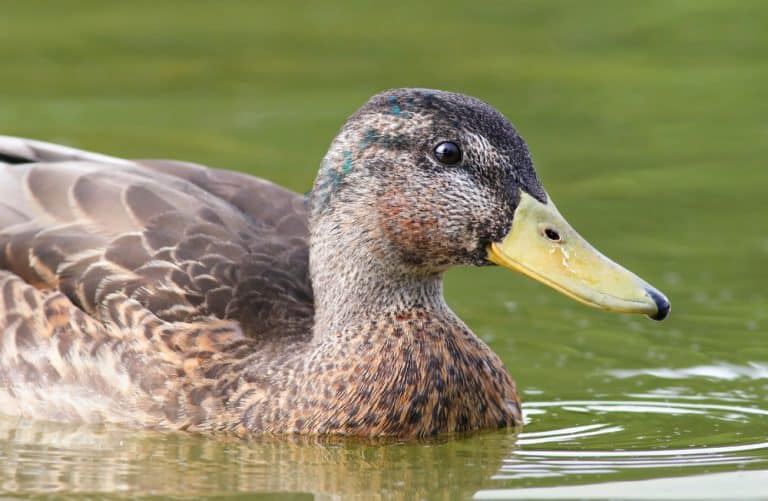
Male and female mandarins look so different that they could pass for separate species. The female is soft gray-brown with a white eye-ring and a pale stripe behind the eye, colors that blend into a wooded shoreline. The male’s plumage is a signal to females, advertising condition and fitness during courtship.
The bright display does not last all year. After the breeding season, males molt into an “eclipse” plumage that looks much more like the female’s. They keep their red bill, which is one way to tell them apart. Because ducks shed their flight feathers all at once while molting, a male in eclipse plumage cannot fly for a few weeks. During that window, dull feathers are a real advantage. In other words, the male only wears his showiest colors when they are most useful.
Pale “silver” and white mandarins also exist, but they come from color varieties bred in captivity, not a separate species. A white male can look nothing like the bird on Lake Garda.
The Love Legend, Checked Against the Science
In China, a pair of mandarin ducks, called yuanyang, has long stood for a faithful marriage. The birds appear on paintings, embroidery and wedding gifts, and the idea is that a pair stays together for life.
The biology is less romantic. Like most ducks, mandarins form seasonal pair bonds. Courtship and pairing happen in fall and winter, and the bond lasts through the breeding season. Lifelong fidelity, as in swans and geese, is not the rule for ducks.
The nesting is where mandarins truly stand out. Unlike most ducks, they nest in tree cavities, sometimes well above the ground. The female lays a single clutch of 9 to 12 eggs in spring. Shortly after hatching, she flies down and calls, and the ducklings leap from the hole. They are light and covered in down, so they usually bounce unharmed off the ground or water below.
How an East Asian Duck Ended Up in Italy
Mandarins came to Europe as ornamental birds. The Swiss Ornithological Institute dates their arrival to the first half of the 18th century, when they were kept on park ponds. Birds escaped from collections, and in the 20th century a large free-living population formed in Great Britain. Britain now holds about 7,000 birds, and smaller feral groups live in other European countries. A mandarin on an Italian lake is most likely an escapee or the descendant of one.
That creates a striking paradox. In its native range, the mandarin duck declined sharply in the 20th century. By the 1980s, fewer than 1,000 pairs were thought to remain in each of Russia and China. Later surveys in China counted far more birds, and the species is now considered at low risk overall. Still, for decades, European park ponds held thousands of birds of a species that was disappearing at home.
The European birds are not on the EU’s list of invasive species of concern. They mostly use tree holes and nest boxes in wooded parks and rivers, where they share space with native waterfowl.
For anyone walking the shore at Lake Garda, the bird is a reminder that a duck from East Asia can turn up anywhere people have carried it, and still stop strangers in their tracks.