
Quick Take
- Britain has three native and one imported snake species living in the wild.
- The European adder is the only UK venomous snake, and bites are rare.
- There are now an estimated 700,000 pet snakes in the UK.
- Some UK pet snakes suffer health issues because they are not cared for correctly.
- 52 percent of Brits are scared of snakes.
Every summer, without fail, the British press carries alarming stories about snake sightings. On an island that only has one venomous snake species, a slithering reptile in the undergrowth is big news. Headlines such as ‘Urgent warning issued over venomous snake sightings’ get Brits all stirred up, but baffle residents of other countries where numerous venomous snakes are endemic.
It would be easy to conclude that the British are not a nation of snake lovers. Yet, a glance at the snake ownership data for the UK shows that more Brits than ever are owning snakes. So, exactly which types of snakes live in the wild in the UK, where are they found, and how healthy are Britain’s pet snakes?
Britain’s Largest Snake
Britain is home to a pretty big snake species, but most Brits will have never seen it. Barred grass snakes (Natrix Helvetica) are found across England and Wales and into southern Scotland in limited areas. They are not just found in the UK; they are also native to Switzerland, Italy, France, and western Germany.
Barred grass snakes can grow to around 6 feet, making them longer than a bathtub, but they rarely grow that long. Most of them are olive-green to brown in color with black bars spaced evenly down their flanks.
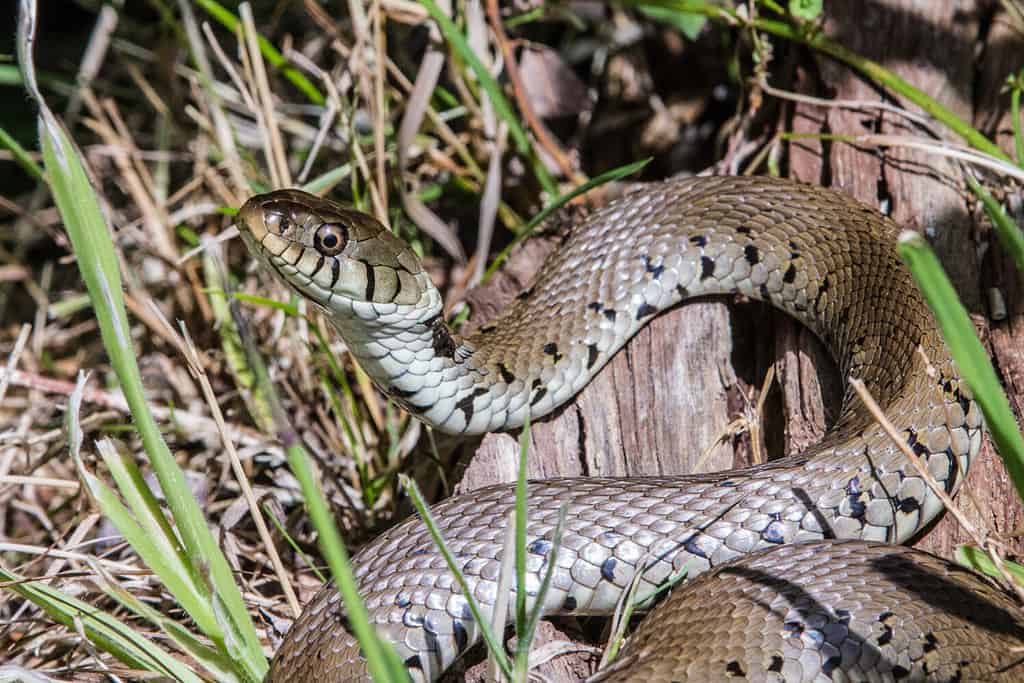
Barred grass snakes can be as long as a bathtub.
©Stephan Morris/Shutterstock.com
These snakes prefer to live in wetland habitats around rivers and lakes and are excellent swimmers. They are described as semi-aquatic but can also be spotted in grassland; they are called grass snakes after all! You could even see them in gardens, especially if there is a garden pond. They typically feed on toads, frogs, and newts, but will also eat small mammals and fish.
These grass snakes also exhibit some quirky behaviors. To defend themselves, they secrete a foul-smelling (and tasting) musk from their anal glands. They also play dead to fool attackers, which is a behavior called thanatosis. Even though they are not venomous, they may pretend that they are and hiss and feign strikes at you. These snakes have also been seen tying themselves in knots, but they can quickly untangle themselves.
The Rare Smooth Snake
The majority of British people will have never seen the smooth snake (Coronella austriaca), which is only found in the sandy heaths of Dorset, Hampshire, and Surrey. There are also reintroduced populations in West Sussex and Devon. However, because they are so rare, they are hardly ever seen by humans.
These snakes can grow to about 2 feet and live for 20 years. They present no risk at all to humans and crush their small prey to death by coiling around them. Their diet is made up of sand lizards, slow-worms, insects, and nestlings. That said, they will strike at anything that attacks them. Thanks to their coloring, they are sometimes mistaken for adders.
Britain’s Only Venomous Snake
The third endemic snake species is also the only venomous one, and this is the snake that gets all the headlines in the UK. When there are increased sightings, which typically occur between April and July, the local police release warnings. Dog owners and hikers are advised to keep their pets on leads and to be aware! But how dangerous are these adders?
Dangers of European Adders
The adders found in the UK are common European adders (Vipera berus), also known as the common European viper. They like heathlands, commons, and woodland and are found in England, Wales, and Scotland. If you are a dog walker or hiker who frequents these sorts of areas, you may come across one. However, their populations are in decline largely because intensive farming is destroying their habitats. Also, they are very shy, and if they sense you approaching, they will slide away as quickly as they can.

European adders are venomous.
©taviphoto/Shutterstock.com
Most sightings are in the spring when they emerge from brumation and spend the early part of the day basking in the sun to raise their body temperature. If you accidentally tread on one, it will bite you, and it will hurt! Around 100 adder bites a year are reported in the UK. Their bites are most dangerous to vulnerable people, such as the very young and the very old. Some people are allergic to the venom and have severe reactions. Therefore, medical advice should always be sought immediately after an adder bite.
Being able to recognize an adder is very useful! Male adders usually have silvery-grey colouration, but females can be copper or brown. Both have a black zig-zag pattern along their backs. Fully black adders are seen in some areas.
Adders and Dogs
Dogs that like racing off-leash through heathlands and woodlands are much more likely to tread on an adder before it has a chance to get away. Typically, dogs suffer from swelling around the bite wound, but they may have other symptoms such as lethargy and vomiting. The official advice is that you should carry your dog (to stop the spread of venom) to a vet as quickly as you can.
The Migrant Aesculapian Snake
Strictly speaking, the Aesculapian snake (Zamenis longissimus) should not be in the UK. They are a native species of central, southern, and eastern Europe as well as parts of western Asia. Since the 1970s, there have been two accidental introductions into the UK. One is around Regent’s Canal in London, and the other at Colwyn Bay in Wales.
These are non-venomous snakes that feed on rodents and birds, which they kill using constriction. No one yet knows if the current UK populations are sustainable or if it will eventually die out.
Pet Snakes in the UK
Britain’s pet snake industry boomed following the COVID pandemic. There are now an estimated 700,000 pet snakes in the UK. While many owners have benefited from owning a snake and many breeders have made a lot of money, there is a dark side to snake ownership here. Despite their owners’ best intentions, some of these amazing animals are not being cared for correctly, while others are being treated cruelly.
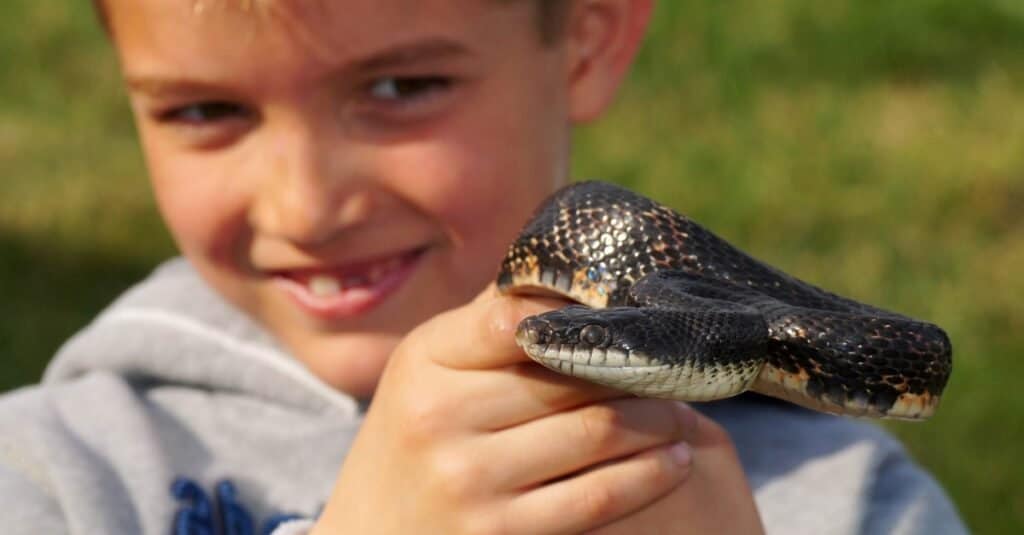
Pet snakes have specific needs that must be met.
©Matt Jeppson/Shutterstock.com
Sadly, some people are not aware of how complex and specific the care needs of snakes can be. They also underestimate how much time, money, and space snakes require. The results are devastating. Vets are reporting fractures because reptiles are not exposed to the correct UV light or because they have been fed the wrong diet. Other vets have seen snakes with burns caused by the inappropriate use of heating and lighting elements.
The UK’s leading veterinary body, the British Veterinary Association (BVA), has also flagged the issue of obesity in snakes. This can be caused by a lack of space to exercise, coupled with overfeeding. Snakes need enough room for physical activity, and if they don’t get it, they can put on too much weight. This can lead to liver problems and other health issues.
Calls for Improved Pet Snake Welfare
The BVA classifies snakes as non-traditional companion animals (NTCAs) and stresses that they have very exacting care needs. The organization supports the introduction of a multi-tiered licensing system for NTCA ownership in the UK. They have also called for further regulation of online sales, licensing of importers, and an end to the importation of wild-caught reptiles.
How Do Brits Feel About Snakes?
A 2014 survey revealed that 52 percent of the British public were scared of snakes, making it the country’s second most common phobia behind heights. The truth is that very few Brits will ever see a snake in the wild in their home country. The few snakes that live in the UK are found only in limited, specific areas and are very shy. Regular hikers and dog walkers in certain heathlands are more likely to come across them, but even then, it is not going to be a regular experience. UK wildlife organizations therefore have an important role to play in educating the British public about their magnificent snake neighbors, what can be done to preserve their habitats, and what to do in the unlikely event that you are bitten by one.
Despite their general lack of experience with wild snakes, more and more Brits seem to want to own one! This presents its own challenges because providing for a pet snake’s needs is not easy or cheap. Organizations, including the BVA, run public information campaigns such as the ‘Think Twice’ campaign, which urges prospective owners to do their research before getting a snake. So, yes, Brits have a very complicated relationship with snakes, underpinned to some extent by misconceptions and a lack of knowledge—both of which are being addressed.