
Quick Take
- Colorado created a $1 million grant program to help communities reduce conflicts between people and black bears.
- Most encounters occur when bears access unsecured trash, birdseed, or outdoor food.
- Bear-resistant containers, education, and community rules reduce attractants.
- Removing easy food helps bears remain wild and prevents dangerous human encounters.
Residents of Colorado’s mountain communities know the sound of a nighttime bear visit. Trash cans clatter across driveways, porch railings shake, and a heavy animal may test a car door in search of food. North American black bears have learned that neighborhoods can provide calories with far less effort than the forest. Instead of spending hours digging for insects or searching for berries, a bear can knock over a trash container and find a high-energy meal in minutes.
Colorado Parks and Wildlife is now investing public funding in a straightforward idea. If easy food disappears, bears have less reason to enter neighborhoods. The agency launched a Human Bear Conflict Reduction Community Grant Program worth about one million dollars. Local governments, homeowner groups, and other organizations can apply for support to reduce attractants and prevent repeat bear visits. The goal is prevention rather than crisis response. When communities limit access to human food, bears keep their natural habits, and conflicts decline.
What Kinds of Bears Live in Colorado?
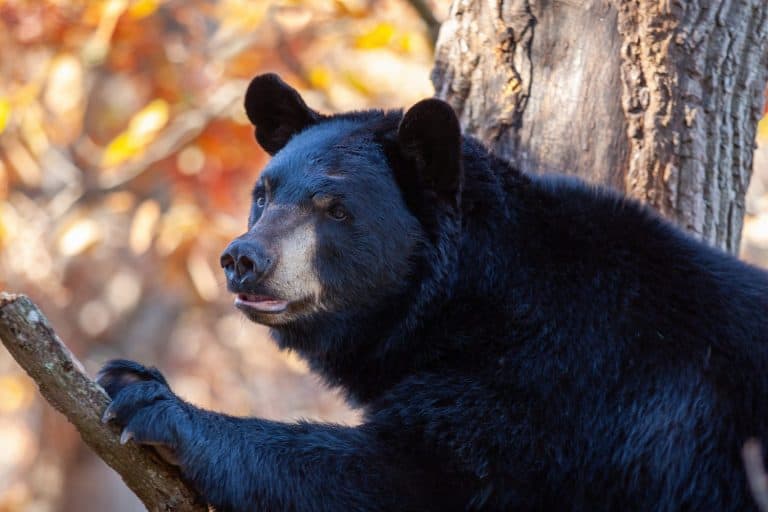
Only one bear species lives in Colorado today, the American black bear (Ursus americanus). Despite the name, these bears are not always black; many have brown, cinnamon, or blond coats. Adults commonly weigh between 200 and 400 pounds, with large males sometimes exceeding that.
Black bears live throughout much of Colorado, especially in forested mountains and foothill areas where natural habitat overlaps with human communities. Grizzly bears once lived in the state but disappeared by the mid-1900s because of hunting and habitat loss. The last confirmed grizzly bear in Colorado was killed in 1979 near Lake City, and no wild populations exist in the state today.
How Dangerous Are Black Bears to People?
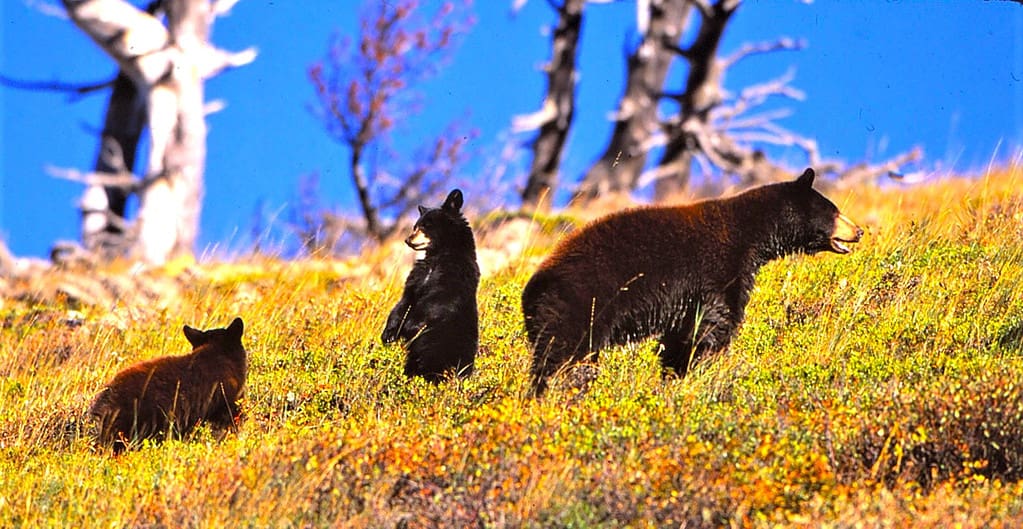
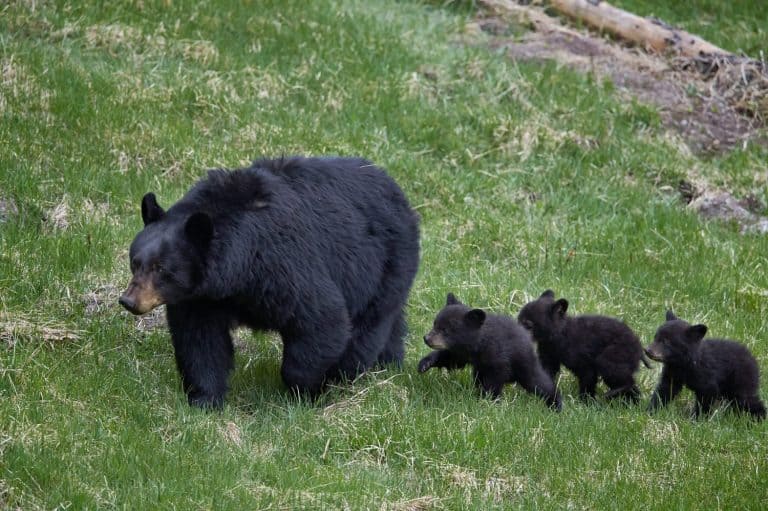
A mother black bear can be aggressive with anyone who gets close to her cubs.
©Richard Jackson/iStock / Getty Images Plus via Getty Images
Bears are generally not very dangerous to people, and attacks are rare. Black bears usually avoid humans and run away when they sense people nearby. Most conflicts happen when bears find human food such as trash, pet food, or birdseed and begin returning to the same places.
Serious attacks are uncommon and usually involve a surprised bear, a mother protecting cubs, or a bear that has become used to human food. Simple precautions such as securing food, making noise on trails, and giving wildlife space greatly reduce the chance of a dangerous encounter.
Rising Bear Encounters Across Colorado
Reports of bears interacting with people have increased in many Colorado communities. In 2025, Colorado Parks and Wildlife received 5,299 reports of bear sightings and conflicts, a 15% increase over the previous six-year average. Reports range from simple sightings to property damage and break-ins involving vehicles or homes. A large share of incidents occur where bears locate unsecured garbage or other food sources near houses.
Wildlife managers explain that several factors drive these encounters. Human development continues to expand into forested areas where bears live. As neighborhoods grow, animals encounter more trash containers, bird feeders, and outdoor food sources. Natural food conditions also change from year to year. Drought, late frost, or poor nut crops can reduce the availability of berries and acorns that bears rely on.
When natural foods decline, bears search wider areas to gain weight before winter. Late summer and early fall create the greatest pressure. During that period, bears enter hyperphagia, a stage where they consume large amounts of food to prepare for hibernation. Neighborhood trash often becomes the easiest solution.
Colorado’s Community Grant Strategy
Colorado’s new grant program supports projects that remove attractants or prevent bears from accessing them. Local governments, nonprofit groups, homeowner associations, and some businesses can apply for funding. Each proposal must show that it reduces conflict in practical and lasting ways.
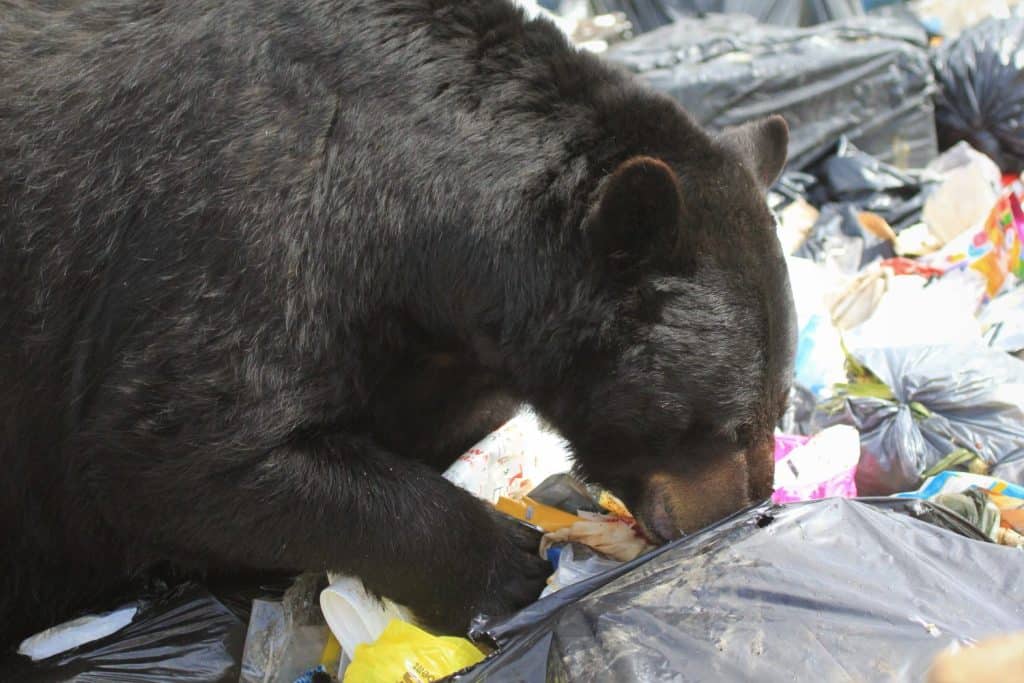
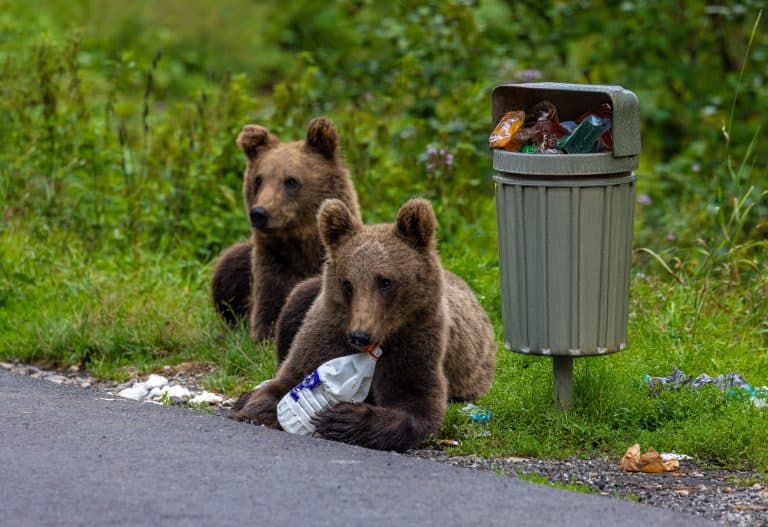
Garbage odors can attract bears from miles away.
©Sketchart/Shutterstock.com
Bear-resistant trash systems rank among the most common projects. Communities can replace standard containers with stronger versions that prevent bears from opening lids. Some towns plan upgrades for dumpsters used by restaurants, apartment complexes, and campgrounds. These locations often generate strong food odors that draw wildlife.
Other proposals involve fencing systems that protect livestock feed, beehives, or compost areas. Electric fencing provides a mild shock that discourages animals without causing injury. Educational campaigns also qualify for funding when they promote consistent community action. The program favors ideas that continue working after the grant ends and that other towns can copy.
Trash Containers and Neighborhood Habits
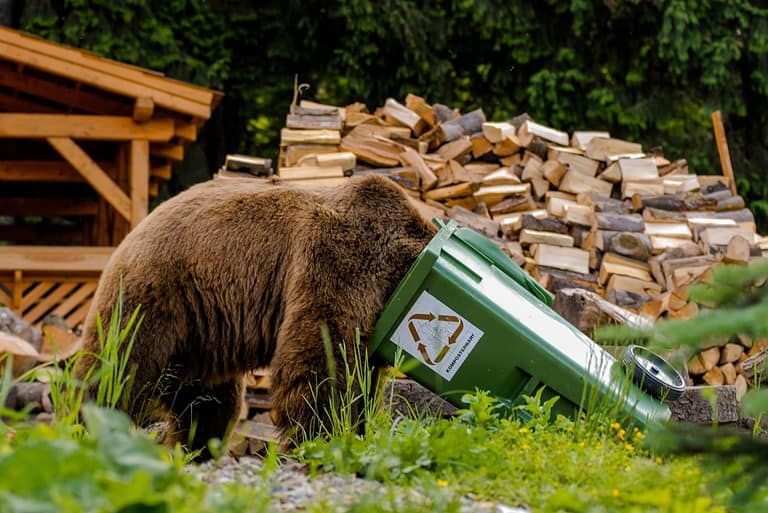
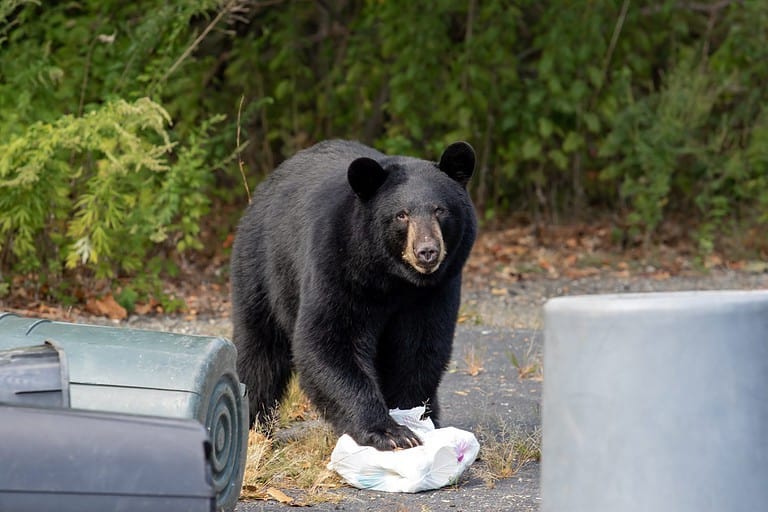
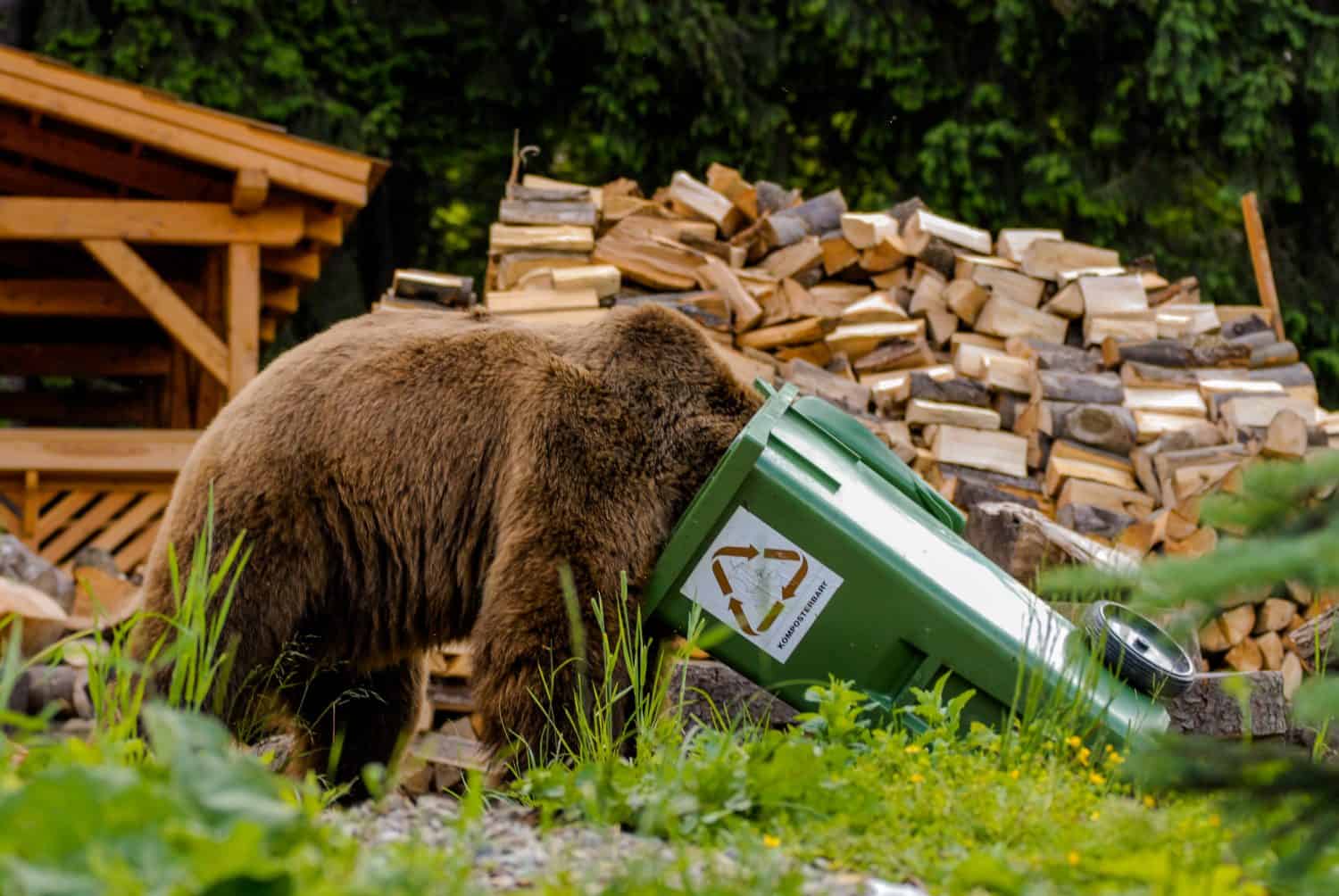
Unsecured garbage remains the most common attractant drawing bears into residential areas. Trash contains strong food odors that travel long distances. Once a bear discovers a reliable trash source, it often returns repeatedly and begins exploring nearby structures for additional food.
Bear-resistant containers help break that pattern. These containers use reinforced lids and latches that bears struggle to open. Waste workers can still unlock them quickly during collection. When entire neighborhoods adopt these containers, bears spend more time searching without reward. Eventually, they move on to natural food sources.
Communities often pair these containers with rules about when residents place trash outside. Limiting curbside hours reduces the time that odors remain accessible overnight. Consistent participation makes the biggest difference. A single unsecured container can train bears to revisit an entire street. Neighborhood cooperation, therefore, becomes an important part of wildlife management.
Bird Feeders That Attract Larger Visitors
Bird feeders create another strong food signal for bears. Seeds and suet provide concentrated calories that animals can smell from far away. A bear may climb trees, decks, or railings to reach a feeder that birds enjoy.
Wildlife agencies advise residents in bear country to remove feeders during active bear seasons. In many Colorado areas this means storing feeders from early spring through late fall. Cleaning spilled seed also matters. Grain that accumulates beneath feeders often attracts bears long after the feeder disappears.
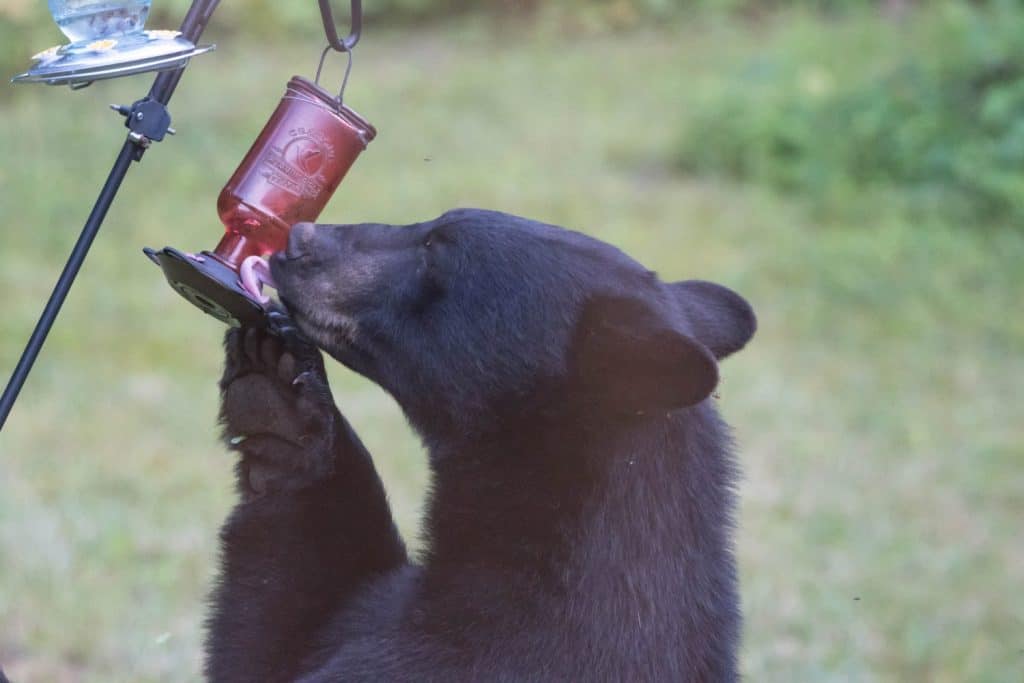
A black bear drinks from a hummingbird feeder.
©Charles Flachs/Shutterstock.com
Communities sometimes use grant funds to spread this message. Educational campaigns encourage neighbors to coordinate feeder removal rather than acting alone. When one yard keeps a feeder active, bears may continue traveling through the neighborhood searching for similar food. Some residents choose to plant native shrubs and flowers that provide natural food for birds without creating the concentrated seed piles that attract bears.
Backyard Attractants Beyond Trash
Many everyday household items can draw bears closer to homes. Pet food left outdoors contains strong scents and high-calorie content. Repeated feeding in the same place may teach bears that houses offer dependable meals.
Outdoor grills and smokers also carry appealing odors. Grease and food residue remain detectable long after cooking ends. A curious bear may tip over a grill or damage a storage cabinet while investigating the smell. Coolers stored on decks and outdoor refrigerators can produce similar problems.
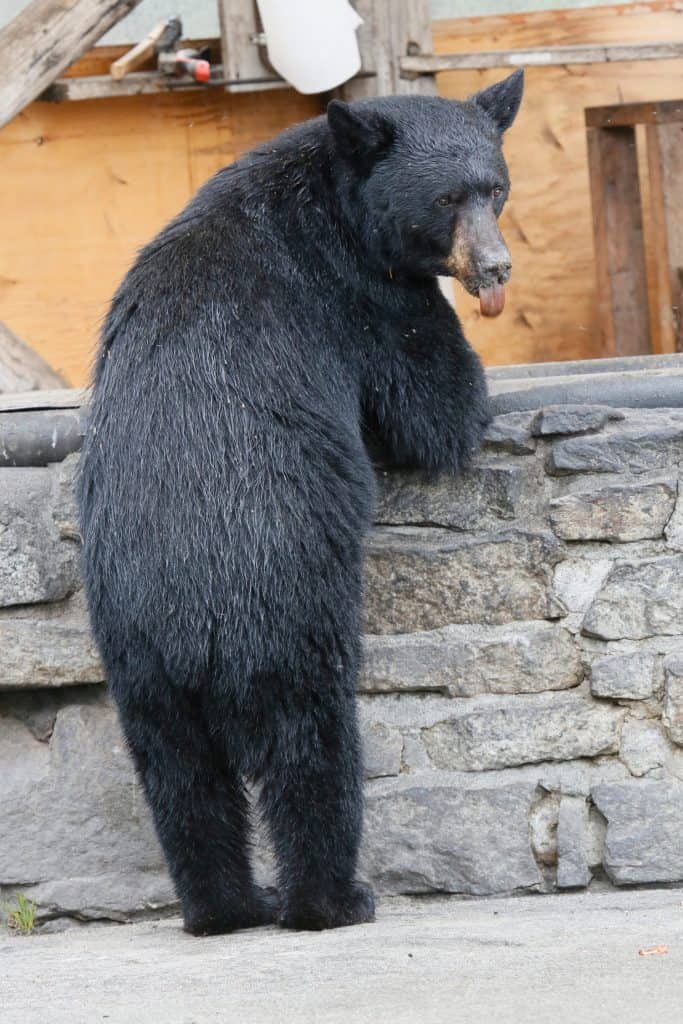
A black bear enjoys cleaning up an outdoor grill.
©Bert van Mackelenbergh/Shutterstock.com
Community programs encourage residents to reduce these attractants. Feeding pets indoors prevents lingering food odors outside. Cleaning grills after each use removes grease that might attract wildlife. Locking coolers and food storage in garages or secure sheds also helps. These small adjustments reduce the number of opportunities that bears associate with human property.
Education and Local Responsibility
Physical equipment solves only part of the problem because human behavior determines whether prevention efforts work. Wildlife officials often note that a single careless household can keep bears returning to a neighborhood. Many grant projects, therefore, support education programs run through schools, community groups, and local governments. Public meetings, social media posts, and neighborhood flyers remind residents to secure trash, store birdseed carefully, and remove other food attractants that draw bears into residential areas.
Some towns also adopt ordinances requiring bear-resistant containers in high-conflict areas, and enforcement officers may issue warnings or fines when food is repeatedly left accessible to wildlife. Colorado Parks and Wildlife tracks bear reports before and after prevention projects to measure results and improve strategies. Successful efforts often become models for other communities, and sharing those results across the state helps reduce conflicts while allowing bears to remain part of Colorado’s ecosystems.
Living Safely Alongside Bears
Colorado’s investment in bear conflict reduction reflects a simple goal: protect people and wildlife while sharing the same landscape. Securing trash, managing bird feeders, and removing outdoor food sources make neighborhoods less attractive to bears. When easy food disappears, bears usually move on. Prevention reduces property damage and lowers the chance that wildlife officers must relocate or euthanize animals that lose their fear of people.