
Quick Take
- A Cornish tidal lagoon's isolation may have triggered something extraordinary in this jellyfish population, though scientists can't agree on what's actually causing it. Explore the color mystery →
- These jellyfish look impossibly delicate, but what they do to their prey tells a very different story. See how they hunt →
- Moon jellyfish are 95% water and lack a brain, blood, or heart. So how are they thriving carnivores? Discover their biology →
- If one of these jellyfish stings you, the treatment isn't what most people would reach for first. Find out sting treatment →
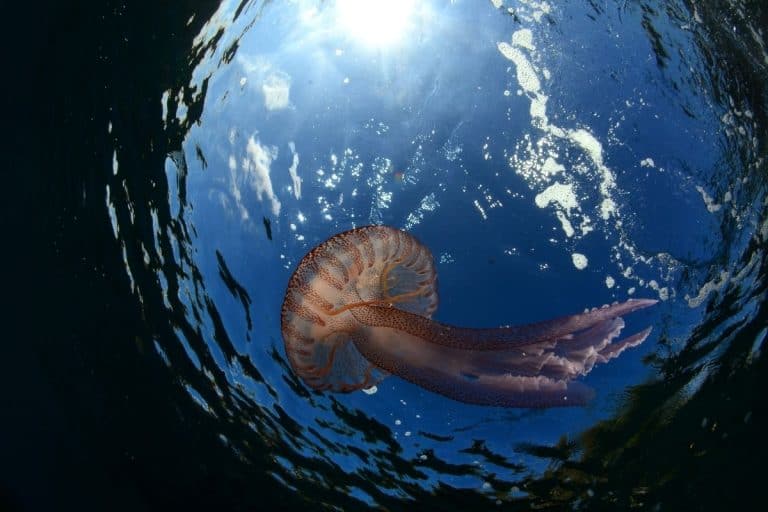
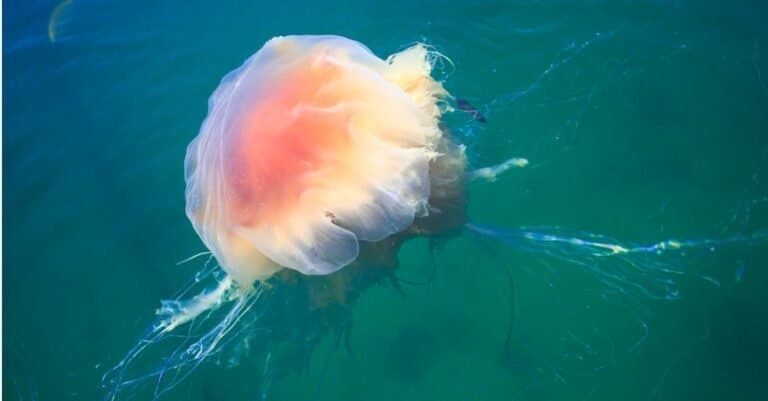
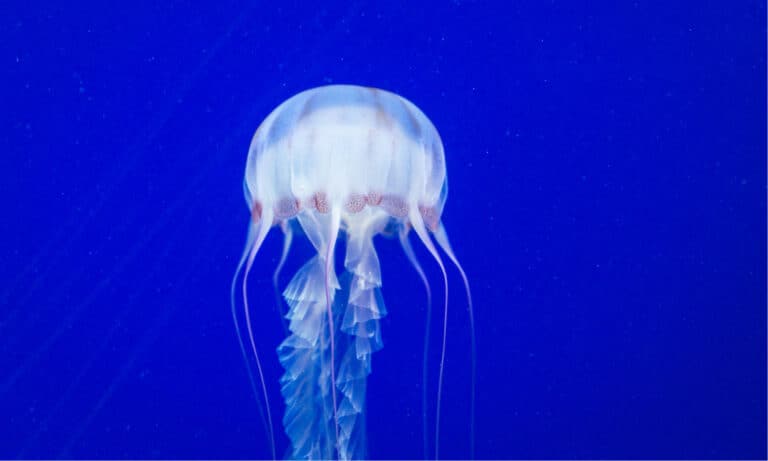
The extraordinarily beautiful scene captured in this Instagram post is also a superb example of genetic morphs or how diet can alter an organism’s appearance. Isolated from other jellyfish of their species, a single genetic variant may have reproduced in a Cornish tidal lagoon, evolving breathtaking pink bodies that stand out in the dark blue water. Or, on the other hand, it could just be the Cornish cuisine that’s creating this spectacle.
Which Type of Jellyfish Are They?
These are moon jellyfish (Aurelia aurita), which are primarily found in the North Atlantic Ocean and coastal regions such as Argentina, although related species in the genus Aurelia are found in temperate and tropical oceans worldwide. Their range includes all the waters of nearly all of North and South America and Eurasia. They prefer to live in coastal waters, like the individuals we see in this post. These jellyfish have a surprisingly high tolerance of freshwater and can survive in water with a salt content of just 0.6 percent. To thrive, however, they need salinity greater than 3.8 percent.
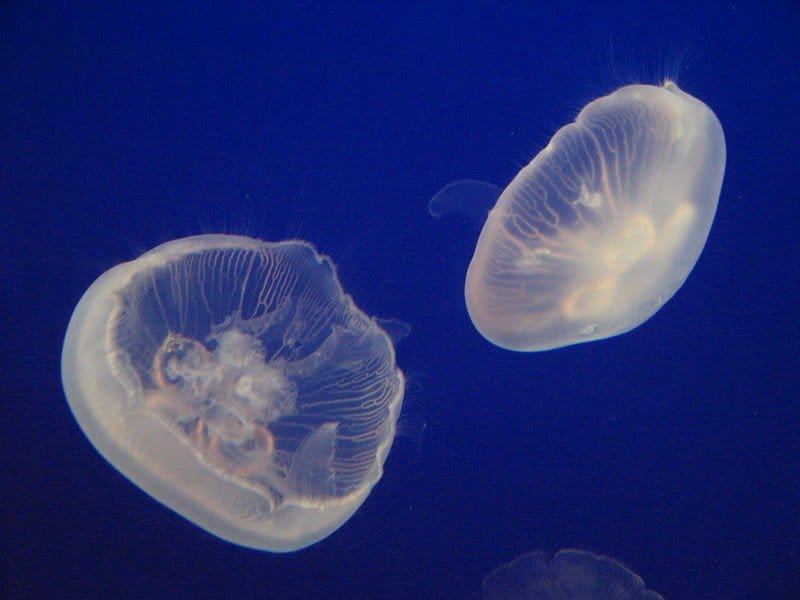
Moon Jelly fish are common in UK waters.
©Yosemite / Creative Commons – Original
These jellyfish are a common sight around UK coastal waters and are often washed up on the shore. Most of their body (95 percent) is made up of water, and they have no blood, brain, or heart.
What Is the Pink Color?
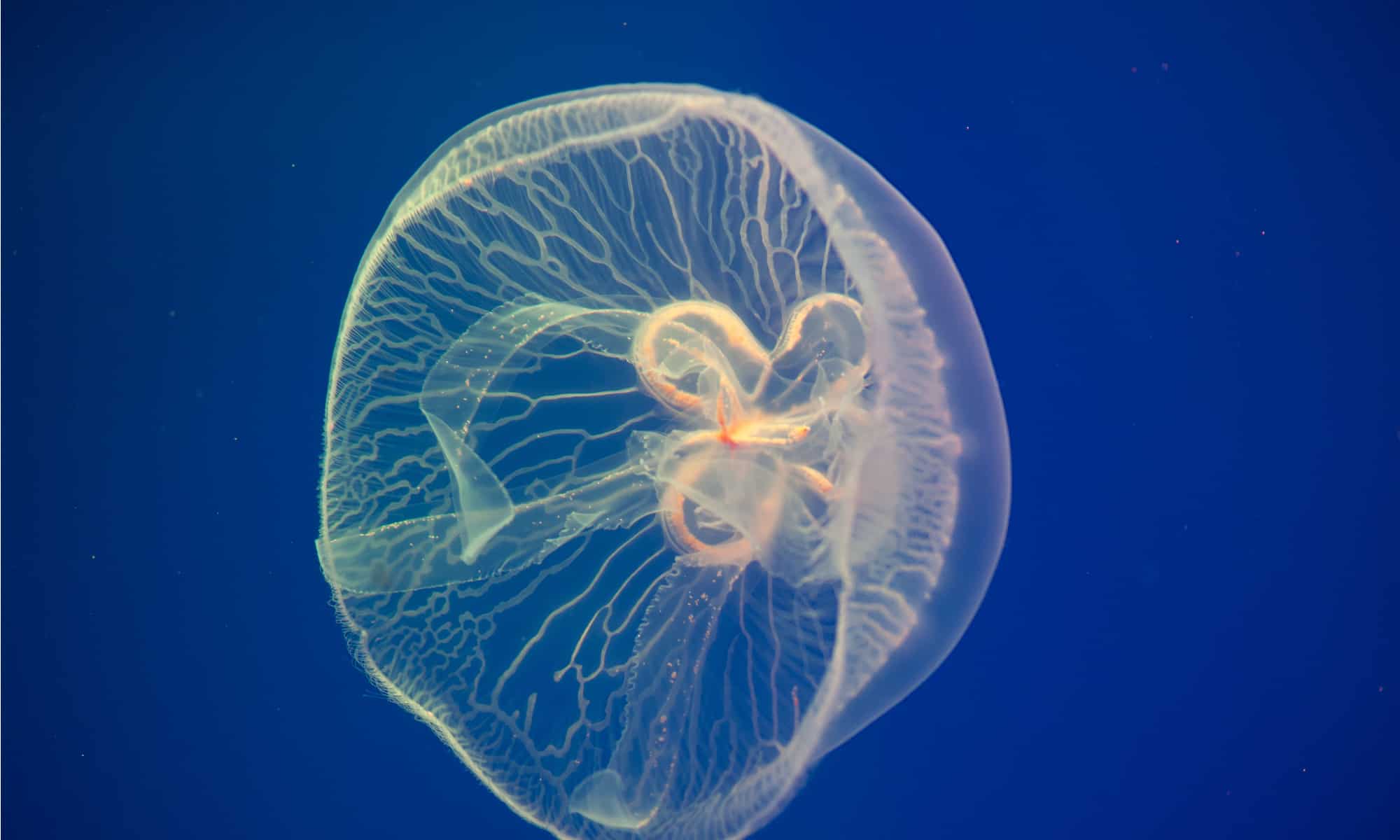
Moon jellyfish have transparent/white outer bells that are around the size of a dinner plate. However, the bell (also called the dome) can also be shades of blue, pink, or purple. Some sources state that coloration comes down to different genetic morphs, distinct genetically determined variations within a single interbreeding population. However, other sources claim that the color variation is caused by diet. Either theory would explain why the isolated population in this post features such vibrant pink hues.
Moon Jellyfish Diet and Lifestyle
These jellyfish may look beautifully delicate, but they are carnivores! They will feed on any creature that is small enough and unfortunate enough to get entangled in their tentacles. Their diet includes plankton, copepods, mollusks, fish eggs, and smaller jellyfish.
Moon jellyfish capture prey with the help of stinging cells on their tentacles called cnidoblasts or nematocysts. Once the prey is incapacitated, they use their oral arms to move it towards their stomachs, located under their bells.
Humans, on the other hand, have little to fear from these creatures. They can sting us, but their venom is mild and not considered dangerous. In fact, rinsing with vinegar can help deactivate the stinging cells, while heat may help relieve pain; the effectiveness of baking soda is less certain.