
Quick Take
- A beached lion's mane jellyfish looks harmless. It isn't, though, and the reason why should change how you approach the shoreline this summer. See the safety warning →
- Your instinct for treating a jellyfish sting could actually make it significantly worse. Get sting advice →
- Something specific in the ocean this summer is pulling massive jellyfish toward the shore in unusual numbers, and experts have a surprising theory about what it is. Explore the surge reasons →
- The sheer scale of the lion's mane jellyfish creates a hidden danger that most swimmers never consider until it's too late. Learn about hidden dangers →
As we enter the peak of summer, many are going to beaches to have fun and cool off in the water. While the beach is perfect for these incredibly hot days, a surge in massive jellyfish washing up on shore has left many worried. While jellyfish washing up on shore isn’t strange, the sheer size and unusually large number is. This Instagram post by @dailymail shows some pictures of these huge jellyfish.
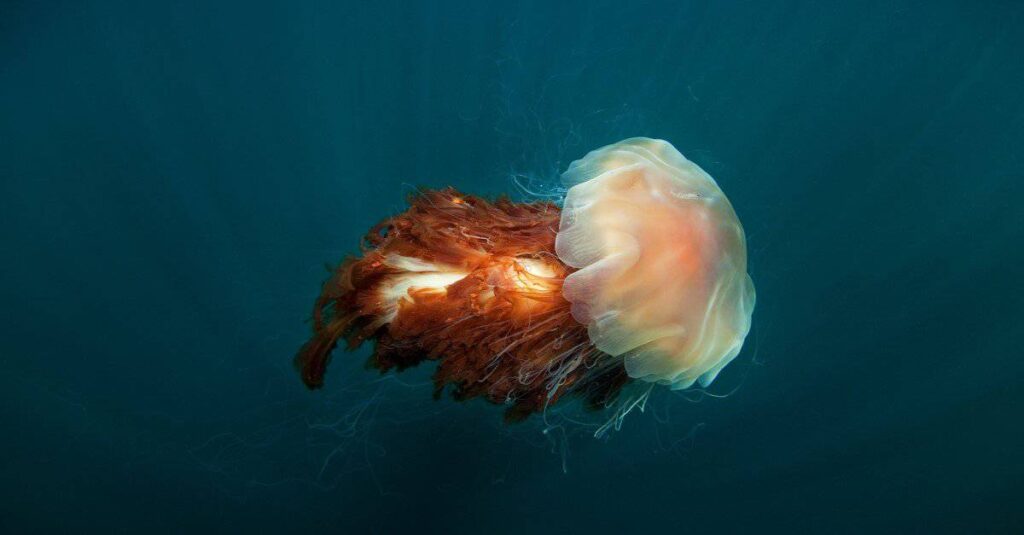
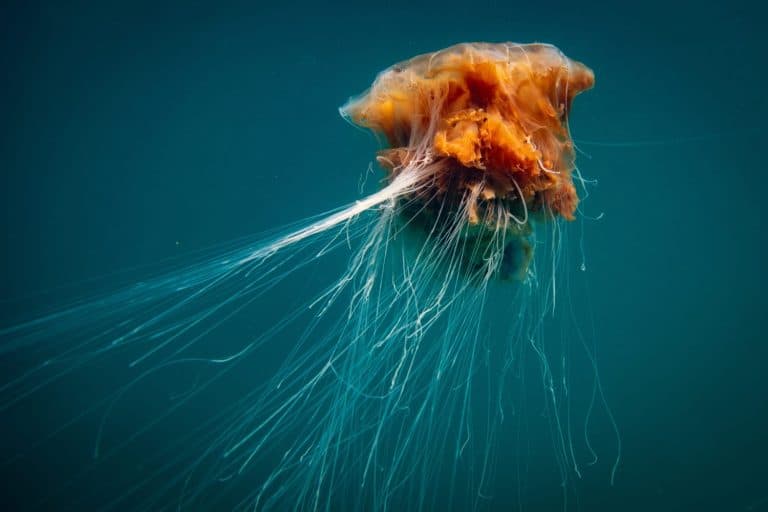
The lion’s mane jellyfish has a bell that can reach about six feet across, and tentacles that can grow over 100 feet long.
©Martin Prochazkacz/Shutterstock.com
About the Lion’s Mane Jellyfish
The post above shows pictures of massive jellyfish washing ashore. While not explicitly stated, the jellyfish are most likely lion’s mane jellyfish, the largest species on Earth. The jellyfish are native to the cold waters of the Arctic, northern Atlantic, and northern Pacific Oceans, and are a familiar sight off the coasts of New England, Alaska, and the Pacific Northwest. While not an irregular sight, the sheer number of lion’s mane jellyfish showing up on shore has been a concern to locals in the area. It has also prompted officials to give warnings to beachgoers.
While the reason for the surge isn’t fully understood yet, experts believe that warmer coastal waters, changing currents, and an abundance of plankton—the jellyfish’s primary food source—are contributing to the population moving closer to shore. If you encounter one on the beach, it is best to stay away and not touch it. Even after the jellyfish dies, its stingers can remain active.
The lion’s mane jellyfish is the largest jellyfish species on Earth! Their bell typically grows between one and three feet across, though the largest specimens can reach up to six feet, with tentacles extending well over 100 feet. The thousands of tiny tentacles trail behind the jellyfish and can be deadly to animals caught in them. The reason they are so dangerous to humans on beaches is that their stingers can remain active. For days to weeks at a time, the millions of microscopic stingers, or nematocysts, can cause burning, stinging, swelling, and even nausea. If you get stung by accident, rinse the area with nearby seawater, as freshwater may make stinging worse. Remove any tentacles with tweezers and seek medical attention if the pain worsens or becomes unbearable. It’s important to stay vigilant by the water this year.