

Quick Take
- Most owners are surprised to learn how dogs actually catch tapeworms, and understanding the process reveals why the most common prevention approach misses the mark.
- That scooting and rear-end licking isn't just a quirky habit. It's a red flag with a specific cause most dog owners overlook. See the symptoms explained →
- Popular home remedies for tapeworms range from useless to outright dangerous, and one commonly suggested cure is actually toxic to dogs. See the dangerous remedies →
- Not all flea treatments are equal, and the one you choose could be the very reason tapeworms keep coming back. Find the right flea treatment →
Tapeworms (Dipylidium caninum) are parasitic flatworms that live in your dog’s digestive tract. Dogs typically contract tapeworms through accidental ingestion of infected fleas while grooming. Controlling fleas is the number one way to eliminate tapeworms in dogs. There are no effective home remedies for tapeworms. It’s important to see a veterinarian when you notice signs of tapeworms to get proper treatment for your pup. Continue reading to discover how to get rid of tapeworms in dogs, what your vet is likely to prescribe, and more.
What Are Tapeworms?
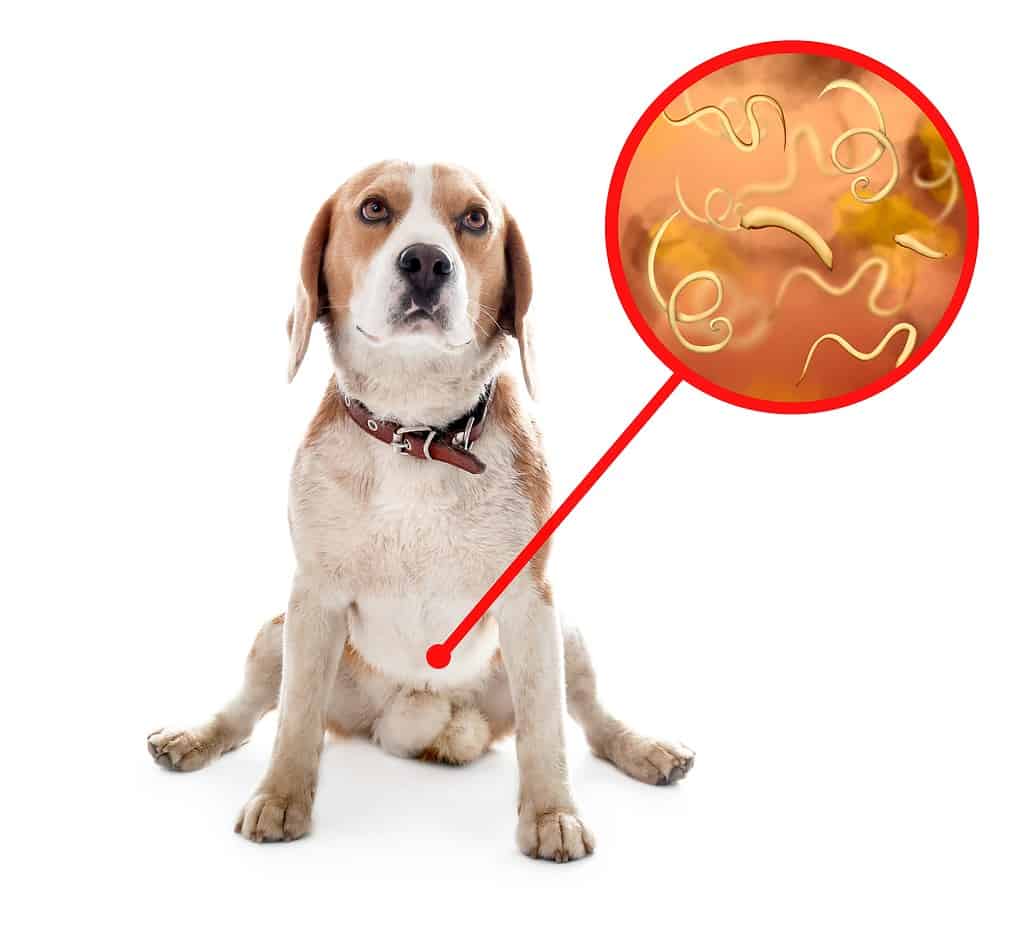
Dogs and cats typically do not show signs of illness from a tapeworm infection unless the infestation is severe or the animal is very young.
©New Africa/Shutterstock.com
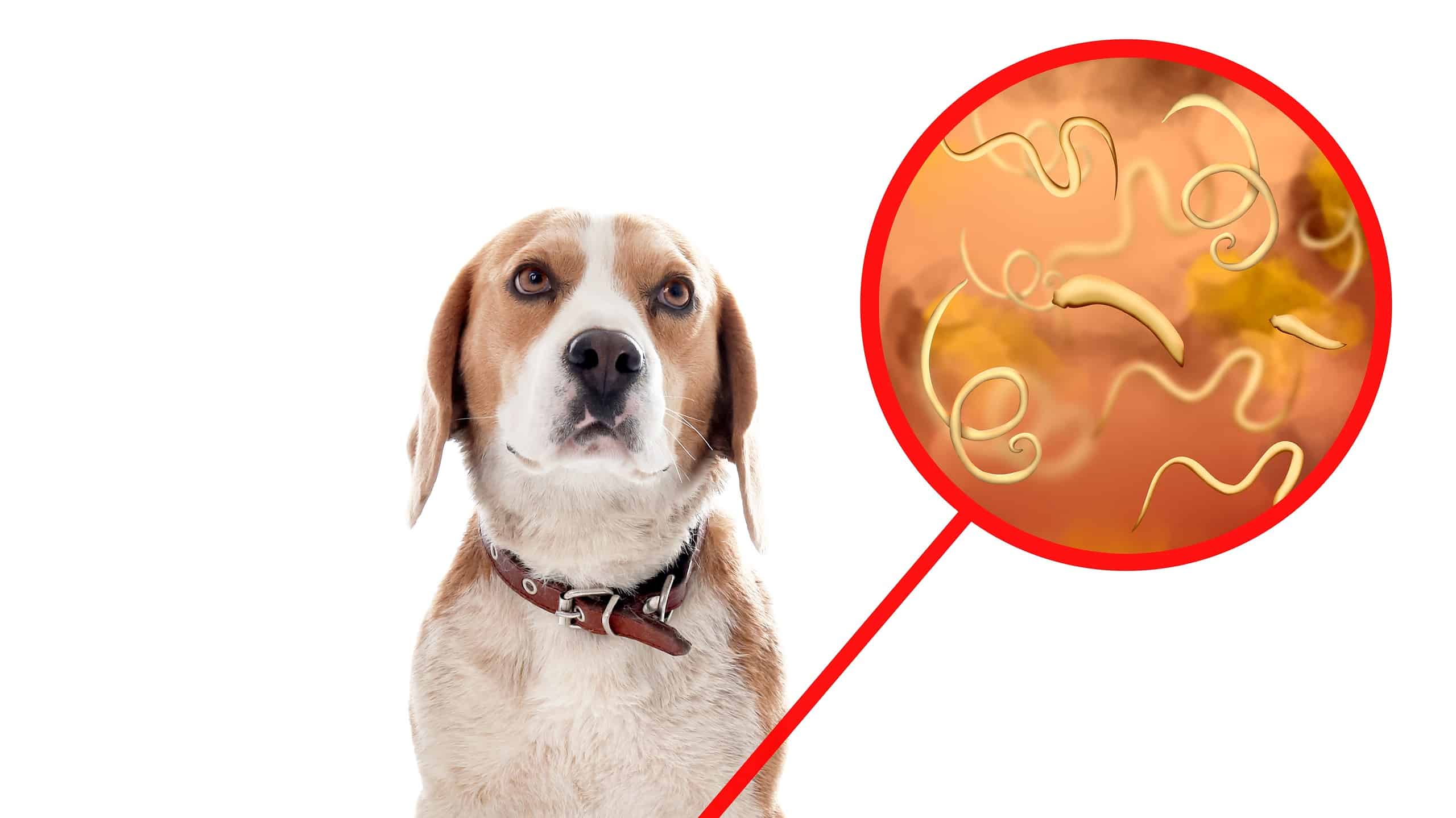
Tapeworms are worms that grow inside an animal’s digestive system. Each worm is made of several segments, called proglottids, which are about the size of a grain of rice. These segments may be seen crawling around the dog’s anus, on bedding, or in fresh feces.
The movement of these segments causes intense itching, prompting infected dogs to frequently lick their hindquarters or scoot their rear ends across the floor to find relief. While tapeworms rarely cause severe illness, heavy infestations can rob a dog of nutrients, leading to a dull coat, mild weight loss, or an increased appetite without weight gain. In rare cases, a dog may even vomit up an entire adult tapeworm, which can be up to 28 inches long.
How Are Tapeworms in Dogs Treated?

If you suspect your dog has tapeworms, veterinary intervention is necessary.
©SeventyFour/Shutterstock.com
Getting rid of tapeworms starts with bringing your dog to the veterinarian. Your vet can prescribe medication to eliminate the tapeworms.
Parasiticides, such as Praziquantel and Epsiprantel, are used to treat tapeworms. They may be prescribed as oral medications or as injections. Multiple doses might be required to kill all the tapeworms, their larvae, and their eggs. Parasiticides are very effective against tapeworms and generally have few side effects, though mild reactions such as vomiting or diarrhea can occasionally occur.
Parasiticides must be prescribed by a veterinarian. Your vet can also prescribe flea preventatives, which help eliminate tapeworms by controlling fleas.

The best way to fight fleas is to keep your dog on a parasite prevention medication year-round.
©Reddogs/Shutterstock.com
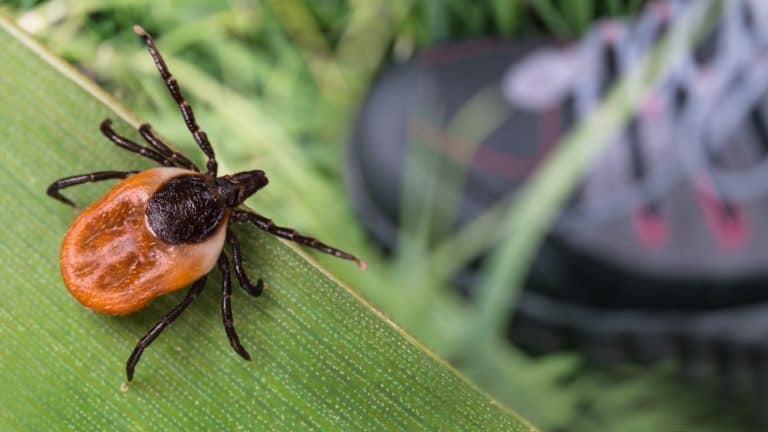
According to the CDC, dogs get tapeworms by eating fleas that have been infected with their larvae. Inside the dog, the larvae then grow into an adult tapeworm.
The best way to fight fleas is to keep your dog on a parasite prevention medication year-round. There are various flea medications for dogs, including topical, injectable, and oral medications.
Some over-the-counter medications don’t work as well as those prescribed by your veterinarian. Many veterinarians report that over-the-counter topical treatments are less effective, and some would not use them on their own pets.
Home Remedies for Tapeworms Are Ineffective
Unfortunately, home remedies for tapeworms aren’t as effective as veterinary treatment. Turmeric or pumpkin seeds might kill off some tapeworms or work in very mild cases, but using them is risky.
The risk is that these remedies are unlikely to eliminate the tapeworms, allowing the infestation to worsen and become more dangerous for your dog. It’s best to see a vet to ensure your dog receives proper treatment.
Garlic is also sometimes touted as a cure, but it is toxic to dogs. Never feed your dog garlic. Even if it were not toxic, garlic is not an effective or reliable treatment.
Apple cider vinegar, which is not toxic to dogs, is another suggested cure. However, like garlic, apple cider vinegar cannot dissolve, kill, or expel tapeworms from your dog’s digestive tract.