
Quick Take
- A single gray wolf successfully entered Los Angeles County for the first time in 100 years.
- The female was previously part of the Plumas County Beyem Seyo pack.
- She was recorded because of her GPS collar.
- Having been eliminated from most of their historical range, wolf populations in the US are increasing.
- As there are more wolves, the potential for wolf-human conflicts increases.
For thousands of years, wolves occupied a range of North American habitats stretching from Arctic tundra to deserts. Their numbers were drastically reduced by hunting and habitat loss, and it has taken a concerted conservation effort to save them. After an absence of 100 years, a female gray wolf has now been recorded in Los Angeles County. We researched the significance of this event in the context of wolf conservation in the US. At the same time, we investigated the challenges associated with the presence of large predators in urban regions.
About Gray Wolves
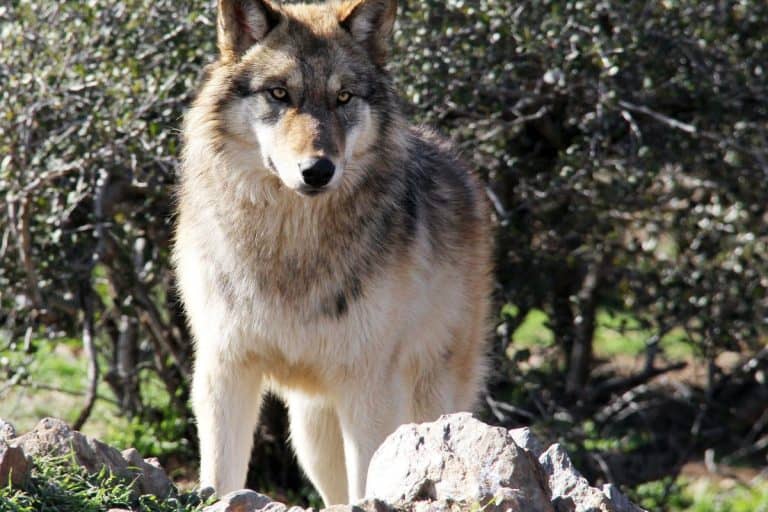
The gray wolf (Canis lupus) is the largest of the wild canine species, but they vary in size depending on where they live. An adult can grow to around 51 inches long and weigh up to 176 pounds. These are highly social animals who live in packs of up to 30 or so individuals, but most packs are smaller. In charge of the pack, there is typically an alpha male and female, and the rest of the pack are their offspring.
Wolves are carnivores and hunt live prey either alone or as a pack. At times, they will also scavenge carrion. Their larger prey, such as moose and elk, is hunted as a pack. A lone wolf would target beavers, rabbits, and other small mammals. Importantly, they will also kill domestic livestock and occasionally raid garbage.
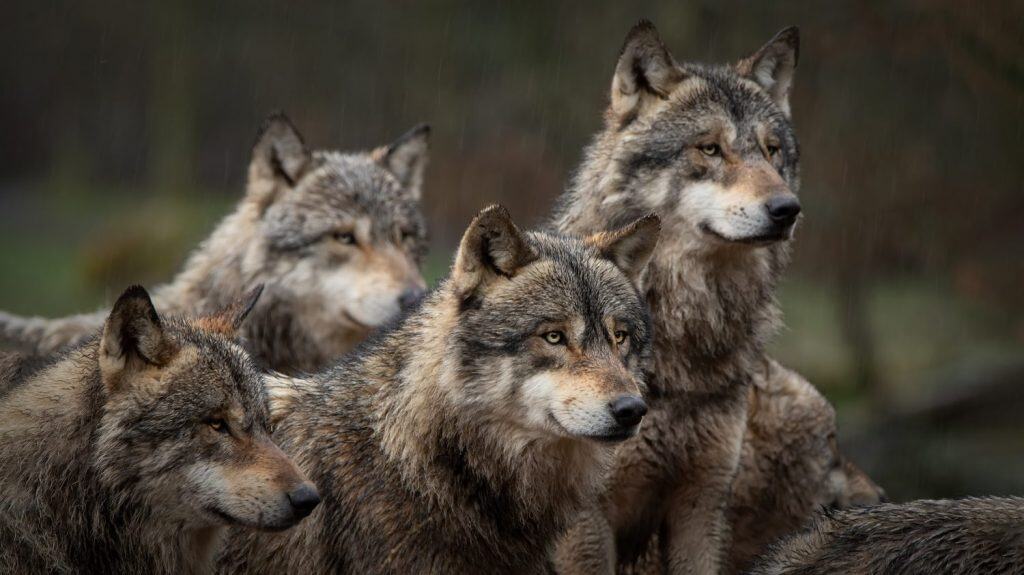
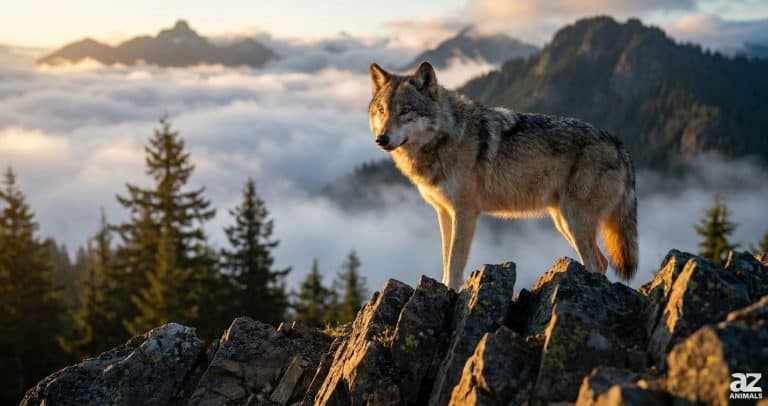
Wolves live in packs of up to 30 individuals.
©Pat-s pictures/Shutterstock.com
The wolf pack has a stationary phase and a nomadic phase. The stationary phase is in the spring and summer when pups are being reared. During the fall and winter nomadic phase, wolves can cover over a hundred miles in one night!
How Was the Wolf Spotted in Los Angeles County?
A three-year-old, black-coated gray wolf crossed the boundary of LA County around 6 am on 7th February 2026. She would have been completely unaware that she was the first wolf to set foot in the area for 100 years. We know the details of her journey because she was fitted with a GPS collar in May 2025 when she passed through Tulare County. Then, she was designated as wolf BEY03F.
We know that she was born in Plumas County in the Beyem Seyo pack in 2023. Therefore, she had travelled almost the entire range of the Sierra Nevada mountains, probably looking for a mate. The Interstate 5 may have deterred her from moving further south, and she was last tracked moving northwards. Her journey is significant because this is the most southern verified gray wolf record in modern times. As of February 2026, no visual sightings of her had been made.
Gray Wolf Conservation and Management
By the mid-20th century, gray wolves had been eliminated from most of their historical range in the US. In the 1800s, agriculture expanded, wiping out much of the wolves’ prey, and so they became a threat to the settlers’ livestock. An eradication program was launched, which eliminated most of them. They were even killed within the newly established Yellowstone National Park because they were viewed as destructive predators. By the mid-20th century, wolves were virtually eliminated from the lower 48 states.
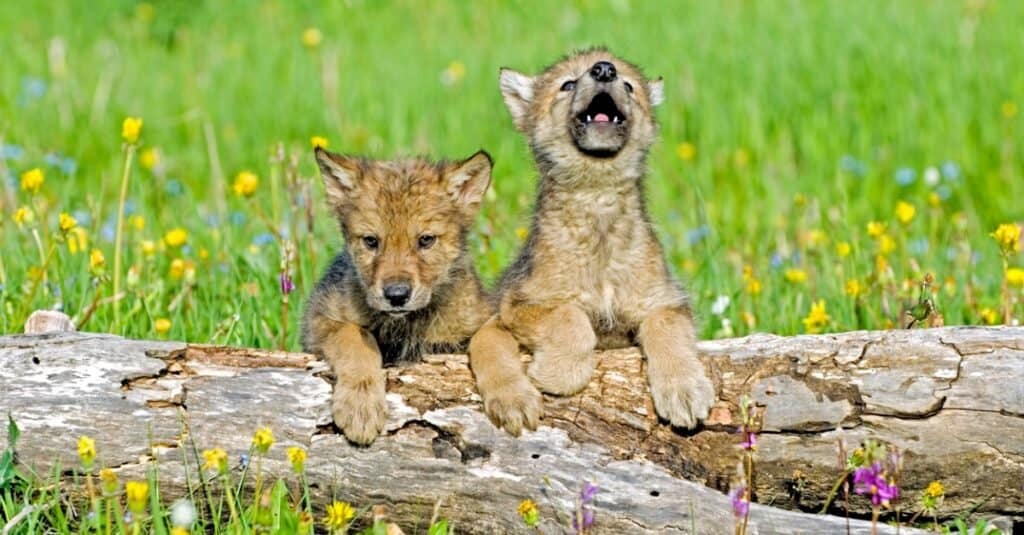
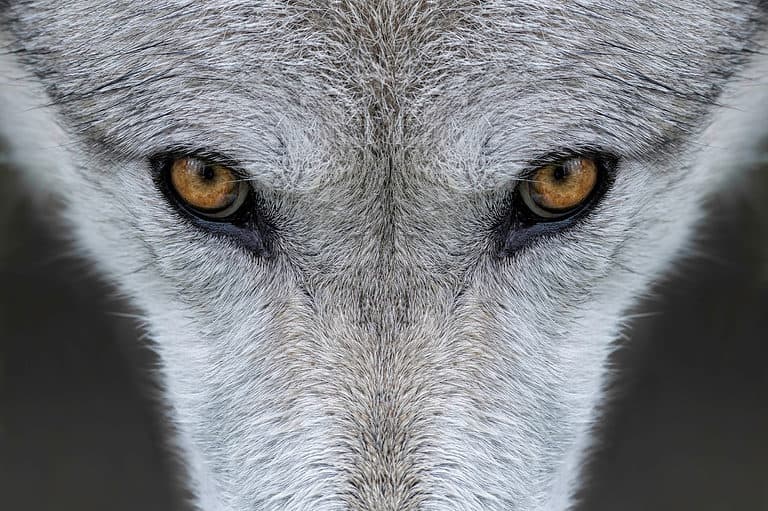
Wolves were nearly eradicated from the US.
©iStock.com/JohnPitcher
Attitudes towards wolves shifted during the 1960s. By 1978, all wolf subspecies except those in Minnesota were federally listed as endangered. The 1990s saw the reintroduction of wolves to Yellowstone. These wolves have dispersed across the lower 48 states.
Gray Wolves in California
The historic range of wolves in California spanned most of the state, including the coastal range from San Diego to Sacramento, as well as inland in the Sierra Nevadas. The last wild wolf in California was shot in 1924, and the state remained a wolf-free zone until the first of the dispersed wolves crossed into California in 2011.
By August 2015, California had its first wild wolf pack in almost a century. The California Department of Fish and Wildlife estimates that there are 70 gray wolves in the state, up from 44 documented the year before. Their numbers are still rising, and today there are nine named packs, including the Antelope pack. There are also several unnamed packs.
What Happened to BEY03F’s Pack?
Female wolf BEY03F was born into the Beyem Seyo pack in 2023, but evidence suggests that this pack is no longer active. It was confirmed in Plumas County in May 2023 after numerous sightings of wolf tracks. The alpha male and female of the pack, and therefore likely her Mom and Dad, were male LAS19M and female LAS23F, who both came from the Lassen Pack. In fact, they were half-siblings. Six pups were reared by the Beyem Seyo Pack in 2023, presumably BEY03F was one of them.
Sadly, breeding male LAS19M has not been detected since the summer of 2024. Meanwhile, female LAS23F was moving south and using areas throughout eastern Sierra County. Helicopter sightings during January 2025 suggested that LAS23F was now traveling with a member of the Antelope pack and several younger Beyem Seyo wolves. One of these could have been BEY03F, and it suggests that part of the Beyem Seyo pack had merged with the Antelope pack. A breeding male joined the group and, in 2025, at least six pups were born!
Issues Surrounding the Wolves’ Return
Preliminary studies into the effects of wolf recovery indicate that they will likely enhance biodiversity. Nevertheless, their reintroduction has not been without controversy and legal challenge. Several lawsuits were filed to halt wolf restoration. They have been delisted from the Endangered Species Act (ESA) in the Northern Rocky Mountain states, including Idaho and Montana.
Gray wolves have been protected under the California Endangered Species Act since 2014. Ranchers who have suffered loss of livestock have not been happy about the situation. Also, while conservationists celebrate the arrival of BEY03F in Los Angeles County, her relatives have been predating cattle in their original home in Sierra Valley.
Between March 28 and September 10, 2025, the Beyem Seyo pack repeatedly preyed on livestock there. It caused the loss of 70 animals. In response, the California Department of Fish and Wildlife killed four Beyem Seyo wolves. One of these was LAS23F, according to the Pacific Wolf Coalition (potentially the mother of BEY03F).
Large Predators in Urban Areas
Wolves have been described as prolific and difficult to control once their numbers are established. Once they reach a certain number, they can outgrow mortality factors such as poaching, etc. We also know that they can disperse over long distances and will readily colonize new areas if they are allowed to do so by the human population. In most areas of the US, there is abundant wild and domestic prey for wolves. Therefore, relying on a limited food supply alone to control their numbers could result in large wolf populations. Wolves tend to avoid humans and areas where humans spend a lot of time. Occasionally, however, they will interact with humans and our animals.
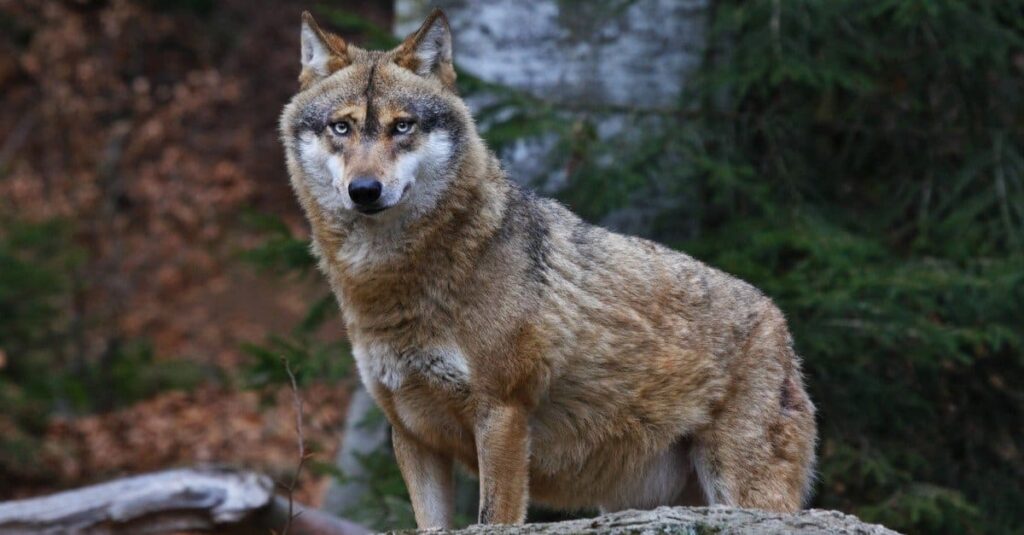
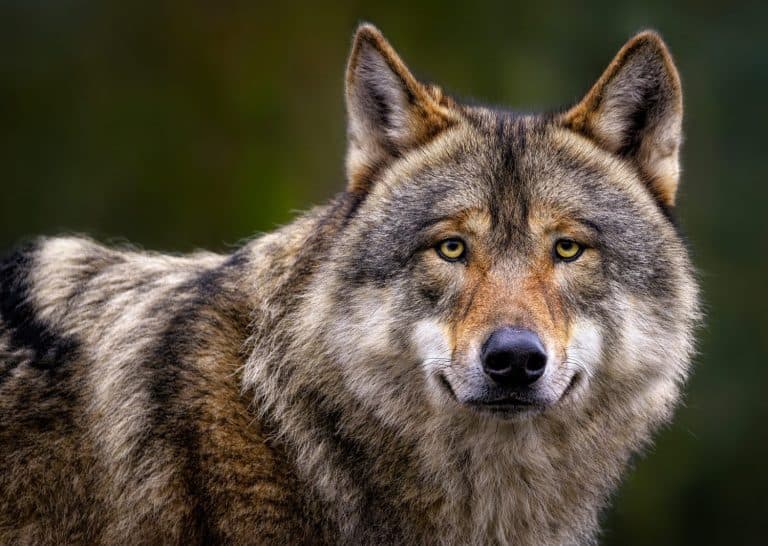
Wolves generally prefer to avoid humans.
©Bildagentur Zoonar GmbH/Shutterstock.com
On the whole, it is rural residents who fear and/or dislike wolves because these large predators target their livestock. Urban-dwellers are more supportive of wolf reintroduction. Nevertheless, wolf-human conflict is a reality, as is the case with all large carnivores. Wolves have attacked pets, and, rarely, humans.
Wolf-Human Conflict
Wolves have been known to chase cyclists and motorcyclists. Globally, most wolf attacks on humans are made by rabid wolves and wolf-dog hybrids. Also, attacks are more common when wolves are habituated to humans. It makes sense that steps should be taken to avoid this from happening. Children under 12 are more likely to be attacked, as are adults intervening when wolves are attacking their pets.
Whilst these incidents are rare, they can have a serious impact on the public’s perception of wolves. This can result in anti-wolf campaigns and even illegal killing of wolves. It is important to understand the various scenarios by which these conflicts may occur. What’s more, effective and efficient prevention and mitigation of wolf–human conflicts is critical to maintaining local tolerance of wolves.