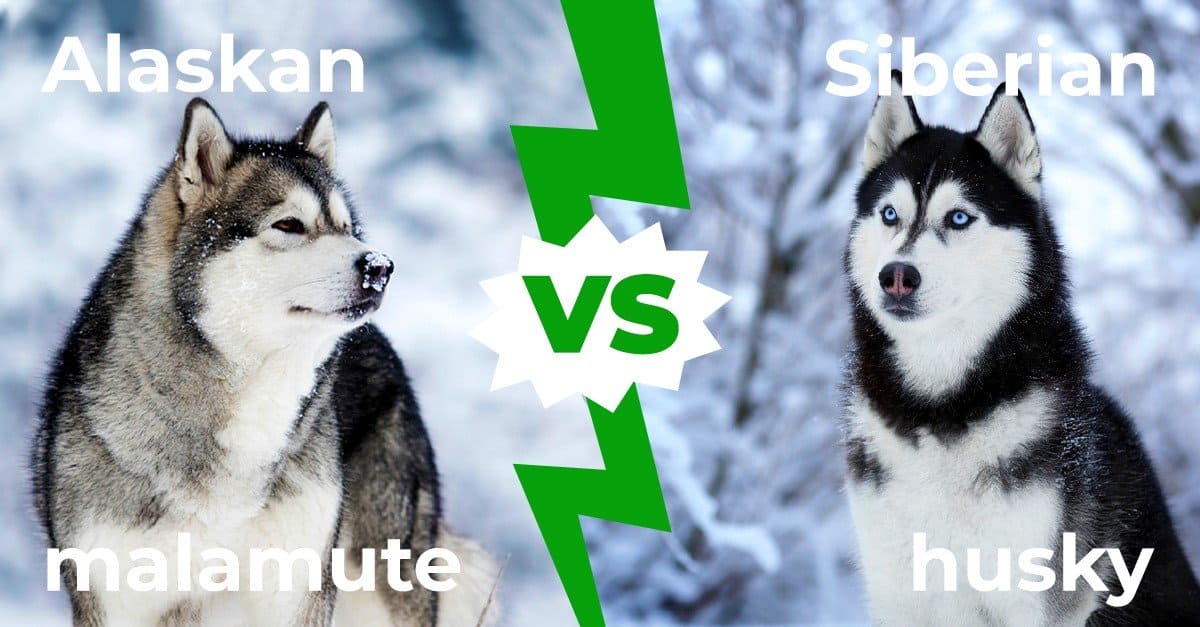

When you think of cold-weather dogs, what breeds come to mind? Two of the most popular answers include Alaskan malamutes and Siberian huskies. These working dogs share many features. Considered spitz breeds, which means “pointed” in German, they thrive in cold-weather climates. Both possess thick double coats, pricked ears, and an overall wolf-like appearance.
While they look similar and evolved to perform similar tasks, several key differences distinguish the two breeds. In this article, we’ll explore the key differences separating Alaskan malamutes vs. Siberian huskies.
Comparing Alaskan Malamutes vs. Siberian Huskies
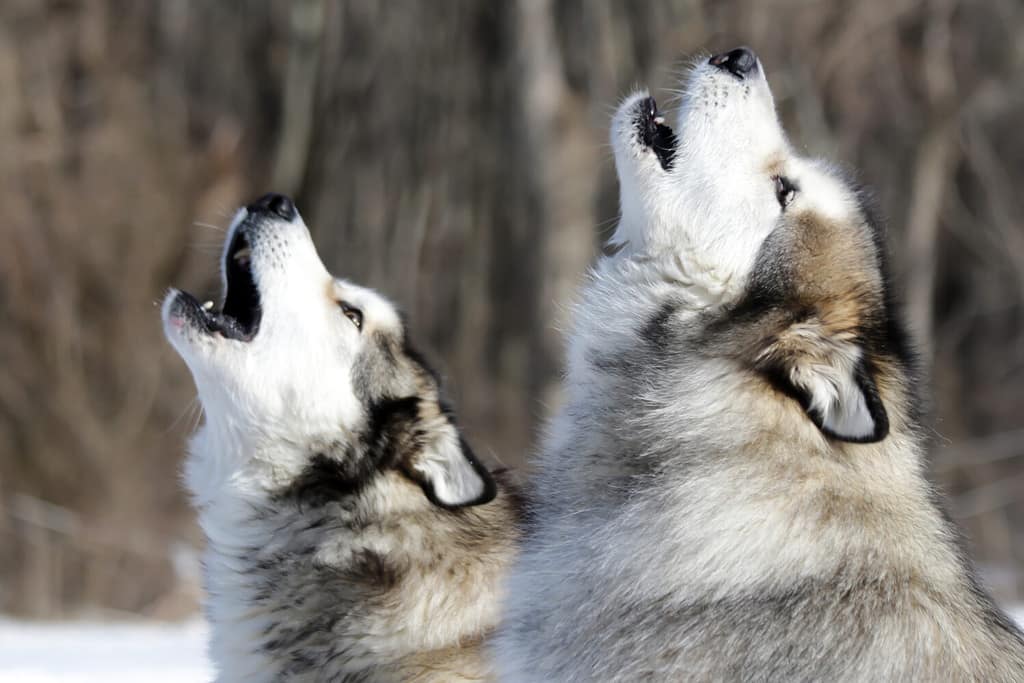
It can be difficult to tell Alaskan malamutes and Siberian huskies apart.
©Kate Lussier/Shutterstock.com
When comparing these two striking dog breeds, it comes down to the details in order to tell them apart. Here are some facts about Alaskan malamutes and Siberian huskies.
| Alaskan Malamutes | Siberian Huskies | |
|---|---|---|
| Size | Tails curl up and lay across the body, heavier bodies, offset ears, peaked foreheads, broad chest, shorter legs | 21 to 23.5 inches tall 45 to 60 pounds |
| Lifespan | 10 to 14 years | 12 to 15 years |
| Habitat | Arctic tundra Bred by the Malemiut Inuit tribe from Alaska’s Norton Sound region | Arctic tundra From Northeast Asia, bred by the Chukchi people of Siberia |
| Coats and coloring | Double coat, longer hair The coat ranges from black to gray with shades of red, brown, and sable Brown eyes | Double coat, shorter hair Colors include red, black, gray, sable, white, and agouti Brown or blue eyes |
| Body | Tails curl up and lay across the body, heavier bodies, offset ears, peaked foreheads, broad chests, shorter legs | Tails hang straight down, leaner bodies, ears on top, striped forehead, narrow chest, longer legs |
| Energy level | Medium to high | High |
| Temperament | Friendly and confident Intelligent Generally quiet | Friendly and independent Highly intelligent More vocal |
| Socialization | More people-oriented Can be aggressive towards other dogs | Natural pack animals Enjoy spending time alone and with their owners |
The 8 Key Differences Between Alaskan Malamutes and Siberian Huskies
On average, Alaskan malamutes are larger than Siberian huskies.
©u4f_tol/Shutterstock.com
While they appear similar at first glance, there are multiple key differences between Alaskan malamutes and Siberian huskies. These dog breeds come in different sizes, are from different regions originally, and have different builds.
Here is a breakdown of these differences in more detail.
Alaskan Malamute vs. Siberian Husky: Size
Alaskan malamutes tend to be much larger than Siberian huskies. On average, male Alaskan malamutes stand between 23-25 inches tall and weigh from 75-85 pounds. Exceptionally large males can easily reach 100 pounds in weight. Meanwhile, male Siberian huskies generally stand between 21-23.5 inches tall and weigh 45-60 pounds. The same difference in size is readily apparent in females as well.
Alaskan Malamute vs. Siberian Husky: Lifespan
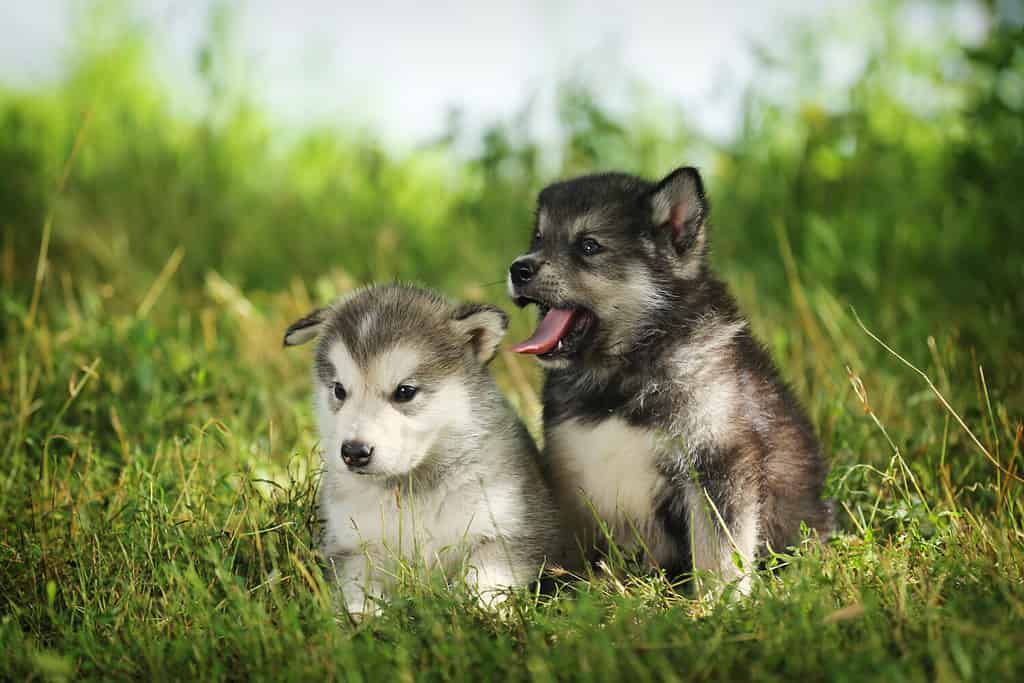
Siberian huskies tend to live longer than Alaskan malamutes.
©Yuriy Koronovskiy/Shutterstock.com
While Alaskan malamutes tend to grow larger than Siberian huskies, their lifespan is not as long. On average, Alaskan malamutes live between 10-14 years, with a median age of around 10.7 years.
Siberian huskies, on the other hand, frequently live between 12-15 years. The difference in their ages may be influenced by various factors, including genetic predispositions and lifestyle, rather than solely size and health issues.
Alaskan Malamute vs. Siberian Husky: Origins
While the two breeds may share a common ancestor, their paths diverged long ago. The current consensus is that the Malemiut Inuit people of Alaska’s Norton Sound region bred malamutes to pull heavy sleds. They became well-known during the Klondike Gold Rush of 1896 among prospectors and settlers. In addition, Rear Admiral Richard Byrd used malamutes during his expedition to the South Pole.
As for Siberian huskies, research indicates that they originate from the Chukchi Peninsula in eastern Siberia. They came to Nome, Alaska, in 1908, where people employed them as working and sled racing dogs. Famous Siberian huskies include Balto, who helped bring antitoxin by sled to Nome to combat an outbreak of Diphtheria in 1925.
Alaskan Malamute vs. Siberian Husky: Coats and Coloring
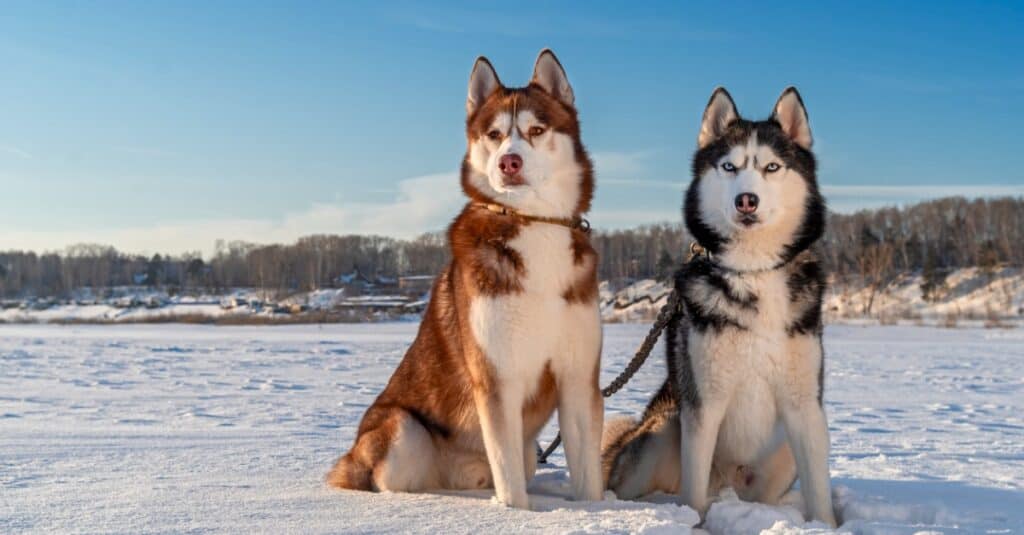
Siberian huskies have more striking coat variations compared to Alaskan malamutes.
©iStock.com/Автор
Another easily identifiable difference between the two breeds is their coats and coloring. While both breeds possess double coats, the Alaskan malamute tends to appear thicker with longer hair, while the Siberian husky’s appear thinner with shorter hair. In addition, although their colorings look similar, there exist a few subtleties separating the two.
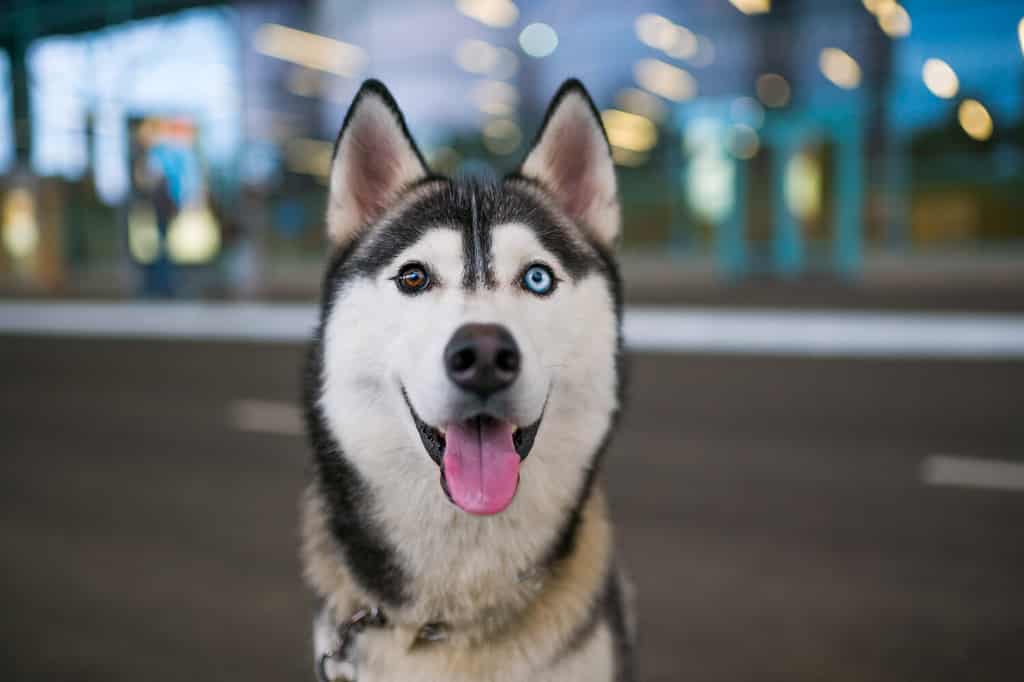
Both tend to range from black to grey with white markings, but the range of colors is more striking in Siberian huskies. Unlike most malamutes, huskies can range from all-white to almost completely red, which appears more rarely in their cousins. Finally, while malamutes’ eyes generally appear dark brown, huskies’ eyes can be brown, blue, or both.
Alaskan Malamute vs. Siberian Husky: Body
In addition to differences in weight and height, the two breeds’ bodies look different as well. Alaskan malamutes tend to have broader chests and shorter legs. Furthermore, their ears appear offset, and they usually sport a peaked forehead. Upon examining Siberian huskies, it’s easy to notice their more narrow chest and longer legs.
Unlike malamutes, huskies’ ears sit directly atop their head, and their forehead is less pronounced and more striped. However, the most noticeable difference in their bodies is certainly the shape of their tail. While the Alaskan malamute’s tail curls upwards, the Siberian husky’s tail hangs straight down.
Alaskan Malamute vs. Siberian Husky: Energy Level
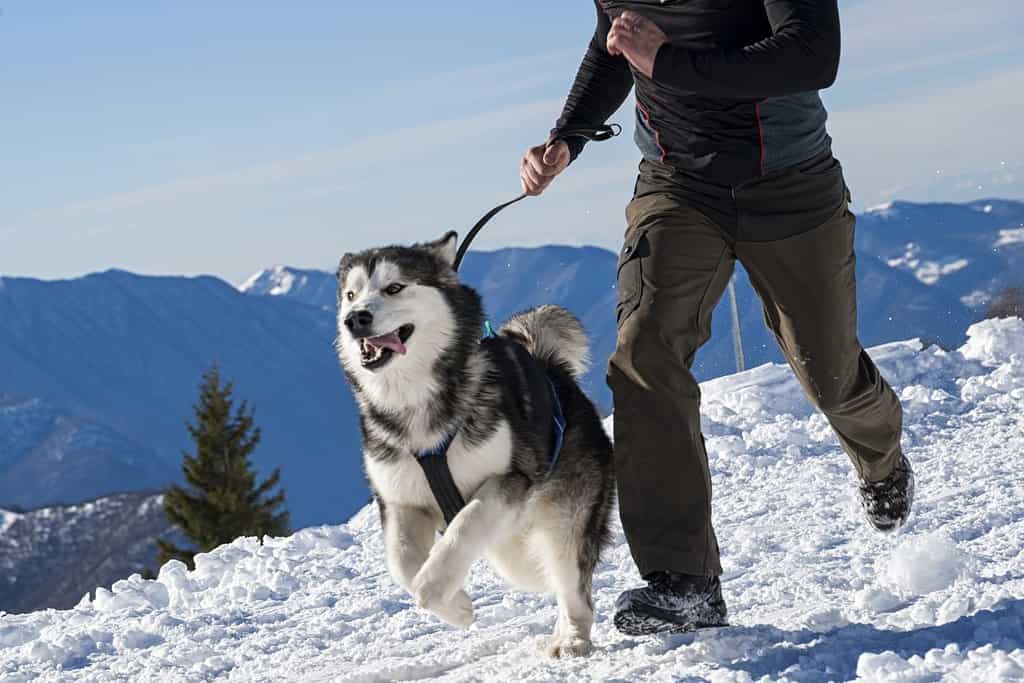
While both are hard-working, Siberian huskies exhibit higher energy levels compared to Alaskan malamutes.
©COLOMBO NICOLA/Shutterstock.com
Alaskan malamutes and Siberian huskies are both high-energy dogs. People breed them to pull heavy sleds, so they require a lot of exercise and training. However, compared to Alaskan malamutes, Siberian huskies seem to possess a nearly inexhaustible supply of energy.
While a malamute will eventually grow tired, Siberian huskies never seem to run out of energy. This is likely due to their adaptation. While Alaskan malamutes were bred to pull heavier sleds for short distances, Siberian huskies were bred to pull sleds for longer distances.
Alaskan Malamute vs. Siberian Husky: Temperament
Alaskan malamutes and Siberian huskies typically act friendly toward people. However, while malamutes tend to appear more confident around people, huskies enjoy a higher level of independence.
In addition, both breeds are quite intelligent, but Siberian huskies exhibit more exceptional problem-solving skills. They will try to escape yards or enclosures when possible, as opposed to malamutes, which are usually more resigned. Finally, malamutes are the quieter of the two breeds, with huskies being more vocal on average.
Alaskan Malamute vs. Siberian Husky: Socialization
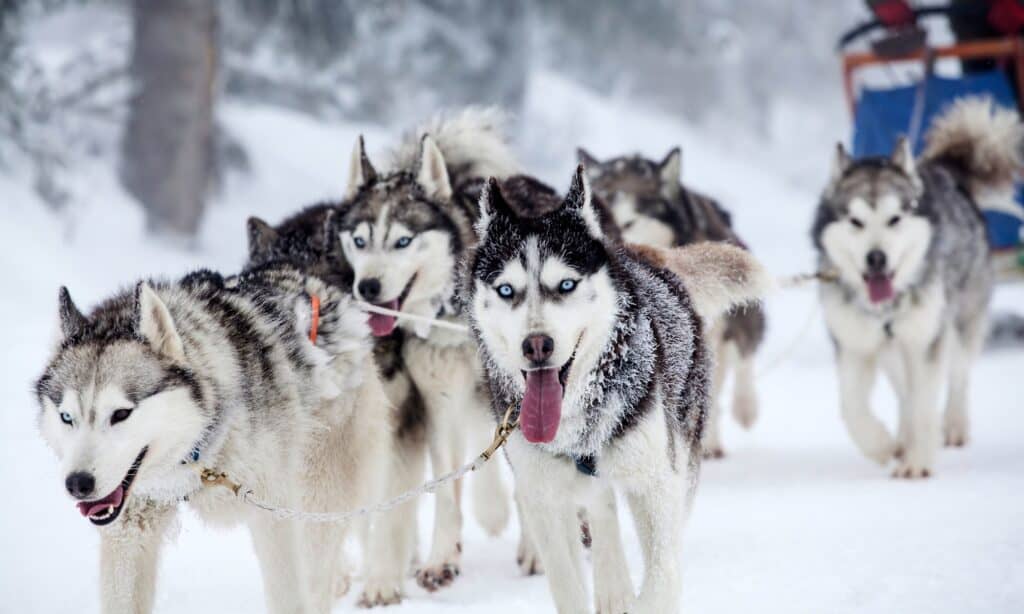
Overall, Siberian huskies get along better with other dogs compared to the Alaskan malamute.
©iStock.com/8213erika
Despite their status as working dogs, malamutes can act aggressively towards other dogs. This, along with the fact that they tire more easily than huskies, may explain why they were not used as often as sled-racing dogs. Huskies, on the other hand, generally get along well with other dogs. While both breeds may not get along well with other animals, huskies perform better with same-sex dogs than malamutes.