
Quick Take
- Albino racoons completely lack melanin, while leucistic racoons have a genetic mutation that limits melanin production.
- The odds of spotting a true albino raccoon in the wild are likely 1 in 750,000.
- A complete lack of melanin triggers severe vision loss and rejection by family units.
- Most white raccoons are leucistic and retain dark pigment despite their snowy appearance.
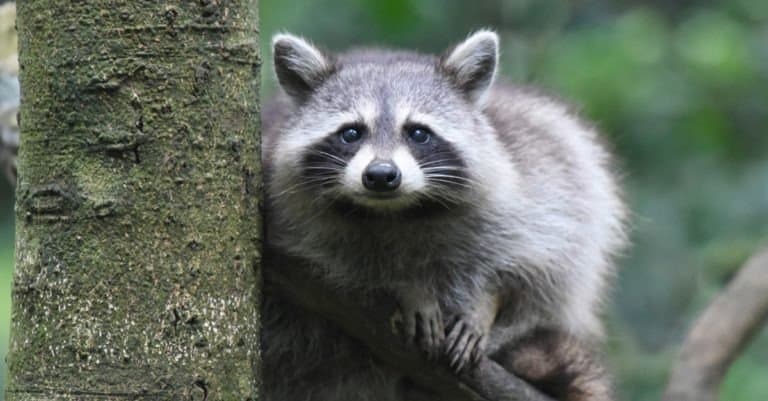
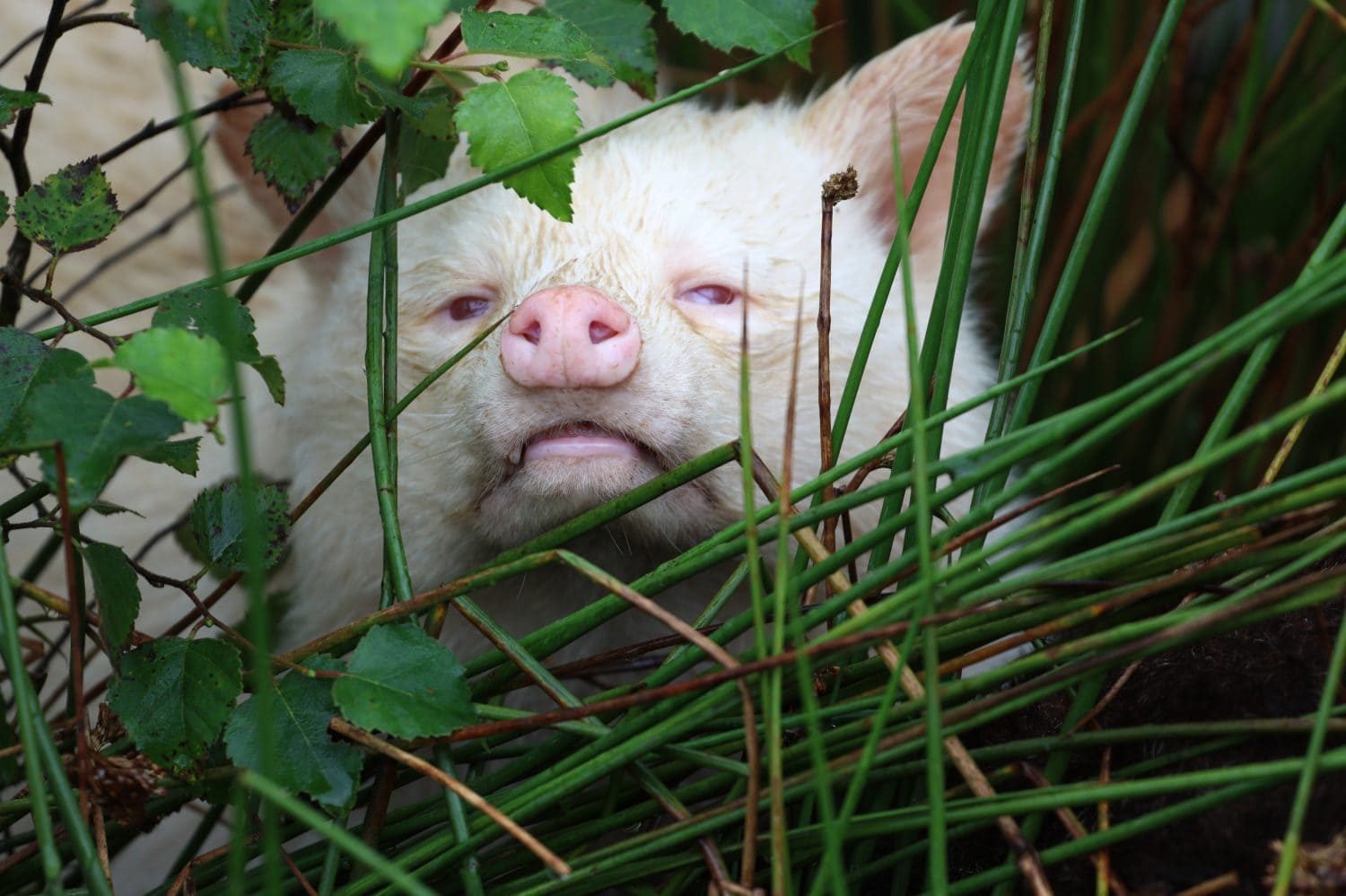
Imagine that you’re taking an evening stroll in the woods. All of a sudden, you spot a flash of color and two glowing eyes. The furry animal looks like a raccoon, but its all-white fur says otherwise. There’s no black fur and the bandit mask is missing entirely; only snow-white hair. What you’ve just observed may have been one of the rarest animals in the world… or maybe not.
While albino raccoons, and albino animals in general, are extremely rare, leucistic raccoons are more common and share many of the same traits. If you saw them both at a distance, it would be challenging to tell them apart. While most people will never see an albino raccoon in their lifetime, leucistic raccoons are identifiable by a few key features.
Albino vs. Leucistic: What’s the Difference?
Although similar, albino and leucistic are not the same. “Albino” means a complete lack of melanin, meaning an animal lacks all pigment. This is what makes its skin white or, in the case of a raccoon, its fur. It’s a genetic disorder that also affects the animal’s eyes and nose, making them appear pink rather than brown or black. Some animals may even have red eyes as a result. The odds of seeing an albino raccoon are comparable to those of being struck by lightning. The chances of a true albino birth are 1 in 10,000, though the odds of actually seeing one in the wild may be as low as 1 in 750,000.
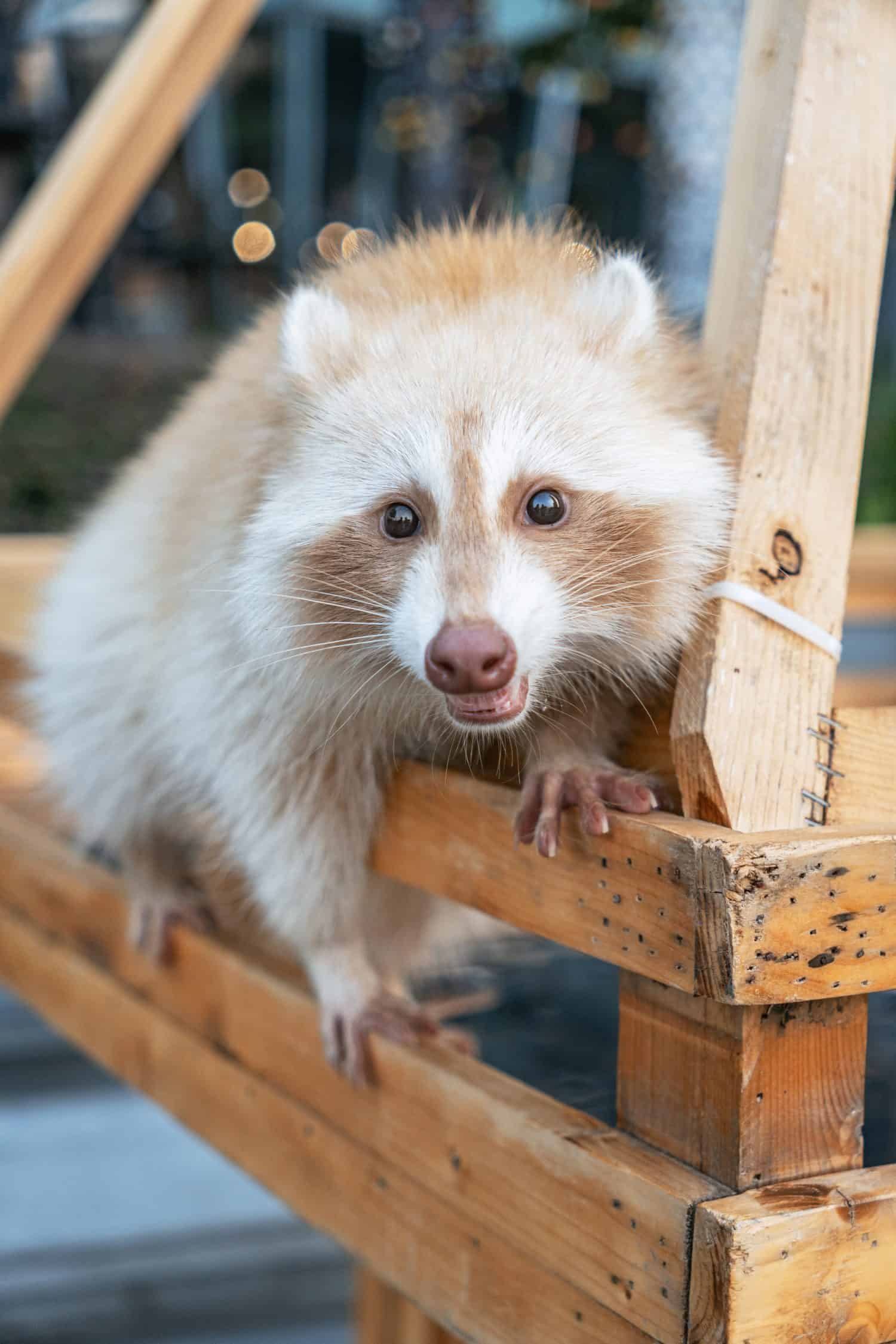
Leucistic raccoons only lose some of their melanin and retain some color.
©Tetiana Osharova/Shutterstock.com
Albino animals do not have an easy life. They’re far more prone to sunburn, which increases their cancer risk. Without pigment for protection, they have sensitive eyes, making it painful for some animals to be out during the day. In addition to light sensitivity, they often lack the camouflage necessary for survival. This can lead their pack or family to push them out of the unit, so they don’t pose a risk to the group when hiding from predators.
Like albinos, leucistic raccoons also have a genetic mutation that limits melanin production, but they are not as rare as albinos. It’s far more likely to see one of these out in the wild, and they do share some features. Leucistic raccoons also have pale white or cream-colored fur, which makes them stand out. However, they maintain color around their eyes and nose, typically brown or black. Leucistic raccoons are less rare than albino raccoons, and the odds of spotting one go up in areas where raccoons are known to congregate.
The Leucistic Raccoons of Lake Merritt
In 2023, several leucistic raccoons were spotted on the shores of Lake Merritt in Oakland, California. The three babies were cream-colored, with varying hues of off-white. Their faces still had patches of dark fur, and their eyes were brown, which is how experts determined they were not albino. In the photo, taken by a local, they can be seen following their mother along the shoreline. She was not leucistic and had typical coloring one would expect to see on a raccoon. If nothing else, this photo captures the rarity and randomness of leucistic raccoons.
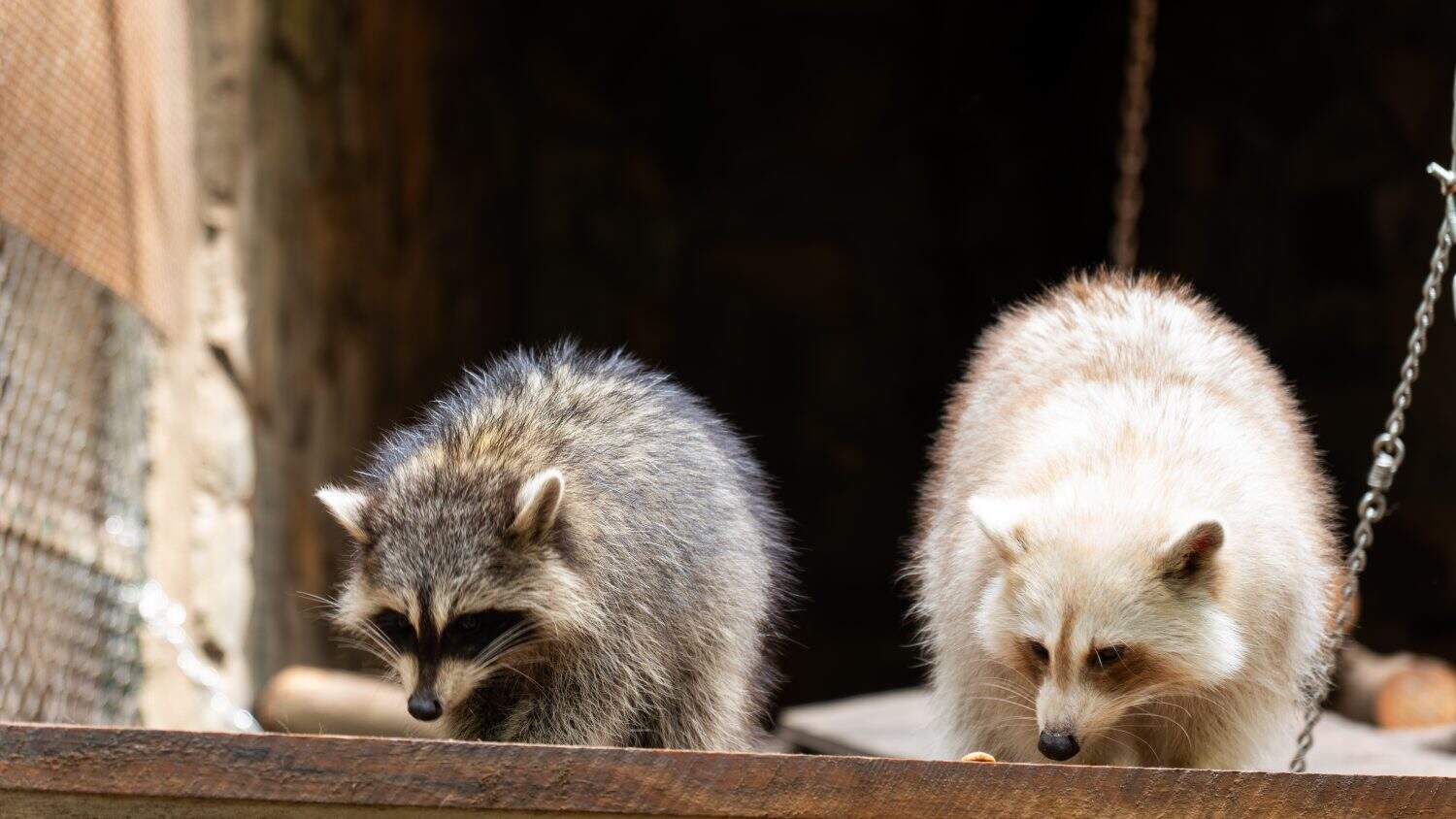
Leucistic and albino raccoons struggle to camouflage themselves like other raccoons.
©DongDu/Shutterstock.com
While often confused for albinos, leucistic raccoons do face similar challenges in the wild. They may have fewer health issues, but they still lack the ability to camouflage themselves. This is even more evident when comparing a leucistic raccoon to one without a melanin disorder. Interestingly, this is not the first case of leucistic raccoons seen near Lake Merritt. A Reddit post from 2019 sadly portrayed a dead leucistic raccoon on the side of the road, which was inaccurately labeled as albino. Its classification was quickly clarified, and many were overjoyed to see leucistic raccoons once again five years later.
Albino Raccoons Rarely Live to Old Age
Part of the reason so few albino raccoons are sighted is that they rarely make it to full maturity. And if they do, survival becomes a significant struggle between health defects and lack of camouflage. High mortality rates prevent many albino animals from growing up, which is why they’re often protected in captivity. In the wild, albino animals are sometimes monitored as researchers track their progress.
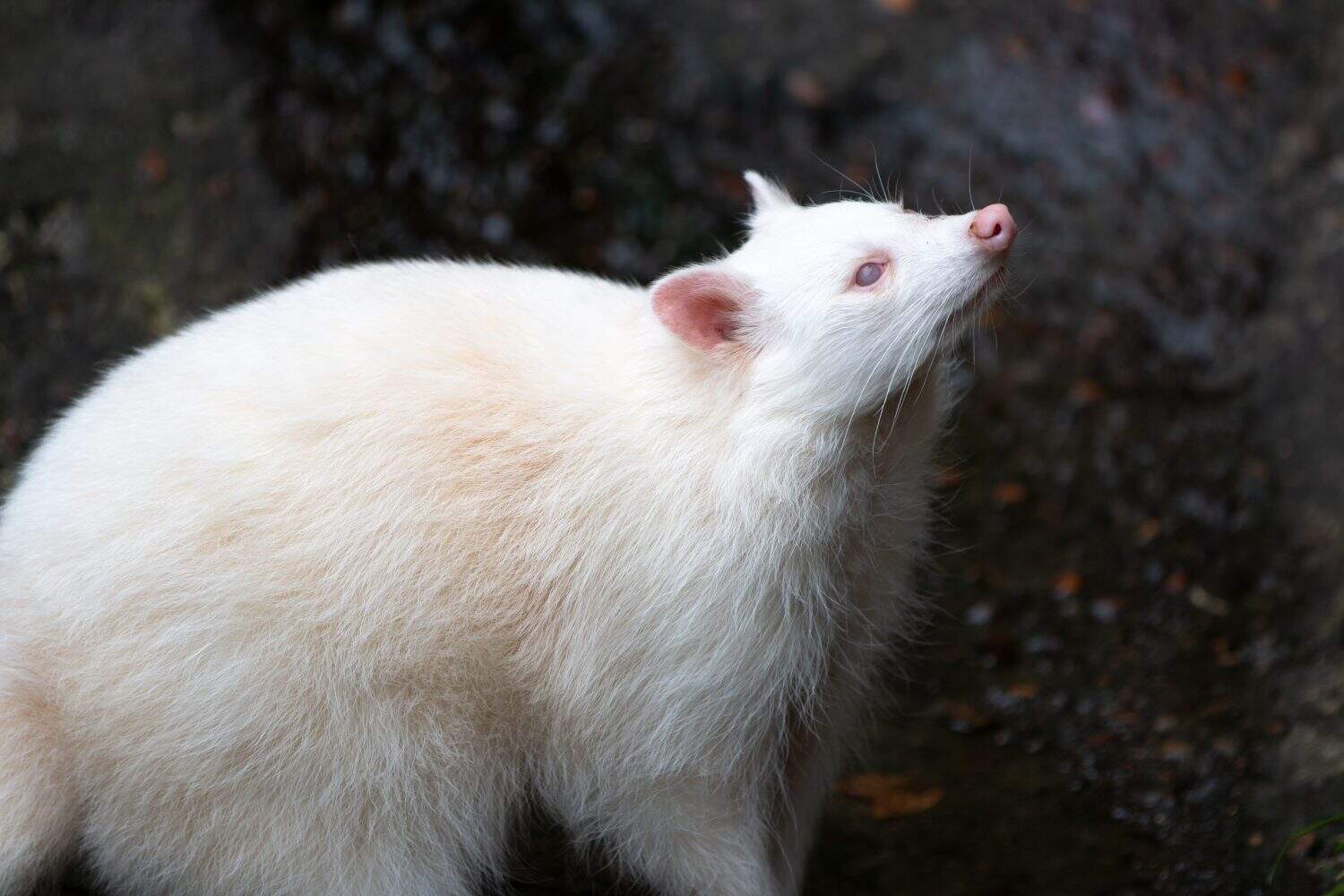
Sadly, albino animals struggle to lead normal, long lives.
©Fabian Junge/Shutterstock.com
A video posted by Pubity in March 2025 shows one of these rare albino raccoons. The raccoon became a frequent visitor to Joanna Wright’s yard, and at the time of her posting, had been showing up regularly for two years. In the video, Wright has a bowl of kibble set out for the raccoon. It’s obvious from its behavior that it has trouble seeing. Vision loss is a common problem among albino animals, making it increasingly difficult for them to find food. Wright affectionately named the raccoon Augusta, and he has a happier life than most albino animals.