
An exciting new species of lizard, Diploderma bifluviale, has been discovered in the upper Dadu River valley of Sichuan, China, offering fresh insights into the region’s rich but underexplored biodiversity. Diploderma bifluviale is now recognized as the 47th Diploderma species in China. This little lizard is characterized by its jagged lemon-colored stripes and compact body, which are adapted to high-altitude shrublands. This striking reptile represents both a scientific breakthrough and a conservation warning.
A Bright Discovery in a Rugged Landscape

The Diploderma bifluviale lizard inhabits the semi-arid shrublands of the Hengduan Mountains.
©ZCOOL HelloRF/Shutterstock.com
The discovery was made by a team from the Chengdu Institute of Biology at the Chinese Academy of Sciences. Measuring between 2.5 and 2.8 inches from snout to vent, Diploderma bifluviale may be small, but it makes a big impression. Males exhibit serrated lemon-yellow stripes running along their backs, an unusual trait among the Diploderma genus, and a wheat-colored tongue that distinguishes them even further. Diploderma is a genus of lizards belonging to the family Agamidae; species within this genus are found in Myanmar, China, Vietnam, Taiwan, and Japan. This new species also lacks a throat patch and has a concealed eardrum—features that distinguish it from its closest relatives.
The lizard inhabits the semi-arid shrublands of the Hengduan Mountains, a region marked by dramatic elevation changes and intense temperature fluctuations. The Dadu River valley, where it was found, lies between 7,200 and 8,300 feet above sea level, and serves as a haven for species adapted to harsh, dry mountain conditions. Unlike many Diploderma species, which thrive in moist, forested areas, this newly discovered Diploderma bifluviale has evolved to survive in a harsher, drier ecosystem. Its rough scales, short limbs, and compact body are believed to help it retain heat and navigate the rocky terrain.
The species lives in warm, dry valleys at elevations between 2,187 and 2,525 meters (approximately 7,175–8,284 feet), a habitat distinct from that of its closest relatives. Its discovery also marks it as the 49th described species in the genus Diploderma, expanding scientific understanding of the morphological and ecological diversity within the Diploderma flaviceps group.
Confirming a New Species
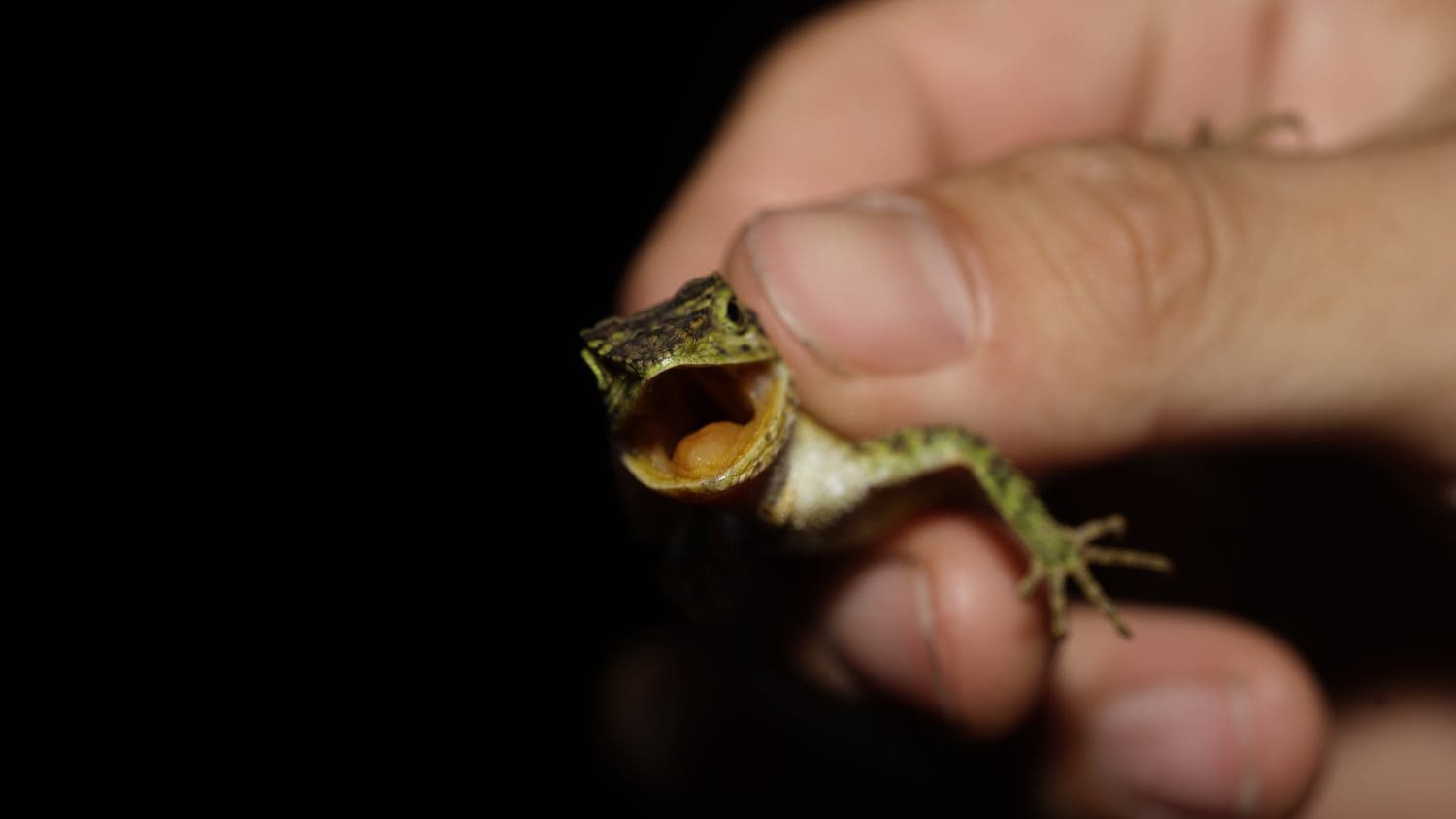
The discovered Diploderma bifluviale is similar to the Diploderma polygonatum lizard, pictured here.
©GRASSS.H/Shutterstock.com
To verify the distinctiveness of the new species, researchers employed a combination of fieldwork and advanced genetic analysis. DNA sequencing of the mitochondrial ND2 gene revealed significant genetic divergence between Diploderma bifluviale and closely related species, including Diploderma danbaense and Diploderma flaviceps. Morphometric data, analyzed using principal component analysis (PCA), further confirmed that this lizard was not merely a variant of an existing species but a unique member of the Diploderma lineage.
Field surveys began in 2018 and continued through 2024, involving specimen collection in Barkam City and Jinchuan County. Researchers photographed live individuals to document fresh coloration, then collected tissue samples for genetic study. The specimens are now housed at the Museum of Herpetology at the Chengdu Institute of Biology, along with comparative specimens from other institutions for additional taxonomic study. The museum is a scientific collection, not open to the public, and is a leading institution in China for the study of amphibians and reptiles.
An Ecosystem Under Threat

Aerial view of the Dadu River Bridge in Luding, Sichuan, China.
©Bill Wei/Shutterstock.com
While the discovery marks a significant scientific milestone, it also underscores the urgent need for conservation action. The upper Dadu River valley, though biologically rich, is a fragile ecosystem increasingly threatened by human development. One primary concern is the nearby Shuangjiangkou hydropower project, the largest of its kind under construction in China. The dam could alter river flows, shift local microclimates, and destroy portions of the semi-arid shrubland on which Diploderma bifluviale depends.
Lead researcher Fengjing Liu and colleagues have called for careful ecological monitoring and mitigation strategies to protect the species. They warn that the lizard’s small, scattered population, which was observed during fieldwork from 2018 to 2024, could be particularly vulnerable to habitat loss and environmental change. Even minor disturbances could have a disproportionate impact on the species’ survival.
Ecologists note that the Dadu River is part of the larger Yangtze system, one of the most species-rich freshwater ecosystems in the Palearctic. Large hydropower projects in the region have historically threatened many Yangtze-basin endemic species, though recent large-scale dam removals aim to restore habitats and protect these species. Studies using self-organizing map (SOM) models predict that while some species may persist in tributaries, others may face uncertain futures.
A Call for Conservation and Research

Many species thrive in the arid valley regions adjacent to major rivers, such as the Jinsha.
©bingdian/iStock via Getty Images
The discovery of Diploderma bifluviale is a reminder that vast portions of western China’s mountainous landscapes remain scientifically underexplored. The Hengduan Mountains, where the species was found, are recognized as one of the world’s biodiversity hotspots, home to numerous endemic plants and animals that have evolved in isolation due to the region’s rugged topography.
Researchers emphasize that protecting such habitats is critical not only for this newly discovered species but also for the broader ecological balance of the region. As hydropower development, road construction, and climate change reshape the Dadu River valley, scientists argue for an increased focus on biodiversity assessments before major projects proceed.
The discovery also underscores the remarkable expansion of Diploderma lizards in the Hengduan Mountains. Many species inhabit dry valley regions along major rivers such as the Jinsha, Yalong, Nu, and Lancang, illustrating the group’s impressive adaptability and endemism. The Dadu River already hosts several localized species: Diploderma daduense, Diploderma danbaense, and Diploderma flaviceps, and the addition of Diploderma bifluviale highlights how much remains to be discovered.
A Symbol of Both Beauty and Fragility
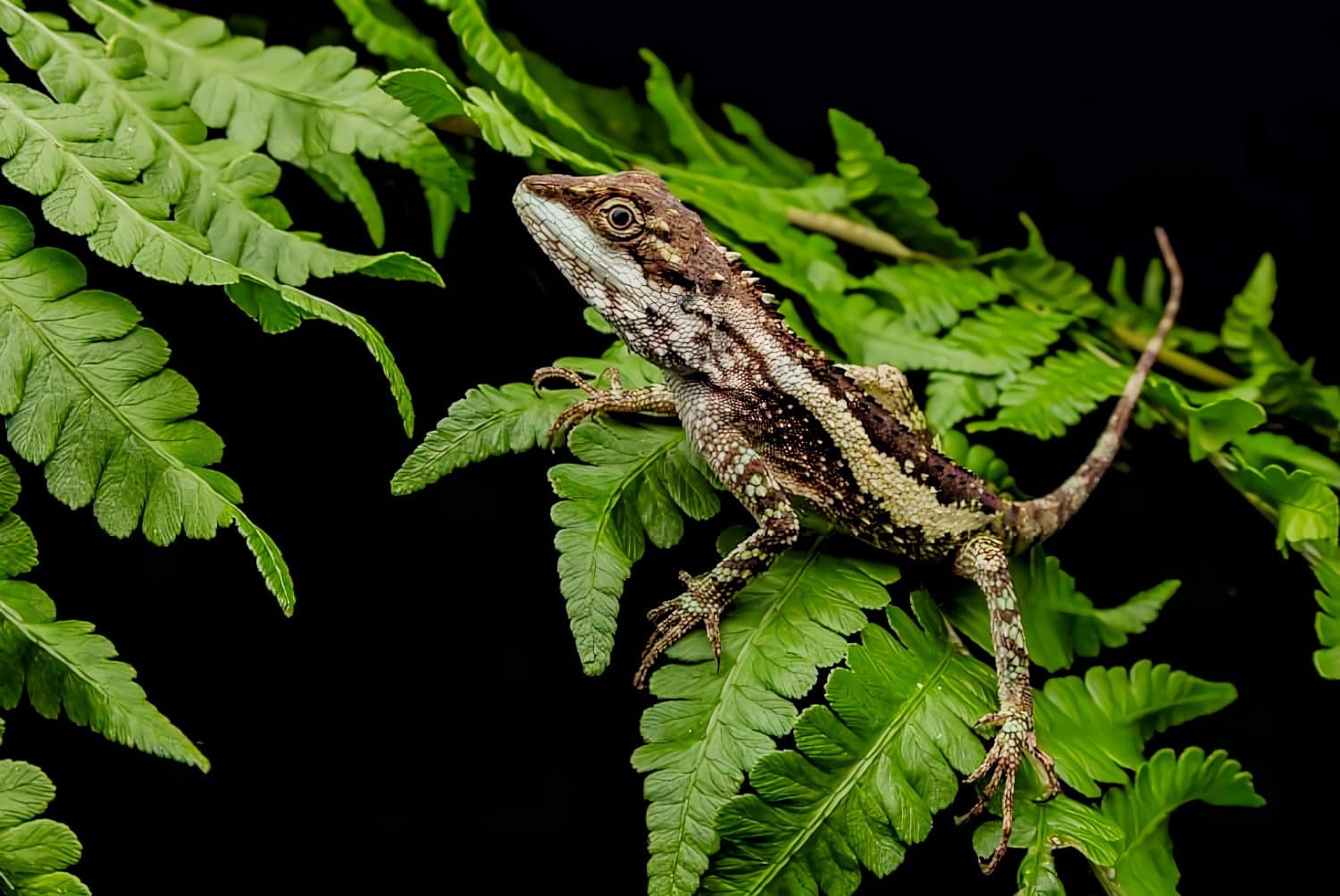
This lizard is called Diploderma polygonatum and is in the same family as Diploderma bifluviale.
©Alfianmzr/Shutterstock.com
With its soft yellow stripes and unique shape, Diploderma bifluviale brings a fresh flash of color to the highlands of Sichuan. Its discovery also underscores the ongoing tension between development and conservation, a pattern seen in many regions where expanding economies press into sensitive natural habitats.
As research in the upper Dadu River valley advances, Diploderma bifluviale is becoming a significant symbol of the area’s rich biodiversity and the delicate ecological balance that makes this part of China remarkable.