
Quick Take
- A six-foot alligator climbed 16 steps to reach a second-story porch, and the way it came back down is something you have to see. See the full story →
- A neighbor had lived on this island for over a decade and never once encountered an alligator, but that all changed one October morning. Read the neighbor's account →
- Alligators are freshwater animals, which raises the question of what one was doing at a coastal beach house in the first place. Explore alligator habitat →
- South Carolina has far more alligators than most people realize, which makes one key question worth asking: why don't incidents like this happen more often? See South Carolina's population →
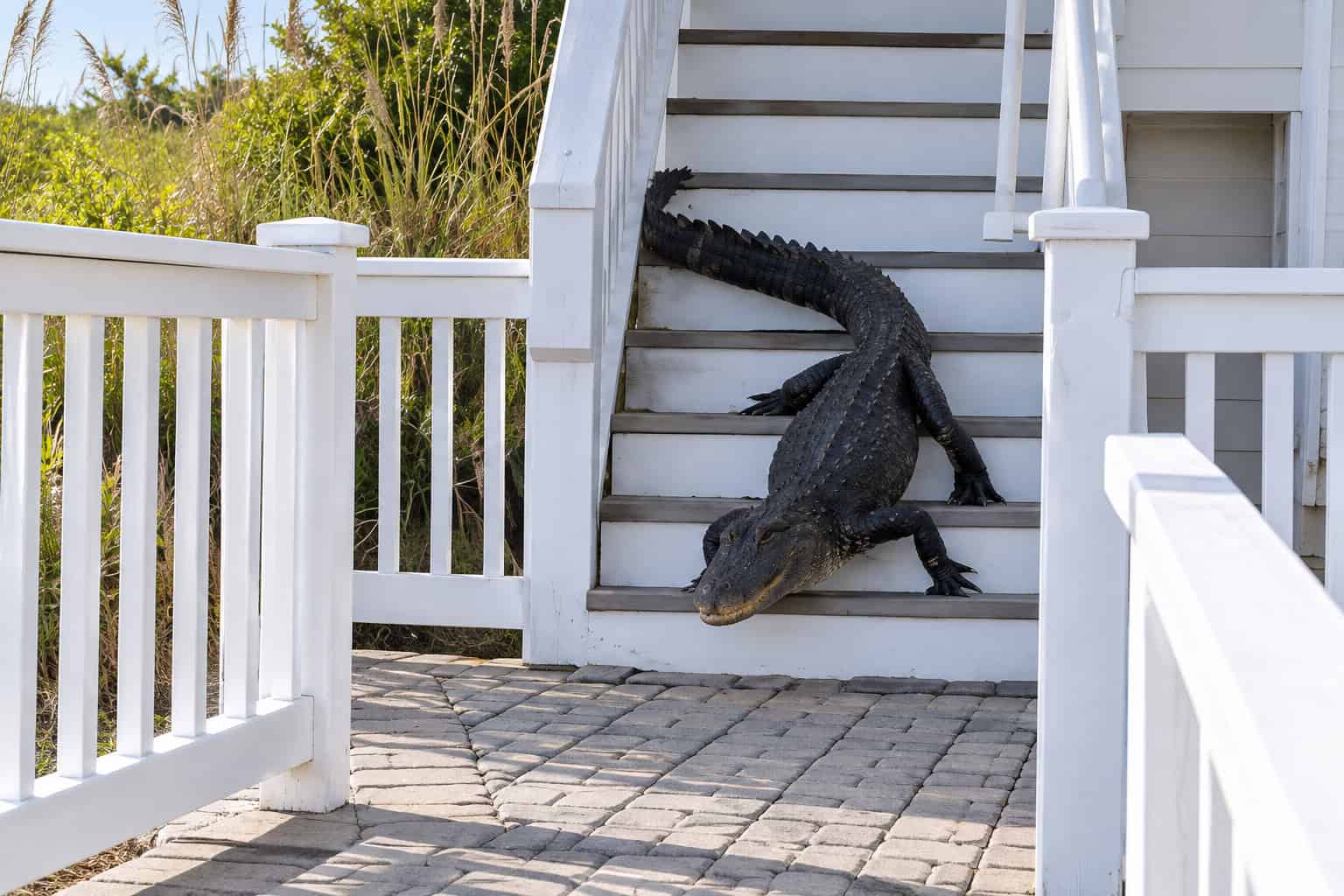
A six-foot alligator showing up at a South Carolina beach house might not sound particularly unusual. Finding one on the second-floor porch, however, raises a few questions. How did it get up there? What was it looking for? And perhaps most importantly, how was it going to get back down? A remarkable video from Folly Beach shows one determined alligator that climbed 16 stairs before apparently finding itself somewhere it didn’t belong. Its awkward attempt to get back to ground level is worth watching, but the encounter also reveals something surprising about how these powerful reptiles move on land.
Watch This Alligator’s Unexpected Trip Downstairs
The unusual encounter happened on October 27, 2023, at a vacation home in Folly Beach, South Carolina. Guests discovered an approximately six-foot alligator standing on a second-story porch after apparently climbing an entire flight of stairs.
Neighbor Greg Bayer, who had owned a home on Folly Beach for 11 years, said he had never encountered an alligator on the island before. That changed when guests at the neighboring property discovered their unexpected visitor.
In the footage, the alligator stands near the top of the staircase, surrounded by porch railings. Bayer uses a long pole to encourage the reptile to turn around and head back toward the steps. After hesitating, the animal begins its descent, alternating between walking and sliding as its long body negotiates the staircase.
Eventually, the alligator reaches the bottom, passes through a gate, and makes its way toward a nearby dock before returning to the marsh. Fortunately, the unusual encounter ended without a reported injury, although approaching an alligator this closely is not something wildlife officials recommend.
How Can an Alligator Climb 16 Stairs?

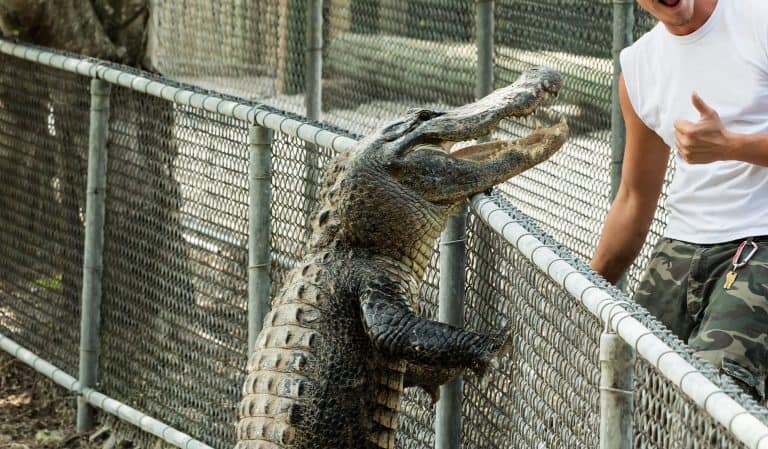
American alligators are surprisingly capable of navigating obstacles on land, including fences and stairs.
©Benjamin Klinger/Shutterstock.com
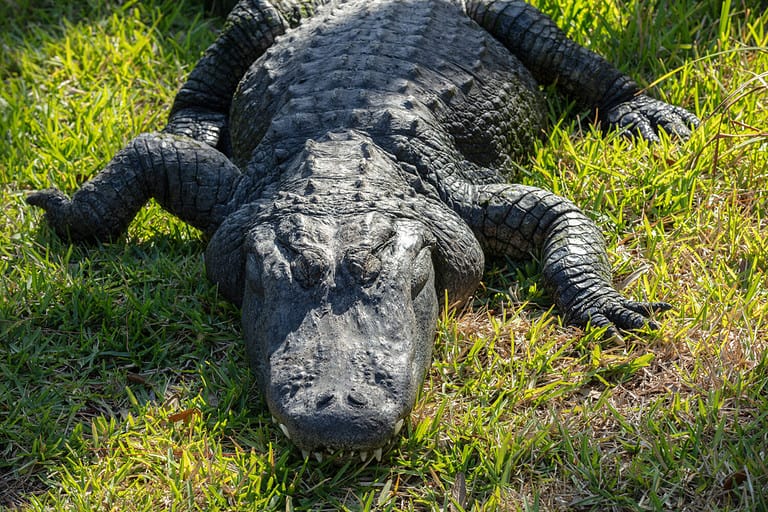
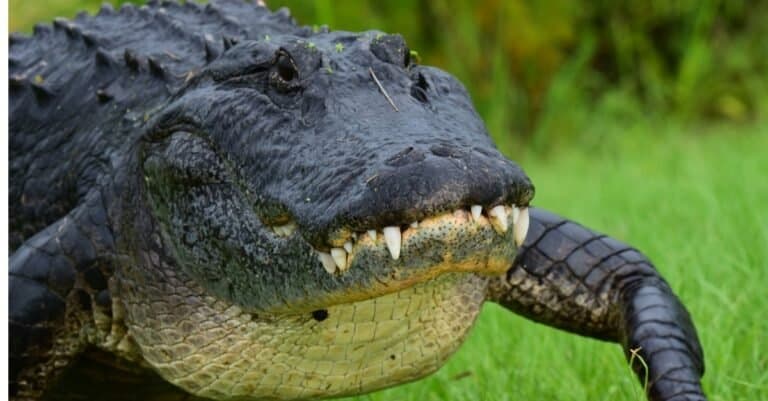
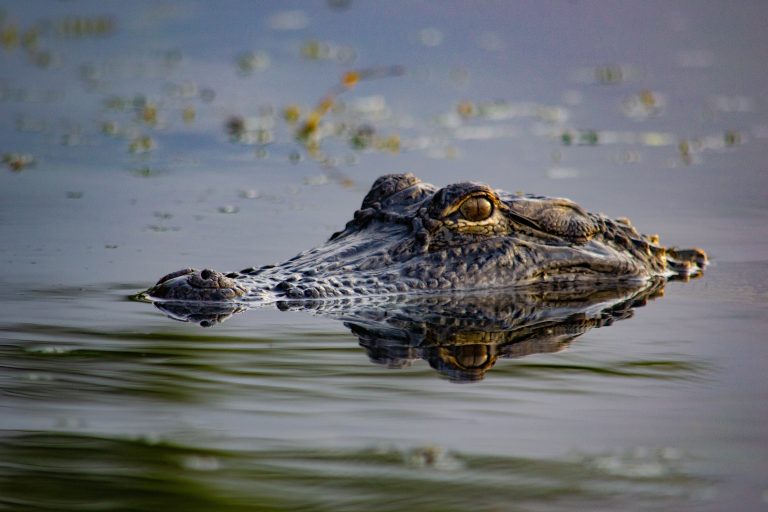
Although alligators spend much of their lives in water, they are considerably more mobile on land than their short legs might suggest. American alligators (Alligator mississippiensis) have powerful limbs, sharp claws, and muscular tails that help them move across uneven terrain and overcome obstacles.
In fact, alligators can perform something called a high walk, raising their bodies off the ground rather than dragging their bellies along the surface. This movement allows them to navigate land more effectively, including uneven ground and obstacles that require them to lift their bodies.
According to the South Carolina Department of Natural Resources, alligators have even been documented climbing chain-link fences. They generally aren’t doing this to hunt people. Instead, they may simply be trying to move from one location to another.
Climbing stairs presents a different challenge. An alligator must lift its heavy body from one step to the next, using its legs for support and balance. Coming down can be even more awkward, particularly when a long body and heavy tail are negotiating relatively narrow steps. The Folly Beach video offers an unusually clear example of these challenges.
Why Would an Alligator Climb Onto a Second-Floor Porch?
That’s the most interesting question, and unfortunately, there’s no way to know exactly what motivated this particular animal. However, its behavior is not necessarily as mysterious as it first appears.
Alligators regularly travel over land when moving between bodies of water, exploring suitable habitat, or encountering obstacles along their routes. Stairs, fences, docks, and other human-made structures can become part of the landscape these animals must navigate.
The alligator may simply have followed an accessible route without understanding that the staircase ended at an elevated porch. There is no evidence that it was attempting to enter the house, pursue anyone, or deliberately seek higher ground.
And while this happened at a beach house, the coastal location isn’t especially surprising. Alligators primarily inhabit freshwater environments, but they also move through brackish marshes and can tolerate saltwater for limited periods. Folly Beach’s surrounding tidal creeks and marshlands offer possible routes for an alligator moving through the area.
How Common Are Alligators in South Carolina?
South Carolina has a substantial alligator population, with the state’s Department of Natural Resources estimating approximately 100,000 animals. Most are found in the Coastal Plain, where rivers, swamps, wetlands, and slow-moving waterways provide suitable habitat.
American alligators were once severely depleted by hunting and habitat pressures, but decades of conservation and wildlife management helped the species recover. Today, alligators are a familiar part of the southeastern United States, particularly in states such as Florida, Georgia, Louisiana, and South Carolina.
Despite their abundance, sightings like the one at Folly Beach remain unusual. Most alligators spend their time near water rather than exploring residential staircases. Their ability to cross land, however, means they can occasionally appear in places people would never expect to find them.
What Should You Do If an Alligator Appears Near Your Home?
While the Folly Beach encounter ended peacefully, an alligator on a porch or near a home should never be treated as a harmless curiosity. These are powerful wild animals capable of reacting defensively when approached or cornered.
South Carolina wildlife officials recommend keeping a safe distance, allowing an alligator room to move away, and never crowding or attempting to handle it. If the animal appears trapped, poses a danger, or attracts a crowd, residents should contact the appropriate wildlife authorities rather than attempting to move it themselves.
Ultimately, the Folly Beach visitor demonstrated something many people underestimate about alligators. They are not limited to swimming and crawling along muddy shorelines. They can climb, negotiate obstacles, and occasionally make their way into some remarkably unexpected places. In this case, the alligator managed to climb 16 stairs, but getting back down proved to be the real adventure.