
Quick Take
- Understanding which animals pose risks can help people stay informed, respectful, and safe in nature.
- There are 29 fatal cougar attacks on record in the U.S. The most recent deadly attack occurred in California in March 2024.
- Considering the dense population of sharks, attacks from these apex predators are rare in the U.S.
- Portuguese Man O’War stings are extremely painful and can cause serious reactions.
From frozen mountain ranges to swamps, deserts, forests, and open coastlines, the United States is home to an extraordinary variety of wildlife. This incredible diversity means that some animals are as scary as they are fascinating, evolved to survive in environments where strength, speed, venom, or stealth can mean the difference between life and death. While most encounters with wildlife are harmless, certain creatures are capable of destruction.
Understanding which animals pose risks can help people stay informed, respectful, and safe while enjoying the outdoors. Though these creatures rarely seek out humans, accidental human-animal interactions can lead to terrible consequences. These animals certainly deserve caution and awareness. Here’s a closer look at some of the scariest creatures you can encounter across the country.
1. American Black Bear
©Mark Caunt/Shutterstock.com
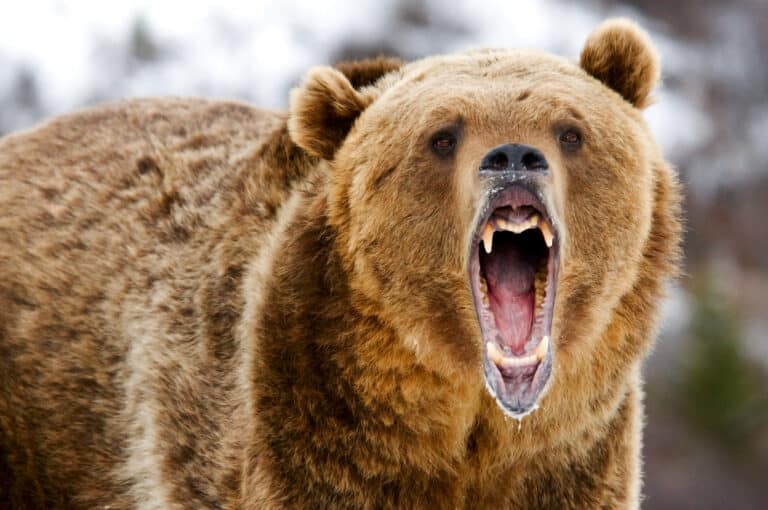
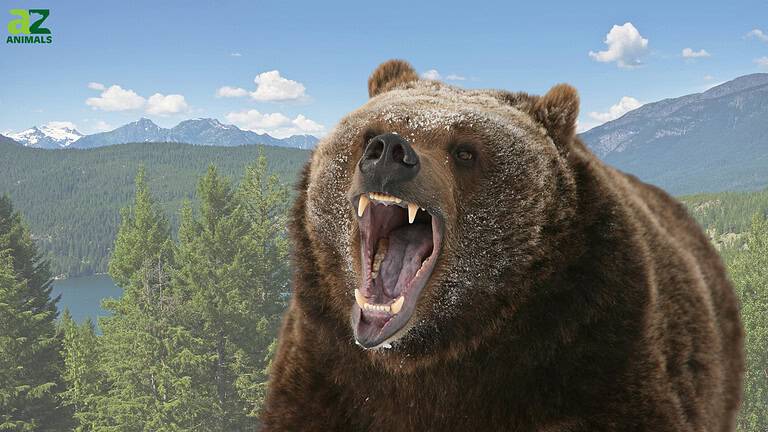
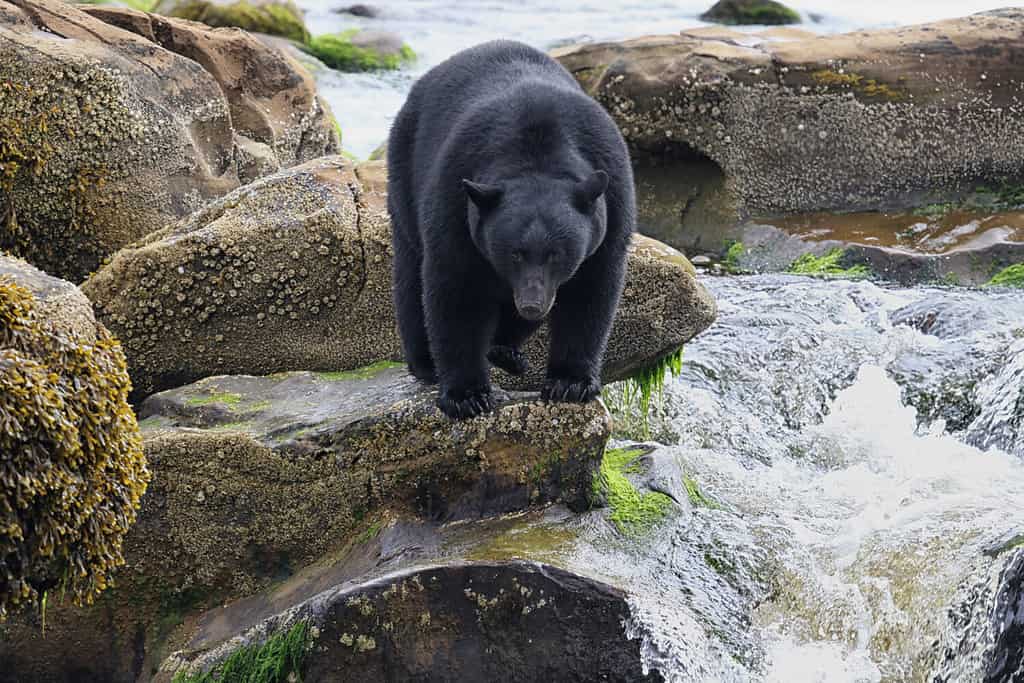
American black bears(Ursus americanus) are one of the scariest animals you can encounter in the U.S. Their size varies depending on location, but generally, they are medium-sized bears. Black bears are omnivores as they eat meat and plants. Their diet consists of the following:
While black bears occasionally hunt elk, deer, and moose, it’s more common for them to target calves. They are generally solitary but can associate in small family groups during fall and winter. Black bears will act aggressively, especially if they have cubs. Though fatal black bear attacks are rare, these intimidating animals should be avoided.
2. Cougar
©Kwadrat/Shutterstock.com
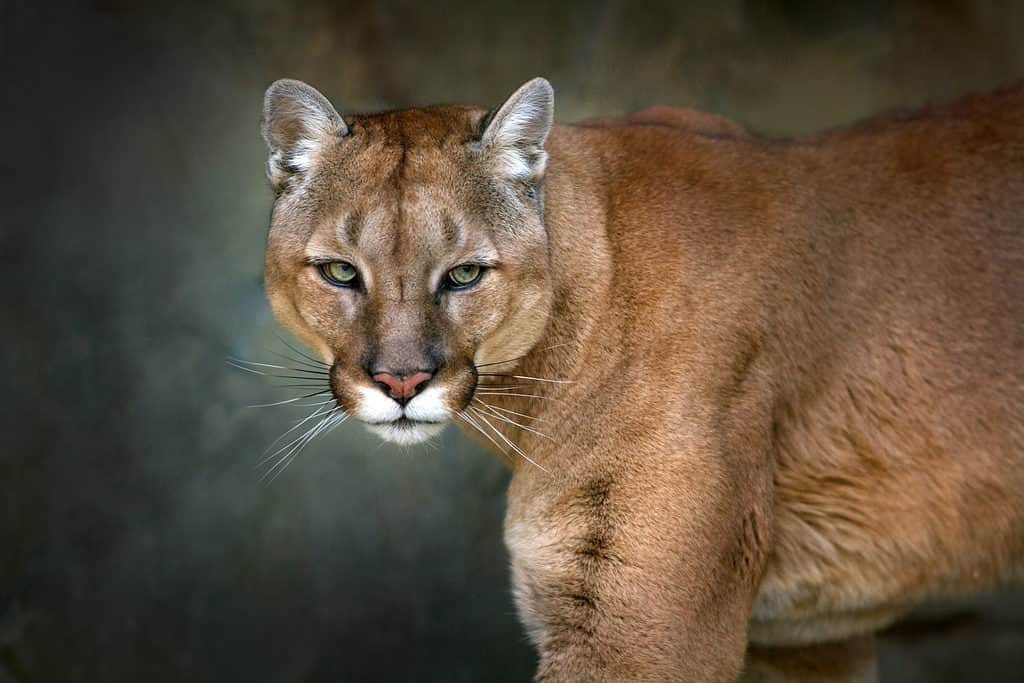
The cougar goes by many names, including mountain lion and puma. It is the second largest wild cat in the U.S., the first being the extremely rare jaguar. Cougars are powerful and have strong bites. In addition, they weigh between 64 to 198 pounds. Their hunting capabilities are exceptional as they can leap 20 feet into the air, helping them pounce on their prey from far away. While scary, these cats are not usually aggressive, and attacks on humans are rare. However, do not provoke them; they will attack if they feel threatened. There are 29 fatal cougar attacks on record in the U.S. The most recent deadly attack occurred in California in March 2024.
3. Sharks
©Martin Prochazkacz/Shutterstock.com
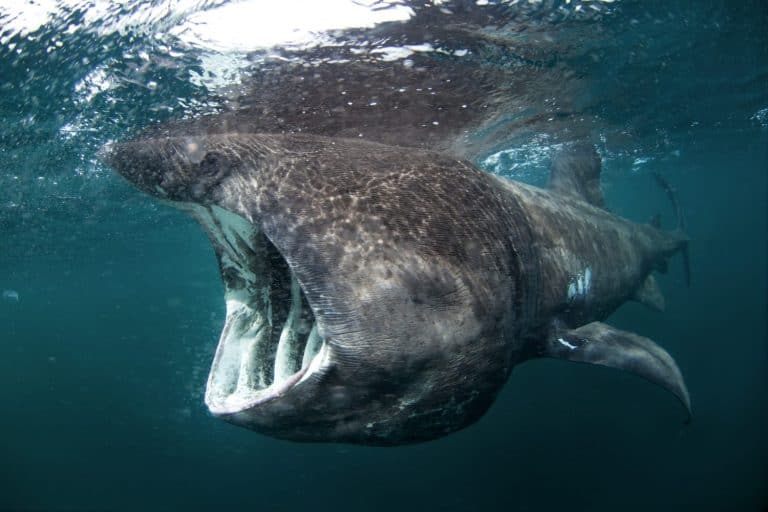
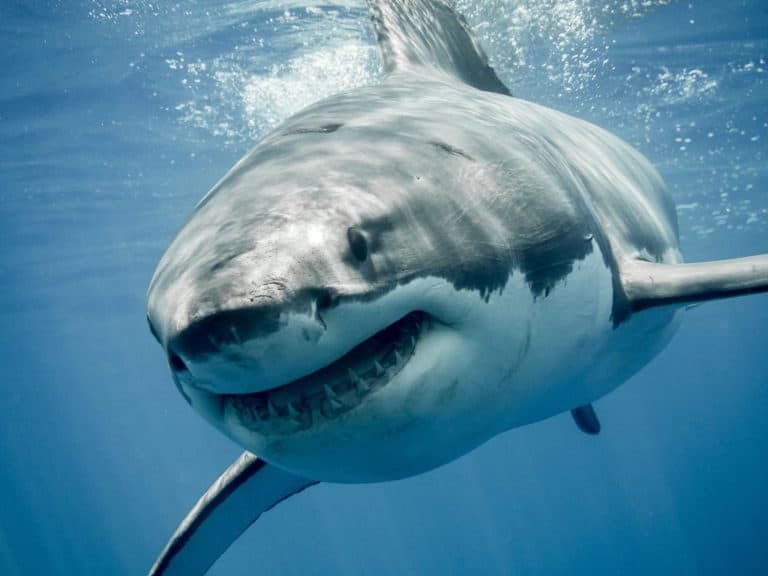
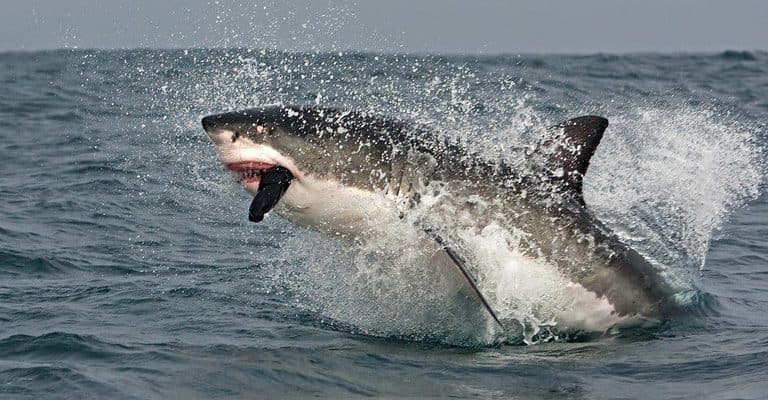
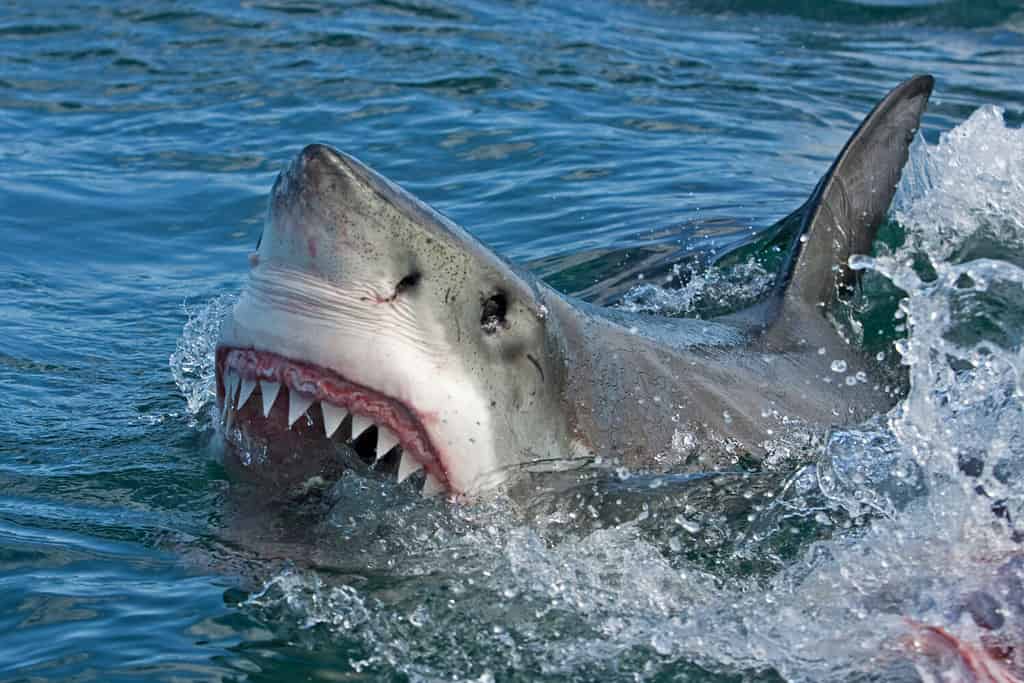
There is a reason Jaws was such a success; sharks are terrifying. The U.S. is home to several species of sharks, including the scary great white shark. However, considering the dense population of these apex predators, fatal shark attacks are rare in the U.S. In 2024, there were 28 confirmed unprovoked shark attacks in U.S. waters, according to the International Shark Attack File.
4. Black Widow Spider
©Sari ONeal/Shutterstock.com
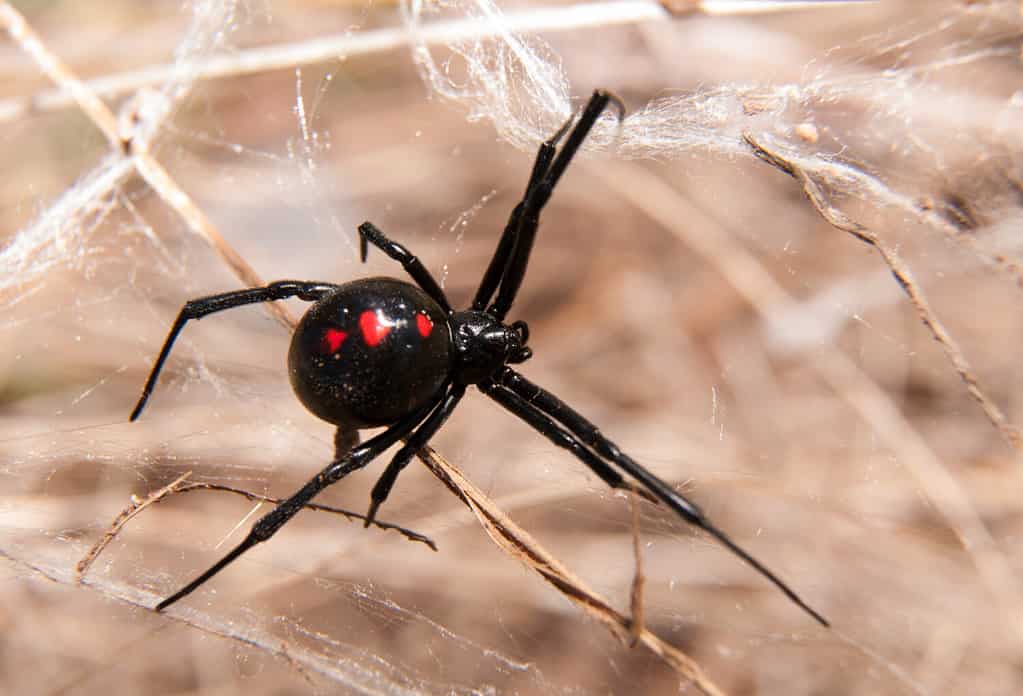
Also known as the shoe-button spider, the black widow inhabits temperate environments on every continent except Antarctica. Females have a toxic bite, but males are harmless. Mating may be fatal for black widow males, as the larger females tend to eat them while mating. Sometimes the male will get away. Females inject a neurotoxic venom into their prey, and if bitten, humans can experience muscular pain, respiratory issues, and hypertension. However, their bites are rarely fatal.
5. Diamondback Rattlesnakes
©Kristian Bell/Shutterstock.com
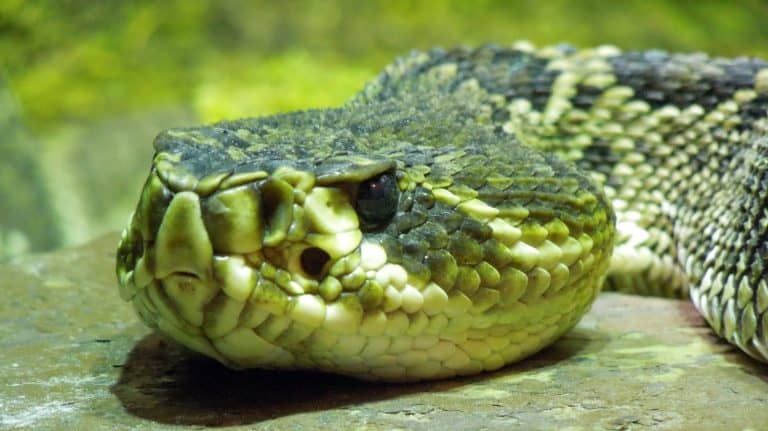
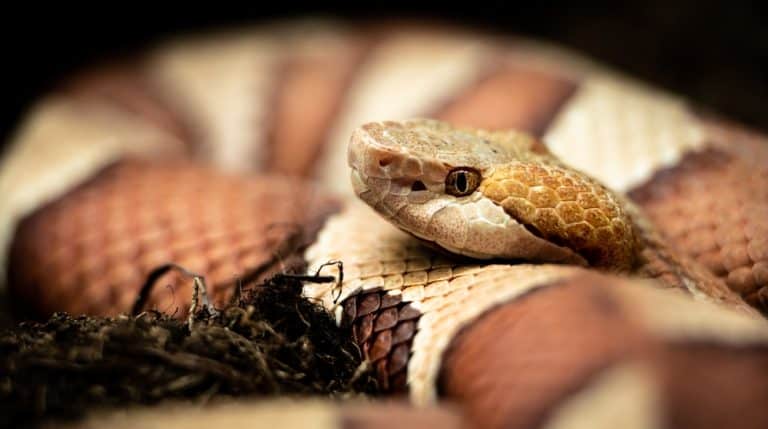
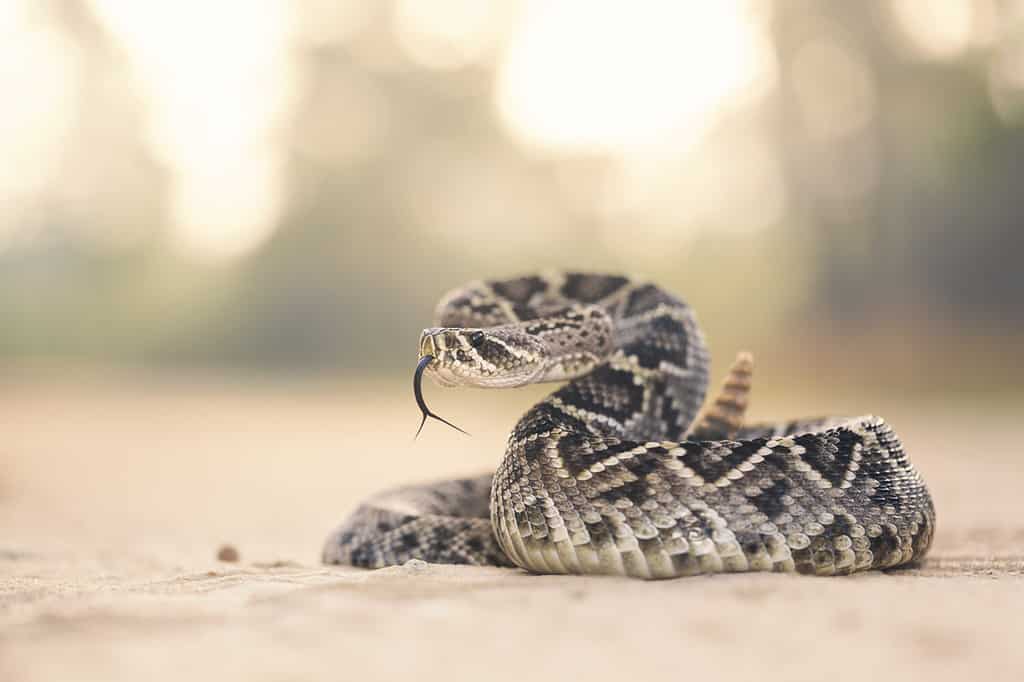
Diamondbacks are pit vipers, related to copperheads and cottonmouths. These snakes are one of the scariest animals in the U.S. These infamous reptiles have special detectors on either side of their head that helps them detect heat and provides a thermal image of their surroundings. They make themselves known by a clattering sound, but sometimes they remain hidden and silent, so keep your eyes and ears open. Additionally, they are not aggressive but will defend themselves if they feel threatened. Their venom is highly toxic and can be deadly if left untreated.
6. Wolf
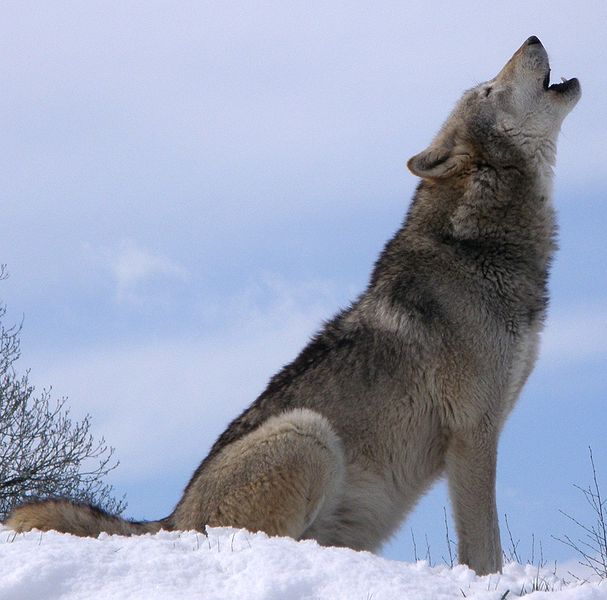
While wolves are not as abundant across the United States as they once were, there are still five subspecies of gray wolves inhabiting states, including Oregon, California, Washington State, Montana, Idaho, Michigan, Wyoming, Wisconsin, Alaska, and Minnesota. However, these canines were once distributed across North America, but due to human encroachment, they were nearly completely exterminated in the United States.
Wolves have various hunting techniques. They may ambush their prey by pouncing on it while sleeping. But they also hunt in packs and use numbers to corner their prey. Wolves are very elusive and usually steer clear of humans. However, they can be dangerous when in a pack.
7. American Alligator
©Thierry Eidenweil/Shutterstock.com
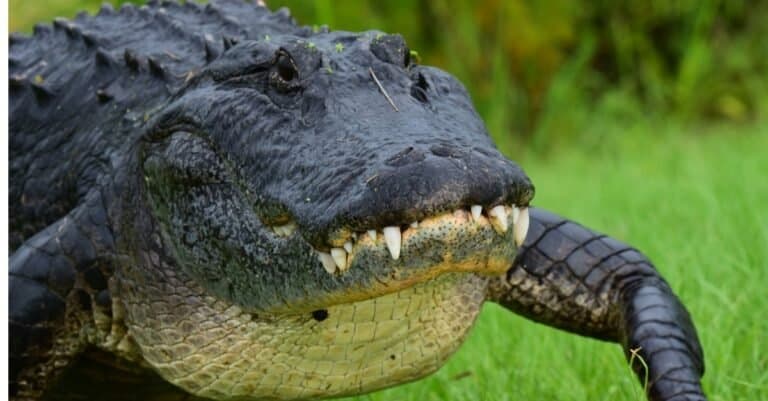
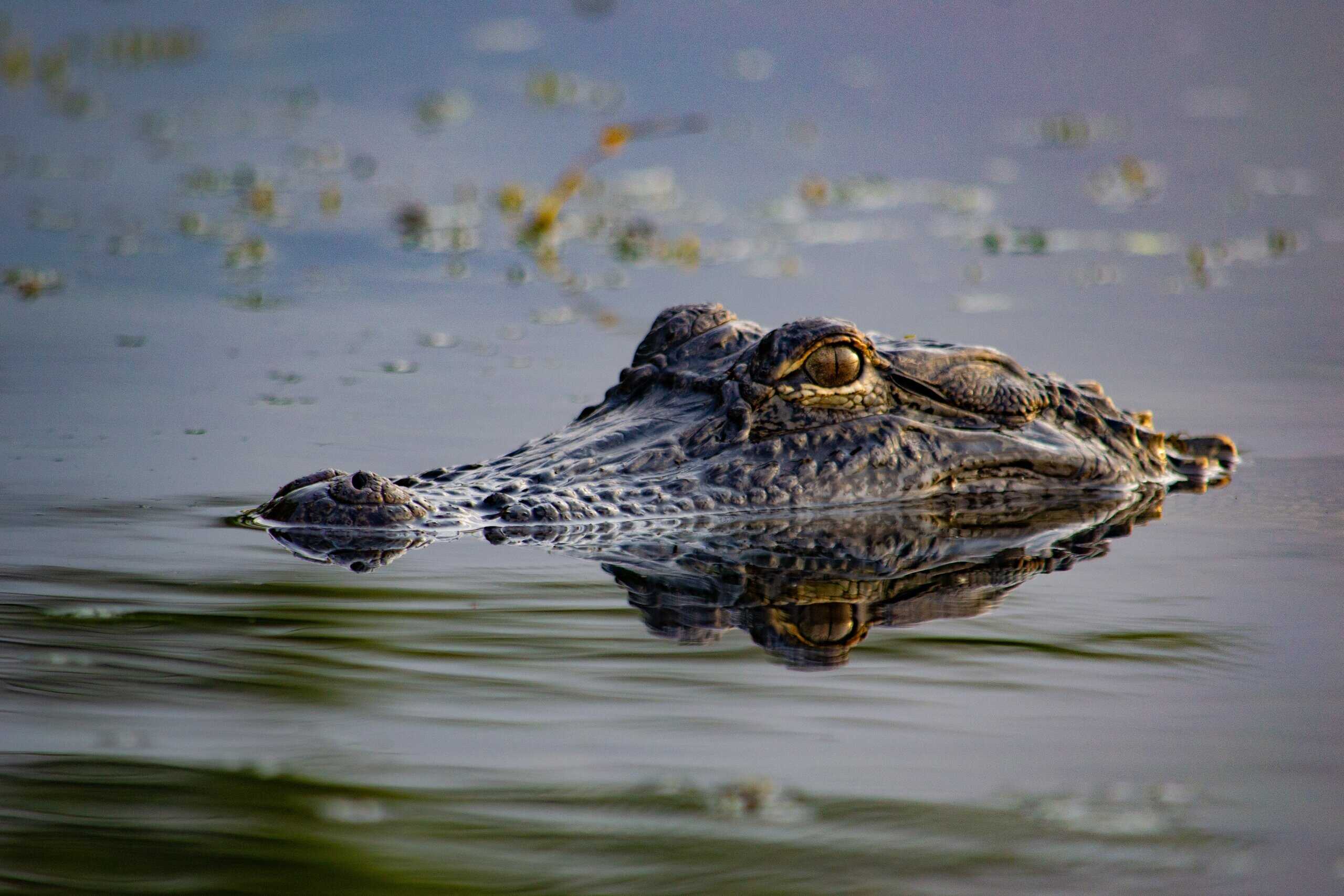
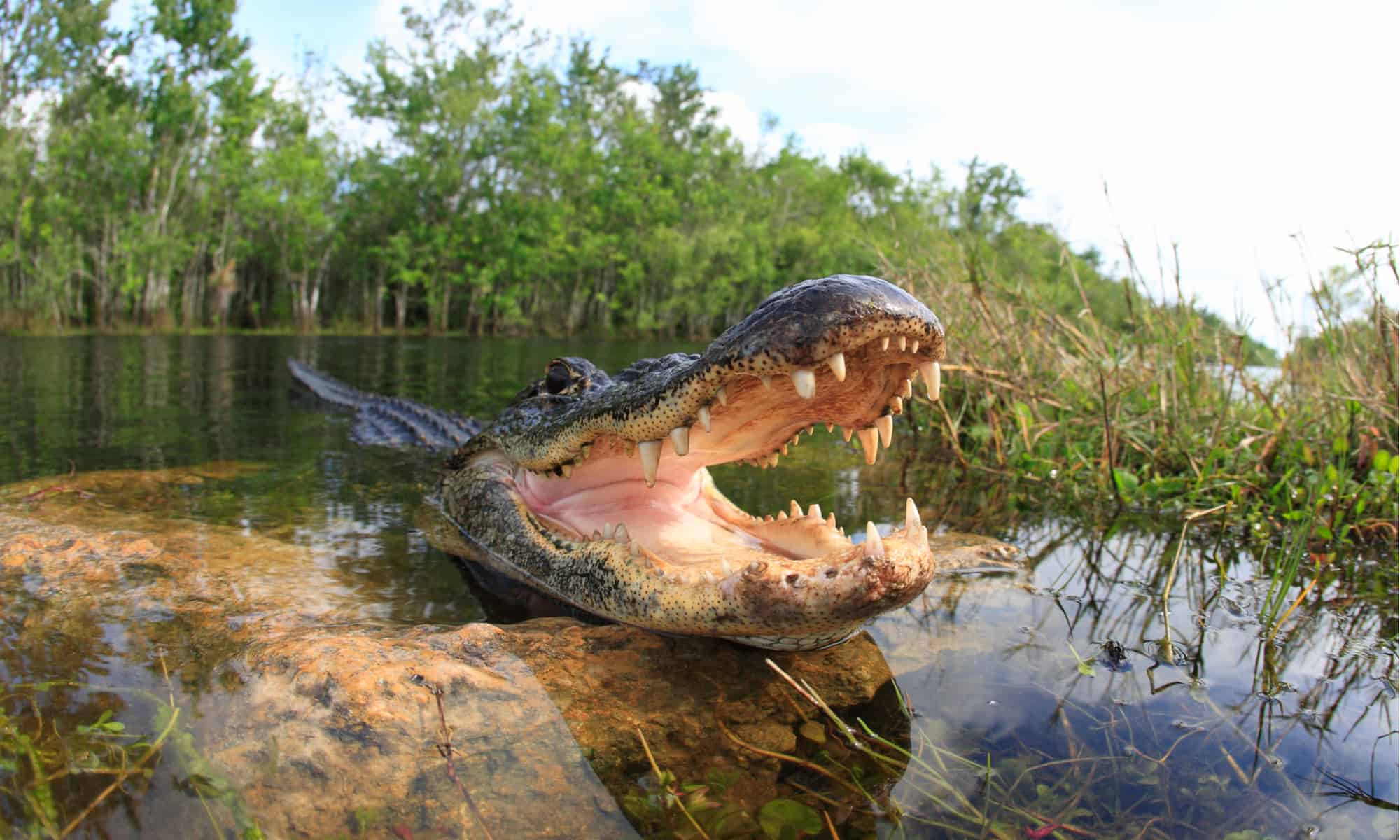
The American alligator is definitely one of the scariest animals in the U.S. Large males can approach 1,000 pounds, but most are much smaller. Alligators are territorial animals but rarely strike humans. However, they will attack if provoked. Furthermore, they may also attack if their food sources are scarce. What makes alligators so scary is their powerful jaws, with one of the deadliest grips in the world. There is very little chance of getting out of an alligator’s jaws once one grabs you. Once it catches its prey, the alligator will drag it under the water and drown it. However, there is a chance to escape its jaws by pocking its eyes or punching its throat.
8. American Crocodile
©iStock.com/CStorz
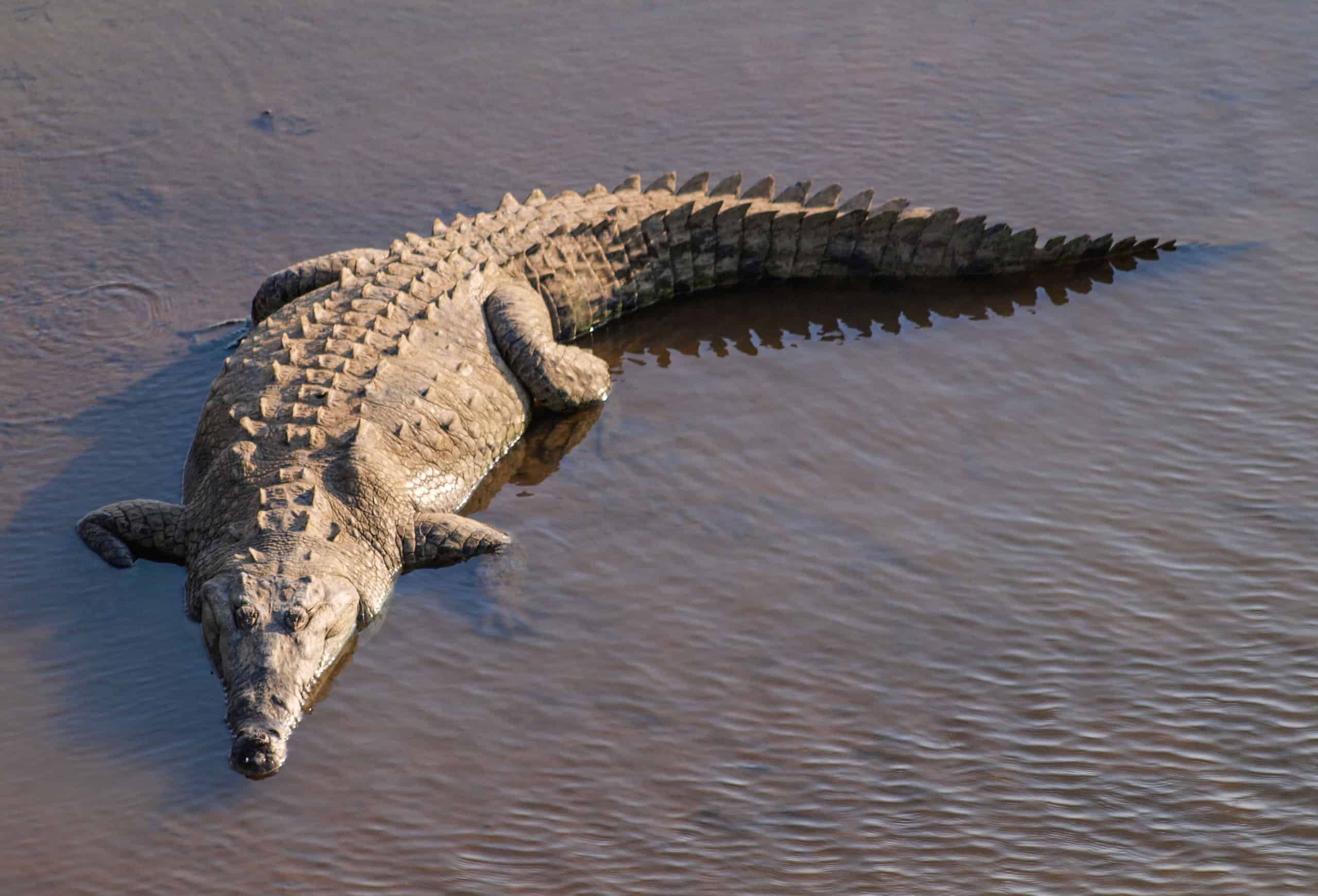
The American crocodile is one of the largest and most dangerous animals in the U.S. These huge reptiles mainly occur in Florida. Since the American crocodile population in the United States is small, attacks are rare. However, these crocs can hide in plain sight and are notorious for their aggressive nature. When compared to alligators, American crocodiles are far more likely to attack humans. For example, in 2014, one of these crocs attacked two swimmers in Florida for reasons unknown. Luckily, they are nocturnal, so it’s unlikely to see one during the day unless it’s basking in the sun.
9. Portuguese Man O’War
©Broadbelt/Shutterstock.com
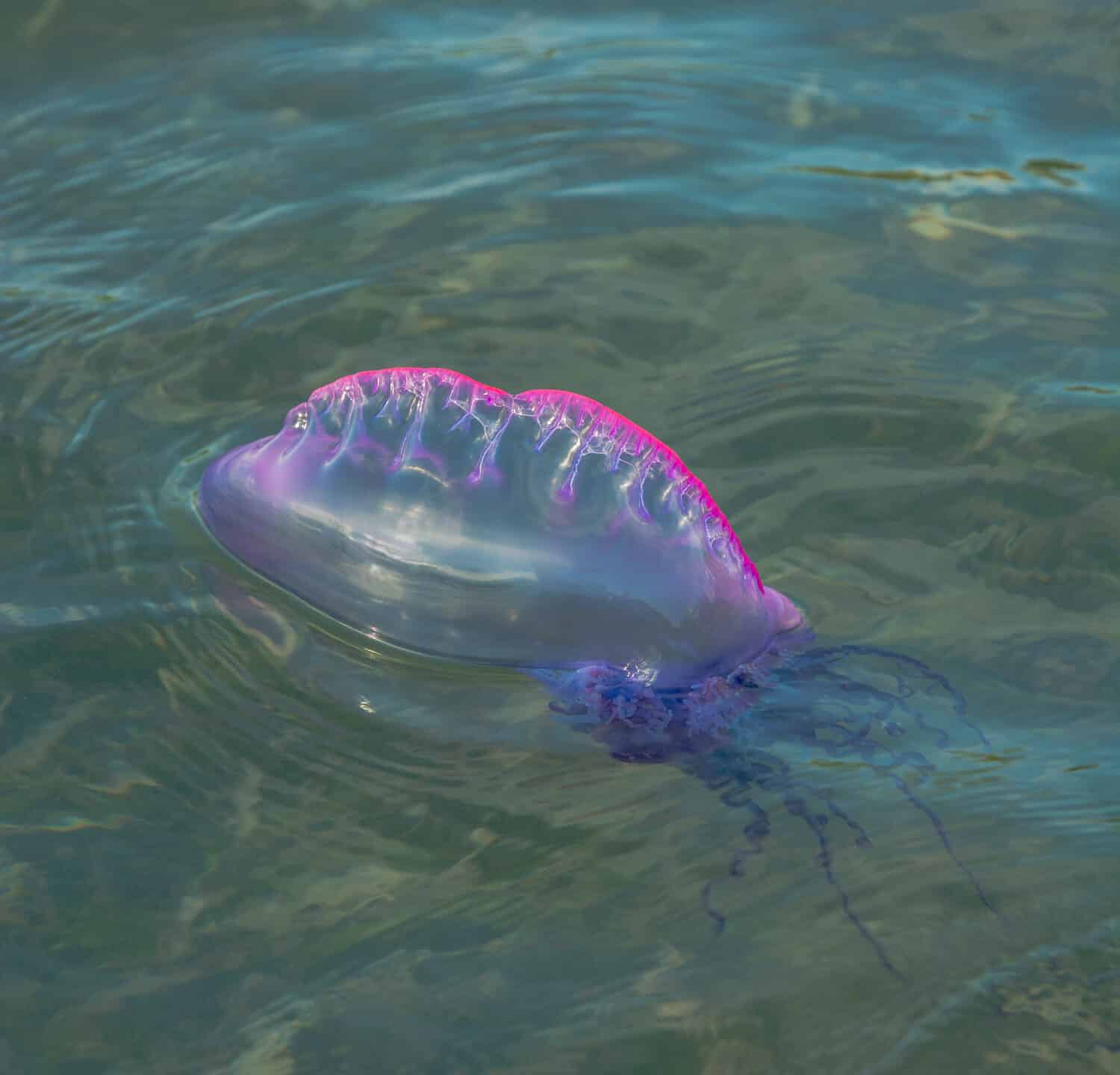
This strange specimen is often mistaken for a jellyfish because they look very similar. However, it is more dangerous. The Portuguese Man O’War derived its name from an 18th-century Portuguese-armed ship, as many thought this creature resembled the ship when viewed at full sail. This creature is highly deadly as its tentacles can sting and kill fish. However, it is just as deadly to humans. Stings are extremely painful and can cause serious reactions; deaths are rare but have occurred. Portuguese Man O’War occasionally wash up on Florida’s beaches and other parts of the U.S. So, if you ever see one on the beach while taking a leisurely walk, stay as far away as possible.
10. Timber Rattlesnake
©Joe McDonald/Shutterstock.com
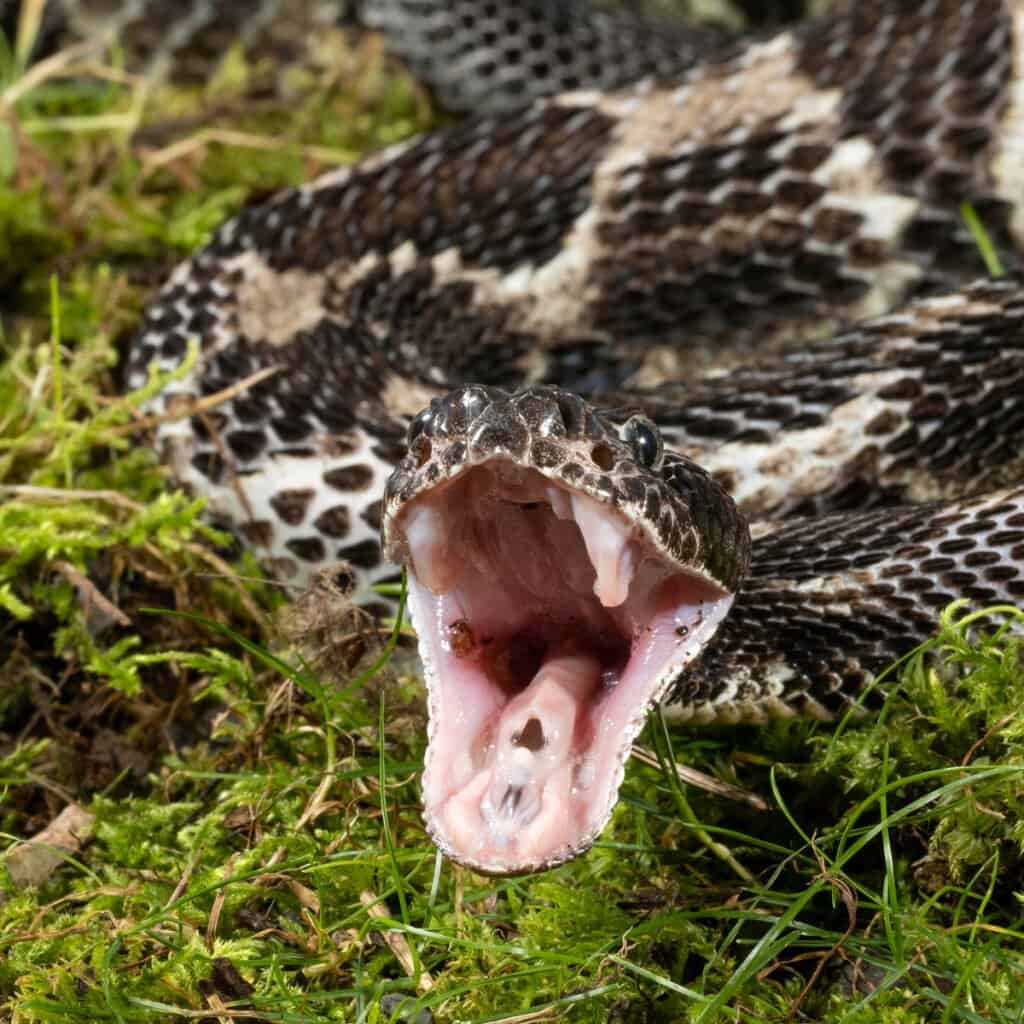
One of the scariest animals in the U.S. is the timber rattlesnake. This intimidating snake can kill humans when threatened. It is identifiable by the dark zig-zag pattern on its body and rough scales, and it can grow between 3 to 5 feet long. Timber rattlesnakes occur across the eastern half of the U.S. For example, they inhabit states like Texas, central Wisconsin, Kansas, Iowa, Georgia, West Virginia, the Carolinas, Pennsylvania, and New England. However, these snakes occur as far north as New York and as far south as Florida. Since they don’t do well in the cold, these rattlesnakes will hibernate for around seven months until the weather warms up again. These snakes are excellent climbers; many people have spotted them in tall trees.
Timber rattlesnakes have a reputation as one of the deadliest animals in the U.S. These snakes have venom commonly described as hemorrhagic and neurotoxic depending on population/location. Therefore, if a human sustains a timber rattlesnake bite, it can prevent the wound from healing and cause other symptoms like paralysis, bleeding, swelling, skin discoloration, extreme pain, and death if the venom enters the bloodstream. So, if you ever come across one of these dangerous snakes, move slowly and back away carefully.