
If you’ve ever scrolled through Instagram or YouTube and stumbled upon a zoologist wearing a bucket hat explaining why prehistoric shrimp were nightmare fuel—or why ancient snakes could swallow you whole—you’ve probably met Lindsay Nikole. With millions of followers across platforms, Lindsay has built an online empire out of science storytelling. She’s known for her boundless curiosity, weird-animal facts, and infectious enthusiasm for evolution.
Now, she’s taking that energy off the screen and onto the page with her debut book, Epic Earth: A Wild Ride Through the History of Life on Our Planet, released on November 11, 2025. Part textbook, part adventure story, Epic Earth is a beautifully illustrated journey through 4.6 billion years of Earth’s history, from fiery beginnings to the rise (and fall) of prehistoric giants.
“When I first started creating videos about animals and evolution online,” Lindsay tells A-Z Animals, “I realized how many people were fascinated by these topics when they were explained in a fun, accessible way. With Epic Earth, I wanted to take that same sense of wonder and curiosity from my videos and compile it into one place that explores the wild, chaotic history of life on our planet.”
And “wild” doesn’t even begin to cover it.
A TikTok Science Star Turned Author

Lindsay Nikole is known for her educational and fun TikTok and YouTube videos.
©Courtesy of Tiffany Ribeiro
Before she was teaching evolution to millions online, Lindsay was a zoology student trying to find her place in the world. In Epic Earth‘s introduction, she recounts how her life changed after volunteering at a wildlife refuge at eighteen. “That experience gave me a firsthand look at working with wild animals, sparking a passion for wildlife and conservation,” she writes.
From there, Lindsay traded a college degree in criminology for zoology, interning at the Cheetah Conservation Fund in Namibia before the pandemic rerouted her career. Instead of fieldwork, she found herself teaching online, turning TikTok and YouTube into her own digital science classroom. Her sharp humor, storytelling flair, and love for “the little guys” of evolution quickly made her a household name among science lovers.
Epic Earth is the natural next step. “Writing this book really allowed me to slow down and dive deep into the stories behind the history of life on Earth,” she says. “It gave me the space to tell the stories that connect it all.”
And she does connect it all, spanning 4.6 billion years from molten rock to modern humans.
The Story of Everything (and Everyone)
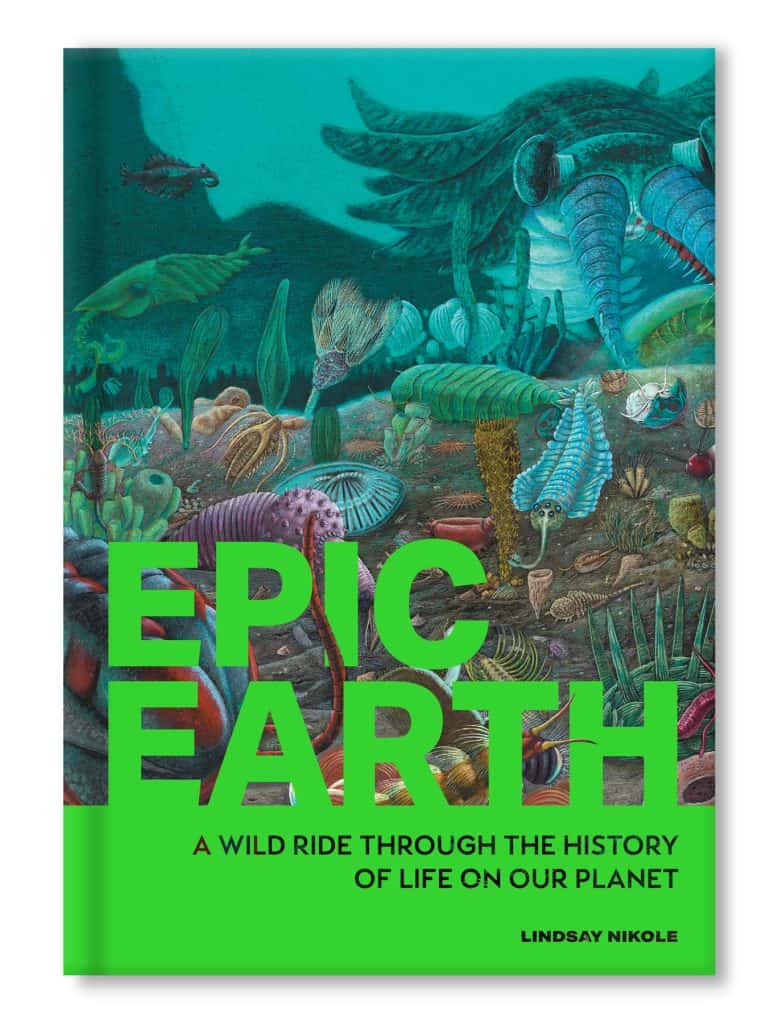
‘Epic Earth’ is Lindsay’s first book.
©Courtesy of Quarto
Epic Earth begins at the very beginning, literally. Lindsay starts with the Precambrian period, when our planet was “a chaotic ball of fire and rock” before cooling into oceans that gave birth to the first single-celled organisms. From there, she guides readers through Earth’s eras and extinctions: the Cambrian Explosion‘s weird new lifeforms, the rise of the dinosaurs, the reign of megafauna, and the arrival of humans.
Every chapter bursts with personality. Lindsay brings complex paleontology to life with her trademark humor and storytelling. In her section on early ocean life, for instance, she describes Opabinia—a five-eyed creature with a clawed, vacuum-nozzle mouth that points backward—as “absolutely deviant little fellas.” You can almost hear her TikTok voice in the writing as Epic Earth doesn’t shy away from the strange or the slimy—in fact, that’s the point.
“The little guys deserve our curiosity; that goes for both the living and the extinct,” Lindsay explains. “While dinosaurs and megafauna are super cool, there are TONS of smaller and lesser-known extinct animals that help to paint a more vibrant picture of the deep past. Prehistoric ecosystems were infinitely complex—each species played a crucial role in maintaining balance.”
She’s right: by shining a light on the forgotten and the freaky, Epic Earth reminds us that evolution isn’t just about the biggest or fiercest, it’s about everything in between.
While dinosaurs and megafauna are super cool, there are TONS of smaller and lesser-known extinct animals that help to paint a more vibrant picture of the deep past.
Lindsay Nikole, animal content creator
Weird Creatures, Real Science
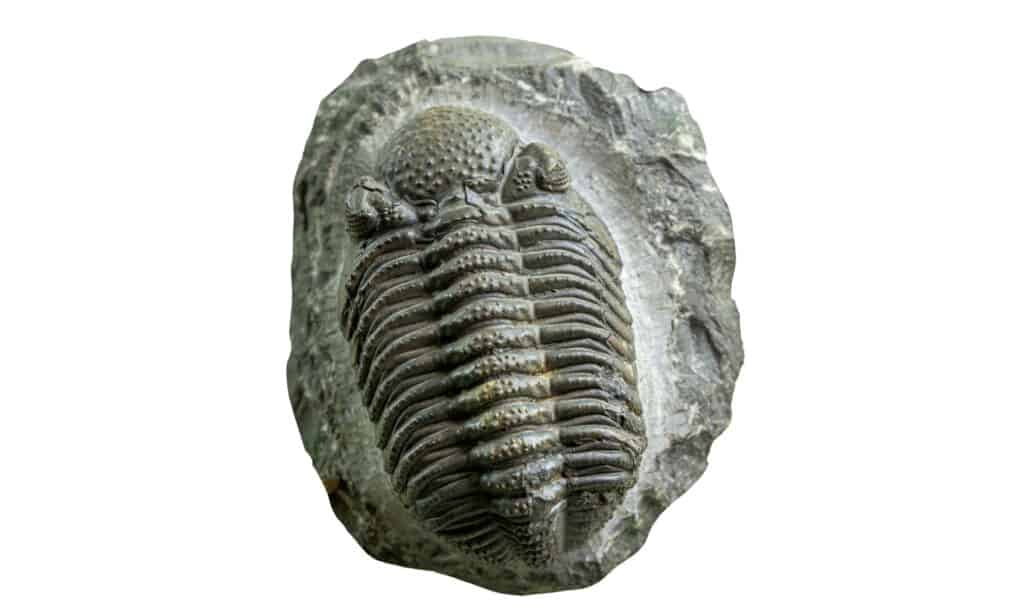
‘Epic Earth’ deals will Earth’s ancient and fossilized history.
©iStock.com/dmitriymoroz
Throughout Epic Earth, Lindsay writes with both scientific accuracy and childlike wonder, not afraid to use words like “heinous predators” or “tiny little guys,” but every page is meticulously researched and clearly structured.
For example, when describing trilobites, she points out they were “dominant in abundance, not in size” and that they were the first animals to develop compound eyes made of calcite crystals. Her playful phrasing reveals a deep knowledge, making the science both memorable and fun.
Later, in her coverage of the Ordovician Period, Lindsay introduces readers to Aegirocassis, the massive arthropod that cruised through oceans like an ancient whale shark, feasting on plankton. “Life is good,” she writes, “there’s food everywhere, and everyone’s too small to hurt you.”
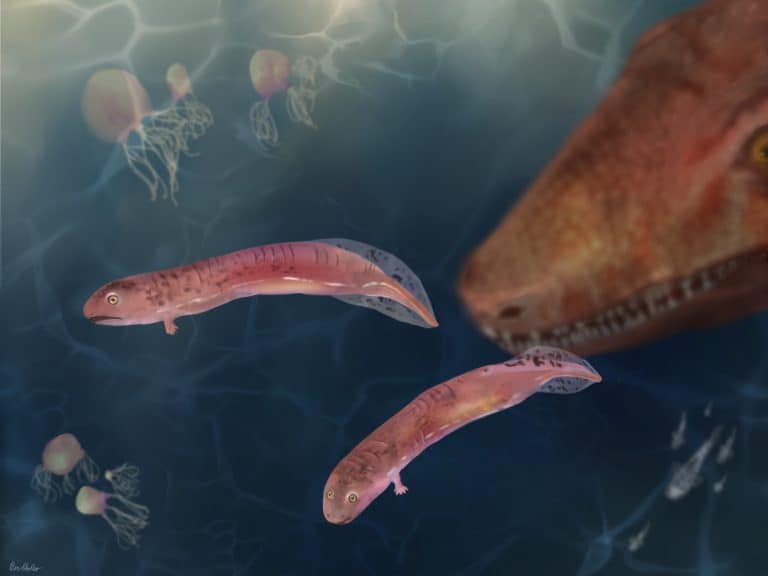
She also doesn’t skip the truly bizarre. The book features the Tully Monster, a 300-million-year-old mystery that scientists still can’t quite classify. “The Tully Monster is still one of the biggest mysteries in paleontology because scientists can’t fully agree on whether it was a vertebrate or an invertebrate,” Lindsay explains. “I love that. It’s a reminder that even after centuries of studying life, we’re still discovering things that challenge what we know.”
From Prokaryotes to People
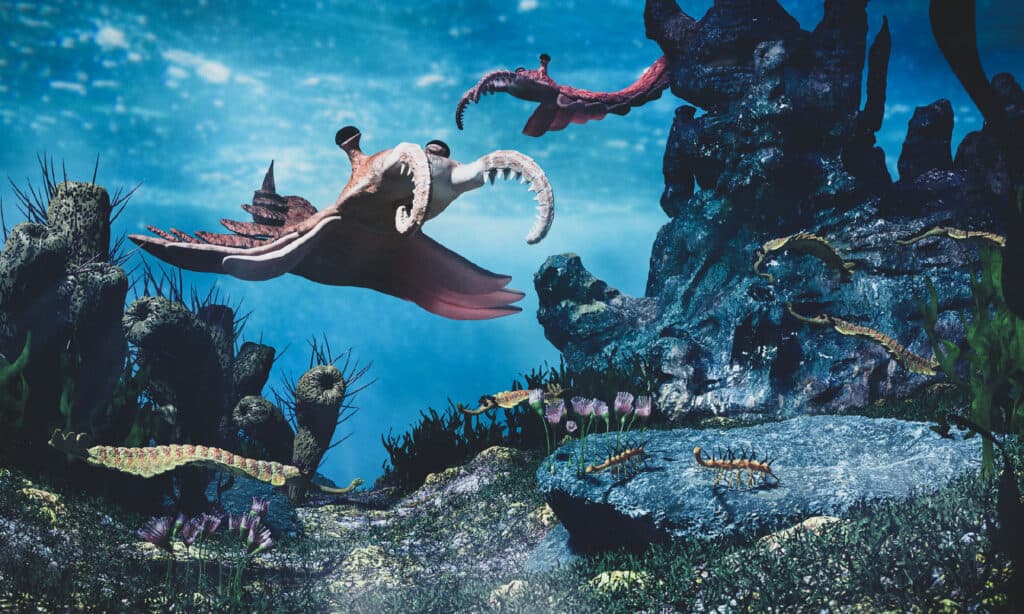
‘Epic Earth’ covers key eras in the evolution of life.
©iStock.com/dottedhippo
One of the most impressive aspects of Epic Earth is its scope. Lindsay moves from Earth’s first microorganisms to the rise of complex multicellular life. She walks us through the Ediacaran biota —the mysterious soft-bodied ancestors of animals —and explains the Cambrian Explosion, when life suddenly diversified into complex forms.
She even weaves in the evolution of oxygen and the formation of the moon, describing these as “crucial environmental changes” that set the stage for everything to come. The storytelling makes you feel the passage of time—billions of years—without ever feeling lost.
Each era ends with “Epic Facts That We Know Of,” where she tosses in quirky details (like the “Snowball Earth” event). It’s both science and storytime, and that’s Lindsay’s sweet spot.
The One That Got Away: Plant Evolution

Lindsay wishes she could have covered more of the evolution of plants.
©Gerry Bishop/Shutterstock.com
For all its breadth, there’s one area Lindsay wishes she could’ve explored more deeply: the rise of plants.
“If I had more time, I would’ve loved to go more in-depth on plant evolution,” she says. “I mentioned a few key species throughout the book (for example, Cooksonia, one of the earliest land plants that we know of), but I’m a zoologist! Animals are my thing. However, the world of paleobotany is so cool and is something I have really loved learning about in the last few years. Just like animal groups mutually shaped each other over the course of millions of years, plants played a huge role in that, too. Our natural world is truly a tangled web of all lifeforms that impact each other in profound ways.”
It’s a candid admission that adds another layer to her scientific persona. She’s not claiming to know everything; instead, she’s inviting readers to learn alongside her. That humility and enthusiasm are what make Epic Earth so engaging.
Finding Comfort in Deep Time
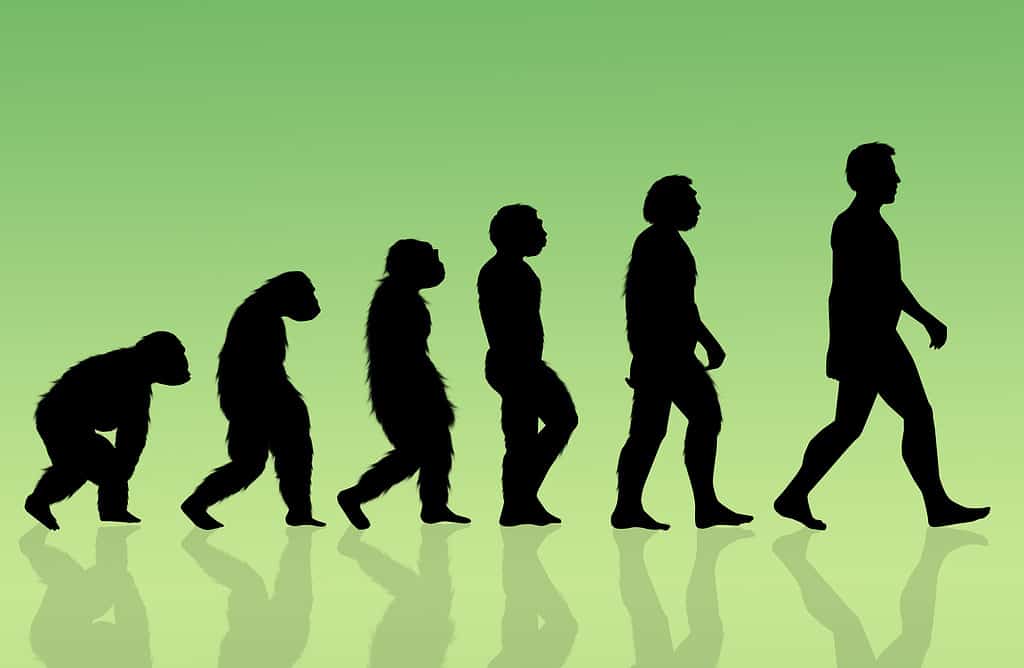
It may be comforting for many to know where we fit in the history of our universe.
©RossellaApostoli/iStock via Getty Images
At its core, Epic Earth is about more than prehistoric animals; it’s about perspective. Lindsay hopes readers feel the same sense of calm when reading her book. “For me, learning about Earth’s deep past actually eased a lot of the existential anxiety I used to feel about our place in the universe. The more I learned about how many improbable steps it took for life to get here, the more comfort I found in simply being part of that story.”
That’s a powerful takeaway, and one that transforms Epic Earth from a science book into something deeply human.