For decades, some people have kept big cats like cheetahs and panthers as exotic pets, attempting to domesticate them. It’s believed that around 20,000 of these big cats remain in captivity in the US, with 500 or so in zoos and other accredited facilities. While the US has completely banned future acts of big cat ownership through the Big Cat Public Safety Act, that doesn’t mean the seedy underbelly of the animal trade doesn’t continue exploiting these captivating animals elsewhere across the globe.
Earlier this year in Somaliland, wildlife officials opened a crate containing several small, trembling cheetah cubs. Starved, dehydrated, and barely alive, they were the latest victims of a growing and deadly trade. Each cub had been stolen from the wild, smuggled across borders, and sold into an illegal underground market. The cubs were part of a much larger pattern: an illicit wildlife trade that supplies wealthy buyers with exotic pets. The incident reflects a grim reality that conservationists have been warning about for years: cheetah trafficking is not slowing down, and the species is paying the price.
According to conservation experts, only around 6,500 adult cheetahs remain in the wild, occupying a mere 9% of their historic range. The illegal pet trade is one of the biggest emerging threats to the species’ survival, as they are classified as Vulnerable on the IUCN Red List of Threatened Species. For a species built for speed and survival, human greed has become an opponent it cannot outrun.
This year alone, we have received 30 cubs that were confiscated from the illegal wildlife pet trade.
Dr. Laurie Marker, founder and executive director of the Cheetah Conservation Fund (CCF)
Cheetah Trafficking: How Widespread Is It?
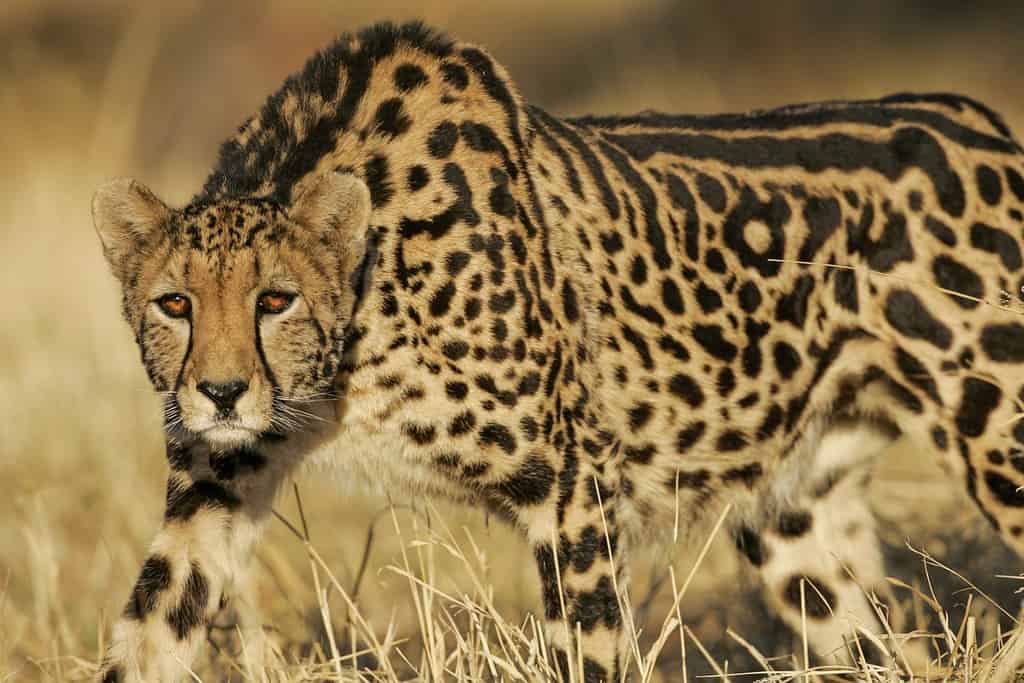
Cheetah trafficking is widespread and increasing.
©Stu Porter/Shutterstock.com
“Cheetah trafficking is mainly in the Horn of Africa into the Middle East,” Dr. Laurie Marker, founder and executive director of the Cheetah Conservation Fund (CCF), told A-Z Animals. “This year alone, we have received 30 cubs that were confiscated from the illegal wildlife pet trade. In the earlier years, we were seeing over 200 cubs being trafficked per year.”
In 2017, the Cheetah Conservation Fund began on-the-ground work in Somaliland, where Marker and her team built safe houses to care for rescued cubs. “We set up our Cheetah Conservation Fund Cheetah Rescue and Conservation Centre on 300 [hectares] with large, natural facilities for the rescued cubs,” she added. “We moved to the Centre in 2023, and today we have over 125 cubs and cheetahs at the Center.”
The Horn of Africa—particularly Somaliland, Puntland, and northern Ethiopia—has become the epicenter of this trade. Cubs taken from the wild are smuggled through Somaliland and shipped across the Gulf of Aden to Yemen, just a short two-hour journey on small wooden boats known as dhows, according to Marker. From there, they are transported into wealthy markets in Saudi Arabia, Kuwait, and the United Arab Emirates, where they are sold to private buyers. “Sadly, we are seeing trafficked cubs going to other areas as well now, including Pakistan and reports in the Far East,” Marker noted.
By CCF’s estimates, roughly 20 percent of the region’s cheetahs are now caught up in trafficking networks, a level that Marker warns “isn’t sustainable.”
How Cheetahs Are Captured and Smuggled
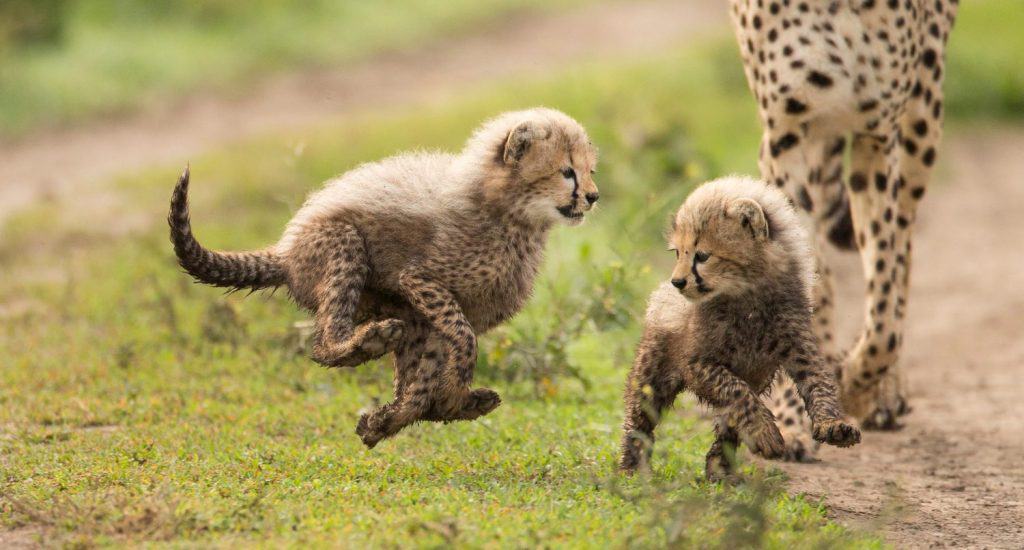
Cheetah cubs are the main target for illegal animal traders.
©Joe McDonald/Shutterstock.com
The process of capturing cheetah cubs is as cruel as it is effective. “Cubs are often caught quite young in the den,” explained Marker. “Cubs don’t start following their mother until after six weeks. It’s been stated that pastoral herders follow the female cheetahs and steal the cubs or will kill the mother and steal the cubs.”
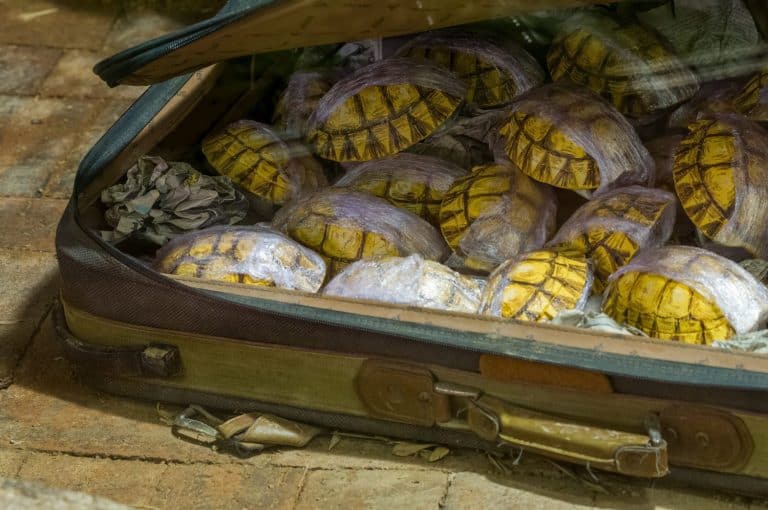
Once taken, the cubs are stuffed into sacks or repurposed plastic jugs with small air holes. “When possible, they bundle several litters together to try to sell,” she said. Many cubs never survive the journey. “For every one cub that makes it, four to five die en route. The cubs come to us with severe malnutrition, and many die at our feet as they arrive. The cubs aren’t given proper food; it’s horrible.”
Their journey follows the same routes used by smugglers trafficking other illegal goods, from weapons to people. The traffickers are organized, mobile, and ruthless; to them, the cubs are merely another commodity.
The Cost of Being a Status Symbol

Tippi Hedren with her pet cheetah, Pharaoh, in the living room of her home in Los Angeles, California
©Larry Bessel, Los Angeles Times / CC BY 4.0 / Wikimedia Commons – Original / License
Once in the hands of buyers, cheetah cubs are marketed as luxury pets and social-media trophies. “Yes, it’s mainly the exotic-pet market,” Marker confirmed. “The traffickers often are dealing in other items, including guns and people.”
In some parts of the Gulf region, a cheetah is a status symbol: an animal to be paraded, photographed, and displayed. But few buyers understand how fragile cheetahs are in captivity. “The cubs…are not given proper facilities to live, very small cages and no exercise.”
Cheetahs also breed poorly in captivity. As the international cheetah studbook keeper, Marker oversees global records of the species in zoos and sanctuaries. “Today there are about 1,800 cheetahs registered in captivity in 45 countries and about 365 facilities,” she explained. “Last year only about 150 cubs were born in very few facilities worldwide.”
Even under expert care, reproduction is rare. In private homes or improvised enclosures, it’s almost impossible. That means every cub stolen from the wild further diminishes the species’ already fragile gene pool.
The Internet’s New Role in Wildlife Crime

Social media can be a key place for traffickers to buy and sell exotic animals like cheetahs
©PeopleImages/iStock via Getty Images
Wildlife trafficking has always thrived in the shadows, but now much of it unfolds in plain sight: on social media. A 2024 report by a global wildlife trade monitoring organization documented how the live cheetah trade has moved online. Over six months, researchers identified 222 unique URLs linked to cheetah sales, and nearly 70 percent of those listings appeared on social-media platforms.
Almost half of the posts—44 percent—explicitly offered live cheetahs for sale. The majority originated from accounts in the United Arab Emirates, Saudi Arabia, Kuwait, South Africa, and the United States. Many of these posts also included other exotic species; in fact, 64 percent advertised multiple types of wildlife.
For traffickers, digital platforms have made the illegal pet trade easier than ever to access. Hashtags, encrypted messages, and private groups allow sellers to reach wealthy buyers directly, often under the guise of “animal lovers” or “conservationists.” What appears to be an innocent photo of a cub lounging beside a sports car is often actually an advertisement for a live, endangered animal..
Fighting Back
Having people be aware of the problems of illegal animal trafficking and join in conservation work is key.
©n.k.junky/Shutterstock.com
Despite the enormity of the problem, there are reasons for hope. Beyond rescue work, CCF is partnering with local governments to improve law enforcement, strengthen wildlife laws, and train customs officials. The organization also works directly with herders and pastoral communities to reduce cub theft by promoting coexistence with predators.
CCF’s teams now monitor social-media activity as well, flagging and documenting online trafficking networks in collaboration with global partners. By combining on-the-ground intervention with digital investigation, Marker hopes to tackle both the supply and demand sides of the trade.
A Global Responsibility
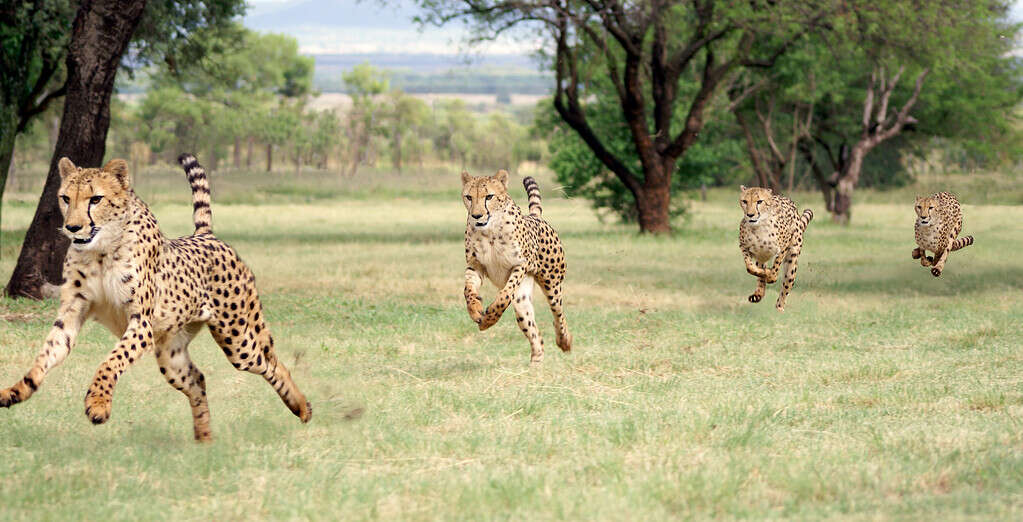
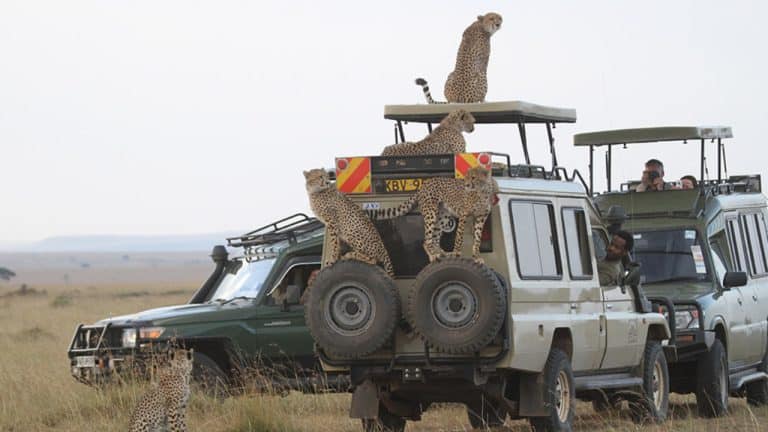
Cheetahs are incredibly fast, but not fast enough to escape the illegal wildlife trade.
©photosfromafrica/iStock via Getty Images
Cheetah trafficking might seem like a distant issue, but its roots reach everywhere. It’s fueled by online visibility, international wealth, and global indifference. The same platforms where we scroll for entertainment are being used to sell endangered animals.
Marker urges the public to take action by refusing to support exotic pet ownership and by raising awareness of the issue. Cheetahs are the fastest animals on land, capable of reaching speeds of up to 70 miles per hour. Yet against the machinery of global trafficking, even they can’t outrun extinction. Their future now depends not on speed, but on awareness, enforcement, and the collective will to protect them before it’s too late.