
Once upon a time, the Northern white rhinoceros wandered the grasslands of central Africa in healthy numbers. They were giant, gentle grazers shaping the landscape as they went. Fast forward to today, and the picture is heartbreakingly different. Only two Northern white rhinos are left on Earth, both female, living under 24-hour armed guard in Kenya. With no males left, their story (at least naturally) is over.
But scientists aren’t ready to close the book just yet. Thanks to a combination of cutting-edge genomics, stem cell biology, and reproductive science, there’s a flicker of hope that these animals could make a comeback.
Earlier this year, researchers from Scripps Research, the San Diego Zoo Wildlife Alliance, the Max Planck Institute for Molecular Genetics, and several international partners announced something remarkable: they had mapped the entire genome of the Northern white rhino. In plain terms, they now hold the species’ complete instruction manual. It’s a blueprint that could guide the creation of sperm and eggs from preserved cells, which might one day lead to the birth of new rhino calves.
The milestone represents a breakthrough not only for the survival of Northern white rhinos, but for conservation science as a whole. It brings researchers significantly closer to developing tools that could one day prevent other species from vanishing within our lifetimes.
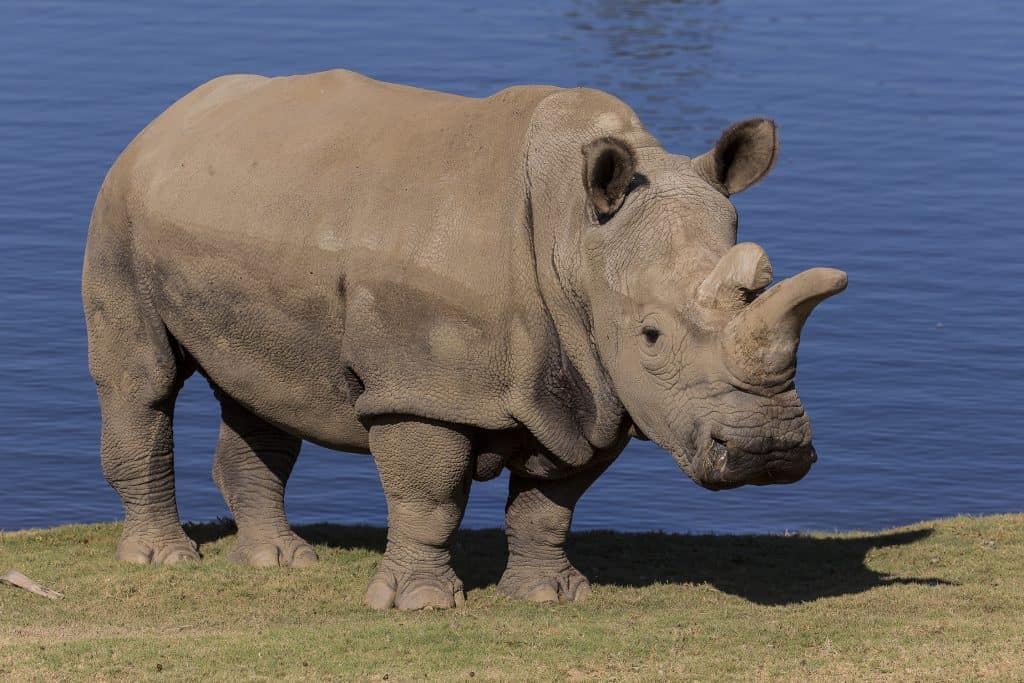
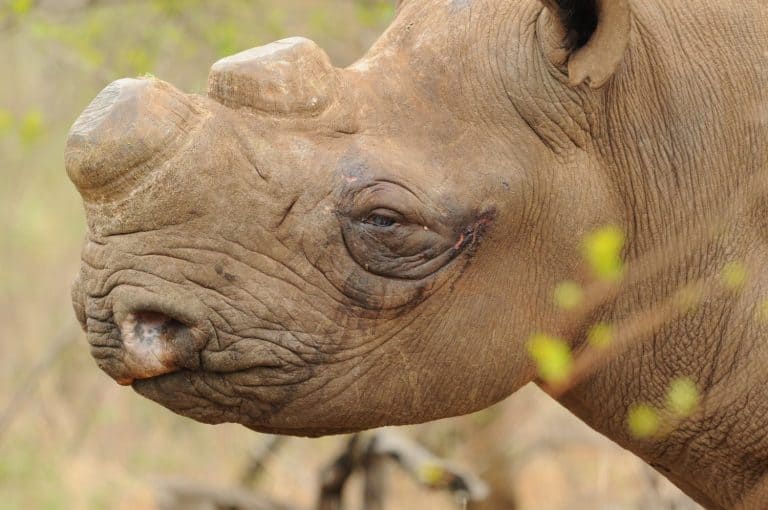
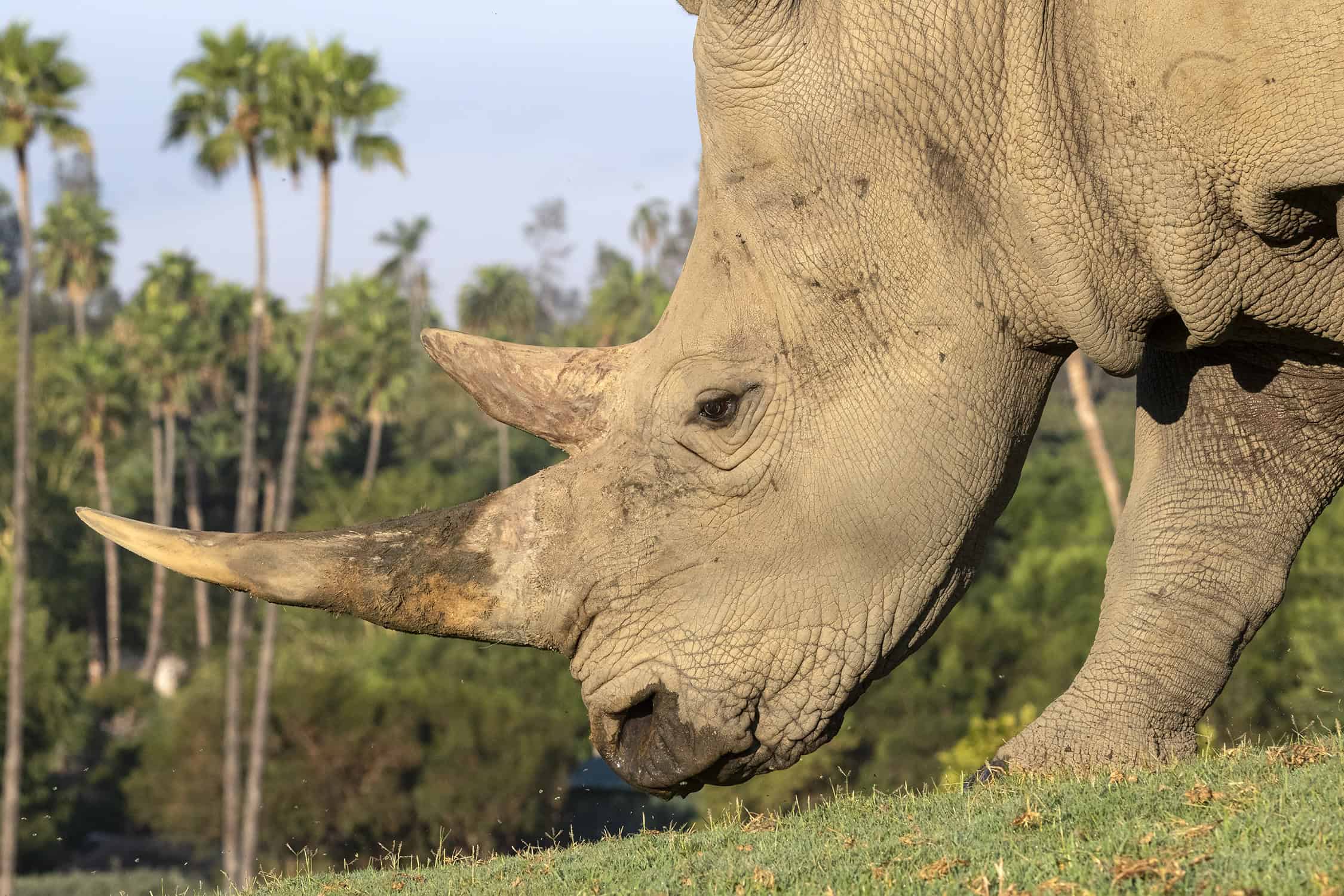
One of the last two Northern white rhinos grazes under armed guard in Kenya, a poignant reminder of what’s at stake in the fight against extinction.
©San Diego Zoo Wildlife Alliance
Why Bother With a Species That’s Practically Gone?
It’s a fair question. With just two elderly females left, why keep trying? For Dr. Nadine Lamberski, chief conservation and wildlife health officer at San Diego Zoo Wildlife Alliance, the answer is clear.
“The current rate of biodiversity loss is occurring at a speed and scale that is outpacing our ability to effectively respond,” she explains. “Healthy biodiversity underpins food security, clean water, medicines, climate stability, and cultural values. Its loss increases risks of pandemics, worsens climate change, and threatens the foundations of human well-being. The Northern white rhino is emblematic of this crisis. This charismatic species is symbolic of the 70% decline in wildlife populations globally since 1970.”
In other words, rhinos aren’t just beautiful to look at. They’re ecological workhorses. They graze, spread seeds, and keep grasslands healthy. If we lose them, the ripple effect will touch countless other plants and animals. Plus, with every species that vanishes, we lose genetic diversity — traits like resistance to disease or adaptability to climate change that might one day be critical to survival.
As Dr. Lamberski puts it, “When we lose a species, we also lose the role they play in nature to shape ecosystems.”
Cracking the Code: Why the Genome Matters
So what does a genome map really do? Think of it as giving scientists a complete wiring diagram for the Northern white rhino.
Back in 2011, Jeanne Loring, Professor Emeritus at Scripps Research and research fellow at the San Diego Zoo Wildlife Alliance, led the team that first created induced pluripotent stem cells (iPSCs) from rhino skin cells. These versatile cells have the potential to transform into any other cell type, including eggs and sperm. At the time, however, there was no full genome to serve as a reference. This meant researchers couldn’t confirm whether those lab-grown cells carried harmful mutations.
With the new genome in hand, researchers discovered that one of the most promising stem cell lines was actually missing more than 30 million base pairs of DNA, including genes essential for reproduction and tumor suppression. Without the complete genomic map, that flaw would have gone undetected. Now, scientists can systematically screen every stem cell line, identifying which ones are safe and healthy enough to pursue.
Healthy biodiversity underpins food security, clean water, medicines, climate stability, and cultural values. Its loss increases risks of pandemics, worsens climate change, and threatens the foundations of human well-being.
Dr. Nadine Lamberski, chief conservation and wildlife health officer at San Diego Zoo Wildlife Alliance
This represents a major leap forward. Instead of relying on educated guesses, conservationists now have a clear roadmap for choosing the most viable cells to help rebuild the population.
The Frozen Zoo: A Time Capsule of Life
Here’s where things get even more fascinating … much of this progress is possible because of the Frozen Zoo®, San Diego Zoo Wildlife Alliance’s collection of cryopreserved cells from more than 10,000 animals. Among them are samples from Northern white rhinos that died years ago, including a male named Angalifu who lived at the Safari Park until 2014.
The foresight to preserve living cells decades ago has proven invaluable. Unlike efforts that attempt to piece together DNA from ancient remains, scientists working with the Frozen Zoo have access to intact, high-quality genetic material. That gives them an unprecedented chance at restoring lost diversity.
For Dr. Lamberski, that foresight can’t be overstated. “Most of the samples in the Frozen Zoo are from individuals who have since passed away. The Northern white rhino cell lines in the Frozen Zoo represent more genetic diversity than is present in the current Southern white rhino population.”
That diversity is the golden ticket. It gives any future calves the best possible shot at being healthy and resilient.
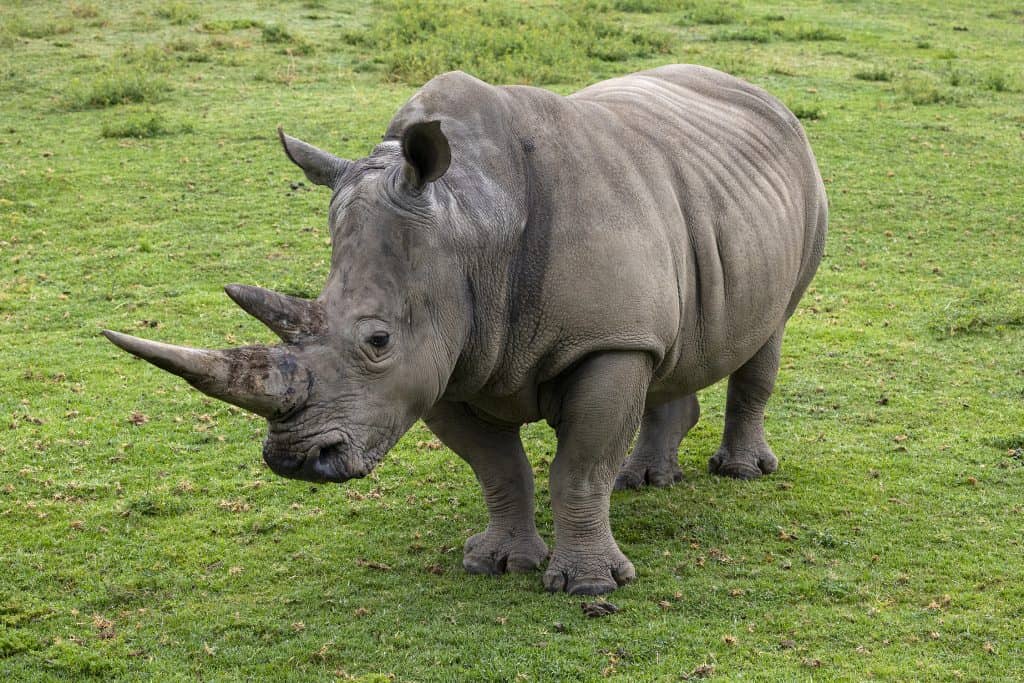
Southern white rhinos thrive in greater numbers across Africa and are now playing a critical role in efforts to rescue their Northern relatives from extinction.
©San Diego Zoo Wildlife Alliance
Southern White Rhinos to the Rescue
Another encouraging finding from the genome project is that Northern and Southern white rhinos are far more alike genetically than some scientists feared. That matters because it means Southern white rhinos (whose numbers are in the tens of thousands) can serve as surrogate mothers.
“Southern white rhinos can act as surrogates for a Northern white rhino embryo if one is created,” Dr. Lamberski says. Because the two are subspecies, the odds of rejection are much lower.
There’s even the possibility of hybrids, which Dr. Lamberski argues isn’t a compromise but a solution. “Hybridization is the bridge between extinction and survival for the Northern white rhino,” she says. “It may not bring back the species in its original form overnight, but it ensures that its genetic legacy and ecological value are not lost forever.”
Hope in the Lab
For all the science involved, this work isn’t just about lab techniques and data. It’s also deeply personal for the people behind it. Dr. Lamberski recalls two milestones that felt especially powerful.
The first was when stem cells from Angalifu and another Northern white rhino, Nola, actually transformed into beating heart cells and early neurons. “Seeing the stem cells responding to our signals to become those cell types gave me hope that the same could be done to generate gametes,” she says.
Efforts to save the Northern white rhino have resulted in important scientific discoveries and innovations that can and are being applied to save other endangered species.
Dr. Nadine Lamberski
Another emotional moment came when her team successfully collected oocytes (developing eggs) from Southern white rhinos and watched them develop into embryos. “The opportunity to play an important role in advancing reproductive knowledge in white rhinoceros is a highlight in our time devoted to this project,” she says.
For Dr. Lamberski and her colleagues, moments like these are the sparks of hope that make years of painstaking, behind-the-scenes research feel worthwhile.
The Roadblocks Ahead
Of course, no one is pretending this will be easy. So far, the only species where gametes have been reliably created from cryopreserved cell lines is the mouse. Rhinos are far more complex, and each step requires years of testing and optimization.
“Although a single calf could be born within the next few years, it would be many more years — or even decades — before there are enough Northern white rhinos to restore ecological function,” Dr. Lamberski shares.
And that’s assuming funding, resources, and global attention remain steady, which is something conservationists can never take for granted.
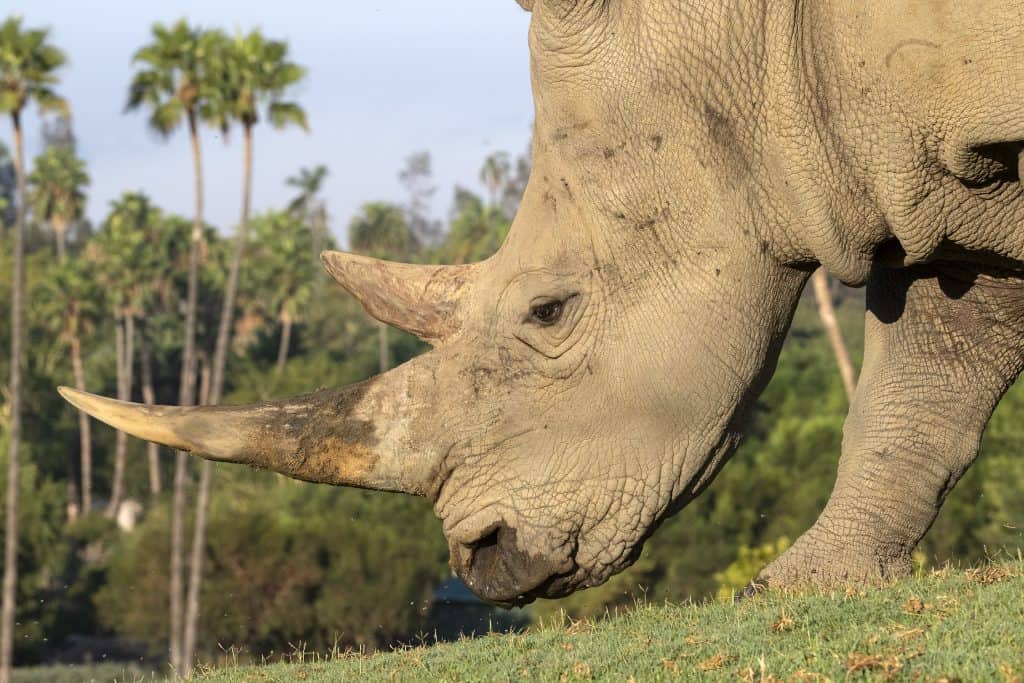
A Southern white rhino, far more numerous than its Northern cousin, may hold the key to saving the species by serving as a surrogate mother.
©San Diego Zoo Wildlife Alliance
Beyond Rhinos: A Model for Saving Others
Still, what’s happening with the Northern white rhino has implications far beyond this one species. The techniques perfected here are already being applied to other endangered animals.
“Efforts to save the Northern white rhino have resulted in important scientific discoveries and innovations that can and are being applied to save other endangered species,” Dr. Lamberski says.
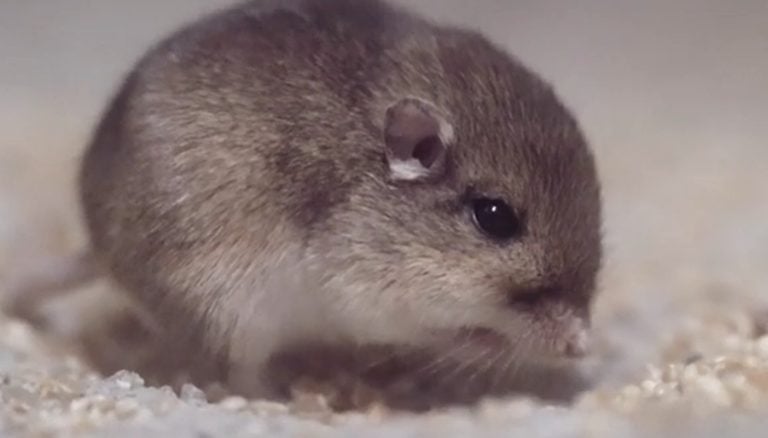
Take Hawaiian honeycreepers, for example. This group of forest birds is devastated by avian malaria. There are also Pacific pocket mice, one of the smallest mammals in North America. Both now benefit from genomic tools pioneered through rhino research.
“This work can be applied to many species,” Dr. Lamberski tells us. “We can also use these cells to treat diseases, develop models to study the diseases, and explore treatments and vaccine development.”
The “Playing God” Question
Whenever conversations turn to high-tech conservation, there’s almost always the familiar question, “Isn’t this just ‘playing God’?”
For Dr. Lamberski, that misses the point entirely. “Genetic rescue isn’t about creating something artificial. It’s about restoring what human activity has damaged through habitat degradation and loss, pollution, and extractive practices,” she explains.
In other words, the real issue isn’t whether the science feels “natural.” It’s whether we’re willing to take responsibility for the harm humans have already done, and use every tool we have to help repair it.
Remembering What’s at Stake & Looking Ahead
For those who’ve never seen one, it can be hard to imagine what makes a Northern white rhino so special. Dr. Lamberski explains, “The tremendous size and strength of a white rhino is uniquely coupled with a calm and gentle demeanor. This makes them so awe-inspiring for humans,” she says. “That said, white rhinos are extremely quick and strong and should never be underestimated.”
It’s that combination — gentle giants with immense presence — that makes their near-loss so poignant.
Will we one day see a Northern white rhino calf born into the world? The answer is still uncertain. But the possibility is real in a way it never was before.
“To see a Northern white rhino calf born will be a historic moment,” Dr. Lamberski says. “Success with this flagship, charismatic species will bring hope to the biodiversity crisis.”
It’s not Jurassic Park or science fiction. It’s science meeting responsibility, with the possibility of rewriting the ending to one of conservation’s saddest stories.
Or, as Dr. Lamberski reminds us, “We may be able to save the rhino, but in order to save the ecosystems we all rely on, we — as humans — must commit to taking care of nature.”