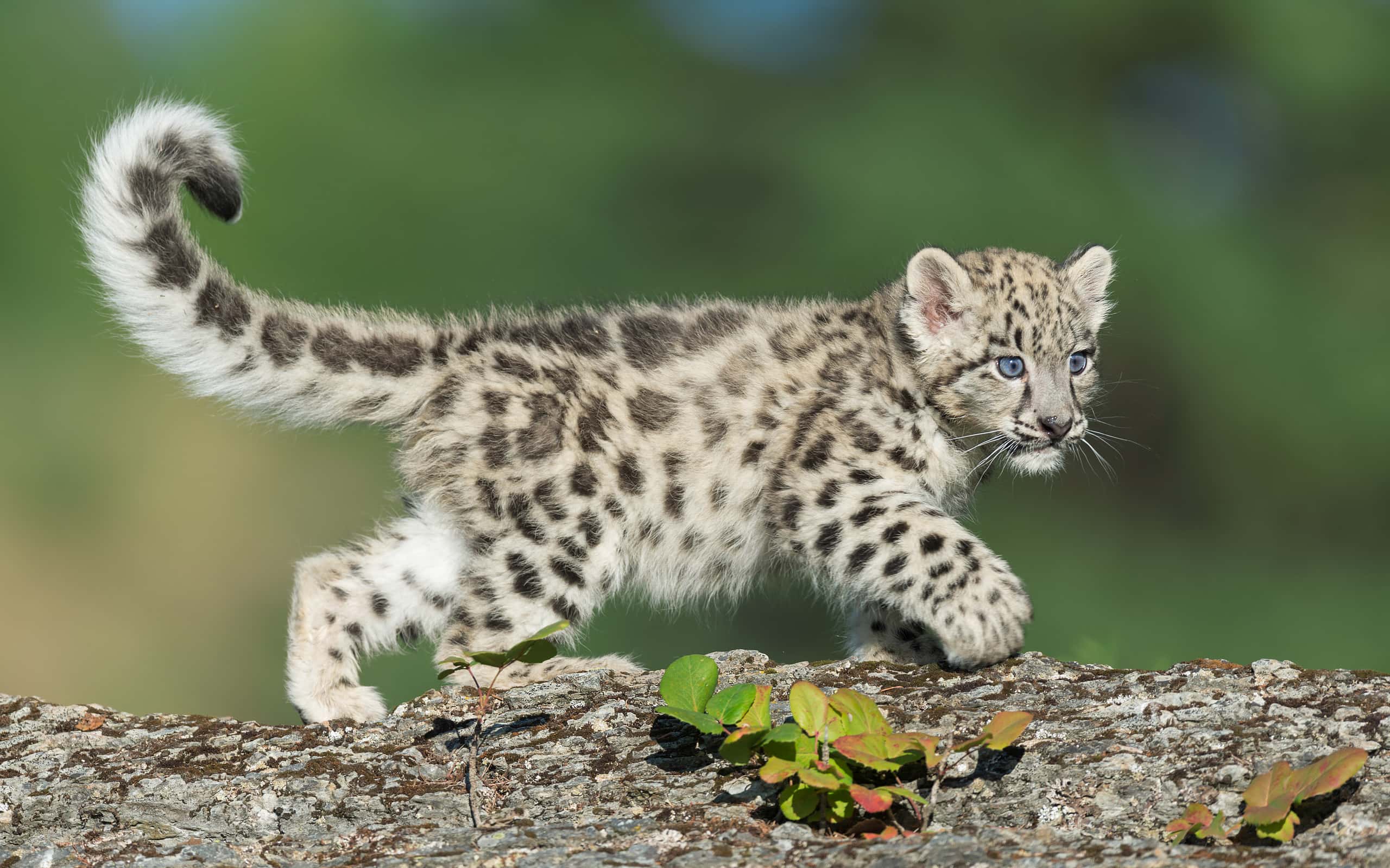

Recently, a captivating Instagram reel showed an adorable snow leopard cub named Juniper at Michigan’s John Ball Zoo having a blast, absolutely destroying a jack-o’-lantern. But beneath the viral Halloween charm, these rare cubs are remarkable examples of how baby animals explore, learn, and grow. It all offers insight into the wonders of the wild and the fragile promise life carries through the winter months.
What Play Means for a Snow Leopard Cub
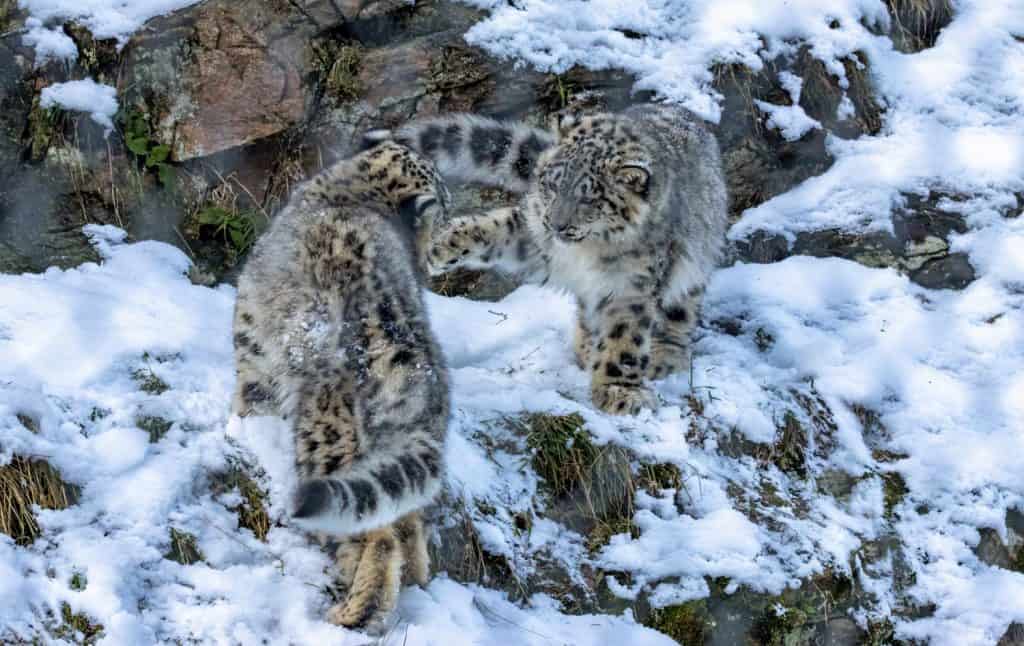
Cubs at play.
©SarahLou Photography/Shutterstock.com
The life of a snow leopard cub begins in shadowy secrecy. In the trans-Himalayan ranges, females give birth in mid-summer to two or three tiny, blind cubs. They stay tucked away in remote rocky dens in their first weeks. Gradually, the cubs’ blue-gray eyes open, and downy fur thickens to combat the chill. But before long, instinct and energy bring a burst of motion: by five weeks, cubs begin to move and explore inside the den, and by two months they are ready for the outside world.
Play with Purpose
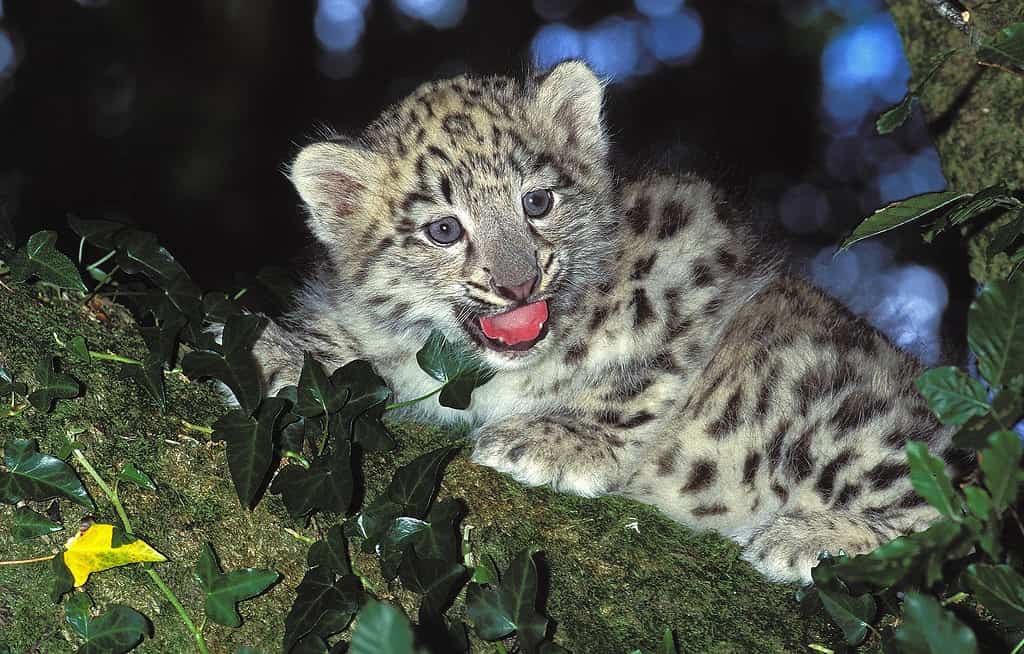
Snow leopards’ play behavior is similar to that of domestic cats.
©slowmotiongli/iStock via Getty Images
This natural playfulness has a critical purpose. For a snow leopard, every leap, swat, or roll is an exercise in survival. When Juniper paws, bats, and gnaws at a jack-o’-lantern, she is not just entertaining herself—she is learning vital hunting and social skills. In the wild, cubs stalk and pounce on siblings, practice silent creeping, and wrestle with anything that moves. These actions condition their muscles, sharpen their reflexes, and teach vital lessons about their mountainous homeland.
Snow leopard cubs’ play mirrors that of domestic cats, but on a grander scale: they chase windblown leaves, dig through snowdrifts, and leap from stones, all under the watchful eye of their mother. In both zoos and in the wild, these playful moments help hone the precision and grace that will allow them to stalk ibex and blue sheep on steep cliffs—a skill essential for their survival.
Early Development: From Helpless to Hardy
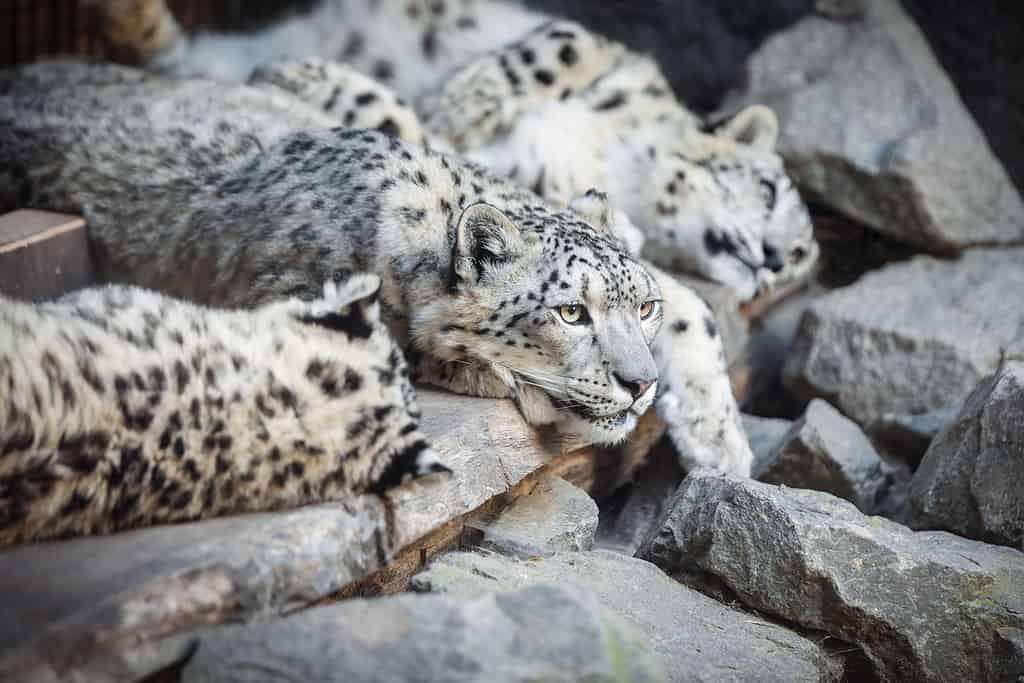
A snow leopard and two cubs.
©Frank Anschuetz/iStock via Getty Images
Snow leopard cubs are born at an astonishingly vulnerable stage. Weighing less than a pound, blind, and almost toothless, their first days are spent suckling and sleeping. Their mother provides milk rich in nutrients and antibodies and, for the first month, rarely leaves their side. She emerges only for brief hunting forays while the cubs remain concealed in their den.
By the end of their first month, sharp little teeth begin to erupt, and the cubs grow bolder—shuffling clumsily across the den, biting and tussling in gentle sibling rivalry. At around six weeks, their mother begins to supplement their diet with regurgitated meat. In captivity, enrichment like pumpkins, furry toys, or frozen treats replaces wild carrion, but the drive to taste and test is equally strong.
By two months, as seen with Juniper, cubs start sampling new foods. In the wild, their mother brings chunks of fresh prey, but in the zoo, a balanced diet supplemented with the occasional pumpkin serves the same purpose. These food interactions are about more than taste—by sniffing, biting, and rolling the jack-o’-lantern, Juniper practices the behaviors that her wild cousins would use on marmots, birds, or even tree bark, building sensory familiarity with a wide range of objects and tastes.
How Cubs Learn: Watching, Mimicking, Practicing
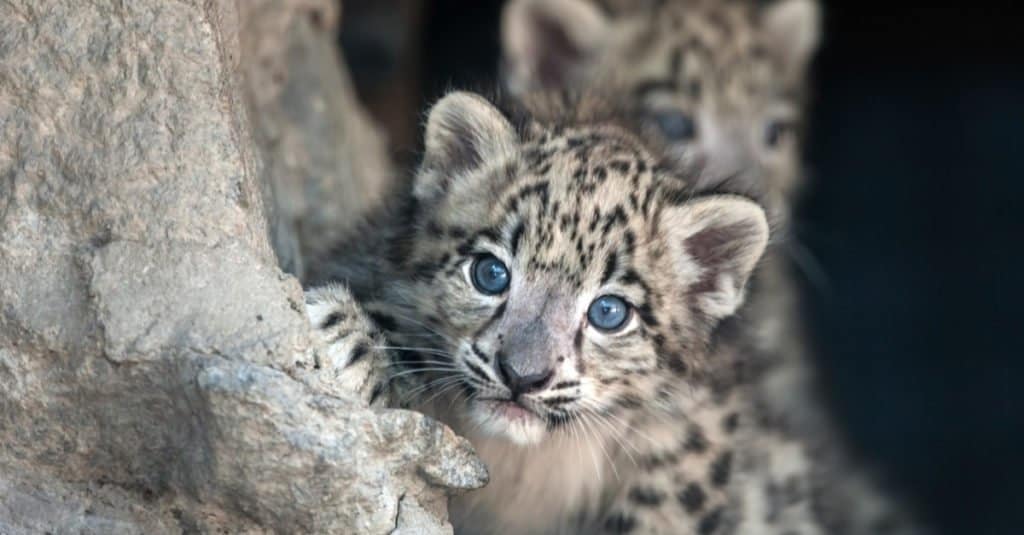
Snow Leopard cub looking out of the den.
©Kwadrat/Shutterstock.com
Beyond simple nourishment, snow leopard cubs are curious learners. They learn best by observing and imitating. Cubs watch their mothers with rapt attention, learning how to climb boulders, creep along ledges, and sniff out hidden prey. While their mother stalks cautiously, cubs test their own stealth by play-stalking her—or each other. Cubs in captivity often practice similar behaviors, ambushing toys, caregivers, or even inanimate objects in their enclosures.
Not all lessons come easily. Wild cubs face setbacks and failures—mistimed jumps, collapsed snow, startled prey. Their mothers are patient but firm, intervening when danger threatens but otherwise allowing young ones to figure things out. Scientific study has shown that by five to six months, wild cubs regularly join their mothers on hunting trips, mimicking each motion, learning by doing, and adding their own eager, if clumsy, attacks to the process. Cubs continue practicing play attacks and chases for more than a year, well into adolescence.
In captivity, enrichment objects like pumpkins serve multiple roles: they entice cubs to explore, encourage climbing and digging, and provide resistance for building jaw and paw strength. A carved pumpkin, for instance, might be flipped, chewed, carried, or shredded—the same actions that, in the wild, would help a cub dismantle a carcass or open a tough-skinned prey item.
Diet: What Fuels a Growing Cub
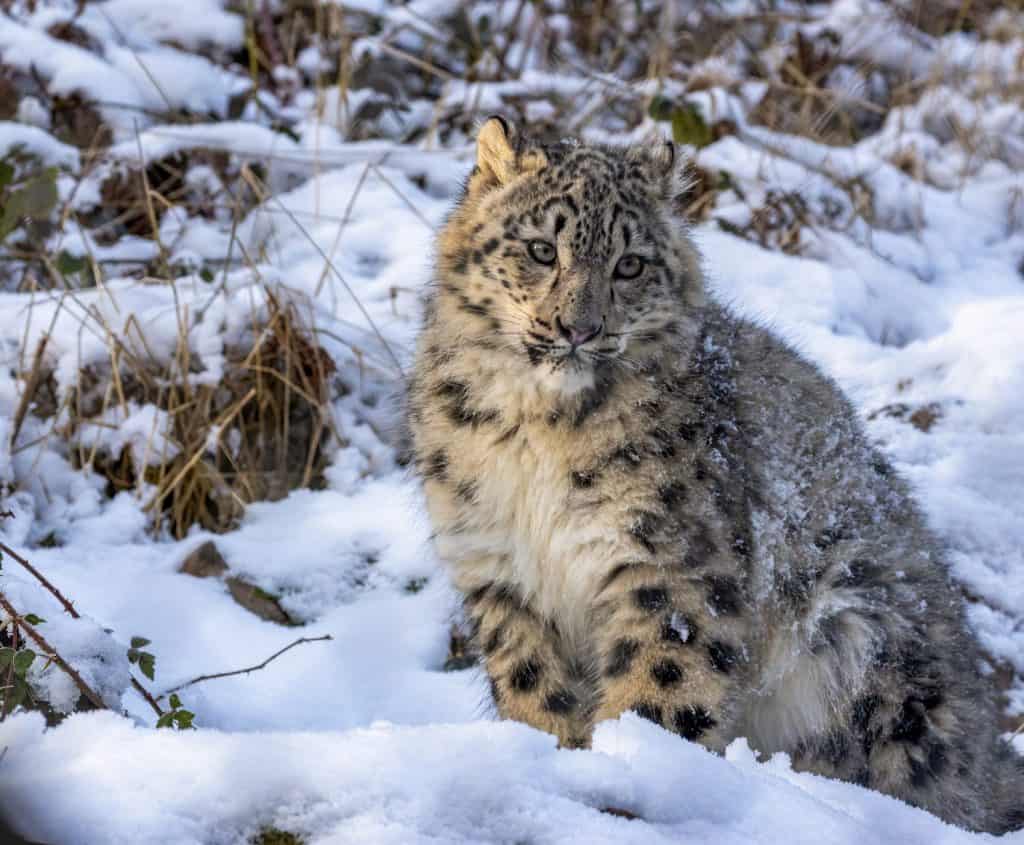
Snow leopards have a carnivorous diet.
©SarahLou Photography/Shutterstock.com
Diet is central not only to cub health but to learning as well. Mothers nurse cubs intensively for two months; after that, solid food rapidly takes precedence. In the wild, cubs are slowly introduced to the rich, varied diet of mountain carnivores: blue sheep, wild goats, marmots, hares, and game birds. Cubs must learn to negotiate tough meat, delicate bones, and even coarse hair, all under maternal guidance. Occasionally, wild cubs ingest grass, twigs, or other plant material, likely aiding digestion.
Zoo diets are similarly balanced, emphasizing protein and key nutrients, while also using safe enrichment foods—like pumpkins—to encourage exploration. Tasting, chewing, and dismembering all contribute to building jaw power, tooth health, and digestive resilience.
Growing Into Their Wild Heritage
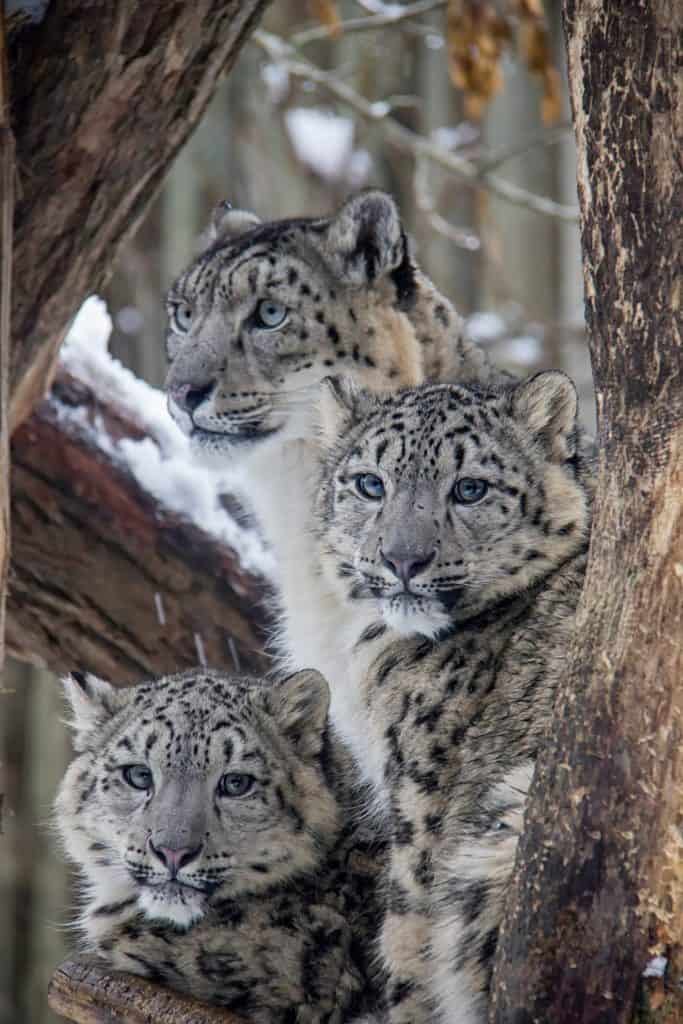
Snow leopard cubs are able to follow their mother over rough terrain by 5-6 months.
©Lucie Bartikova/Shutterstock.com
At about three months, snow leopard cubs start exploring beyond the den, gradually expanding their world. These initial forays are short but increase as strength and experience grow. By five to six months, cubs follow their mother over tough terrain, learning to navigate cliffs, snow, and wind—a miniature echo of their eventual solo treks across vast mountain ranges.
Sibling interaction plays a major part in skill-building. Cubs chase, tumble, and “hunt” each other, developing coordination, social skills, and problem-solving abilities. They also begin to use their powerful voices, communicating with soft mews, yowls, and the signature chuff—an affectionate greeting noise. Mothers reinforce boundaries, using gentle swats or growls to keep boisterous cubs in line, teaching them respect and the cues of snow leopard language.
By 18 to 22 months, the cubs are ready to strike out on their own. In rare cases, some remain nearby or occasionally reunite with their mothers for several months. However, by two years old, most are solitary, patrolling their own ranges and beginning the cycle anew when breeding season arrives.
The Role of Play in Conservation and Welfare
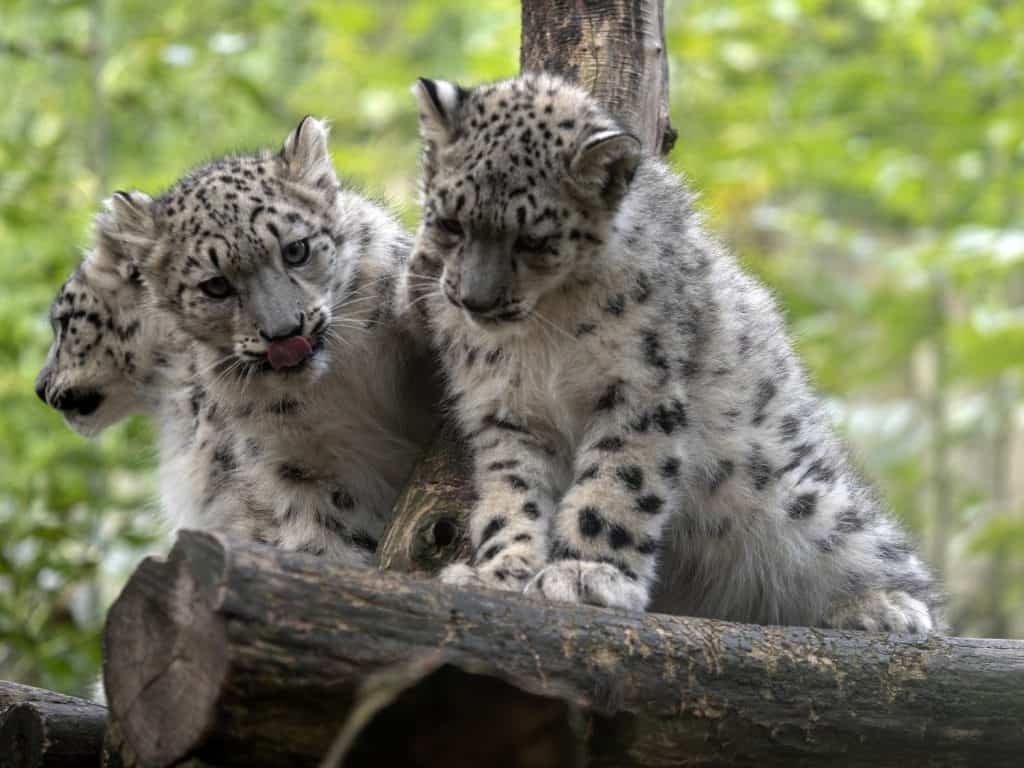
Ethical zoos and animal parks provide behavioral enrichment programs for the animals under their care.
©Vladislav T. Jirousek/Shutterstock.com
The viral video of Juniper and her pumpkin is more than cute entertainment—it’s also a window into responsible animal care. Modern zoos and wildlife parks strive to offer behavioral enrichment programs designed to mimic the challenges and complexity of life in the wild. For snow leopard cubs, this means a steady supply of objects to manipulate, food to puzzle out, scents to follow, and obstacles to climb.
Such activities keep cubs mentally and physically sharp, reducing boredom, stress, and the risks of stereotypic behaviors. Seasonal events like Halloween pumpkin enrichment offer novelty, encouraging not just feeding but creative problem-solving and mental stimulation.
Lessons from a Snow Leopard Cub
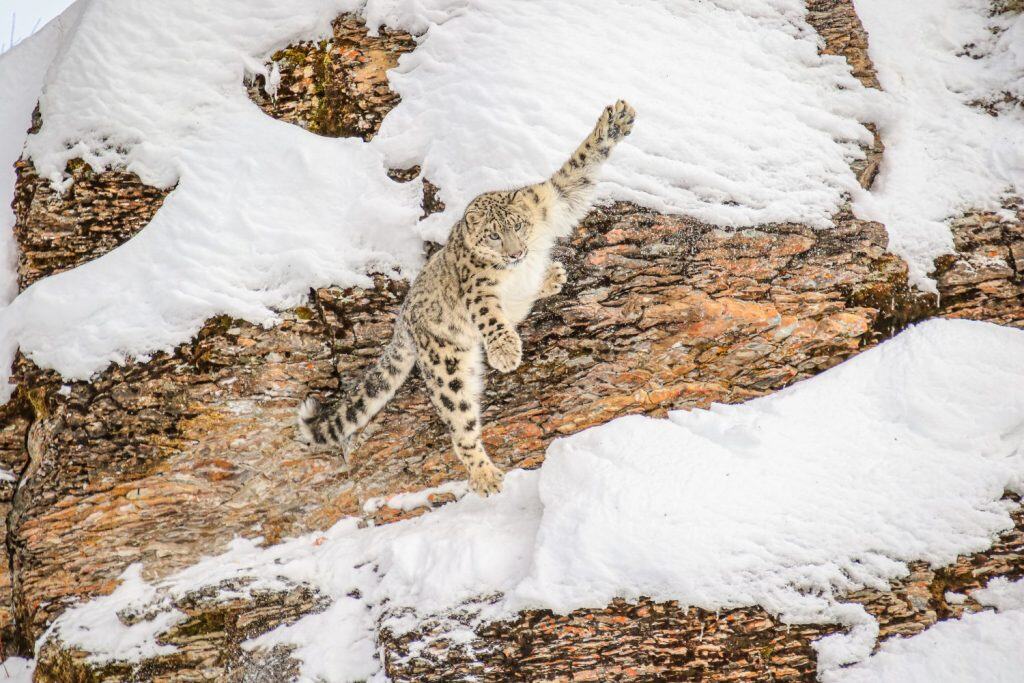
Snow leopards are determined, resilient survivors.
©Holly S Cannon/Shutterstock.com
Cubs teach us that discovery is constant: every new scent, taste, or obstacle is a lesson in adaptation. Their energy defies winter’s chill, and their persistence reminds us that even in harsh conditions, beauty endures. For families and animal lovers everywhere, the sight of Juniper’s blue eyes, snowy fur, and pouncing paws against a bright pumpkin is a celebration of spirit—a lesson that life, joy, and curiosity persist no matter how deep the snows may fall.