
Motor vehicle accidents that involve animals are devastating for both drivers and wildlife alike. To date, the technology developed to reduce accidents has included fences, cattle guards, and underpasses and overpasses. While these methods have decreased the number of wild animals hit by vehicles, it has not stopped it, leading researchers to look to AI to make a real impact.
Australia’s tech-driven approach to keeping animals and humans safe on the road has harnessed the power of AI in hopes of decreasing the number of animals, specifically those who are endangered, hit and killed on roadways around the world each year. The technology is special in that it learns from every image it receives of the animal it is programmed to detect, thereby increasing its detection success rate over time. In turn, drivers are safer, wildlife is safer, and the rates of injury and fatalities decrease for all involved.
Australia Develops Alert System to Reduce Driver and Wildlife Collisions
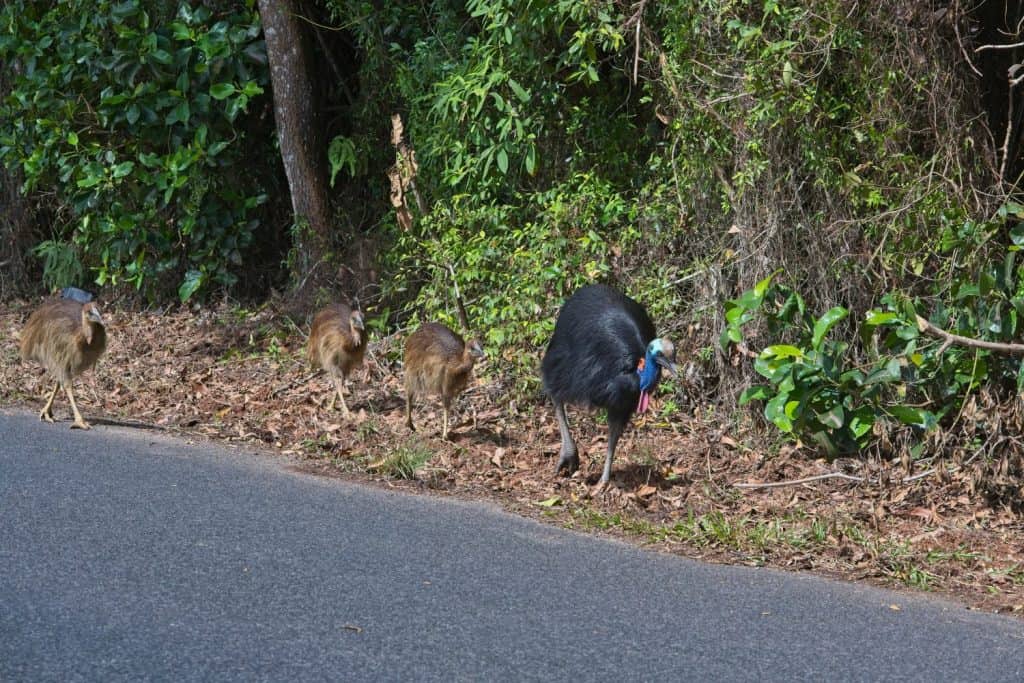
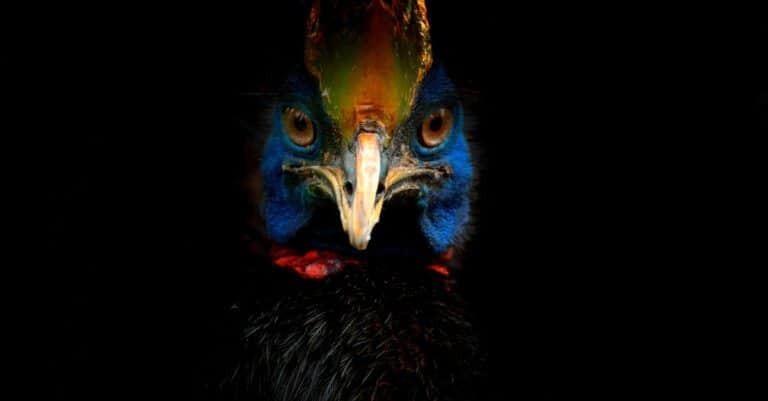
LAARMA has been successfully used to save cassowaries when detected near road crossings.
©A.Flassig/Shutterstock.com
Researchers have developed a first-of-its-kind detection system aimed at decreasing the number of motor vehicle collisions involving wild animals. The system uses AI technology that not only uses data sets to identify the animal as it nears the roadway but also evolves to become more accurate over time.
Researchers from the University of Sydney and the Department of Transport and Main Roads, Queensland, developed AI technology aimed at significantly reducing the number of traffic collisions between humans and animals. Named the Large Animal Activated Roadside Monitoring and Alert System (LAARMA), the trial phase of the program focused on reducing the number of cassowaries hit and killed on the roadways of Queensland. The bird was specifically chosen, given its propensity to spend time and cross roadways in the region, as well as the fact that the cassowary is an endangered species with a continuously decreasing population.
Researchers made the code publicly available on GitHub, in hopes that other countries with similar issues of endangered animals being hit by vehicles could use the technology to prevent that from happening.
The technology is a “low-cost, AI-powered roadside unit” that relies on sensors installed in locations near roadways to detect the animals it has been programmed to identify. The sensors used to identify the cassowaries included the following:
- RGB cameras
- Thermal imaging
- LiDAR
All of the sensors were mounted on poles at different heights to capture the cassowaries as they moved through the environment. When one was detected within about 330 feet of the roadway, drivers were alerted via digital signs. These signs were not illuminated around the clock. The signs were only illuminated when cassowaries were present, specifically to grab drivers’ attention.
Researchers tested multiple signs on drivers, including yellow signs that warned of the presence of cassowaries in the area. However, by using a focus group of 550 drivers, it was determined that the yellow signs did not have a significant effect in decreasing speed. It was the signs that were only lit when cassowaries were present that did so instead.
According to Ioni Lewis, who was the project co-lead from the University of Sydney, not only was the fact that the program worked and evolved exciting, but the fact that drivers’ behaviors changed was as well.
“Beyond the technological success, we’re particularly encouraged by the behavioral data, which shows that real-time, context-specific warnings do change how people drive,” Lewis explains in a statement to EurekAlert. “That’s vital when seconds can be the difference between a near-miss and a fatal collision.”
Initially, LAARMA accurately identified cassowaries only a small percentage of the time, but as it continued to gather data, its accuracy improved, resulting in a successful trial phase.
Trial Phase of Alert System Produces Promising Results
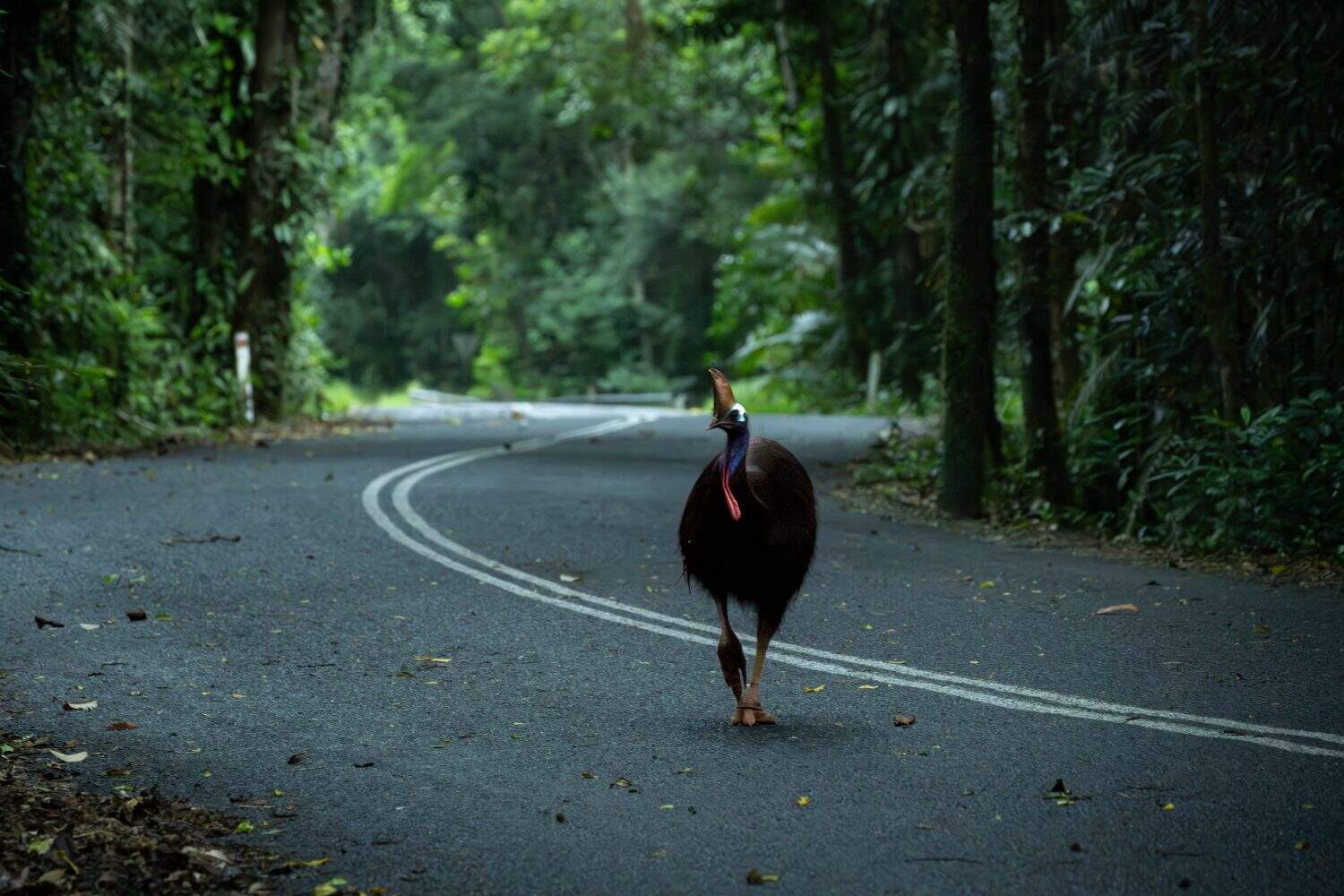
The trial phase of LAARMA proved to be 78.5% accurate at detecting cassowaries crossing the road.
©Wavey Jones/Shutterstock.com
When LAARMA was first deployed, it had a success rate of identifying cassowaries of just 4.2%. However, researchers were not involved in making the detection system more accurate. Instead, the AI technology was able to improve itself over time, which was proven by the accuracy of detection.
The longer the technology was in the field, the better it got at detecting cassowaries. By the end of the trial, LAARMA had a 78.5% accuracy rate. Additionally, by detecting the 287 cassowary sightings during the five-month trial, LAARMA was able to decrease the speed of drivers in the Kuranda region of Queensland by nearly four miles per hour.
According to Dr. Kunming Li of the University of Sydney, part of what makes LAARMA successful is the fact that with each sighting of the programmed animal it sees, it learns from. As this happens, things such as a cassowary face behind a bush or a shadow the bird makes are detected.
“It doesn’t just function—it evolves,” Dr. Li explains to Interesting Engineering. “It learns what a cassowary looks like in varied conditions, making it more reliable over time.”
The fact that LAARMA can evolve every time the programmed animal is detected makes it far more reliable than other technologies available in the past. Consequently, LAARMA may be what is needed to protect drivers and wildlife alike, versus fences, and over and underpasses alone.
“This is a big step towards autonomous wildlife protection,” Dr. Li tells EurekAlert. “LAARMA is far more adaptable and scalable than previous approaches. The more it’s used in the field, the more accurate it becomes. The technology doesn’t just function — it evolves.”
Given the ability to adapt and evolve, researchers hope that LAARMA can be used in other countries to protect drivers and wildlife, making roads safer in the process.
Future Goals for the Alert System
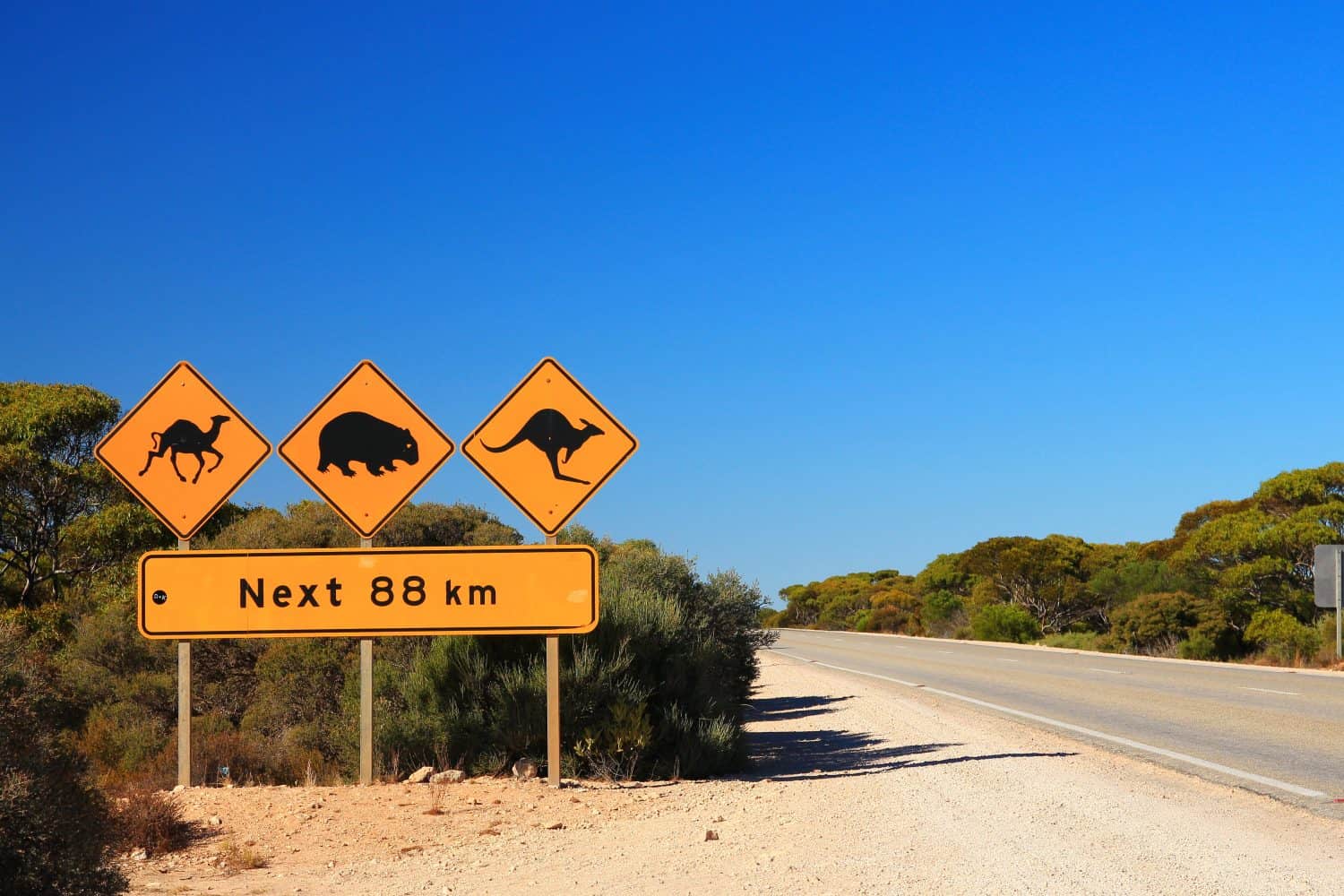
Researchers would like LAARMA to be able to detect other animals across Australia and the rest of the world to keep them from getting hit by a vehicle.
©totajla/Shutterstock.com
Currently, LAARMA was only designed to identify cassowaries to help protect this declining species. Now that the technology has proven to be able to evolve and identify the cassowary from a multitude of angles, the goal is to increase the number of animals identified to make roads safer still for both drivers and animals alike.
To correctly identify animals crossing the road, LAARMA would need to be taught multiple datasets. As the different animals are learned, the system would theoretically evolve as it did with the cassowaries to accurately identify the animals as they approach the road from different angles.
Additionally, scientists state that the sensors used to detect animals need to be adjusted in terms of size, location, and type to maximize the number of animals detected. Scientists are interested in whether the type of animal detected affects drivers’ reaction times. Consequently, as the technology learns each new animal, the long-term effect of the system must be evaluated to determine if it is reducing the number of motor vehicle collisions between people and wild animals.
Other Countries’ Efforts to Reduce Wildlife Collisions
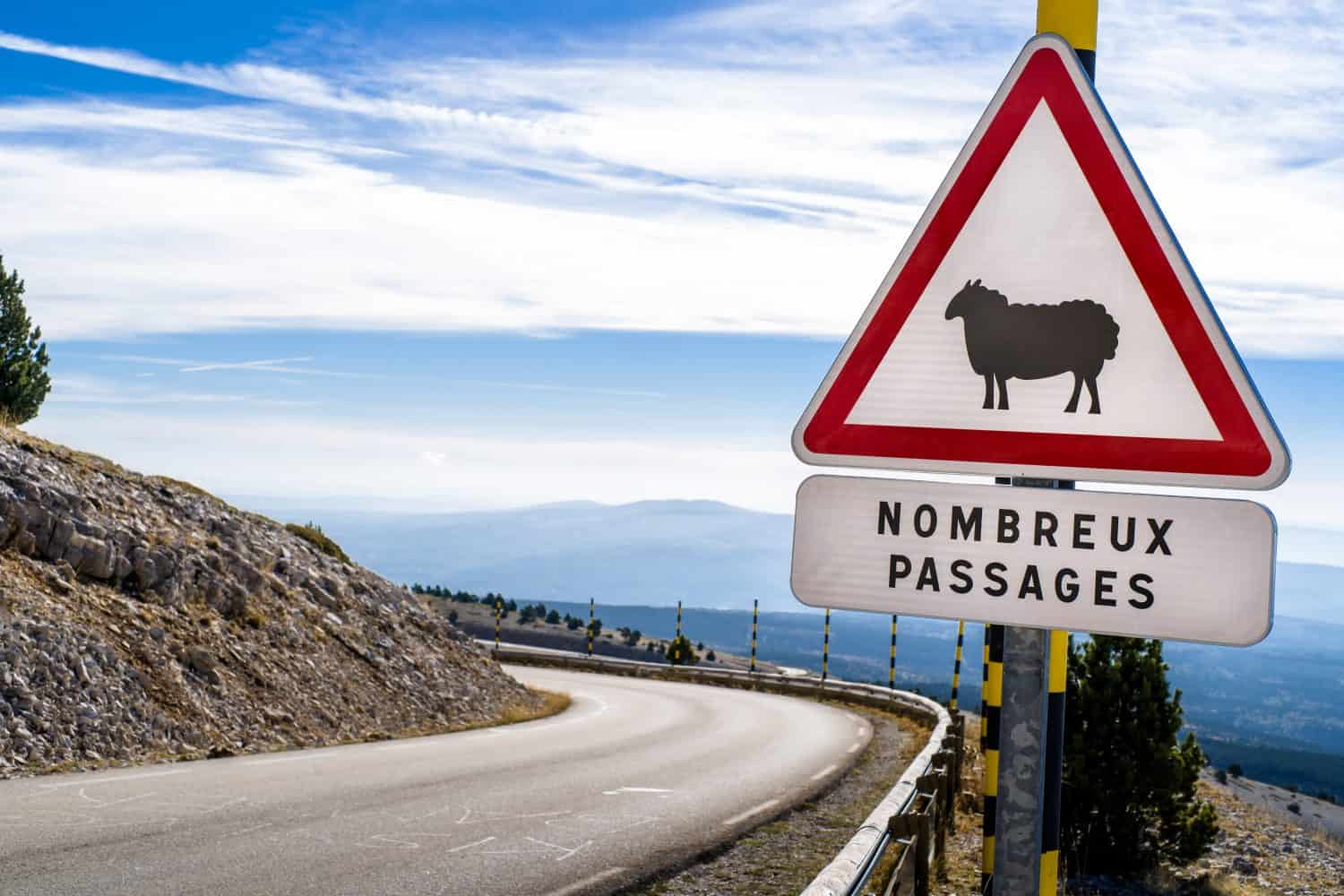
France and other countries have implemented technology to help stop collisions between vehicles and wildlife.
©Fotografiecor.nl/Shutterstock.com
Recognizing there is an issue with vehicle collisions involving wildlife, several countries, including France, Sweden, Japan, Canada, and India, have developed or are in the process of developing technology that would allow drivers the opportunity to slow down when approaching detected wildlife in hopes of saving both the lives of those in the car and the wild animal. Each country is at a different stage with its technology. All share the same endgame of reducing accidents by stopping them before they have a chance to develop. The technology developed to date includes:
| Country | Technology |
| France | Uses sensors at transportation infrastructure sites, trap cameras, and technology designed to process images and identify the animal present. Currently used to detect when animals are nearing train tracks to help trains slow down and decrease impact with wild animals. |
| India | Ultrasonic sensors detect approaching animals. This data is sent to the application that then identifies the animal. Vehicles are alerted via navigational maps, the use of LED lights, and a buzzer that wild animals are close so that drivers will reduce their speed. |
| Japan | Invented AnimaLert, which uses roadside devices to create animal sounds that catch the attention of wild animals nearing roadways to deter them back into their habitats. |
| Sweden | Animal Detection and Driver Warning Systems was developed to work in conjunction with preexisting fencing used to deter animals from crossing the road in all but one open section. The detection system uses infrared, heat, and motion detection to sense animals present. When wild animals are present, signage is lit to alert drivers to slow down. |
Currently, all of these programs have completed a trial stage with promising results. All technologies used not only positively identified the animals present (when applicable), but also helped reduce the number of collisions in the regions where they were tested. When more of the technology will be rolled out on a larger scale has yet to be announced.
Wildlife Collisions in the U.S.
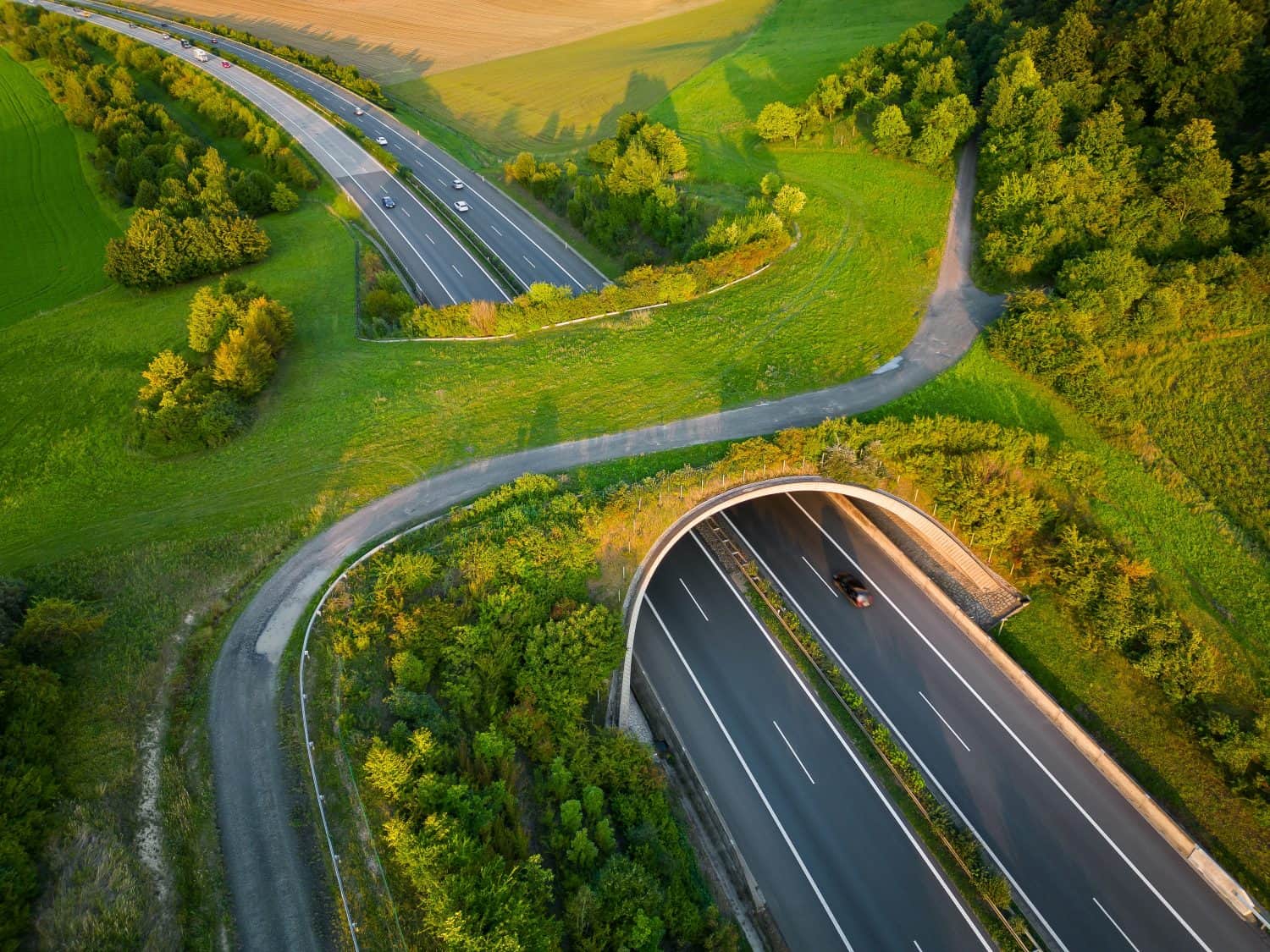
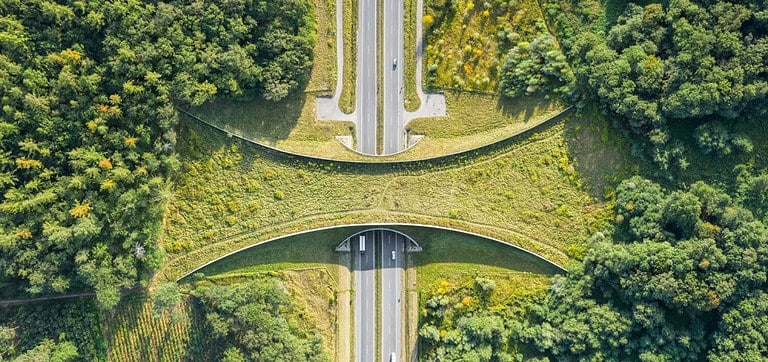
The United States used wildlife overpasses to help save drivers and animals from collisions.
©VOJTa Herout/Shutterstock.com
Currently, there are no plans in place to implement AI technology to reduce the number of vehicle and animal collisions in the United States. While the government admits there is an issue with the number of crashes that occur between wild animals and cars, other methods are being used to reduce the accidents instead.
In the U.S., there are an estimated one million incidents of vehicle and wild animal crashes each year. Of those collisions, 26,000 cause injuries, with 200 drivers and/or passengers dying annually from said injuries. Not only is this costly in terms of human and animal life, but there is also a yearly cost of $8 billion attached to these collisions.
Despite the U.S. recognizing there was an increasing problem with wildlife and vehicle collisions in 2015, it was not until 2023 that a bill was passed that allocated funding to attempt to reduce the deaths of both wild animals and people. The breakdown of money allotted to the states that have proven to have the most wildlife and car-related crashes includes:
| State | Project | Budget |
| Arizona | 17 miles of new fencing and installation of cattle guards | $24 million |
| Colorado | Construction of one overpass | $22 million |
| Vermont | Construction of one underpass | $1.6 million |
| Wyoming | 30 miles of new fencing and several underpasses and one overpass | $24.4 million |
In total, states around the nation requested $550 million in grants to battle the vehicle and animal collisions. However, there is only $350 million allocated from the $1 trillion infrastructure law that was passed to provide funds for these projects. While there are more states to be awarded grants in the future, there is just not enough funding to cover them all.
It is unclear if the U.S. has any interest in AI technology to combat the accidents that occur between motor vehicles and wild animals. With projects focused on overpasses, underpasses, and additional fencing to keep animals off the roads, the number of collisions will likely decrease. Whether it is as effective as the technology Australia has developed, however, remains to be seen.