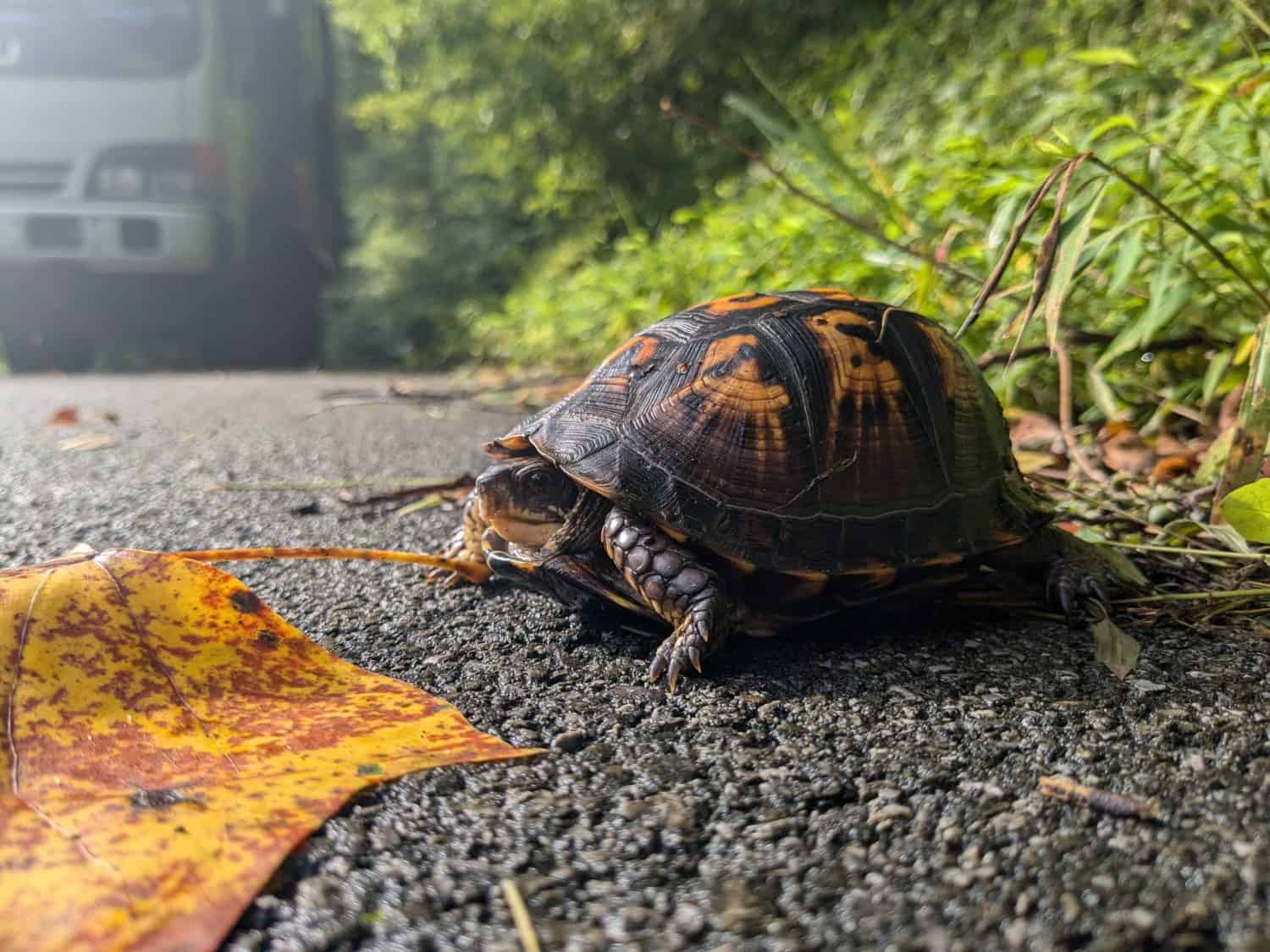

Quick Take
- Artificial lights near coastal roads trigger a reflex in sea turtle hatchlings that steers them straight toward the deadliest possible destination. Artificial lights and hatchlings →
- Putting a turtle back on the side of the road it came from seems safe, though doing so virtually guarantees it ends up in danger again. Where to release them →
- Picking up a turtle the wrong way can cause a permanent, painful injury, though most people don't realize they're doing it. Proper handling steps →
As temperatures rise, the turtle nesting season is beginning. There are several hundred species of turtles, but many of them nest in the summer and early fall. Many turtle species, including leatherback sea turtles, snapping turtles, and diamondback terrapins, have summer nesting seasons. In areas with a lot of human activity, nesting season produces plenty of hazards or outright dangers for pregnant turtles. That is why we have compiled a list of expert suggestions for what to do if you spot a turtle on the road during nesting season.
While sea turtles are the only reptiles known to migrate long distances specifically to lay their eggs on a favored beach, even freshwater turtles will travel considerable distances during nesting season. This allows females to find suitable areas in which to lay their eggs. Nesting season is often the most dangerous period of a turtle’s life, made even more precarious by the increasing number of roadways constructed through previously uninhabited areas. Turtle populations are declining across North America due to habitat destruction and fragmentation. This problem is exacerbated by the thousands of turtles killed each year by passing cars during nesting season. Let’s learn more about this critical window and what to do if you spot a turtle on the road this summer.
Saltwater Nesting Season
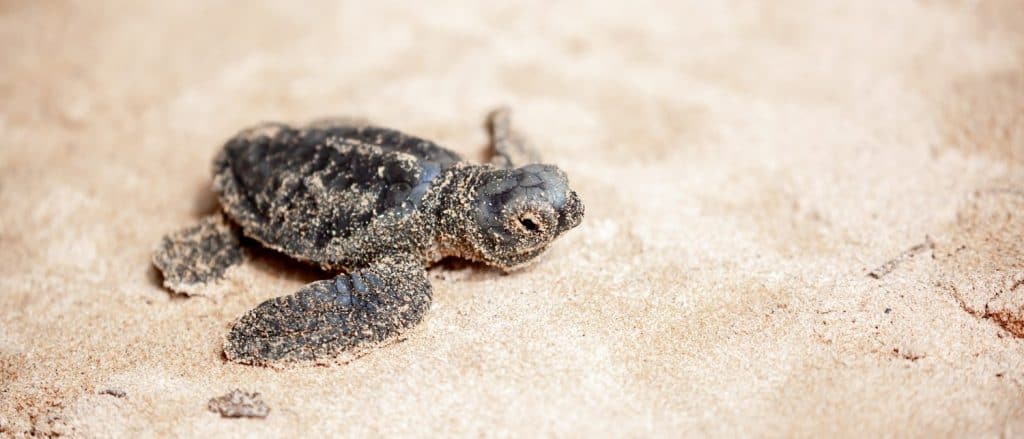
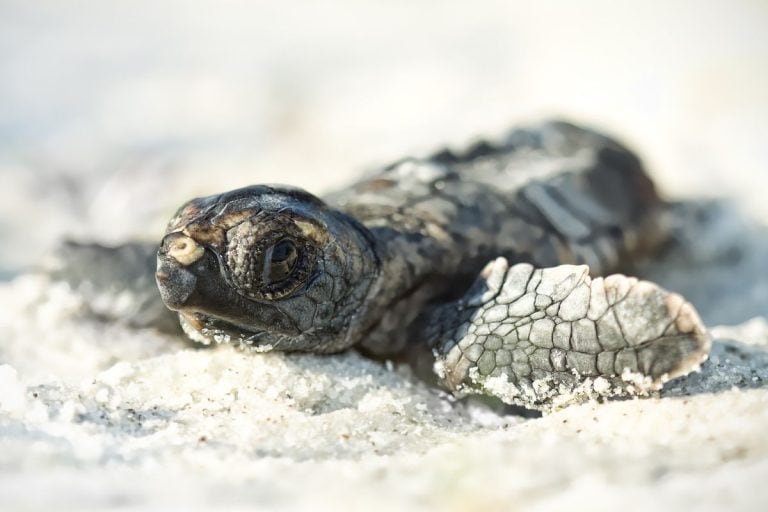
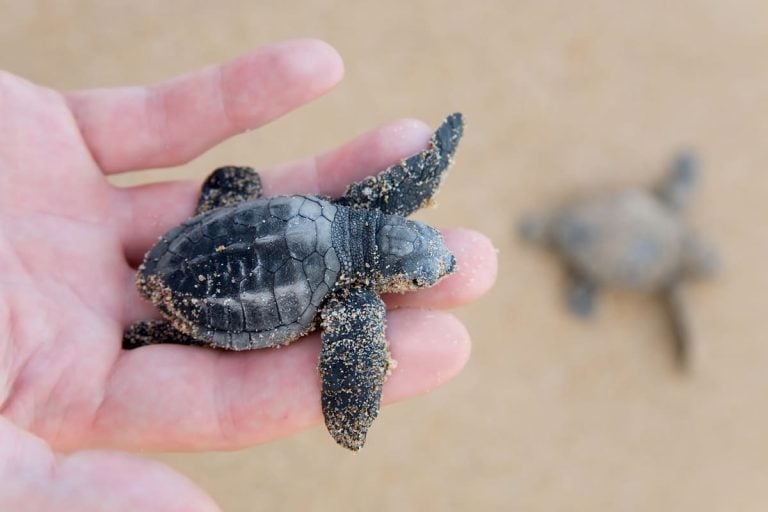
Sometimes, sea turtle hatchlings become confused by artificial lights and head inland instead of toward the ocean.
©Vera Larina/Shutterstock.com
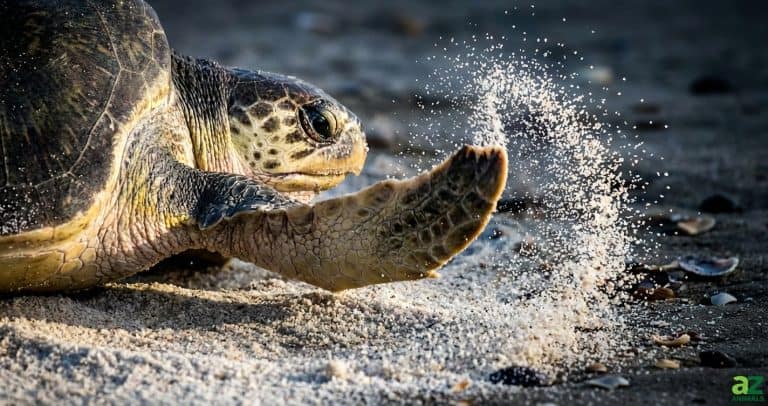
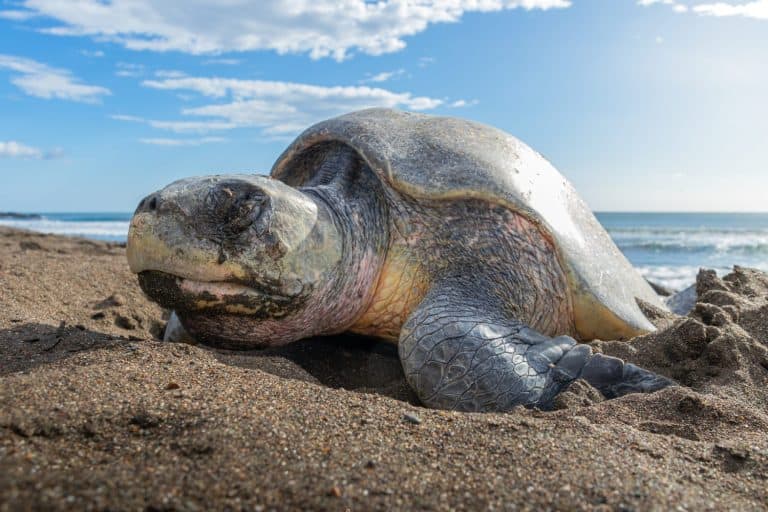
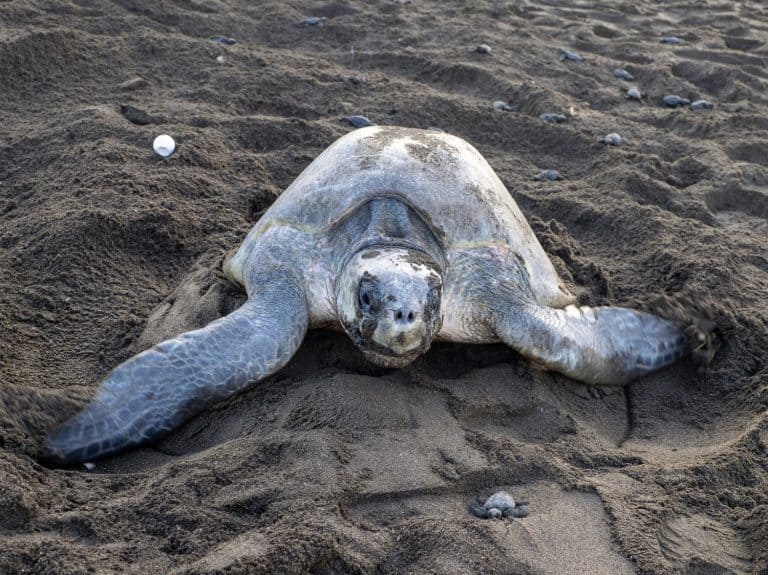
In late May, a million-year-old ritual begins: the nesting season of saltwater turtles. Like clockwork, pregnant female saltwater turtles return from all over to the specific region where they hatched decades earlier. Under the moonlight, they come to ground and traverse the beach to find a dry spot. There, they dig a shallow nest and lay up to 180 eggs. If successful, at least a dozen of those eggs will hatch simultaneously after about two months.
However, the hatching process is perilous and fraught with danger. In places along North America’s Atlantic Coast, such as the Chesapeake Bay, pregnant female sea turtles must sometimes cross dangerous highways to find the right spot for their eggs. Even if they manage to lay their eggs successfully, their young hatchlings can get confused by the artificial light from human settlements. This makes them crawl away from the ocean, often across highways, instead of toward the water.
Freshwater Nesting Season
Freshwater turtles also undergo nesting season during the summer. While saltwater turtle nesting season extends until October, freshwater nesting season typically ends in July. Starting around this time (late May), female freshwater turtles leave water sources and travel over land to higher-elevation areas with plenty of loose groundcover, such as soil, sand, clay, or even gravel.
This search for optimal nesting material can take pregnant female freshwater turtles up to half a mile away from their usual water source. Once they find a suitable spot, the turtles lay up to two dozen eggs and cover them with dirt as camouflage. After two months or more, the hatchlings emerge and head out to look for water. In some places, however, these hatchlings stay underground throughout the cold seasons until it is warm enough to search for a water source. Just like sea turtles, however, female freshwater turtles are in danger during their search for nesting grounds. Turtles are creatures of generational habit, which causes them to follow long-established nesting routes—even if a road now lies in their path.
Helping Crossing Turtles
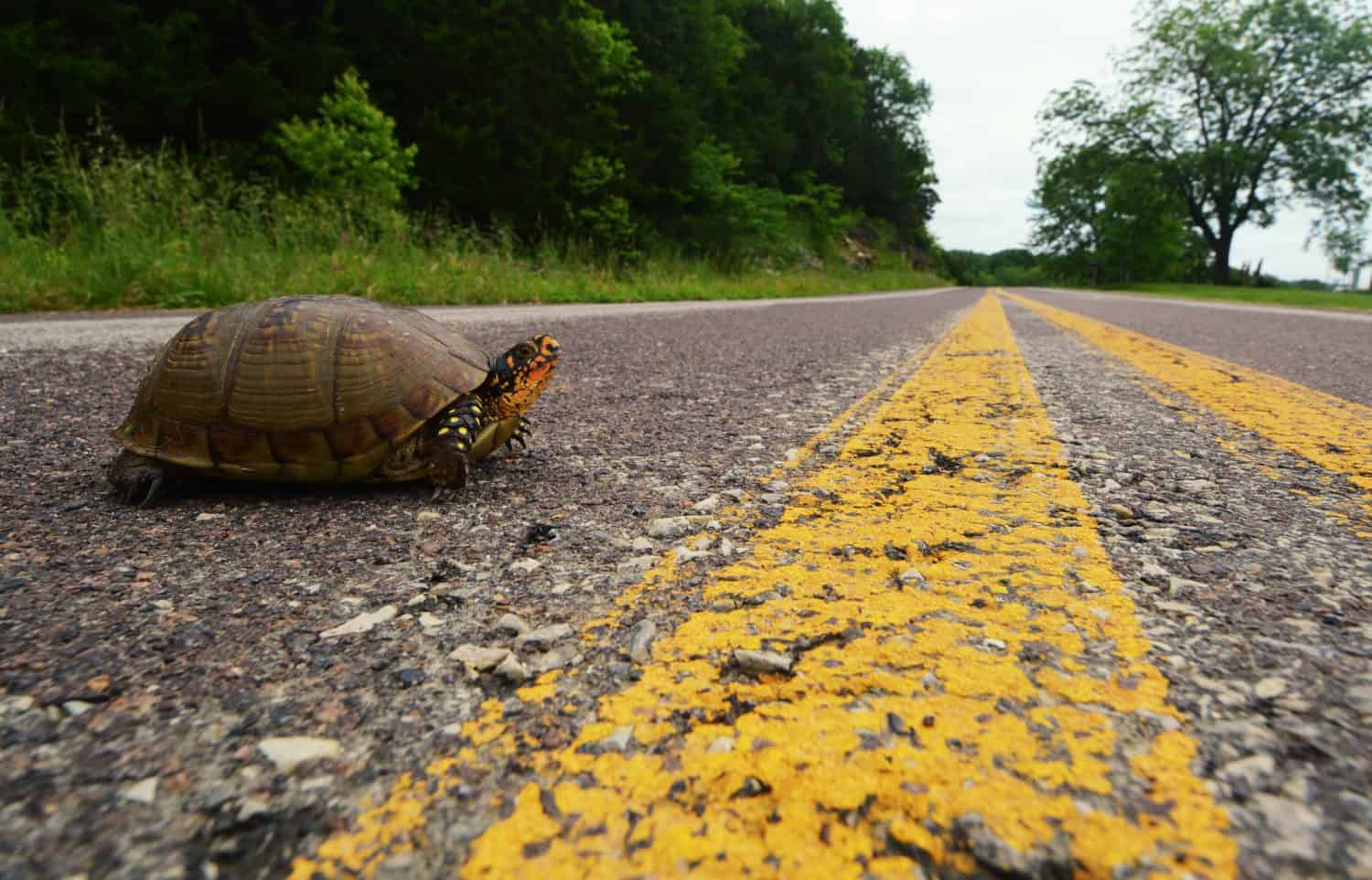
Passing vehicles kill thousands of turtles each year during nesting season.
©Aaron Rhoads/Shutterstock.com
Handling a wild turtle is a last resort. That said, if you find yourself on a roadway that is putting a turtle in serious danger, there are ways to help. First, be sure to pull your vehicle over in a safe location and put your hazard lights on. This will help signal to oncoming drivers that there is a situation to be aware of.
If the turtle is heading across the road, gently grasp it by the back of its shell. If it is a snapping turtle, avoid the front half of its body entirely. Use a mat, shovel, or another object to carefully lift the turtle. From there, be sure to move the turtle in the direction it was already heading. Nesting season drives the pregnant turtle’s behavior, so if you return it to the side it came from, it will simply try to cross the road again. Once you pick up a turtle, keep it low to the ground and never pick it up by its tail. This can cause serious injury by potentially dislocating their vertebrae.
Once you get it across the road, gently place it down in a safe place. Placing the turtle directly in water may seem helpful, but it can actually cause it to drown. Simply place the turtle on dry land and let it continue on its way. Afterward, be sure to report your sighting to your state’s Department of Natural Resources or another relevant agency.
State-Level Turtle Protection Efforts
The problem of turtles being run over during nesting season is so severe that several states have created specific programs to address it. Wisconsin, which has 11 species of turtle, deals with this problem every year. In response, the state established the Wisconsin Turtle Conservation Program. While wild animals should generally be left alone, many experts recommend helping pregnant female turtles cross roadways during the nesting period.
Few turtle hatchlings from a nest survive into adulthood. Even though turtles live long lives, they often take decades to mature. As such, turtle populations don’t recover easily. These reptiles are already vulnerable, so any assistance can go a long way if done correctly and conscientiously.