
Quick Take
- The road-wildlife crisis looks like a Keene quirk, yet the national price tag attached to it will stop you cold. See the national scale →
- The Jefferson complex salamander has a behavior that makes Jordan Road a near-perfect death trap, and volunteers are unable to fully counter it. Meet the species at risk →
- The tunnel solution isn't theoretical. A nearly identical project already exists in New Hampshire, and its track record is remarkable. See the Monkton Road results →
- New Hampshire has over 26,000 road-habitat intersections, and almost none were built with the animals crossing them in mind. So why did only one site get chosen? Find out how it was chosen →
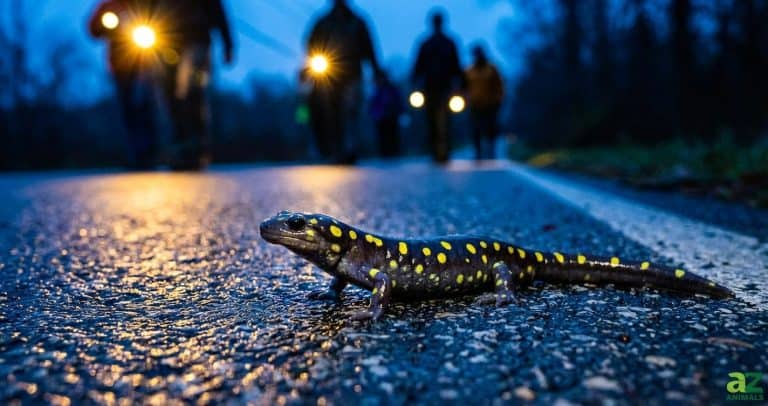
Each spring, in a small city in New England, a brigade of wildlife lovers takes to the streets after dark, armed with flashlights and the will to save as many tiny amphibians as possible. They focus their attention primarily on a single stretch of road, one that cuts through the natural migration route for the area’s frog and salamander populations.
For residents of Keene, New Hampshire, this is an annual tradition. The goal? To protect the area’s smallest wildlife during a critical period. And while each night during migration season can find upwards of 1,000 frogs and salamanders crossing busy Jordan Road, locals and conservation groups hope a construction change can reduce the need for human rescuers altogether.
Why Do Amphibians Cross the Road?
Amphibians like frogs and vulnerable Jefferson complex salamanders spend their winters underground in forests to survive the harsh and cold seasonal conditions. When the first warm, rainy spring night rolls around, they instinctively leave their protected sanctuaries to travel to nearby breeding pools.
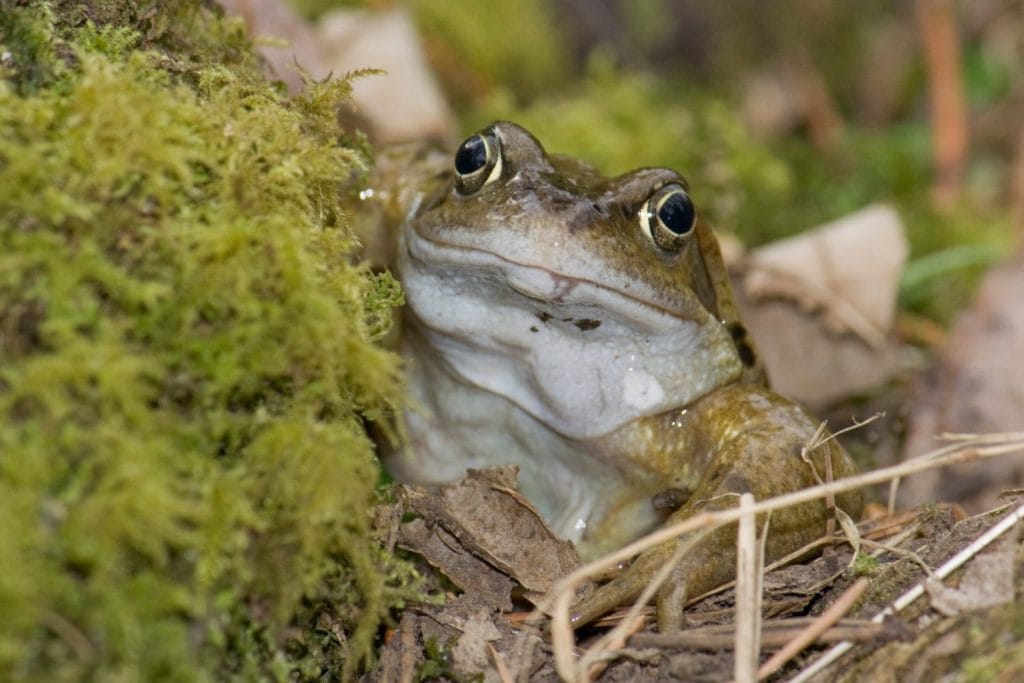
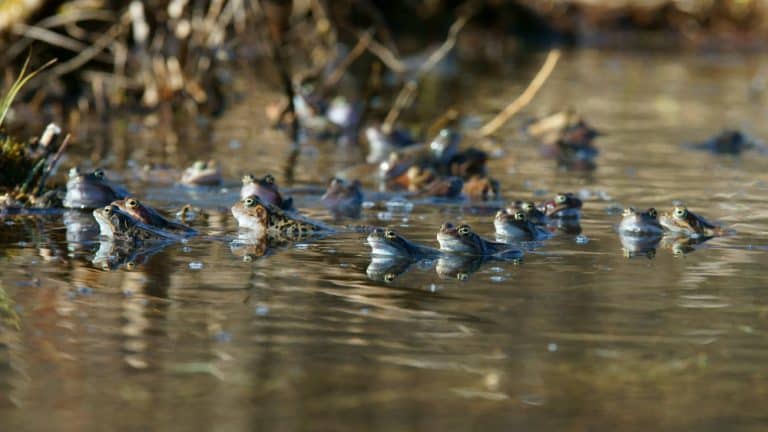
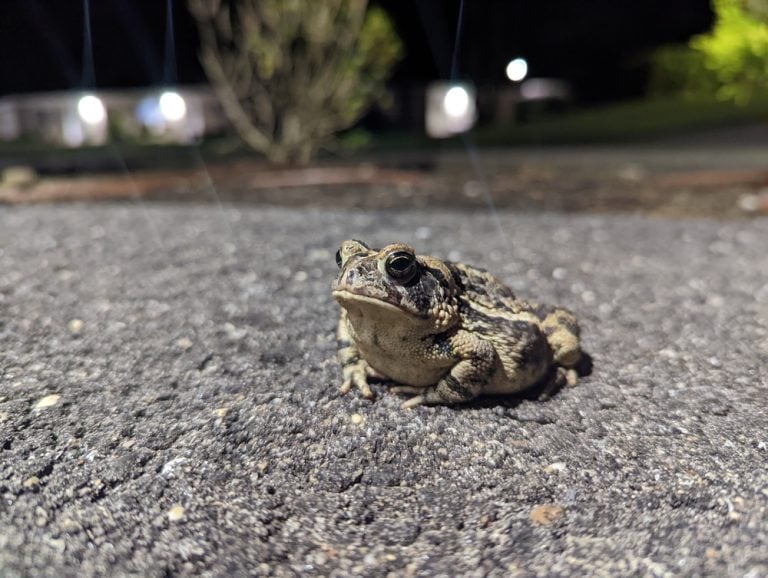
Each spring, thousands of frogs cross busy roadways during their migration to breeding ponds.
©Scott Cobb UK/Shutterstock.com
In the case of the amphibians that call the greater Keene area home, their underground bunkers and breeding pools are separated by a manmade threat – paved roadways. One in particular is Jordan Road, which cuts directly between the two habitats.
The amphibians have no choice but to attempt to cross the roadway, risking being crushed by oncoming traffic. Unfortunately, it can take the small frogs and salamanders several minutes to slowly make their way across the road. Adding to this, their habit of traveling after dark and in rainy conditions creates situations in which drivers cannot see the tiny creatures until it is too late.
Is New Hampshire Unique?
Keene is just one city in the state to face this dilemma. According to one news story, New Hampshire has an estimated 26,000 locations where roads cut through aquatic habitats. Most weren’t built with an eye toward protecting the wildlife that would need to cross the manmade structures.
But New Hampshire is not unique. The interruption of animal migration routes by roadways is a global problem. In fact, one to two million crashes a year in the U.S. alone are attributed to driver-wildlife interactions, causing about eight billion dollars in damages.
The issue puts vulnerable species especially at risk. That’s the situation in Keene, New Hampshire, where the Jefferson complex salamander lives.
Meet the Salamanders At Risk
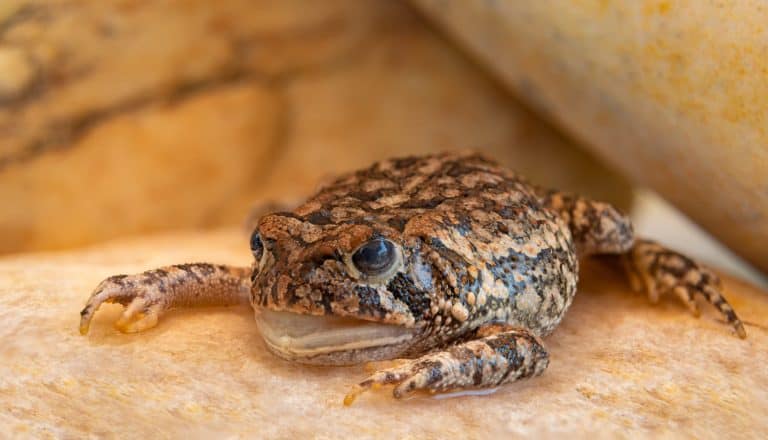
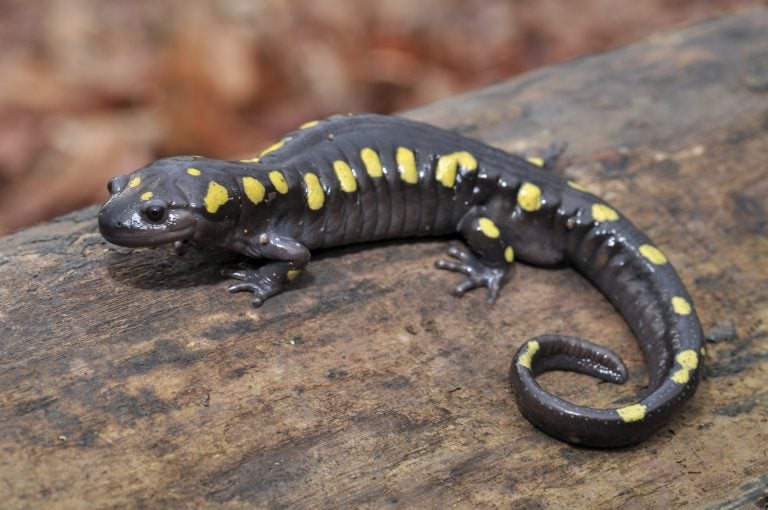
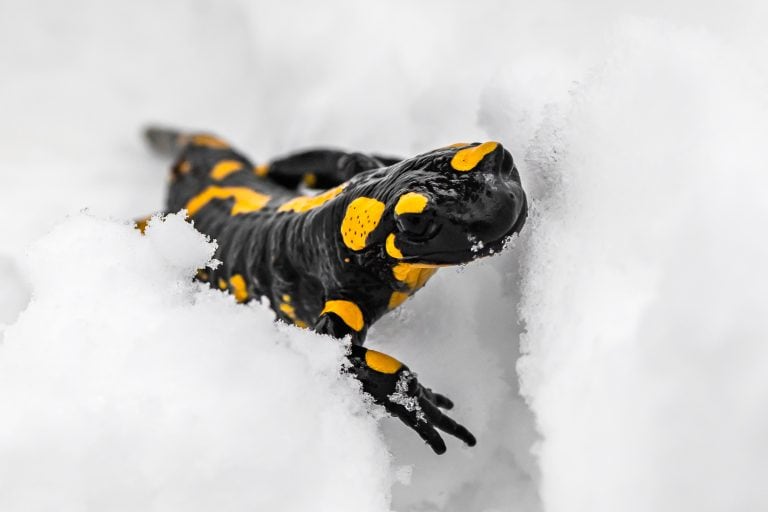
The Jefferson complex salamander is actually a group of closely related salamanders that all live in New Hampshire. The group is listed as a “species of greatest conservation need” in the state, and they congregate almost exclusively on Jordan Road.
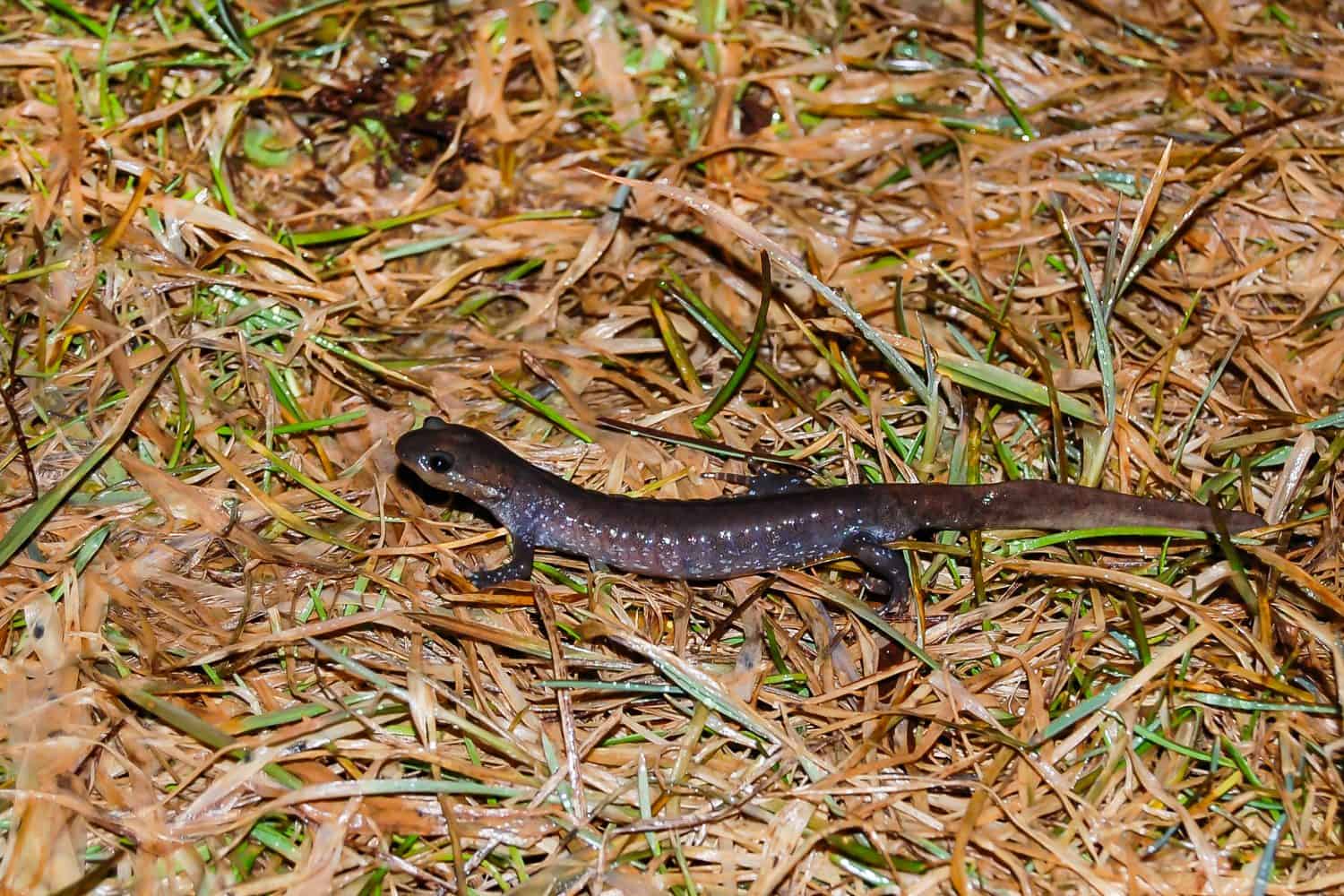
The Jefferson complex salamander is a vulnerable species in New Hampshire.
©Jay Ondreicka/Shutterstock.com
Over the past 18 years, between 2008 and 2025, volunteers have helped nearly 4,000 migrating amphibians, including the vulnerable salamanders, cross Jordan Road safely. Unfortunately, not all amphibians survived; volunteers also recorded nearly 500 that were killed by cars.
When volunteers turned to the state for help, New Hampshire’s Fish and Game department requested a list of sites with an at-risk species and a large enough number to matter. The Harris Center for Conservation Education, a non-profit environmental group in the state, provided the answer – Jordan Road and the Jefferson complex salamander.
The Plan For Protection
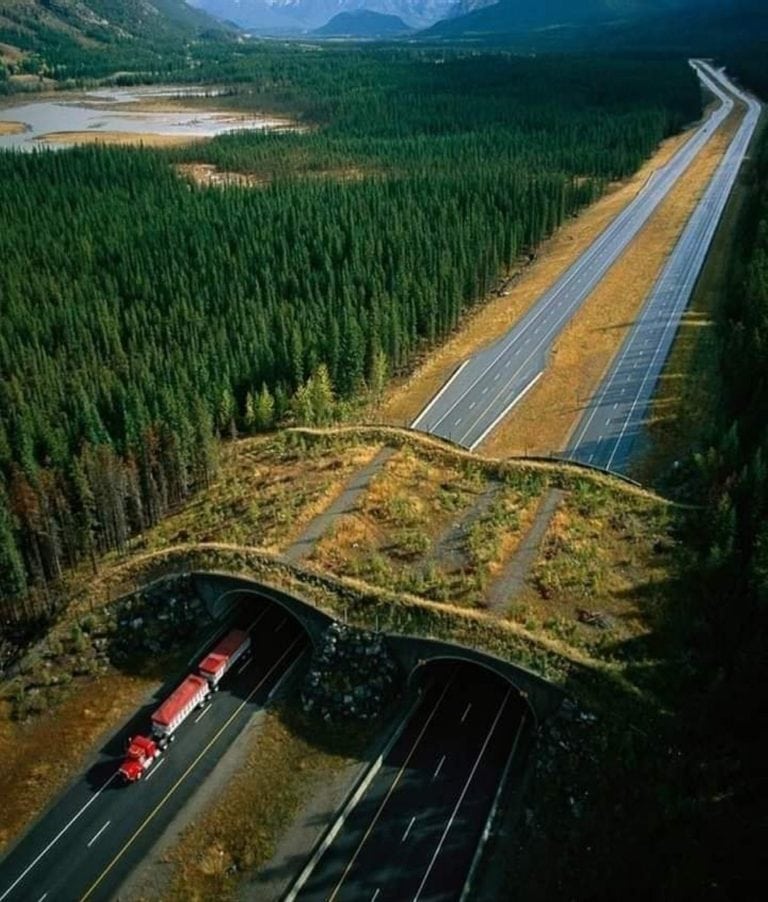
The state determined that a series of underground animal crossings would be the most effective approach to solving the Jordan Road issue. A series of fences would be installed along the roadsides to keep animals from wandering onto the roadway. Those fences would guide animals towards two to three underpass tunnels designed specifically for them.
The idea was inspired by existing animal underpass crossings already in place along other New Hampshire roadways. However, this project would be designed specifically for the smallest migrating animals. It is being modeled after a project on Monkton Road, about 100 miles northwest of Keene. Those tunnels have cut amphibian deaths by 80 percent since they opened in 2015.
“Just like we need to go to the grocery store or the doctor . . . animals have the equivalent,” said Brett Amy Thelen, science director at the Harris Center, in a recent news story announcing the project. “They need to be able to move across the landscape to find food, to access different habitat at different times of year. Even when there’s conserved land on both sides of a road, roads interrupt that ability to move across the landscape. They create a barrier.”
Once complete, the tunnels will greatly reduce the need to close Jordan Road at night during migration season and relieve volunteers of the task of hand-carrying amphibians to safety.
How Far Along Is the Project?
The idea is still in the design phase, with construction targeted to begin in mid- to late 2027. The goal is to have the tunnels ready for the spring 2028 migration.
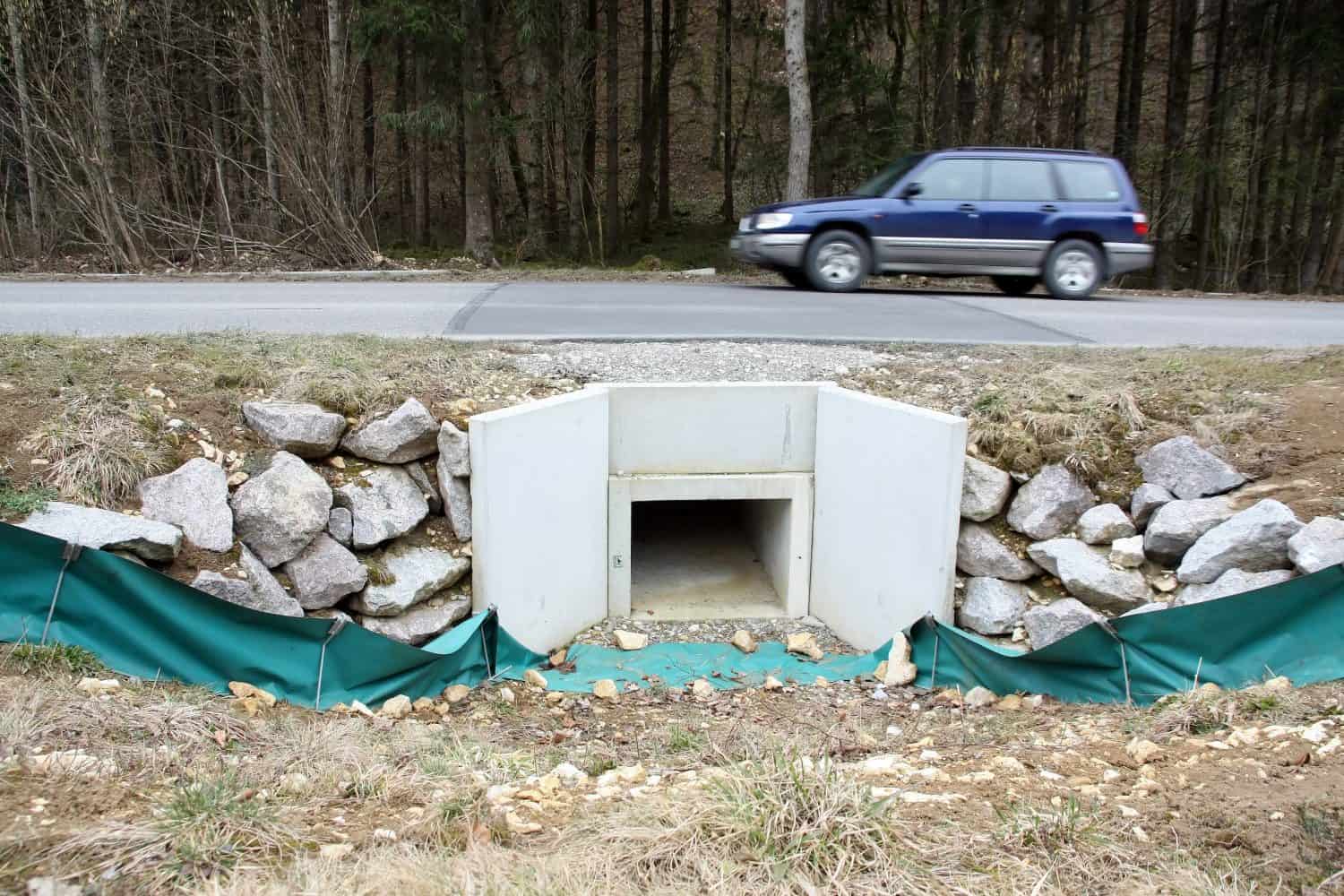
An example of a frog crossing tunnel.
©YueStock/Shutterstock.com
Keene received a $375,000 grant to fund the project. The funding comes from the National Fish and Wildlife Foundation, which is also sponsoring crossings elsewhere in the state, including several for turtles. The city is also required to contribute an additional ten percent. The city council approved the arrangement in December 2025.