
Quick Take
- Some leeches hunt and devour prey in a way that technically still qualifies as fluid feeding, and the mechanism behind it is stranger than you would expect. See how they feed →
- Blood-sucking leeches split into two groups that use completely opposite strategies to stop your blood from clotting. Explore the two strategies →
- Some leeches skip humans entirely and target a host you'd never suspect, with their prey occasionally including other leeches.
- A leech can range from barely a quarter-inch to nearly a foot long, and size is far from the only thing that varies wildly between species. Discover leech anatomy →
Leeches have a reputation as bloodsucking creatures, and that has not exactly helped their popularity. But there are many leeches out there that do not suck blood at all. Let us walk you through the fascinating world of the leech diet!
What Exactly Are Leeches?
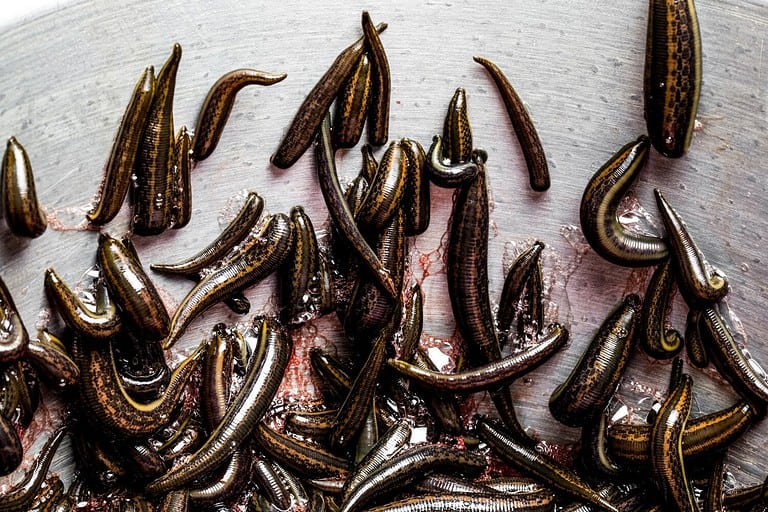
Leeches belong to the Hirudinea subclass and are a type of annelid or segmented worm. They are related to earthworms but have a specialized anatomy and behavior. There are hundreds of species, and their length can vary from 0.27 inches to 11 inches. They are bilaterally symmetrical, with thick muscular bodies that taper towards the head. Some are long and thin, but others are pear-shaped and broad.
Most leeches live in freshwater, but some live on land (terrestrial leeches), and some live in the sea (marine leeches). They can be found in all seas and on all continents, except terrestrial Antarctica.
Leeches Feeding on Blood
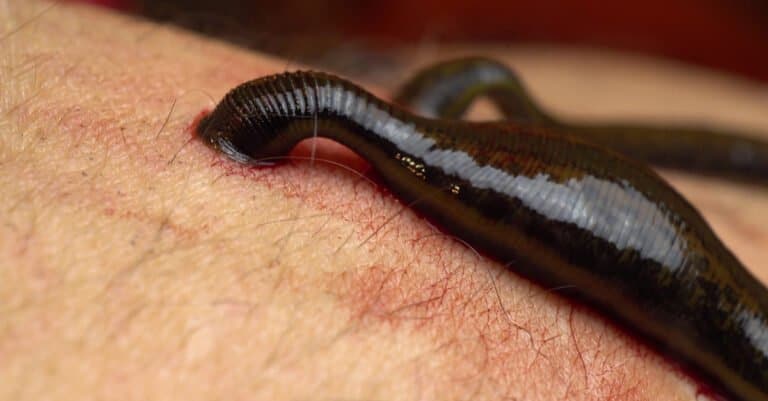
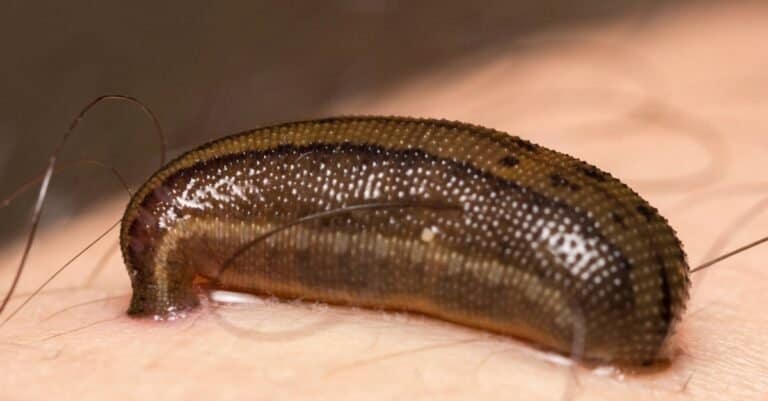
By far the most well-known leech meal is blood! Many leeches are sanguivorous, which means that they are blood-sucking parasites. Each species has a preferred host, which could be mammals (including humans), fish, frogs, turtles, or birds. Some leeches even suck blood from other leeches!
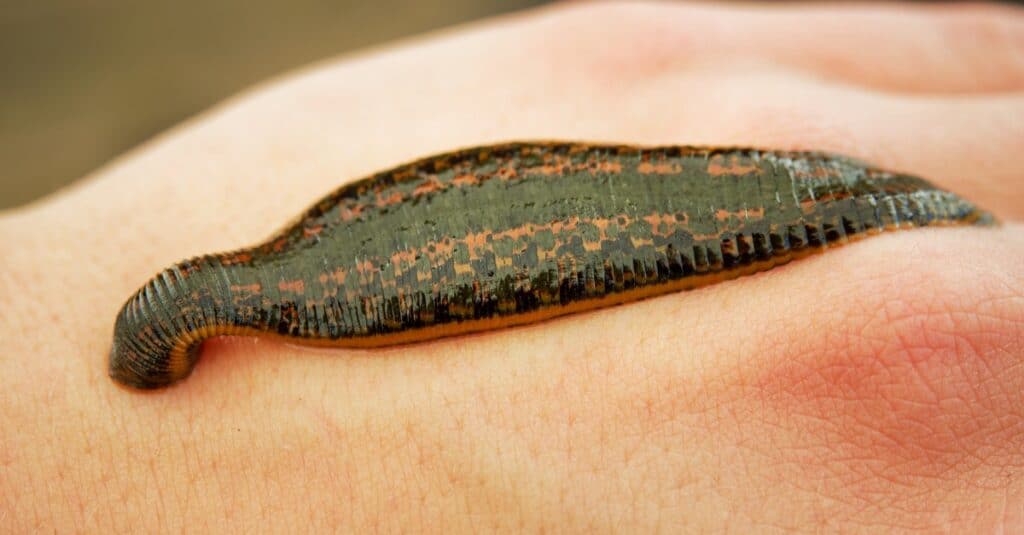
Some blood sucking leeches have jaws.
©Martin Pelanek/Shutterstock.com
One group of blood-sucking leeches is the jawed leeches or Gnathobdellida. They have jaws containing teeth, which they use to bite their host. Then, they produce a secretion called hirudin, which stops the blood from clotting as they feed. The second group of sanguivorous leeches is the jawless leeches or Rhynchobdellida. They insert a needle-like protrusion called a proboscis into the body of their host. This group produces an enzyme, called hematin, which dissolves clots once they have formed. This group tends to suck the blood of worms and freshwater snails.
Which Leeches Don’t Suck Blood?
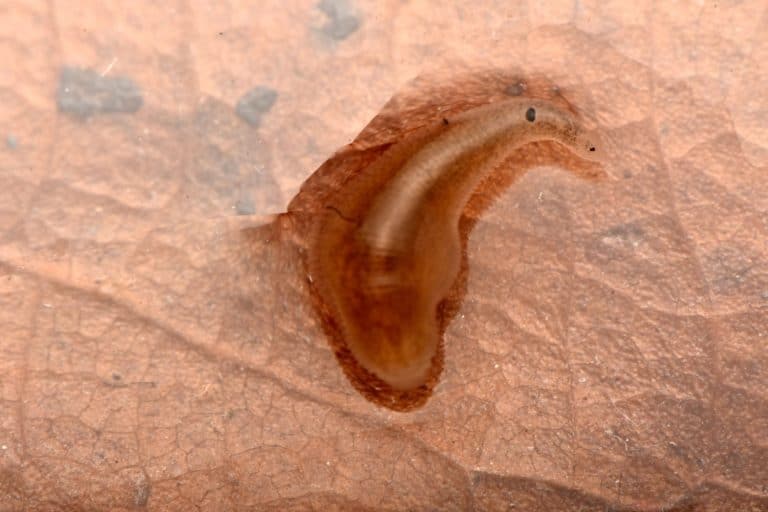
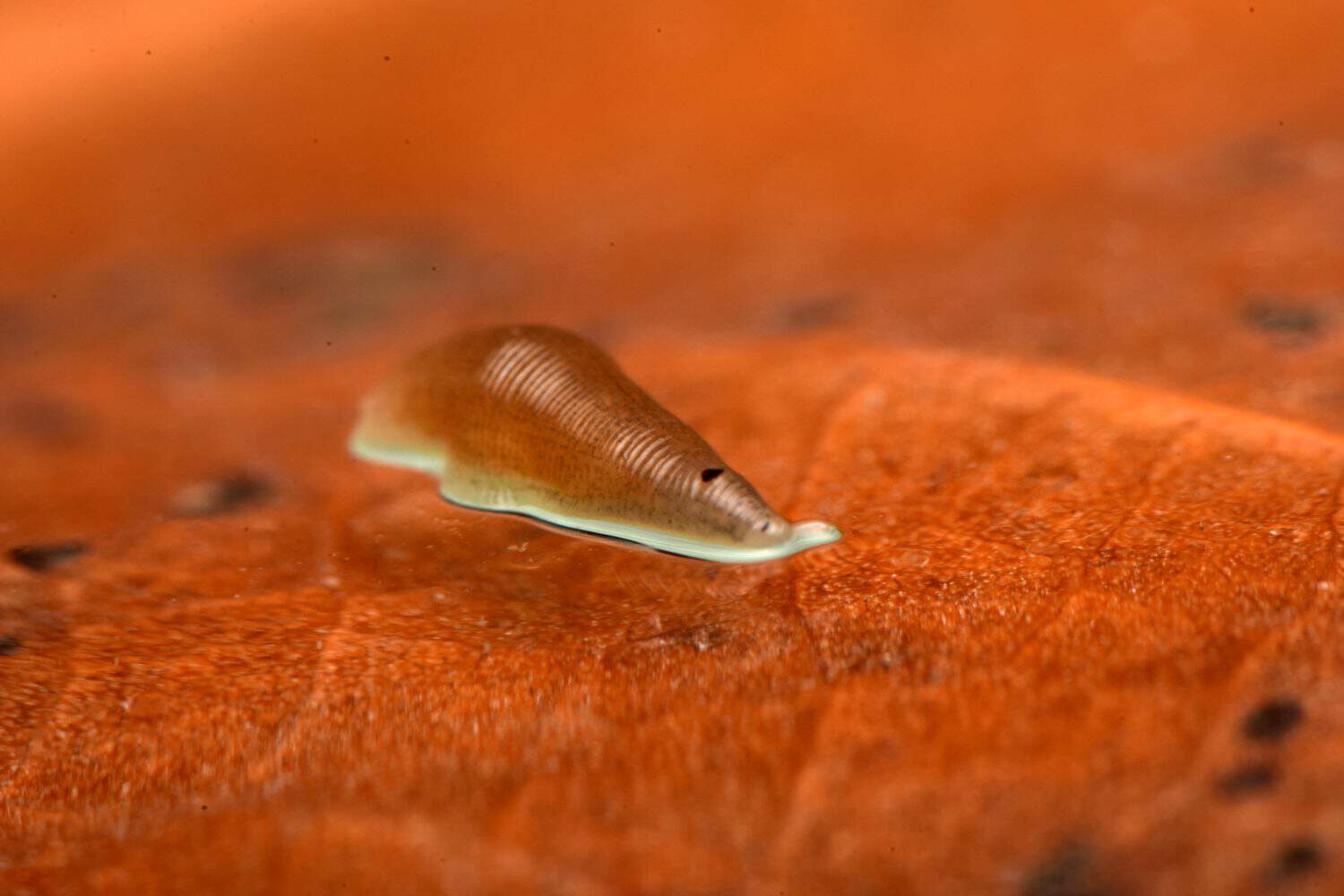
The worm leeches or Pharyngobdellida, don’t suck blood at all. They don’t have any jaws or teeth but are still carnivorous. Their diet consists of small invertebrates, which they swallow whole. Their prey can include small fly larvae, tiny crustaceans, and filter feeders. Even though these leeches swallow their prey whole, they are still considered fluid feeders because they suck out the ‘juice’ of the prey, either vomiting up or excreting the rest of the body!