
With their infamous bloodsucking reputation, leeches inspire both fear and fascination. But how do they actually find and attach to their hosts? This deep dive explains the incredible sensory adaptations leeches use to detect warmth, vibrations, and even chemicals in the water to zero in on prey and hosts. After reading this, you will have much more respect for them!
Leeches Are Misunderstood
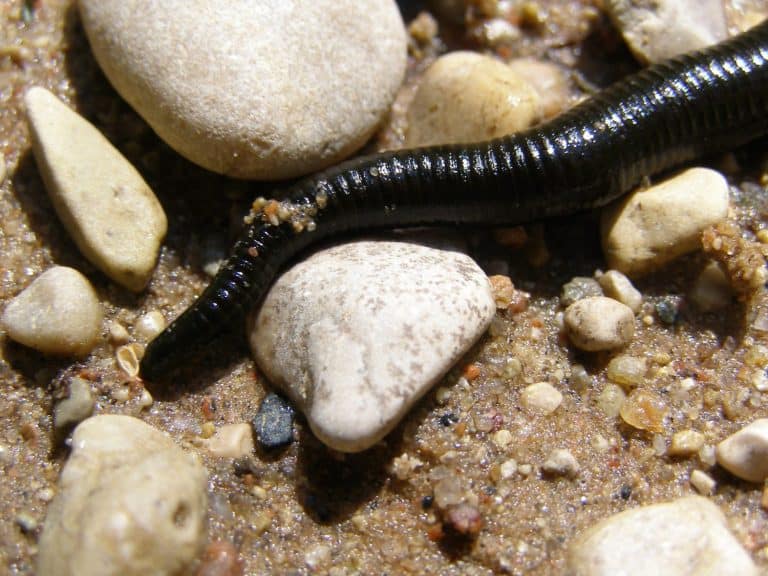
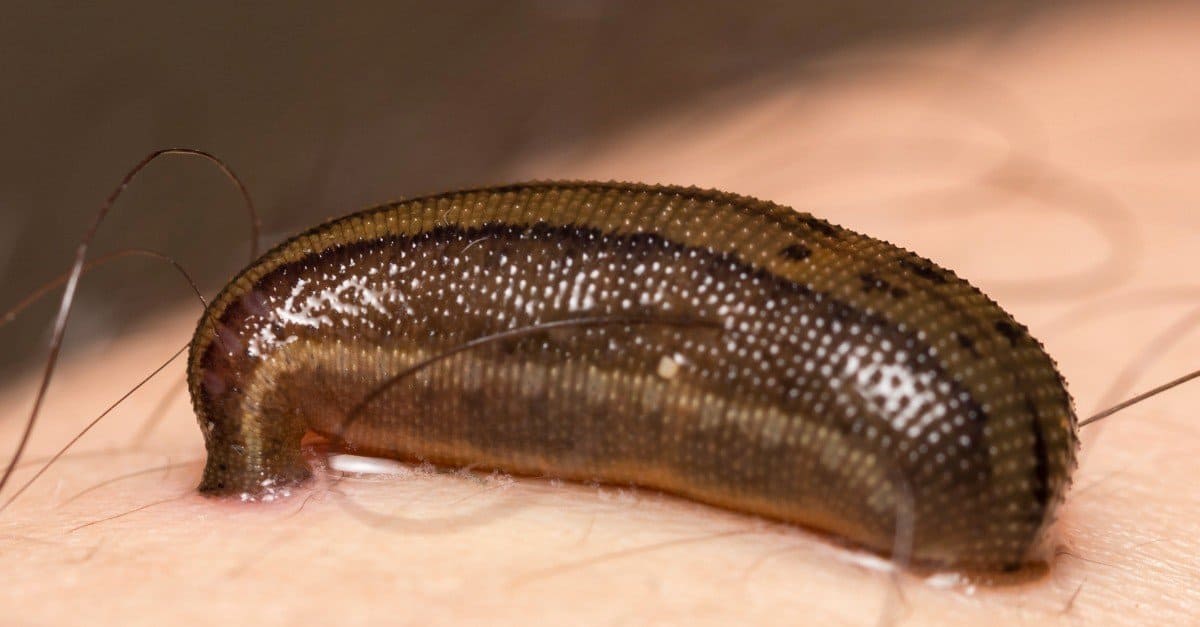
Most people think that all leeches are black, slimy, and scary because they latch onto us and suck our blood. This may be an accurate description of some of them, but there is far more to leeches than this stereotype. There are more than 700 species of leeches, and they are a varied group in terms of where they live, how they feed, and what they look like. These extremely successful parasitic or predatory worms (related to earthworms) are found on all continents except Antarctica. They need a watery or at least moist habitat to survive, so they live in freshwater (rivers, lakes, etc.), seas, and swamp-like ecosystems. The presence of certain leech species in an ecosystem can indicate good water quality, as some are sensitive to pollution.
Leeches have soft, muscular, segmented bodies that can lengthen and contract. The medicinal leech has a single brain but also a chain of 32 segmental ganglia—clusters of nerve cells in each body segment—that help coordinate its movements and sensory input. Let’s take a closer look at the receptors that leeches use to make sense of their habitats. Their success in finding prey and hosts in such unfavorable conditions is partly due to their excellent senses.
Leech Senses
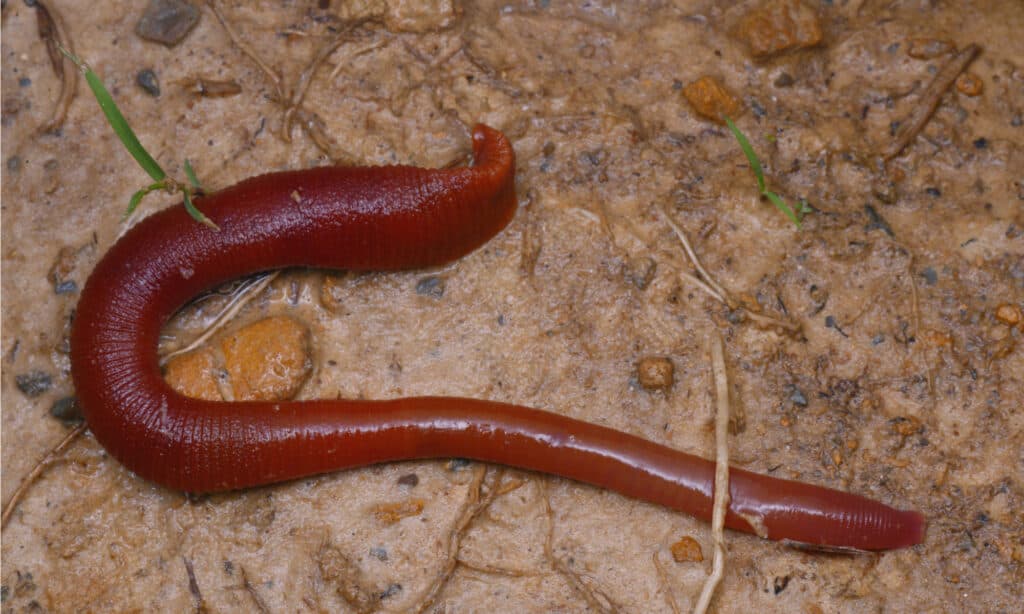
The leech has several sensory structures.
©SIMON SHIM/Shutterstock.com
Leeches have a number of sensory structures that they use to find potential hosts so that they can feed on their blood. They combine sight, chemical reception, thermoreception, and vibration (sound) reception to build up a complete picture of what is around them using their nervous system. The medicinal leech has a single brain but also a chain of 32 segmental ganglia—clusters of nerve cells in each body segment—that help coordinate its movements and sensory input. Let’s take a closer look at the receptors that leeches use to make sense of their habitats.
Photoreceptors
A photoreceptor is what the leech uses to see. The receptor detects light, which triggers a nerve impulse to their nervous system via neurons. Leeches have simple eyes made up of small photoreceptors. For example, the medicinal leech has five pairs of eyes, each with about 50 photoreceptors. Mostly, the eyes are located at the front of the leech and around the head, but the exact number and arrangement differ between species. Some have eyes in their posterior suckers! Most leeches have theirs located on their upper (dorsal) surface.
Even though they are unlikely to form high-resolution images, leeches can probably distinguish between light and dark, as well as some movement. The photoreceptors within the eyes have different thresholds and aggregate their signals to give a combined output from the eye. Having many photoreceptors together allows leeches to better distinguish differences in light intensity.
Chemoreceptors
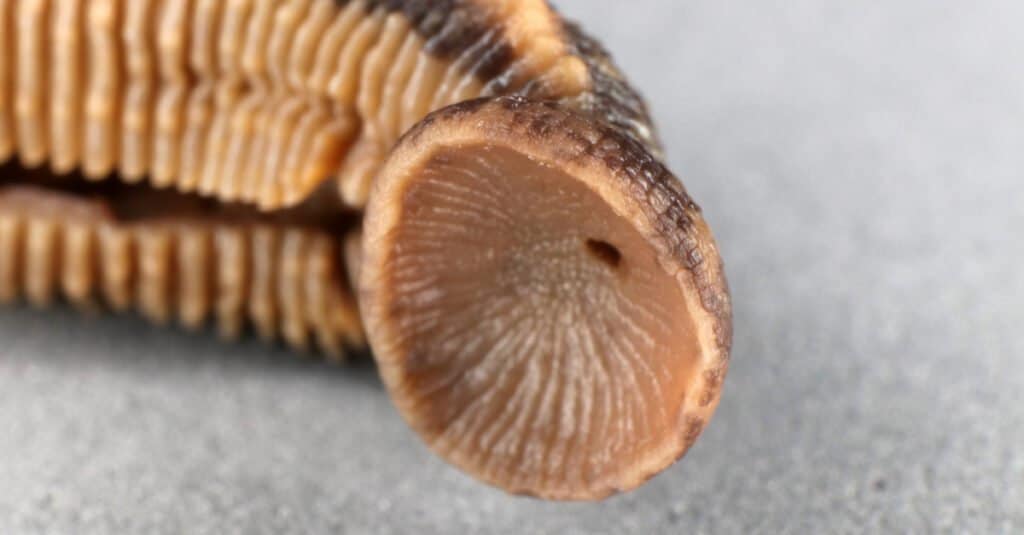
Leeches locate hosts through carbon dioxide detection.
©photowind/Shutterstock.com
Special receptors allow leeches to detect chemicals released by potential hosts and even by predators. These receptors are found in structures called sensilla, within which there are sensory neurons that gather information about the environment. Under an electron microscope, they look like disc-shaped small pores. Sensilla are often located along the length of their bodies, but may also be concentrated toward the rear end. Using these receptors, leeches can detect carbon dioxide given off by a potential host and head toward their next meal. Leech behavior in the presence of chemical stimulation is particularly interesting. When they detect chemicals, leeches reduce their movement and stop more frequently to probe the water.
Mechanoreceptors
Mechanoreception is the ability to detect vibrations (sound) in air or water. Mechanoreceptors are generally located toward the rear of the leech, and some are quite large. For example, Hirudo medicinalis has special types of hairs (called S hairs) that can detect water currents. Studies have also shown that medicinal leeches detect low-amplitude surface waves.
Mechanoreceptors vary by species. A predatory leech called M. Montezuma uses its mechanoreceptors in a way similar to passive sonar to detect prey while swimming. It has particularly large receptors with numerous sensory hairs, so it can detect variations in vibration frequency. Another leech species, Erpobdella punctata, does not have large sensilla and does not rely on mechanoreception for prey detection.
Thermoreceptors
There is evidence that some leeches can detect heat and head toward it, as it indicates a warm-blooded animal nearby that they can feed on. There is also evidence that leeches move to warmer places after they have eaten. Thermoreception in leeches is determined by a complex reflex action that involves several neurons (receptor, motor, trigger, and interneurons). Not all leeches feed on blood, so not all of them are attracted to warmth.