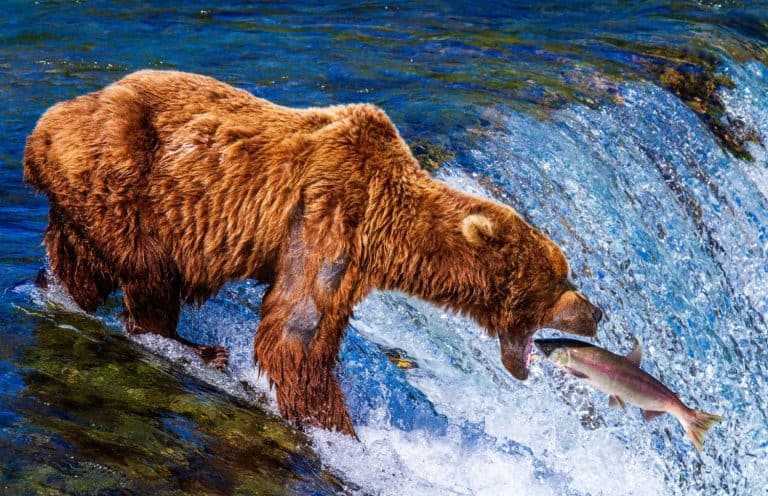
This glorious Instagram post shows three brown bears fishing at Brooks Falls in Katmai National Park and Preserve. You have to admire how deftly they snatch the leaping fish as they fling themselves up the waterfall. One of them, a true expert angler, grabs a fish right out of the air. The other two move their heads from side to side, waiting for their chance. Let’s explore this behavior in more detail.
What Type of Bears Are These?
These are brown bears (Ursus arctos) who live in a coastal area and have access to salmon as a food source. Large males can weigh over 1,000 pounds in the fall when they are eating a lot in preparation for hibernation. They stand at around 3 to 5 feet tall at the shoulder.
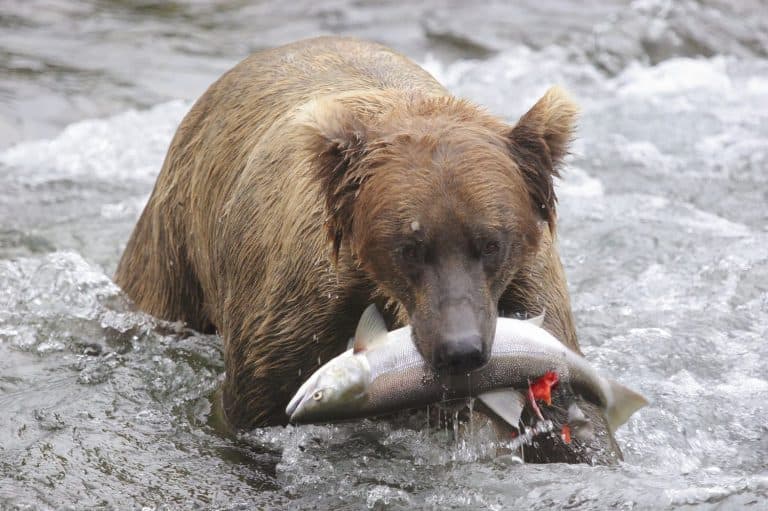
These bears are fishing for salmon along the Brooks River in Alaska. They must consume large quantities of food to prepare for hibernation. Salmon begin arriving at Brooks River in late June to early July, and by this time, many are already in spawning condition. Brooks Falls is a well-known spot where bears gather to catch these migrating salmon as they leap the falls. Salmon is a high-calorie meal for a bear. A sockeye salmon contains about 4500 calories.
Bear Fishing Technique
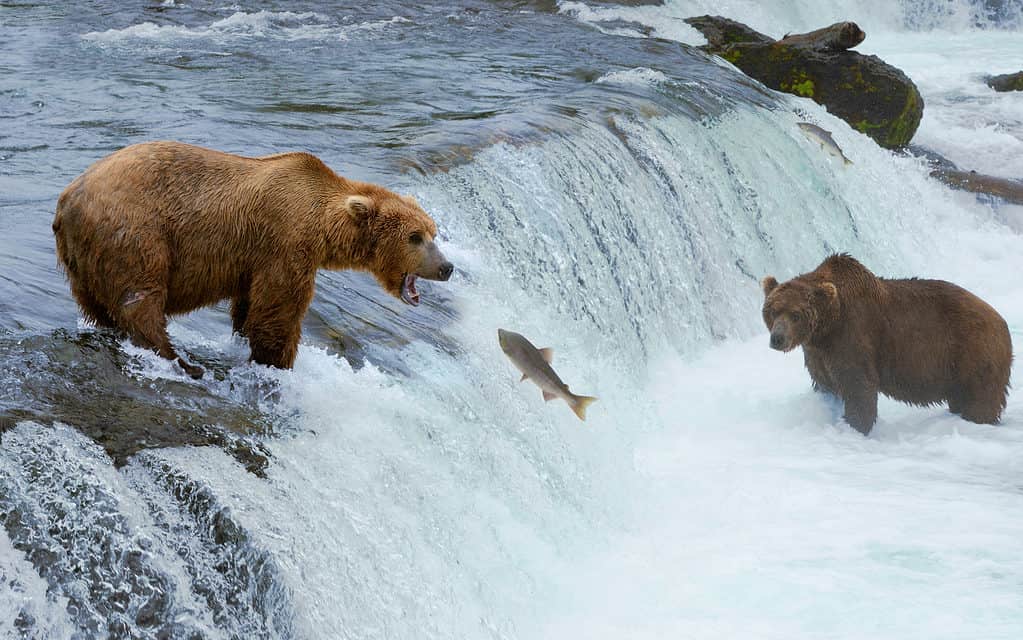
Bears defend their position at waterfalls.
©Michal_K/Shutterstock.com
Bears that live near salmon-rich rivers and streams become experts at fishing. Bears in other areas choose alternative types of nutrition. Fishing techniques are a learned behavior and are likely passed down from mothers to their cubs.
The bears in this clip are using the ‘stand and wait’ technique. They stand at the top of the waterfall and scan the water for leaping salmon. When a fish jumps out of the water, they grab it using their paw or mouth. This technique is generally used by adult bears because they will need to defend these popular fishing spots where the salmon leap most often. If there is space, younger bears will try to sneak in. However, this can be risky because the water is fast-flowing, and if a bear loses its footing, it may fall off the waterfall.