
Quick Take
- Bobcats have found a hidden network inside cities that lets them move miles without ever crossing a road, and this network has been there all along. See how they travel →
- A 6-foot backyard fence sounds like solid protection, but bobcats treat it as barely a suggestion. Check fence limitations →
- Bobcats are thriving in U.S. cities, yet most urban residents have never seen one, and their secret goes beyond mere shyness. Discover their urban secret →
- Trail cameras are catching bobcats doing something researchers didn't expect to see inside city limits. See the camera footage →
Bobcats can be found from Mexico to southern Canada. They are in every U.S. contiguous state, except for Delaware. However, they are famously elusive and will go to great lengths to avoid humans, even when they are living in urban or suburban areas. The best way to spot a bobcat is on trail cameras, where footage gives us clues as to how this wild cat navigates human-dominated terrain
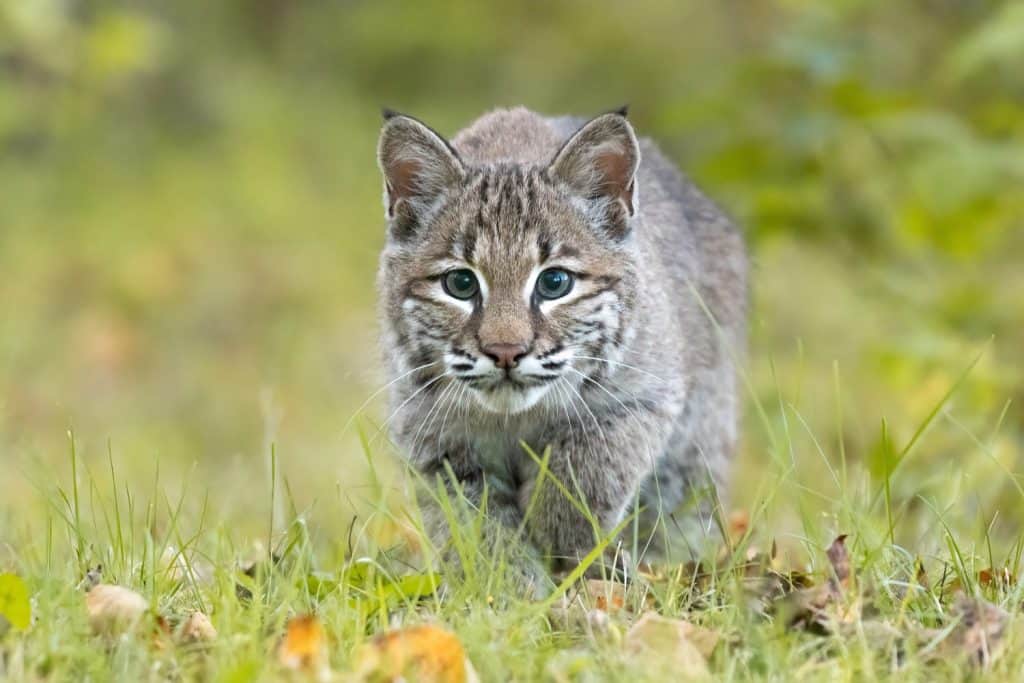
Bobcats can be found in 47 states in the United States.
©Travis Potter/Shutterstock.com
What Is a Bobcat?
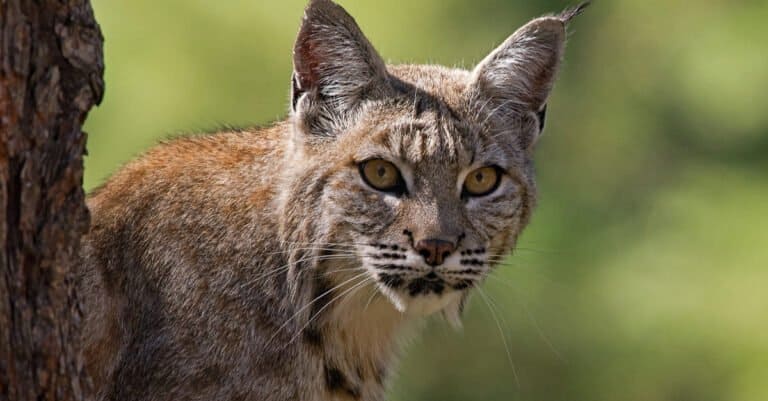
Bobcats (Lynx rufus) are medium-sized wild cats, about twice as large as housecats. They are much smaller than mountain lions, and have tufted ears and a short tail. They are sometimes mistaken for Canada lynx. However, unlike the adaptable bobcat, lynx are only found in wilderness areas.
According to the National Park Service, there are around one million bobcats in the United States. Bobcats are both carnivores and scavengers. They mainly prey on small animals but will sometimes hunt larger animals, including domestic livestock. They travel from two to seven miles per night, hunting for food and protecting their territory.
Why Bobcats Are Thriving in Urban and Suburban Areas
According to The Nature Conservancy, bobcat sightings have increased over the past few decades. This is mainly due to a population rebound combined with a loss of the bobcat’s habitat. As protections for bobcats helped the species recover from its low numbers in the 1970s, the loss of natural habitats has driven them to adapt to living in more populated areas.
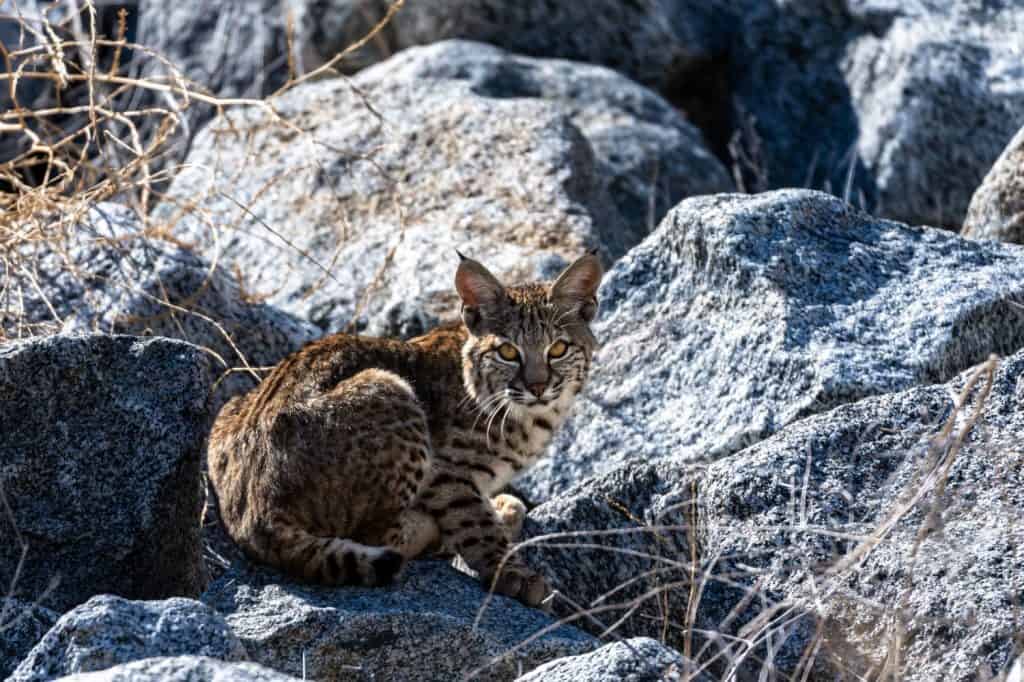
Bobcats are shy and secretive.
©Wirestock Creators/Shutterstock.com
Bobcats followed their main source of prey (mice, rats, squirrels, raccoons, and rabbits) into residential neighborhoods and even urban parks. However, unlike other wild animals such as raccoons, which may move into people’s attics and ransack their trash, bobcats are secretive and tend to stay hidden from sight.
How Bobcats Navigate Human-Dominated Landscapes
Another study on bobcat behavior from Dallas revealed that although bobcats have moved into urban areas, they still do their best to avoid people. Bobcats tend to roam in undeveloped woodlands, parks, and golf courses within city limits. The researchers in Dallas tracked the movement of wild bobcats and discovered that the elusive cats were using creek beds and river systems to travel, thereby avoiding roads and busy neighborhoods.
Texas Parks and Wildlife Department biologist Richard Heilbrun, a coauthor of the study, told Texas Parks & Wildlife Magazine, “Our urban areas are not 100 percent concrete. There is nature all amongst where we work and where we play.”
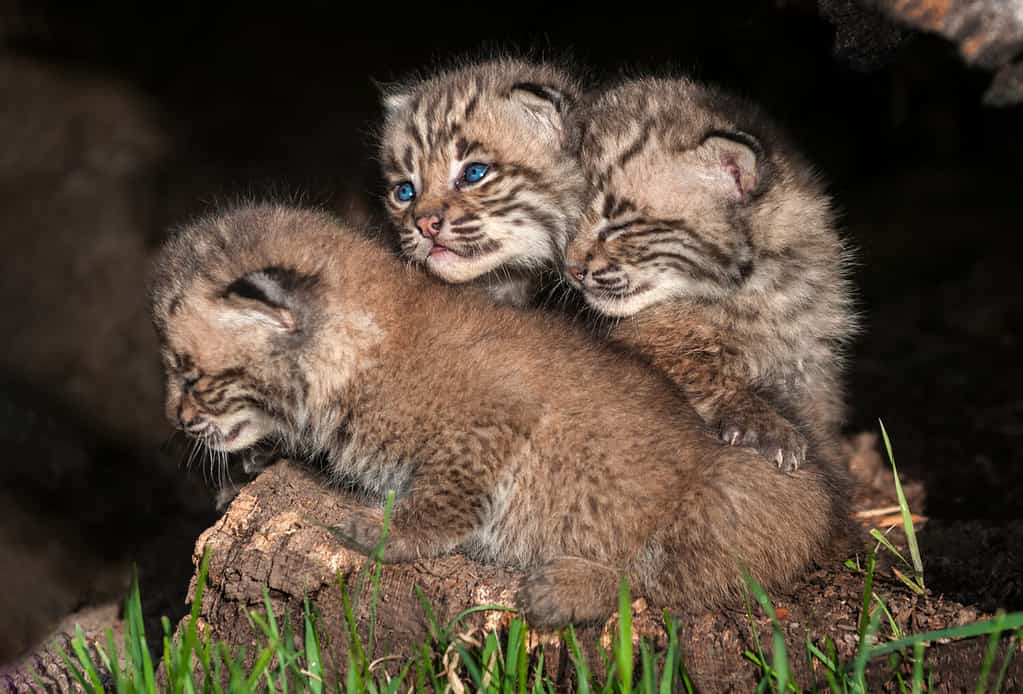
Bobcat kittens stay with their mother up to one year.
©Holly Kuchera/Shutterstock.com
Research has also found that bobcats shifted their behavior to become more nocturnal in populated areas. By sticking to quiet routes and only coming out at night, bobcats are adept at avoiding detection by people, making it possible to live among us without many ever even spotting one.
What Trail Cameras Reveal About Hidden Bobcat Behavior
Bobcats are likely to spot you first and will either stay hidden or move away. Your best bet to observe bobcats in the wild is by watching trail cam footage. Wildlife enthusiasts are setting up motion-activated trail cameras and experiencing fascinating sightings of many different wild animals, including bobcats. We’ve gathered some of the best footage we could find, including a lone bobcat taking a rare daytime stroll and another video featuring adorable bobcat kittens frolicking on a rocky outcrop. Check out the following:
- Winterberry Wildlife, wildlife bloggers in Massachusetts, once captured footage of a bobcat mom playing with her kittens. In another video, one kitten pounces on the other, and the two playfully wrestle.
- A wildlife photographer posted an up-close video in the Reddit community, r/Portland, of a bobcat crossing a beaver dam.
- Camo Lens Wilderness Watch in New Hampshire features a compilation of bobcat footage from a trail cam in a forest. The bobcats in the video can be seen both at night and during the day.
Are Bobcats Dangerous? What Pet Owners Should Know
It’s very rare for a bobcat to attack a human. According to the Arizona Game and Fish Department, when it does happen, it is usually due to the animal being infected with rabies. Humans are generally safe from bobcats, but our pets are another matter.
Bobcats will attack domestic chickens, ducks, and turkeys. They also consider outdoor cats and small dogs to be prey. Like any other wild animal, they are seeking food, shelter, and water. They may come into yards where spilled seed for feeding birds has attracted rodents. Bobcats will also be drawn to water sources in your yard or shady spots to take shelter.
Be sure to keep small pets inside, especially during dusk, dawn, and nighttime. Bobcats can jump 12 feet, so even a 6-foot fence won’t deter them. If you keep domestic birds or rabbits outdoors, make sure they are housed in fully enclosed spaces with a roof to protect them from bobcats.