
Quick Take
- Critically endangered Māui dolphins may number fewer than 50, so losing even one individual can shift the species’ future.
- Investigators treat each carcass like a crime scene, documenting location, condition, and possible human impacts before it decomposes.
- Necropsies and lab tests search for causes such as fishing nets, disease, toxins, or vessel strikes—and collect DNA to confirm subspecies.
- Every stranding improves population models, guides fishing rules and marine protections, and shows why quick public reporting really matters.
A small dolphin washed ashore on a remote section of New Zealand’s west coast in February 2026. To a casual observer, it might have looked like another marine stranding. Scientists saw something far more serious. The carcass may belong to one of the last Māui dolphins on Earth. Estimates suggest that fewer than fifty of these animals remain.
When a population reaches such low numbers, the loss of a single dolphin matters. Each death affects the survival odds of the entire subspecies. For this reason, researchers treat every Māui dolphin stranding as an important investigation. Each carcass provides evidence about threats facing the animals and guides decisions about fishing rules, protected areas, and conservation planning.
The Dolphins of New Zealand’s Coastal Waters
Two closely related dolphins live only in the waters around New Zealand. Hector’s dolphins inhabit coastal areas around the South Island. Māui dolphins live along the west coast of the North Island. Scientists classify Māui dolphins as a subspecies of Hector’s dolphin, although they occupy a separate range. These dolphins rank among the smallest marine dolphins on Earth. Adults usually reach lengths of about five feet. Their bodies display gray coloration with clear black and white markings. The rounded dorsal fin resembles the shape of a mouse ear.
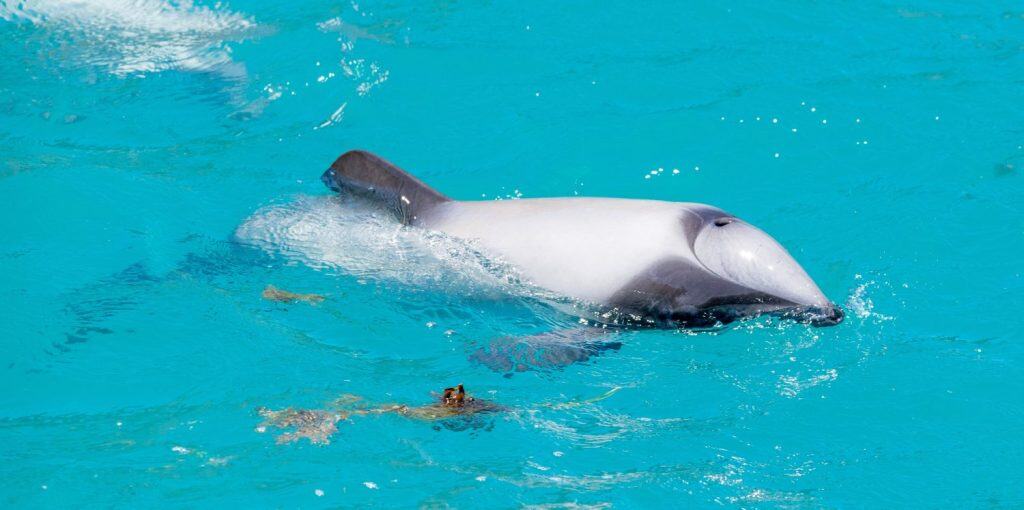
Hector’s Dolphin and its calf swim in Akaroa Harbour in New Zealand.
©DSykes23i/Shutterstock.com
Genetic studies show that Māui and Hector’s dolphins separated thousands of years ago. Isolation allowed them to develop distinct genetic traits. Losing the Māui dolphin would erase an evolutionary branch that developed over many millennia.
Population Numbers and Conservation Status
The Hector’s dolphin is classified as Endangered by the International Union for Conservation of Nature (IUCN). The species lives only in coastal waters around New Zealand, mainly surrounding the South Island. Population estimates suggest there are about 15,700 individuals, though numbers vary by region, and some local groups are small.
The situation is much more dangerous for the Māui subspecies. Researchers classify it as critically endangered, the highest threat level before extinction in the wild. Surveys and genetic studies suggest the population remains extremely small, with recent estimates indicating fewer than fifty individuals. Earlier studies suggested between 48 and 64 dolphins. Small populations face serious risks because random events such as disease outbreaks, severe storms, or accidental capture in fishing gear can remove a large portion of the group and reduce genetic diversity necessary for the species to survive.
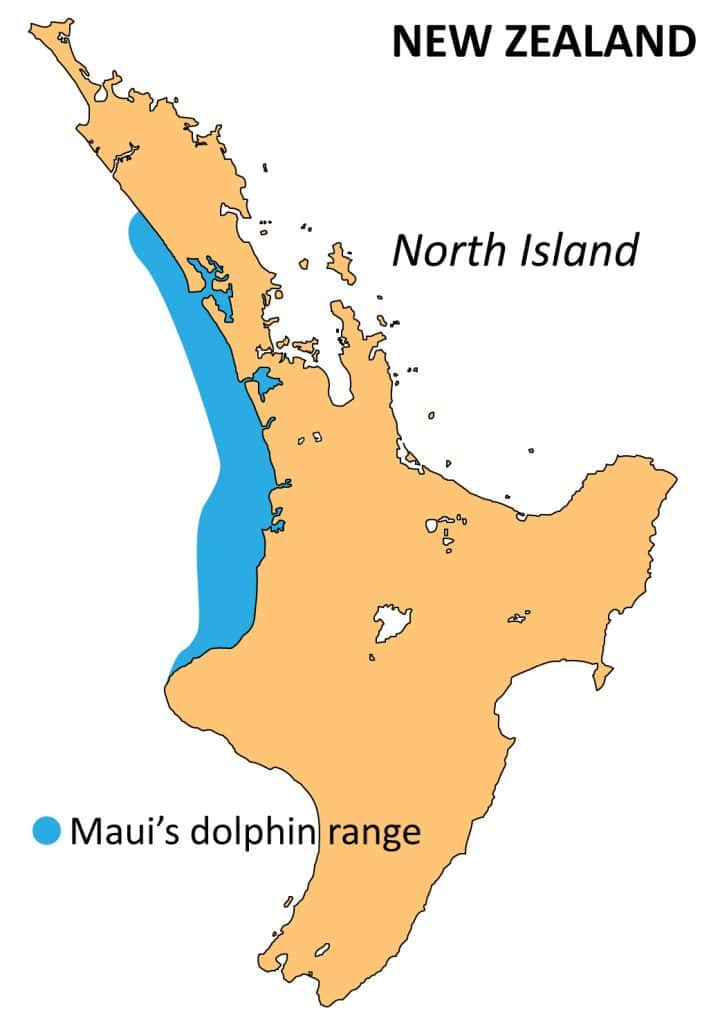
The range of the Māui dolphin is very limited.
©Rudolph89, CC BY-SA 3.0 , via Wikimedia Commons – Original / License
A 2026 Dolphin Stranding
A young dolphin was stranded near Port Waikato in late February 2026. In marine science, a stranding includes any dolphin found dead or alive on a beach or in shallow water where it cannot return to the open ocean. Because the animal appeared along the west coast of New Zealand’s North Island, researchers suspected it belonged to the critically endangered Māui dolphin population rather than the more common Hector’s dolphin. As of March 2026, genetic testing is still required to confirm the identification.
The Department of Conservation began an investigation soon after the discovery. Staff recovered the carcass and transported it to Massey University for examination, while DNA samples were sent to specialists at the University of Auckland. Although decomposition limited the visible evidence, scientists continue analyzing tissue samples for signs of disease, injury, or other threats. Even when the cause of death remains uncertain, these investigations add valuable information that helps improve conservation planning. Because the hot sun, waves, and scavenging animals rapidly damage tissues, important evidence may disappear within hours. For that reason, authorities urge the public to report stranded dolphins quickly.
Cultural Respect and Community Involvement
Investigations also include cultural protocols important to Māori communities. Many Māori groups consider these dolphins taonga, a word meaning treasured species. Their cultural importance requires respect during scientific work.
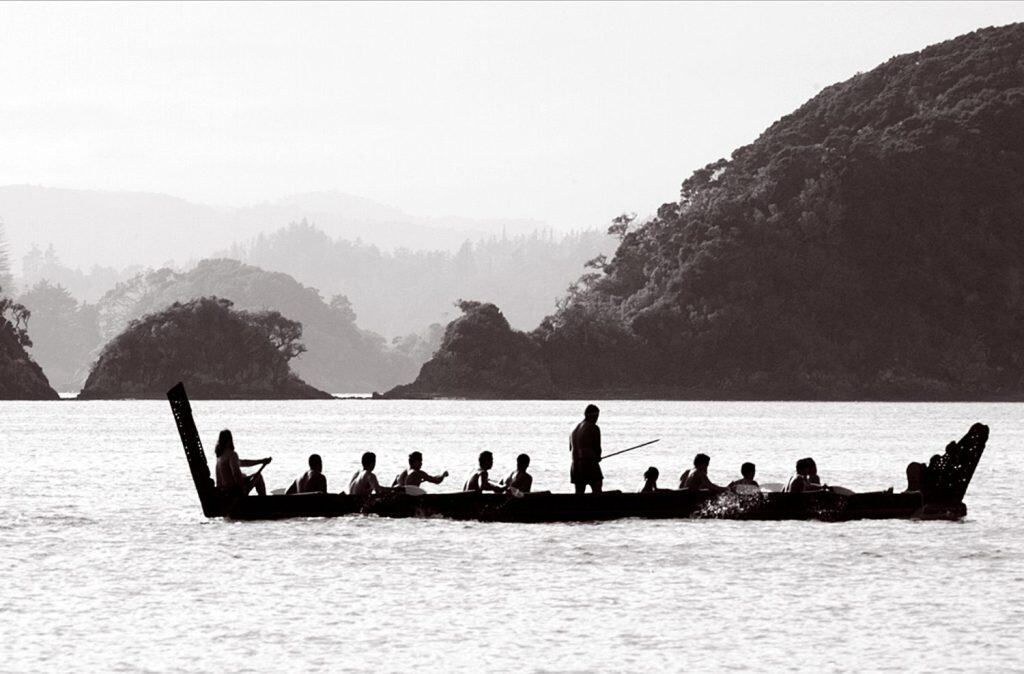
Māori culture promotes respect for the sea and its creatures.
©ChameleonsEye/Shutterstock.com
Māori representatives may participate in the recovery process. Ceremonies acknowledge the significance of the animal before it is removed for examination. After scientists complete their work, remains may return to local communities for appropriate care. These partnerships strengthen cooperation between researchers and Indigenous groups. The approach encourages reporting of future strandings and recognizes the cultural importance of wildlife alongside scientific research.
External Examinations and Initial Clues
The first step in a necropsy begins with careful observation. Scientists measure the dolphin and record its sex, size, and physical condition. They also document injuries or marks on the body. Investigators pay close attention to lines or abrasions that might indicate fishing gear entanglement. Straight grooves around fins or the snout can suggest contact with nets or ropes. Propeller wounds from boats may also appear as deep cuts. They also look for signs of exposure to toxins. Measurements of weight and stored blubber signal long-term illness or food shortages.
Necropsies and Internal Investigations
A necropsy allows scientists to study the dolphin’s internal organs. Veterinarians inspect the lungs, heart, liver, and other tissues. Small samples are collected for laboratory analysis. Microscopic examination may reveal infections, parasites, or tumors. Researchers may also examine stomach contents to determine recent meals. Evidence of plastic debris or unusual prey may point to environmental problems. Some cases require specialized testing. Laboratories may screen for viruses or algal toxins that affect marine mammals.
DNA testing plays a key role in dolphin investigations because Māui and Hector’s dolphins look very similar and cannot always be identified by sight alone. Scientists collect skin or tissue samples and analyze genetic markers that distinguish the two subspecies while also determining the animal’s sex. These results feed into long-term monitoring programs that track family relationships, population size, and survival trends over time.
When Decomposition Limits the Evidence
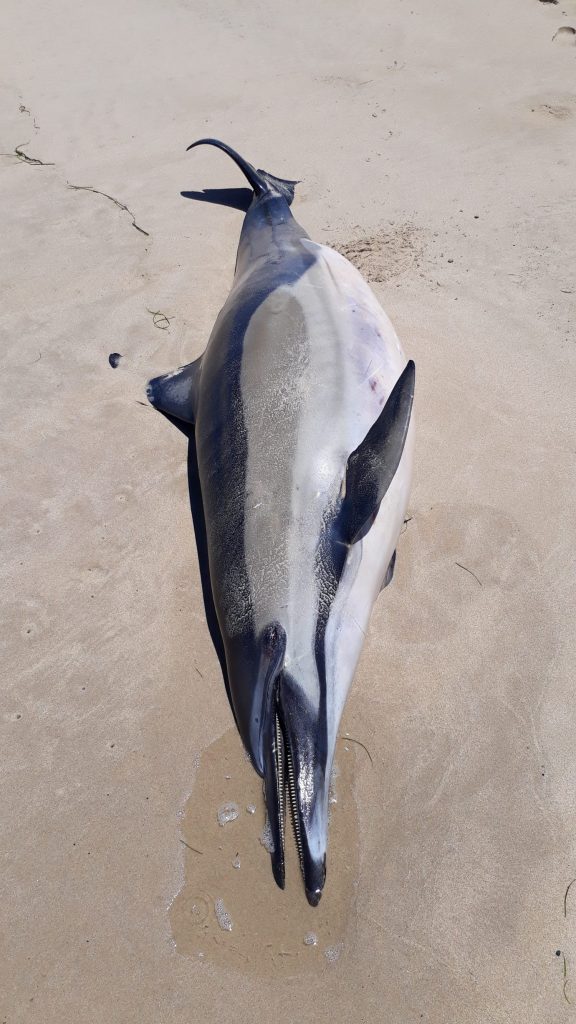
Stranded dolphins, such as this common dolphin, decompose quickly in the sun, degrading the information available to researchers by the hour.
©GS Penry/Shutterstock.com
Some dolphin carcasses arrive too decomposed to reveal a clear cause of death because soft tissues break down quickly in marine environments, making bruising and internal injuries difficult to interpret. In the 2026 Port Waikato case, the dolphin’s condition prevented investigators from determining a precise cause of death, so scientists recorded the case as uncertain. Even so, the discovery still adds valuable information. Details about location, age, and overall condition help researchers build population records, and when combined with other investigations, these data can reveal broader patterns affecting the species.
Using Stranding Data
Every confirmed dolphin death enters national research databases, where scientists combine the information with sightings and genetic surveys to model population trends. In a population as small as the Māui dolphin’s, the loss of one animal can change projections about survival and extinction risk. Researchers analyze these data to identify the most serious threats and where they occur. The results guide real conservation actions, including expanding fishing restrictions, adjusting protected areas, strengthening monitoring programs, and improving reporting requirements.
Reporting Strandings and Hidden Dolphin Deaths
Stranding investigations capture only part of dolphin mortality because some animals die at sea and sink or become entangled in fishing gear without being reported. Missing cases can distort population estimates, which may lead scientists to underestimate threats facing the species. To improve accuracy, New Zealand authorities continue strengthening reporting requirements and monitoring systems.
Public reporting plays a key role because beachgoers often discover stranded dolphins first. Quick reports, along with photos and location details, allow responders to recover carcasses before evidence disappears. Sightings of live dolphins also help researchers track where the animals spend time. These reports improve conservation planning and help protect a population that remains extremely small.
A Species Measured One Animal at a Time
The story of the Māui dolphin unfolds through individual discoveries. Each sighting, genetic sample, and stranded carcass adds information to the scientific record. The juvenile found near Port Waikato may never reveal its exact cause of death, yet the investigation still matters. Data from each case helps scientists refine population estimates, identify major threats, and guide future protections. For a subspecies numbering only a few dozen individuals, every animal counts.