Quick Take
- A species declared extinct twice somehow survived both verdicts, and the story of how it was rediscovered the second time is stranger than you'd expect. The two extinction verdicts →
- Two birds alone have moved the needle on an entire species' survival, though conservation managers are actually hoping one of them slows down. Meet Nacho and Trixie →
- European settlers didn't just clear the forests. They also introduced something that proved even more lethal to the parakeets. See the introduced threats →
- A third extinction declaration would be different from the first two, and conservationists are racing against a deadline that most people don't even know exists. Follow the conservation race →
It is not often that one or two animals can be singled out for saving an entire species. But thanks to their exceptional breeding skills, a pair of “super breeder” orange-fronted parakeets may just do that.
Nacho and Trixie Are Helping Drive the Species’ Recovery
Parakeets Nacho and Trixie take their job of helping to rebuild the orange-fronted parakeet, or kākāriki karaka, population seriously. The couple, who were paired up in 2024, have successfully raised 55 hatchlings. Of those orange-fronted parakeet chicks, 2026 has proven to be a successful year so far, with 33 eggs successfully hatching.
The species needs all the help it can get. After the species was classified as extinct twice in the 20th century, conservationists had a third chance to save it when a small population was discovered in the 1980s. Beginning in 2003, conservation began in earnest.
One of the conservation methods is the use of captive breeding programs. One such program is at the Isaac Conservation and Wildlife Trust in Christchurch, New Zealand, where Nacho and Trixie reside.
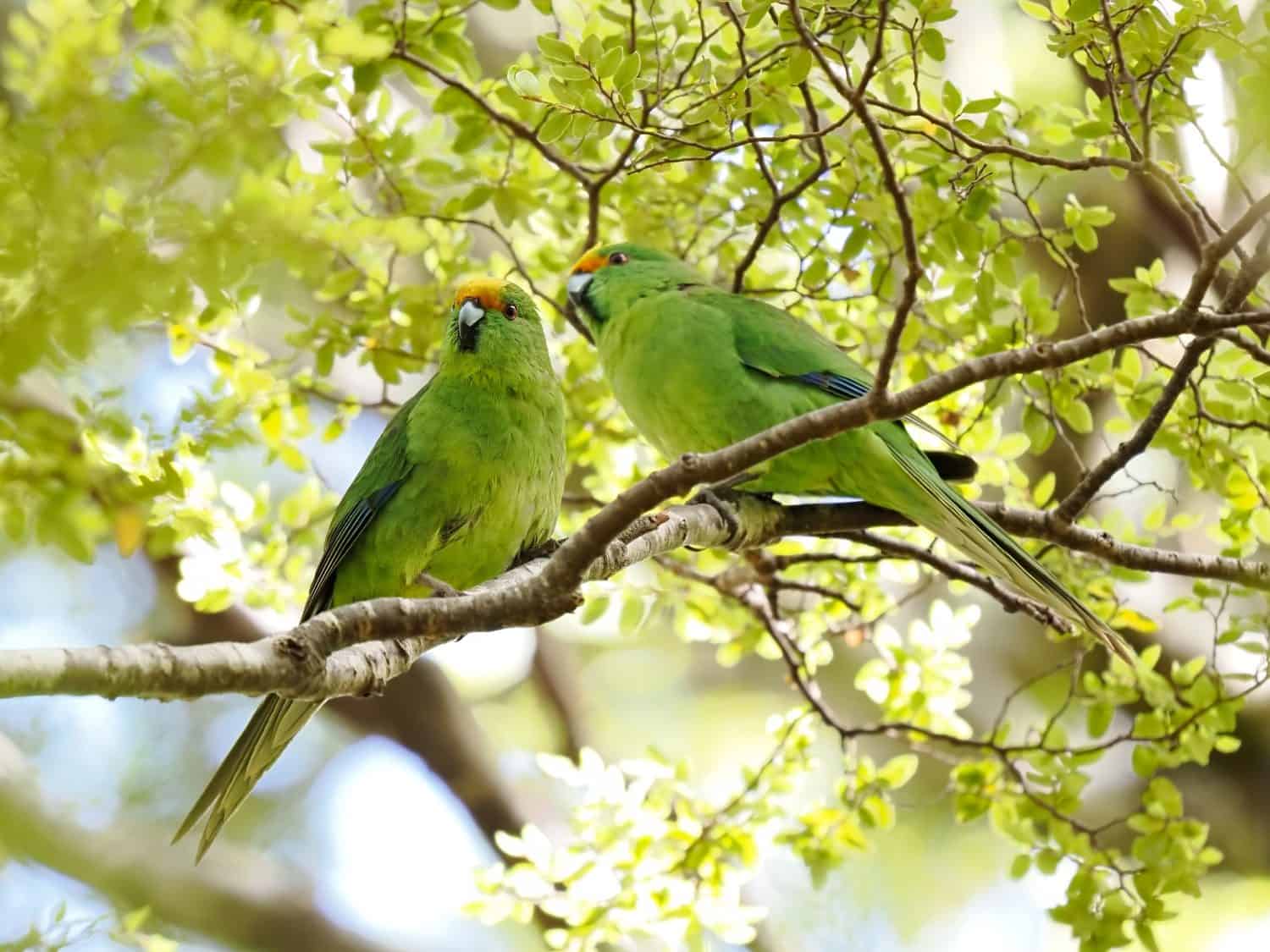
Nacho and Trixie, similar to this kākāriki karaka pair, are helping to save their species.
©Robert L. Sanson/Shutterstock.com
According to Leigh Percasky, the wildlife manager of the conservation center, Trixie continues to lay eggs, despite the breeding season being over. Consequently, she has been labeled as a “super-mom.”
“The breeding season has ended and yet she’s still producing eggs and raising chicks,” Percasky explained to The Witness. “Ideally we’d prefer her to stop so she can have a rest, but she shows no signs of that with another seven chicks in her most recent clutch.”
It is not only Trixie who is praised for her dedication to parenting. Nacho “is responsible for finding food for both Trixie and the chicks,” Percasky said, which is a very taxing job for the doting father.
The dynamic duo is responsible for increasing the orange-fronted parakeet population by 10% on their own. Currently, it is unclear whether Nacho and Trixie will continue raising hatchlings this year or take some much-deserved downtime before the breeding season resumes.
Orange-Fronted Parakeets Have Been Declared Extinct Twice
The orange-fronted parakeets have been classified as extinct twice. The first time was in 1919, and the second was in 1965. Given the small population alive today, the classification was incorrect.
At the end of the 1800s, the orange-fronted parakeets, along with two other parakeet species, could still be found in the wild. However, naturalist Alfred Philpott noted in 1919 that the large populations that once existed were long gone.
“The three species of Cyanoramphus which were once so common in Otago are now seldom seen or heard in the small forests,” Philpott said. “Cyanoramphus malherbi … which was never so abundant as the other two, is in all probability extinct.”
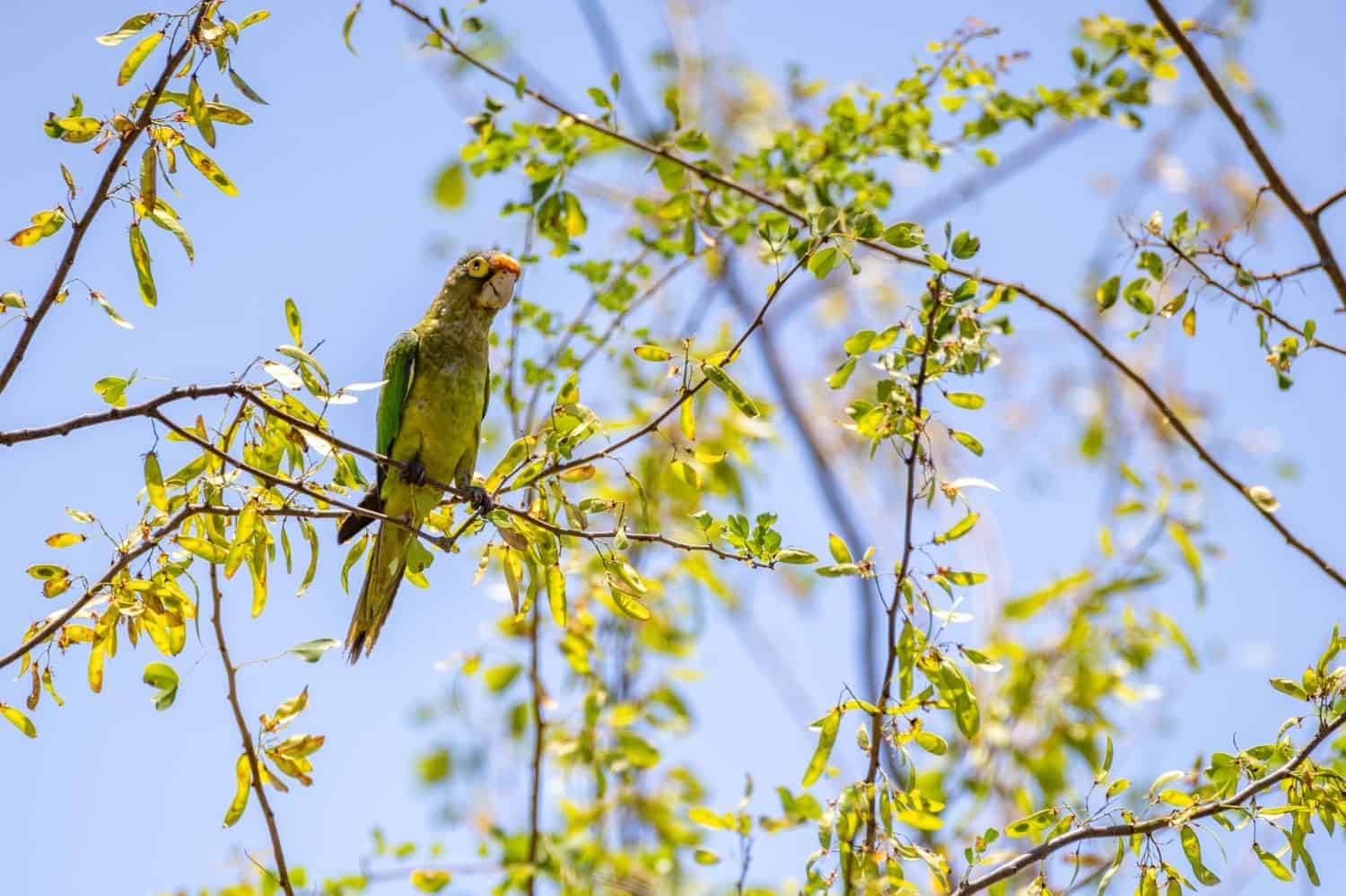
Orange-fronted parakeets were classified as extinct in 1919 and 1965.
©Daniel James Anderson/Shutterstock.com
Cyanoramphus malherbi, or the orange-fronted parakeet, was not extinct in 1919. This was proven by a handful of sightings over the next several decades. The last of these sightings was in 1965. Shortly thereafter, the orange-fronted parakeet was again classified as extinct.
In the late 1980s, something incredible happened. The kākāriki karaka was discovered living in the South Island’s Lake Sumner National Park. Other small populations were later found living in Arthur’s Pass National Park.
Today, with just a few hundred orange-fronted parakeets left, conservation groups and captive breeding programs are not leaving the recovery of the parakeets to chance. They are working hard to ensure that the brightly colored orange-fronted parakeet is not classified as extinct once again, which would likely be a terminal classification.
What Caused the Orange-Fronted Parakeet Population to Decline?
The kākāriki karaka was once an abundant bird found only in New Zealand. As with so many other animals whose populations have declined, the arrival of Europeans in the 19th century proved devastating for the orange-fronted parakeet.
Orange-fronted parakeets thrived in New Zealand, specifically on the South Island. In years when beech seeds were abundant, the population would spike, and parakeets could be found on the Canterbury Plains. Experts suggest that this means thousands of kākāriki karaka once lived in New Zealand, although no records exist of how many birds were alive when Europeans first arrived.
The population decline occurred for two primary reasons:
- Habitat loss
- Introduction of predators
Orange-fronted parakeets’ main habitat is beech forests. European settlers cleared much of the beech forests for timber, construction, and fuel. Additionally, land was cleared for agricultural purposes. This removed so many beech trees that the forests that once covered 85% of New Zealand before Europeans settled were reduced to 53% by 1840.
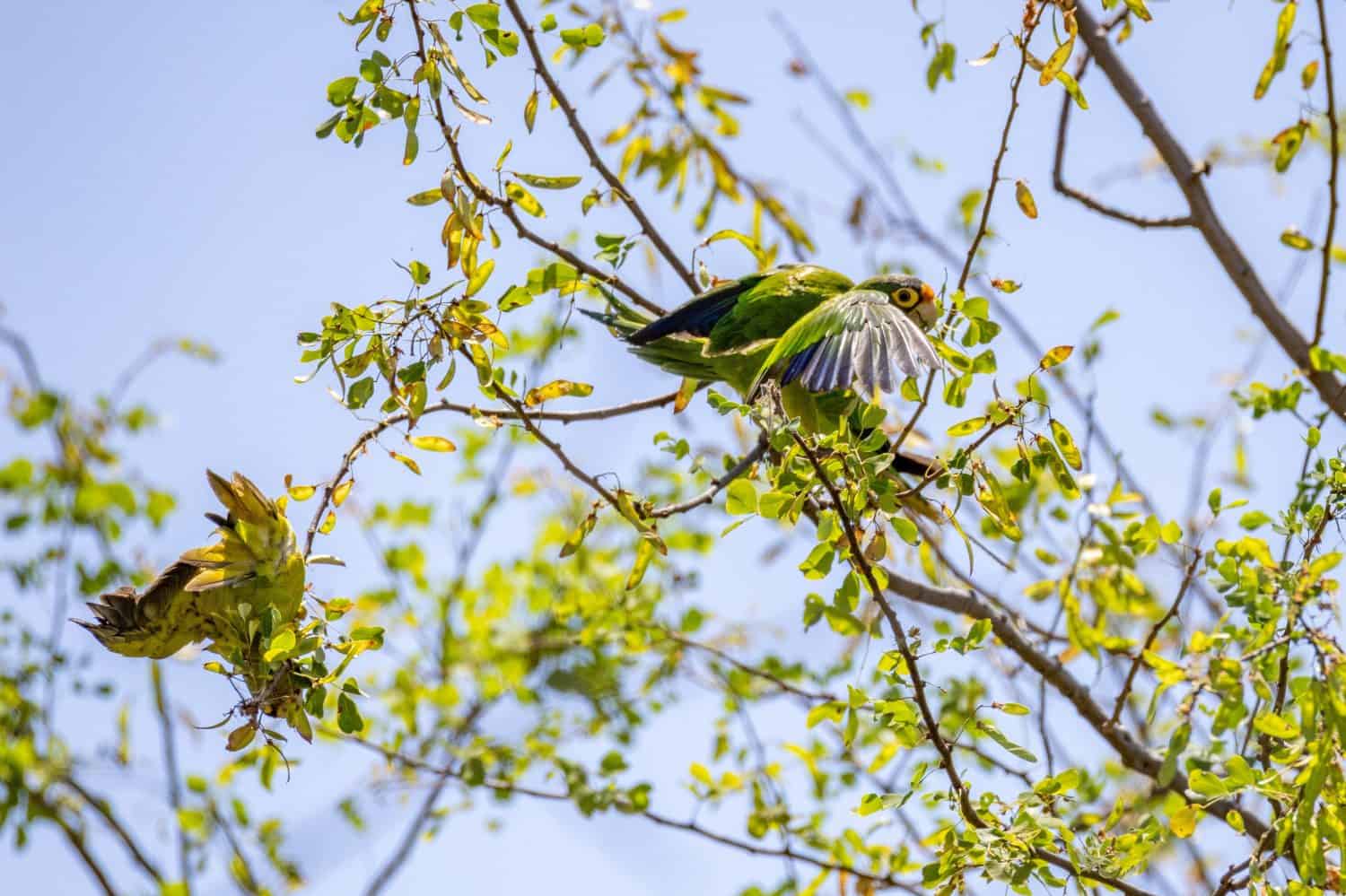
Habitat loss and the introduction of predators are to blame for the decline in the orange-fronted parakeet population.
©Daniel James Anderson/Shutterstock.com
With the arrival of Europeans in New Zealand came the introduction of species that became predators of the parakeets. Some of the worst predators for the species included:
- Stoats
- Rats
- Cats
The orange-fronted parakeets that were not decimated by habitat loss were targeted by predators. Whether predators targeted the birds themselves or their eggs, by the 1900s, the population was a mere fraction of what it had been.
How Orange-Fronted Parakeets Are Being Conserved
Orange-fronted parakeets have already been declared extinct twice. It is likely that if declared extinct for a third time, these parakeets truly will disappear. Conservation efforts implemented since 2003 are helping to keep that from happening.
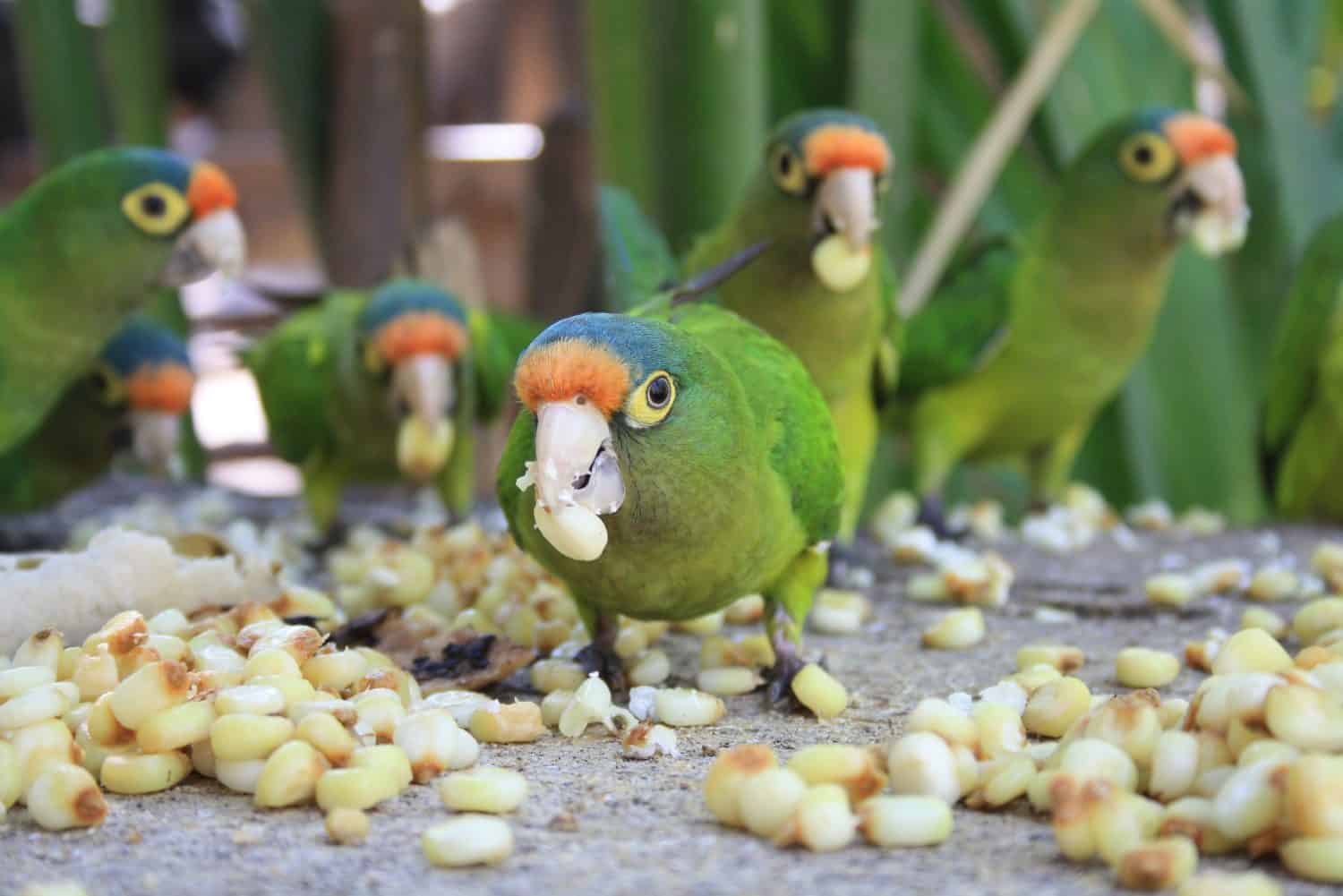
Orange-fronted parakeets are being conserved through captive breeding programs and restoration of native habitats.
©Aushee/Shutterstock.com
Conservation efforts helping to keep the kākāriki karaka from going extinct include:
- Captive breeding programs
- Relocating captive orange-fronted parakeets to pest-free island habitats
- Restoration of native habitats that orange-fronted parakeets call home, including beech forests
- Introduction of the Te Ara Mōrehu: Kākāriki Karaka Recovery Strategy 2024–2034, aimed at monitoring wild populations of the parakeets, educating locals on why the parakeets are important to their ecosystems, increasing captive populations, and increasing territory for the birds to live in
With the help of Trixie and Nacho, the orange-fronted parakeet population has recovered from what seemed all but inevitable extinction. The growth has been slow but steady. Were it not for conservation programs working tirelessly to keep these parakeets alive, it is all but certain that the orange-fronted parakeets would have gone extinct. Now, the goal is to keep the species alive for the long term so that the brightly colored birds never face eradication from the planet again.