
Quick Take
- The quagga looked different from the zebras you know, and that unusual appearance is exactly what sealed its fate. See its unusual appearance →
- European settlers wiped out an entire subspecies in under a century, and the reason they started hunting quaggas in the first place isn't what you'd expect. Discover why settlers hunted it →
- The last quagga died before scientists even realized the species was gone, a tragedy made worse by a bizarre case of mistaken identity that ensured no one tried to save it. Read the extinction timeline →
- Scientists are now trying to bring the quagga back from extinction, but critics argue the creature they're creating isn't really a quagga at all. Explore the revival project →
Most people have seen a zebra in person, either in the wild or in captivity. Their black and white stripes make them unique from other equines, and their beauty has fascinated people for generations.
A unique subspecies of zebra is one many may never have heard of. This is because the half-striped ghost of the African plains has been extinct for nearly 150 years. The quagga, which looks like a half-zebra, half-horse-creature, was ultimately targeted in the name of progress and financial gain until it no longer existed.
What Was the Quagga?
Quagga were a subspecies of the plains zebra. It is believed that the DNA of the two animals first became distinct approximately 140,000 years ago.
Unlike the plains zebra, which is covered from head to hoof in black and white stripes, the quagga had brown and white stripes only on the head and neck. The majority of the body and rump were solid brown. Quaggas were also taller and stockier than zebras, measuring approximately eight feet long and 4.5 feet tall.
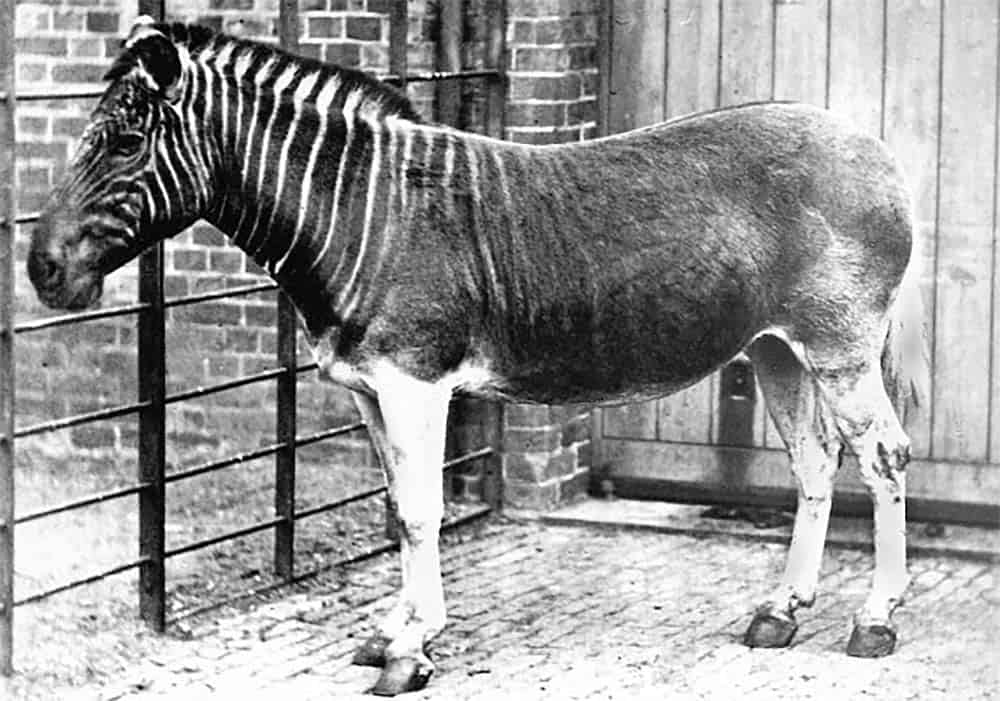
Quaggas roamed the grasslands and savannahs of South Africa for thousands of years.
©Frederick York (d. 1903) / public domain – Original / License
Up until the 1600s, a large number of quaggas lived in South Africa. They were herbivores that ate grasses on the region’s savannas and grasslands. While targeted by lions, leopards, and spotted hyenas, quaggas were able to protect themselves by living in large packs and always having one or more individuals on guard while the others rested. These animals were braver than zebras, willing to take on these predators if attacked.
Quaggas received their name from the Khoikohi. It is believed the mammal was named for the sounds they made when communicating with one another.
Despite living harmoniously with zebras and other species in South Africa for thousands of years, it only took a few hundred years of European habitation to permanently alter quagga populations.
Why the Quagga Was Targeted by European Settlers
The quagga roamed the grasslands of the Orange Free State and Karoo region of Cape Province in South Africa. The large herds of 30 to 50 head lived together for a lifetime, peacefully within their small territory in South Africa, until European settlers arrived in the region.
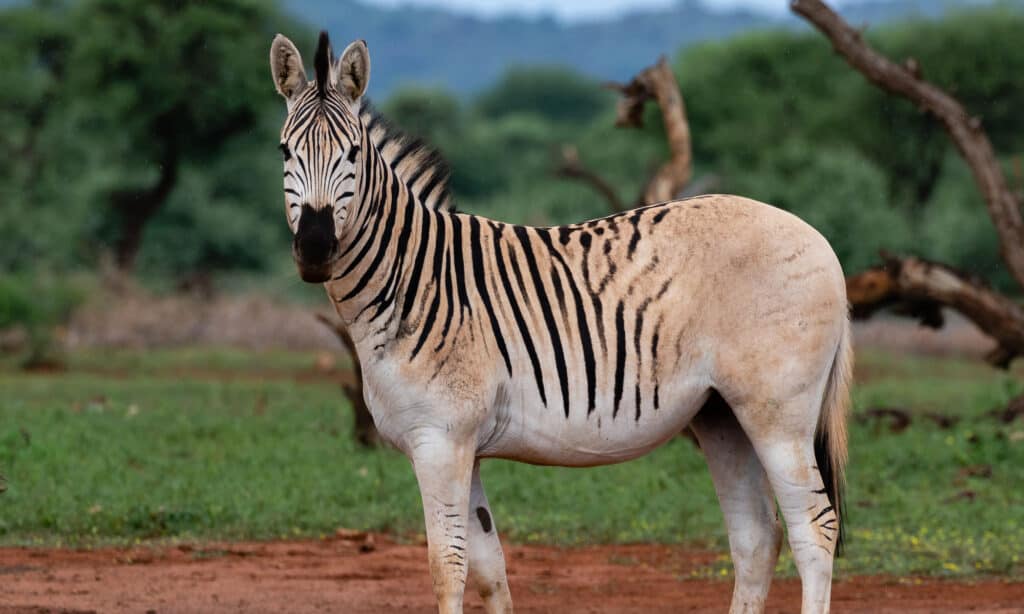
The quagga were targeted by Europeans for their hides, their meat, and to stop competition with livestock for food.
©LouisLotterPhotography/Shutterstock.com
Beginning in the 1650s, the Dutch arrived in the region and killed quagga for both food and to prevent them from competing with livestock. When the British arrived at the end of the 1700s, they continued slaughtering the quagga to make way for agricultural fields. They also consumed their meat and used their hides for leather.
Extremely high numbers of quagga were killed when the British took over the region; within three-quarters of a century, the quagga were extinct.
When Did the Quagga Go Extinct?
After being hunted by European settlers, the quagga quickly perished. However, it was not until years after the extinction that people realized the quagga no longer roamed the earth, and by then, there was no undoing the travesty.
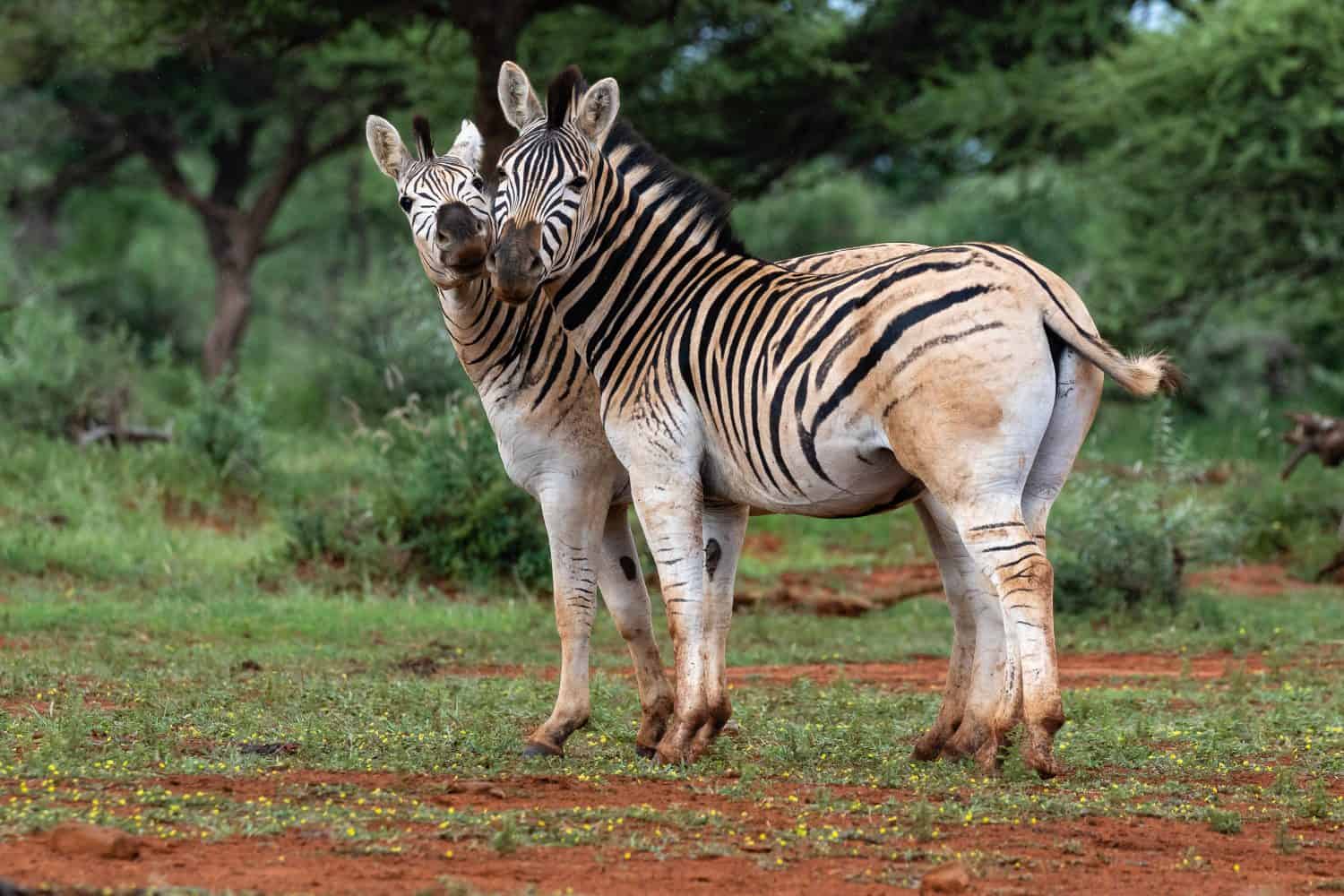
Quaggas went extinct in 1883, after the last known living quagga died in an Amsterdam zoo.
©LouisLotterPhotography/Shutterstock.com
It is believed that the last year the quagga roamed free was in 1878. The last known quagga died in captivity in 1883 at the Artis Zoo in Amsterdam. Because quaggas were not seen as a distinct species, there were no conservation efforts put into place to save them from extinction. It was thought their hides were varieties of those of other zebra species. Consequently, there was no need to save them, given that other zebra herds were large and widespread. Whether European settlers would have stopped hunting the quagga if they had known it was a unique species is unclear.
Plans To Bring the Quagga Back From Extinction
In 1984, the quagga became the first extinct animal to have its DNA successfully sequenced, thanks to skin specimens housed in a museum. It was discovered that quaggas were more closely related to zebras than to horses, and that there was very little genetic diversity compared with a species of plains zebra still alive in Africa today.
Armed with this information, a group of scientists started the Quagga Project. According to the Quagga Project’s website, the ultimate goal is to create a species that is close, “if not identical,” to the original quaggas.
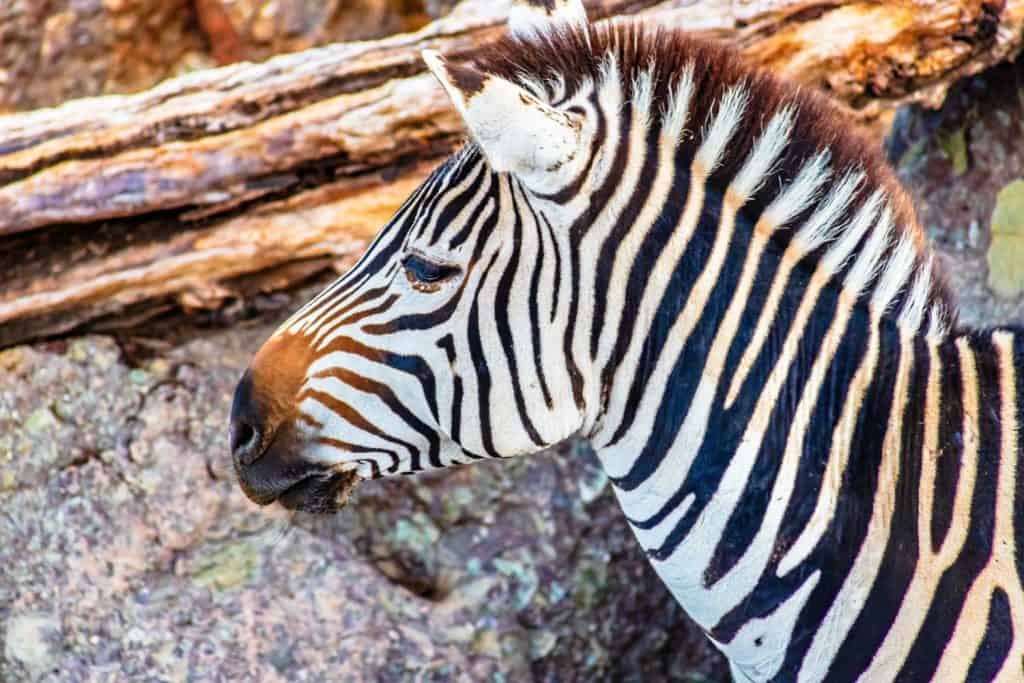
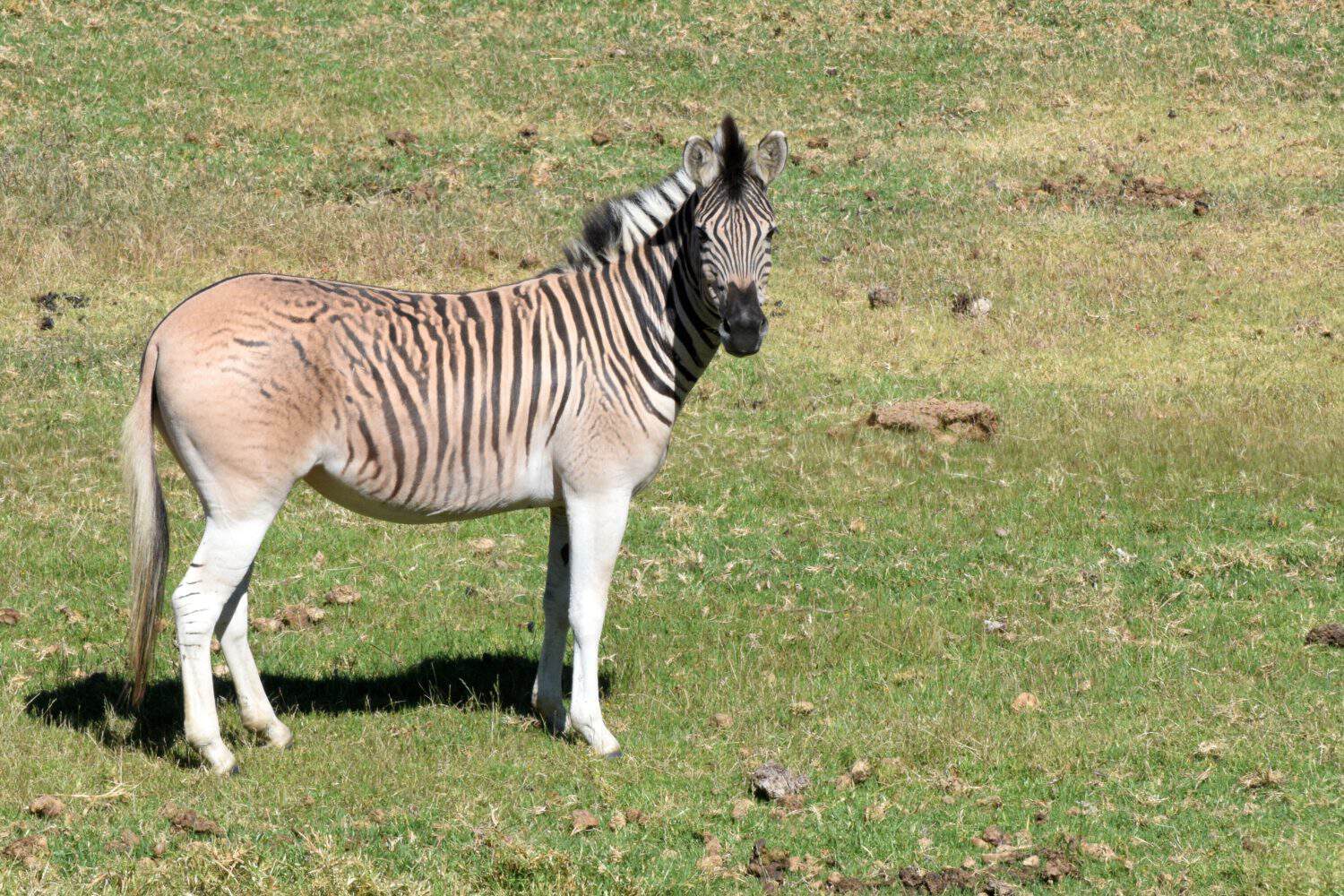
The Quagga Project is working to bring back quaggas, despite many critics believing that all it has accomplished is the appearance of a quagga that is not genetically distinct from a plains zebra.
©Alex Borderline/Shutterstock.com
“The Quagga project attempts to breed through selection a population of Plains Zebras, which in its external appearance, and possibly genetically as well, will be closer, if not identical to the former population known as ‘Quagga’,” the website reads, “which was exterminated during the second half of the 19th century.”
From the standpoint of creating an animal that resembles the quagga, the project has been successful. Some of the animals features stripes on the head that eventually disappear from the neck down. However, there are those who criticize the project, stating that the created quaggas are genetically different from those that once roamed South Africa. They are just plains zebras bred to have certain quagga-like physical characteristics.
Whether the Quagga Project will be successful in creating a quagga with DNA matching the original animal remains to be seen. If it does happen, a species that went extinct at the hands of humans will be given a second chance that so many other extinct species will never be afforded.