
Quick Take
- Iguanas are excellent swimmers, and the way they actually move through water surprises almost everyone who sees it. See how iguanas swim →
- A green iguana can outlast most threats by going underwater, and they can stay under for a surprisingly long time. Discover their breath-holding trick →
- Land predators that seem dangerous to iguanas actually have a critical weakness, which iguanas exploit ruthlessly. How iguanas escape predators →
- Florida's pools aren't just a human amenity. One invasive species has quietly claimed them too. Florida's pool invaders →
Florida is home to a wide variety of lizard species, many of which live within urban environments. Locals and tourists often see both small and large lizards at places like pools or beaches. Larger lizards like iguanas are able to swim through bodies of water such as swimming pools. This Instagram post by @_maramartin shows a bright green iguana taking a quick dip in a swimming pool, almost as if it were trying to cool down from the heat. Read here to learn more.
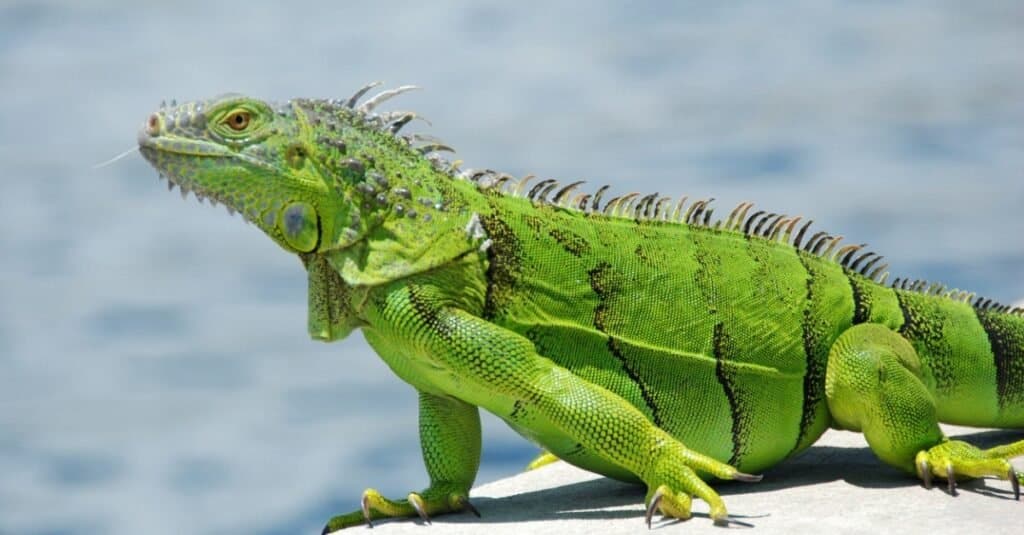
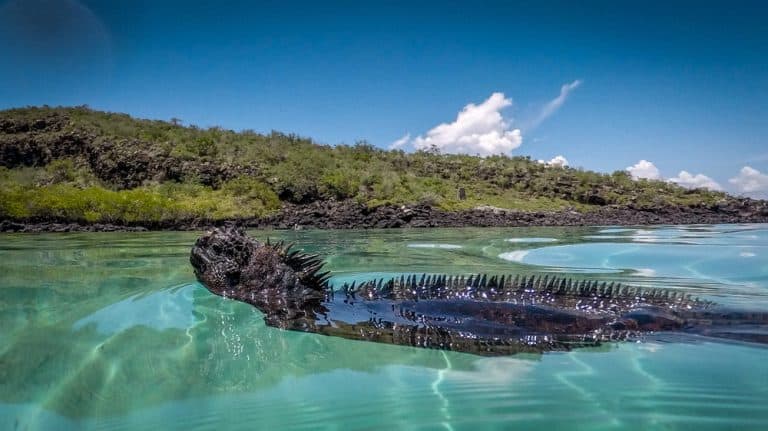
Green iguanas are excellent swimmers that primarily use their tails instead of their legs to glide across the water.
©iStock.com/Travel_Bug
Lizard Walking on Water
While the video doesn’t specify the lizard species, it’s most likely a green iguana due to its bright coloration and swimming behavior. Green iguanas are native to Central and South America but have become an invasive species in much of southern Florida, making sightings in the area common. One of their most interesting features is their amazing swimming abilities. Most people do not associate lizards with swimming, which makes the behavior both surprising and impressive. Although iguanas primarily live in trees, they use water to flee from predators and navigate their environment. They are skilled swimmers, primarily thanks to their tails. When underwater, iguanas tuck their legs close to their bodies and rapidly move their tails side to side. This movement generates thrust and propels them forward, as demonstrated in the video above.
Iguanas use water as a means of escaping from predators. Land predators such as raptors, snakes, and raccoons cannot swim as well as green iguanas. The lizards take advantage of this by submerging themselves underwater for extended periods. Surprisingly, they can stay underwater anywhere between 15 and 30 minutes. They achieve this by slowing their metabolism and heart rate to conserve oxygen. However, remaining underwater for such long periods is very taxing on their bodies, so this behavior is rarely observed. Fortunately, the lizard in the video above appears to be swimming simply for enjoyment.