
Quick Take
- Ocean acidification may weaken shark teeth, potentially affecting their ability to hunt and survive.
- A 2025 study found visible corrosion and structural changes in shark teeth under lower pH conditions.
- Changes to shark feeding efficiency could disrupt entire marine ecosystems and food chains.
Growing up, I never loved jewelry. But I’ve been wearing the same necklace for the past year: a wrapped lemon shark tooth that I found on Wrightsville Beach, which never fails to act as a conversation starter. Most recently, my fiancé and I attended a wedding where many of the women I met were as captivated by sharks and marine life as I am. As we discussed my shark tooth necklace, we also moved on to other topics, such as shark conservation efforts or the threats facing today’s shark populations, such as climate change and ocean acidification.
Ocean acidification is often discussed in relation to its impact on corals, sea urchins, or mollusks like clams, sea snails, or oysters. Why, you might ask? These creatures have shells or skeletons made of calcium carbonate. As the ocean acidifies, too much carbon dioxide makes it difficult to build or maintain those shells. However, a 2025 study published in Frontiers in Marine Science found that ocean acidification could have potentially harmful effects on sharks as well. When researchers simulated the effects of acidified oceans on shark teeth, they discovered surprising results.
What is Ocean Acidification?
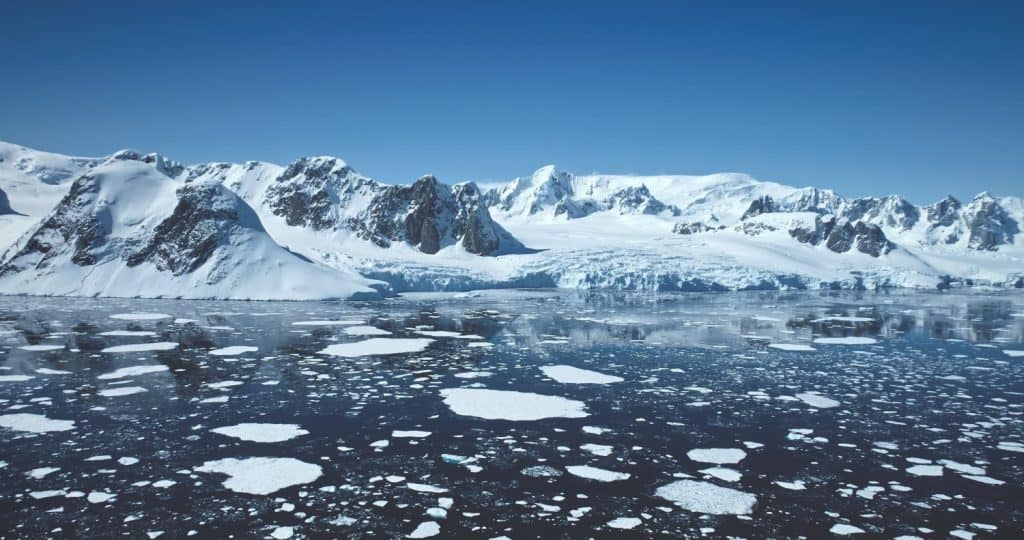
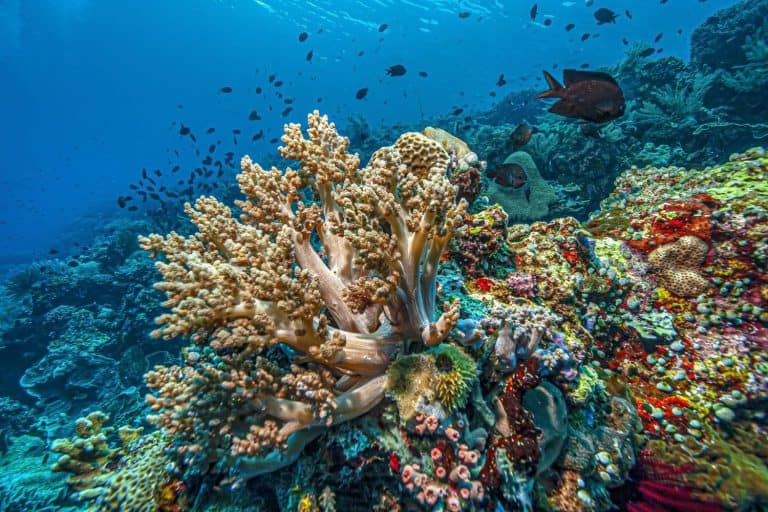
Because of the colder water temperatures, polar oceans are especially vulnerable to acidification.
©Mozgova/Shutterstock.com
The International Atomic Energy Agency (IAEA)’s Ocean Acidification International Coordination Centre (OA-ICC) explains, “Ocean acidification is an urgent environmental challenge caused by rising atmospheric carbon dioxide (CO2) levels, mainly due to human activities. It involves a continuous decrease in the pH of ocean water.”
Atmospheric CO2 has increased significantly since the mid-18th century. An estimated 26% of human-derived CO2 is absorbed by the ocean. CO2 then forms carbonic acid, releasing hydrogen ions and increasing ocean acidity. The NOAA says oceanic changes represent 30% more acidity than the time of the Industrial Revolution.
Ocean acidification is a huge threat to our world. In addition to its impact on invertebrates, the NOAA explains that acidification can make it harder for clownfish to detect predators or larval clownfish to find suitable habitat to grow. If we lose these creatures, the food chain could crumble.
How Acidification Impacts Sharks
Although studies on ocean acidification have been done, most have not considered the broader impact on sharks. In the 2025 study, researchers sought to change that. Currently, the pH level in our oceans averages around 8.1. The pH is projected to drop to anywhere between 7.8 and 7.3 by 2300 under high-emission scenarios, the lowest in 14-17 million years.
Sharks may be affected in several ways. The researchers hypothesize, based on projections, that:
- Sharks may develop hypercapnia (too much CO2 in the blood), resulting in nutritional changes or reduced growth.
- High CO2 levels and warmer waters could reduce shark hatching success.
- Sharks’ dermal denticles could corrode, making them less efficient swimmers.
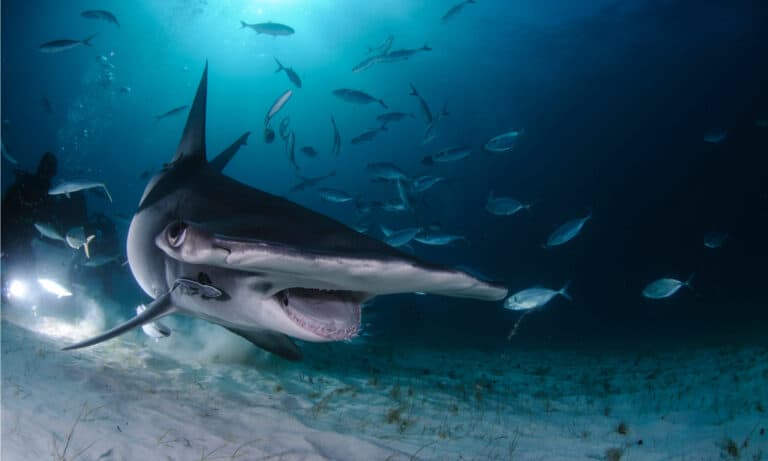
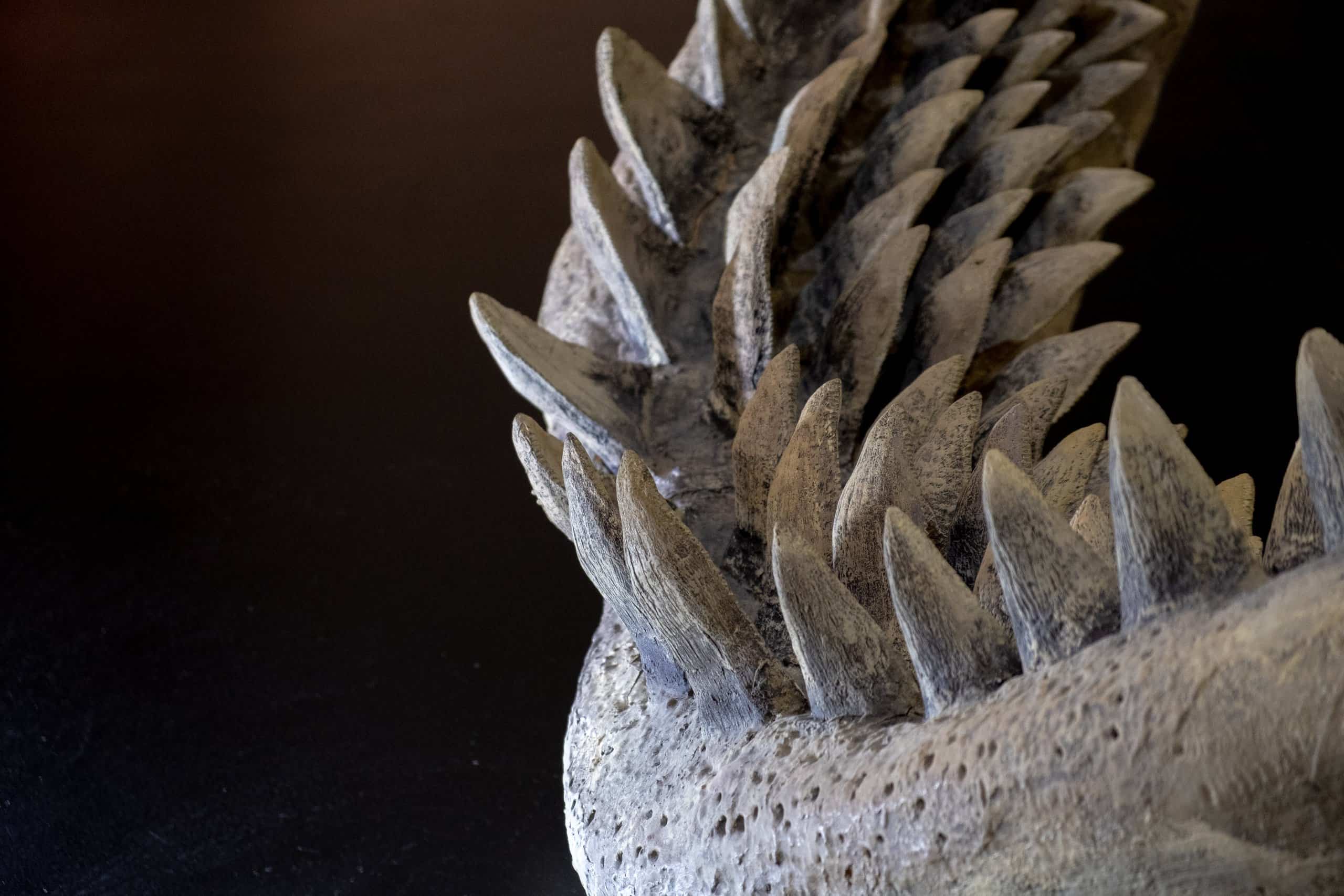
The dermal denticles making up sharks’ rough skin are structurally similar to human teeth.
©iStock.com/Alessandro De Maddalena
While these hypotheses must be tested further, researchers wanted to see for themselves how ocean acidification could impact shark teeth, either structurally or morphologically.
Why Shark Teeth?
Sharks appear in the fossil record up to 450 million years ago, farther back than dinosaurs. Throughout history, sharks have had to adapt to changing marine environments. Their specialized teeth are a big reason for their remarkable longevity.
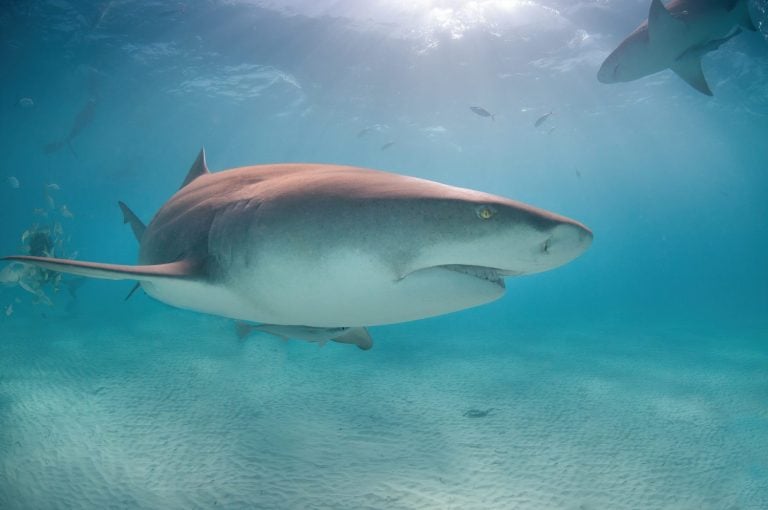
Not all shark teeth are the same. Great white sharks, for example, have around 300 large, serrated triangular teeth designed to tear and shear flesh. Nurse sharks, on the other hand, only have around 58 to 76 teeth. Their teeth, though also serrated, are smaller and flatter, perfect for their crustacean-heavy diet.

Great white shark teeth (right) can be up to three inches long, but they’re nothing compared to Megalodon teeth (left) from millions of years ago!
©Mark_Kostich/Shutterstock.com
As oceans have changed, sharks’ unique teeth allow them to pursue a wide variety of prey. Since sharks lose and replace thousands of teeth in their lifetime, they also have a constant supply for hunting. Sharks also use their teeth during mating. Male sharks often bite female sharks to hold onto them during mating. If sharks were to lose their teeth or if their teeth were significantly damaged, it would greatly affect the health and survival of shark populations.
Evaluating the Study
Within this particular study, researchers used blacktip reef shark teeth. To understand why, you need to know that sharks breathe in one of two ways: ram ventilation or buccal pumping. Ram ventilators like blacktip reef sharks are passive breathers; they must always be swimming with their mouths open in order to breathe. Buccal pumpers can pump water through their gills, allowing them to stay stationary. Since blacktip reef sharks have their mouths constantly open, ocean acidification could have more serious repercussions. Blacktip reef sharks are also part of the requiem shark family Carcharhinidae, so their teeth are a good representation of what might happen to other requiem sharks like bull sharks.
The research team started by collecting blacktip reef shark teeth from ten sharks at the SEA LIFE Oberhausen aquarium. All teeth had naturally fallen out and were not directly removed from the sharks. Researchers then exposed these teeth to seawater with a pH of 7.3 for an eight-week period. For comparison, control teeth were kept in seawater with normal pH levels (8.19). At the end of the eight weeks, the researchers re-examined the teeth. Some of the fascinating findings include:
- Teeth exposed to 7.3 pH showed an increase in circumference of approximately 0.73 mm. This does not necessarily mean the teeth became larger, but rather that they developed jagged edges, making their outlines more irregular.
- These teeth also had more corroded roots and damaged crowns. Shark teeth kept in the lower pH were speckled with more spots and holes than the teeth kept in normal seawater.
As the study authors explain, “While previous studies have suggested that shark teeth…are relatively resistant to ocean acidification (Leung et al., 2022), our findings indicate that isolated shark teeth are nonetheless susceptible to visible corrosion under experimentally acidified conditions.”
Study Limitations
The findings are compelling, but we can’t necessarily take them fully at face value. Because the teeth were not inside living sharks, it is unclear how the sharks’ natural tooth replacement process might compensate for any potential damage caused by acidified waters. In fact, the 2022 study referenced by the authors found that, in live Port Jackson sharks exposed to 7.7 pH water for 30 days, there was damage to root tips, but the teeth resisted damage overall. However, the authors note that their experiment with 7.3 pH water was clearly more extreme, which could have prompted the different outcomes. The authors also note that aquarium water differs from natural reef environments, which could have influenced the findings.
Still, we need to consider the study’s implications. If acidification affects the structural soundness of shark teeth, it could lead to more tooth breakage. Structural changes to the teeth may also mean a shark is less effective at capturing prey, can’t tear into its prey, or has to expend more energy hunting. Since sharks help regulate prey populations and keep their ecosystems and food chains balanced, tooth changes can have wide-reaching effects, showing why it’s so crucial to halt acidification.