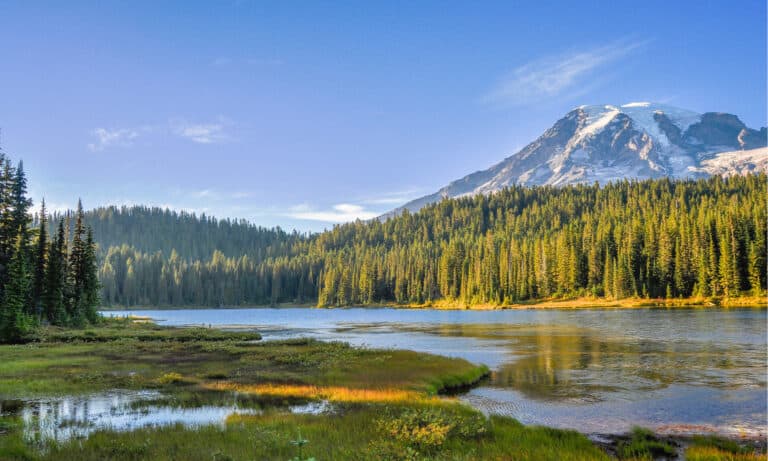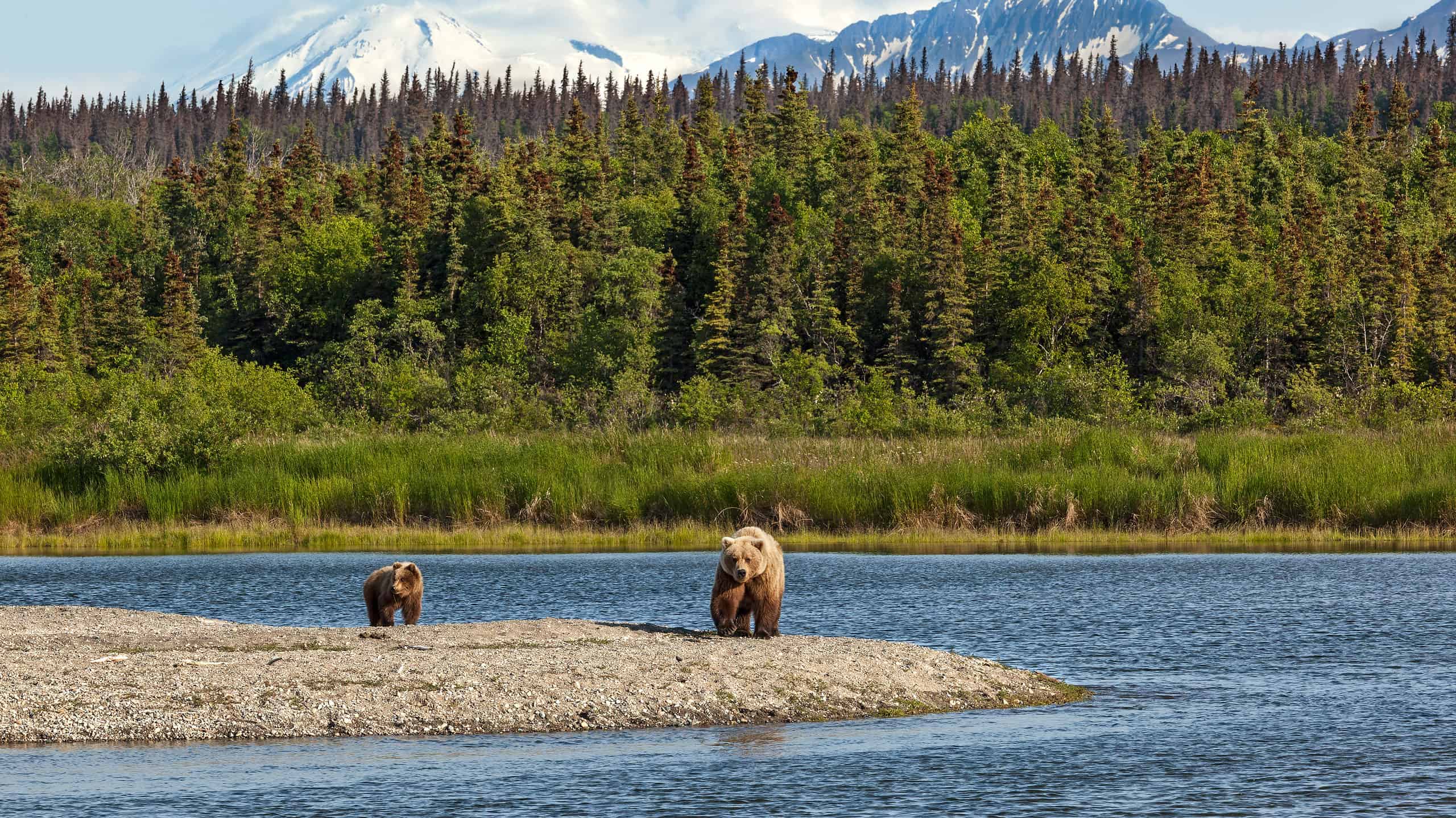

Way up north in Alaska, Katmai National Park protects a vast landscape (over 4 million acres!) of volcanoes, tundra, lakes and Pacific coastline. The park is famous worldwide for its brown bears and the salmon runs that sustain them, but it’s also home to a rich array of fish, birds, and marine mammals, alongside dozens of other land mammals. But Katmai is remote. Not only is Alaska separated from the lower 48 states by the vast country of Canada, but the park is also located way out on the peninsula with no roads leading in or out; visitors arrive by small plane or boat. This results in modest numbers of annual visitors, with fewer than 35,000 people visiting the park each year (compare that to, say, Joshua Tree National Park, which receives a little over 3 million). Most of the park’s business is concentrated in the summer months when the salmon runs, bird migration, and bear-viewing are at their peak. The park offers plenty of recreation for its visitors, like sport fishing, flightseeing, kayaking, and backcountry hiking, but the wildlife is the real draw. Read on for a list of the animals you’re most likely to encounter in this remote wonderland.
Brown Bear
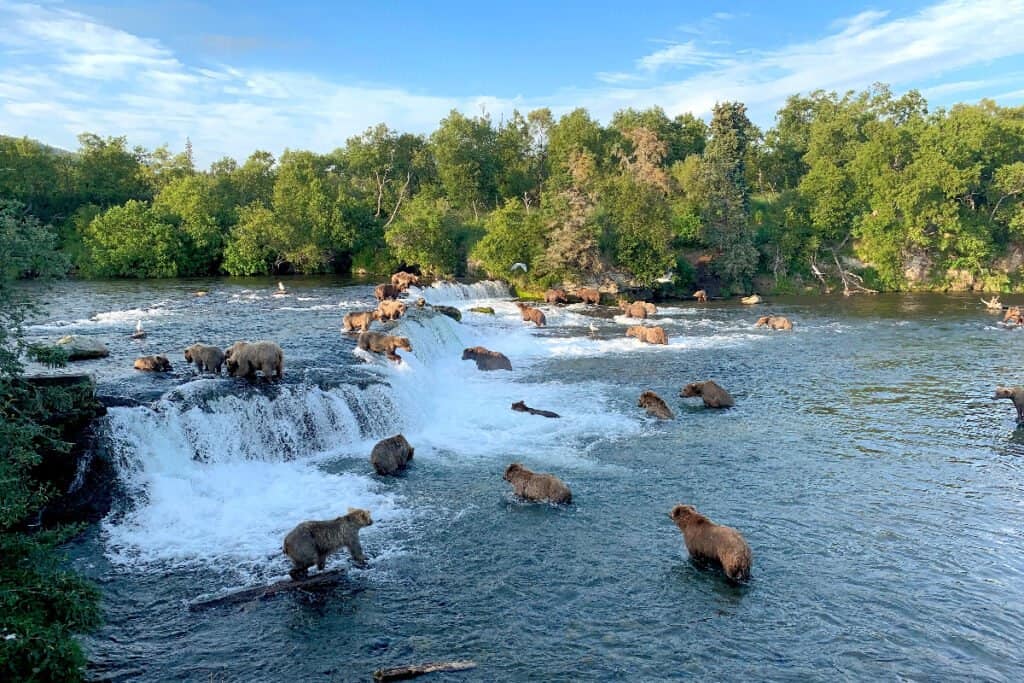
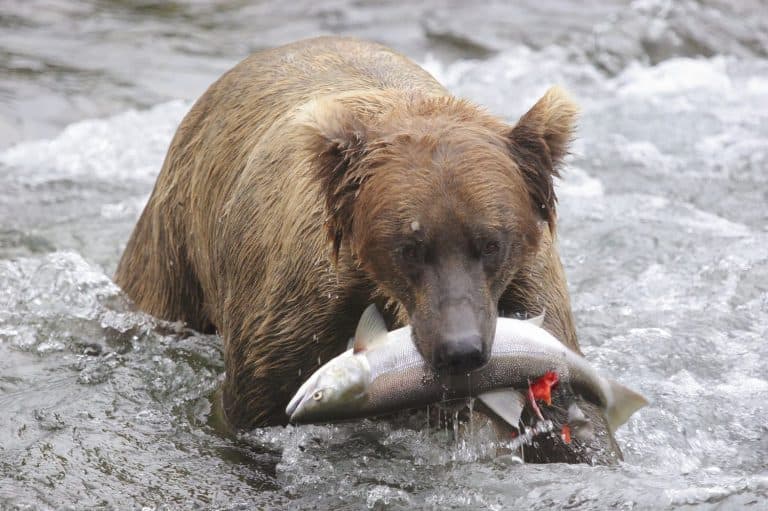
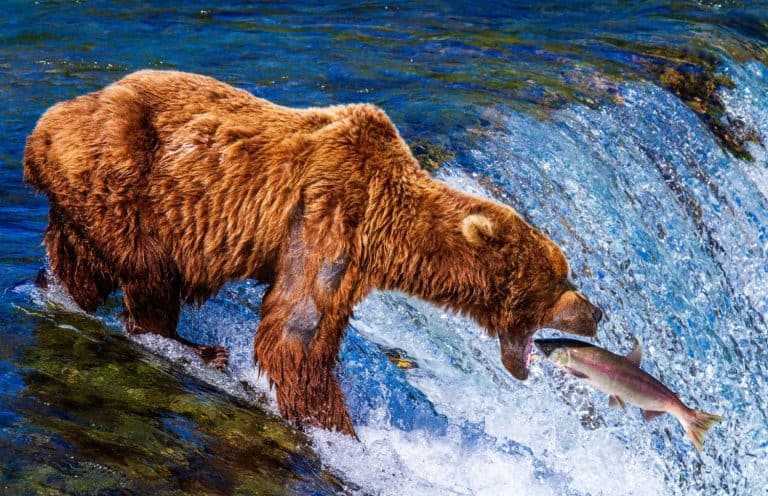
Brown bears congregate at Brooks Falls for the annual sockeye salmon run.
©iStock.com/Mark Kostich
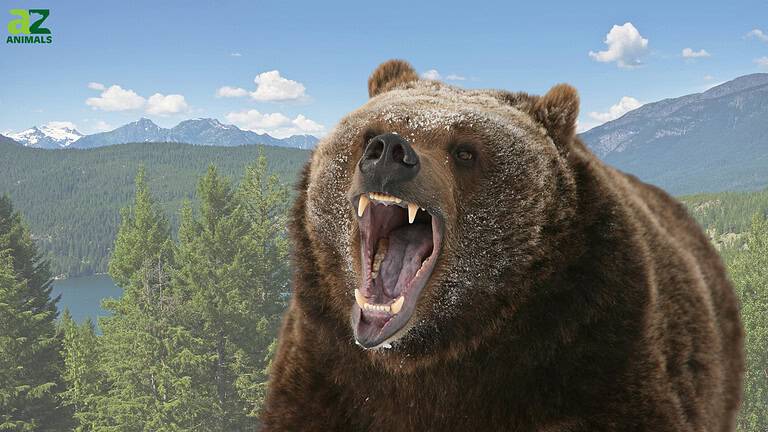
Might as well skip straight to the main attraction: the brown bear, the defining animal of Katmai. It’s estimated that over 2,000 brown bears call the park home, making it one of the largest protected populations on Earth. While plenty of other parks have bears, sightings are still often rarities. Not at Katmai! Bears are actually one of the easiest and most predictable animal sightings in the park, thanks to their annual congregation to Brooks Falls during the sockeye salmon run, where dozens of bears gather each summer to catch leaping salmon in midair.
Katmai’s bears are unusually large thanks to these rich salmon runs, with males often weighing over 1,000 pounds by autumn. Significant fat stores supply more than enough sustenance to get them through their winter hibernation in high elevation dens.
And while you’re probably familiar with “Shark Week,” have you ever heard of “Fat Bear Week”? It’s Katmai’s global online event celebrating these animals’ remarkable pre-hibernation weight gain. So even if you can’t make it out to Katmai to see these magnificent animals in person, you can still catch them chowing down at the sockeye salmon run right on your smartphone via live webcams around the park!
Sockeye Salmon
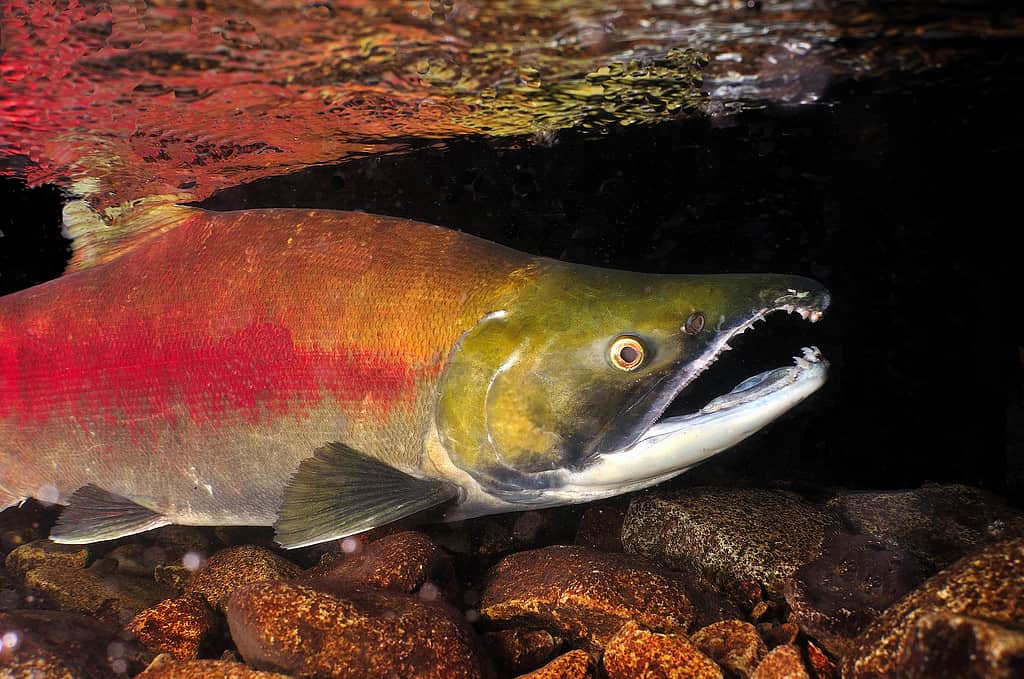
Upwards of a million sockeye salmon migrate to the rivers to spawn every summer.
©Eduardo Baena/iStock via Getty Images
The sockeye salmon is the beating heart of Katmai’s ecosystem. Each summer, hundreds of thousands (some studies even suggest over a million!) of them return from the sea to spawn in the Naknek and Brooks River systems. During this journey, they provide a buffet for bears, eagles, and even wolves. After spawning, they die, enriching the water and soil with nutrients that feed plants and future generations of salmon. You’ll want to visit in late June through July when the run begins and the salmon are most abundant. Their spectacular leap up Brooks Falls—sadly for them, often into the waiting jaws of a bear—is not just one of the most iconic wildlife scenes in the park, but on the entire Earth.
Rainbow Trout & Lake Trout
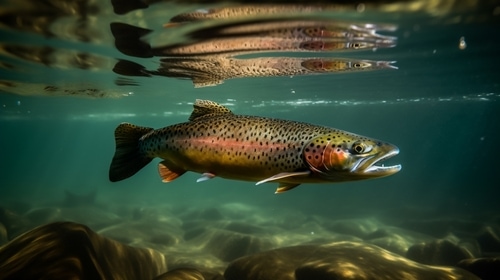
Rainbow trout are a huge draw for sport fishers.
©Henrik A. Jonsson/Shutterstock.com
No other fish is going to live up to the sockeye salmon in Katmai, but that doesn’t mean there aren’t plenty of others in the park, perhaps most notably its two species of trout. Not only are trout an important part of the park’s ecosystem and natural food chain, playing both prey and predator roles, but they are also a major draw for sport fishing, especially the rainbow trout, which are widespread throughout Katmai’s many rivers and lakes, especially near salmon runs where trout feed on salmon eggs. Lake trout tend to be a little more elusive, mostly hanging out in deeper lakes.
Moose
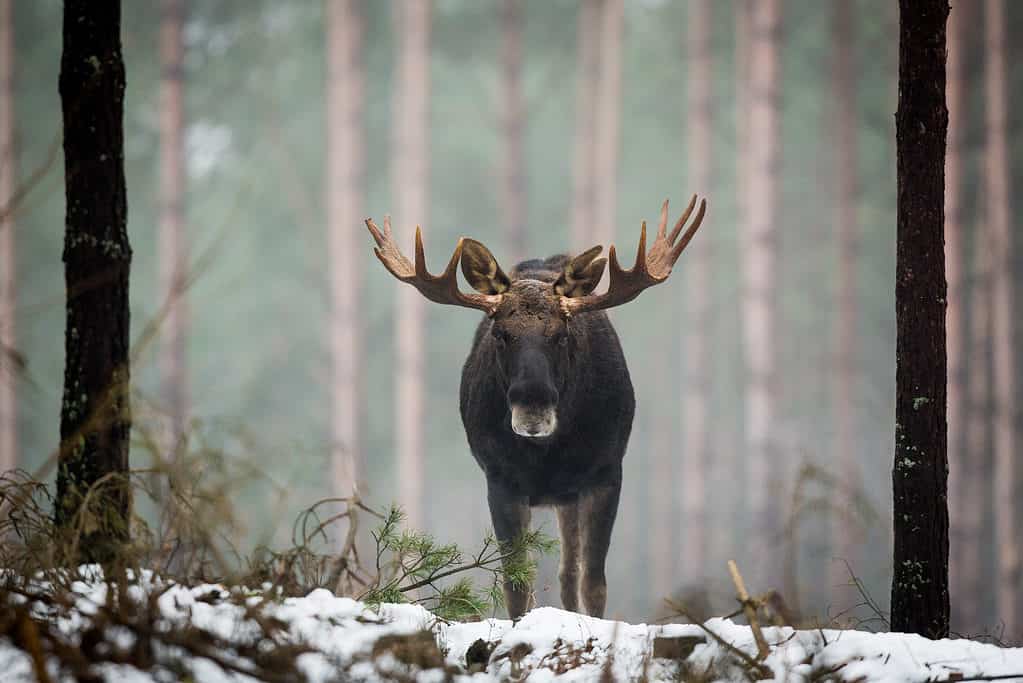
Moose are solitary browsers.
©Szczepan Klejbuk/Shutterstock.com
The Alaska moose is the largest subspecies in the world, with bulls often standing at over six feet at the shoulder and weighing a whopping 1,400 pounds! Moose are solitary browsers, wandering Katmai’s wetlands, riverbanks, and lake margins as they feed on willow, alder, and aquatic plants. In fall, their deep, echoing calls can be heard across the tundra as males compete for mates. While not as visible as bears, moose are still pretty common, especially in the Savonoski and Naknek Lake regions. Be on the lookout for them in the early morning or evening along lakes or river corridors. And bring binoculars.
Gray Wolf

The versatile wolf scavenges both inland and in coastal areas.
©The Wolf Conservation Center
Elusive and rarely seen, gray wolves roam widely across Katmai’s interior as well as coastal regions. Population numbers aren’t well-documented but tracks and scat are regularly found throughout the park, confirming their presence. Wolves are adaptable, hunting moose and beavers inland, while scavenging salmon carcasses and marine mammals along the coast. If you really want to try to see one, your best bet is at dawn or dusk in remote coastal areas or tundra zones with a guided wildlife tour. Even then, you’re probably more likely to only see tracks or other signs of their presence as opposed to an actual sighting.
Red Fox
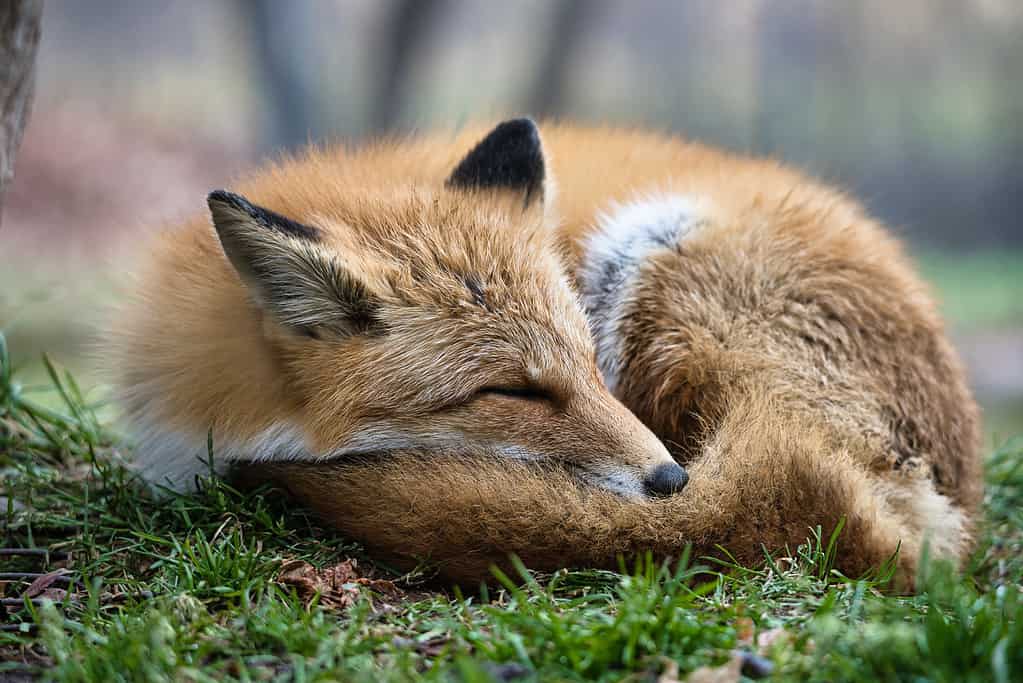
Red foxes are equal opportunity scavengers, eating almost anything they can find.
©TokioMarineLife/iStock via Getty Images
The red fox is among Katmai’s most photogenic mammals, often spotted trotting along riverbanks or open tundra. Their coloration varies, with some individuals being a bright, flaming red-orange while others are darker or even silver. They feed on small mammals, insects, berries, and carrion; basically, whatever the tundra provides. Sightings are definitely possible, but not as common or predictable as some of the park’s other animals. Hang out around Brooks Camp or the Valley of Ten Thousand Smokes in summer when kits emerge from their dens and you may just be lucky enough to catch these young foxes playing and pouncing.
Otters

Sea otters use rocks as a tool to smash open shellfish.
©2009fotofriends/Shutterstock.com
RIVER OTTERS inhabit Katmai’s lakes, rivers, and coastal areas, feeding on fish, crustaceans, and amphibians. Their presence is a good sign of clean, healthy waterways, since otters depend on unpolluted rivers teeming with fish. They are mostly active at dawn or dusk, but they’re shy and rarely seen, which is unfortunate because they have the most delightful habit of sliding down muddy banks for fun, which sounds almost as entertaining as watching a brown bear catch a leaping sockeye salmon in its mouth!
SEA OTTERS are the star of the nearshore marine ecosystem. These otters live almost entirely at sea along Katmai’s rugged Pacific coast. Sea otters have the densest fur of any animal in nature, allowing it to stay warm in the frigid Alaskan waters. Sea otters dive for clams, sea urchins, and crabs. If any of their a food as particularly hard shell, the innovative otter will float on its back, place the clam on its chest, and smash it open with a rock. Some otters even have favorite rocks that they keep with them for this purpose! Your best chance of a sighting is on coastal tour or boat trip where the rocky shores are accessible. Keep your eyes peeled for floating “rafts” of otters.
Harbor Seal
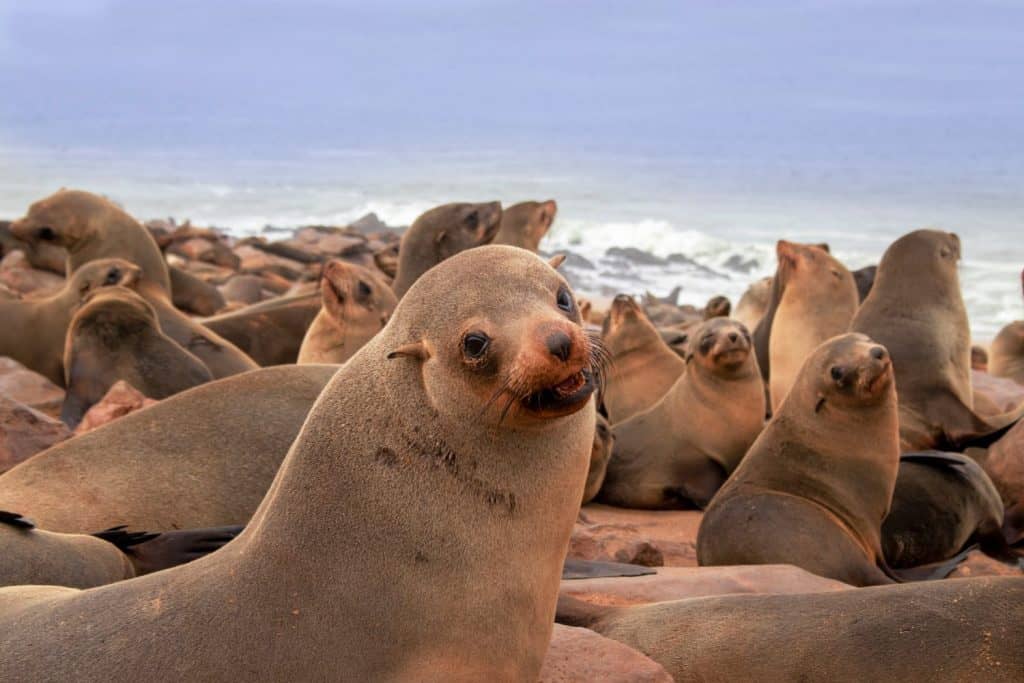
Harbor seals can dive over 1,000 feet for food.
©Yuliia Lakeienko/Shutterstock.com
Harbor seals are common along Katmai’s coastal bays and estuaries, especially around Hallo Bay. They haul out on sandbars or rocks to rest and give birth in summer. Feeding primarily on fish and squid, harbor seals are agile hunters who can dive over 1,000 feet deep for food. A vital link between marine and terrestrial ecosystems, seals provide food for coastal wolves and bears that scavenge carcasses washed ashore. Sightings are definitely possible, but you’ll need boat or kayak access to coastal zones and may require a guided trip.
Bald Eagle
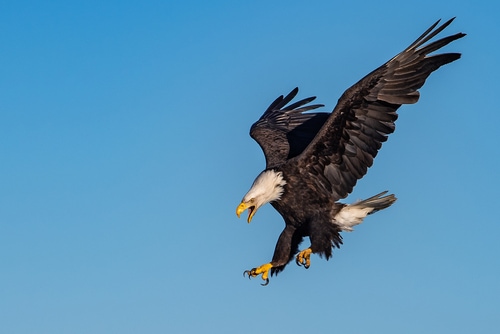
Bald eagles are een soaring all over the park.
©FloridaStock/Shutterstock.com
America’s national bird, the bald eagle is abundant in Katmai, thanks to the plentiful fish and carrion. They are relatively easy to spot, especially near Brooks River, Naknek Lake, or other salmon-rich waterways. Look for them perched on spruce trees or gliding above the lake shores, wetlands, coastal cliffs, or anywhere else fish, carcasses, or carrion are available. They play a vital role in cleaning up the ecosystem. With wingspans reaching up to an impressive 7 feet, bald eagles are both majestic and powerful.
Birds
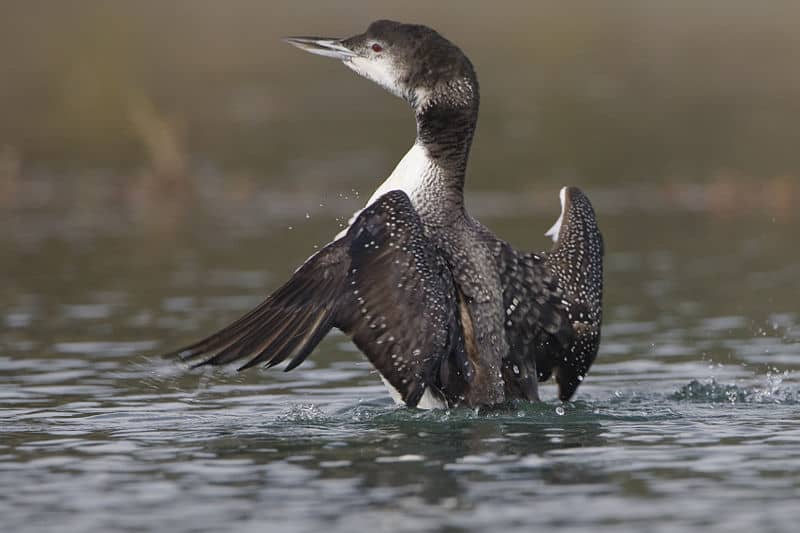
Common loon calls are common across the Katmai lakes.
©Mike Baird / Creative Commons – Original
On the land and in the seas and skies of Katmai are a massive diversity of birds. The is one of the best birding areas on the Alaska Peninsula. Breeding colonies of puffins, kittiwakes, and murres are found on rocky headlands; wetlands and lakes host shorebirds and waterfowl during the summer breeding season; coastal and interior wetlands provide breeding habitat for long-distance migrants like the arctic tern and godwit. Many species are seasonal but highly visible during migration and breeding months. A park favorite is the common loon, whose haunting call often echoes off Katmai’s quiet lakes. These striking black and white waterbirds dive expertly for fish, sometimes staying submerged for up to a minute! They nest on secluded lake shores in summer and migrate south to coastal waters in winter. Seeing or hearing a loon in Katmai is a quintessential Alaskan experience, especially in the calm mornings around Naknek Lake.
Red Squirrel
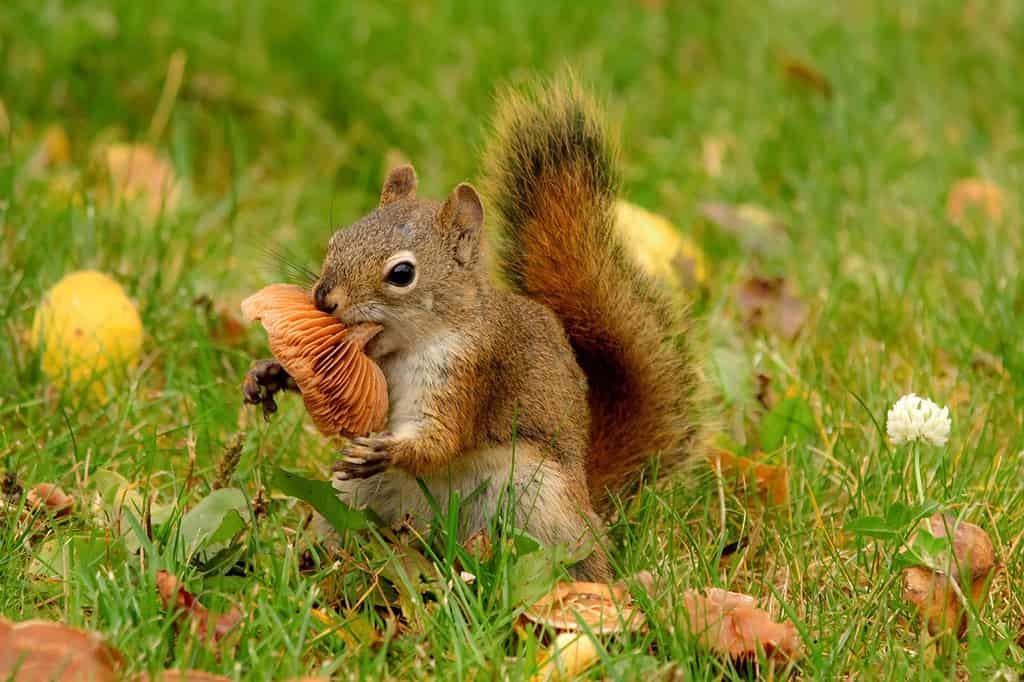
The red squirrel is just one of over 40 small mammals the park has to offer.
©Saeedatun/Shutterstock.com
Katmai is home to over 40 small mammals and other ground dwelling critters: snowshoe hares, beavers martens, minks, and weasels to name a few. One of the most active and vocal of these animals is the red squirrel. Found in forested areas near Brooks Camp, they feed on seeds, berries, mushrooms, and spruce cones, often caching (or squirreling away) food for the long winter. Their sharp “chirr” calls echo through the trees whenever a human (or bear) gets too close to their territory. They may be small, but they add a lot of life and sound to the boreal forest.
Have a great trip!
Katmai National Park and Preserve is much more than a “bear safari,” though the bears are indeed spectacular and among the most accessible large carnivores you’ll likely ever encounter. But these impressive mammals are just one part of a larger ecosystem: huge salmon runs fueling a web of life, remote and rugged landscapes sculpted by volcanism, moose trudging through wetlands and tundra, secretive wolves navigating both inlands and the edge of the Pacific, and coastal marine life like sea otters linking the ocean and the shore. When you walk into Katmai, you’re stepping into one of the wildest, least-disturbed parklands in the U.S., where the animals observed are doing what they’ve done for millennia: catching fish, roaming tundra, diving for shellfish, raising young, and surviving harsh winters. Some enterprising little buggers are even using rocks as hammers! If you plan a visit, aim for summer when access and wildlife activity align. And as always, be safe, follow the rules, and treat this ancient landscape and amazing wildlife with the respect and reverence it deserves.