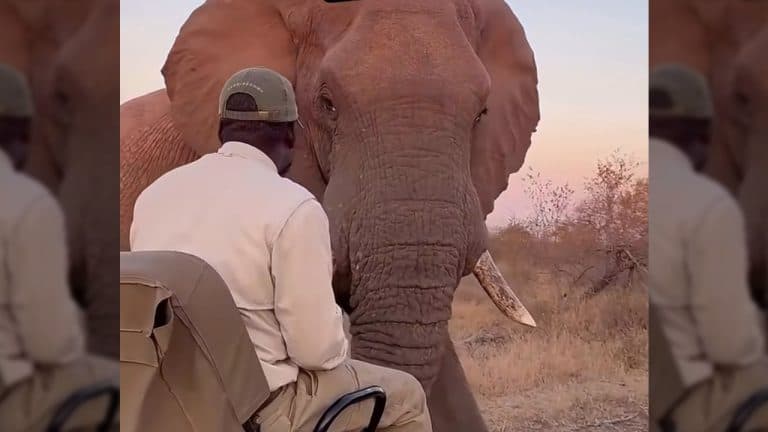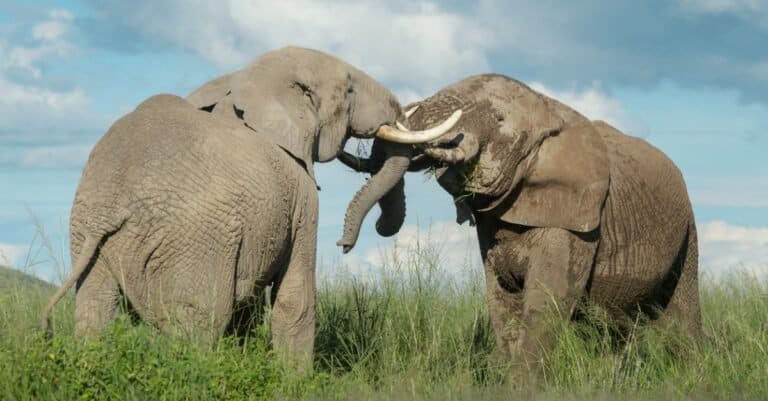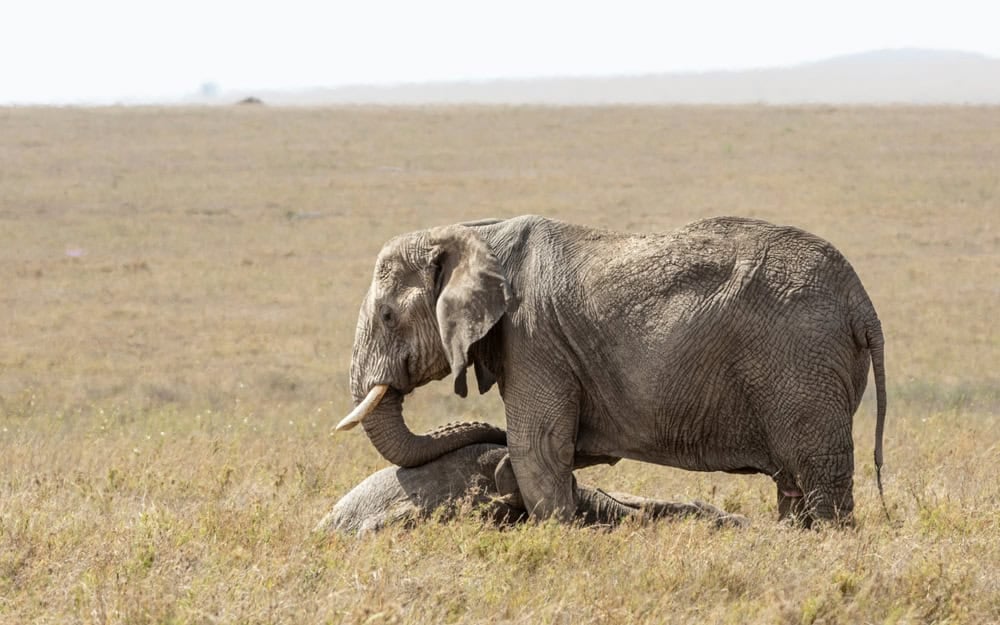

This terribly sad Instagram post documents a mother elephant’s grief for her stillborn calf. For two days, she carries it around, showing it to the herd and to human visitors to the area. The herd appears to provide comfort to the bereaved mother by gathering around her in silence and touching her. This show of respect and compassion is quite similar to that seen during a human funeral, including physical gestures of comfort for the young mother. This tells us a great deal about elephant cognition and communication within the herd.
Elephant Herd Maternity
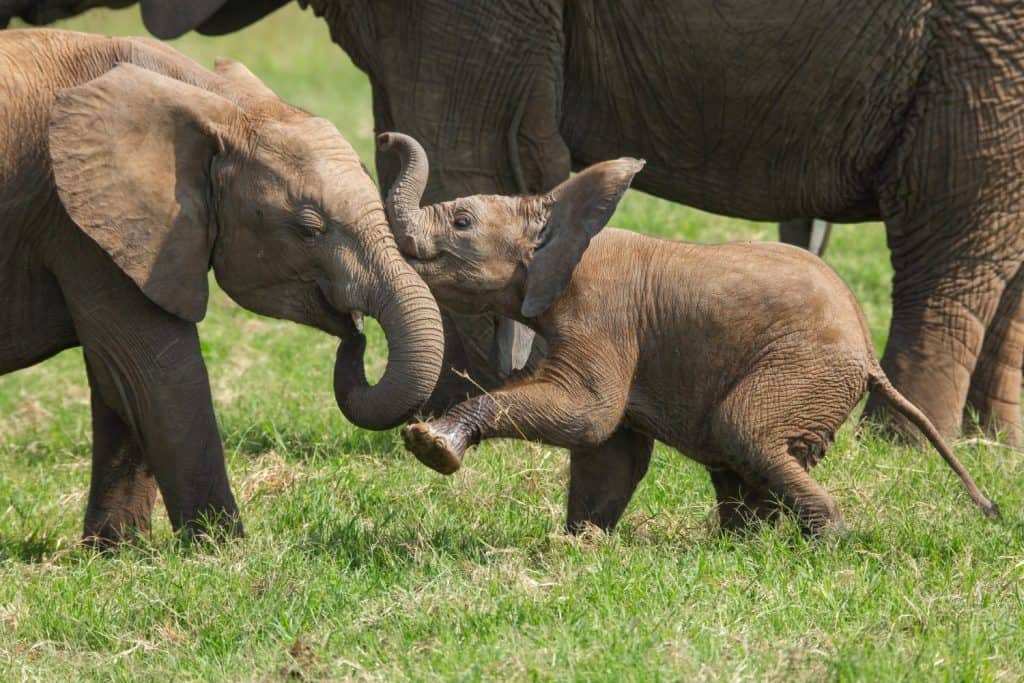
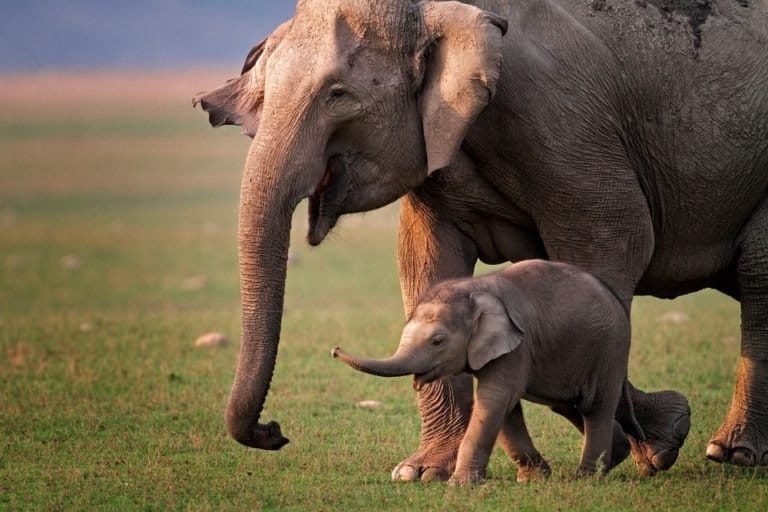
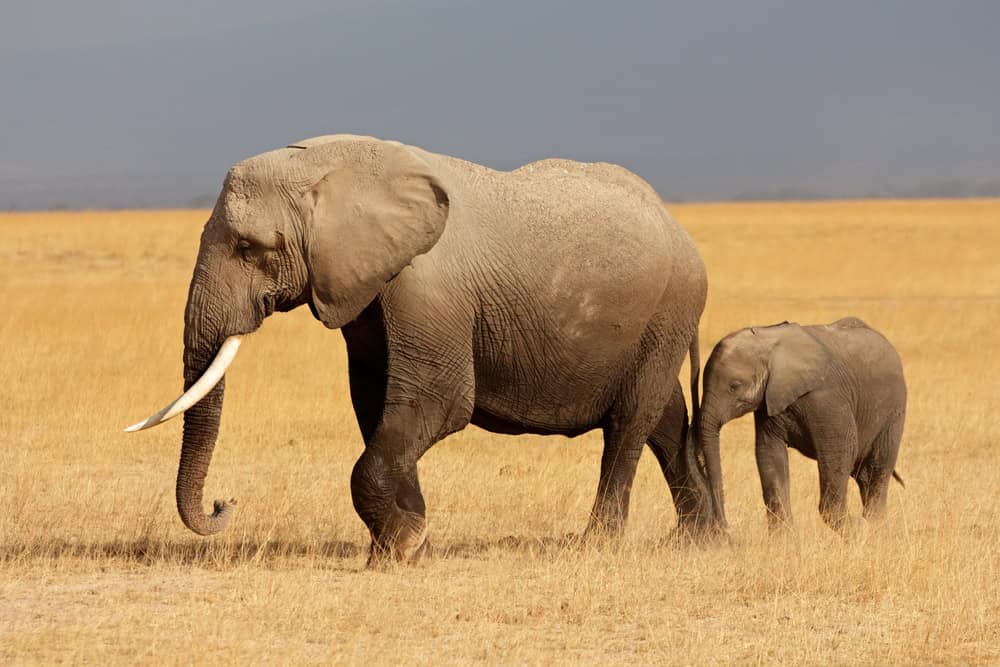
Elephant calves are raised by the herd.
©Chedko/Shutterstock.com
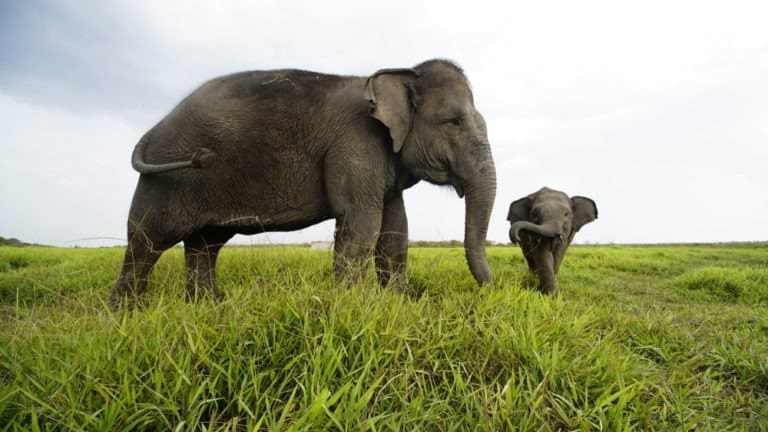
African bush elephants (Loxodonta Africana) form some of the most complex social bonds seen in any animal. Herds are made up of around 10 to 25 adult females and their offspring. Some herds join together to form much larger groups. These groups are very often multi-generational; mothers, grandmothers, and even great-grandmothers live together. There is a strong linear dominance hierarchy with the older and larger females in charge.
The females reach sexual maturity at around 12 years old and generally give birth to their first calf at around 14 years of age. Pregnancies last for 22 months, and usually just one calf is born at a time. The females can go from 3 to 10 years or more between births.
Therefore, a birth is a big occasion for the entire herd, who are all likely biologically related to the new arrival. Females often give birth at night, staying close to other females throughout the process. Once the calf arrives, the females often seem to celebrate: vocalizing, showing interest in the newborn calf, and even tossing the placenta around! Calves receive what is termed ‘allomaternal care’, which means they are looked after by the entire herd. This co-parenting gives them the best chance of surviving.
Given elephants’ low reproductive rate and the group parenting that takes place, it is not surprising that this stillbirth was such a devastating loss for the entire herd. These animals invested a lot of emotional energy in the calf, and that did not dissipate simply because the calf was deceased. The way in which the elephants expressed their grief is extraordinarily human.
Elephants and Grief
Plenty of evidence suggests that elephants understand death. They have been recorded approaching, investigating, smelling, and touching dead elephants. Herds have also been seen guarding the bodies of dead elephants as well as lifting them, attempting to feed them, and even covering them with vegetation or dirt. The strongest reactions seem to take place just after the death. Even though most of these observations are anecdotal rather than part of formal research studies, they teach us a lot about elephants. Many other types of animals show very little interest in the dead of their own species, so elephants are unusual in this regard. During closer studies of elephant grief, researchers have concluded that elephants, like humans, can show compassionate behavior. They can recognize when another elephant is in distress and direct their attention towards that individual.
Elephant Death Rituals
Elephants invest a lot in their offspring.
©EcoPrint/Shutterstock.com
Some of the behavior shown by these elephants is very similar to that of a human funeral ceremony. Similar behavior has been recorded in other herds who have carried a carcass of a dead elephant for some distance, observed the body for several hours, and even buried it.
In one detailed study of Asian elephants, five calf burials were recorded. In all the burials, the heads, trunks, and backs were fully buried, but the legs were still above the ground. This suggests that the dead calves had been placed respectfully and purposefully in their graves. There were footsteps of several elephants around the burial, indicating that all of the herd were involved in the burial ceremony. Also, the elephants had been heard vocalizing during the burial. In one case, the herd had carried the dead calf for 40-45 hours before finding an appropriate place to bury it. This would be an isolated location away from humans and carnivores. The researchers in this study commented that such Asian elephant behavior may be partly explained by the maternal hormone oxytocin and the prolonged pregnancy period.
Tactile Communication
On several occasions in this clip, you can see herd members using their bodies to comfort the new mother and other elephants. Communication by touching another animal is called tactile communication and is important for many species. It is used by elephants for several purposes, including to provide reassurance and affection. In this clip, you see elephants touching their herd mates with their trunks, a very sensitive and expressive part of the elephant’s body. Some elephants even caress the others with their trunk to provide comfort. The whole herd’s reaction to this tragic loss is one of the most heartbreaking animal clips you will find.