
Quick Take
- The Northern mockingbird was the first official animal of Arkansas
- White-tailed deer provide income to the state primarily from hunters.
- The Arkansas state dinosaur, Arkansaurus Fridayi, was about the same size as an ostrich.
As with every other state in the United States, Arkansas legislators have chosen various symbols to represent their state. Among many other examples, the state has an official gem (diamond), musical instrument (fiddle), grain (rice), beverage (milk), and even an official cooking vessel (Dutch oven). Along with these symbols, Arkansas lawmakers have selected five animals as official representatives of their state. Continue reading to learn more about the six animals that represent Arkansas and why they were chosen as official symbols of The Natural State.
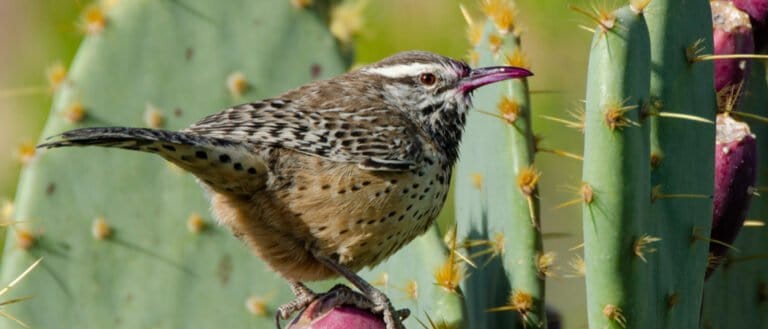
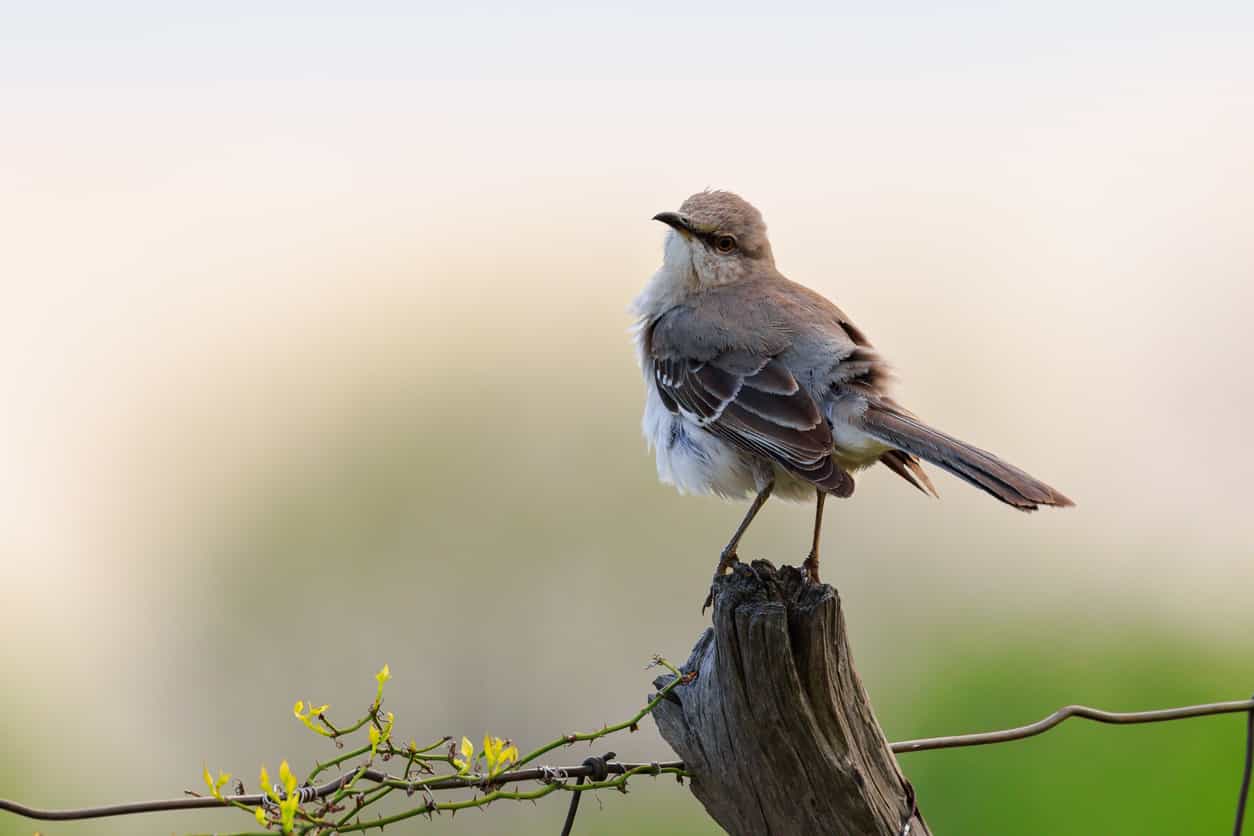
State Bird: Northern Mockingbird
There are 14 species of mockingbirds, and the Northern mockingbird (Mimus polyglottos) is the only one commonly found in North America. The other species are found farther south in Mexico, Central America, the Caribbean, and South America.
Like other mockingbirds, the Northern mockingbird can mimic other animals. This mimicry is not confined to other birds, though. The Northern mockingbird can mimic animals such as frogs and insects. They can even mimic manmade sounds, such as the ringing of a telephone.
The songs and sounds of the Northern mockingbird number in the hundreds. The bird’s scientific name, Mimus polyglottos, is Latin for many-tongued mimic.
When the Northern mockingbird was proposed as the official state bird of Arkansas, many initially scoffed at the idea. The bird was hardly unique to Arkansas. These birds are found throughout much of the United States. Many Arkansas lawmakers were reluctant to designate this bird as the first official animal symbol of their state.
But the official state motto of Arkansas seemed to win the day: Regnat Populus, which is Latin for “the people rule.” The people of Arkansas pushed for the Northern mockingbird’s official state status, and their elected officials eventually listened.
Mockingbirds are omnivores that eat insects and weed seeds, which are both beneficial to farmers and gardeners. The Arkansas Federation of Women’s Clubs advocated for the bird’s benefits to state lawmakers. Their efforts persuaded many officials to support the mockingbird as the official state bird, and the bill was eventually passed. The Northern mockingbird was named the official state bird of Arkansas in 1929.
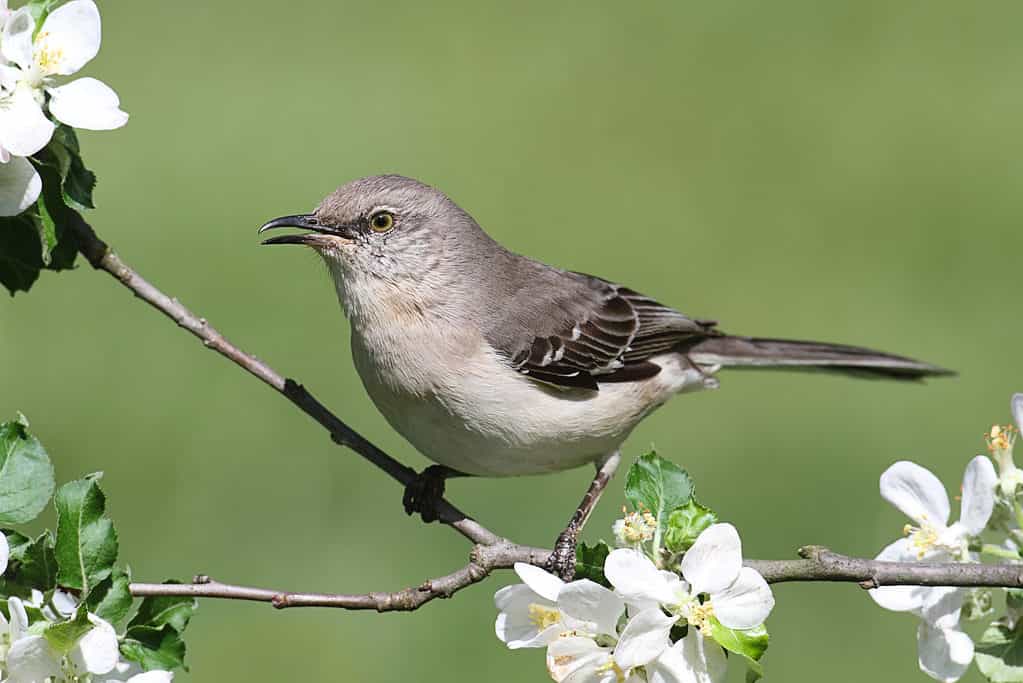
The Northern mockingbird eats insects, which is welcomed by farmers and gardeners.
©Steve Byland/Shutterstock.com
State Insect: Honey Bee
The honey bee (Apis mellifera) was named the state insect of Arkansas in 1973. Arkansas is hardly alone in this designation, though. The honey bee has been designated as the official insect in 19 states, more than any other insect by a wide margin.
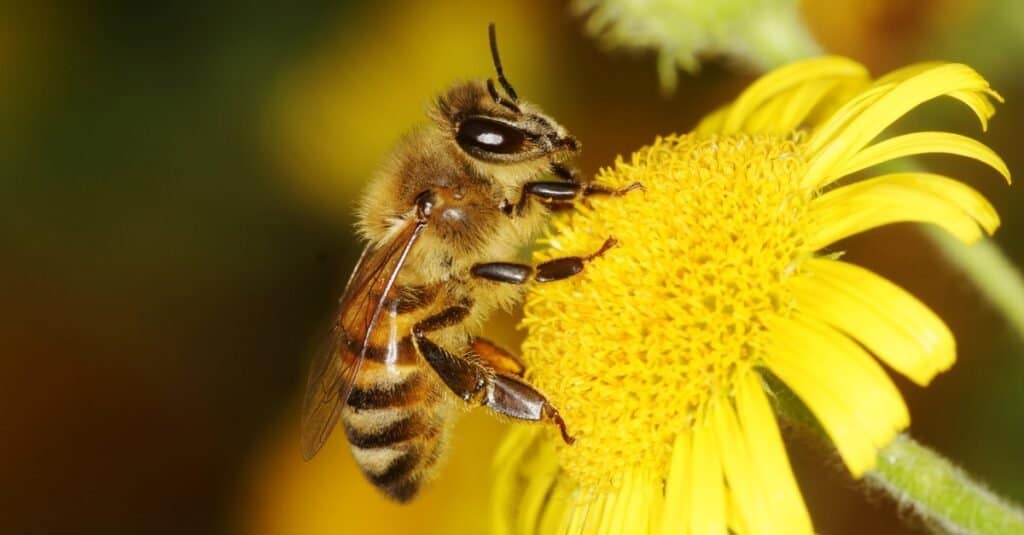
The honey bee is an invaluable pollinator.
©Maciej Olszewski/Shutterstock.com
Such widespread recognition is appropriate given our reliance on this pollinator. Honey bees pollinate many fruits, vegetables, and nuts that are human dietary staples.
Albert Collier, a representative from Jackson County, Arkansas, proposed the legislation to officially recognize the honey bee as Arkansas’s state insect. He cited the bee’s importance in pollination, as well as the insect’s values of perseverance and hard work.
Although the honey bee was named the state insect in 1973, Arkansas’s recognition of its importance dates back to the state’s founding. When Arkansas joined the Union in 1836, a beehive was included on the state seal, where it remains today.
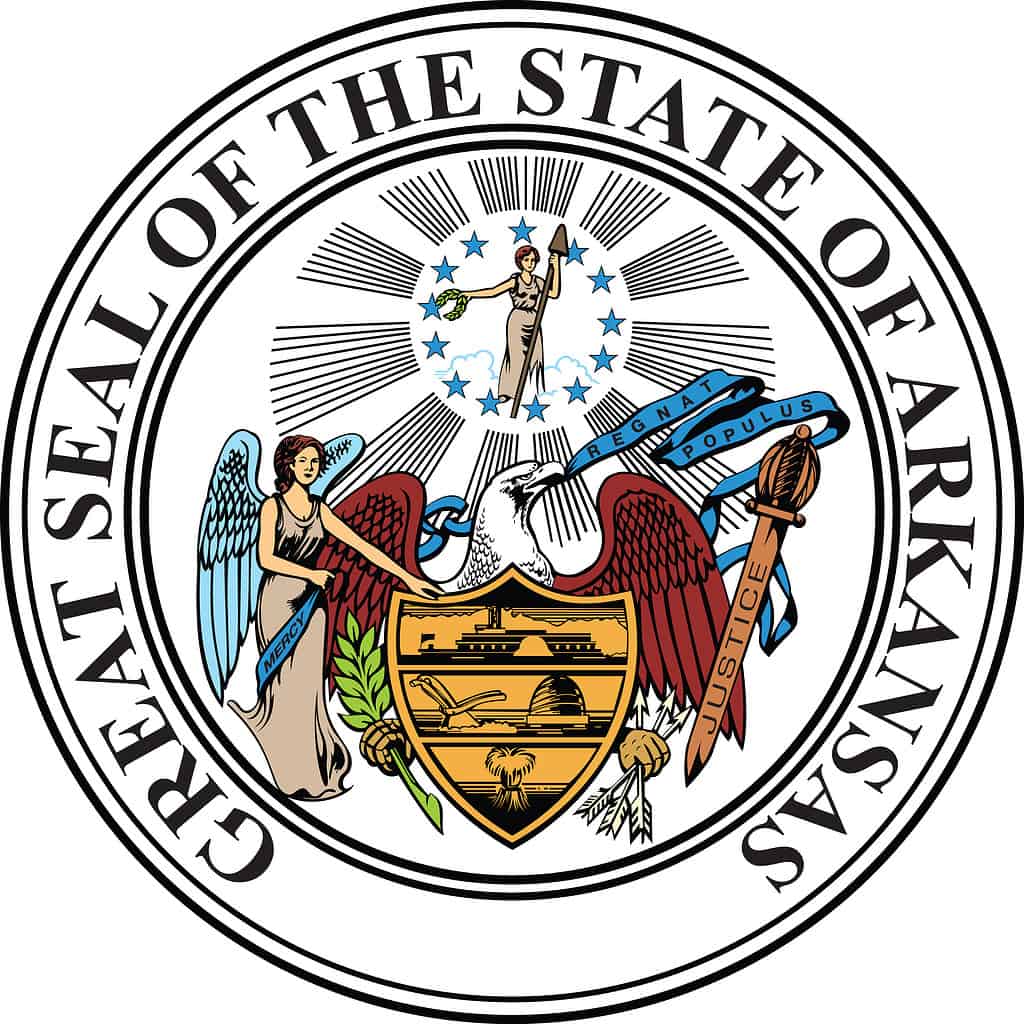
A beehive is featured on the official state seal of Arkansas.
©iStock.com/Roki Rodic
State Mammal: White-Tailed Deer
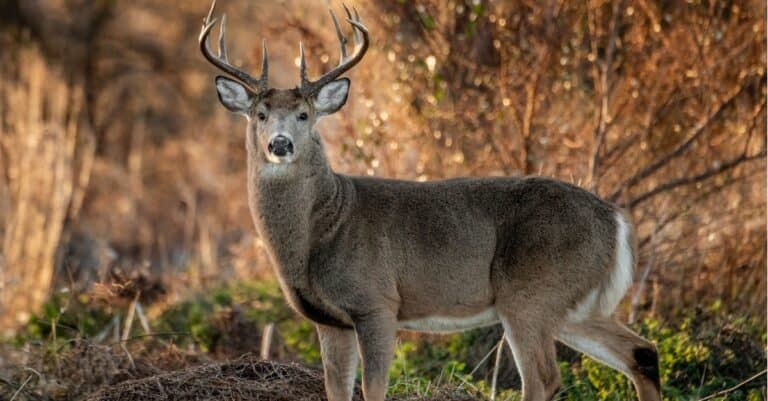
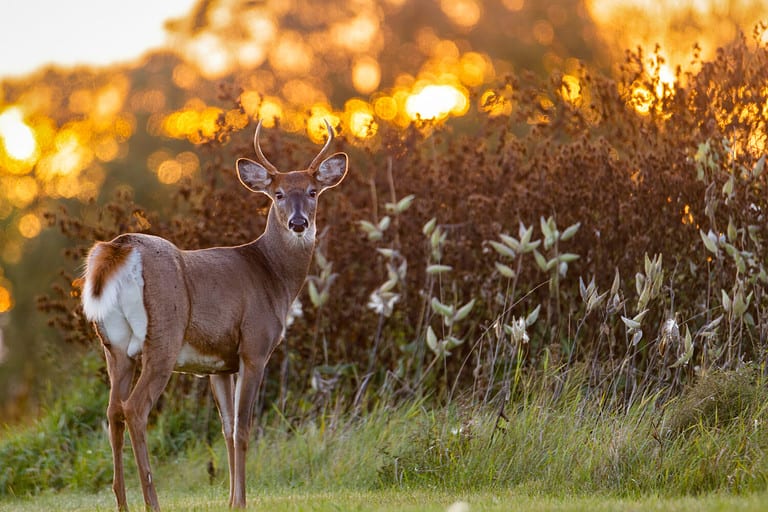
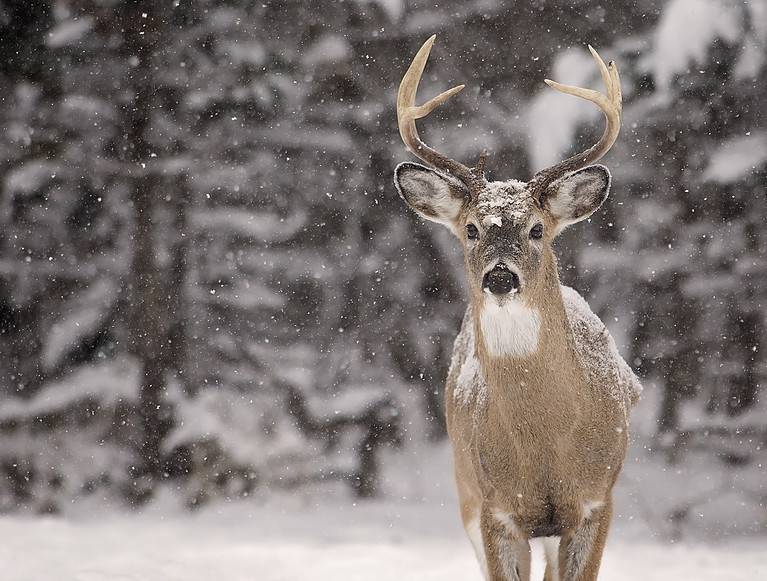
The white-tailed deer (Odocoileus virginianus) has been the official mammal of Arkansas since 1993.
The Arkansas deer population is healthy, with white-tailed deer found in every county within the state. Recent estimates put the Arkansas white-tailed deer population at about 970,000.
Indigenous peoples relied heavily on the deer. They used every part of the animal, including the meat, hide, and antlers. The arrival of colonists put more pressure on the deer population. White-tailed deer were hunted with no limits or restrictions until 1916, when the first legal deer hunting season was enacted. By then, much of the damage had already been done. By the 1930s, only a few hundred deer remained in the state. The Arkansas Game and Fish Commission (AGFC) began purchasing deer from other states in an attempt to rebuild the state’s population. The AGFC later redistributed herds within the state to improve population density and reproductive viability. Thanks to these conservation efforts, the white-tailed deer population is thriving once again in The Natural State.
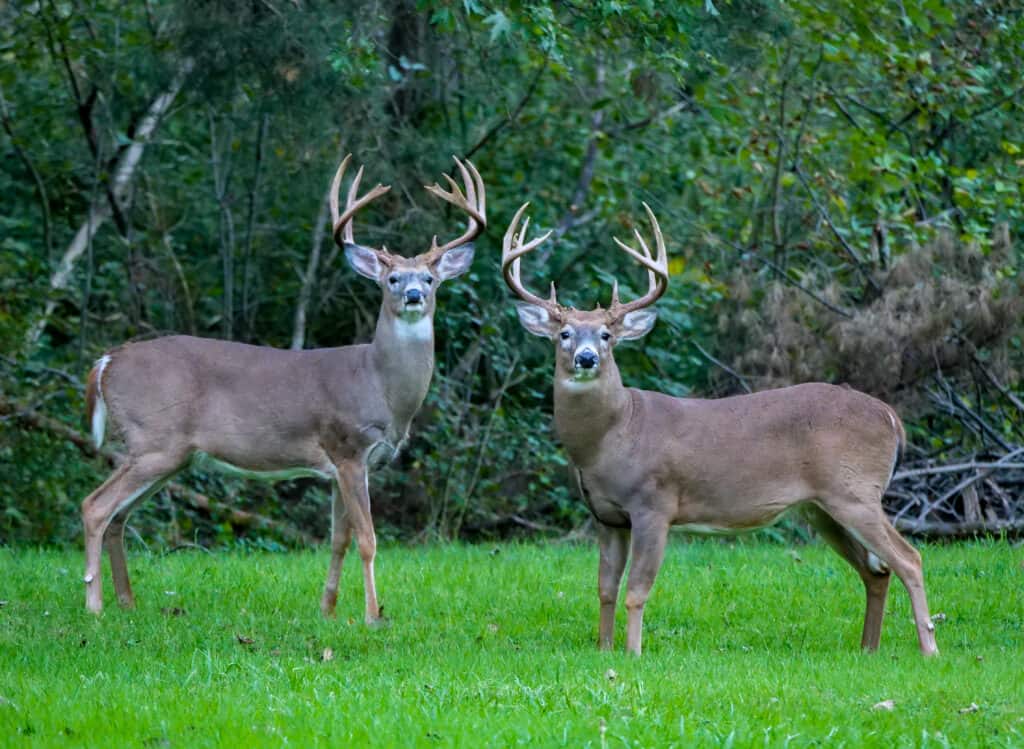
White-tailed deer were brought back from the brink of extirpation in Arkansas.
©iStock.com/Ralph Navarro
Managing the Arkansas Deer Population
The white-tailed deer is the most common deer species in the world. These deer are vital parts of their native ecosystems. Along with human hunters, white-tailed deer are a necessary food source for predators, including black bears, bobcats, and coyotes.
In addition to serving as prey for Arkansas’s natural predators, white-tailed deer also provide an economic boost to the state. Nearly 200,000 deer are harvested by Arkansas hunters each year. Hunting-related activities contribute approximately $3 billion annually to the state’s economy.
While white-tailed deer were once severely threatened in Arkansas, hunting is now necessary to keep the deer population at a manageable level. Overpopulation puts a strain on both the ecosystem and the economy. Arkansas has around 3,000 deer-related traffic accidents yearly. Without a well-regulated deer season, that number could be even higher.
The white-tailed deer is a conservation success story and vital to the Arkansas ecosystem and economy. It was a well-deserved honor when Governor Jim Guy Tucker signed legislation on April 5, 1993, naming the white-tailed deer as the official state mammal of Arkansas.
State Butterfly: Diana Fritillary Butterfly
The Diana fritillary butterfly (Speyeria diana) was named the state butterfly of Arkansas in 2007.
Then-Representative John Paul Wells of Logan County introduced legislation to make the butterfly an official state symbol. The bill noted the butterfly’s beauty, educational importance, and impact on state tourism. The legislation was passed, and the Diana fritillary butterfly became the state butterfly of Arkansas on February 28, 2007.
The Diana fritillary (often known simply as the Diana) is a large butterfly with a wingspan of 3.5 to 4.5 inches. It is among the most stunning of the 134 butterfly species found in Arkansas. The butterfly was named after Diana, the Roman goddess of light and life. Diana later became known as the goddess of the moon and hunting, as well as a protector of women.
This butterfly has been documented in 27 of Arkansas’ 75 counties. It is often found in higher elevations, including Mount Magazine, the highest point in Arkansas.
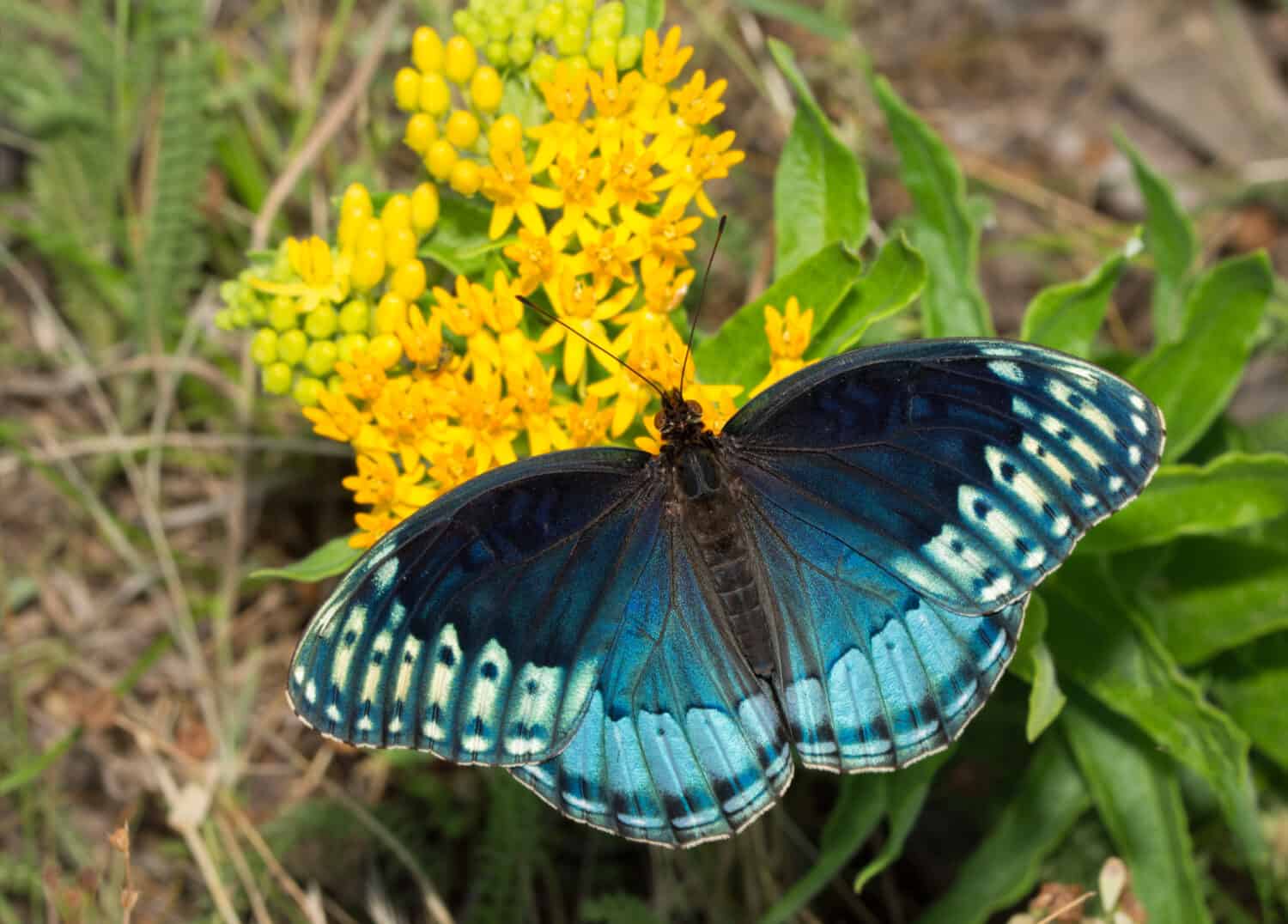
The female Diana fritillary butterfly is black with lovely blue hindwings.
©Sari ONeal/Shutterstock.com
The Diana is a sexually dimorphic butterfly. Males have a black base color with orange outer portions, while females are larger and display a striking pattern of black with iridescent blue outer edges.
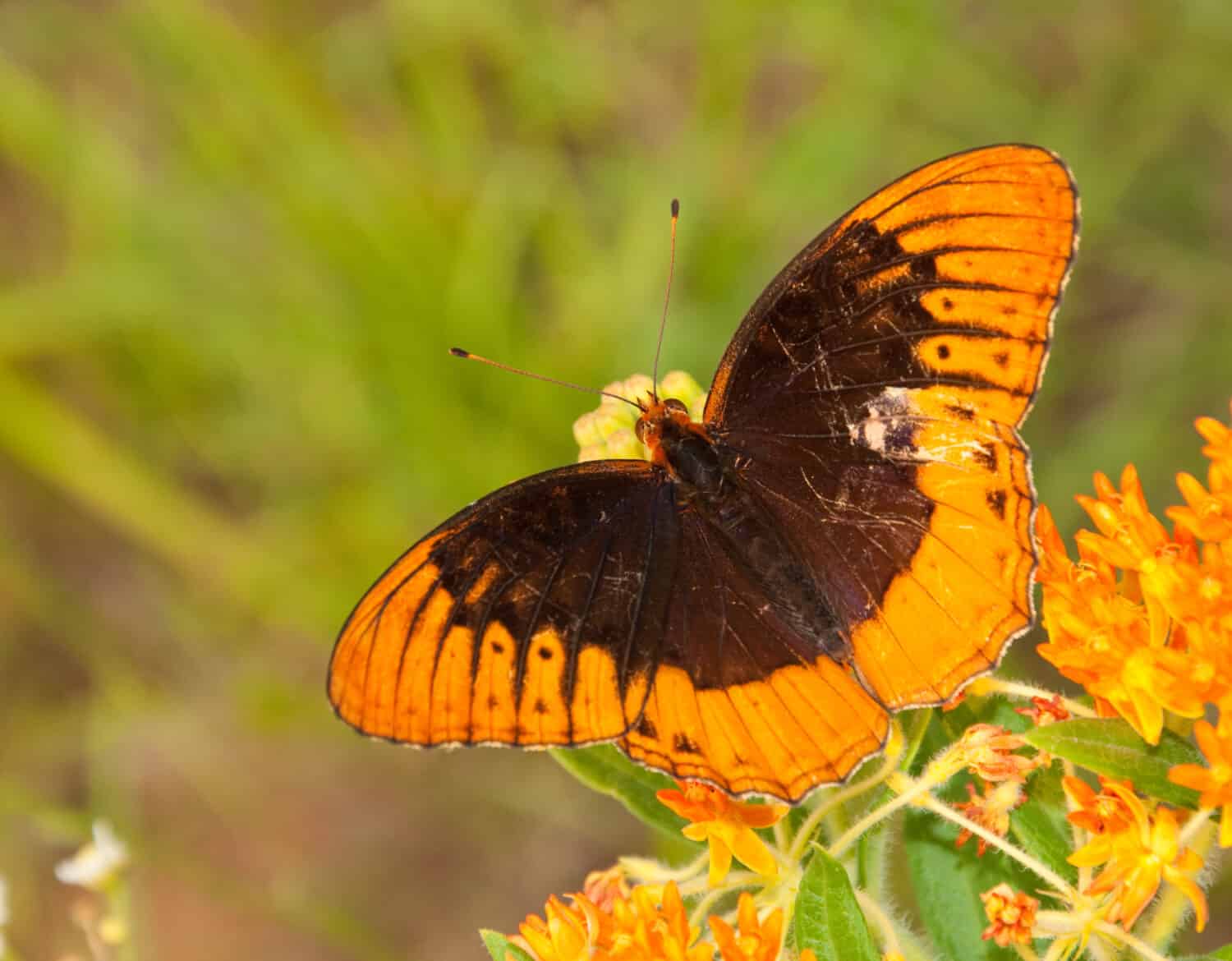
Male Dianas are black with bright orange hindwings.
©Sari ONeal/Shutterstock.com
State Dinosaur: Arkansaurus Fridayi
Finding fossils in Arkansas is a rarity. Fossils are often poorly preserved underneath the state’s soil. In fact, the first verified fossil discovery in the state did not occur until 1972. That is when the bones of a prehistoric theropod dinosaur that bore at least some resemblance to a modern-day ostrich were found on property owned by Joe Friday (hence the dinosaur’s name). The bones were found in Southwestern Arkansas in Early Cretaceous age rocks formed approximately 100 to 146 million years ago.
Arkansaurus fridayi was roughly the same size as a modern ostrich but had a long tail and clawed fingers. It is also theorized that this dinosaur had teeth, while later ostrich-mimics were toothless. It was likely covered in shaggy hair-like feathers.
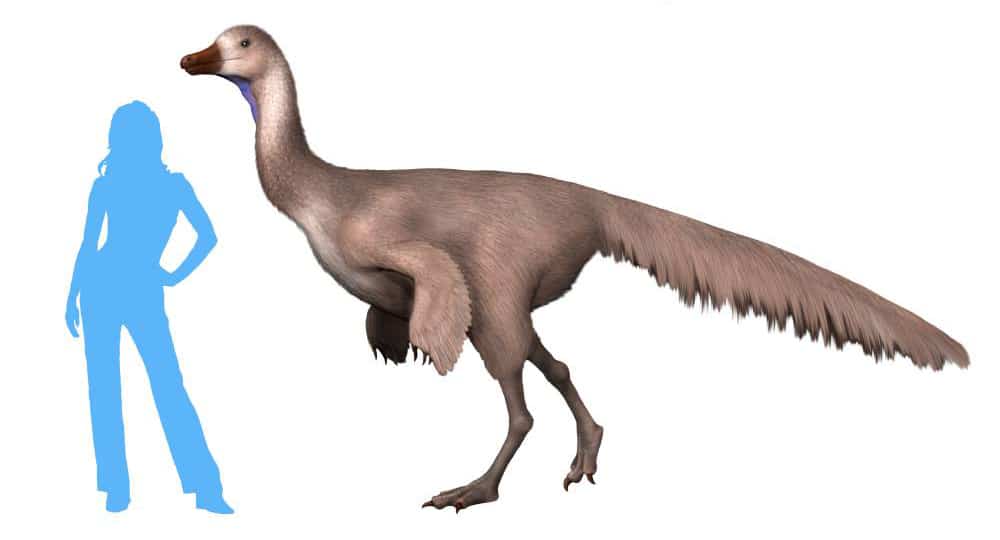
The Arkansaurus fridayi featured a long tail and hairlike feathers.
©Nobu Tamura Email:[email protected] http://spinops.blogspot.com/ http://paleoexhibit.blogspot.com/ CC BY-SA 4.0 – Original / License
One Student’s Mission
Mason Oury, a high school student from Fayetteville, created a campaign to name Arkansaurus fridayi as the official dinosaur of Arkansas. It was, after all, the first fossil ever discovered in the state. Oury’s efforts included a website, podcast, and social media presence. His goal, which began in 2013, was realized when then-Governor Asa Hutchinson signed the resolution in 2017. Although this animal lived over 100 million years ago, it now holds an official place alongside Arkansas’s four modern state animals.
State Primitive Fish: Alligator Gar
The alligator gar (Atractosteus spatula) was designated as Arkansas’s official primitive fish in 2019. The charge was led by 10-year-old Henry Foster of Fayetteville, Arkansas, to make the alligator gar the state’s official primitive fish. Foster’s desire to have a unique state fish that represented Arkansas led him to launch his campaign via change.org in 2018.
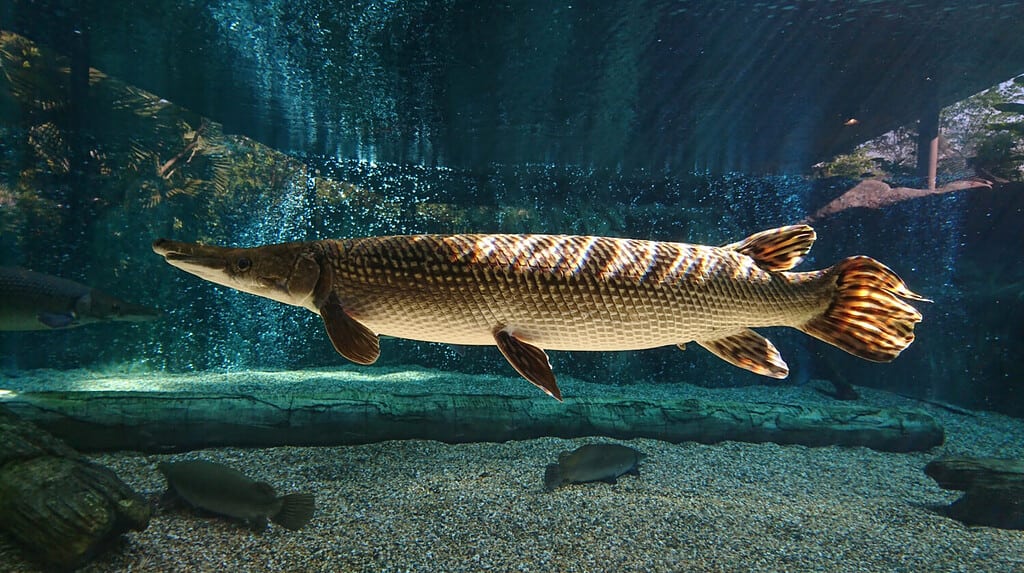
The average adult alligator gar is 4 to 6 feet long and weighs between 100 and 150 pounds, although they are capable of growing significantly larger.
©Cheng Wei/Shutterstock.com
Despite their prehistoric appearance and sharp, double rows of teeth, are not aggressive and do not pose a threat to humans. The alligator gar is a passive, sluggish fish that tends to be wary of humans.
They are ambush predators that feed on fish, crabs, waterfowl, and turtles.
Alligator gar meat is firm, white-fleshed table fare in the Southern U.S. and Mexico. While the meat is safe and tasty, their eggs are highly toxic and should never be consumed.