
Quick Take
- Pliny the Elder had a very specific cure for earwigs in the ear 2,000 years ago, and it is stranger than you would expect. See ancient accounts →
- Earwigs hide a secret under their bodies that unfolds to ten times their size. Discover the hidden wings →
- The earwig's scariest-looking feature isn't what you think it's for, and knowing its real purpose changes how threatening they actually seem. Learn the pincers' real use →
- Earwig mothers do something with their eggs that most social insects don't, and it has nothing to do with your ear. Meet the devoted mothers →
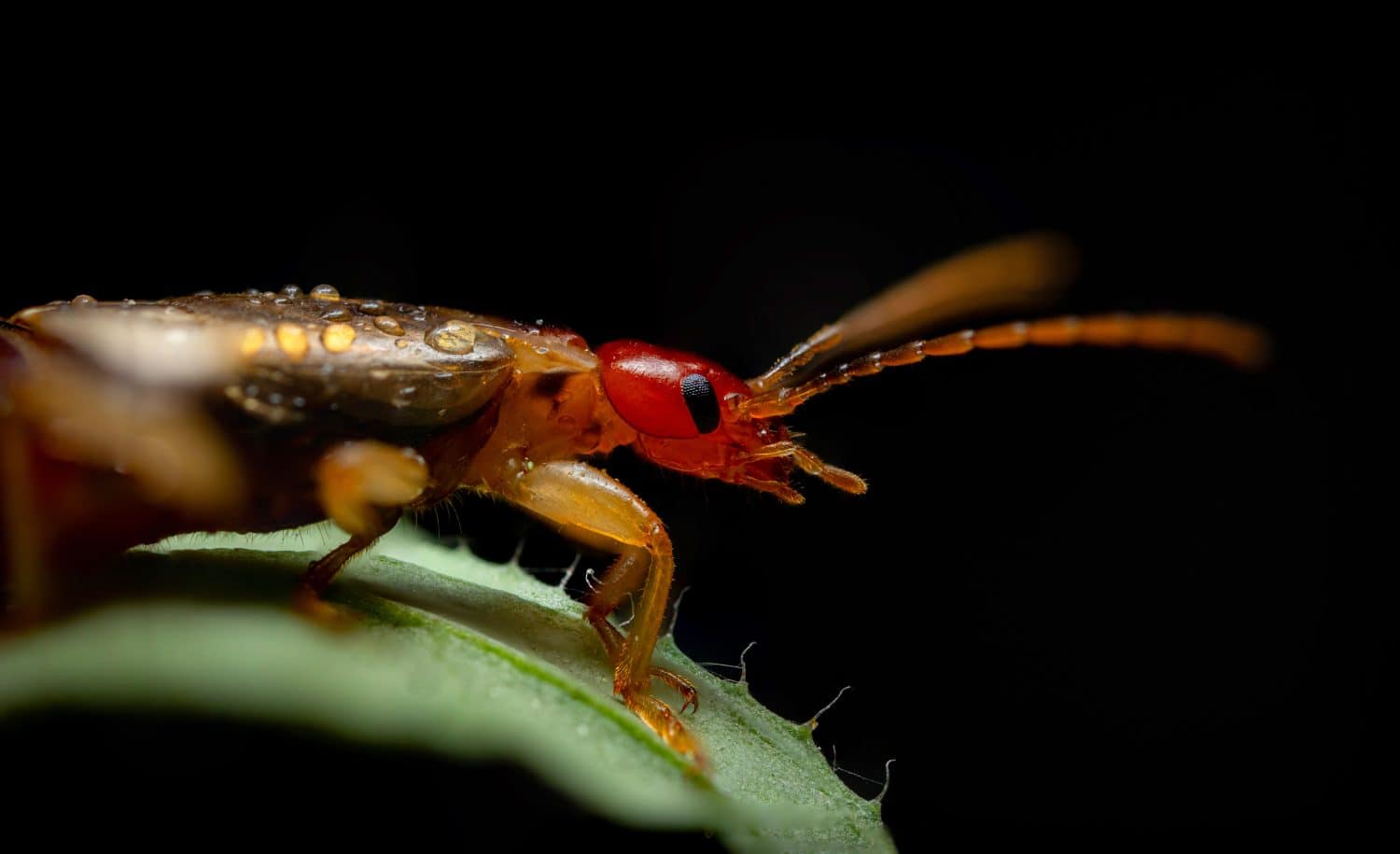
The much-maligned earwig gets its name from an ancient myth stating that the flattened insect will crawl inside a person’s ear while they are sleeping and lay eggs in their brain. Although it is possible for an earwig to choose a human ear when seeking out a dark, cozy space to hide, the chances of it happening are incredibly low. Why does this harmless garden-dwelling insect have such a bad reputation? And is there truly anything to fear from an earwig? Here is what the misunderstood creature is actually up to.
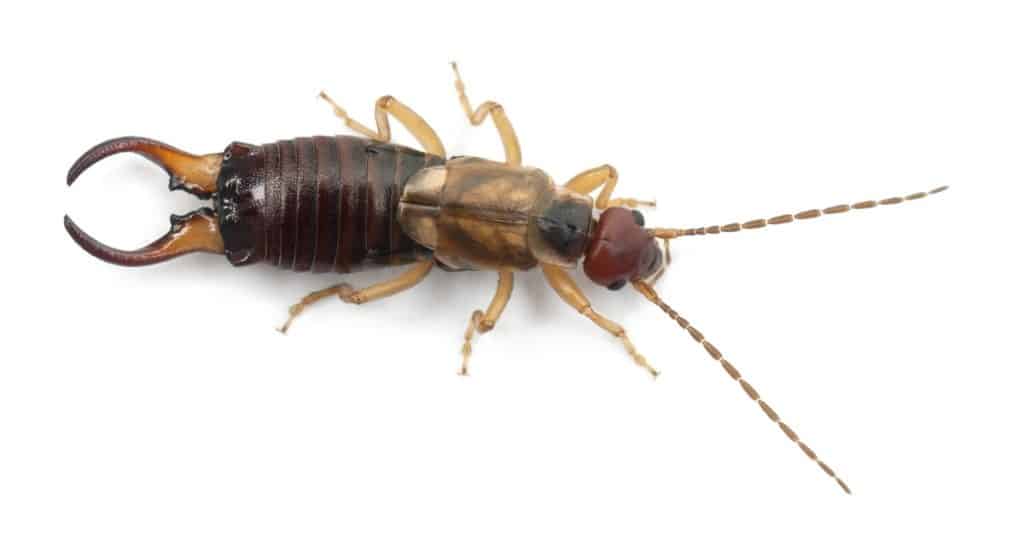
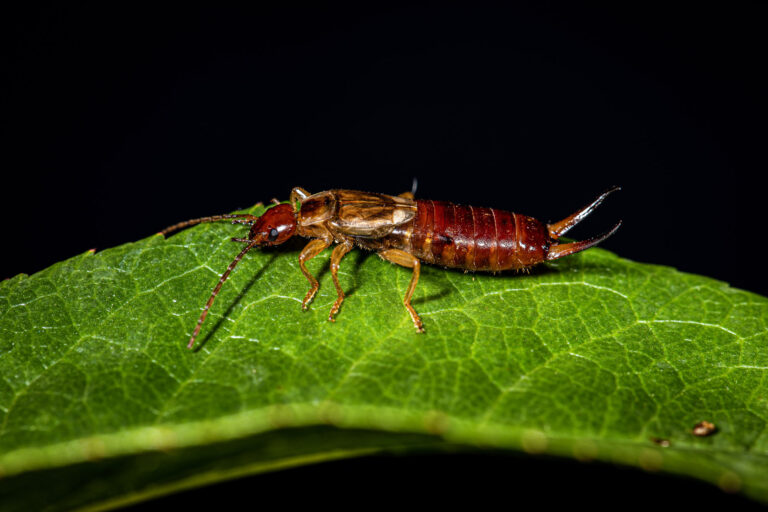
The European earwig has frightening looking pincers, but they are harmless to humans.
©Eric Isselee/Shutterstock.com
How the Earwig Got Its Name
The name earwig comes from the Old English word for ear, “eare,” and “wicga,” which means insect. We can trace the first mention of an earwig inside an ear to 2,000 years ago in Ancient Rome, when Pliny the Elder gave his remedy in “Natural History”. His advice was that if “an earwig … be gotten into the eare … spit into the same and it will come forth anon.”
About 1,000 years later, another cure is found in an Anglo-Saxon collection of medical remedies. The advice is to use a blade of grass to extract the earwig from the ear. It’s not just the British and Romans who were preoccupied with earwigs crawling into ears. Other European countries had similar names to refer to the insect. In Russia it’s known as ukhovertka (ear turner), while in France, the earwig is called a perce-oreille (ear piercer).
Why People Believed the Myth
Earwigs are incredibly common, nocturnal, and also tend to hide in unexpected places. This knowledge, alongside their skinny body type, wriggly way of moving, and intimidating pincers, may have helped fuel the earwig myth through the centuries. Even today, it’s a common belief that earwigs frequently crawl into people’s ears while they sleep.
Can an Earwig Crawl into Your Ear?
Though it may have started with Pliny the Elder, the misconception that earwigs purposefully seek out human ears may come from their real-life affinity for hiding in dark spaces.
However, just because they don’t intend to end up in your ear doesn’t mean it never happens. There are numerous reports from medical journals of earwigs being pulled out of people’s ears. The unsuspecting earwig probably thought it had found a safe and dark spot to retreat to.
What Happens if an Earwig Gets in Your Ear?
While the thought of an insect in your ear may be frightening, earwigs don’t cause injuries or break eardrums. And they are incapable of coming anywhere near a person’s brain. There are several standard methods for removing them, none of which cause lasting damage.
Earwigs Can Actually Help Your Garden
Despite the superstitions that earwigs lay eggs inside brains, or burrow through bone and skin with their pincers, this is not how earwigs behave. There are approximately 2,000 species of earwigs in the order Dermaptera, and they live on every continent except for Antarctica.
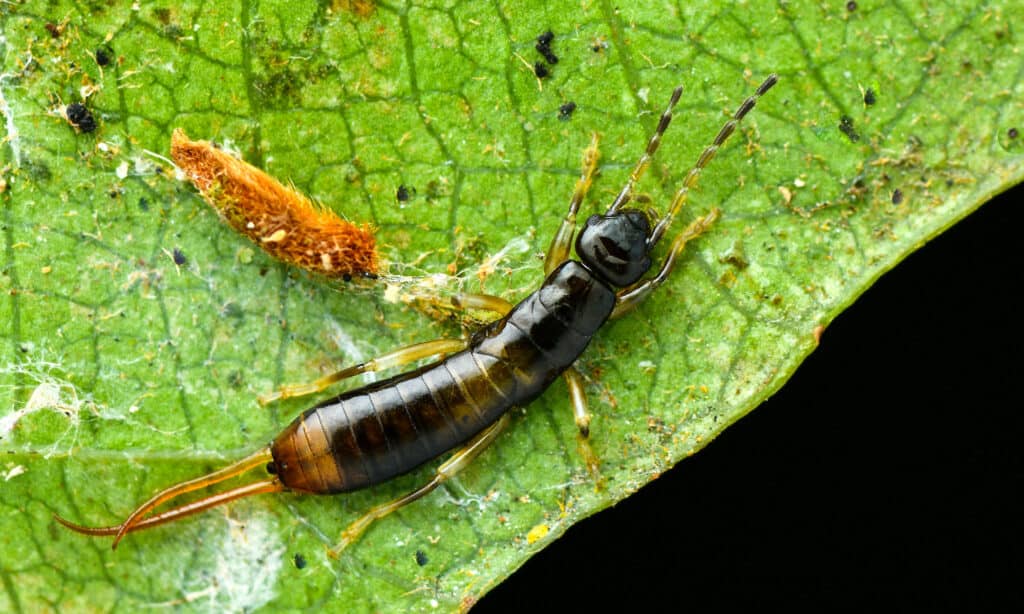
Some consider earwigs beneficial in the garden because they eat pests such as aphids.
©SIMON SHIM/Shutterstock.com
One of the most commonly found species is the non-native European earwig (Forficula auricularia). Though some consider the earwig a garden pest, it’s more of a nuisance to plants. It does not cause ecological or economic harm to crops. In fact, experts have found that the humble earwig loves to eat aphids, which commonly damage vegetation, and can be a real benefit to gardeners and farmers.
Earwigs are known as opportunistic feeders and will eat almost anything they find. In addition to aphids, they will eat insect eggs, mites, and other small soft-bodied insects. They help clean up the environment by feasting on decaying plant matter. However, they also chew on living plants such as flowers, hostas, and strawberries.
What Are Earwig Pincers Actually For?
The superstition that an earwig can cut its way through an eardrum probably comes from the insect’s formidable appearance. But earwig pincers are used primarily for hunting, defense, and wrestling rivals during mating. People who have been pinched by an earwig report a very mild pressure that doesn’t break the skin, and it certainly couldn’t cut through a person’s skull to enter their brain.
The Amazing Origami Wings of Earwigs
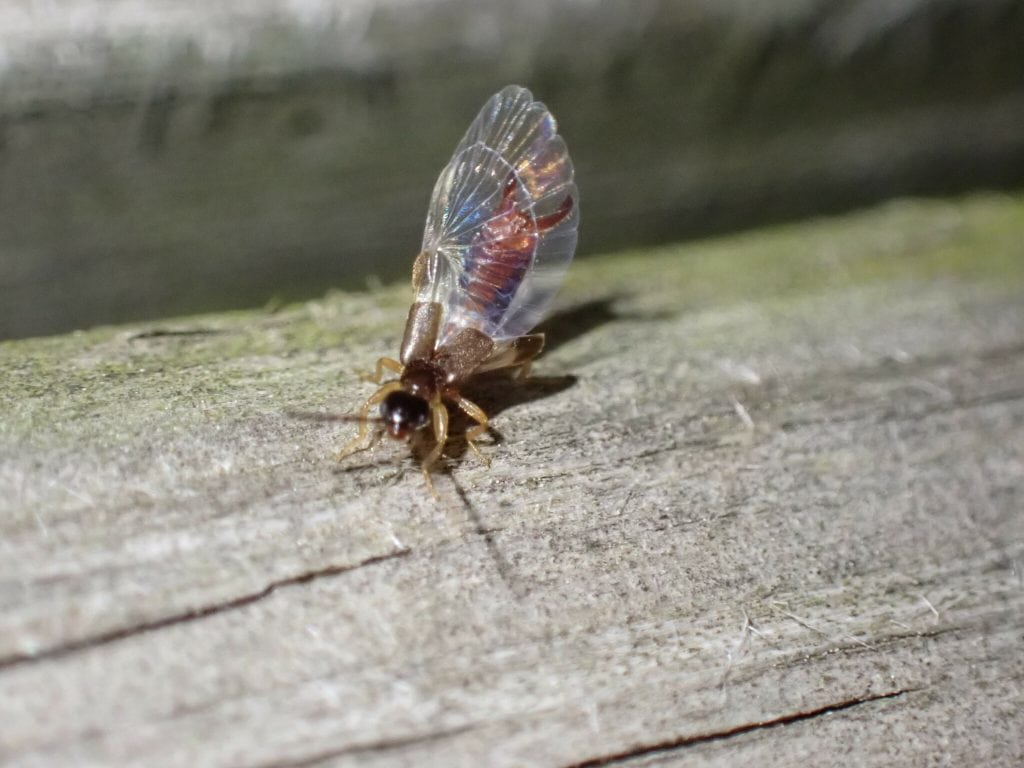
An earwig’s flight wings fold up like origami when not in use and stay hidden under leathery wing coverings.
©Cecil Smith, CC BY 4.0, via Wikimedia Commons – Original / License
Earwigs have some of the most fascinating wings in the animal kingdom. They keep them tucked away and out of sight most of the time. But when they unfurl them, the shimmering wings are revealed to be 10 times their body size. Remarkably, the earwig uses a complex folding pattern, similar to origami, to tuck their wings back in.
Earwig Mothers Are Surprisingly Devoted
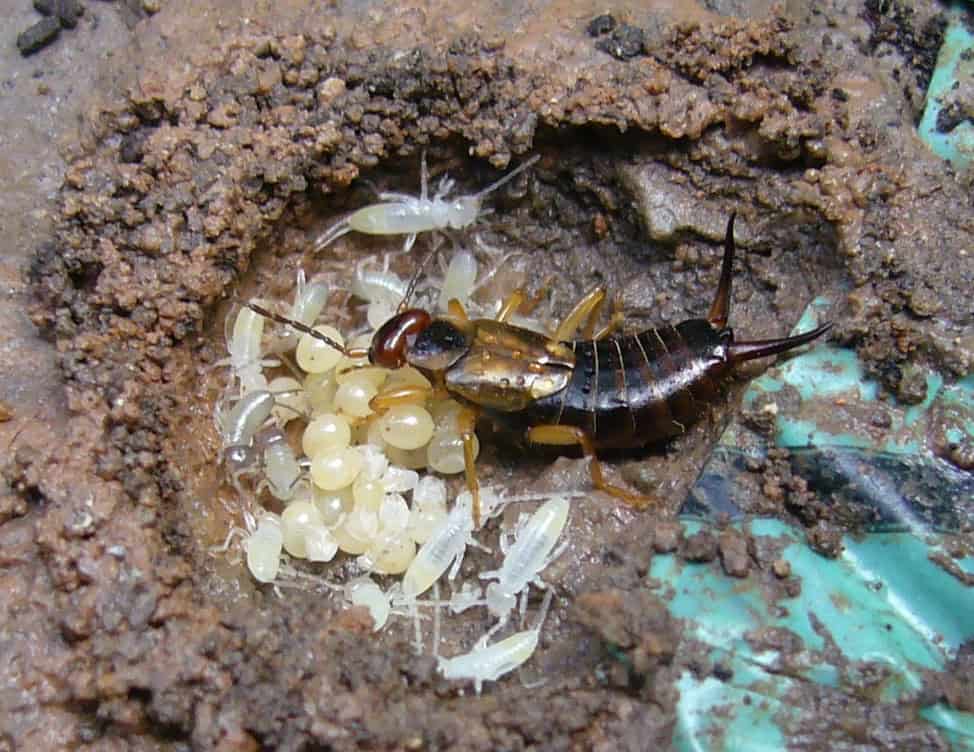
Earwig mothers carefully protect their young.
©Photo by Tom Oates, 2010, CC BY-SA 3.0, via Wikimedia Commons – Original / License
As for reproducing, earwig mothers don’t lay eggs inside ears. Instead, they burrow underground and lay their eggs in a chamber which they carefully guard. In a behavior unusual for non-social insects, earwig mothers carefully protect their young in the egg stage and even after they hatch. It varies by species, but some earwig nymphs stay with their mothers for several weeks and undergo two molts.