
Quick Take
- One earwig lookalike can actually bite you, and another carries venom. Knowing which is which matters more than you'd think. See the venomous lookalike →
- Male and female earwigs have physically different pincers, which is also a detail that helps you rule out every other bug on this list. Check the pincer details →
- One bug on this list hides specifically under baseboards eating your wallpaper and book bindings right now. Meet the wallpaper eater →
- The bug most people confuse for an earwig is missing the one feature that would give it away, and that gap is easier to spot than you think. Spot the missing feature →
Did you know that apart from scorpions, there are other species with pincers? Earwigs belong to the order Dermaptera, which consists of nearly 2,000 species. Fortunately, their pincers are harmless to humans and they are not venomous. With their long, slender bodies, there are also many bugs that resemble earwigs. Read on to learn how to identify an earwig, and discover some common bugs that look like earwigs so you can find out what is hiding under your baseboards.
How Do You Identify an Earwig?
Forficula auricularia, also known as the common earwig or the European earwig, is a species that originated in Europe but eventually reached North America in the early 1900s. Common earwigs feed on plants or scavenge for animal materials. They prefer cool, dark, and damp habitats, and are often found in mulch, under stones and leaf litter, and inside rotting wood. They may venture inside when the weather conditions are very dry, and are generally only a nuisance during the summer.
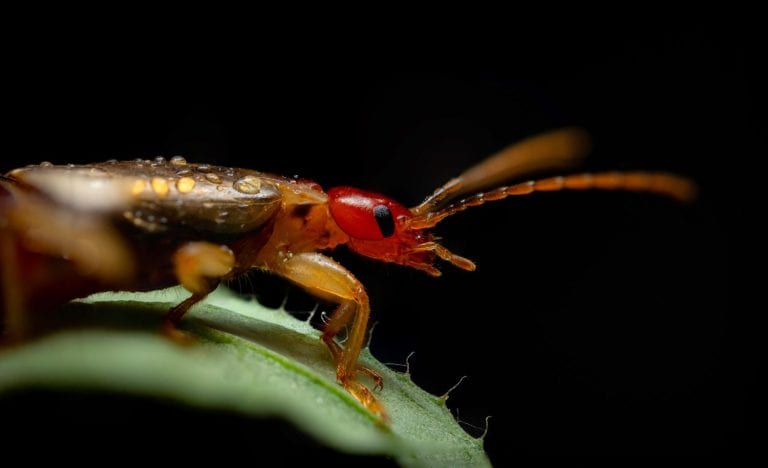
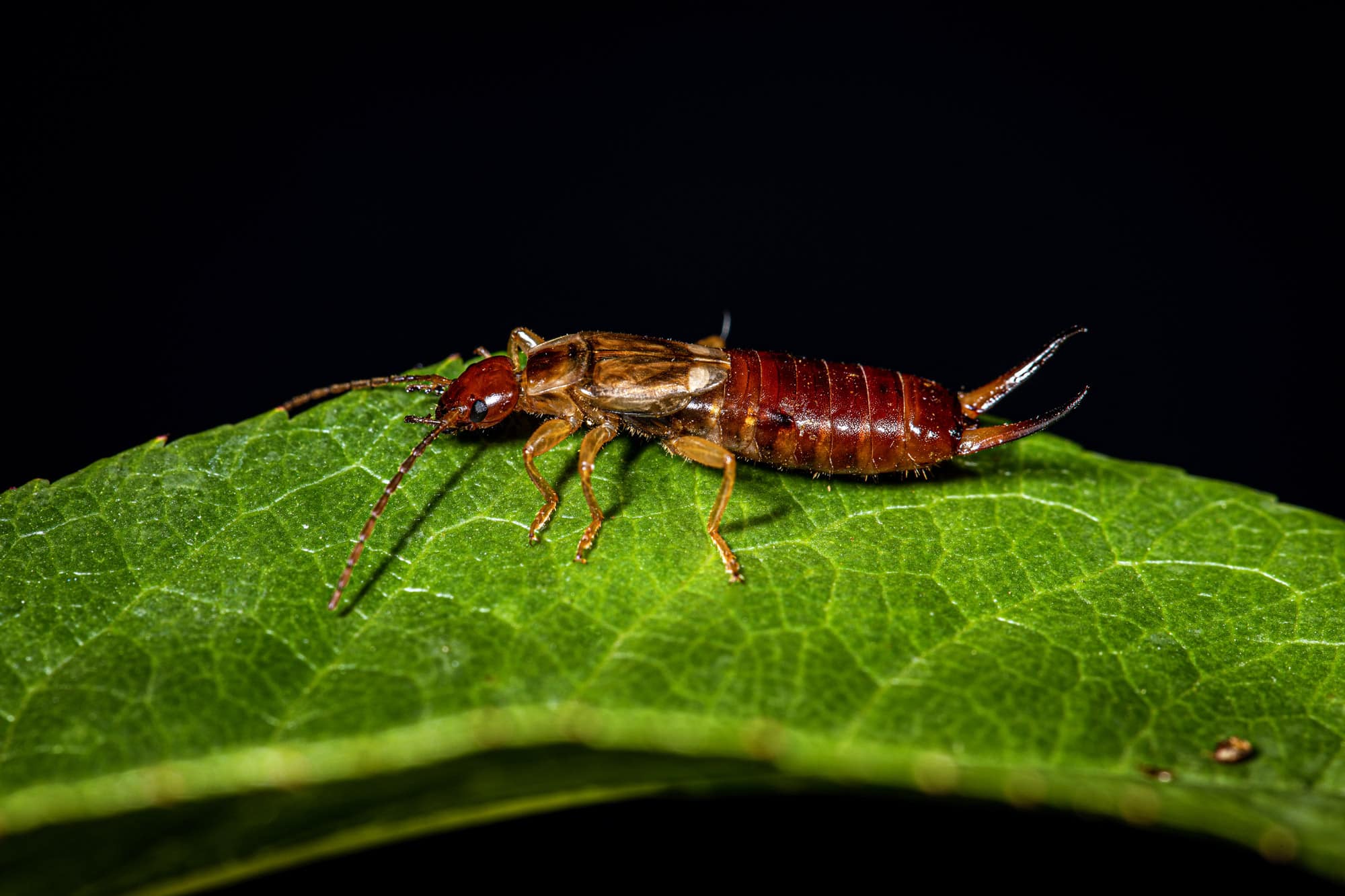
Adult European earwigs usually measure 0.63 inches long, but other species, like the giant Australian earwig, can grow up to 2 inches long. European earwigs have dark reddish-brown bodies, reddish colored heads and light brownish-yellow legs. A European earwig’s head measures about 0.08 inches wide, and its antennas have up to 14 segments. It has six legs and a flat, segmented body. An adult earwig has delicate wings that allow it to fly, although it rarely does so, and its hardened wings (elytra) do not cover all of its abdominal segments.
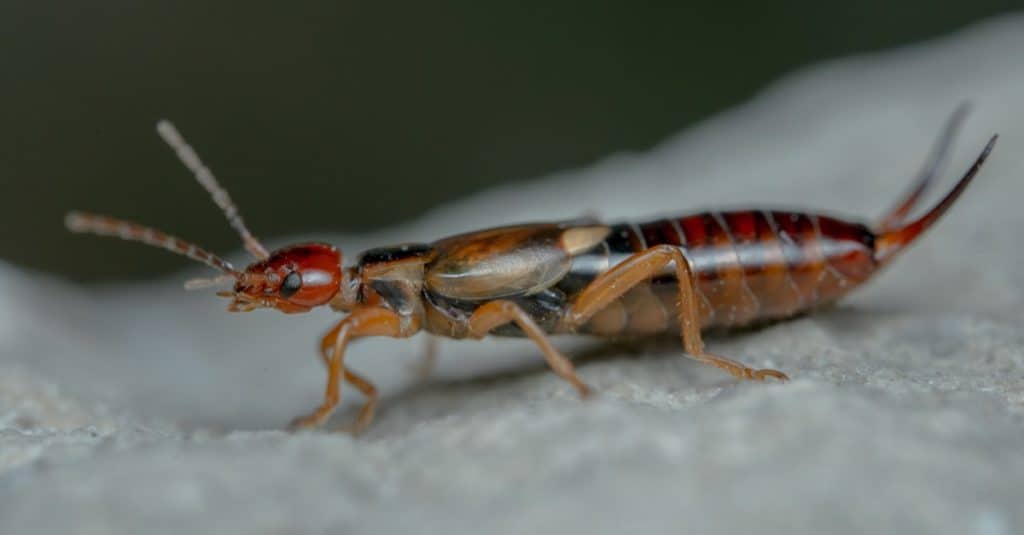
Earwigs are nocturnal predatory insects in the Dermaptera order.
©Mike Holmes/Shutterstock.com
The most distinct earwig characteristic is its cerci, which are forceps-like pincers that differ in males and females. An adult male earwig has strongly curved pincers, while an adult female earwig has slightly bent pincers that look almost straight. As we mentioned above, earwigs are neither dangerous nor poisonous to humans. But what about other bugs that look like them? Let’s find out!
1. Centipedes
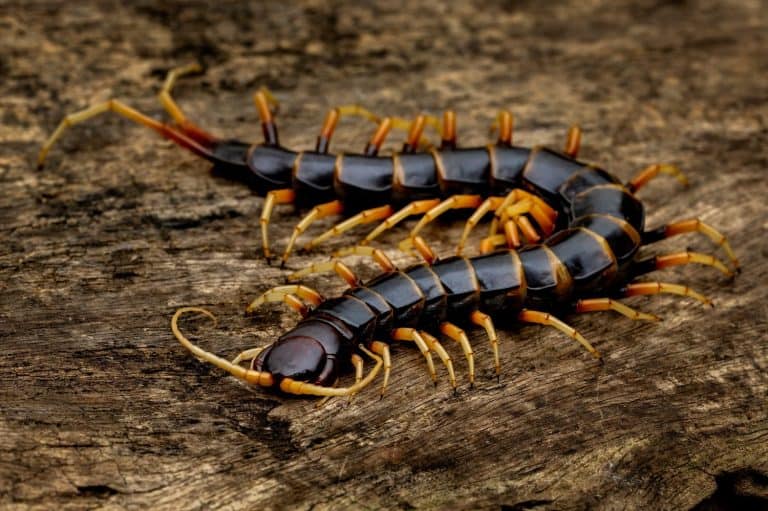
Centipedes are nocturnal, predatory arthropods with about 3,000 described species. Most common home and garden centipedes measure between 1 and 2 inches, but some species can grow much larger. Centipedes can have various body colors, ranging from yellow to brown. Tropical centipedes are bigger and more colorful, while common house centipedes are more likely to be brown or gray.
Earwigs and centipedes look similar because they both have flat, segmented bodies covered in shells. However, centipedes are wingless arthropods with 15 to 177 pairs of legs, allowing them to move quickly. They have long antennae and sharp, modified front legs called forcipules. These venomous pincers are used to hunt prey, such as earthworms or snails. Most centipedes have pincers that are too weak to pierce human skin, and their venom is generally mild to humans.
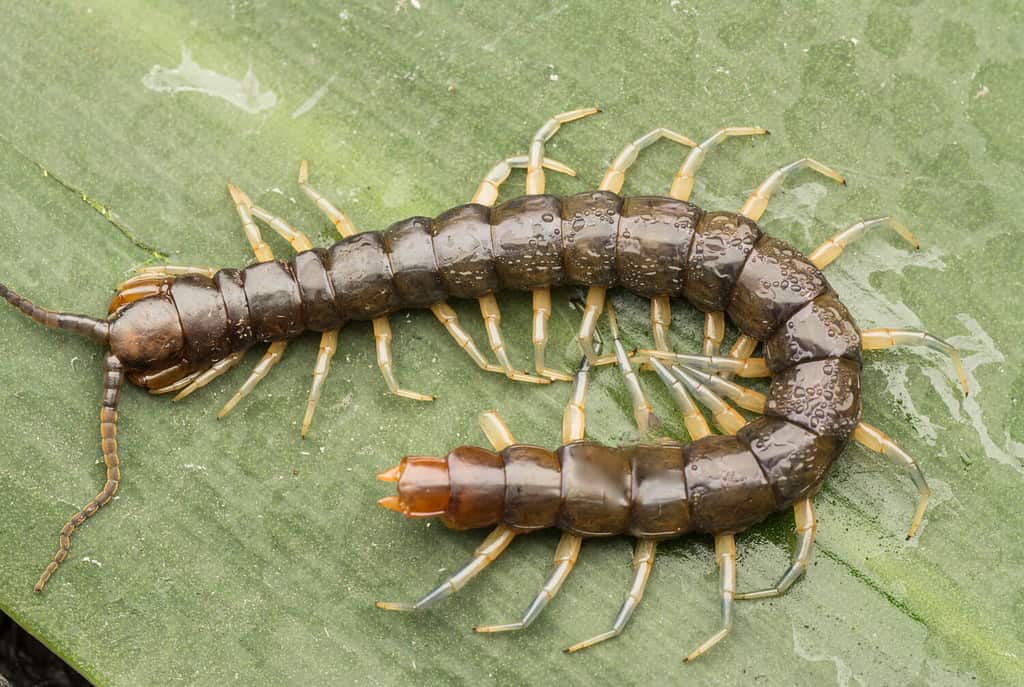
Centipedes have 15 to 177 pairs of legs so they can move very quickly.
©Young Swee Ming/Shutterstock.com
2. Cockroaches
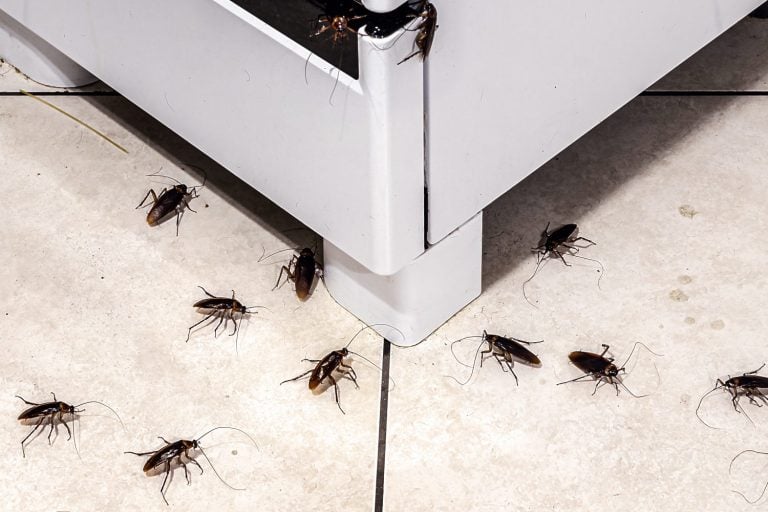
Cockroaches belong to the Blattodea order, with at least 4,500 species distributed worldwide. However, only around 30 species interact with humans and are considered pests. Those that are pests can carry bacteria, contaminate food, and cause allergies. Fortunately, most cockroaches live outdoors in forests, woodlands, grasslands, and other habitats. They help the ecosystem by consuming decaying organic matter.
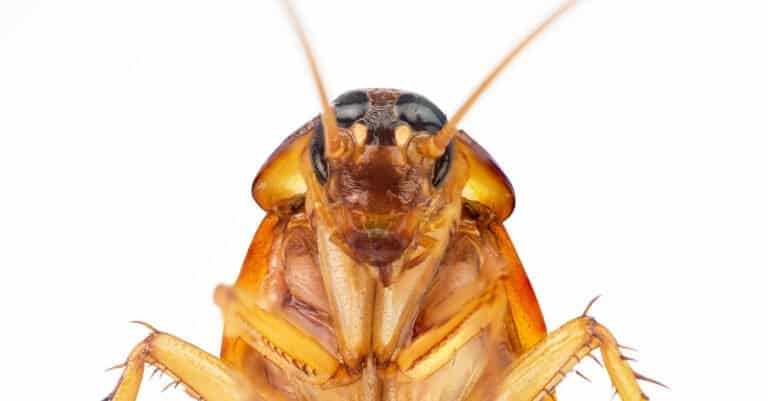
A cockroach has a flat, oval-shaped body, six legs, and two antennae used to sense vibrations and smell. You can mistake a cockroach for an earwig since they have similar body shapes and colors. The American cockroach is the among most common cockroaches you will see indoors, and it has a reddish-brown body. Additionally, both have wings but rarely fly. However, unlike earwigs, cockroaches do not have pincer-like structures.
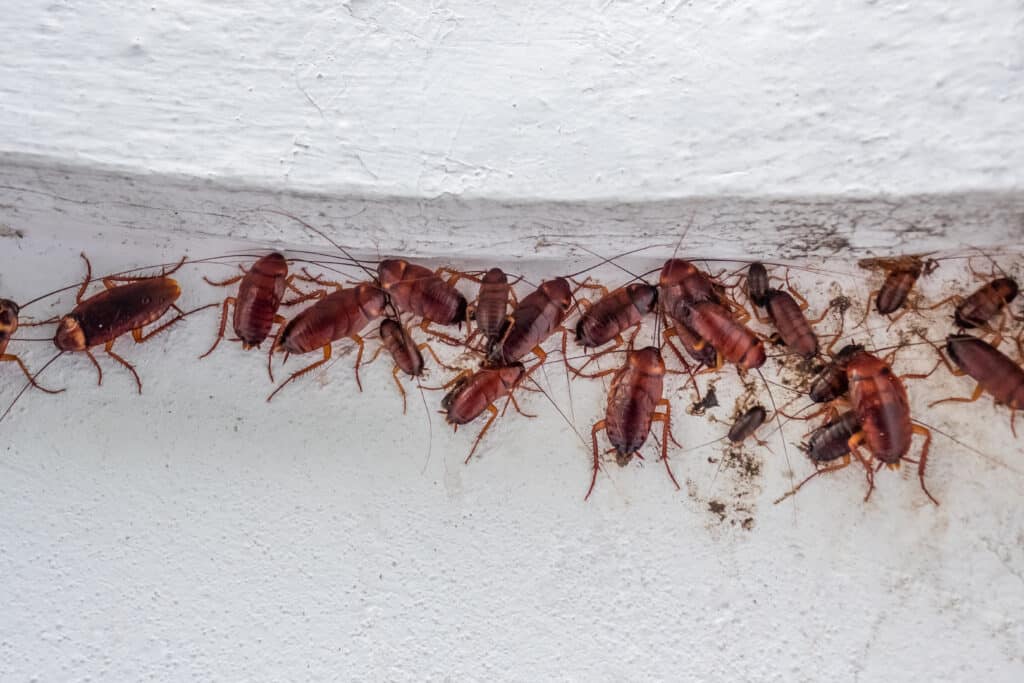
Some of the most common cockroaches have reddish-brown bodies and wings, similar to an earwig.
©Naamtoey/Shutterstock.com
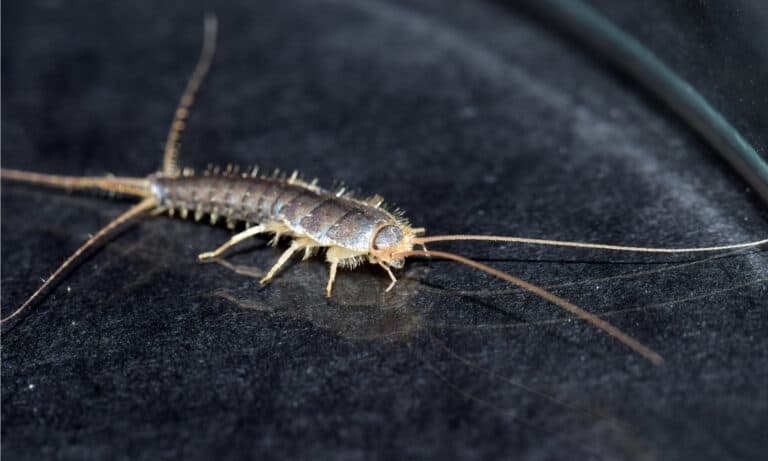
3. Silverfish
Silverfish (Lepisma saccharina) are wingless insects in the Zygentoma order. There are 14 species of silverfish that occur in North America. They are household pests with mandibles that allow them to eat fabrics, upholstery, paper, book bindings, and wallpaper for their starch. This insect prefers cool, dark, damp habitats such as basements, garages, and attics. They often hide behind walls or under baseboards.
Like earwigs, silverfish have slender, elongated bodies. However, silverfish bodies are more carrot-shaped, tapering toward the rear. They are covered in glistening, silvery scales with no other markings. Silverfish have two antennae on one end of their bodies and three long filaments on the other that make up the tail. They are around 0.5-0.75 inches long and have six legs.
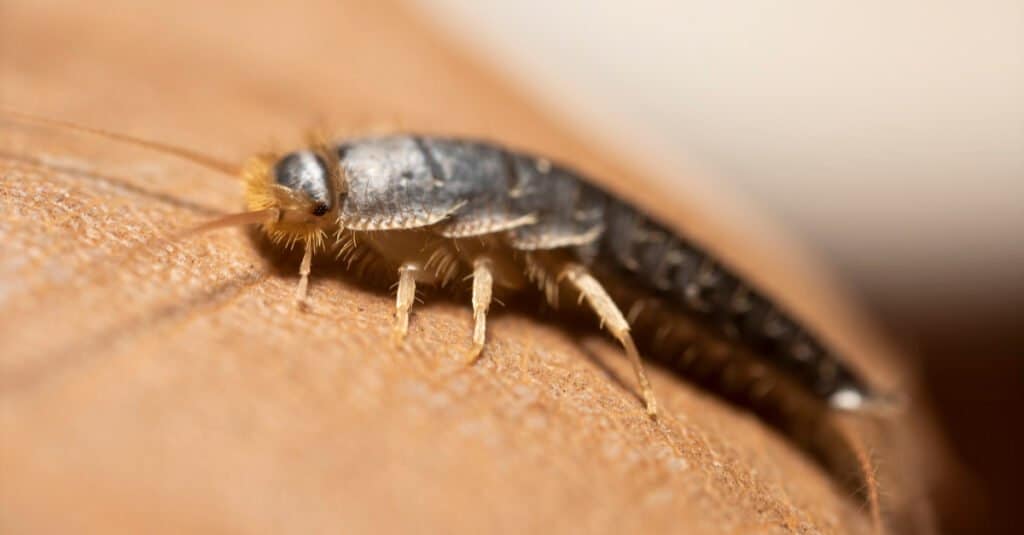
Silverfish are wingless insects in the Zygentoma order.
©Panto.unno/Shutterstock.com
4. Firebrats
Firebrats (Thermobia domestica) are also from the Zygentoma order. They are closely related to silverfish, but there is only one firebrat species. Firebrats are also commonly found in book bindings and wallpaper because they feed on starch. In contrast to silverfish, they prefer warm habitats and are generally found near fireplaces, ovens, furnaces, and warm pipes.
Firebrats have six legs and no wings, and their antennas are twice the length of their bodies. Their bodies are flat, and elongated like earwigs, but they are covered with scales and hair-like bristles. Firebrats can measure 0.5-0.75 inches, but are generally shorter and thicker than silverfish, and their abdomens are not as tapered. They are a dull gray color, and the tip of the abdomen is more of a yellowish shade. Firebrats also have brown markings, such as bands and spots.
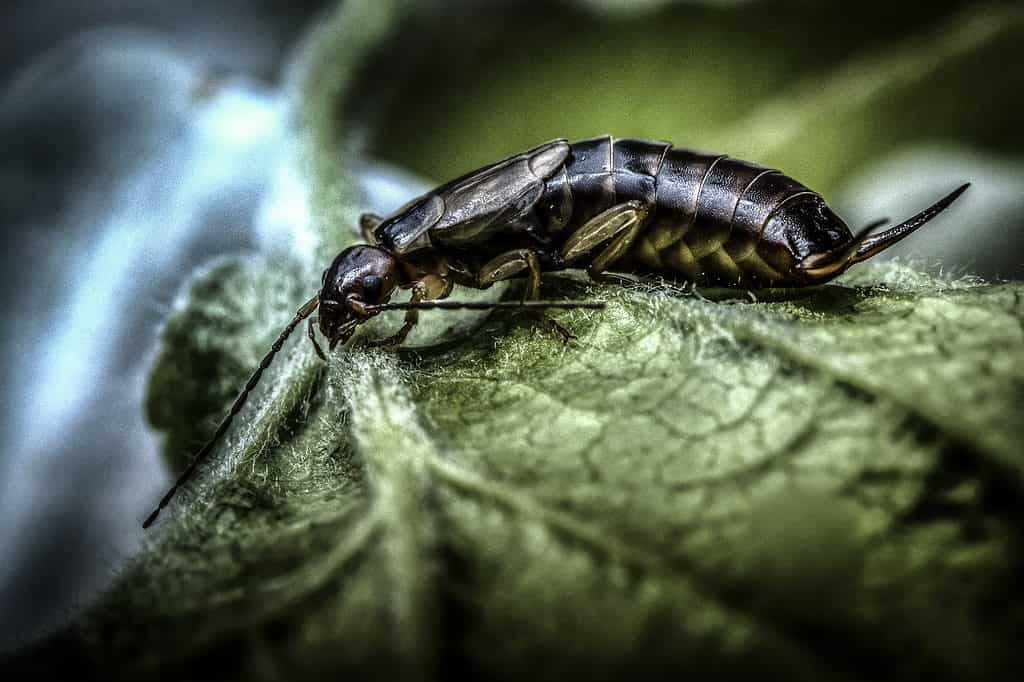
Firebrats are related to silverfish but tend to be shorter, thicker, and darker.
©iStock.com/Wirestock
5. Jumping Bristletails
Jumping bristletails belong to the order Microcoryphia. There are around 30 species in North America. These insects can be found in a wide variety of environments around the world. They prefer damp, dark, outdoor habitats where they hide in leaf litter, under tree bark, and in rock crevices.
Jumping bristletails have elongated, humpbacked bodies that measure about 0.5 inches. Similar to silverfish, they are covered in shimmering scales that can appear a metallic silver or coppery shade. They have two antennae at one end and three caudal filaments at the other. Bristletails also have six legs, but on their undersides, they have additional pairs of short, vestigial leg-like appendages called styli. They jump by pushing their middle and hind legs down, contracting their abdomen, and slapping it against the ground. They can jump 6 inches or more.
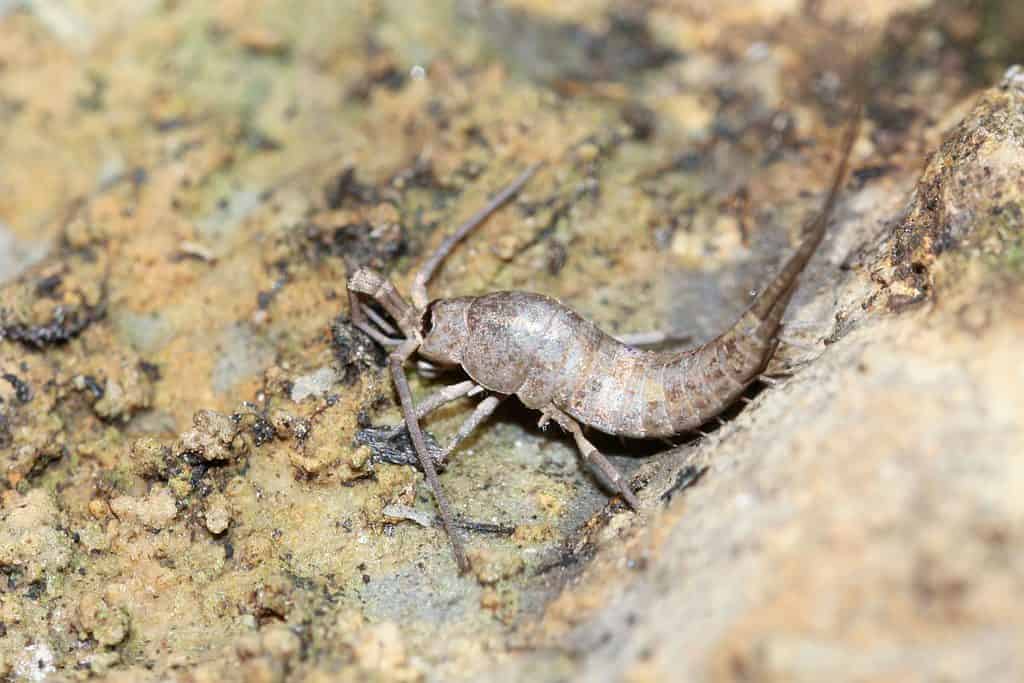
Jumping bristletails push their feet down and slap their abdomens against the ground to jump.
©asturfauna/Shutterstock.com
6. Rove Beetles
Rove beetles are insects that belong to the Staphylinidae family and can be found worldwide. There are over 4,400 species in the U.S. and Canada. They prefer moist environments like leaf litter, soil, compost piles, rotting wood, and other decaying organic debris. Although they cannot sting you with their abdomen tips, they can bite you with their mandibles.
Rove beetles have slim, elongated bodies like earwigs, as well as segmented abdomens. Their colors range from yellow and red to brown and black. Some species can also be multi-colored with a mix of black and yellow. Their elytra are short and squared, while their flying wings are tucked underneath. Like the earwig, their elytra are so short that their abdominal sections are exposed in most species. Most species are less than 0.5 inches long, but the largest species can reach 1 inch long.
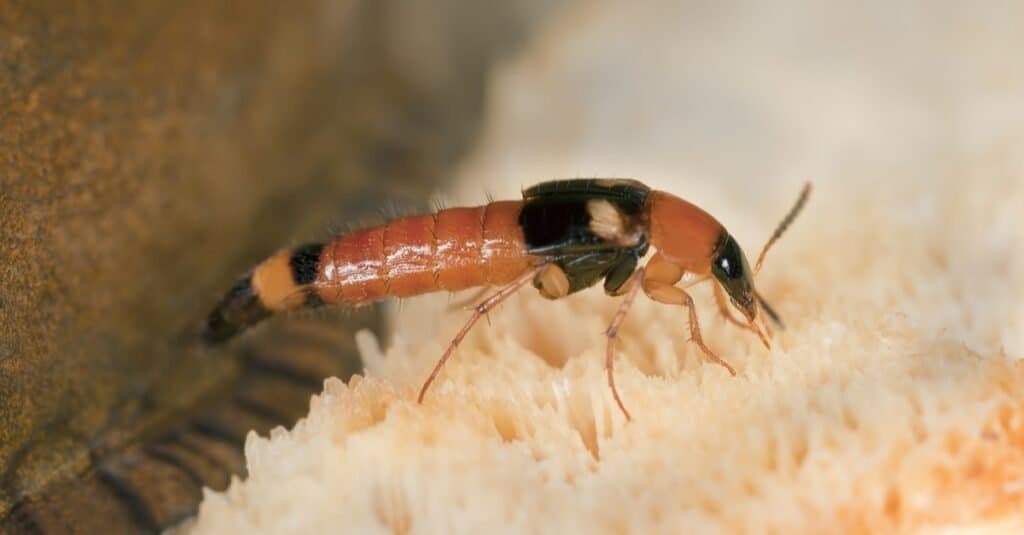
Like earwigs, rove beetles typically have short elytra and exposed abdomens.
©Henrik Larsson/Shutterstock.com
7. Termites
Termites are insects in the Isoptera infraorder. The most common termite species in the United States is the eastern subterranean termite (Reticulitermes flavipes). They are most common in warm, humid southern and western states. They build their colonies underground below the frost line, or in rotting logs, tree stumps, or decaying plant material.
The termite’s straight body has three segments: head, thorax, and abdomen. Their thorax connects the head to the abdomen. Termites have two straight antennae, but their bodies differ depending on their social class. Termite colonies have three castes: soldiers, workers, and reproductives. Soldiers and workers have six legs but no wings, while the swarmers, which are also responsible for reproduction, have long wings nearly twice the size of their bodies. Soldier termites have large pincers, but they are attached to the head, not the rear of the abdomen like earwigs.
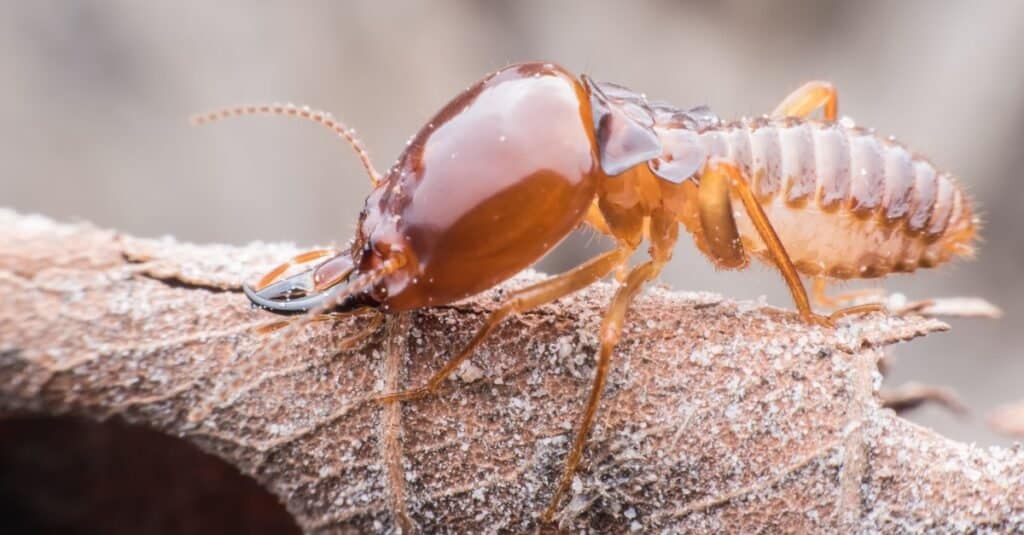
Soldier termites have pincer-like mouthparts called mandibles on their heads.
©PK289/Shutterstock.com