
Quick Take
- Female hummingbirds complete a critical task before they even find a mate, and skipping it would doom their eggs. See how nests come first →
- The color of a hummingbird egg is no accident. It reflects a survival trade-off with a surprising logic behind it. Discover the egg details →
- Male hummingbirds put on one of nature's most dramatic courtship displays, then vanish. From that point forward, the female is entirely on her own. Watch the male's role end →
- One of the deadliest predators hummingbirds face is an insect, and it is roughly the same size as the bird itself. Meet their insect predators →
Of the over 330 species of hummingbirds in the family Trochilidae, 24 are found in the United States. Hummingbirds are the smallest birds in North America, with some species weighing as little as 0.1 ounces. These little birds delight us with their fast-beating wings and colorful feathers. It’s difficult to imagine how tiny baby hummingbirds and their eggs must be, since full-grown adults are already so small. The life cycle of hummingbirds, from their mating season and nest-building to egg-laying and hatching babies, is a fascinating one. Continue reading to learn about all of the stages of a hummingbird’s life.
When Is Hummingbird Breeding Season?
The time of year when hummingbirds begin nesting, mating, laying eggs, and having babies varies by location, according to the American Bird Conservancy.
Breeding season can begin as soon as March in the Southern United States or as late as July in cooler parts of the country. The process of creating baby hummingbirds involves many steps.
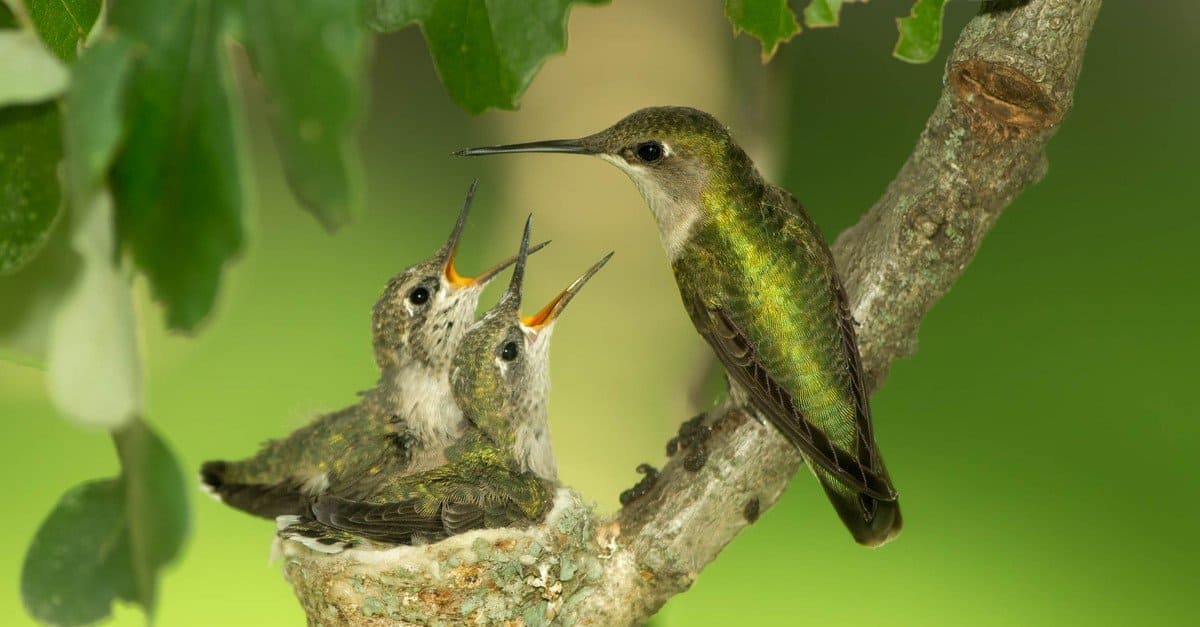
Mother hummingbirds take care of their babies for 1-2 months after they hatch.
©Agnieszka Bacal/Shutterstock.com
Nesting
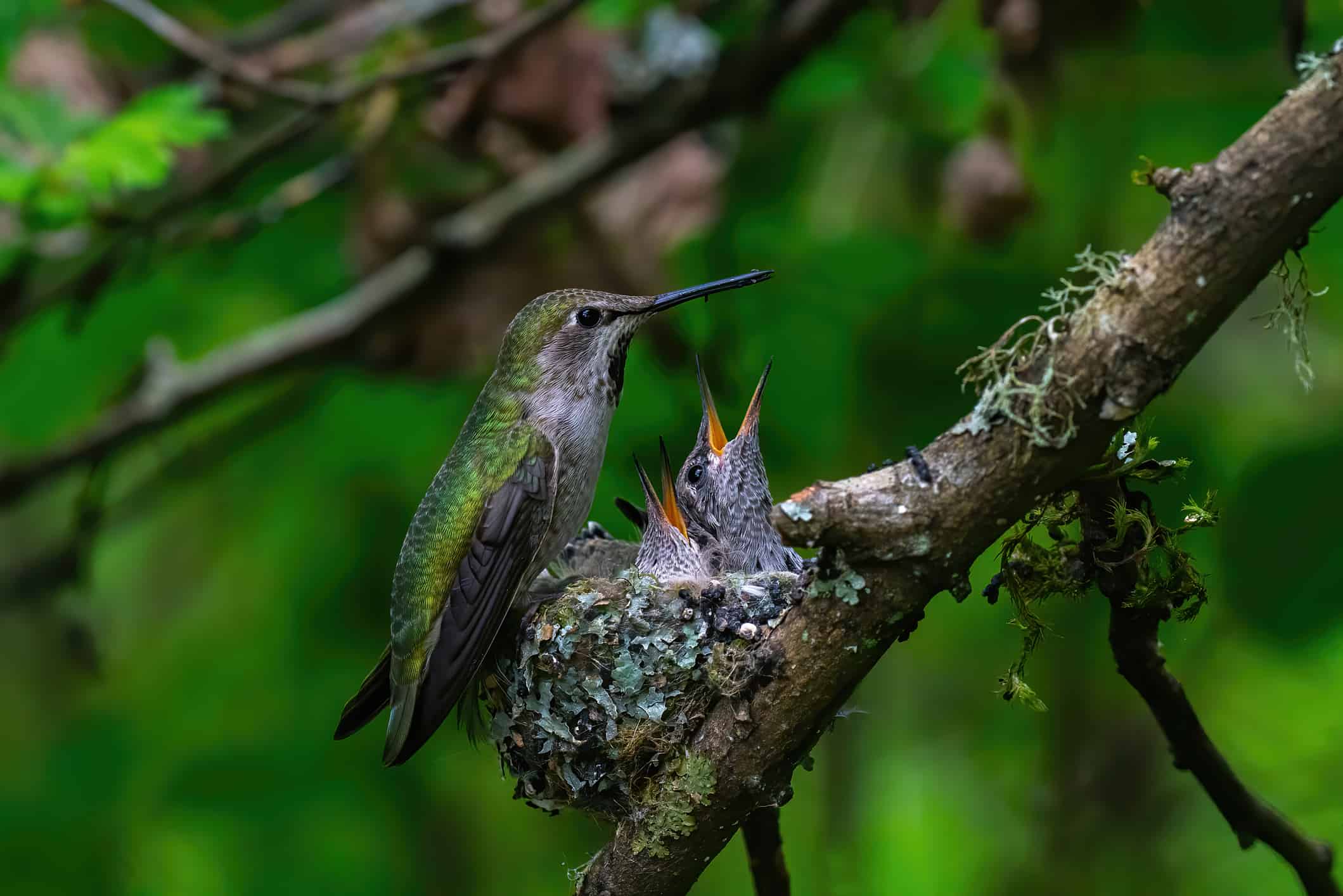
Female hummingbirds prepare for the arrival of their babies before they even begin to mate, and their first essential task is to build a nest. Nest-building takes about one week. The tiny birds build their nests on slender tree branches 10-40 feet above the ground.
Hummingbirds use a variety of materials to make their tiny nests. They first collect spider webs to attach the nest to the branch of a tree. Then hummingbirds gather soft plant materials such as thistledown or dandelion fluff. The female may also camouflage the outside of the nest with lichens.
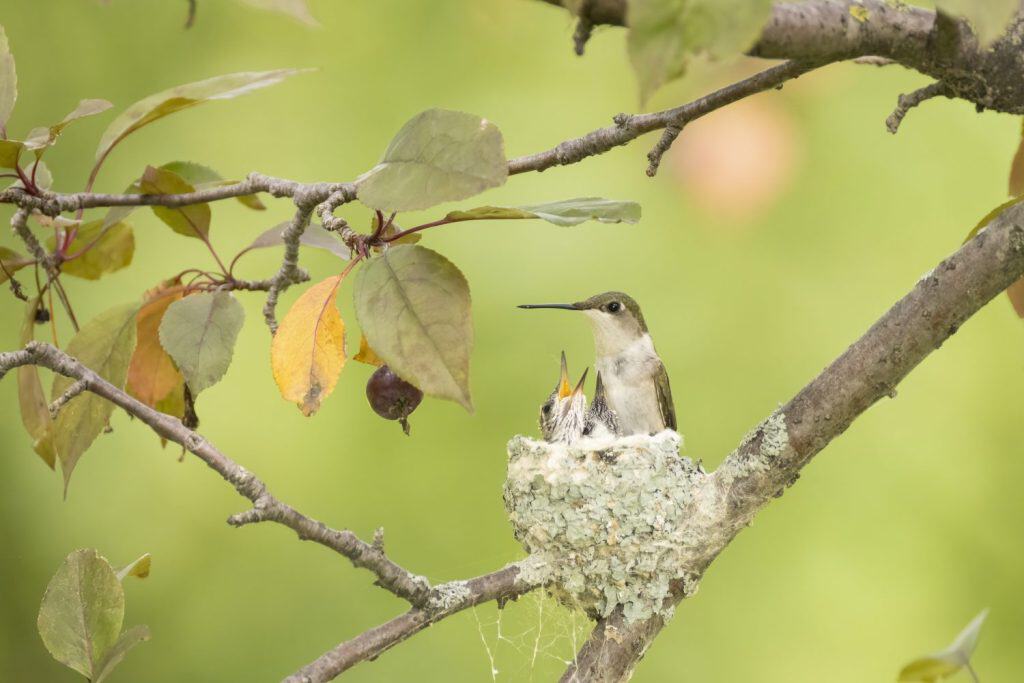
Female hummingbirds craft tiny nests high up in trees.
©Agnieszka Bacal/Shutterstock.com
The result is a small, safe, and well-insulated space for hummingbird eggs. The nests are about two inches across and one inch deep. Hummingbird nests have also been found in unlikely places, such as inside a hanging flower basket or on top of a porch light or basketball net.
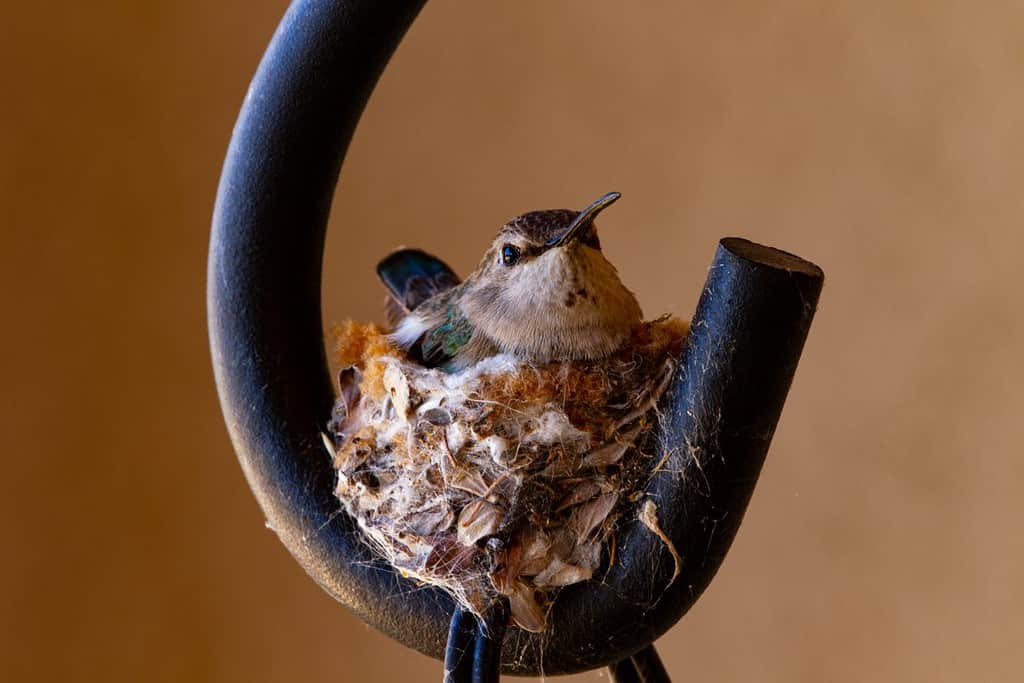
Sometimes hummingbirds build their nests in unlikely places, like this garden hanger.
©Florence-Joseph McGinn/Shutterstock.com
Mating
Hummingbird mating season generally begins in very early spring when the tiny creatures return from their winter migration. Hummingbirds can begin mating once they are a year old.
Male hummingbirds have brightly colored jewel-tone feathers to attract females. They also put on quite a show as part of the mating process.
Some hummingbirds might perform a mid-air dance and sing. Others may fly up to 60 feet and execute a courtship dive to impress a female.
Although attracting a mate involves quite a bit of showmanship, after mating, male hummingbirds do not participate in caring for the offspring
When Do Hummingbirds Lay Eggs?
Hummingbird clutches usually consist of two eggs. The first egg is typically laid 24 to 30 hours after mating, with the second egg following a day or two later. Female hummingbirds can only develop and carry one egg at a time due to their small size and the weight constraints of flight. Once the first egg has been laid, the development of the second egg begins, and it will join the first egg a day or two later. Females may lay eggs up to three times per year.
The tiny white eggs are smaller than jelly beans and are very fragile and vulnerable. The American Bird Conservancy speculates that there is an important reason hummingbird eggs are always such a light color.
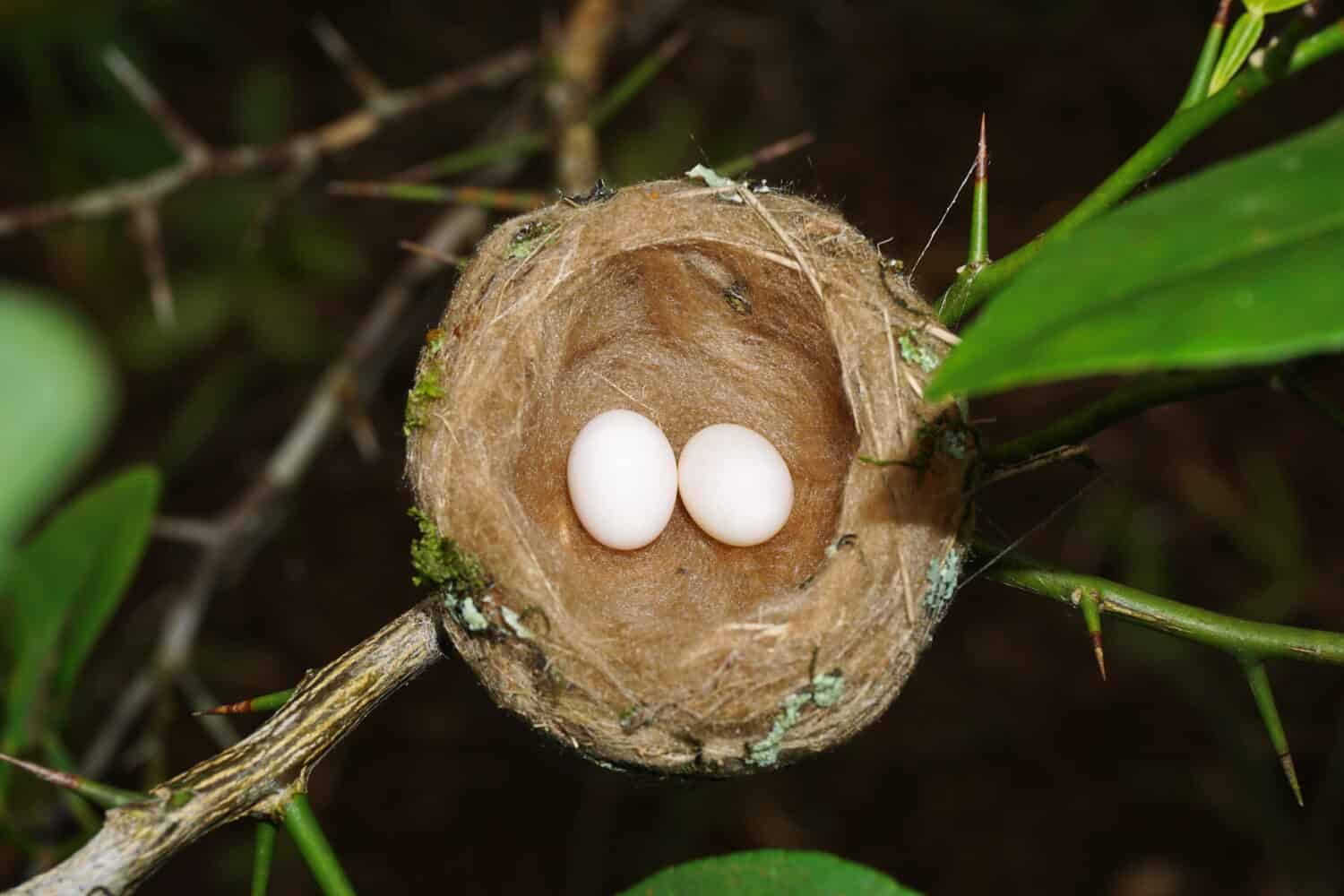
Hummingbird eggs are white and about the size of a jelly bean.
©Damsea/Shutterstock.com
While darker-colored eggs are more protected from UV rays, they are more susceptible to heat, whereas lighter-colored eggs are less protected from UV rays but stay cooler.
Female hummingbirds watch over their nests closely, keeping them at a temperature of around 96°F. The two eggs typically hatch at the same time after two to three weeks.
Hatchlings
Baby hummingbirds are known as nestlings, hatchlings, or chicks. They are born with their eyes closed and have pink or gray skin and very few feathers, according to the American Bird Conservancy.
Newly hatched hummingbirds are helpless and rely completely on their mothers. In fact, the hatchling’s legs are so small that they can’t even stand.
Mother hummingbirds bring food to their babies several times a day. The hatchlings need both insects and nectar as part of their diet. Like many species of birds, hummingbirds feed their hatchlings by regurgitating into their mouths.
Hatchling Timeline
Hatchling hummingbirds are helpless at first, but after a relatively short period of time, they can function on their own. Here’s a look at their maturation timeline:
- Hummingbirds first open their eyes about 9-10 days after hatching. They will also sprout pin-like feathers.
- Two weeks after hatching, hummingbirds begin exercising their wings in preparation for when they will eventually take flight
- After three weeks, hummingbird hatchlings should have a full set of feathers.
- After 1-2 months (depending on the species of hummingbird), the hatchlings are ready to take flight and fend for themselves.
Flight
Learning to fly is a harrowing process for baby hummingbirds. Fledgling hummingbirds may end up on the ground where they are at risk of predators.
However, mother hummingbirds will stay with their fledglings for a few days while they become accustomed to flying. Mothers also teach their babies how to find insects and nectar before they fully fledge (leave the nest).
Hummingbird wings beat at incredible speeds and their unique anatomy allows them to fly forward, backward, and upside down. They can also hover in place, which allows them to drink nectar from flowers while remaining in the air. When in flight, some species of hummingbirds can reach speeds of up to 60 miles per hour.
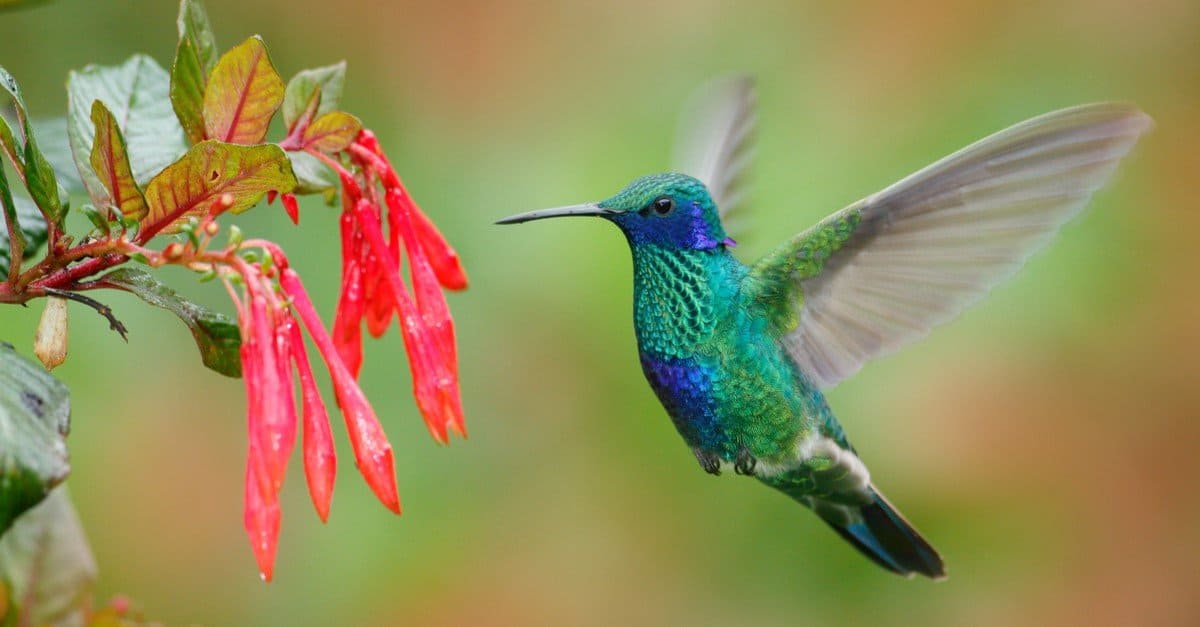
Hummingbird wings beat at incredible speeds, allowing them to fly as fast as 60 mph.
©Ondrej Prosicky/Shutterstock.com
How Long Do Hummingbirds Live?
The lifespan of a hummingbird varies by species, but on average, they live between three and five years. However, some of these little creatures have been known to live as long as 10 years. These birds also face a variety of predators, starting from the moment they are eggs.
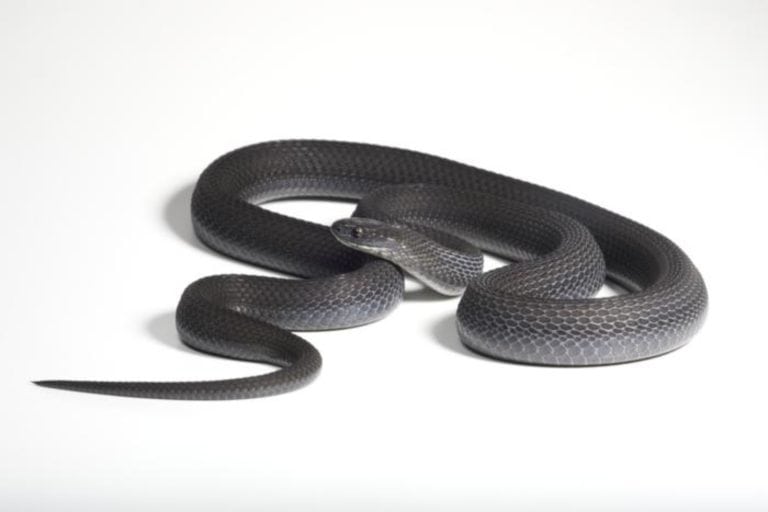
It’s probably no surprise to learn that animals like snakes and cats prey on hummingbirds. A snake’s diet often includes various types of birds and bird eggs. Cats are known for catching and playing with these flying creatures. Interestingly, larger birds will also kill and eat hummingbirds.
Because hummingbirds are so small, they have some unlikely predators. According to the Georgia Department of Natural Resources, one of the most common predators of hummingbirds is the Chinese mantis, which can measure up to five inches long. In comparison, hummingbirds usually measure around 3-5 inches in length.
Spiders are another surprising threat to hummingbirds. The tiny birds may become trapped in the webs of larger species, such as the golden silk orb-weaver. While some large South American spiders may consume hummingbirds, in other cases, the birds die simply from becoming trapped in webs that are meant to catch insects.