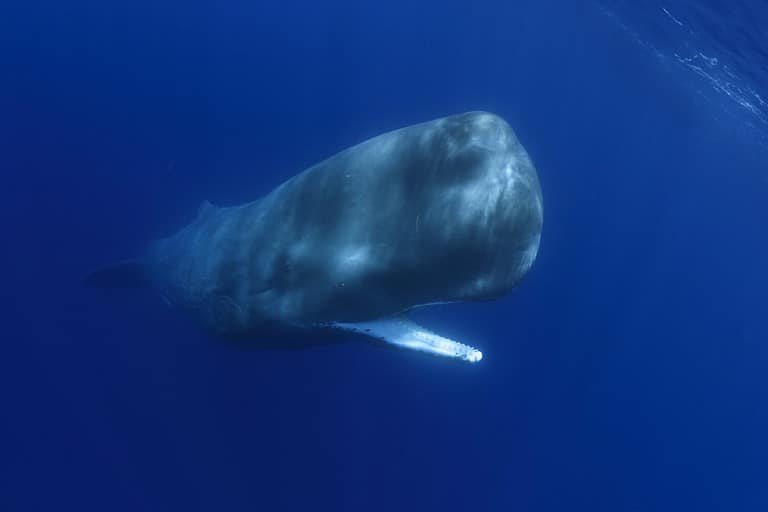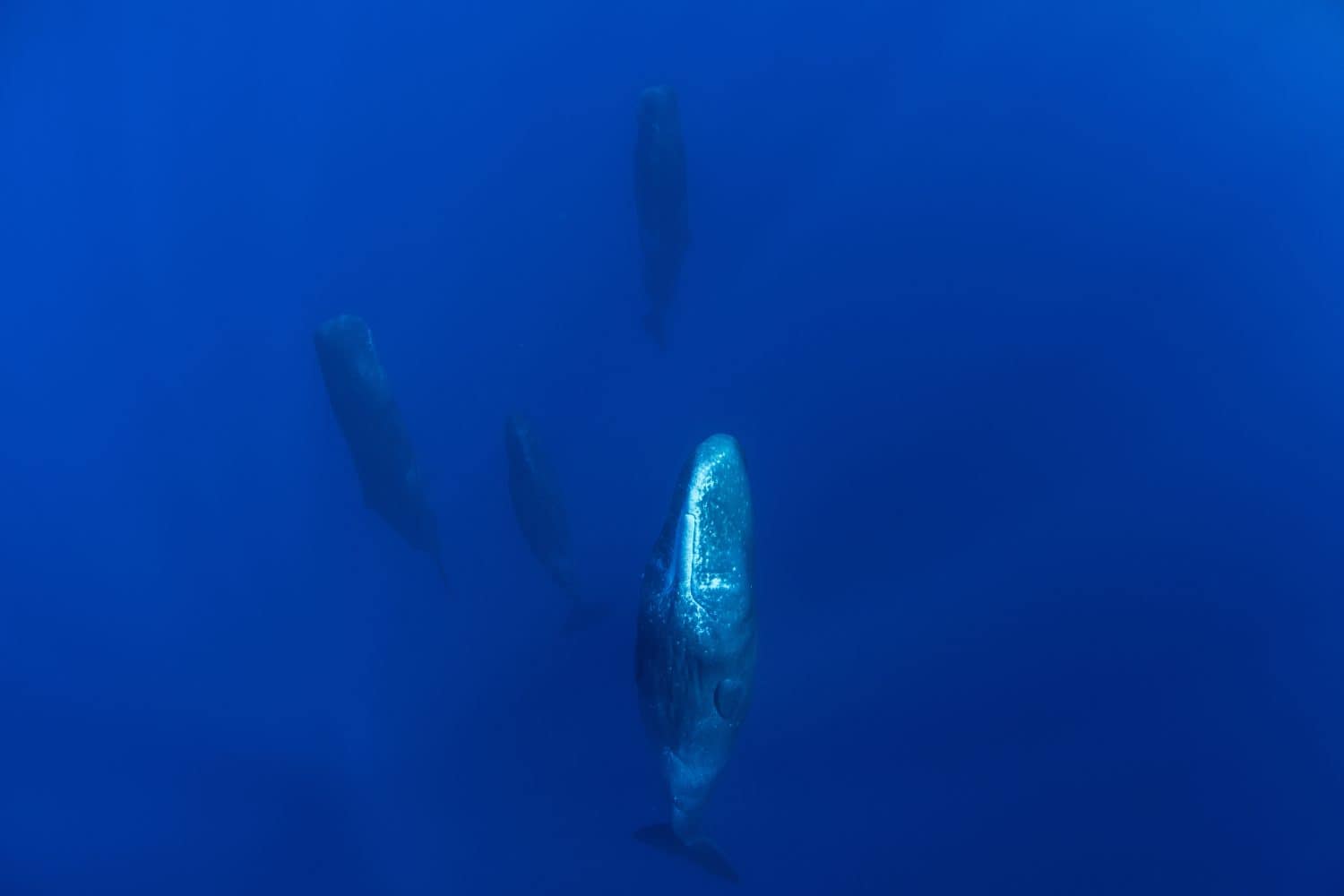

Sperm whales are truly remarkable creatures, holding the title of the largest toothed whale and possessing the largest brains of any animal on Earth. To keep their massive brains healthy and functioning properly, they need rest, but their sleep habits are quite different than our own. Instead of long, uninterrupted stretches of sleep, sperm whales take frequent, surprisingly short naps. However, their most peculiar trait is their unusual sleeping position. As seen in this YouTube video, these colossal sea creatures float motionless and vertically just below the ocean’s surface while they sleep. This position makes them appear as though they are “standing up” or frozen mid-dance in the water.
Vertical Sleep
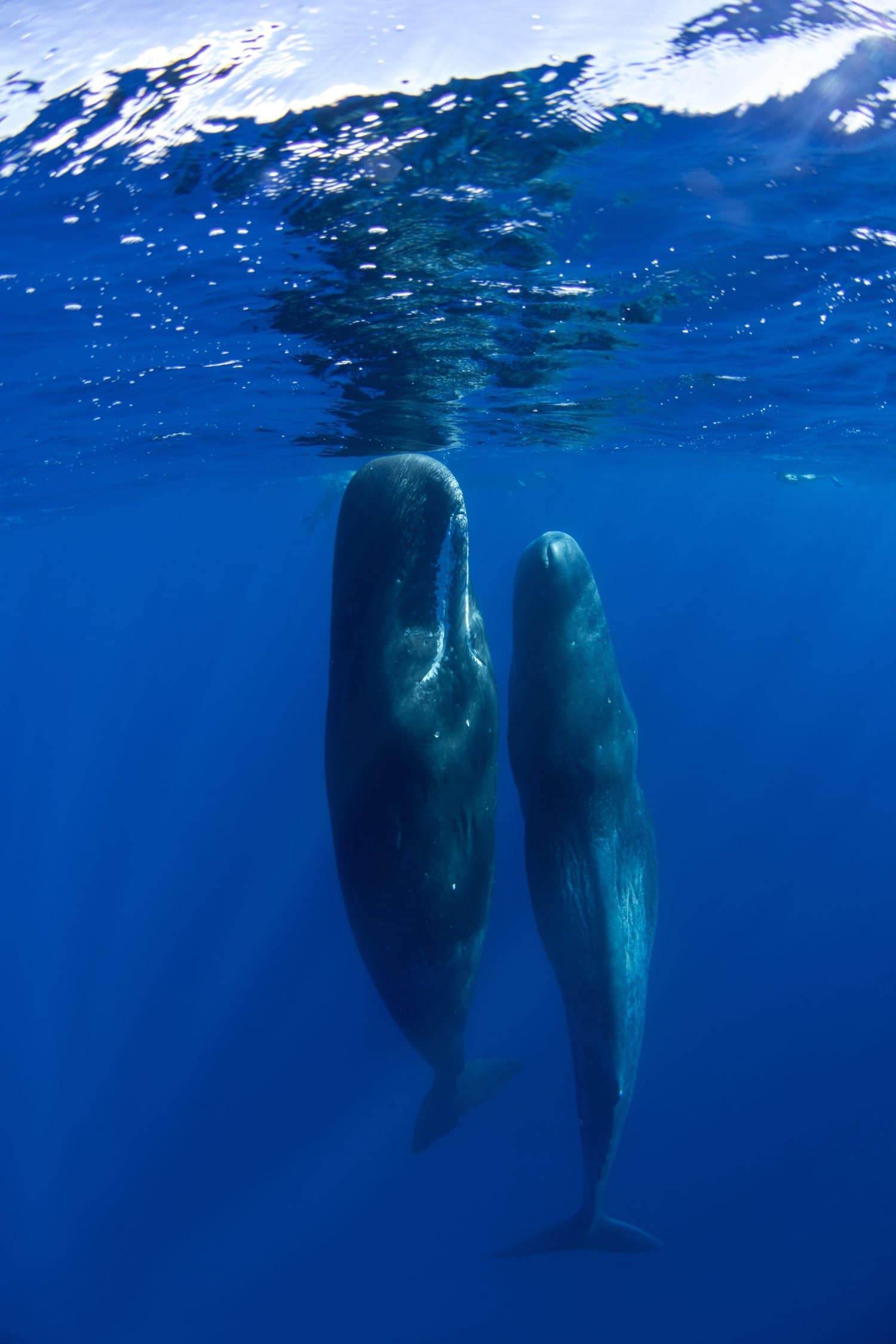
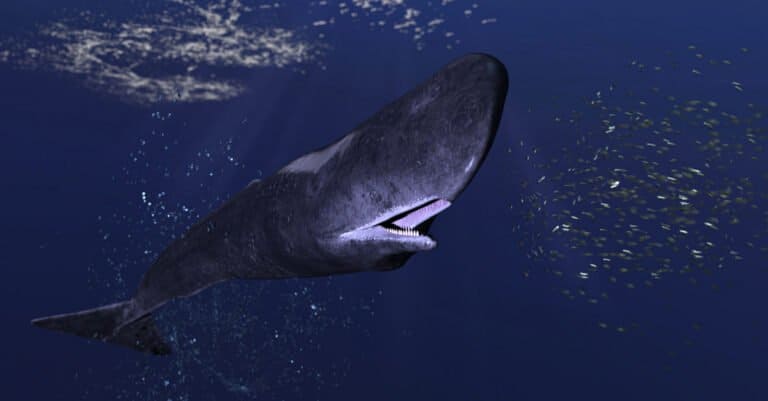
Spermaceti is a waxy and oily substance in a sperm whale’s head that helps with buoyancy and echolocation.
©ohrim/Shutterstock.com
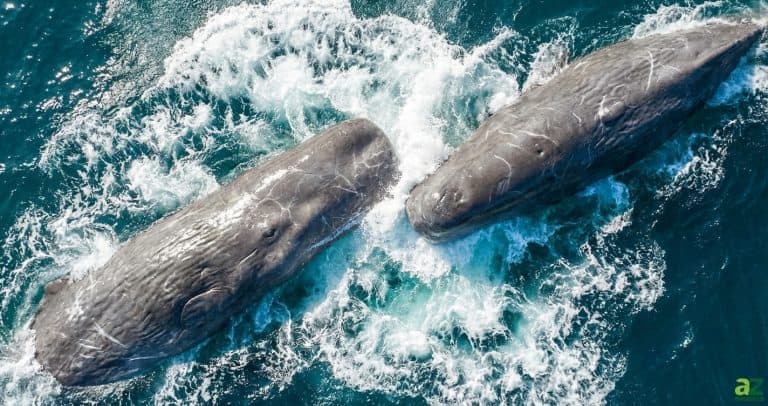
When sperm whales sleep, they hang completely motionless and in a vertical position in the water. The whales often gather in circles or small clusters, appearing as though they are part of an eerie underwater ballet. During these deep sleeps, which scientists refer to as “drift-dives,” the whales are so still that they don’t even seem to notice nearby boats. Researchers discovered this detail by accident in 2008 when they stumbled upon a group of motionless sperm whales floating near the ocean’s surface. One whale was so deeply asleep that the research team’s boat actually touched it before it finally reacted.
Researchers believe this unique upright sleeping position is simply a matter of physics. The whale’s back end is denser and heavier than its massive head, which contains less-dense spermaceti oil. When a whale stops swimming, its heavier tail sinks while its lighter head naturally drifts upward, creating their iconic, vertical sleep stance.
This unique sleeping position is a brilliant energy-saver. It allows the whales to float completely motionless, expending almost no effort to stay in place, all while remaining close enough to the surface for an effortless breath of air whenever they may need one.
Underwater Power Naps
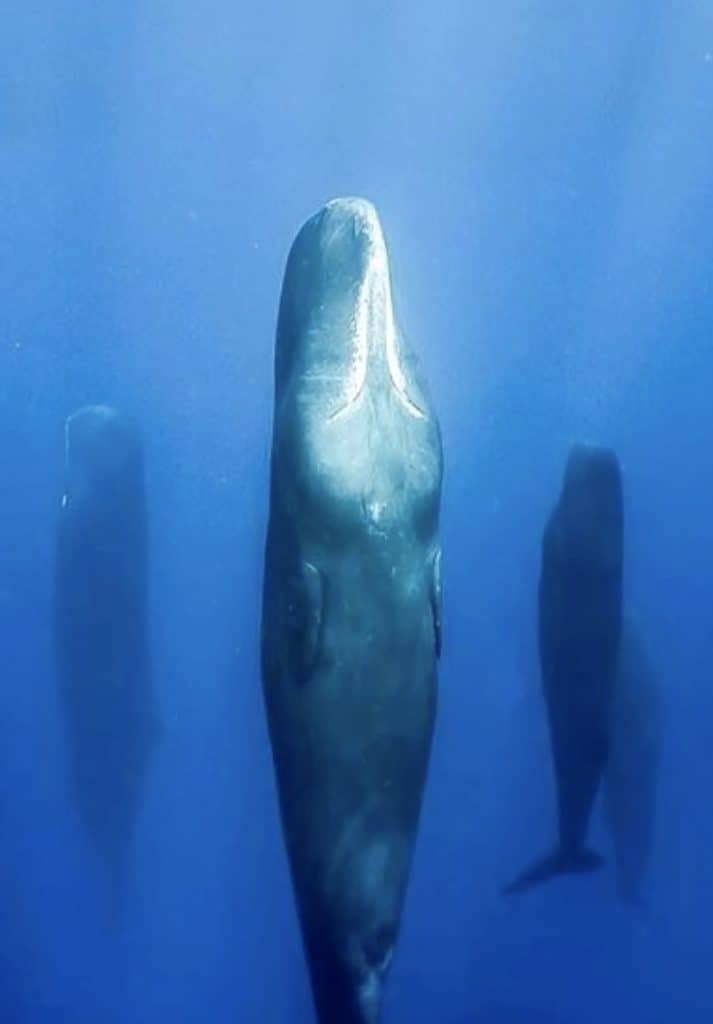
Many cetaceans (whales and dolphins) utilize uni-hemispheric sleep.
©YouTube / naturelenses – Original
What’s even more fascinating about how sperm whales sleep is that they only sleep for about 10 to 15 minutes at a time — one of the shortest sleep cycles recorded among mammals.
Additionally, when drift-diving, only half of their brain actually goes to sleep. This is called uni-hemispheric sleep, and it provides a major survival advantage that many whales and dolphins use. As seen in the YouTube video, this allows the whale to stay alert enough to breathe when necessary, keep in contact with their pod, and watch for predators. While half the brain rests, the other half remains awake to monitor their surroundings and make the conscious decision to swim to the surface for air. This is crucial, as they must consciously take action to breathe.
Given the short duration of their naps and the fact that only half their brain is truly resting, sperm whales spend only about seven percent of their day in these unique drift-dives. While they may nap at any time of day, they are most likely to do so between 6 p.m. and midnight. This leaves the majority of their time open for a much more demanding activity: the hunt for food.
A Colossal Appetite
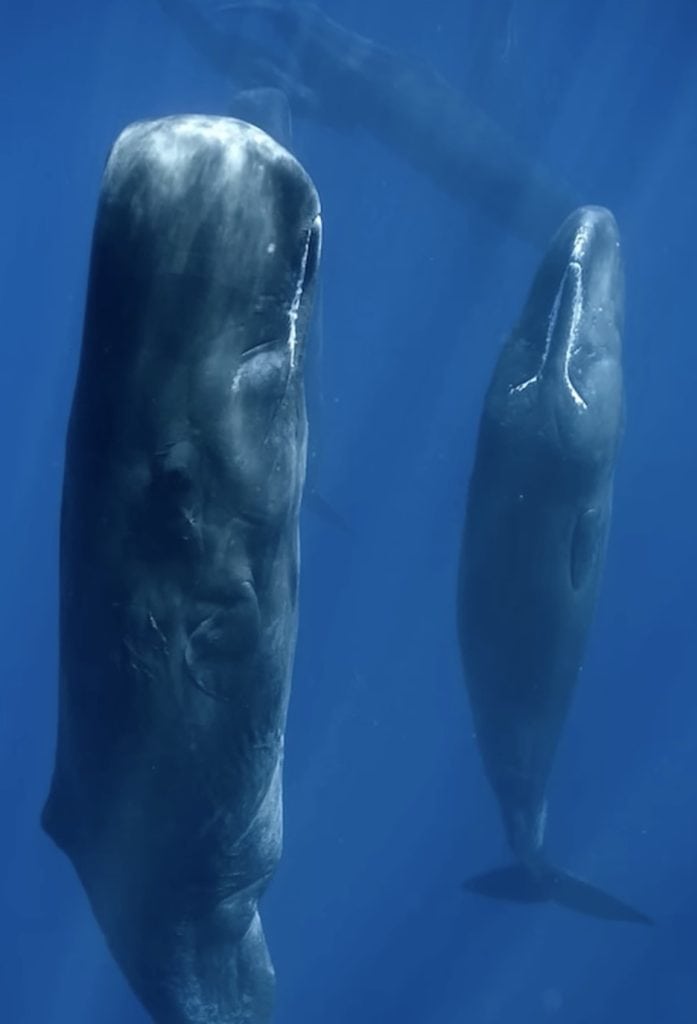
Sperm whales can eat 2,000 to 3,000 pounds a day.
©YouTube / naturelenses – Original
Foraging for food consumes the majority of a sperm whale’s day. These massive animals — with males reaching up to 45 tons — require a staggering amount of food, eating around three to three and a half percent of their body weight each day. For a creature of that size, the numbers quickly add up.
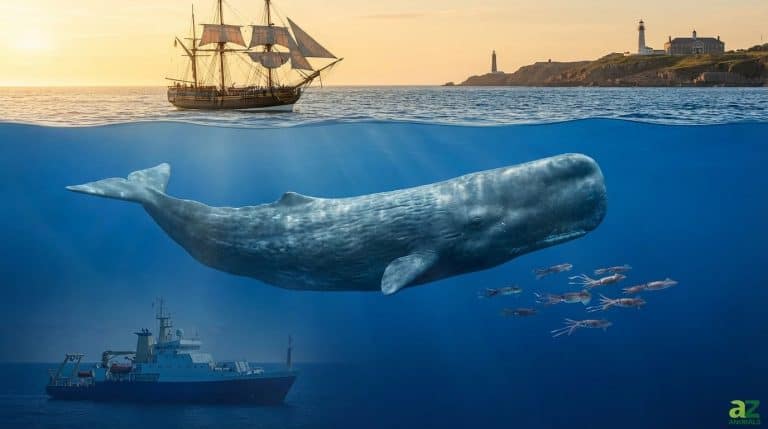
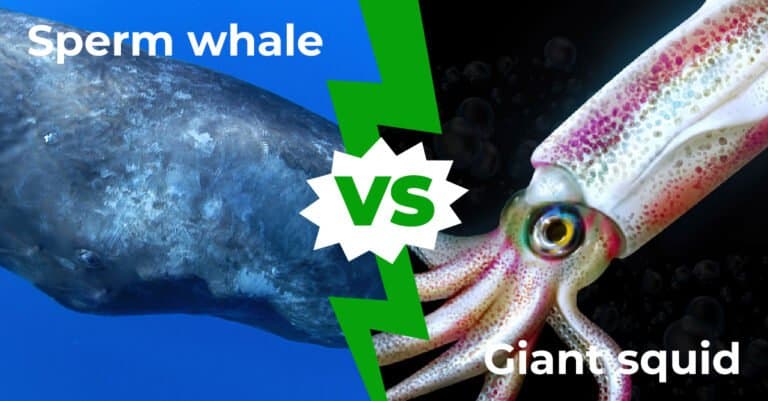
To find their meals, sperm whales dive deep into the ocean, often plunging to depths of 6,500 to 9,000 feet (1.2 to 1.8 miles). They can hold their breath for up to two hours, though their typical dives last around 45 minutes. In the total darkness of the deep ocean, they rely on echolocation and a unique spermaceti organ in their heads to find prey. Their favorite meal is the elusive giant squid, but they also hunt deep-sea fish, skates, octopus, and sharks. Sperm whales need a lot of food to support their colossal bodies and are always on the hunt. This constant need for food is a key reason for their exceptionally brief sleep cycles.
The Hidden Cost of Whale-Watching for Sperm Whales
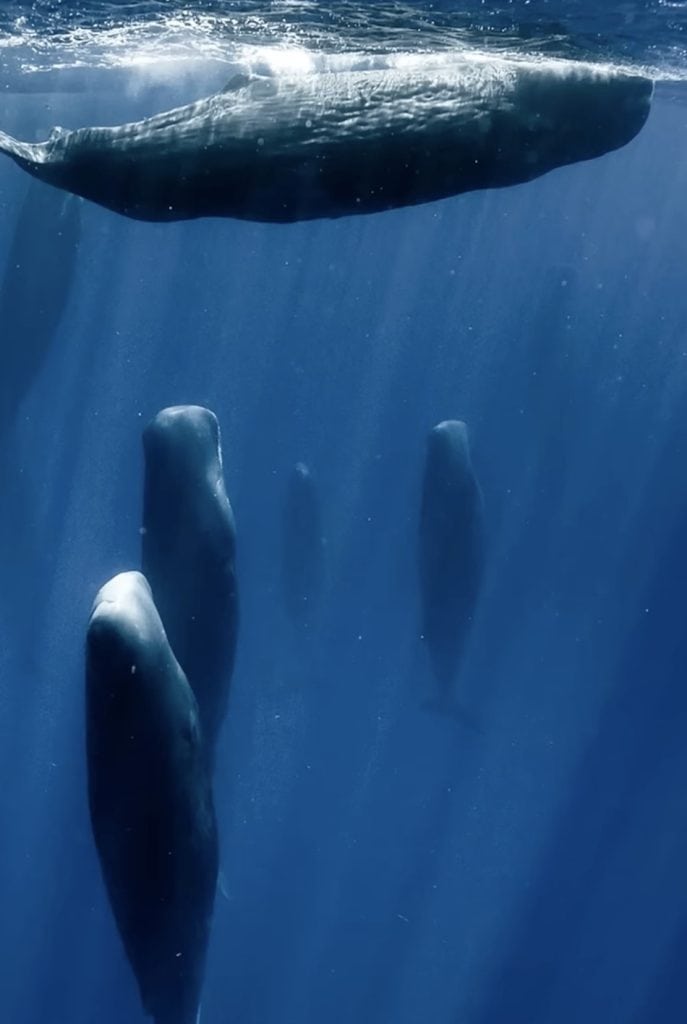
Whale-watching does not appear to disrupt sperm whales when feeding, but it does when they are sleeping.
©YouTube / naturelenses – Original
Sperm whales, like humans, need rest to survive, but their deep-sleep drift-diving is often interrupted by human activity. Researchers have found that when whale-watching boats are nearby, sperm whales move around more and return to the surface more quickly, forcing them to expend more energy. This constant disturbance can take a serious toll on their health over time. Just imagine trying to get a good night’s sleep while someone keeps waking you up — you would be exhausted and likely stressed the next day, particularly if this happened on a regular basis.
These disruptions are particularly concerning because sperm whales are a Vulnerable species. Even the most “sustainable” boats create noise that can disturb whales and cause behavioral changes. This leads to increased stress, wasted energy, and less time for essential activities such as hunting for food.